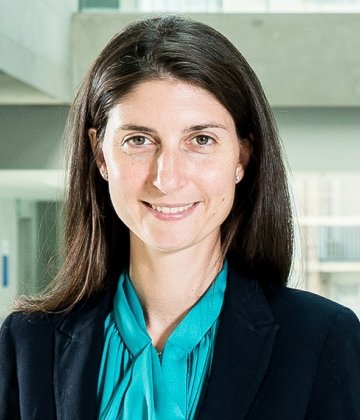
Dr Seb Franklin is a Senior Lecturer in the Department of English Language & Literature at King's College London, Faculty of Arts & Humanities. Their research explores intersections between media theory, racial capitalism, Marxism, and the history of science and technology. Key research areas include: Digital humanities and media archaeology Critical race and postcolonial studies Cybernetics and technocultural analysis Political economy of digital labor Visual culture and post-Fordism Recent publications examine: 2024 works on analog-digital distinctions and digital ethics 2023 analyses of data dispossession and racial capitalism 2021 monograph 'The Digitally Disposed' 2015 foundational text 'Control: Digitality as Cultural Logic'
Shuo Yu is an Assistant Professor of Information Systems and Quantitative Sciences at the Rawls College of Business, Texas Tech University, and serves as the Wetherbe Professor in Management Information Systems. He directs the MIS Doctoral Program and teaches courses such as Big Data Security, Information Security, and Data Analytics Tools. Yu holds a PhD from the University of Arizona (Management Information Systems) and a BBA from Tsinghua University (Information Management). His research focuses on data science applications in healthcare analytics, cybersecurity, and e-commerce. Key areas include interpretable deep learning, text mining, and mobile health technologies. Notable projects include SilverLink, a smart home monitoring system for senior care using wearable sensors and machine learning. Yu’s publications span journals like MIS Quarterly and IEEE Transactions, emphasizing innovations in health profiling, fall prevention, and recommendation systems. His work integrates techniques such as Hidden Markov Models, Generative Adversarial Networks, and Bayesian networks. No scientific awards are listed. He is actively involved in advising doctoral students and contributes to the Association for Information Systems (AIS).
Professor Rubindhiran Pillay is a faculty member at the University of Alabama at Birmingham (UAB) School of Medicine, holding appointments as Professor in General Internal Medicine & Population Science and Senior Scientist at the Center for Clinical and Translational Science. Previously, he served as the Daniel White Jordan Chair and founding Executive Director of the Center for Health Systems Innovation at Oklahoma State University, and as a visiting professor across multiple UAB schools. His academic expertise bridges healthcare innovation, strategic leadership, and entrepreneurship, with a focus on transforming health systems through creativity and technology. PhD in Business Administration, University of Cape Town (2003) MBA in Health Management, University of Cape Town (1997) MD, University of Cape Town (1987) His research explores the intersection of innovation , health leadership , and management capacity in public and private healthcare sectors. Key themes include competency gaps among nursing and hospital managers, work satisfaction dynamics, and strategies for retaining healthcare professionals. His publications span topics like global health informatics , innovation pedagogy , and managed care systems , reflecting a multidisciplinary approach. Notable scientific awards include the Harvard Advanced Leadership Fellowship and founding presidency of the International Society of Healthcare Entrepreneurship Education and Research (ISHEER) . He serves as Editor-in-Chief of the Journal of Innovation and Entrepreneurship in Health. Teaching activities include advising PhD students and graduate courses at UAB on business and healthcare topics. Recent grants from the South African Medical Research Council support innovations in gestational diabetes diagnostics and preterm birth prevention.
Giorgio Riello is Professor of Global History and Culture at the University of Warwick and Chair of Early Modern Global History at the European University Institute in Florence. He serves as Director of the Warwick Institute of Advanced Study and has held significant leadership positions including Head of Department of History at the European University Institute (2021-22) and Director of Warwick in Venice (2018-19). His academic career spans multiple prestigious institutions across Europe and North America. His educational background includes a Laurea in Business Economics from Ca' Foscari University, Venice (1998) and a Ph.D. in History from University College London (2002). His academic appointments progressed from Assistant Professor (2007-9) to Associate Professor (2009-11) and finally Professor of Global History and Culture at the University of Warwick (2011-present). Riello's research focuses on the intersections of material culture, trade, and consumption in early modern Europe and Asia, with particular expertise in textile history. He explores how objects shape global historical narratives, examining the relationship between consumption and production, with specific reference to textiles and clothing. His work bridges economic, cultural, and global history through innovative methodologies that incorporate material culture studies. His publication record reveals a consistent focus on global connections, particularly in textile history and early modern trade networks. Riello has pioneered concepts like the 'Diamond-shaped Trade' connecting Atlantic and Indian Ocean spaces, challenging traditional Eurocentric narratives of industrial development. His research demonstrates how Asian knowledge and commodities fundamentally shaped European economic development. Fellow of the Royal Historical Society (2013) Philip Leverhulme Prize (2010) World History Association Bentley Book Prize for Cotton: The Fabric that Made the Modern World (2014) Braudel Senior Fellowship, European University Institute (2012) Iris Foundation Award for contribution to the Decorative Arts and Material Culture (2016) Riello has successfully secured major research funding including an ERC Advanced Grant 'CAPASIA. The Asian Origins of Global Capitalism' (2022-27) and a Marie Curie COFUND grant. He currently supervises 10 PhD students at the EUI and acts as Second Reader for another 8 PhD students. His research has been supported by the Leverhulme Trust, Arts and Humanities Research Council, British Academy, and Economic History Society. As director of the Pasold Research Fund since 2010 and active collaborator with major international museums including the Victoria and Albert Museum and MUDEC Museum in Milan, Riello bridges academic research with public engagement in material culture studies.
Thomas Massaro, S.J., is the Laurence J. McGinley Professor of Religion and Society and Professor of Moral Theology at Fordham University’s Department of Theology. A Jesuit priest of the East Province, he previously held academic roles at Weston Jesuit School of Theology, Boston College, and the Jesuit School of Theology of Santa Clara University, serving as Dean there. Awarded the McGinley Chair in 2024, his work centers Catholic social teaching’s application to public policy, social justice, and peacebuilding. His research explores Pope Francis’s moral leadership, globalization ethics, environmental concerns, and the role of conscience in religious participation in public life. Education includes a PhD in Christian Social Ethics from Emory University, STL and MDiv from Weston Jesuit School of Theology, and BA from Amherst College. He co-founded Catholic Scholars for Worker Justice and served on Cambridge’s Peace Commission. His 11 books and over 100 articles analyze papal social ethics, economic justice, and faith-based activism. Recent works include Pope Francis as Moral Leader (2023) and Living Justice: Catholic Social Teaching in Action (2024). Research interests span the ethics of globalization, spirituality of social justice, and Pope Francis’s contributions to social ethics. His articles critically engage Laudato Si’, papal advocacy for the poor, and Ignatian spirituality. Grants and collaborations include work on Medellín conference legacies and Jesuit approaches to peace.
Sylvie Bepoix is an Assistant Professor affiliated with the UMR 6249 Chrono-environment research unit at the University of Franche-Comté, based in Besançon, France. Her research focuses on the County of Burgundy during the late Middle Ages, encompassing political structures, economic systems, societal organization, environmental interactions, and administrative practices. Her research interests are deeply rooted in the history of Burgundy in the late medieval period. Key areas include: The economic and political dynamics of the County of Burgundy under figures like Jean sans Peur. The utilization of space, territories, and natural resources, particularly forests, by rural populations. Medieval administration, justice, and legal systems as evidenced through account books and other records. Social structures, including serfdom, labor (corvée), and sustenance. The role and presence of foreign groups, such as Lombard merchants. Analysis of her 14 most recent publications reveals a consistent and deep engagement with the history of Burgundy and Franche-Comté in the late Middle Ages (primarily 14th-16th centuries). Her work frequently utilizes administrative documents, especially account books, to explore themes of economic control (e.g., saltworks, taxation like the 'brennerie'), governance, justice, land management, resource use (particularly forests), social status, and the interactions between rulers and subjects or cities. The publications demonstrate methodological strengths in codicology, linguistic analysis of historical terms, and the interpretation of financial records. She currently advises or has advised the following students: Marie Lafarge Ariane Lambart Valentin Métral
Jeffrey Luckstead is a Distinguished Professor of Agricultural and Resource Economics and serves as the Graduate Director at the School of Economic Sciences, Washington State University. He holds a Ph.D. in Economics from WSU (2013), an M.S. in Applied Economics (University of Idaho, 2008), and a B.S. in Economics (University of Idaho, 2006). His academic career includes roles at the University of Arkansas and promotions from Assistant to Associate Professor before joining WSU. His research focuses on International Trade , Agricultural Policy , and Farm Labor Markets , with an emphasis on immigration economics and environmental policy. Recent work examines trade agreements' impacts, labor automation in agriculture, and the role of subsidies in global dairy markets. His articles analyze topics like U.S.-Mexico trade disputes, robotic harvesters’ economic viability, and climate change effects on rice farmers in Bangladesh. Key themes in his publications include trade policy dynamics, labor market challenges in agriculture, and the interplay between technology and global supply chains. His work often bridges theoretical trade models (e.g., gravity models) with applied analyses of agricultural commodities and labor markets. Luckstead’s contributions address critical issues such as food security, trade sanctions, and the socio-economic implications of immigration policies. His interdisciplinary approach integrates economics, policy analysis, and quantitative methods to inform decision-making in agricultural and resource sectors.
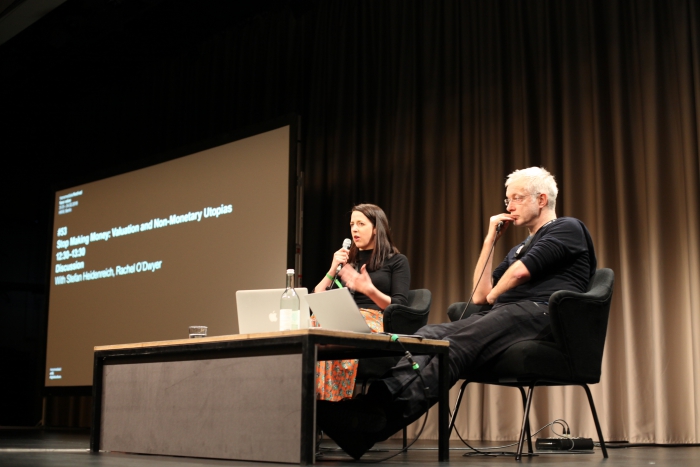
Rachel O’Dwyer is a Lecturer in Digital Cultures at the School of Visual Culture, National College of Art and Design (NCAD), Dublin. She holds a PhD from Trinity College Dublin (2014), an M.Phil. in Music and Media Technologies (2009), a B.A. Honours in Fine Art (Digital Media) from IADT Dun Laoghaire (2006), and a City & Guilds Diploma in Sound Engineering (2007). Her research explores the intersection of digital cultures and cultural economies, focusing on how digital networks transform ownership, value, and production of art, knowledge, and information. She critiques neoliberal logics in blockchain and algorithmic systems, advocating for a return to commons-based models. Education: PhD, Trinity College Dublin (2014): Spectre of the Commons: A Political Economy of Radio Spectrum M.Phil., Trinity College Dublin (2009): Music and Media Technologies B.A. Honours, IADT Dun Laoghaire (2006): Fine Art (Digital Media) City & Guilds Diploma, Sound Engineering (2007) Research Interests: Rachel’s work interrogates money, algorithms, AI, and their implications for cultural production and resistance. She investigates the role of blockchain in crypto-art, freeports, and art markets, while also examining how IoT and 5G reshape payments and surveillance. Her critical lens extends to the political economy of communications, digital value systems, and tactical media strategies like Openhere and D.A.T.A. Scientific Awards: 2018: Fulbright Scholar Award (Blockchain & Art) 2018: RIA Charlemont Scholar Award 2014: SFI Public Engagement Grant 2010-2014: Science Gallery Seed Funding Advising & Grants: Rachel has coordinated modules in the history of creative industries and designed MOOCs on technology and society. She organized the Openhere festival (2012, 2014), Data Politics conferences (2016), and Quantified Self events (2011). Her current book project with MIT Press examines radio spectrum ownership. Labs & Teams: She is a core member of the P2P Foundation’s academic research network and coordinates the Orthogonal Methods Group (OMG) at Trinity College Dublin. She advises the DECODE EU project on data sovereignty and contributes to ADAPT’s Ethics and Privacy Working Group.
Mehmet Nedim Karakayalı is an Associate Professor in the Sociology Department at Bilkent University. He holds a Ph.D. in Sociology from the University of Toronto (2003). His research focuses on social theory, science and technology studies, sociology of music, biopolitics, and the history of social thought. His work explores themes such as social distance, self-practices, algorithmic control, and cultural transmission. He has published extensively in journals like Information Society , Theory, Culture and Society , and Sociology . Key research areas include the impact of digital media on social behavior, the theoretical intersections of critical theory and reflexive sociology, and historical comparisons of cultural transmission mechanisms. His recent work examines algorithmic systems as technologies of the self, biopolitical dynamics in online platforms, and the theoretical foundations of social distance. Dr. Karakayalı’s publications span book chapters and peer-reviewed articles, with notable contributions to understanding the sociological implications of music recommendation systems, Facebook’s analytic labor, and the conceptualization of ‘stranger’ in social theory. He is a member of the Department of Political Science and Public Administration (POLS) at Bilkent University, where he contributes to undergraduate and graduate education.
Dr. Grzegorz Kida is an Assistant Professor in the Department of Work Psychology, Organization and Psychosocial Rehabilitation at the Faculty of Social Sciences, John Paul II Catholic University of Lublin. His research focuses on organizational psychology, career counseling, and social responsibility in business contexts. He has authored chapters in peer-reviewed books and articles in journals like Journal for Perspectives of Economic Political and Social Integration and Studies in Psychology at the Catholic University of Lublin . His work addresses topics such as distance career counseling, emotional intelligence in job analysis, and interreligious dialogue readiness among youth. Dr. Kida actively participates in national and international conferences, presenting on themes like personnel management in socially responsible companies and knowledge of the labor market among psychology students. He has also engaged in peer reviewing for academic publications. His teaching responsibilities include courses on business psychology, personnel management, and psychological career counseling across undergraduate years. He is reachable at grzegorz.kida@kul.pl and holds ORCID ID 0000-0001-6769-9213 . His research demonstrates a commitment to bridging theoretical concepts with practical applications in organizational behavior, psychosocial rehabilitation, and social integration. Recent efforts emphasize technological adaptations in career guidance and dialogue facilitation in multicultural contexts.
Melinda Erdmann is a Research Fellow at the WZB Berlin Social Science Center, focusing on educational inequality, guidance counseling, and post-secondary education decisions. She leads the ZuBAb project examining future and career plans of high school students. Previously, she researched first-year university experiences and study success at the University of Potsdam. Her work emphasizes experimental methods, such as randomized controlled trials, to evaluate interventions addressing educational disparities. Erdmann holds a Magister in Sociology from the University of Potsdam (2012), with minors in Philosophy and Business Administration. She has extensive experience in higher education studies, including roles as Deputy Director of the Centre for Quality Development at the University of Potsdam and as an exchange student at the University of Technology Sydney. Her research interests span educational policy, gender studies, and social stratification, with a focus on reducing inequality through effective counseling programs. She has collaborated on projects funded by Germany's Federal Ministry of Education and Research (BMBF), investigating interventions to improve educational transitions. Erdmann's recent publications highlight the impact of guidance counseling on university enrollment, gender segregation in higher education, and methodological advancements in evaluating educational interventions. Her work bridges academic research with practical policy recommendations, aiming to enhance equity in education systems. No scientific awards are explicitly mentioned in her profile, though her contributions to educational equity research are widely recognized. Erdmann is affiliated with the Research Department Skill Formation and Labor Markets at WZB, contributing to interdisciplinary teams studying labor market dynamics and skill development.
Dr. Billy Holzberg is a Lecturer in Social Justice at King's College London, affiliated with the School of Education, Communication & Society and the Faculty of Social Science & Public Policy. He holds a PhD in Gender Studies from the London School of Economics (LSE), where he was previously a Fellow in Gender and Sexuality. His interdisciplinary research focuses on the intersections of sexuality, race, migration, and affect, with a particular emphasis on queer theory, transnational feminism, and postcolonial critique. His work critically examines the emotional dynamics of migration control, border politics, and anti-gender movements. Key publications include *Affective Bordering: The Emotional Politics of Race, Migration, and Deservingness* (2024) and *Bad Sex: Sexuality, Gender and Affect in Contemporary TV* (2025). He co-edited *Transnational Anti-Gender Politics: Feminist Solidarity in Times of Global Attacks* (2024), addressing global anti-gender mobilizations. Dr. Holzberg has received the Philip Abrams Memorial Prize (2025) for his book on migration and affect. He contributes to initiatives like Queer@King’s and the Centre for Public Policy Research, advancing LGBTQ+ policymaking and social justice. Teaching includes modules on gender, media, and civil rights, and he supervises PhD students in queer theory, migration studies, and cultural analysis.
Dr. David Chilosi is a Lecturer in Economic History at King's College London's Department of Political Economy, within the Faculty of Social Science & Public Policy. He teaches economic history and has held prior academic positions at the University of Groningen and LSE. His research focuses on long-run socio-economic processes, including market evolution and occupational structures, with expertise in European and global history. He supervises PhD students in economic history, especially those using quantitative methods. Chilosi holds a PhD in historical sociology from the University of Surrey, alongside degrees in economics and econometrics from the University of Essex and LSE. His research groups include the Quantitative Political Economy Group (bridging economics and political science via advanced methods) and the History and Political Economy Group at the Centre for British Democracy. His work emphasizes quantitative analysis of historical economic systems, covering topics like transoceanic market integration, Italy's unification impacts, and early globalization dynamics. Key themes include financial integration, state formation, and the interplay between political institutions and economic growth. Chilosi has published widely in journals like the Economic History Review and Explorations in Economic History , with recent focus on 19th-century China trade, Smithian growth theories, and occupational structures in Italy. His teaching and research are supported by affiliations with interdisciplinary groups and a focus on methodological innovation in historical analysis.
Christine Morley is a Professor and Head of the Social Work and Human Services Disciplines at QUT's Faculty of Health. She co-leads the 'Access to Justice' research program at the Centre for Justice and chairs the Faculty of Health Equity Committee. As an Adjunct Professor at the University of the Sunshine Coast, she focuses on critical social work pedagogy and transformative practice. Her work addresses neoliberal challenges in education, domestic violence, and mental health service delivery. Education: PhD from La Trobe University. Professional memberships include the Australian Association of Social Workers and editorial roles at Advances in Social Work and Welfare Education . Prior roles include Head of Social Work at the University of the Sunshine Coast (2008–2016) and practitioner roles in sexual assault services (1997–2007). Research interests center on critical reflection, social justice activism, and resisting neoliberal influences in academia. Key publications include Engaging with Social Work (2014) and the Routledge Handbook of Critical Pedagogies for Social Work (2020). Awards recognize her contributions to transformative learning and student-centered pedagogy. Recent work explores pandemic impacts on social work education and domestic violence services. She advocates for field education reforms to address placement poverty and financial stress among students.
Giulia Cappellaro is Associate Professor in the Department of Social and Political Sciences at Bocconi University, with affiliations at CERGAS and DONDENA research centers. She holds a PhD in Management Studies from the University of Cambridge. Her interdisciplinary research examines collaborative governance, institutional change, and ambiguity in public sector organizations, particularly in healthcare contexts. Cappellaro's publications investigate how organizations navigate complex policy environments, with recent focus on public-private hybrids, COVID-19 physician experiences, and technology implementation in healthcare. Her methodological expertise includes ethnography and qualitative analysis of organizational phenomena. Bocconi Research Excellence Award (2024, 2021, 2020) ABCD Award - OMT Division, Academy of Management (2017, 2015, 2012) EGOS Best Student Paper Award (2012) Best Young Researcher Award, Italian Health Economics Association (2012)