Dr. Patrick Baesjou is a Lecturer and Researcher at the Debye Institute for Nanomaterials Science within the Faculty of Science at Utrecht University . His work spans Soft Condensed Matter and Nanomaterials Science , with a focus on optical properties , quantum dots , and metal-organic frameworks . He is based at the Leonard S. Ornstein Laboratory in Utrecht, Netherlands. Research Interests : Self-assembly of nanocrystals Switchable optical components (e.g., lenses, gratings) Photonic supraparticles and lasing mechanisms Catalysis of oxidative polymerization reactions Electronic paper and display technology Publication Trends : His recent work (2016-2022) focuses on titanium dioxide nanorods , supraparticle lasing , and quantum dot engineering , often involving collaborations with teams led by Prof. Alfons van Blaaderen and Prof. Andries van Blaaderen. Earlier studies (1992-2003) explored homogeneous catalysis and organic electronics . Supervised Work : As a co-promoter and research leader, he guided projects on responsive colloids and electronic paper , mentoring scholars like F. Montanarella and S.N. Hosseini. His publications frequently involve interdisciplinary teams in chemistry , physics , and materials science .
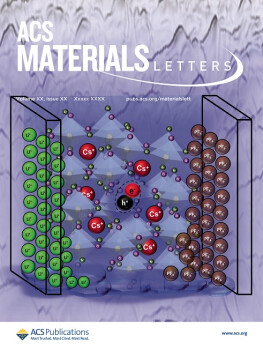
Jason Slinker is a Professor of Physics and Associate Department Head in the Department of Physics at The University of Texas at Dallas, within the School of Natural Sciences and Mathematics. He is also affiliated with the Department of Materials Science and Engineering and the Department of Chemistry. He mentors the UTD Society of Physics Students and serves on the International Advisory Board of ChemPlusChem. Education: Ph.D. in Applied and Engineering Physics, Cornell University (2007) M.S. in Applied and Engineering Physics, Cornell University (2006) B.S. in Physics, Chemistry, and Mathematics (Triple Major, GPA: 4.0), Southern Nazarene University (2001) Dr. Slinker's research spans optoelectronics from mixed conductors , electrochemistry of perovskites , electrochemical biosensors , and bioinspired molecular wires . His work leverages ionic and electronic conductivity to develop energy-efficient light-emitting devices, solar cells, and novel biosensors for disease diagnostics. He uses DNA-inspired systems for high-fidelity nanoscale electronic devices and studies doping and degradation mechanisms in perovskite materials. His recent publications (2023–2024) show a strong focus on perovskite electroluminescence, DNA-based electrochemical switches, and quantum dot applications. These works emphasize material stability, efficiency, and novel device architectures, reflecting a trend toward practical, high-performance optoelectronic and sensing systems. Scientific Awards: Jonathan F. Reichert & Barbara Wolff-Reichert Award for Excellence in Advanced Laboratory Instruction, American Physical Society (2025) Provost's Award for Excellence in Undergraduate Research Mentoring, UT Dallas (2022) Hyer Award, Undergraduate Research Mentoring, American Physical Society, Texas Section (2019) Institutional Improvement Award, The University of Texas at Dallas (2018) Hyer Award, Graduate Research Mentoring, American Physical Society, Texas Section (2014) Regent's Outstanding Teaching Award, University of Texas System (2014) Outstanding Alumni Award, Southern Nazarene University (2013) Dr. Slinker has been actively involved in mentoring undergraduate and graduate researchers, recognized through multiple awards. He has secured significant research funding from the National Science Foundation and the Office of Naval Research. Current grants include projects on stable electroluminescent devices, REU programs in physics, high-precision characterization of bioinspired nanowires, and DNA-inspired nanoscale electronic devices. He leads the Slinker Group , which focuses on mixed conductor optoelectronics and electrochemical biosensors. The group develops novel materials and devices at the intersection of physics, chemistry, and engineering, aiming to advance both fundamental understanding and real-world applications in energy and healthcare.
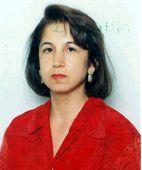
Dr. Cristian Bahrim is a Professor of Physics at Lamar University, with a joint appointment in the Department of Electrical Engineering since 2005. He earned his B.S./M.S. in Physics from the University of Bucharest (1991), followed by a Ph.D. from University of Paris-Orsay (1997) under Prof. Francoise Masnou-Seeuws. From 1998-2001, he conducted postdoctoral research at Kansas State University's Theoretical Atomic Physics Group with Dr. Uwe Thumm. His research spans atomic physics, quantum mechanics, optics, lasers, and light-matter interaction , with over 100 peer-reviewed publications. Notably, he developed optical quantum bit systems via dielectric surface interactions and studied alignment relaxation in neon-helium collisions. His work bridges fundamental physics and applied optoelectronics, including laser-based capacitor switching. Dr. Bahrim has received numerous mentorship awards , including the national 2019 Council of Undergraduate Research Mentor Award and three Outstanding McNair Mentor Awards. He co-led the $1M NSF-STEP grant 'STAIRSTEP' to boost STEM retention through undergraduate research and advises the Society of Physics Students and Sigma Pi Sigma honor society. He served as Interim Chair of Lamar's Department of Physics (2013-2014), President of the Texas Section of the American Association of Physics Teachers (2018-2019), and Director of the Office of Undergraduate Research. He co-organized major physics conferences and reactivated Sigma Pi Sigma at Lamar after 17 years. French Government Fellowship (1992-1997) Postdoctoral Fellowship at Kansas State University (1992-1997) 2019 Mentor Award in Physics & Astronomy (national) 2015 Faculty Mentor Award at Lamar University
Alexander Serga is a researcher affiliated with the Arbeitsgruppe Prof. Hillebrands at the Department of Physics, Technische Universität Kaiserslautern, Germany. His work is centered within the domain of experimental and theoretical condensed matter physics, particularly focusing on spin dynamics and magnonic systems. The research interests of Alexander Serga span key areas in modern solid-state physics, including spintronics , magnonics , collective spin excitations , and nonlinear wave propagation in magnetic structures . His contributions are aligned with advanced investigations into information processing using magnons as carriers, a promising alternative to conventional electronics. Scientific awards and honors have not been mentioned in the available text. He has contributed to research supervision within the group; however, no specific students are listed. The research group, led by Prof. Burkard Hillebrands, operates state-of-the-art laboratories for studying dynamic magnetic phenomena using techniques such as Brillouin light scattering and microwave spectroscopy. The team actively participates in collaborative projects within Germany and internationally, advancing the frontiers of magnon-based computing and hybrid quantum systems.
Dr. Jens Tomm is a Senior Researcher at the Max Born Institute for Nonlinear Optics and Short Pulse Spectroscopy (MBI), where he has been since 1995. His work focuses on high-power semiconductor lasers, optoelectronic device limitations, and material characterization. He collaborates with industry partners like Osram and Lumentum, studying GaN-based devices and degradation mechanisms. Key projects include analyzing catastrophic optical damage, carrier dynamics in quantum wells, and luminescence properties of materials like ZnSe and MgAl2O4. Education: PhD in Physics (1984, Humboldt University), Diplom (1982). Previous roles include visiting professorships at Georgia Tech (1993–1995) and RIKEN (1999). Author of books on optoelectronic semiconductors and quantum-well laser packaging. His research spans semiconductor materials science, laser physics, and device reliability. Recent work emphasizes UV LEDs, infrared solid-state lasers, and nanoscale heterostructures. Key Projects: Catastrophic optical damage analysis, GaN-based laser reliability, quantum well recombination studies. Collaborations: BMBF projects (e.g., BlauLas), industry partnerships with Osram, Dilas, and Lumentum. Techniques: Photoluminescence, transient spectroscopy, cathodoluminescence, Raman spectroscopy. Publications focus on semiconductor laser physics, material degradation, and optoelectronic device optimization. Over 100+ peer-reviewed articles and two Springer/McGraw-Hill books highlight his contributions to the field.
Dr. Guo Liang is an Associate Professor in the Department of Mechanical and Energy Engineering at the Southern University of Science and Technology (SUSTech) . His academic journey includes a B.S. in Mechanical Engineering from Tsinghua University (2009), a Ph.D. in Mechanical Engineering from Purdue University (2014), and postdoctoral research in Chemistry at University of California, Berkeley (2014-2017). He joined SUSTech as a full-time faculty in 2018. Research Interests include: Nanoscale Energy Conversion and Transfer Laser-Matter Interaction Femtosecond Time-Resolved Spectroscopy Laser Micro/Nanofabrication Publications span 50+ SCI-indexed papers in journals like Nature Physics , Science Advances , Advanced Materials , and Nano Letters . Key topics include ultrafast energy transfer , coherent phonon dynamics , and laser-based manufacturing . Honors & Awards : 2025 Second Prize in SUSTech Graduate Teaching Achievement Award 2024 Excellent Communist Party Member at SUSTech 2023 First Prize in SUSTech Young Teachers Teaching Competition 2019 Shenzhen Industrial Development and Innovation Talent Award Multiple SUSTech/Residential College Advisor Awards 2018 Shenzhen Overseas High-Caliber Personnel Ross Fellowship at Purdue University (2009-2010) Grants include: 2 National Natural Science Foundation of China projects, 2 Guangdong Outstanding Youth Projects, 2 Shenzhen Basic Research grants, and participation in national-level initiatives like the Transformative Technologies Key Special Project . Laboratory houses a femtosecond spectroscopy system , laser processing equipment , and material synthesis facilities (glovebox, tube furnace, etc.).
Jonas Matukas is a Professor at the Institute of Applied Electrodynamics and Telecommunications (IAET) , Vilnius University. His work focuses on low-frequency noise analysis and charge carrier transport in semiconductor nanostructures, with applications in optoelectronics and terahertz technology. Senior researcher at IAET since 2002 Supervisor of 1-2 Bachelor/Master theses annually Project leader for Communications Regulatory Authority of Lithuania Research interests involve using noise spectroscopy to study reliability and performance of optoelectronic devices (laser diodes, LEDs, THz detectors). His work spans graphene-based electronics , carbon nanotube composites , and wide bandgap semiconductors . Recent publications emphasize THz detector optimization (2019), graphene/silicon junctions (2022), and LED degradation mechanisms (2022). Key trends show interdisciplinary applications of noise analysis in materials science and device engineering. Teaching includes courses on Information Theory and Fluctuations in Electronic Systems . He contributes to academic governance as Chairman of the Lithuanian Standards Board's Telecommunication Committee and member of the Communications Regulatory Authority Council.
Dr. Žydrūnas Podlipskas is a Senior Researcher at the Institute of Photonics and Nanotechnology (IPN) under Vilnius University. His work focuses on semiconductor physics, particularly in III-nitrides and scintillator materials. Research Interests: Cathodoluminescence-SEM Microscopy, Time-resolved Characterisation, Nitrides, Semiconductor Defects, Computational Approaches for Image Processing. His recent publications highlight advancements in GaN epitaxy for Si integration, Mg-codoped garnet scintillators, and carrier dynamics in InGaN structures. He has supervised doctoral student Gabija Soltanaitė, focusing on spectro-spatiotemporal imaging of carrier transport phenomena. His work spans collaborations in high-energy physics instrumentation, semiconductor defect engineering, and computational materials analysis, with a strong emphasis on optimizing optoelectronic device performance through material science innovations.
Prof. Gintautas Tamulaitis is a faculty member at Vilnius University's Institute of Photonics and Nanotechnology, Department of Semiconductor Physics. His academic roles include leadership in the Excellence Center for Advanced Light Technologies and participation in Horizon 2020 projects like AIDAinnova and SCINTIGLASS. His research spans semiconductor physics, scintillators, radiation detectors, and nonlinear optics. Key focus areas include carrier localization effects in nitrides, scintillator engineering for fast response, and optoelectronic material development. His work bridges fundamental studies and applied technologies, particularly in radiation-hard materials and LED-based systems. Recent articles highlight advancements in multicomponent garnet scintillators, transient optical absorption techniques, and carrier diffusion dynamics. Collaborations span institutions like CERN, Rensselaer Polytechnic Institute, and international consortia. Scientific accolades include two Lithuanian National Science Awards (2002, 2008) and a State Fellowship (2004-2005). He supervises doctoral students and has led major grants from the Lithuanian Research Council and Horizon 2020.
Dr. Vincas Tamošiūnas is a Professor at the Institute of Photonics and Nanotechnology (IPN) within the Faculty of Physics at Vilnius University. His research focuses on semiconductor optoelectronics, with special emphasis on terahertz devices, solar simulators, and detection of ionizing radiation. His educational background is not explicitly stated in the provided information, but his expertise is evident through his extensive research and teaching activities. Professor Tamošiūnas specializes in semiconductor optoelectronics with research interests spanning terahertz technology, solar energy systems, and radiation detection. His work bridges fundamental physics with practical applications in imaging, sensing, and renewable energy. He has made significant contributions to the development of terahertz imaging systems, LED-based solar simulators, and novel methods for radiation detection. His scientific output shows a consistent focus on terahertz technology and solar energy applications, with recent work emphasizing compact and cost-effective solutions for terahertz imaging systems and highly accurate solar simulators. His research has evolved from fundamental terahertz device physics to practical applications in imaging and energy systems. Rector's award for the best lecturer of the faculty (2017, VU Faculty of Physics) Professor Tamošiūnas has supervised 6 master's and 11 bachelor's final theses as of 2022, in addition to supervising scientific research works and courseworks for many of these students. He has been actively involved in university governance, serving on various committees including the Commission for the evaluation of educational initiatives and the Commission for the selection of best lecturers' awards at Vilnius University. At the Faculty of Physics, he has chaired the "Photonics and Nanotechnology" study program committee since 2013 and has been a member of the "Light Engineering" study program committee since 2017. His work is conducted within the Institute of Photonics and Nanotechnology at Vilnius University, where he collaborates with researchers on advanced optoelectronic systems and devices.
Nurdal Watsuji serves as Assistant Professor in the Department of Electrical and Electronics Engineering at Gaziantep University's Faculty of Engineering, specializing in Electrical-Electronics Engineering with research emphases on Image Processing, Signal Processing, and Digital Design. His academic foundation includes: Doctorate in Electrical and Electronic Engineering from Imperial College London (1987-1991) Degree in Electrical-Electronic Engineering from Middle East Technical University, Gaziantep (1982-1985) Licence in Electrical Engineering from Middle East Technical University, Gaziantep (1975-1981) Watsuji's research integrates theoretical signal processing with practical engineering applications, particularly in LED/OLED lighting systems and image analysis. His work demonstrates consistent innovation in optical efficiency optimization, compressed sensing algorithms, and wavelet-based texture classification, bridging electrical engineering principles with real-world implementation challenges in energy systems and computer vision. Publication analysis from 2003-2016 reveals evolving expertise from foundational wavelet techniques to advanced optical efficiency modeling in solid-state lighting. The recurring theme involves mathematical optimization of signal/image processing methods for specific engineering constraints, with significant contributions to nonconvex compressed sensing and LED reflector design. His graduate mentoring spans eight students: PhD candidates: İpek Atık (2016) on LED reflector optimization and Taner Ince (2012) on compressed sensing Master's students: Ugur Polat (2022) on energy analyzers, Gulden Akay Ozbay (2008) on hand recognition, Taner Ince (2006) on medical image processing, Recep Oz (2004) on 3D rendering, Omer Cengiz Celebi (2003) on volume rendering, and Bayram Kara (2003) on wavelet texture analysis This diverse portfolio reflects sustained engagement with computational methods across lighting systems, biomedical imaging, and computer graphics applications.
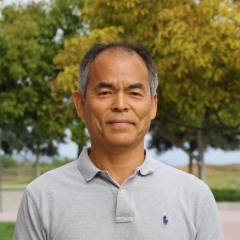
Shuji Nakamura is a CREE Professor of Solid State Lighting and Displays at the University of California, Santa Barbara, where he holds appointments in both the Department of Materials and the Department of Electrical and Computer Engineering within the Robert Mehrabian College of Engineering. He serves as the Research Director of the Solid State Lighting & Energy Electronics Center and holds The Cree Chair in Solid State Lighting & Displays. Since joining UCSB in 2000, Professor Nakamura has established himself as a leading figure in semiconductor research, particularly in the field of gallium nitride-based optoelectronics. Professor Nakamura earned his academic credentials from the University of Tokushima in Japan, obtaining his Bachelor of Electronic Engineering, Master of Electronic Engineering, and Doctor of Engineering degrees from the same institution. Professor Nakamura is widely recognized as the pioneer of light emitters based on wide-bandgap semiconductors, particularly gallium nitride (GaN). His research focuses on the development of GaN thin film technology for high-efficiency nitride-based LEDs and laser diodes. His groundbreaking work in the early 1990s led to the first practical blue LEDs and violet laser diodes, which revolutionized lighting technology and enabled white LED lighting. His current research continues to advance solid-state lighting and display technologies, with particular emphasis on improving efficiency and performance of nitride semiconductor devices. Professor Nakamura has received numerous prestigious scientific awards throughout his career, including: Nobel Prize in Physics (2014) for the invention of efficient blue light-emitting diodes Millennium Technology Prize Benjamin Franklin Medal in Engineering Harvey Prize for advancements in Science and Technology Global Energy Prize Zayed Future Energy Prize Lifetime Achievement Queen Elizabeth Prize for Engineering (2021) National Academy of Engineering membership National Academy of Inventors membership National Inventors Hall of Fame induction Professor Nakamura has mentored numerous students and researchers throughout his career and has been instrumental in establishing the Solid State Lighting & Energy Electronics Center at UCSB. He has secured significant research funding for his work on nitride semiconductors and has been awarded more than 200 US patents and over 175 Japanese patents. His research has led to practical applications through the companies he co-founded, including Soraa, Inc. (2008) and SLD Laser (2013), which was later acquired by Kyocera Corporation. Professor Nakamura leads research activities at the Solid State Lighting & Energy Electronics Center, which focuses on advancing nitride semiconductor technology for lighting and display applications. His team continues to push the boundaries of efficiency and performance in GaN-based devices, with ongoing research in blue and green LEDs, laser diodes, and related semiconductor technologies.
Kiril Hristovski is an Associate Professor at Arizona State University's Polytechnic School within the Ira A. Fulton Schools of Engineering. He holds multiple affiliations including Senior Global Futures Scientist , faculty in the Environmental Engineering Graduate Program at the School of Sustainable Engineering, and advisor in the Barrett Honors College . His research focuses on nanomaterial synthesis for environmental applications , water/wastewater treatment systems, and environmental-health-safety (EHS) implications of nanotechnology. Ph.D., Civil and Environmental Engineering, ASU M.S., Technology (Environmental), ASU B.Sc., Chemical Engineering, University of Sts. Cyril and Methody, Macedonia He has led 15+ recent publications on microbial potentiometric sensors, nanomaterial adsorption mechanisms, and water quality innovations. His work spans from fundamental material science to applied systems for developing communities. Key subfields include biofilm-based monitoring, oxyanion removal, and electrochemical water treatment. Major awards include: Presidential Medal of Merit (Republic of Macedonia, 2016) 2015 Best Paper Award (Journal of Environmental Quality) Fulbright Scholar (Panama, 2012) Presidential Academic Award (U.S., 1991) He serves as advisor for patents related to nano-enabled water treatment systems and hybrid sorbent media , with active roles in global emergency management collaborations and environmental education programs.
Anna Prnová, PhD is a dedicated researcher at the Joint Glass Centre (Vitrum Laugaricio – VILA) within Alexander Dubček University of Trenčín, Slovakia. Her work focuses on advanced glass and ceramic materials, with particular expertise in glass-ceramics, thermal analysis, and crystallization kinetics. Dr. Prnová actively contributes to both national and international research projects while supervising doctoral students in the field of inorganic technologies and materials science. Dr. Prnová's educational background includes: PhD in Inorganic Technology and Materials Science (2008) from Alexander Dubček University of Trenčín, Faculty of Industrial Technologies Púchov, with research focused on transparent ceramics and glass ceramics materials on the Al 2 O 3 base Master's degree in Analytical Chemistry (1995) from Slovak University of Technology in Bratislava, Faculty of Technical and Food Technology Her research interests span analytical chemistry, inorganic chemistry, and specialized glass science. Dr. Prnová has developed significant expertise in glass, ceramics and glass-ceramics material preparation and characterization, with particular focus on thermal analysis and the study of thermal behavior and kinetics of crystallization of glasses. Her work bridges fundamental materials science with practical applications in lighting, composites, and advanced functional materials. Dr. Prnová's publication record demonstrates consistent contributions to high-impact journals in materials science, with particular emphasis on aluminate-based glass systems, crystallization processes, and structure-property relationships. Her research shows a clear trajectory from fundamental glass science toward applications in functional materials, phosphors, and advanced composites, with recurring themes in thermal behavior analysis and microstructural control of glass-ceramic systems. Her notable scientific recognitions include: Member of the "Scientific Team of the Year" awarded by the President of Slovak Republic (2008) Fulbright Scholarship from the US government (2015) She is also an active member of the Slovak Glass Society, Slovak Sillicate Society, and Fulbright Alumni Association. As a supervisor of PhD students, Dr. Prnová guides doctoral candidates through their research in inorganic technologies and materials. She serves as Study Advisor for Foreign Students and teaches specialized modules including Atom Structure and Chemical Bond Theory, Chemistry, Thermochemistry and Chemical Kinetics, and Thermal Analysis. Her research is supported by multiple significant grants: Principal Investigator for OPEN MOBILITY project on aluminate glasses with optical properties (2023-2024) Principal Investigator for APVV 19-0010 project on advanced eutectic materials (2020-2024) Member of research teams for multiple VEGA projects on glass and glass-ceramic materials (2020-2024) Participant in SAS-MOST project on bioactive surface engineering (2023-2026) Responsible person for Fulbright scholar program on glass structure (2023) Dr. Prnová is integral to the Joint Glass Centre (VILA), which represents a significant collaboration between Alexander Dubček University of Trenčín and international partners including Friedrich-Alexander Universität Erlangen-Nürnberg, Friedrich-Schiller-Universität Jena, Consejo Superior de Investigaciones Científicas, and Università degli Studi di Padova. This center, supported by the European Union's Horizon 2020 program, provides state-of-the-art facilities for glass research and development.