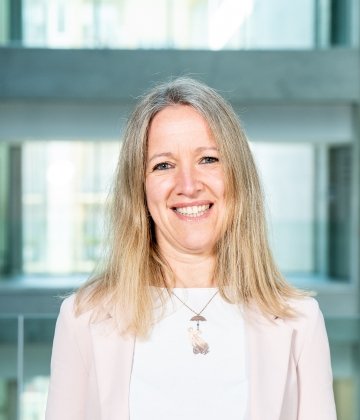
Anna Michálková is an Associate Professor at the Department of Tourism, Faculty of Commerce, Bratislava University of Economics and Business. Her expertise spans regional tourism, destination management, and tourism economics, with a focus on sustainable development and innovation. Education: Study stays at University of St. Gallen (Switzerland), University of Economics in Vienna (Austria), and University Lüneburg (Germany). Her research investigates institutional frameworks for destination management, tourism cluster dynamics, and economic impacts of tourism, particularly in crisis periods. She emphasizes stakeholder cooperation, societal value metrics, and sustainable growth strategies. Key trends in her publications include regional policy integration, gazelle enterprises in tourism, and cross-border collaboration. She has led projects like KEGA 034EU-4/2020 on innovative teaching methods and VEGA grants on competitiveness and innovation. Anna supervises bachelor and master programs in tourism management, teaches case studies in German, and collaborates with institutions across Europe. Her work bridges academia and practice through projects with local governments and tourism organizations.
Teresa Fort is an Associate Professor at the Tuck School of Business at Dartmouth College , focusing on international trade, industrial organization, and political economy. She teaches core microeconomics and seminars on firm globalization, while maintaining affiliations as a Faculty Research Fellow at the National Bureau of Economic Research (NBER) and a Research Affiliate at the Centre for Economic Policy Research (CEPR). Her work bridges economic theory with empirical analysis using U.S. Census Bureau data. PhD , University of Maryland (2012) MA , University of Maryland (2008) BA , University of Virginia (2000) Her research explores global production fragmentation , technology's impact on offshoring , and globalization's heterogeneous effects . Key findings include: technology's disproportionate role in domestic production reorganization, the rise of factoryless goods producers redefining manufacturing statistics, and evidence on how trade policies create interdependent sourcing dynamics . Recent publications in Review of Economic Studies and Journal of Political Economy Macroeconomics examine tariff escalation welfare effects and multinational firm trade patterns . Her work has been featured in major media outlets including Financial Times , The Wall Street Journal , and Marketplace . NBER Faculty Research Fellow CEPR Research Affiliate Coauthor of influential studies on global value chains She actively participates in academic conferences, recently discussing topics like multinational firm strategies and labor mobility during recessions . Her empirical methods often involve novel data infrastructure projects, including redesigning the U.S. Census Bureau's Longitudinal Business Database and County Business Patterns imputation techniques.
Lea Stadtler serves as Associate Professor of Strategy at Grenoble Ecole de Management, specializing in cross-sector collaborations and coopetition within the Department of Management and Technology. Her research examines organizational tensions through paradox and organizational theories, with focus on partnerships addressing societal grand challenges. Her research centers on cross-sector partnerships, coopetition, and organizational paradoxes, investigating dynamics in global health, sustainable development, and humanitarian contexts. Key themes include partnership sustainability, dark side effects, colonial legacies in business-NGO relationships, and place-based collaboration strategies. She employs critical perspectives to analyze power structures and unintended consequences in partnership ecosystems. Analysis of her 2022-2025 publications reveals escalating focus on partnership complexity in high-reliability contexts like global health, with growing attention to South-South cooperation, political embeddedness of innovation networks, and systemic approaches to Sustainable Development Goals implementation. Dr. Stadtler has received four international awards for her scholarly contributions and case studies. She currently serves as Associate Editor for Business and Society , contributing to academic discourse on cross-sector collaboration ethics and effectiveness. No information was provided regarding student advising, research grants, laboratory affiliations, or team leadership roles in the source materials.
Dr. Erwei (David) Xiang is a Senior Lecturer (Associate Professor) in Accounting at Newcastle University Business School, where he has been employed since 2022. Previously, he served as a Lecturer in Accounting at Edith Cowan University in Australia from 2015 to 2021. His academic career spans multiple institutions across the UK, Australia, and China, demonstrating international experience in accounting and finance education and research. Dr. Xiang's primary research interests include: Capital markets research Sustainability and social responsibility accounting Corporate finance Corporate governance R&D investment & innovation His scholarly work has been published in prestigious journals including Journal of Economic Behaviour & Organization, Energy Economics, International Review of Financial Analysis, Business Strategy and the Environment, and Journal of Cleaner Production. Dr. Xiang has established an extensive research track record with internationally excellent publications that have been recognized as top-cited papers and have won best-paper awards. His research demonstrates a consistent focus on the intersection of corporate governance, sustainability, and financial performance, with particular attention to emerging markets and Chinese business contexts. Dr. Xiang has secured more than a dozen competitive research grants totaling over £280K, including a UKRI-NERC grant. He has led research clusters, built interdisciplinary and international teams, and initiated research impact cases targeting REF2029. His research has practical implications for business practice and policy, as evidenced by his media publications at The Conversation on topics including corporate biodiversity disclosures, interest rate impacts on businesses, and corporate social responsibility in banking. As an educator, he has accumulated substantial teaching experience across undergraduate, postgraduate, MBA, and PhD levels, teaching courses such as Financial Accounting, Corporate Governance and Ethics, Accounting for Analysts, and Topics in Accounting. He has successfully supervised PhD students from enrollment to completion and is committed to developing research-led and employability-embedded teaching approaches. Dr. Xiang serves as the Ethics Convenor at Newcastle University Business School and has held editorial and reviewing roles for numerous academic journals, including serving as an Associate Editor for Business Ethics, the Environment & Responsibility. His professional service extends to external leadership roles through director, council member, or committee member positions in various academic associations domestically and internationally.
Jesper Strandgaard Pedersen is a Professor at Copenhagen Business School (CBS) in the Department of Organization, serving as co-director of the Imagine .. Creative Industries Research Centre. He previously chaired SCANCOR (Scandinavian Consortium for Organizational Research) hosted at Stanford and Harvard Universities, establishing his prominence in global organizational studies. His research centers on organizational and institutional change dynamics, examining institutional action, industry emergence, field structuring, and organizational identity construction. Key studies investigate cultural transformation in high-tech firms, mergers in knowledge-intensive industries, diffusion of managerial practices, and creative enterprise organization in film and culinary sectors. Recent work focuses on culinary movements as innovation drivers, analyzing how gastronomic traditions are strategically constructed and institutionalized. Publication analysis reveals consistent emphasis on creative industries (particularly culinary and film), sustainability intersections, and institutional entrepreneurship. His work demonstrates evolving focus from organizational identity in knowledge firms toward sustainability-driven innovation in food systems, with increasing European collaborations. Methodologically, he bridges qualitative case studies with institutional theory frameworks. Professor Strandgaard supervises PhD students and teaches advanced courses including Research Methodology in Organization and Management Analyses and Institutional Organizational Analysis across MSc, HD, and BSc programs. His external engagement includes executive education with CBS Executive Fonden in 2024. He leads the Imagine .. Creative Industries Research Centre, which investigates creative sector dynamics, and maintains influence through SCANCOR networks despite stepping down as chairman. His research directly informs European creative industry policy debates through frequent media contributions and international conference leadership.
Hans Hellsmark is an Associate Professor and Senior Researcher at Chalmers University of Technology's Environmental Systems Analysis department. He serves as coordinator of the Chalmers Initiative for Innovation and Sustainability Transitions and as one of the profile managers for Technology Governance in Energy Transitions within the Energy Area of Advance. Additionally, he acts as Chalmers coordinator for the Swedish knowledge centre for renewable transportation fuels (f3), working with diverse stakeholders across academia, industry, and policy to facilitate societal transitions through knowledge support and tailored activities. His research focuses on innovation and research policy for transformative societal change, particularly examining how policy instruments drive sustainability transitions. Hellsmark investigates the socio-economic benefits of governmental investments in research infrastructure and analyzes the complex interactions between policy makers, industry actors, research institutes, and universities in facilitating energy transitions. His work specializes in policy mixes, directionality in transformative missions, and the role of pilot and demonstration plants in market formation for sustainable technologies. Recent publications reveal a strong focus on energy transition pathways in process industries and hydrogen economies, with recurring themes of policy alignment challenges, stakeholder narratives, and practical implementation of decarbonization strategies. His research consistently examines how directionality in policy missions influences industrial transformation and how demonstration projects bridge technology development and market formation. Hellsmark leads and participates in numerous research projects funded by VINNOVA, Swedish Energy Agency, Formas, and Nordic Energy Research, including 'Mission-driven policy instruments for zero and negative emissions' (2024-2026), 'Nordic Hydrogen Hubs' (2023-2026), and 'Pilot and Demonstration Plants for Energy Transitions' (ongoing since 2020). His work demonstrates extensive collaboration with researchers including Anna Bergek, Patrik Söderholm, and Johnn Andersson across multiple institutions. He works within the Environmental Systems Analysis research group at Chalmers, contributing to the university's Energy Area of Advance. His research connects closely with Chalmers' broader sustainability initiatives and knowledge platforms focused on system transformation, where he helps bridge academic research with practical policy applications in the energy transition.
Professor George Shinkle is a faculty member at the School of Management and Governance within the UNSW Business School . His academic background includes a B.S. in Mechanical Engineering from Purdue University, an MBA from Ball State University, and a Ph.D. in Strategic Management from the Krannert Graduate School of Management at Purdue University. Prior to academia, he held industry roles at Ball Corporation, General Motors, and co-founded a management consulting firm. Research Interests: Strategic goal setting, agility, implementation, and innovation in turbulent environments; international business strategy; organizational control theory. Awards: 2019 ANZAM Innovative Management Educator Award, 2018 UNSW Teaching Excellence Award, 2017 UNSW Arc PostGraduate Research Council Supervisor Award, 2013-2015 ARC DECRA award. Teaching: Facilitates Executive Strategy - Disruption and Transformation in AGSM Executive MBA and Executive Education programs. Supervision: Mentored Ph.D. candidates including Min-Huei Yang, Feifei Yang, Lingli Luo, Mirjam Goudsmit, Jingyi Wang, and Angel Sharma. Grants: Includes an ARC Industrial Transformation Training Centre (2023-2028) and multiple ARC Linkage/Discovery grants.
Nicoletta Corrocher is a Lecturer in Applied Economics at Bocconi University and Research Fellow at ICRIOS (Invernizzi Center for Research on Innovation, Organization, Strategy and Entrepreneurship). She holds a PhD in Economics and Management of Innovation from Sant'Anna School of Advanced Studies and an MSc in Science and Technology Policy from SPRU, University of Sussex. Her research focuses on innovation dynamics, digital transformation, and sustainability, particularly in ICT industries and service sectors. Key areas include eco-innovation, technology diffusion, and policy impacts on innovation adoption. Her teaching portfolio includes courses such as Innovation in Services , Innovation, Growth and Sustainability , and Entrepreneurship Lab , emphasizing critical thinking and real-world application. Recent research explores algorithmic decision-making fairness, unintended effects of environmental policies, and SME digitalization strategies. Corrocher’s work spans empirical analyses of green technology catch-up, mobile commerce adoption, and cluster policy effectiveness. Her contributions appear in journals like Research Policy , Regional Studies , and Industry and Innovation . Ongoing projects address digitalization-sustainability complementarity in SMEs and the role of science in green technologies. Her research highlights include studies on patent growth in environmental technologies, personalized pricing in telecom, and the 'resource curse' in European regions. She advises on innovation policy design, emphasizing evidence-based approaches to bridge theory and practice. Labs and collaborations involve interdisciplinary teams at ICRIOS, focusing on innovation ecosystems, sustainable transitions, and digital economy dynamics. Her work integrates quantitative methods with institutional analysis to address global challenges in innovation and development.
Bruce Skaggs is the Flavin Endowed Professor in Entrepreneurial Studies and Professor of Management at the Isenberg School of Management, University of Massachusetts. He holds a PhD in Strategic Management from Penn State University (1999), an MBA from Virginia Tech (1992), and a BBA in Finance/Economics from the University of Kentucky (1990). He has held academic roles at UMass since 2004, including Department Chair since 2013. His research focuses on knowledge creation, human capital, and strategic management in knowledge-intensive firms, particularly in service industries. He explores how customer interaction, organizational structure, and leadership influence firm performance and innovation. Skaggs has received prestigious awards including the Isenberg Research Excellence Award (2018) and the College Outstanding Teacher Award (2011). His work bridges organizational theory, strategic management, and applied research methods, with publications in top journals like Journal of Management Studies and Academy of Management Journal .
Christoph Lechner holds the position of Full Professor of Management with special focus on Strategic Management at the University of St. Gallen's Institute of Management. His leadership includes research direction and academic oversight in strategic management domains. Lechner's research examines strategic transformation through ecosystem governance models and corporate initiative programs. Core investigations focus on orchestrator roles in digital platforms, evolutionary dynamics of business ecosystems, and programmatic approaches to organizational change. His work integrates complexity perspectives with practical governance frameworks. Recent publications demonstrate sustained interest in digital ecosystem management, particularly coordination mechanisms and leadership challenges within evolving value networks. Methodological approaches combine case-based research with theoretical modeling across insurance and professional service contexts.
Dr. Nicola Cortinovis is an Assistant Professor in the Department of Economic Geography at Utrecht University's Faculty of Geosciences. His research focuses on regional economic performance, industrial dynamics, and the role of knowledge spillovers in shaping regional development. He explores topics such as smart specialization, green innovation, and the impact of multinational enterprises on local economies. Education: PhD in Economic Geography (2016, Utrecht University) Teaching: Courses include Geographies of Multinationals, Location in a Globalized World, and Methods for Economic Geography. Research interests span institutional drivers of regional diversification, the relationship between spatial structure and productivity, and the application of AI in research data processing. He contributes to initiatives like the LSE GILD Blog and collaborates on projects such as PILLARS (Pathways to Inclusive Labour Markets). Recent work examines green innovation in EU regions, export dynamics in China, and wage inequality in the Netherlands. He is affiliated with the Foundations of Complex Systems and Institutions for Open Societies (IOS) research groups.
Dr. Scott A. Snell is the Eleanor and Philip Rust Chair in Business Administration at the University of Virginia's Darden Graduate School of Business. He teaches strategic management courses and works internationally with senior executives to align organizational strategy with talent investments. His research explores human capital strategy, knowledge transfer mechanisms, and global organizational challenges. Education: B.A. from Miami University, M.B.A. and Ph.D. in Business from Michigan State University Prior Appointments: Former Professor at Cornell University's Center for Advanced Human Resource Studies and Penn State's Smeal College of Business Current Roles: Professor of Business Administration, Board Member for SHRM, Editor for multiple academic journals His research integrates strategic management with human resource practices, focusing on: Strategic execution frameworks Intellectual capital configurations Global HRM challenges Knowledge integration for competitive advantage Organizational learning architectures Selected publications demonstrate expertise in: Strategic transformation models Human capital measurement International business strategies Workforce flexibility solutions Organizational capability building Academic-practitioner integration Scientific achievements include: International HRM Scholarly Research Award (Academy of Management) Multiple top-tier journal editorial board memberships Leading academic-practitioner collaborations Foundational contributions to HRM theory Dr. Snell has: Advised Fortune 500 companies (AstraZeneca, Shell, etc.) Developed executive education programs for global leaders Contributed to SHRM's strategic direction Created case studies used worldwide
Elisabete Gomes Santana Felix is an Associate Professor at the University of Évora. She holds a PhD in Management from ISCTE (2008), a Master's in Business Sciences from INDEG/ISCTE (1999), and a Bachelor's in Business Management from the University of Évora (1993). Her research focuses on Corporate Finance, SMEs, Family Businesses, Venture Capital, and Social Entrepreneurship. Her educational background includes: PhD in Management, ISCTE (2008) Master in Business Sciences, INDEG/ISCTE (1999) Degree in Business Management, University of Évora (1993) Felix's research explores diverse aspects of financial ecosystems, including venture capital dynamics, financial distress modeling, and socioeconomic impacts of microcredit. Her work frequently examines how organizational structures and market conditions influence business sustainability, with a strong emphasis on empirical analysis across global emerging and developed markets. Her publications demonstrate consistent focus on venture capital mechanisms, SME financing, and corporate governance, with recent work expanding into gender impacts in family businesses and sustainable development frameworks. Research frequently employs comparative methodologies across European and Asian economic contexts. Felix actively advises graduate researchers, having supervised 35+ Master's students and 3 PhD candidates. Major research projects include: Corporate Governance in Medium Income Countries: The Case of Portugal (2007-2009) Programa para a Valorização, Inovação e Transferência de Tecnologia no Alentejo (2021-2023)
James Faulconbridge is a Professor in the Department of Organisation, Work and Technology at Lancaster University Management School (LUMS). He currently serves as Faculty Associate Dean (Resources) for LUMS and previously led the department as Head between 2016–2020. His expertise spans professions, professional service firms, and knowledge-intensive services, with a focus on digital transformation, professional misconduct, globalization, and business mobilities. Research Interests: Digital Transformation of Professional Work : Examines AI integration, algorithmic work processes, and organizational adaptation in legal, accounting, and other service sectors. Professional Misconduct : Investigates systemic causes of wrongdoing, including ethnic disparities in legal professions and regulatory failures. Globalization of Professional Firms : Analyzes how law, advertising, and executive search firms navigate institutional complexity across borders. Business Mobilities : Studies travel practices in multinational firms, sustainability implications, and future airport dynamics. Awards & Editorial Roles : Editor of the Journal of Economic Geography , Co-Convenor of the Professions and Professionals Network (SASE), and recipient of prestigious awards including the 2012 Progress in Human Geography Best Paper Prize and 2023 Top-Cited JMS Paper. Key Projects : ESRC-funded studies on AI in accounting/law firms and professional training. DEMAND Centre research on energy-efficient office design and sustainable building practices. EU-funded exploration of future business mobilities and airport roles. Academic Engagement : Active in global networks (EGOS, SASE, Academy of Management), supervising PhDs on professions, globalization, and mobilities. Affiliated with research centers like CeMoRe (Mobilities Research) and DEMAND (Energy-Mobility Dynamics).
Dr. Jossy Mathew is a Senior Lecturer in Human Resource Management (HRM) and Organizational Behaviour at Swansea University's School of Management. He holds a PhD from Cardiff University and has extensive experience in academia, including roles at Middlesex University and Cardiff Business School. His research focuses on HRM tensions, organizational culture, and expatriation in emerging economies. He has secured grants from ESRC and ICSSR and collaborates with leading academics globally. Dr. Mathew teaches modules like International Human Resource Management and People Policies in Practice, emphasizing ethical HR practices and organizational agility. Education: PhD from Cardiff University Grants: ESRC, ICSSR, and intra-university funding Consultancy: Performance management, salary policy, and management development programs His research highlights include studies on project-based organizations in Bangalore, expatriate relationships in UK healthcare, and organizational culture's impact on effectiveness. He is actively developing new grant applications and supervising postgraduate research in HRM and performance management.