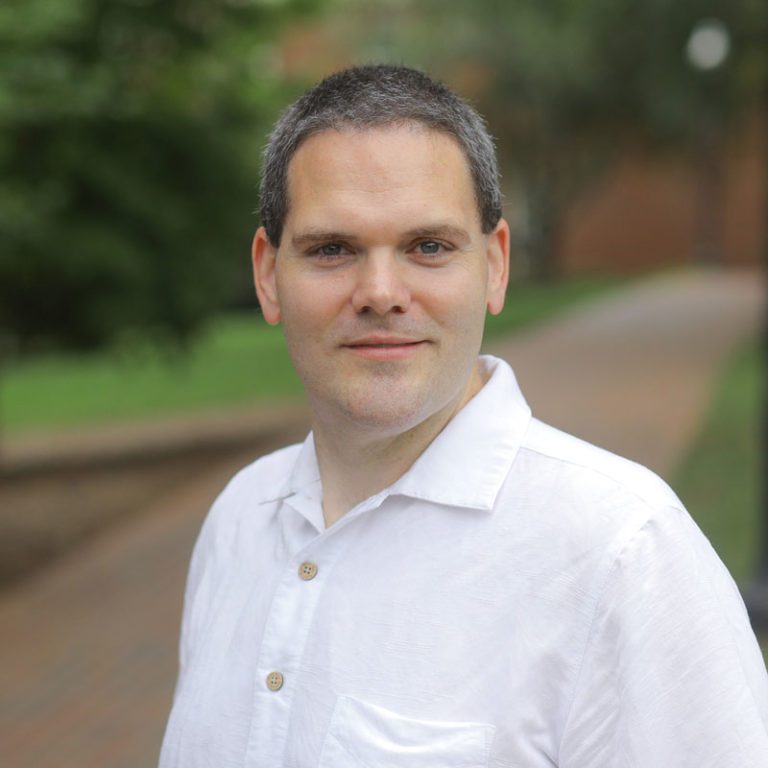
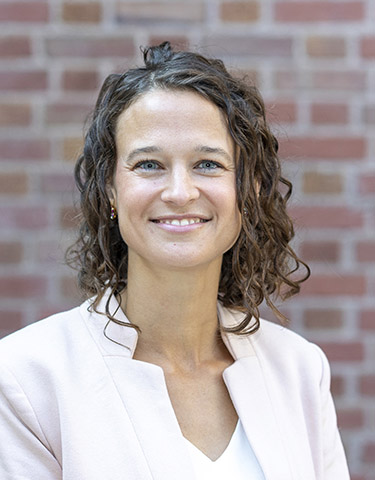
Maria Garcia De La Banda Garcia is a Professor at Monash University's Faculty of Information Technology with over 25 years of academic experience. She currently serves on the ARC College of Experts and is Co-Chair of the Monash-Woodside FutureLab. Her research spans: Combinatorial optimization techniques Program analysis and transformation Constraint programming languages Bioinformatics applications She has secured over $34M in research funding and serves as Area Editor for the Journal of Theory and Practice of Logic Programming. Awards include: Logan Fellowship (1997) International Constraint Modelling Challenge (2005) Monash Honour Roll (2021)
Marco Guarnieri is an Associate Research Professor at the IMDEA Software Institute in Spain. He holds a PhD in Computer Science from ETH Zurich (2017), an MSc in Computer Engineering from the Università degli Studi di Bergamo (2012), and a BSc in Computer Engineering from the same institution (2010). His research focuses on secure hardware-software co-design, microarchitectural side-channel attacks, and formal methods for verifying security guarantees. Education : PhD in Computer Science, ETH Zurich (2017) MSc in Computer Engineering, Università degli Studi di Bergamo (2012) BSc in Computer Engineering, Università degli Studi di Bergamo (2010) Research Interests : Security, privacy, programming languages, formal methods, and microarchitectural security. His work emphasizes practical systems for securing sensitive data storage and processing, with recent focus on leakage contracts for open-source processors and automated testing of secure speculation countermeasures. Awards : Best Paper Award at CCS 2024 for work on leakage contracts for RISC-V processors Distinguished Paper Award at CCS 2023 for Spectre attack detection Best Paper Award at S&P 2021 for hardware-software contracts for secure speculation Grants & Advising : He leads a research group at IMDEA, actively mentoring PhD students and postdocs in hardware-software security. His projects include AMuLeT (automated testing of secure speculation) and LeaVe (verifying leakage contracts). Labs/Teams : IMDEA Software Institute’s security research group, focusing on cross-layer hardware-software security solutions.
Iskra Fileva is an Associate Professor at the University of Colorado Boulder, specializing in moral psychology, philosophy-psychiatry intersections, aesthetics, and epistemology. She holds a Ph.D. from Boston University (2009) and has taught at University of North Carolina at Chapel Hill and University of Michigan prior to joining CU Boulder. Fileva serves as Associate Director of the Center for Values and Social Policy and is currently working on a book manuscript 'Character and Values'. Her research examines: Character fragmentation and psychological foundations of personality Boundaries between character flaws and psychiatric conditions Aesthetic judgment and taste formation Moral testimony and collective governance Her publications consistently explore moral psychology through interdisciplinary lenses, with recent work focusing on virtue ethics, moral testimony, and the philosophy of disgust. Awards include: Character Project's Essay Award (2013) for NYTimes essay 'Character and its Discontents' APA Public Philosophy Op-Ed Prize (2022) for 'What Do We Owe the Dead?' As editor of 'Questions of Character' (Oxford University Press, 2016), she compiled interdisciplinary perspectives on character from leading philosophers and psychologists. She also hosts 'The Philosopher's Diaries' blog at Psychology Today.
Vera Dekkers is a researcher and lecturer at Inholland University, affiliated with the Lectorate Power of Sport and Exercise. Her work focuses on fostering inclusion in sports for youth with disabilities, emphasizing policy development, educational material creation, and cross-cultural collaboration. She leads the SEDY2 project, funded by the EU, which aims to enhance inclusion in mainstream sports clubs through shared best practices. Her research spans qualitative studies on youth perspectives, parent insights, and sports professional attitudes across Finland, Lithuania, Portugal, and the Netherlands. Key contributions include the Inclusion Handbook for Sport Clubs , an Educational Material Toolkit for educators, and multi-lingual publications addressing regional challenges. Vera collaborates with international partners to design tools like the Hobby Finder Tool to increase sports participation. Her work bridges theoretical research with practical implementation, advocating for accessible and inclusive sports environments. Publications highlight themes such as digital accessibility, online focus group methodologies, and the impact of mobile apps on health behaviors. She has contributed to neighborhood-based sport initiatives and policy evaluations, demonstrating a commitment to both academic rigor and real-world application.
Gustav Martinsson is a Professor of Financial Economics at Stockholm University and a Visiting Research Fellow at the Swedish House of Finance (SHoF). He also serves as Project Manager of the Governance research group at Mistra Financial Systems (MFS). His academic career includes a postdoctoral position at the Institute for Financial Research (SIFR) and a Wallander post-doc scholarship (2010–2013). His research focuses on corporate finance, entrepreneurial finance, and the intersection of finance with economic growth. Notably, he explores government policies affecting entrepreneurial firms, financing innovation, and sustainable development. Martinsson has held part-time roles in government commissions, including the Corporate Tax Rate Commission (2011–2014) and the Incentive-Pay Commission (2014–2016). Education: PhD in Economics from KTH Royal Institute of Technology (2010). Teaching experience includes corporate finance courses at both Stockholm School of Economics and KTH. His research has been recognized with awards, including the Highly Commended Financial Times Responsible Business Education Award (2025) and a runner-up in the 2023 edition. His work spans environmental policy impacts, financial market dynamics, and crisis management, with a focus on empirical analyses using large datasets. Awards: Highly Commended Financial Times Award (2025), Runner-up Financial Times Award (2023). Affiliations: Swedish House of Finance, Mistra Financial Systems, SHoF Data Center. Grants & Funding: Multiple government-funded projects on climate policy, innovation financing, and financial systems resilience. Key research themes include the effectiveness of carbon pricing, the role of transparency in innovation, and the macroeconomic implications of financial sector growth. His publications often bridge theoretical frameworks with real-world policy applications, emphasizing empirical rigor and policy relevance.
Dr. Mirosław Szyndera is an Assistant Professor and Lecturer at the Department of Recreation and Wellness, Faculty of Tourism and Recreation, Academy of Physical Education in Kraków. He holds a Master's in Movement Rehabilitation and a PhD in Physical Culture Sciences from the University of Physical Education in Katowice. His expertise spans post-exercise restitution, biological regeneration, kinesiology, and sports medicine. He has extensive practical experience as a wellness specialist and rehabilitation expert, including a notable tenure with the international road cycling team of the 'Krupiński' club (1988-1991). He is certified as a Ski Instructor (PZN/SiTN), Windsurfing Instructor, and holds multiple roles in Polish sports associations. His research focuses on fatigue management, body regeneration mechanisms, and the impact of physical activity on health. He has taught subjects such as Biological Regeneration, Psychosomatic Recovery, Classic Massage Techniques, and Health Tourism Management. His publications explore topics like scoliosis therapy, student lifestyle analysis, and recreational patterns in Podhale regions. He previously led the inter-faculty wellness specialization program at his institution for a decade.
Pierre-Alain Fouque is Professor of Computer Science at University of Rennes 1 and Institut Universitaire de France, specializing in cryptographic security and cryptanalysis. His research spans post-quantum algorithms, symmetric cryptosystem vulnerabilities, and practical side-channel attacks. Key research areas: Lattice reduction algorithms Blockchain-based supply chain security White-box cryptography implementations Automated cryptanalysis tools Current projects include ANR SafeTLS improving TLS protocol security and Brutus project analyzing authenticated ciphers. Supervises doctoral candidates working on lattice-based signature schemes, side-channel resistant implementations, and cryptographic reverse-engineering. Extensive program committee service includes CRYPTO, Eurocrypt, CCS, and CHES conferences. Research contributions include Falcon lattice-based signatures and key recovery attacks on multivariate schemes.
Gabriele Ferrario is a Senior Assistant Professor (fixed-term) in the Department of Philosophy at the University of Bologna, specializing in the History of Science and Technology (PHIL-02/B). His research focuses on medieval alchemy, Jewish scientific traditions, and the Cairo Genizah manuscripts. He examines intersections between religious practices, textual transmission, and material science in Islamicate and Jewish contexts. Key research areas include: (1) alchemical manuscripts from the Cairo Genizah, (2) pseudo-attributed scientific texts (e.g., Pseudo-Rāzī), (3) Maimonides' medical writings, and (4) technical terminology in medieval scientific lexicons. His work bridges Arabic, Hebrew, and Latin sources to explore knowledge transmission across cultural and religious boundaries. Recent publications analyze alchemical taxonomies, Judaeo-Arabic scientific texts, and the material culture of medieval medicine. His research highlights the role of Cairo Genizah manuscripts in reconstructing lost scientific traditions. Current projects include revising critical editions of alchemical texts and studying medical practices in medieval Egyptian Jewish communities.
Matteo Martelli is a Full Professor in the History of Science at the University of Bologna’s Department of Philosophy. He specializes in the history of alchemy and medicine across ancient, Byzantine, Syriac, and Arabic traditions. His research focuses on textual transmission, cross-cultural knowledge exchange, and the socio-technical practices of pre-modern science. Education: PhD in History of Science (2012, University of Pisa); PhD in Classics (2007, University of Bologna); MA in Classics (2002). He has held positions at institutions including the Berlin-Brandenburgische Akademie der Wissenschaften and the Humboldt-Universität zu Berlin. Research Interests: Graeco-Egyptian alchemy, Byzantine medical compendia, Syriac translations of scientific texts, and the reception of ancient alchemical knowledge. He directs the ERC-funded project ‘AlchemEast’ exploring alchemy’s origins from 1500 BCE to 1000 AD. Major Achievements: Awarded prizes for his book on Pseudo-Democritus’ alchemical texts (2011, 2013). Editor for Archives Internationales d’Histoire des Sciences and Ambix . Organized over 20 international conferences on topics like late antique pharmacology and medical knowledge transfer. Grants & Leadership: ERC Consolidator Grant (2017–2022), Rita Levi Montalcini Grant nominee, and co-applicant on multiple international grants. Serves on editorial boards and scientific committees globally.
Michael Godfrey is a Professor at the University of Waterloo's David R. Cheriton School of Computer Science, affiliated with the Department of Electrical and Computer Engineering. His work focuses on software engineering, empirical studies of software systems, code review practices, and open-source software ecosystems. He holds a Ph.D., M.Sc., and B.Sc. from the University of Toronto (1997, 1988, 1986). Research interests include software evolution, mining software repositories, provenance tracking, code duplication analysis, and program comprehension. He actively explores how developers interact with code reviews, documentation systems, and modern CI/CD pipelines. Recent work investigates app store software ecosystems, Bash scripting vulnerabilities, and deep learning API testing. Publications span empirical studies of developer communities (e.g., Stack Overflow analysis), architectural teaching methods, and automated testing techniques like documentation-guided fuzzing. His work bridges theory and practice, addressing challenges in large-scale systems maintenance and developer productivity. Leverages tools like Elasticsearch for repository mining and explores anomaly detection in software development. Engaged in curriculum development for software architecture education and has contributed to conferences like MSR and ICSE.
Prof. Alexander Werth is a Professor of German Linguistics and Chair holder (W3) at the University of Passau since 2021. He previously held acting professorships at the Universities of Augsburg, Bonn, and Erlangen-Nuremberg (2017–2021). His academic career includes a Dr. phil. (2009) and extensive research roles at the German Language Atlas Research Center (2007–2021) and the Institute for the German Language in Mannheim (2006). His research focuses on German dialectology, historical linguistics (especially the Early Modern period), syntax-morphology interactions, phonology, and psycholinguistics. Key projects include the Fränkisches Wörterbuch , the PhonD2 database, and the DFG-funded Freie und gebundene Variation in der Grammatik (2023–2026). He also leads the DFG-funded Graduiertenkolleg Dynamik und Stabilität sprachlicher Repräsentationen (2022–2025) and collaborates on international double-degree programs in German Studies, such as with the University of South Bohemia and the Turkish-German University Istanbul. Werth serves as Founding Dean of Studies in the Faculty of Humanities and Cultural Studies (since 2023), chairs and holds deputy roles in multiple examination committees, and is Managing Director of the Department of Linguistic Research at the Institute for Cultural Research of Eastern Bavaria and Neighbouring Regions (since 2024). He contributes to editorial roles for journals like Journal of Language Variation and Sociolinguistics and has authored/co-authored monographs on topics like intra-individual variation and phonological word structure. His academic involvement extends to professional associations, including the Society for the History of Germanic Language (Board member), the Franconian Dictionary Project Committee, and the Association for University German Studies in Bavaria (Deputy Chairman since 2024).
Chris Alvin is an Associate Professor at Furman University with expertise in artificial intelligence applications, particularly in drug discovery and educational technology. His research spans computational biology, algorithm design for geometric problems, and AI-driven educational tools. Alvin has published extensively on machine learning approaches to pharmaceutical challenges including COVID-19 therapeutics. Current projects develop knowledge graph frameworks for drug-target affinity prediction and lattice-based systems for geometry education. His work appears in computational chemistry, AI, and computer science education venues. Alvin integrates industry experience from software engineering roles into his academic research and teaching methodology.
Miha Škerlavaj is a Professor at the School of Economics and Business , University of Ljubljana, and an Adjunct Professor at the Department of Leadership and Organizational Behaviour , BI Norwegian Business School. He also serves as Vice-dean for Research at the University of Ljubljana. His academic work bridges proactive organizational behaviors , creativity , and innovation management with a focus on knowledge hiding , organizational learning , and non-technological innovations . PhD from School of Economics and Business, University of Ljubljana Teaches in PhD, MBA, executive, and master’s programs Authored/co-authored in journals like Academy of Management Journal , Harvard Business Review , and Leadership Quarterly His research emphasizes leadership in complex environments , particularly post-heroic leadership , where shared accountability and collective achievement are prioritized. Articles like " Knowledge Hiding in Organizations " (2023) and " Fueling the Creative Spark " (2023) explore how leadership styles and relational dynamics shape employee creativity. He also investigates organizational change through narrative-based processes and prosocial sensegiving, as seen in " Giving Sense to Change Leadership " (2023). While his scientific awards are implied through "several national and international honors and awards," specific accolades are not named. His teaching includes managing knowledge work, creativity, and organizational network analysis , with a focus on multilevel management issues. Collaborative projects with international organizations and invited talks on HRM and innovation management highlight his thought leadership.
Stephan Reinhold is a Professor in the Department of Marketing and Tourism Studies at Linnaeus University's School of Business and Economics. He holds a PhD in Management (Dr.oec.) from the University of St. Gallen (HSG), Switzerland (2014). His research focuses on strategic decision-making, business models, destination management, and sustainability in tourism and transportation industries. He teaches courses such as Business Models for Sustainability and supervises PhD students in Business Administration. Education: PhD in Management (Dr.oec.), University of St. Gallen (2014) Research Interests: Business models and innovation in tourism and transportation Flow-based destination management and governance Climate change adaptation in SME tourism enterprises Reflexivity and decision-making processes Post-pandemic tourism development His work bridges theoretical frameworks with practical applications, emphasizing sustainability and stakeholder collaboration. Key Projects: InKuiS: Innovative Cultural Entrepreneurship in Collaborative Research Post-Pandemic Tourism Development Social Cues for Environmental Messaging in Tourist Destinations Editorial Roles: Journal of Destination Marketing & Management (Elsevier), Journal of Travel Research (Sage), and others. Active in conferences like AOM, EGOS, and NEST. Grants & Labs: Leading projects funded by Linnaeus University, focusing on AI/big data for destination sustainability and post-pandemic tourism resilience. Part of the Tourism Research Group.
Greta Wagner is an Adjunct Professor of Business Administration at Wisconsin Lutheran College (WLC), combining academic teaching with her career as a Tax Professional at Client First Tax and Wealth Advisors. She holds a B.A. in Business Administration and Accounting, and an M.S. in Professional Accounting, both from the University of Wisconsin-Milwaukee. Her expertise focuses on taxation, including corporate and flow-through entity tax returns, income tax projections, financial statement compilation, and reconciliation processes. She teaches ACC 336 (Income Taxation) and ACC 436 (Advanced Taxation), emphasizing real-world application through her professional experience. Her teaching philosophy prioritizes student development into professionals through practical knowledge transfer. Licensed as a Certified Public Accountant (CPA), Wagner bridges academic theory with industry practices, enriching student learning through her eight+ years of tax and accounting experience in the professional sector.