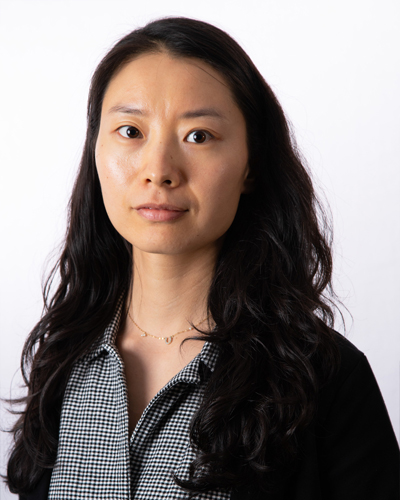
Associate Professor Fiona O'Leary is affiliated with the University of Sydney's Sydney Nursing School and the Discipline of Nutrition and Dietetics within the Faculty of Medicine and Health. She holds membership in the Charles Perkins Centre's Brain and Body, Biology of Ageing, and Healthy Food Systems research nodes. Her academic qualifications include a PhD, BSc (Hons), and a Graduate Diploma in Nutrition and Dietetics. Her research focuses on dietary assessment, malnutrition, public health nutrition, and evidence translation for healthy ageing. Notable projects include the NHMRC-funded Maintain Your Brain dementia prevention trial and secondary analysis of the Australian National Nutrition Survey. She also leads initiatives in Tanzania and Zambia addressing childhood malnutrition through poultry and crop integration. Current research projects: Maintain Your Brain trial, dietary patterns analysis, COPD supplementation, and food security initiatives in Africa. Dr. O'Leary has 33 peer-reviewed publications, primarily in ageing and dementia. She teaches Medical Nutrition Therapy and coordinates the Dietetic Professional Studies course. Awards include Advanced Accredited Practising Dietitian status. Her advisory roles include associate supervision of PhD and MPhil students in nutrition and cognitive function, oral health, and biomarker panel development.
Prof. Helen Blank is a Professor leading the Multisensory Perception Group and the Prediction in Communication Lab at the Institute for Systems Neuroscience, University Medical Center Hamburg-Eppendorf. Her work focuses on understanding how sensory information is integrated and predicted in contexts like speech perception and face recognition. She holds a Marie Curie Fellowship for her research on prior information's role in human communication. Fluent in German, English, and French, she contributes to experimental medicine and systems neuroscience. Her research spans predictive coding, neuroimaging, and clinical applications in Parkinson’s and developmental disorders. Education: Not explicitly stated in text, inferred as advanced degrees in neuroscience or related fields. Her research interests emphasize multisensory integration, predictive processing in speech and vision, and the neural bases of perception. Recent articles explore topics such as pupil responses to auditory surprise, face expectation hierarchies, and audio-visual speech processing. Awards include the Marie Curie Fellowship supporting her predictive communication work. She leads interdisciplinary teams within the Center for Experimental Medicine, advancing knowledge on perceptual mechanisms and their clinical implications.
Dr. Shirley Coleman is a distinguished Professor at Newcastle University Business School, specializing in the application of statistical methods to business and industrial problems. With over two decades of academic contributions, she has established herself as a leading expert in statistics, data science, and quality management within industrial contexts. Her research interests span several interconnected domains: Statistics, Data Science, Business Analytics, Quality Management, Six Sigma methodologies, Kansei Engineering (which integrates emotional design with product development), Industrial Statistics, Design of Experiments, Predictive Maintenance, and Customer Lifetime Value analysis. Coleman's work consistently bridges theoretical statistical concepts with practical business applications across diverse sectors including healthcare, manufacturing, facilities management, and digital marketing. Analysis of her recent publications reveals a strong focus on the evolving role of statistics in the digital age, particularly examining how statistical expertise contributes to AI development, Industry 4.0 initiatives, and data-driven business transformation. Her work demonstrates increasing emphasis on customer analytics, predictive maintenance modeling, and the strategic implementation of data science in small and medium enterprises. Coleman's publications frequently address methodological challenges while maintaining strong practical relevance for industry practitioners. Throughout her career, Coleman has been actively involved with the European Network for Business and Industrial Statistics (ENBIS), contributing to the development and dissemination of statistical methods in business contexts. Her collaborative approach is evident in numerous co-authored publications across disciplines, demonstrating her ability to work effectively with researchers from diverse fields including engineering, healthcare, and business management. Her advisory work appears focused on helping organizations implement statistical thinking in business processes, with particular attention to small and medium enterprises seeking to leverage data analytics for competitive advantage. Though specific grant information isn't detailed in the available publications, her extensive industry-focused research suggests significant engagement with practical business problems and industry partnerships. Dr. Coleman has made substantial contributions to the field through her leadership in professional organizations, particularly ENBIS, where she has helped shape the discourse around industrial statistics and their business applications. Her work on Kansei Engineering demonstrates innovative approaches to integrating human factors with statistical methods for product development.
Gerry Dozier is the Charles D. McCrary Eminent Chair Professor in the Department of Computer Science and Software Engineering at Auburn University's College of Engineering. His research focuses on artificial intelligence, computational intelligence, cybersecurity, identity science, and cyber identity protection. He leads initiatives like the Center for Artificial Intelligence and Cybersecurity Engineering and contributes to Alabama's AI policy through the state commission. Dr. Dozier holds a Ph.D. from North Carolina State University and has pioneered work in adversarial machine learning, biometric security, and low-resource language NLP. Education: Ph.D. Computer Science, North Carolina State University (Raleigh) M.S. Computer Science, North Carolina State University (Raleigh) B.S. Computer Science, Northeastern Illinois University Research Themes: Combines AI with cybersecurity to address modern digital challenges. Specializes in adversarial attacks/defenses, biometric authentication systems, and ethical NLP applications in multilingual contexts. Active in developing tools for sentiment analysis in underrepresented languages and mitigating biases in automated systems. Impact: Spearheaded Auburn's AI@AU initiative with lecture series and forums. Collaborates internationally on facial recognition, malware detection, and medical AI applications like bacterial vaginosis diagnosis. His work bridges theoretical CS advancements with real-world security and ethical considerations. Labs/Teams: Directs Auburn's AI & Cybersecurity Engineering Center and contributes to interdisciplinary groups like the McCrary Institute for Cyber and Critical Infrastructure Security.
Ke Yang serves as Assistant Professor in the Department of Computer Science at the University of Texas at San Antonio (UTSA), College of Sciences. He founded and leads the Cohort for AI REsponsibility (CAREAI) initiative, while also holding core faculty positions in UTSA's School of Data Science and MATRIX (AI Consortium for Human Well-being). Education: Ph.D. from New York University (supervised by Prof. Julia Stoyanovich) Research Focus: Dr. Yang's work centers on AI trustworthiness and responsibility , with specialized expertise in algorithmic fairness, data ethics, and human-centered data science. His research addresses critical challenges including Large Language Model hallucinations, explainable AI frameworks, and algorithmic accountability mechanisms. He actively develops open-source tools like Ranking Facts and FairDAGs to implement these principles in practical systems. Publication Trends: Recent work (2020-2025) demonstrates evolving focus from foundational fairness in ranking systems toward generative AI safety and medical applications. His publications show strong theoretical grounding combined with real-world implementation, particularly in privacy policy analysis and medical question-answering systems using causal inference techniques. Scientific Recognition: Pearl Brownstein Doctoral Research Award (NYU Tandon School of Engineering) CDS Postdoctoral Fellowship (University of Massachusetts) Professional Development: Dr. Yang has secured significant research funding including the CDS Postdoctoral Fellowship at UMass. His graduate work at NYU and Drexel University was fully supported by research assistantships, demonstrating consistent funding acquisition throughout his career. He actively contributes to academic community building through conference tutorials and educational initiatives. Research Ecosystem: He directs CAREAI at UTSA while collaborating across institutional boundaries through MATRIX and the School of Data Science. Previously, he contributed to the Data systems Research for Exploration, Analytics, and Modeling (DREAM) lab and Center for Data Science at UMass Amherst, maintaining continuity in his responsible AI research trajectory.
Daniel J McAllister is an Associate Professor at the National University of Singapore Business School , Department of Management and Organisation. His research explores interpersonal relationships in organizations , with particular emphasis on social emotions , trust dynamics , and their implications for organizational citizenship behavior and ethical leadership . He has published extensively in top-tier journals such as Academy of Management Review, Journal of Applied Psychology, and Academy of Management Journal. Academic Focus: Organizational Behavior, Trust/Distrust, Workplace Emotions Teaching Interests: Technical Knowledge, Practical Application, Ethical Decision-Making Key Courses: MNO2007 (Undergraduate), BMA5004A (MBA), MNO6012A (PhD) McAllister's research spans workplace underdog trajectories, awe in leadership, abusive supervision, and cross-cultural management in China. His work examines how emotions like contempt, envy, and schadenfreude influence organizational outcomes. He emphasizes creating a safe learning environment that integrates theoretical knowledge ( technical ), real-world application ( practical ), and ethical judgment ( wisdom ). McAllister has received consistently positive student feedback for his engaging teaching style , with recent evaluations highlighting improvements in time management and practical relevance. He distributes course materials post-class and avoids rote memorization, prioritizing conceptual understanding. His 2025 work on workplace underdogs and awe-driven leadership continues to shape contemporary organizational theory.
Lars-Olof Johansson is a Senior Lecturer at Halmstad University's School of Information Technology, specializing in Informatics. His research focuses on digital service innovation from a learning perspective, emphasizing collaboration between diverse stakeholders and knowledge exchange in innovation processes. He is actively involved in the LeaDS research program (Learning in a Digitalized Society) and teaches in the bachelor's program 'Digital Business Development' and the master's program 'Digital Learning'. His work bridges educational methodologies and technological innovation, particularly in fostering environments where interdisciplinary learning drives successful digital service creation. Notably recognized as an 'Excellent Teacher in Informatics,' he integrates practical experience with academic rigor, contributing to both scholarly discourse and pedagogical advancements. Key projects include SESMA (2019-2021), exploring sustainable mobility solutions, and ongoing collaborations in boundary practices for ICT innovation. His publications span topics like knowledgeability in digital service innovation, ethics in autonomous systems, and collaborative learning frameworks. His awards highlight his pedagogical impact, while his research addresses systemic challenges in innovation through interdisciplinary approaches.
Maria Rosa Rifà Ros is a Lecturer in the Department of Nursing and Physiotherapy at the Blanquerna School of Health Sciences, Universitat Ramon Llull. She is an active researcher with 52 publications spanning from 1993 to 2025 and maintains an h-index of 5 with 46 citations. Her research expertise centers on nursing education, primary health care, nursing diagnosis, and immigrant health. Dr. Rifà Ros employs diverse methodologies including cross-sectional studies, qualitative approaches, and systematic reviews to investigate nursing student experiences, pandemic impacts on healthcare education, and health disparities among vulnerable populations. Her fingerprint analysis shows strong focus areas in Nursing Diagnosis (100%), Immigrant Health (94%), and Nursing Student experiences (68%). Recent publications reveal a consistent trajectory examining healthcare inequalities, clinical education environments, and pandemic-related transformations in healthcare delivery. Her work spans both Spanish and international contexts with particular attention to vulnerable populations and healthcare system responses to emerging challenges. Dr. Rifà Ros has been actively involved in the Global Research on Wellbeing (GRoW) project as a researcher from 2017-2021 and continues in this role from 2022-2025, funded by the Agència de Gestió d'Ajuts Universitaris i de Recerca (AGAUR). This sustained research commitment demonstrates her dedication to advancing knowledge in health and wellbeing. She has mentored numerous nursing students and collaborated extensively with colleagues including Carrillo Alvarez, Rodríguez Monforte, Salinas Roca, and Costa Tutusaus on research examining healthcare systems, student experiences, and health inequalities. As a key member of the Global Research on Wellbeing group, Dr. Rifà Ros collaborates with an interdisciplinary team across various health science disciplines, contributing her nursing expertise to address complex health challenges through research that directly impacts clinical practice and healthcare education.
John Joseph is a Professor of Strategy and Entrepreneurship at the Paul Merage School of Business, University of California, Irvine. His research and teaching focus on organizational design, strategic decision-making, innovation, and the integration of artificial intelligence in business strategy. He is actively involved in editorial leadership as Senior Editor at Organization Science and former editor of the Journal of Organization Design . PhD, Kellogg School of Management, Northwestern University MBA, Wharton School, University of Pennsylvania John Joseph's research centers on how organizations can be designed to enhance innovation, strategic planning, and decision-making. His work explores the role of attention, feedback mechanisms, and AI in shaping strategic outcomes. He investigates organizational structures in technology and healthcare sectors, with a focus on platform ecosystems and community-driven innovation. His recent publications and research projects examine AI-enabled organizational transformation, mobile industry innovation, and healthcare system design. The body of work shows a strong trend toward behavioral strategy, integrating cognitive and structural perspectives to understand how firms adapt and grow. 2017 Ralph Gomory Award, Industry Studies Association John Joseph has advised numerous organizations including General Electric, Samsung Electronics, Molina Healthcare, and UC Irvine. He has received multiple teaching awards and has taught in full-time, part-time, and executive education programs at Kellogg, Duke, and UC Irvine. He serves as Chair of the Behavioral Strategy Interest Group of the Strategic Management Society. His research is supported by engagements with centers such as the Center for Health Care Management and Policy and the Beall Center for Innovation and Entrepreneurship at UCI.
Prof. Dr. Lisa Schipper is Professor of Development Geography at the University of Bonn since 2023. Her research focuses on understanding vulnerability to climate change in the Global South and the barriers and enablers for adaptation. She has extensive experience working across Central and South America, East Africa, and South and Southeast Asia. Her educational background includes: BSc in Environmental Science (1997) from Brown University MSc in Environment and Development (2000) from the University of East Anglia PhD in Development Studies (2004) from the University of East Anglia Post-Doctoral Fellowship at the International Water Management Institute in Colombo, Sri Lanka (2005-2007) Post-Graduate Certificate in Teaching and Learning in Higher Education (Oxford, 2021) Prof. Schipper's research centers on socio-cultural dimensions of vulnerability to climate change, including gender, culture, and religion, as well as structural issues related to power, justice, and equity. Her work has demonstrated how understanding underlying development factors driving vulnerability is vital for identifying effective adaptation strategies, yet this knowledge is often absent in adaptation planning. She has made significant contributions to understanding maladaptation - when adaptation efforts inadvertently increase vulnerability rather than reduce it. Her research also explores how religious beliefs influence hazard perceptions and adaptation actions. As Co-ordinating Lead Author of Chapter 18 ("Climate Resilient Development Pathways") for the IPCC Working Group II Sixth Assessment Report, she has helped shape global understanding of how adaptation and mitigation must be integrated with sustainable development efforts. Prof. Schipper's scientific contributions have been recognized with several honors, including: Winner of Emerald Literati Network Award for Outstanding Paper (2017) Selected as one of Climate Policy's "Top 20 Papers" Ida Pfeiffer Visiting Professor appointment (2022/23, declined) She is actively engaged in mentoring and welcomes students interested in supervision, particularly those with research questions related to climate change adaptation and development. Prof. Schipper serves on the editorial boards of Climate and Development (where she is Co-Editor), World Development Perspectives, and Global Transitions - Health. She also participates in several advisory roles including the Science Committee of the Adaptation Futures Conference 2023 and the CLARE Advisors Group. Prof. Schipper leads the AG Schipper research group at the University of Bonn, which focuses on three main areas: Adaptation and Development (examining how development projects can best promote transformative climate change adaptation), Equity and the Politics of Knowledge (understanding how knowledge informs climate resilient development decisions), and Culture and Risk (exploring how clashing worldviews create barriers for policy making and knowledge sharing).
Dr. Simon Thomas is a Senior Lecturer at the University of South Wales' South Wales Business School, specializing in Pilgrimage, Memorial & Tourism Studies. He leads the Doctor of Business Administration program and oversees the Tourism, Hospitality and Events Group. With a PhD in Pilgrimage Tourism (2013), he has extensive experience in doctoral supervision and external examining roles across UK institutions. Education: PhD Pilgrimage Tourism, University of South Wales (2013) MA Heritage Tourism, University of Wales Trinity College Carmarthen (2005) PgCert Education (Tourism), University of Wales Newport (2003) BA (Hons) Tourism & Leisure Management, University of Glamorgan (2001) Research Interests: Focused on pilgrimage tourism, heritage tourism innovation, and sustainable tourism development. His work bridges academic inquiry with practical applications, including a Knowledge Transfer Partnership (KTP) with the Cardiff Story Museum rated 'outstanding' by the KTP Board. Key themes include secular pilgrimage dynamics, autoethnographic methodologies, and cultural identity in tourism. Publications: Over 20 peer-reviewed articles and book chapters, including studies on Lourdes pilgrimage, Welsh heritage entrepreneurship, and thanatourism. Recent work explores NGO engagement strategies and digital tourism innovation. Awards: Fellow of the Higher Education Academy (FHEA) Outstanding KTP Board Rating (Cardiff Story Museum collaboration) 4* ABS Full Paper Award Advising & Grants: Supervised over 25 doctoral candidates across business and tourism disciplines. Active in external examining roles (e.g., Coventry University, Bishop Grossteste University) and curriculum design. Led projects funded by the Welsh Government and private sector partnerships. Labs & Teams: Research Lead for the Tourism, Hospitality and Events Group, fostering interdisciplinary collaboration on tourism policy, innovation, and cultural heritage.
Professor Mustapha Sheikh is Chair in Islamic Thought and Muslim Societies at the School of Languages, Cultures and Societies, University of Leeds. He is Co-Director of the Iqbal Centre for Critical Muslim Studies and actively contributes to interdisciplinary research on Muslim intellectual history, Islamic law, and contemporary socio-political issues affecting Muslim communities globally. His educational background includes a DPhil in Theology and Religion from the University of Oxford, an MSt in the Study of Religions (Oxford), a BA in Arabic and Islamic Law, and a BSc in Project Management from University College London. His academic journey reflects a deep integration of traditional Islamic scholarship and rigorous Western academic training. Sheikh's research is centered on two interrelated strands: first, Islamic intellectual and legal history, particularly revivalist and reformist movements in the Ottoman and early modern Islamic world; second, the socio-scientific analysis of contemporary Muslim societies, including Islamophobia, Islamic finance, food and water security, and decolonial studies. His seminal work Ottoman Puritanism and Its Discontents (Oxford University Press, 2016) has significantly reshaped scholarly understanding of the Qadizadeli movement and Taymiyyan influences in Ottoman thought. He is a pioneer in advancing Critical Muslim Studies as a post-Orientalist framework for rethinking Islamic tradition. His recent publications reveal a strong interdisciplinary trend, combining Islamic legal theory with social justice, environmental security, and political economy. Themes such as intersectional oppression, decoloniality, and ethical finance recur across his work, reflecting a commitment to justice-oriented scholarship. He frequently collaborates with scholars across disciplines and geographies, particularly in the Global South. Member, British Society for Middle Eastern Studies (BRISMES) Member, British Association of Islamic Studies (BRAIS) Board Member, (In)Justice International Professor Sheikh actively supervises PhD students and has successfully guided over 20 doctoral candidates to completion. His research is supported by collaborations across institutions, including the University of Punjab (where he is a Visiting Professor) and Harper Adams University. He is currently co-editing volumes on global injustice and Islamic finance, and working on a book about healing racial trauma from an Islamic psycho-spiritual perspective. He leads and participates in numerous research groups, including the Arabic History group and the Centre for Religion and Public Life, and is deeply involved in public engagement through talks, webinars, and podcasts addressing Islamophobia, women’s rights under Shari’a, and decolonising knowledge.
Tim Schweisfurth is a Full Professor in Organizational Design and Collaboration Engineering at the School of Management Sciences and Technology, Hamburg University of Technology (TUHH), Germany. He previously served as an Associate Professor in High-Tech Business at the University of Twente and in Technology and Innovation Management at the University of Southern Denmark. He received his PhD from TUHH and his venia legendi from the Technical University of Munich (TUM). His research focuses on innovation and entrepreneurship, with key themes including digital and technology-driven innovation, idea generation and evaluation, and distributed and collaborative innovation. His work has been published in leading journals such as Research Policy , Strategic Management Journal , Organization Science , and Creativity and Innovation Management . His recent publications reflect a strong trend in understanding how organizational structures, digital platforms, and user involvement influence innovation outcomes. Topics include internal crowdfunding, idea evaluation biases, user innovation, and Industry 4.0 adoption in SMEs, indicating a deep engagement with both theoretical and applied aspects of innovation management. Editor-in-Chief, Creativity and Innovation Management Advisory Editor, Research Policy He has collaborated with major companies such as Siemens, Osram, Audi, Panasonic, and EWE in both research and consulting. He has advised on innovation strategies and digital transformation, contributing to real-world applications of his research. His work has not explicitly mentioned grants, but his extensive industry collaborations suggest strong project funding and engagement. He leads the research group on Organizational Design and Collaboration Engineering at TUHH, which investigates collaborative innovation, digital platforms, and employee-driven innovation. The team engages in both empirical and theoretical research, often using large datasets and field experiments to understand innovation dynamics in organizations.
Shiho Satsuka is an Associate Professor of Anthropology at the University of Toronto, Canada, specializing in sociocultural anthropology with regional expertise in East Asia and North America. Her research focuses on the politics of knowledge production , cultural translation of nature , and capitalism-environment relations . She is currently developing a book project titled The Charisma of Wild Mushrooms: Undoing the Long Twentieth Century , examining how mushroom science can destabilize industrial modernity. Ph.D. in Anthropology (University of California, Santa Cruz, 2004) Her ethnographic work spans: Transnational translation of ecological knowledge in Japanese tourism (book: Nature in Translation , Duke 2015) Satoyama forest revitalization movements Matsutake mushroom's role in reimagining interspecies coexistence Comparative studies of Canadian multiculturalism and Japanese coexistence models Publications demonstrate trends in: Multispecies entanglements Environmental knowledge pluralism Decolonizing scientific frameworks Ontological multiplicity in cultural analysis Anthropocene ethnography Collaborative research methodologies Awards and grants include: SSHRC Insight Grant (2016-2022) for Matsutake Worlds research Carson Fellowship (2012) at Rachel Carson Center She supervises graduate students in areas of environmental anthropology and science studies while maintaining a collaborative research network across Japan, North America, and Europe.
Nicole Latulippe is an Associate Professor in the Department of Human Geography at the University of Toronto Scarborough (UTSC), with a cross-appointment in the Department of Physical and Environmental Sciences. She focuses on Indigenous environmental governance, anticolonial research methodologies, and relational geographies through community-engaged practices. Ph.D. in Geography from University of Toronto M.A. in Geography from University of Guelph B.A. (Hons) in Geography from Nipissing University Her research explores Indigenous knowledge systems in environmental governance, settler-Indigenous relations in urban spaces, and decolonizing methodologies. Current projects include land/water stewardship in Toronto, treaty citizenship, and pathways to just futures through Indigenous placemaking. Her recent publications emphasize fisheries policy alternatives rooted in Indigenous relationality, co-creative research with Toronto Islands communities, and Indigenous-led environmental governance frameworks. Themes include knowledge sovereignty, colonial-disruption strategies, and land-based relational ethics. Scientific Awards: Connaught New Researcher Award (2022), SSHRC Insight Development Grant (2021), SSHRC Connection Grant (2019) Community Collaborations: Nipissing First Nation fisheries stewardship, Indigenous Environmental Justice Project, Mississaugas of the Credit First Nation partnerships