Janike Kampevold Larsen serves as Professor at the Institute of Urbanism and Landscape Architecture, Oslo School of Architecture and Design (AHO). Her academic work bridges landscape architecture, cultural geography, and environmental humanities with a primary focus on Arctic territories and communities. Her research interests span Arctic landscape studies and cultural geography Environmental humanities and geologic time perception Landscape democracy and participatory design Indigenous knowledge systems and place attachment theory Urban-rural interfaces in northern contexts She approaches landscapes as dynamic cultural constructs where geological time, human practices, and environmental change intersect. Analysis of her recent publications reveals consistent thematic threads across Arctic regions (Svalbard, Vardø, Kola Peninsula), with particular attention to Material cultures of northern landscapes Temporal dimensions in environmental change Indigenous and local knowledge systems Climate adaptation through cultural practices Political dimensions of Arctic territories Her work often employs poetic and phenomenological approaches alongside empirical research. Larsen actively leads the Future North research initiative, which includes collaborative projects across Arctic regions. Her work with the Community Water Systems project demonstrates practical engagement with sustainable resource management. She has co-edited significant publications including Future North: The Changing Arctic Landscapes (Routledge, 2018) and multiple regional studies on Svalbard, Kola, and Vardø. Her scholarly activities include editorial work for Journal of Landscape Architecture and contributions to major handbooks on Arctic environments and landscape teaching. She frequently collaborates with Peter Hemmersam and Andrew Morrison on Arctic research projects.
S. Max Edelson is a Professor of History at the University of Virginia and Co-Director of the UVA Early American Seminar. He specializes in British America, cartography, and plantation societies. Ph.D., Johns Hopkins University (1999) M.A., Johns Hopkins University (1997) M.Litt., University of Oxford (1994) B.A., Cornell University (1992) Deep Springs College, Class of 1988 Edelson’s research focuses on space, place, and cultural exchange in colonial North America and the Caribbean. His work bridges traditional historical analysis with digital humanities, particularly through the development of MapScholar , a digital tool for historic map visualization. His scholarship examines how colonial powers like Britain used cartography to assert control over contested territories, including Jamaica, Carolina, New York, and Pennsylvania. His publications highlight trends in imperial geography and colonial mapping , with keywords spanning British Empire , Cartography , and Digital Humanities . Sub-fields include Eighteenth-century Atlantic World , Geospatial colonial control , and Historical GIS . Scientific recognition includes: John Lyman Book Award for U.S. Maritime History (2017) Finalist, George Washington Book Prize (2018) NEH Digital Implementation Grant (2012-2016) ACLS Digital Innovation Fellowship (2010) Edelson has advised numerous graduate students whose work spans topics like Indigenous diplomacy , disability in early America , and British imperial crises . He has also secured grants for digital projects such as MapScholar , which received NEH and Mellon Foundation support.
Jason Braasch serves as an Associate Professor in the Department of Learning Sciences at Georgia State University's College of Education and Human Development. He maintains an active affiliation with the university's Adult Literacy Research Center, contributing to interdisciplinary initiatives focused on literacy development. His academic preparation includes: Ph.D. in Psychology, University of Illinois at Chicago (2009) M.A. in Psychology, University of Illinois at Chicago (2006) B.A. in Psychology, University of Wisconsin-Milwaukee (2001) Dr. Braasch's research program centers on critical thinking processes during internet-based reading, with particular emphasis on source evaluation mechanisms and individual differences in learning. His work investigates how readers assess content credibility, navigate conflicting information, and develop strategies for discerning trustworthy sources. This research has direct implications for educational interventions aimed at improving digital literacy across diverse learner populations. Analysis of his recent publications (2021-2025) reveals consistent focus on multiple source comprehension, particularly regarding health-related controversies (e.g., vaccination debates), belief-driven processing biases, and contextual factors affecting conflict detection. His scholarship demonstrates increasing integration of epistemic cognition frameworks with practical classroom applications, showing how intellectual humility and mindset theories influence information processing. Dr. Braasch has secured external research funding from prominent organizations including the Spencer Foundation and Facebook, supporting his investigations into internet literacy and critical reading development. As an active researcher within the Adult Literacy Research Center, he contributes to advancing evidence-based practices for literacy instruction while mentoring graduate students in learning sciences methodology and research design.
Sara Waters is an Associate Professor in the Department of Human Development at Washington State University , affiliated with the College of Agricultural, Human, and Natural Resource Sciences (CAHNRS) . Her work bridges developmental psychology, trauma-informed interventions, and health equity, with a focus on marginalized populations. Education : Ph.D. in Human Development from the University of California, Davis (2011); M.S. in Child Development from UC Davis (2008); B.A. in Psychology and English from UC Berkeley (2003). Research Interests include children’s emotional/physiological self-regulation, child-caregiver attachment, biological pathways linking early adversity to health outcomes, and culturally grounded interventions for trauma-exposed families. She integrates Indigenous worldviews and strengths-based approaches in her work with Native communities. Scientific Contributions span child development, emotion regulation, and health disparities. Recent publications emphasize Indigenous infant mental health, antiracism interventions, and pandemic impacts on marginalized populations. Her work often employs interdisciplinary and community-participatory frameworks. Current Funding : Multiple grants, including a $350,000 Robert Wood Johnson Foundation award for Indigenous trauma interventions and a WSU Grand Challenges Grant ($4.1M) for health equity research. Community Engagement : Collaborates with Pacific Northwest Tribes, Burmese communities, and Micronesian Islander organizations to address intergenerational trauma and promote resilience.
Anthony Cognato is a Professor, Collection Director, and Graduate Advisor in the Department of Entomology at Michigan State University (MSU). He holds a PhD from the University of California, Berkeley (1998), MS and BS from SUNY College of Environmental Science & Forestry (1995, 1992). His research focuses on insect systematics, particularly bark beetles, with an emphasis on biodiversity, taxonomy, and collection stewardship. His work has been continuously funded since 2003, supporting student training and revitalizing the A.J. Cook Arthropod Research Collection. Education: PhD - University of California, Berkeley (1998) MS - SUNY College of Environmental Science & Forestry (1995) BS - SUNY College of Environmental Science & Forestry (1992) His research program includes studies on bark beetle systematics, their ecological roles as decomposers, and their economic impacts as pests. He collaborates internationally, advancing taxonomic knowledge and diagnostic tools for beetles. He teaches graduate courses in insect taxonomy and spider biology, emphasizing learner-centered pedagogy. Notably, he received the CANR Research Fellow Career Award and leads efforts to digitize entomological collections globally. He has advised 16 graduate students and served on numerous committees. His recent work includes studies on ambrosia beetle symbionts, invasive species, and phylogenetic analyses of beetle diversity. Collaborations span institutions like Texas A&M, Imperial College London, and international research networks like LepNet. Awards: CANR Research Fellow Career Award His lab, the Holistic Insect Systematics Laboratory, integrates fieldwork, molecular methods, and morphological analysis to address taxonomic challenges and ecological impacts of insects.
Jennifer Singh is Associate Professor and Associate Chair in Georgia Tech's School of History and Sociology, specializing in medical sociology and science/technology studies. Her research examines autism through lenses of genomic science, health disparities, and social determinants, with particular focus on racial/class inequities. She co-founded the Break the Cycle of Autism Disparities Working Group to address service gaps across the lifespan. Singh investigates structural barriers to autism diagnosis/services using mixed methods, including narrative analysis of marginalized caregivers. Her award-winning book Multiple Autisms analyzes the sociopolitical evolution of autism genetics research. She teaches courses on sociology of medicine, race/science, and health inequities. Her publications demonstrate consistent focus on: intersectional health disparities, ethical dimensions of genetic research, patient advocacy dynamics, and critical analyses of diagnostic systems. Recent work emphasizes community-engaged solutions to structural inequities.
Dr. Dustin Z Nowaskie is a Clinical Assistant Professor of Psychiatry and Behavioral Sciences at the University of Southern California (USC), affiliated with USC Counseling and Mental Health (CMH). They hold a nonbinary identity and focus on LGBTQ+ healthcare equity, particularly gender-affirming care and systemic disparities. Dr. Nowaskie completed their undergraduate studies in Neuroscience, Psychology, and Biology at USC before attending Indiana University School of Medicine for medical training and residency. As a clinician-educator, they prioritize improving LGBTQ+ health outcomes through OutCare Health, a nonprofit providing education, resources, and mentorship for healthcare providers. Their work includes developing online training programs and national directories of LGBTQ+-competent providers. Research interests encompass healthcare disparities, provider cultural competency, and the intersectionality of race, gender, and sexual orientation in healthcare access. Publications highlight systemic barriers faced by LGBTQ+ communities, including medical gaslighting and lack of gender affirmation. Their articles analyze disparities across specialties like pediatrics, dermatology, and surgery, emphasizing the need for standardized education. Current initiatives include evaluating provider directories and promoting equitable care for nonbinary individuals. Dr. Nowaskie’s efforts extend to pandemic impacts on LGBTQ+ populations and faith-based identity challenges, with a focus on actionable solutions through digital platforms and community engagement. They collaborate with multidisciplinary teams to advance person-centered dementia care and LGBTQ+ health equity.
Annemieke Witte is a Researcher at the Vrije Universiteit Amsterdam , affiliated with the Faculty of Behavioural and Movement Sciences and working within the Clinical Child and Family Studies department. She is also associated with APH - Mental Health and LEARN! - Child Rearing research groups. Research Interests : Her work focuses on Secure Base Script knowledge in attachment theory, including its heritability and transmission across generations. She investigates emotional development in individuals with intellectual disabilities , particularly those with autism spectrum disorder , and evaluates interventions like video-feedback to improve parenting practices. Her studies often incorporate oxytocin and vasopressin in understanding attachment security and fatherhood . Scientific Awards : Excellence in Attachment Research in an Outstanding Dissertation Award (Society for Emotion and Attachment Studies, 2024) Email : a.m.witte@vu.nl
Annette ten Teije is a Full Professor at Vrije Universiteit Amsterdam (VU Amsterdam) with appointments in the Faculty of Science, Artificial Intelligence department, the Network Institute, and the Knowledge Representation and Reasoning research group. Her academic career spans several decades with a strong focus on the intersection of artificial intelligence and healthcare applications. Professor ten Teije's research interests center around Knowledge Representation, particularly in medical contexts. Her work bridges multiple domains including Semantic Web technologies, Ontology development, Neuro-Symbolic AI systems, and Clinical Decision Support. She has made significant contributions to the formalization of clinical guidelines, handling multimorbidity in healthcare systems, and developing design patterns for hybrid AI systems. Her research integrates machine learning with symbolic reasoning to create explainable and reliable AI systems for healthcare applications. Analysis of Professor ten Teije's recent publications reveals a strong trajectory toward neuro-symbolic AI approaches that combine the strengths of neural networks and symbolic reasoning. Her work increasingly focuses on explainability in medical AI systems, with numerous publications on feature selection, interaction detection, and narrative-based understanding. She has developed frameworks for shared understanding in multi-agent systems and created design patterns specifically for medical decision-making contexts. Her research consistently bridges theoretical AI advances with practical healthcare applications. Professor ten Teije has supervised 5 PhD theses as indicated in her academic profile and teaches courses including "AI in Health" and "Machine Learning and Reasoning for Health" for the 2024-2025 academic year. Her academic contributions extend to editorial work, including serving as editor for conference proceedings and special issues on Knowledge Representation for Healthcare Processes.
Associate Professor Julie Willems is affiliated with Monash University's Faculty of Medicine Nursing and Health Sciences, specializing in Health Sciences Education. Her roles include Associate Editor for the Journal of University Teaching and Learning Practice and Guest Editor for Frontiers in Medicine. She has held executive positions in professional associations like ODLAA and ASCILITE, contributing to policy development and cross-country collaboration. Education: PhD in E-learning, Monash University (2004–2010) MEd(Honours) in Education, University of New England (1998–2004) GDipEd, Charles Sturt University (2002–2003) BA (Double Major) in Humanities & Communication, Murdoch University (1984–1992) Certificate in Nursing (General), Westmead Hospital (1979–1982) Research Interests: Her work focuses on educational equity, technology-enhanced learning, disaster resilience, and medical education. She explores how social media and online tools impact disaster recovery, rural health, and mental health interventions. Her projects include the 'i-Survive' initiative on mobile use in emergencies and the 'National GP Supervisor Curriculum' to enhance medical training. Awards & Grants: Lionel Allen Award (2004) Cultural Safety & Supervisor CPD Grant ($285,506, 2020) i-Survive Project (auDA Foundation, 2011) RACGP Education Research Grants (2020) Advising & Grants: She mentors in academic development and disaster resilience. Notable projects include 'Transforming pre-vocational medical training' (2021) to bolster rural healthcare workforces. Labs & Teams: Collaborates with institutions like Flinders University (e-Learning Developer) and Eastern Victoria General Practice Training (Manager, Supervisor CPD).
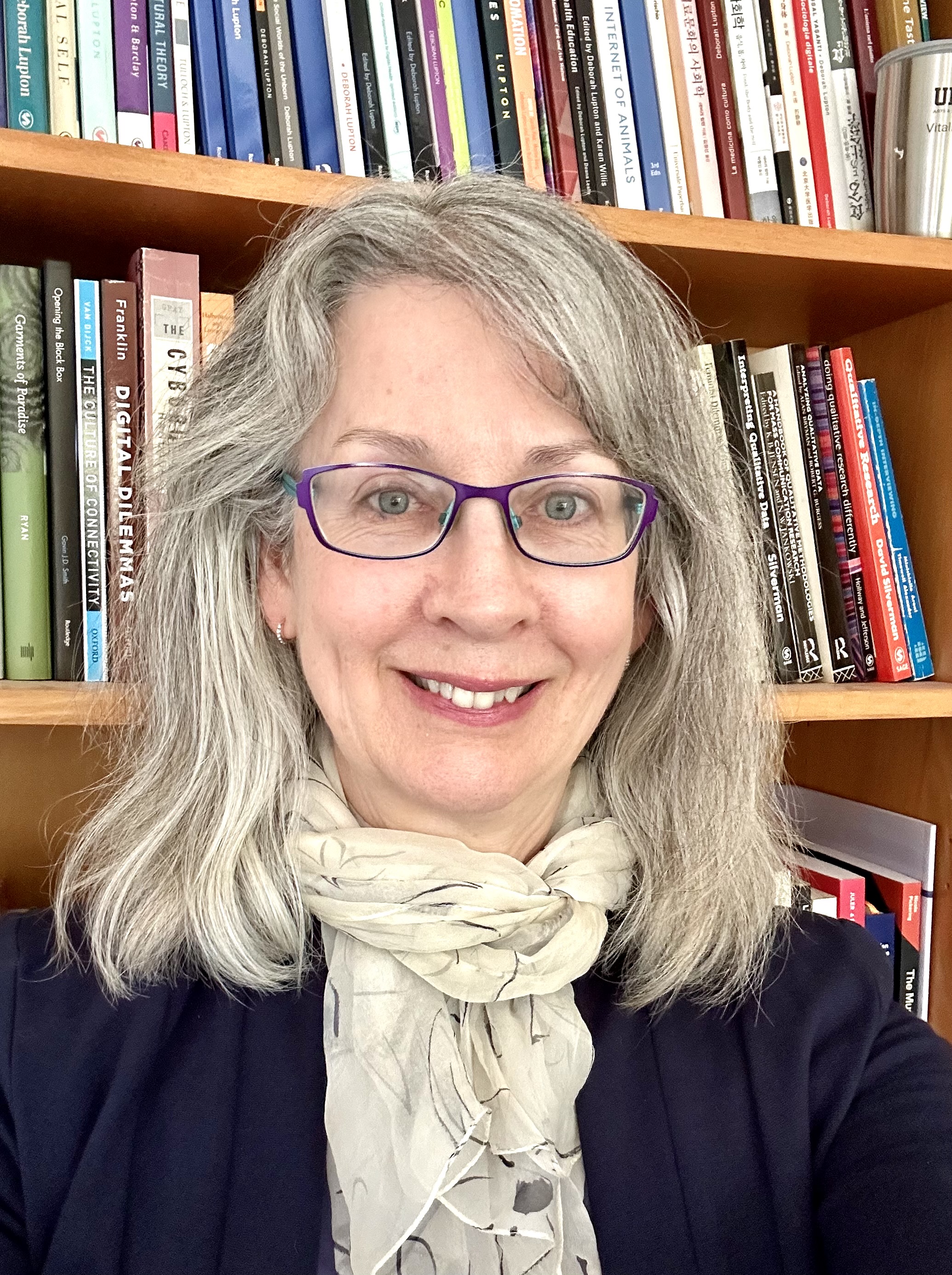
Deborah Lupton is a Professor at UNSW Sydney, holding positions in the Centre for Social Research in Health and the Social Policy Research Centre. She leads the Vitalities Lab and serves as UNSW Node Leader, Health Focus Area Leader, and People Co-Leader for the Australian Research Council Centre of Excellence for Automated Decision-Making and Society (ADM+S). Her expertise spans medical sociology, digital health, public health, and qualitative methods. She has authored/co-authored 20 books and over 240 articles/chapters, including influential works like Self-Tracking, Health and Medicine and Digital Sociology . Education: BA, LittB, MPH, PhD, FASSA, FAHMS, FRSN. She has received prestigious awards such as the 2024 Fellowship from the Australian Academy of Health and Medical Sciences, a 2023 Honorary Doctorate from University of Skövde, and the 2021 Australasian Council of Deans Award. Her research projects include investigations into digitized school health, automated decision-making, and pandemic-related health practices. Grants and Collaborations: Lupton has led/co-investigated numerous grants, including ARC Discovery Projects (2015–2018, 2019–2020), Swedish Foundation grants (2016–2018, 2019–2021), and the Medical Research Future Fund project 'Cardiac AI'. She collaborates internationally with institutions like RMIT, Monash University, and Aarhus University. Research Supervision: Available to supervise postgraduate students in areas of health, digital culture, and sociocultural theory. She emphasizes creative methods in health education and has been involved in projects like 'Creative Approaches to Health Education' and 'Re-humanising automated decision making'.
Associate Professor Lisa Whop is an Associate Professor and Senior Fellow at the National Centre for Aboriginal and Torres Strait Islander Wellbeing Research at the Australian National University (ANU). She holds a BMedSc, MAppEpid, and PhD in Epidemiology. Her research focuses on cervical cancer control, vaccine-preventable diseases, and achieving health equity for Indigenous Australians through an Indigenist research approach. She leads projects including the Centre for Research Excellence on Targeted Approaches to Improve Cancer Services (TACTICS) and an ARC Discovery grant on HPV vaccination uptake among Indigenous adolescents. Her work emphasizes culturally appropriate health interventions, including HPV self-testing and improving cervical screening access. Key achievements include developing the What Matters 2 Adults wellbeing measure and advocating for inclusive health language policies. She has secured significant grants and fellowships, including NHMRC Early Career Research Fellow status. Research Strengths: Epidemiology, Indigenous health systems, policy translation Key Projects: TACTICS, Indigenous HPV Cohort Study, lung cancer screening equity initiatives Her publications address tobacco control, healthcare disparities, and digital surveillance equity. She collaborates widely with Indigenous communities and health organizations to drive evidence-based policy changes.
Dr. Robert A Jenders is a Health Sciences Clinical Professor in the Department of Medicine at the University of California Los Angeles (UCLA) School of Medicine. He serves as a Senior Associate Director for the UCLA Clinical and Translational Science Institute (CTSI), where he coordinates CTSI activity on the Charles Drew University campus. Dr. Jenders also chairs the Healthcare Information Technology Research (HITR) study section of the US Agency for Healthcare Research and Quality (AHRQ) and holds leadership roles on the CTSI Council and Quality and Efficiency Council. His extensive experience bridges clinical medicine and health informatics, with active contributions to biomedical informatics standards development. Dr. Jenders' educational background includes: BS in Computer Science from Marquette University (1984) MD in Medicine from University of Wisconsin (1988) Residency in Internal Medicine from University of Wisconsin (1991) MS in Computer Science from Northeastern University (1993) Fellowship in Medical Informatics from Harvard University/Massachusetts General Hospital (1994) Dr. Jenders' research focuses on the development and application of health information technology standards, particularly in clinical decision support systems, electronic health records, and patient care registries. His work centers on the Arden Syntax standard, FHIR (Fast Healthcare Interoperability Resources), and other healthcare interoperability frameworks. He explores how standardized knowledge representation can improve clinical decision support, data interoperability, and computable knowledge sharing across healthcare systems. His research has significant implications for improving healthcare quality through better information systems and has influenced national standards for health information technology. Dr. Jenders' recent publications demonstrate a consistent focus on healthcare standards, particularly the Arden Syntax for clinical decision support and its integration with modern standards like FHIR. His work spans theoretical exploration of knowledge representation frameworks, practical implementation challenges, and evaluation of standards for clinical decision support. A notable trend is his increasing focus on interoperability between different healthcare information standards and how they can work together to create more effective clinical decision support systems. His research bridges computer science, medical informatics, and clinical practice, with applications across healthcare delivery, research, and quality improvement. Dr. Jenders has received numerous prestigious honors, including: Fellow of the American Medical Informatics Association (2019) Fellow (elected) of Health Level Seven International (2019) Distinguished Poster Award from American Medical Informatics Association (2016) Book of the Year Award from Healthcare Information and Management Systems Society (2012) Fellow (elected) of the American College of Medical Informatics (2005) Book of the Year Award from Healthcare Information and Management Systems Society (2005) Fellow (elected) of the American College of Physicians (2004) As an educator and mentor, Dr. Jenders serves on the KL2 and TL1 programs, advises on the KL2 program, and is a member of the CREST Committee for the Workforce Development program. He also mentors senior medical students at Charles Drew University, which primarily serves African American and Latino students. His research is supported by multiple NIH grants, including the UCLA Clinical Translational Science Institute (UL1TR001881), CDU-CRECD Mentored Postdoctoral Training program (R25MD007610), and the Accelerating Excellence in Translational Science (AXIS) initiative (U54MD007598), where he serves as Co-Investigator on all three projects. Dr. Jenders leverages his leadership role in Health Level Seven International, the premier standards development organization for health information technology, to ensure that his work with the CTSI is fully standards-based. This approach promotes interoperability and generalizability of information system solutions. He assists CTSI units in requirements analysis, data modeling, and system interfaces necessary to build and study the use of information technology infrastructure for collecting laboratory and survey data. His work connects clinical practice with informatics infrastructure to advance translational science.
Angela C. Wolff is a Professor in the School of Nursing at Trinity Western University (TWU), joining in 2018. She holds Affiliated Researcher status at Fraser Health Authority and is a Certified Health Executive with the Canadian College of Health Leaders. Her expertise spans research methodologies, leadership development, and healthcare systems improvement. Wolff’s work bridges clinical practice, education, and research, focusing on nurse retention, workplace culture, and patient-centered outcomes. She earned a PhD in Nursing from the University of British Columbia (2009), an MSN (2003), and a BSN (2000) from McMaster University. Her research addresses practice change, nursing workforce challenges, and the integration of patient-reported outcome measures (PROMs) into clinical care. Wolff’s research portfolio includes leadership roles in major grants, such as the $2.25M National Nurse Residency Program (2022–2027) and the $761K CIHR-funded study on patient-centered health measurement. Her awards include the UBC Centenary Medal (2019) and CRNBC’s Excellence in Research Award (2014). Her teaching spans leadership, knowledge synthesis, and health policy, with courses like NURS 434 (Leadership in Nursing) and NURS 621 (Perspectives on Nursing Leadership). She actively promotes evidence-based practice through interdisciplinary collaborations and knowledge translation initiatives.
Dr. Jane Atterton is a Senior Lecturer and Manager of the Rural Policy Centre at Scotland's Rural College (SRUC). She holds a PhD from the University of Aberdeen and has over 20 years' experience researching rural development, policy analysis, and community resilience. Her work bridges academia and policy, focusing on rural economies, demographic change, and evidence-based policymaking. Key roles include managing the Scottish Government's Strategic Research Programme on communities and wellbeing, leading projects on rural poverty, climate change impacts, and circular economy initiatives. She co-leads the Land-use for Net Zero Hub and advises Defra's Academic Panel and the Scottish Government's Rural Communities Liaison Group. Teaching responsibilities include modules on rural development and policy engagement at both undergraduate and postgraduate levels. She has supervised numerous PhD students and contributes to policy briefings, conferences, and parliamentary engagements. Notable projects include evaluations of rural proofing strategies, gender pay gaps, and international land ownership models. Her research emphasizes applied methodologies: large-scale business surveys, qualitative interviews, and participatory workshops. Current priorities include addressing financial hardship in rural areas, adapting to climate change, and building resilient rural economies through community wealth initiatives.