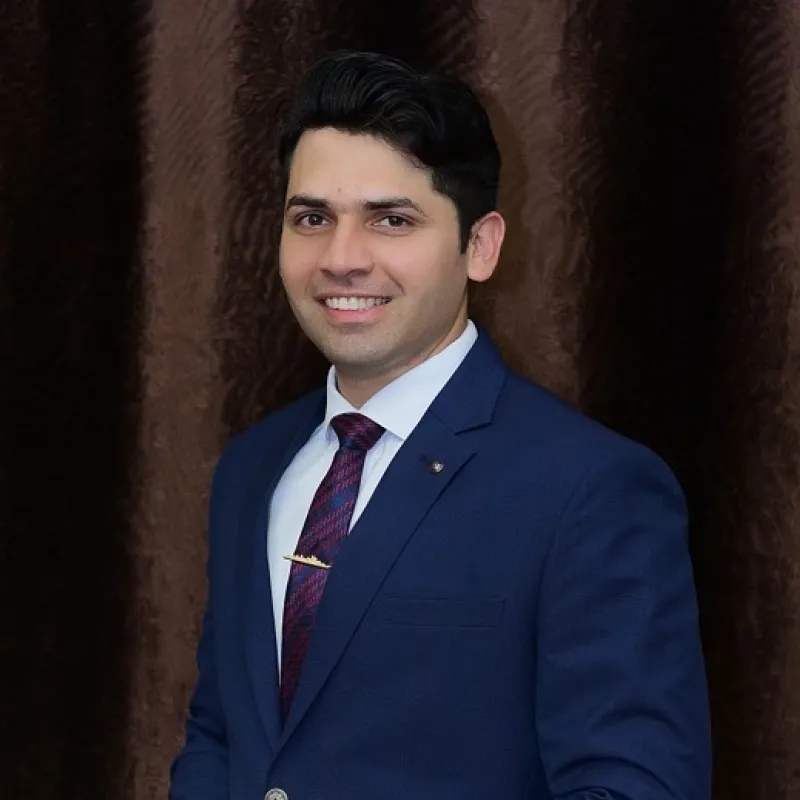
Adeel Tariq is a Post-Doctoral Researcher at the Industrial Engineering and Management department of LUT School of Engineering Sciences , Lappeenranta University of Technology, Finland. He completed his Ph.D. (2019) and MBA (2014) at the School of Management , Asian Institute of Technology, Thailand. Research Focus: Technology and innovation management, digital transformation, sustainable development, knowledge management, and leadership studies. Peer Review: Active reviewer for journals including Leadership & Organization Development Journal , Journal of Intellectual Capital , and European Journal of Innovation Management . Collaborations: Regular co-author with Waqas Tariq, Muhammad Saleem Sumbal, and Marko Torkkeli on topics like digital governance, fintech, and SME sustainability.
Lorin M. Hitt serves as the Zhang Jindong Professor of Operations, Information and Decisions at the University of Pennsylvania's Wharton School. His distinguished career spans multiple domains at the intersection of information technology, economics, and business strategy. As a leading scholar in IT productivity and innovation, he maintains an active research agenda while teaching undergraduate and graduate courses in information systems and data analysis. Professor Hitt's research interests focus on the relationship between information technology and productivity, with particular emphasis on complementary factors such as organizational design and human capital that affect the value of IT investments. His current work explores the economics of IT labor mobility, enterprise software contracting, recommender systems' influence on consumer behavior, measurement of intangible assets, and pricing information goods. His research increasingly examines IT deployment in healthcare settings and the role of the IT workforce in relation to issues like offshoring and the H1-B visa program. His research publications demonstrate consistent contributions to top-tier journals, with recent work analyzing how data analytics mitigates post-IPO innovation decline, digital capital accumulation in superstar firms, and the relationship between analytics skills and firm productivity. His publication record shows sustained scholarly output across multiple domains of information systems research. Best Paper Runner-up – Management Science, 2014 Best Paper – Information Systems Research, 2013 Multiple Wharton Excellence in Teaching Awards (2003, 2007-2008, 2011) David Hauck Award for Distinguished Teaching, 1999 National Science Foundation Career Grant Recipient, 1998 Lindback Award for Distinguished Teaching, 1998 Professor Hitt teaches multiple courses including OPIM101 (Introduction to OPIM), OPIM105 (Data Analysis in VBA and SQL), OPIM469 (Information Strategy and Economics), and OPIM955 (Doctoral Seminar in IS Economics). His teaching focuses on information systems management, economics, data analysis, and advanced analytical methods. Beyond academia, he consults on IT outsourcing agreements and IT investment evaluation, and occasionally serves as an expert witness in technology-related litigation.
Dr. Shirley Coleman is a distinguished Professor at Newcastle University Business School, specializing in the application of statistical methods to business and industrial problems. With over two decades of academic contributions, she has established herself as a leading expert in statistics, data science, and quality management within industrial contexts. Her research interests span several interconnected domains: Statistics, Data Science, Business Analytics, Quality Management, Six Sigma methodologies, Kansei Engineering (which integrates emotional design with product development), Industrial Statistics, Design of Experiments, Predictive Maintenance, and Customer Lifetime Value analysis. Coleman's work consistently bridges theoretical statistical concepts with practical business applications across diverse sectors including healthcare, manufacturing, facilities management, and digital marketing. Analysis of her recent publications reveals a strong focus on the evolving role of statistics in the digital age, particularly examining how statistical expertise contributes to AI development, Industry 4.0 initiatives, and data-driven business transformation. Her work demonstrates increasing emphasis on customer analytics, predictive maintenance modeling, and the strategic implementation of data science in small and medium enterprises. Coleman's publications frequently address methodological challenges while maintaining strong practical relevance for industry practitioners. Throughout her career, Coleman has been actively involved with the European Network for Business and Industrial Statistics (ENBIS), contributing to the development and dissemination of statistical methods in business contexts. Her collaborative approach is evident in numerous co-authored publications across disciplines, demonstrating her ability to work effectively with researchers from diverse fields including engineering, healthcare, and business management. Her advisory work appears focused on helping organizations implement statistical thinking in business processes, with particular attention to small and medium enterprises seeking to leverage data analytics for competitive advantage. Though specific grant information isn't detailed in the available publications, her extensive industry-focused research suggests significant engagement with practical business problems and industry partnerships. Dr. Coleman has made substantial contributions to the field through her leadership in professional organizations, particularly ENBIS, where she has helped shape the discourse around industrial statistics and their business applications. Her work on Kansei Engineering demonstrates innovative approaches to integrating human factors with statistical methods for product development.
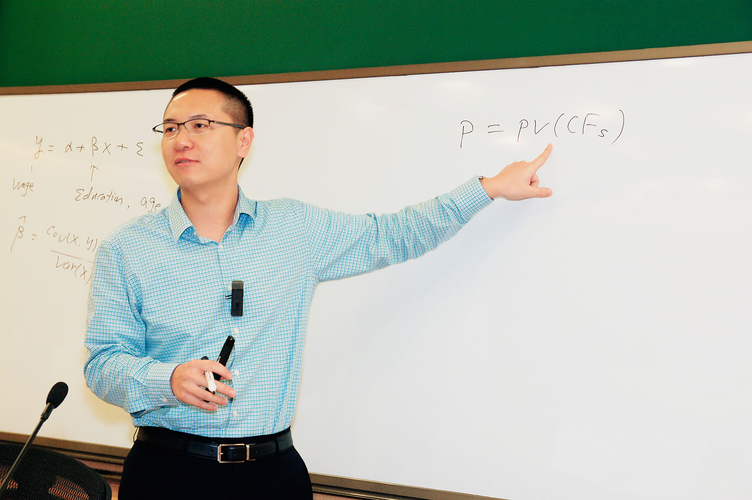
Xuan Tian is the JD Capital Chair Professor of Finance at PBC School of Finance, Tsinghua University, where he has been actively contributing to academic research and teaching since at least 2014. His institutional affiliation is evident through his university email address (tianx@pbcsf.tsinghua.edu.cn) and his extensive publication record representing Tsinghua University as his primary academic institution. Professor Tian's research interests center on theoretical and empirical corporate finance and entrepreneurial finance, with primary focus areas including Venture Capital, Corporate Innovation, Mergers and Acquisitions, Labor Economics, and Payout Policy. His scholarly work demonstrates a consistent trajectory exploring how financial markets, institutions, and policies influence corporate innovation and entrepreneurial activities, with particular attention to Chinese market dynamics and global comparative perspectives. Analysis of his recent publication trends reveals a growing emphasis on the intersection of technology, information, and finance, with increasing attention to patent systems, innovation ecosystems, and the impact of digital transformation on traditional financial markets. His work frequently examines how market participants process information and how institutional arrangements affect innovation outcomes. Jensen Prize (2nd prize) of Journal of Financial Economics Jensen Prize (1st prize) of Journal of Financial Economics Professor Tian has presented his research at numerous prestigious conferences including the American Finance Association (AFA), Western Finance Association (WFA), and National Bureau of Economic Research (NBER) programs. His teaching portfolio includes Corporate Finance for Master's students and Ph.D. Seminars on Advanced Topics in Finance, demonstrating his commitment to both research and academic mentorship. His publications have been featured in prominent outlets including the Harvard Law School Forum on Corporate Governance and Financial Regulation, indicating significant impact on both academic and practitioner communities.
Sarah E. Stein is an Associate Professor and Deloitte Foundation Faculty Fellow in the Department of Accounting and Information Systems at Virginia Polytechnic Institute and State University (Virginia Tech). She serves as Director of the Ph.D. Program within the Pamplin College of Business. Her academic journey includes a Ph.D. from the University of Missouri, a B.S. and M.S. in Accounting from Truman State University, and CPA licensure in Colorado. Prior to academia, she worked as an audit manager at Deloitte in Denver. Education: Ph.D., University of Missouri; B.S. and M.S., Truman State University; CPA (Colorado) Roles: Deloitte Foundation Faculty Fellow, Director of Ph.D. Program Dr. Stein’s research focuses on auditor expertise, corporate governance, auditing networks, and financial reporting challenges. Her work has been published in top journals like The Accounting Review and Auditing: A Journal of Practice & Theory . She received the 2019 Best Paper Award in Issues in Accounting Education and the 2020 Innovation in Auditing Education Award for her data visualization audit case. Her recent articles (2023–2025) highlight themes such as audit committee responsibilities, CFO-audit partner dynamics, and small accounting firm strategies. Her teaching includes graduate auditing courses and PhD seminars. Research trends in her articles emphasize audit quality, governance evaluation, and emerging technologies in auditing. She actively contributes to professional standards through commentaries on PCAOB releases. Awards: 2019 Best Paper Award, 2020 Innovation Award, Deloitte Doctoral Fellowship Dr. Stein advises the Ph.D. program and collaborates with industry on audit innovation. Her lab focuses on auditing education and case development, reflecting her commitment to bridging academic research and practical application.
Alessandra Maria Paola Broccolini is an Associate Professor at the Department of Social and Economic Sciences (DISSE), Sapienza University of Rome. She specializes in cultural anthropology, with a focus on intangible cultural heritage, ecomuseums, and urban/rural territorial studies. Since 2016, she has led the Italian Society for Museography and Demo-Ethno-Anthropological Assets (SIMBDEA) and coordinates national research projects like PRIN 2022 on local museums and PRIN 2020 on marginal Italian territories. Current affiliations: Sapienza University of Rome, Ecole Française de Rome [2021-2026] Research themes: Identity politics, festivals/rituals, traditional knowledge, migration-heritage intersections Key projects: Ecomuseo Casilino Ad Duas Lauros, UNESCO cultural heritage nominations Fieldwork: 5-year study in Naples' Pallonetto district (1994-1999), Bolsena Lake fisheries, Irpinia carnivals Collaborations: ICCD, Regione Lazio, Universidad de Huancayo (Peru) Her publications address heritage regimes in Italy, UNESCO's 2003 Convention implementation, and ethnographic case studies on Mediterranean festivals, urban ecomuseums, and agricultural biodiversity. She teaches Cultural Anthropology and Anthropology of Territory at Sapienza's Faculty of Political Science, Sociology, and Communication.
Pardis Pishdad is an Associate Professor and Graduate Program Director in the School of Building Construction at Georgia Institute of Technology’s College of Design. She directs the Smart Built Environment Eco-System (Smart Bees) Laboratory, focusing on integrating cyber-physical systems, digital twins, and innovative project delivery methods (e.g., IPD, Flash Tracking) for sustainable built environments. Her research bridges technology adoption, trust-building in construction contracts, and supply chain optimization. Education: PhD, Environmental Design and Planning (Virginia Tech) Master’s Degrees: Civil Engineering (Virginia Tech), Design Studies in Project Management (Harvard), Architecture (University of Tehran) Bachelor’s in Architectural Engineering (Azad University of Shiraz) Research Interests: Her work emphasizes sustainable construction practices using IoT, BIM, and blockchain. Key areas include lifecycle cost analysis, lean construction, and smart building technologies. She explores trust dynamics and collaboration in construction projects through game theory and process optimization. Recognition: 2018 ENR Top 20 Under 40 Professionals 2016 CII National Outstanding Researcher Award 2020-2022 Georgia Tech Provost Teaching Learning Fellow Advisory Roles: Academic Advisor for CII’s Supply Chain Management Community, Vice Chair of BuildingSMART’s BIM Forum 5D Taskforce. Formerly advised the Construction Management Association of America’s Board (2016–2018). Industry Collaboration: Partnerships with Turner Construction, GDOT, and VDOT. Research on Flash Tracking and blockchain has been integrated into industry practices. Labs & Teams: The Smart Bees Lab pioneers cyber-physical systems for smart buildings, exploring AI-driven solutions and sustainable construction frameworks.
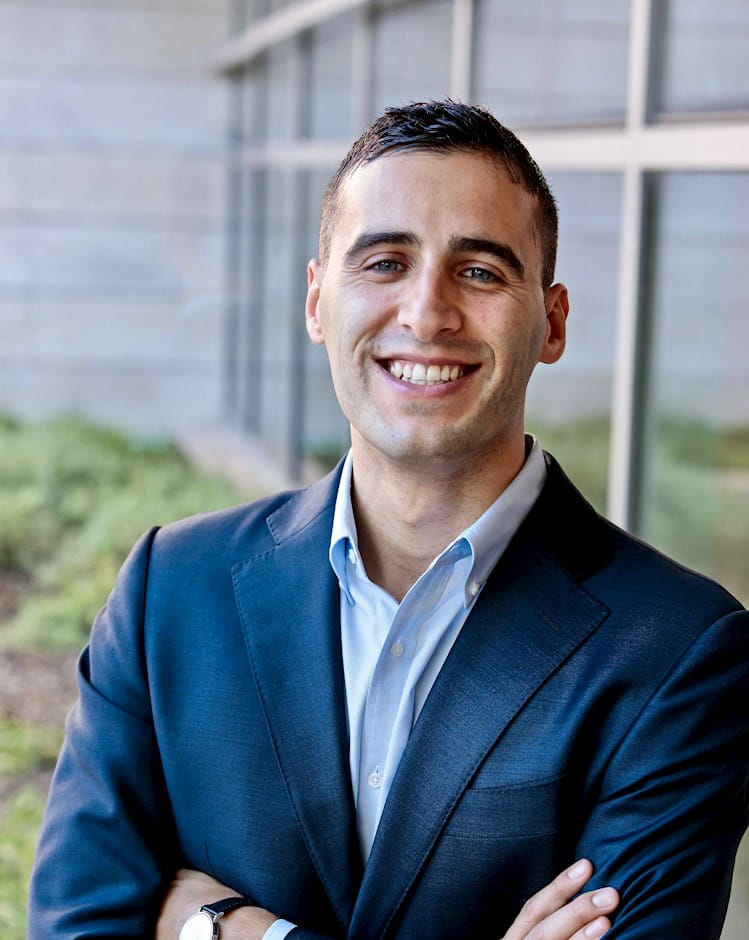
Emanuele Colonnelli is the Joseph L. Gidwitz Professor of Finance and Entrepreneurship at the University of Chicago Booth School of Business. He serves as Board Member and Co-Chair of the Finance Sector at J-PAL, leads the Finance and Entrepreneurship theme at PEDL, co-directs BFI LATAM, and is a Research Associate at NBER, CEPR, and BREAD. He founded the Chicago Booth Entrepreneurship Research Lab and directs Undergraduate Studies in Entrepreneurship at the University of Chicago. Education: PhD in Economics, Stanford University (2018) MSc in Economics, Bocconi University BSc in Economics, University of Siena Visiting Scholar, Pembroke College, Oxford University Research Interests: Colonnelli's work focuses on the intersection of finance, development economics, and political economy. His primary investigations examine high-growth entrepreneurship, government-firm-investor dynamics, venture capital in emerging markets, corruption mechanisms, ESG impact, and bankruptcy systems. His methodology emphasizes large-scale field experiments across 16+ emerging economies. Publication Trends: His research consistently employs field experiments and administrative microdata to analyze institutional impacts on firms. Recent work demonstrates growing emphasis on ESG polarization, public procurement integrity, bankruptcy stigma, and political influences in labor markets – frequently set in Brazil, China, and Uganda. Awards and Honors: 2023 Carlo Alberto Medal (top Italian economist under 40) Poets & Quants 40 Under 40 Best MBA Professors Leadership and Grants: As founding director of the Chicago Booth Entrepreneurship Research Lab, he oversees investigations into global entrepreneurial ecosystems. He secured multiple grants through PEDL, BFI, and J-PAL to support field experiments in developing economies. At Booth, he developed the first MBA course on emerging markets venture capital.
Joseph T. Mahoney is the Caterpillar Chair and Professor of Business Administration at the Gies College of Business, University of Illinois at Urbana-Champaign. He also serves as Associate Director of the Illinois Strategic Organizations Initiative (ISOI). His research focuses on strategic management, organizational economics, and governance theory, emphasizing topics like resource-based views, transaction costs, stakeholder management, and firm growth dynamics. Mahoney is a Fellow of the Strategic Management Society (2013) and an AOM Fellow (2012). Key research interests include Edith Penrose’s growth theory, real options analysis, and the interplay between corporate governance and stakeholder interests. His work bridges classical economic theories with modern organizational challenges, addressing topics such as firm boundaries, strategic decision-making under uncertainty, and institutional frameworks. Recent publications highlight explorations into resource redeployment, stakeholder governance frameworks, and the Penrose Effect. His contributions emphasize theoretical rigor while addressing practical managerial implications. Professional recognitions include leadership roles in academic initiatives and editorial contributions to journals like Strategy Science and Strategic Management Review . His research has been widely cited, with notable works on transaction cost economics and strategic alliances.
Dr. Alan Kirkpatrick is a Senior Lecturer in Financial Accounting and Sustainability at Bournemouth University’s Business School. He holds a PhD in Accounting and Finance (Bournemouth University, 2013), an MSc in Economics from Oxford University (1982), and a BA in Economics from Durham University (1981). A chartered accountant with PwC experience, he is a Fellow of the Institute of Chartered Accountants in Ireland and a Senior Fellow of the Higher Education Academy. Current roles: Research Lead in TRIBUTE (Tax Research Group), Head of Education (2017–2020), Dissertation Supervisor for MSc students. Research focuses on climate change policy, carbon taxation, sustainability reporting, pension accounting, and tax planning impacts on firm value. His work bridges academia and policy, including contributions to UK parliamentary evidence on carbon taxes and a conference on economic inequality. Key interests include the interplay between environmental policies and corporate reporting, tax incentives for innovation, and the Green Economy. Recent publications explore carbon tax implications, pension accounting’s firm value relevance, and tax avoidance analysis. Awards: Margaret Scott Memorial Prize for Economics (1981), ICAEW Southern Committee Member, External Examiner at London Metropolitan University. Teaching spans Financial Reporting, Auditing, and Taxation at undergraduate/postgraduate levels. He advises on PhDs focusing on tax minimization and corporate governance.
Emanuel Sallinger is a Full Professor at TU Wien's Databases and Artificial Intelligence Group and Vice Dean of Academic Affairs for Business Informatics and Data Science. He leads the Knowledge Graph Lab, focusing on scalable knowledge-based systems, reasoning in knowledge graphs, and AI integration. His research spans computational logic, database theory, and blockchain applications. Education: PhD in Computer Science (awarded 'sub auspiciis praesidentis rei publicae'), Master's degrees in Computational Intelligence and Informatics Management, and a Bachelor's in Software and Information Engineering. Research Interests: Knowledge graphs (construction, reasoning, scalability), logic-based systems, AI/ML integration with databases, enterprise architecture modeling, and financial knowledge systems. His work emphasizes practical applications like enterprise modeling, sustainable waste management, and regulatory compliance. Grants & Projects: Lead Vienna Science and Technology Fund (WWTF)-funded Knowledge Graph Lab. Involved in projects like 'Knowledge Graph-driven Tour Management' (sustainability), 'SustainGraph' (waste processing), and 'Enterprise Architecture Knowledge Graphs'. Teaching: Offers courses on Knowledge Graphs, Generative AI, Database Systems, and research methodology. Supervises doctoral and master's students in AI, databases, and knowledge representation. Labs/Teams: Knowledge Graph Lab at TU Wien, collaborating with industry on blockchain-based systems, financial AI, and enterprise architecture frameworks.
Natalia Villanueva-Rosales is an Associate Professor in the Department of Computer Science at The University of Texas at El Paso (UTEP). As Co-Principal Investigator at the NSF-funded Cyber-ShARE Center of Excellence, she leads the iLink Research Group focusing on semantic technologies and smart city initiatives. Ph.D. in Computer Science, Carleton University (2011) M.Sc. in Artificial Intelligence, University of Edinburgh (2005) B.Sc. in Computer Science & Statistics, Universidad Panamericana & CINVESTAV-IPN (2002) Her research bridges Semantic Web technologies with Smart Cities applications, particularly in Water Sustainability and Senior Mobility . Key projects include ontology-based frameworks for freight performance data integration and community-driven smart mobility solutions. Recent publications demonstrate her interdisciplinary approach across Environmental Informatics (2022-2025) and Urban Mobility (2019-2022). She holds editorial and leadership roles in semantic science initiatives while actively mentoring through the ACM-W WICS student group. 2019 HEENAC Education Award 2019 NCWIT Undergraduate Research Mentoring Award Her NSF grants include IRES-1658733 for US-Mexico Smart Cities collaboration and OAC-1835897 for the SWIM water sustainability project. The iLink Research Group under her leadership develops ontological frameworks for cross-domain data integration and trust establishment in collaborative environments.
Rui Pedro Figueiredo Marques is a Professor at the Higher Institute of Accounting and Administration, University of Aveiro, where he teaches Information Systems across technical, bachelor's, master's, and doctoral programs. He serves as course director for the Professional Higher Technical Course in Organizational Informatics and Communication and holds a board position at the Institute of Accounting and Administration, University of Aveiro. As a Full Researcher at GOVCOPP's Competitiveness, Innovation and Sustainability (CIS) group, his work focuses on Information Systems for Business, with recent emphasis on AI, Blockchain, and Business Intelligence applications in auditing and accounting contexts. Marques' academic credentials include a Ph.D. in Computer Science (2014, Universities of Minho/Aveiro/Porto), a Master's degree (2008), and a Bachelor's in Electronics and Telecommunications Engineering (2005, University of Aveiro). He has authored/co-authored over 50 publications, including journal articles, conference papers, and book chapters on topics ranging from ERP systems in auditing to digital transformation in low-density territories. He is editor-in-chief of the International Journal of Business Innovation and actively participates in funded research projects addressing governance, competitiveness, and public policies. His research explores intersections between technology and business practices, with notable contributions to AI in auditing, blockchain's role in financial transparency, and sustainable development frameworks for social economy entities. Notable projects include evaluations of ERP systems' impact on internal audit maturity and frameworks promoting accountability in private social solidarity institutions. Marques' work frequently emphasizes practical applications of technology in audit processes, education, and public sector modernization. He collaborates with institutions like the Portuguese Social Solidarity Sector and has advised on digital transformation strategies for tourism and hospitality industries.
Prof. Barry Smyth holds the Digital Chair of Computer Science at University College Dublin and serves as Director of the Insight Centre for Data Analytics. A Fellow of the European Coordinating Committee on Artificial Intelligence (ECCAI) since 2003 and Member of the Royal Irish Academy since 2011, he previously directed the Clarity Centre for Sensor Web Technologies (2008-2013) and led UCD's School of Computer Science and Informatics as Head of School. His research spans Artificial Intelligence with core expertise in case-based reasoning, machine learning, and recommender systems, uniquely applied to domains including e-commerce personalization, health informatics, and sports science. Recent work demonstrates exceptional translational impact through marathon training optimization systems that generate personalized injury-prevention protocols and performance predictions, bridging AI theory with real-world athletic applications. Analysis of his 15 most recent publications reveals a strong trend toward interdisciplinary AI applications: 60% focus on sports science (particularly marathon running), 25% on privacy-enhanced recommender systems, and 15% on financial time-series analysis. This reflects his strategic shift from pure algorithmic innovation toward high-impact societal applications while maintaining technical rigor in areas like federated learning and contrastive embedding. Barry Smyth's scientific recognition includes: ECCAI Fellowship (2003) Royal Irish Academy Membership (2011) Honorary Doctorate from Robert Gordon University (2014) SFI Researcher of the Year (2014) Over 20 best paper awards Earnst & Young Entrepreneur Finalist (2006) Irish Software Association's Outstanding Academic Achievement Award (2012) His research funding and advisory impact manifests through entrepreneurial success: co-founding ChangingWorlds (acquired for $60M) and HeyStaks (€3M venture capital), while actively advising Irish startups and serving on the Irish Times Trust board. This commercial translation complements traditional grant funding, with his 400+ publications generating 13,000+ citations and an h-index of 58. Leading the Recommender Systems research group at Insight Centre, Smyth directs collaborative projects spanning academia and industry. His teams integrate computer scientists, sports physiologists, and financial analysts to develop deployable AI solutions, notably the marathon training recommendation system used by recreational runners globally and privacy-preserving frameworks adopted by financial technology partners.
A/Pr Steven Goh is an Associate Professor in Mechanical and Mechatronic Engineering at the University of Southern Queensland (USQ), affiliated with the School of Engineering. He holds advanced degrees including a DEng from USQ and is a Fellow of Engineers Australia. His research focuses on engineering education, practice, management, and biomedical engineering. He has received notable awards such as the 2015 Australian Government OLT Citation for Outstanding Contribution to Student Learning and multiple USQ accolades. Education: BEng(Hons) in Manufacturing & Materials (UQ), MBA (Deakin), MProfAcc (USQ), DEng (USQ), and a Diploma in Company Directorship (AICD). Research Interests: Engineering education innovation, sustainable energy systems, and biomedical applications. He actively contributes to professional bodies like the Australasian Association of Engineering Education and serves as Editor (Strategic) for the Australian Journal of Mechanical Engineering. Awards: Multiple teaching excellence awards from USQ (2008-2010) and the 2015 national OLT Citation. Advising/Grants: Not explicitly detailed in text; his roles include supervising students and leading research projects on engineering education and asset management. Labs/Teams: Associated with the Centre for Future Materials and Centre for Health Research at USQ.