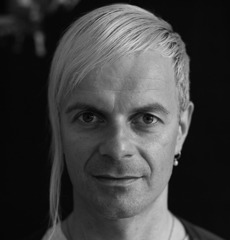
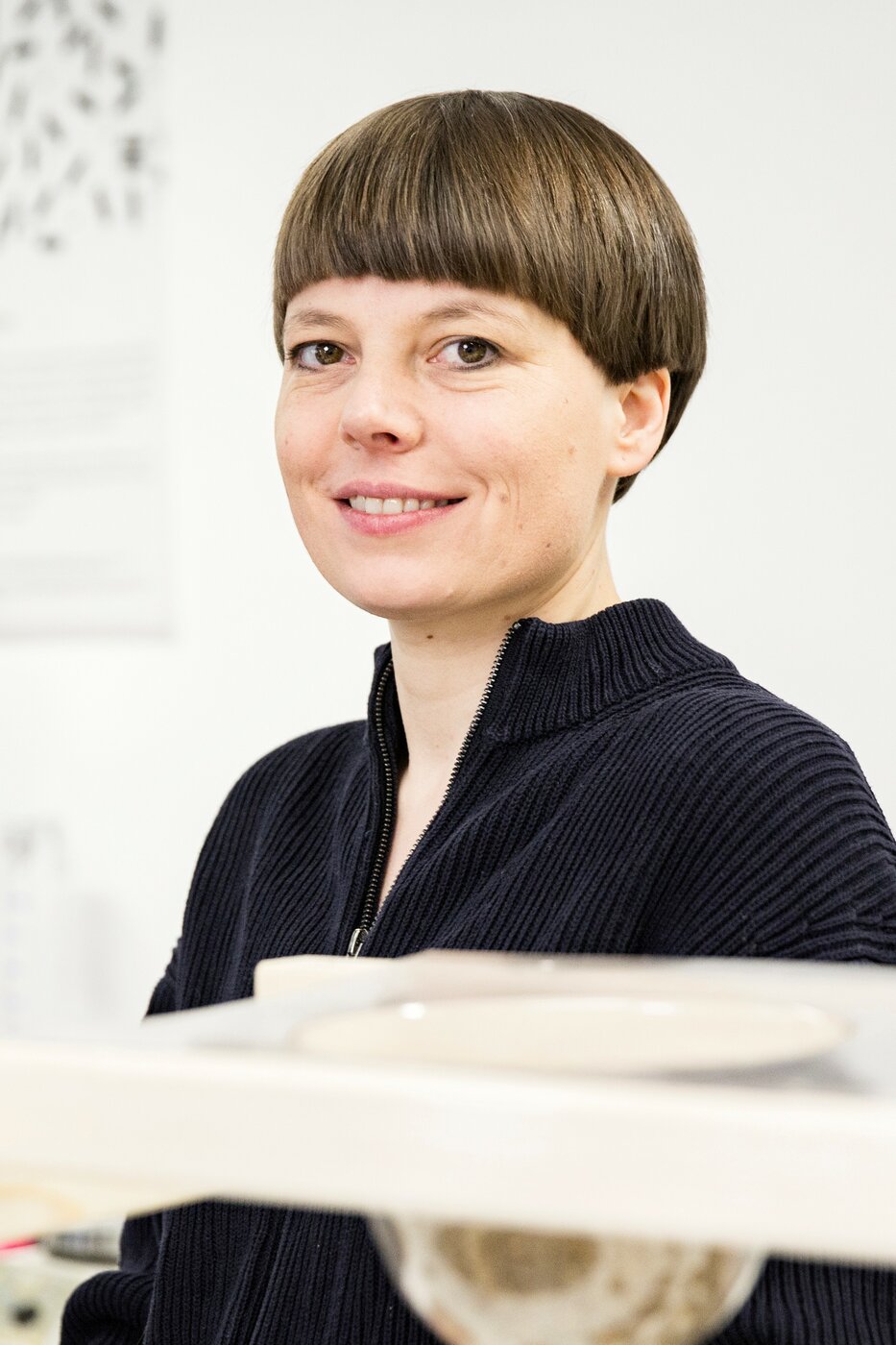
Wolfgang Mayer is a Professor for Performative Practice at the State Academy of Fine Arts Stuttgart , teaching collaborative artistic processes. He co-founded the art group Discoteca Flaming Star (DFS) in 1998 with Cristina Gómez Barrio, focusing on performative works that challenge memory and institutional frameworks. 1990–1995: Studied at Academy of Fine Arts Munich 1996–1997: DAAD scholarship at School of Visual Arts NYC 2005–2006: Whitney ISP participant Mayer’s research integrates performative practice , body theory , and collaborative art . His works interrogate memory , feminist narratives , and public space dynamics through sculptures , performances , and experimental music . Recent projects like Momentum:synthesize.r (2024) and Love Any Out of (90 Seconds) End (2023) explore temporal structures and emotional labor . Scientific honors include: 2013 Fundacion Estrenos Grant 2006–2007 Pollock-Krasner Scholarship 1993 Salzburg Summer Academy scholarship He emphasizes non-formalized artistic development through Sound & Body modules, public space interventions , and critical response protocols . Mayer’s DFS collective has shown globally at institutions like The Kitchen , Whitney Museum , and Tate Modern , often collaborating with figures like Rita McBride and Jeremiah Day.
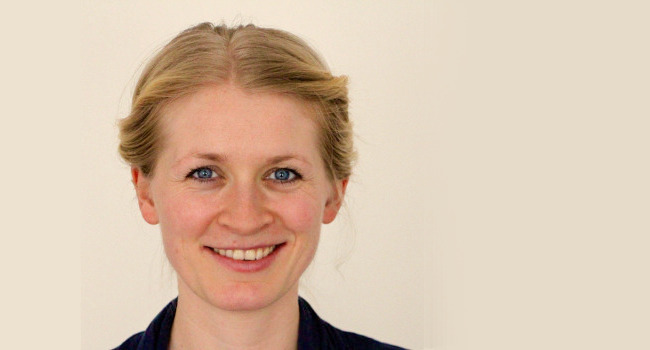
Dr. Katharina Graf is a Research Fellow at the Institute of Cultural Anthropology and European Ethnology, Faculty of Linguistics, Cultures and Arts, Goethe University Frankfurt. She leads the DFG-funded ethnographic research project Cyborg Cook – Domestic Cooking in the Digital Age , investigating how digital technologies transform domestic cooking practices, knowledge reproduction, and socio-political negotiations around gender, class, and race in German households. Previously, she was a Postdoctoral Research Fellow at the SOAS Food Studies Centre, University of London, where she conducted research on bread as a measure of urban stability in Morocco, funded by the AXA Research Fund. Her educational background includes a PhD in Social Anthropology from SOAS, University of London (2016), with fieldwork in Marrakech, and a Diplom in Geography from the universities of Tübingen, Bonn, and Cologne, focusing on water supply in rural Morocco. Katharina Graf’s research lies at the intersection of cultural anthropology, food studies, gender, urban life, and science and technology studies. She explores how everyday practices—especially cooking—reflect and shape broader social, political, and technological transformations. Her work emphasizes the entanglement of material culture, digitalization, and human agency, particularly in domestic spaces. She investigates how food serves as a lens for understanding political legitimacy, social change, and human-machine relations. Her recent publications and blog posts from the Cyborg Cook project reveal a strong trend toward understanding digital domesticity through ethnographic, sensory, and feminist lenses. Themes include the role of mothers as technological pioneers, the disruption of routines by smart devices, and the multisensory experience of digital cooking practices. Her earlier work on bread in Morocco highlights how food security and culinary practices are deeply tied to political stability and state-society relations. Postdoctoral Fellowship, AXA Research Fund Principal Investigator, DFG-funded 'Cyborg Cook' project Dr. Graf has supervised undergraduate and postgraduate students at SOAS and Goethe University. While no specific grants beyond DFG and AXA are named, her role as principal investigator indicates leadership in competitive research funding. She is actively involved in academic service, including as associate book reviews editor for the FoodAnthropology Blog (Society for the Anthropology of Food and Nutrition) and former co-convenor of the Anthropology of Food Network at EASA. She disseminates research through innovative public formats such as photo exhibitions, cookery classes, and comedy clubs, reflecting a commitment to engaged scholarship. She is affiliated with the Cyborg Cook research team at Goethe University, an interdisciplinary group using ethnographic methods to study digital kitchen technologies. The project emphasizes collaborative, sensory, and participatory research approaches, often involving co-creation with participants through shared meals and observational cooking sessions.
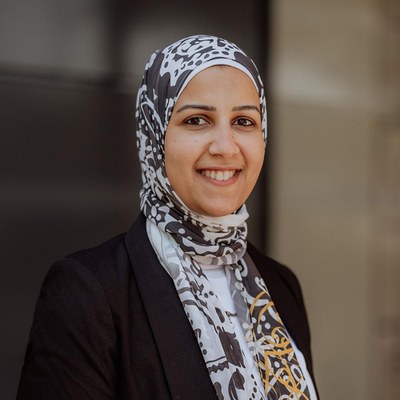
Dr. Yomna Abdelrahman is a Professor of Usable Security and Privacy at the Bundeswehr University Munich . Her research focuses on thermal imaging for security and privacy , virtual reality usability, eye tracking , and biometric authentication . She collaborates with researchers like Florian Alt and Albrecht Schmidt on projects exploring how thermal sensing can enhance user identification and privacy awareness . Key Research Areas : Thermal Imaging, Human-Computer Interaction, Virtual Reality, Password Security, Biometric Authentication, Eye Tracking, Privacy Her recent publications address VR emotion detection , password usability , and privacy implications of thermal imaging . She has contributed to conferences like CHI, MUM, and INTERACT, often examining security-privacy trade-offs and non-invasive biometric systems . Notably, her work on thermal attacks reveals vulnerabilities in mobile authentication through thermal residue. She holds a PhD in Computer Science from the University of Stuttgart (2018), where her thesis, "Thermal Imaging for Amplifying Human Perception," laid the foundation for her later work on thermal-based interaction and cognitive load estimation . Her collaborations span diverse domains, from smart home notifications to industrial worker assistance , reflecting her interdisciplinary approach to usable security and interactive systems .
Richard Robinson is a Professor in the Leadership and Human Resource Management Department at Northumbria University, holding a Vice Chancellor Fellowship. Previously at The University of Queensland, he transitioned from an 18-year career as a chef. His research focuses on service work, employment contexts, and fair labor practices across tourism, hospitality, and welfare sectors. He explores themes like mental health, skills training, and sustainable work environments. Robinson has authored over 138 publications, leading in areas such as workforce resilience, gig economy challenges, and commensality in commercial settings. His work aligns with UN Sustainable Development Goals on quality education and decent work. Education: PhD in Tourism (University of Queensland, 2011), Advanced Diploma in International Hotel Management (2004), BA in Humanities (Griffith University, 1998). Research Interests: Service Work and Employment Dynamics Occupational Well-being and Mental Health Sustainable Workforce Development Global South Labor Practices Culinary Professional Attrition Key Contributions: His 2025 work on frontline worker well-being and 2024 analysis of toxic kitchen environments highlight systemic labor issues. He co-edited Unpacking Hospitality Work Realities (2025) and contributes to policy reforms via the Global Hospitality Research Alliance. Awards include national teaching excellence recognitions for curriculum innovation. Advisory Roles: Holds leadership positions in higher education research portfolios and an international charity. Advises governments and NGOs on labor policies, most recently contributing to Queensland's tourism workforce recovery strategy. Labs/Teams: Leads Northumbria's Hospitality Work and Employment Research Group, collaborating globally on projects funded by UN agencies, industry bodies, and governmental grants.
Alexis Maldonado serves as a Researcher and Manager of the robotics laboratory at the Institute for Artificial Intelligence (IAS), University of Bremen, where he oversees all hardware (robots, sensors) and software systems (ROS, drivers, calibration). Currently pursuing his PhD under Prof. Michael Beetz, he specializes in practical robotic implementations for real-world environments. His core research focuses on robotic grasping, manipulation, sensor integration for robot hands/arms, and end-to-end systems integration . Key projects include TUM-Rosie integration, the Boxy mobile manipulator, and REFILLS logistics robots. His work bridges theoretical robotics with deployable solutions in domains like warehouse automation and assistive kitchens. Analysis of his 15 most recent publications (2009-2025) reveals consistent emphasis on mobile manipulation dexterity , particularly tactile feedback for unmodeled objects, sim-to-real transfer for fluid handling, and perception-action loops in human-robot collaboration. His methodology prioritizes hardware-software co-design for robustness in unstructured environments. Maldonado actively contributes to the IAS research ecosystem through laboratory leadership and hands-on development of cognitive robotic platforms, supporting both academic research and industry applications in service robotics.
Barbara Ott is a lecturer at the Berlin-Weißensee School of Fine Arts, specializing in CAD and Visualization. She graduated from HfG Offenbach with a Diplom in Industrial Design (2011) and has collaborated with major brands like Neff, Thermador, and Kahla since founding her design studio ProGestalt in 2013. Education: Diplom in Industrial Design, HfG Offenbach (2011); Carpentry Apprenticeship (2003) Her research focuses on industrial design and kitchen-centric product development , emphasizing functional complexity and craftsmanship. She manages the Kitchen Archives and integrates parametric design into her practice. Her projects span pressure cookers (Djinni), parametric reliefs for catering services, modular spice racks, and outdoor furniture. These works highlight her expertise in blending traditional design with modern technologies like Rhino, Grasshopper, and Keyshot. Barbara Ott's career bridges academia and industry, with roles at Modell-N (2012) and BSH Hausgeräte GmbH (2014–2017). She prioritizes resolving technical challenges while maintaining aesthetic coherence.
Dr. Marion Roehmer is a Research Associate in the Department of Prehistoric and Early History at the Institute of Archaeology and Cultural Anthropology, University of Bonn. She is actively involved in the research project "Bartmann goes global," focusing on the cultural, historical, and trade dimensions of Siegburg stoneware and related ceramics from the late medieval to early modern periods. Her research interests span a wide range of topics including Renaissance imagery on stoneware, the typology and chronology of Siegburg stoneware, Rhenish ceramics, early German porcelain, and Roman architectural sculpture. She investigates material goods such as tableware, kitchen utensils, and non-ferrous metal artifacts, integrating archaeological evidence with historical and museum sources. The articles she has published in recent years reflect a consistent focus on material culture, particularly ceramic artifacts, their production, use, and symbolic meanings. Her work frequently explores the intersection of trade, religion, and daily life, especially during the Reformation and early modern Atlantic trade era. She has contributed extensively to understanding the cultural-historical impact of ceramics in Central Europe. Dr. Roehmer has authored several monographs and edited volumes, and her publications appear in leading archaeological and historical journals and conference proceedings. Her editorial work includes organizing interdisciplinary symposia and publications on ceramic research. Selected Roles and Affiliations: Research Associate, University of Bonn Project Member: "Bartmann goes global" Co-Editor, Bonner Beiträge zur Vor- und Frühgeschichtlichen Archäologie Contributor to major ceramic research symposia Research and Editorial Leadership: Expert in Siegburg stoneware typology and chronology Research on Reformation-era iconography on ceramics Studies on early porcelain trade and consumption Museum communication and exhibition design Archaeological investigation of urban sites like Zons and Cologne
Shaun K. Kane is a researcher specializing in accessibility , human-computer interaction , and assistive technology . His work focuses on creating inclusive interfaces for people with disabilities, particularly through tactile systems , wearable devices , and AI tools . Kane collaborates with institutions like the University of Washington and organizations such as ACM SIGACCESS. Primary research areas: Accessibility, Human-Computer Interaction, Tactile Interfaces Key collaborations: Amy Hurst, Meredith Ringel Morris, Jacob O. Wobbrock His recent articles explore AI ethics and non-visual accessibility , including projects like RoboGraphics (tactile graphics for education) and Accessible Text-to-Image Interfaces . Kane's work bridges disability-centered design with emerging technologies , emphasizing participatory methods and universal access.
Konstantin Wächter is a Researcher in the Department of Classical Archaeology at Martin Luther University Halle-Wittenberg, Faculty of Philosophy I. He specializes in archaeological building research with a focus on synagogues of the 19th and early 20th centuries, castles and manor houses from the late 17th to 19th centuries, and Berlin architecture of the 19th/20th century. His educational background includes: Diploma in Architecture from the Technical University of Dresden (2002-2009) Erasmus exchange at École nationale supérieure d'architecture de Strasbourg (2005-2006) Master's degree in Building Research and Monument Preservation from the Technical University of Berlin (2011-2013) Doctorate from the Graduate School "Identity and Heritage" at Technical University of Berlin and Bauhaus University Weimar (2016-2019), with dissertation on "The Berlin Community Synagogues in the German Empire – Integration and Self-Assertion" Wächter's research interests center around archaeological building research, with particular expertise in synagogue architecture of the 19th and early 20th centuries, castles and manor houses from the late 17th to 19th centuries, and Berlin architecture of the 19th/20th century. His work bridges architectural history, cultural heritage, and social history, examining how built environments reflect societal structures and cultural identities. He approaches architectural analysis through both archaeological investigation and historical contextualization, focusing on how buildings function as markers of cultural identity and social positioning. His recent scholarly output shows a strong focus on architectural heritage, particularly examining synagogue architecture in Imperial Germany as expressions of Jewish cultural identity. His work also extends to classical archaeology, with significant contributions to the study of the Apollo Temple at Didyma in Turkey. This dual focus demonstrates his interdisciplinary approach to understanding built environments across different historical periods. His notable research projects include: "New Edition of the Building Reports of Didyma" (since 2021) "Cults within the Cult" project (since 2013) "Identity and Heritage" Graduate School (2016-2019) Charlottenburg Palace Kitchen Wing research (2019-2020) Wächter has been actively involved in multiple significant research collaborations, including interdisciplinary projects with the Austrian Academy of Sciences and the German Research Foundation (DFG). His work combines meticulous architectural documentation with cultural analysis, particularly examining how built environments reflect societal structures and cultural identities across different historical contexts. He is currently working within the research infrastructure of the Department of Classical Archaeology at Martin Luther University Halle-Wittenberg, collaborating with researchers like Prof. Dr. Helga Bumke on the Didyma project and contributing to the broader archaeological and architectural research community through his specialized expertise in building analysis.
Jörg Andreä is a Professor of Physics and Household Technology at the Department of Nutritional Science, Hamburg University of Applied Sciences. His work bridges physical principles with household technology applications in both domestic and commercial settings. Teaching areas: Physical principles, Device technology, Sustainable energy industry, Measurement technology Core competencies: Household food processing appliances, Commercial kitchen technology, Smart Home/Smart Kitchen systems, Energy efficiency measurements His research focuses on digital skills in nutritional science, with projects like 'SmartDrum' and publications on topics such as food processing and kitchen technology. He leads the Household Appliances Laboratory and contributes to academic governance through the Department Council and German Society for Home Economics (dgh).
Silvia Elfers serves as a Researcher in the Household Appliances Laboratory within the Department of Nutritional Science at the Faculty of Life Sciences, Hamburg University of Applied Sciences. Her institutional affiliation is centered at Ulmenliet 20, Room 0.49, Hamburg, Germany, where she conducts specialized research linking nutritional science with household appliance applications. Her research spans Nutrition, Food Science, and Household Technology, with particular emphasis on the engineering and chemical interactions of kitchen appliances in food preparation contexts. This interdisciplinary work bridges nutritional chemistry with practical appliance design, focusing on optimizing household equipment for dietary science applications. As an active member of the Department of Nutritional Science, Dr. Elfers contributes to the university's research infrastructure in food technology. Her work aligns with the institution's focus on applied sciences through laboratory-based investigations of kitchen equipment performance and nutritional outcomes. Contact is available via telephone at +49 40 428 75-6436 for research collaboration inquiries.
Mareike Gast is a Professor of Industrial Design with a focus on Material, Technology and Sustainability at Burg Giebichenstein University of Art and Design Halle since 2016. She is co-initiator and project leader of BurgLabs, an interdisciplinary research platform focused on sustainability, biotechnology, and robotics. Gast also leads the Materialsammlung of the BURG together with Prof. Dr. Sara Burkhardt and has been a board member of the Material-Archiv since 2025. She serves on the advisory board of the Bundespreis Ecodesign since 2019 and was a member of the Ressourcenkommission am Umweltbundesamt (2021-2023). Education: Foundation Studies in Art and Design at Central Saint Martins College of Art and Design in London (2000/01) Industrial Design at Design Academy Eindhoven (2001-2005) Mareike Gast's research focuses on the development of sustainable material interactions and transformation processes, with particular emphasis on the potentials and risks of biotechnology. Her work explores how living microorganisms can be integrated into materials, membranes, and textile surfaces to create symbiotic systems. She investigates questions about living products, biological obsolescence, and the care required for perishable materials. Her research bridges industrial design, material science, and sustainability, with strong emphasis on circular economy principles and innovative production methods. She has pioneered approaches to embedding microorganisms in various materials using manufacturing techniques such as 3D printing and electrospinning. Her recent publications and student projects demonstrate a consistent focus on sustainable design solutions across biomaterials, circular product development, and sustainable manufacturing. Projects like 'Compostable Devices' showcase innovative approaches to integrating biological materials into everyday products, while 'Monomaterial' addresses systemic challenges in material flows. Her work increasingly explores biotechnology applications in design, as seen in projects involving microbial materials, biofabrication, and living textiles. The 'Living Layers' project exemplifies her approach to symbiotic material systems, examining how microorganisms alter material properties and interact with the environment. Mareike Gast has supervised numerous master's theses on sustainable design topics, mentoring students who have developed innovative approaches to material use and product design. Her guidance spans diverse areas including sustainable footwear ('prototyping footprints'), food systems ('Rethinking Food Storage Design'), and medical applications ('Monomaterial'). She has established a robust framework for design research that emphasizes hands-on experimentation alongside theoretical exploration. As co-initiator of BurgLabs, Gast leads research in the BioLab and SustainLab, where interdisciplinary teams explore sustainable materials and production methods. The BioLab focuses on integrating living microorganisms into design processes, while SustainLab addresses systemic sustainability challenges in product design and manufacturing. These labs provide a platform for collaborative research with industry partners and academic institutions, facilitating knowledge exchange between design, science, and industry. The Materialsammlung she co-leads serves as a physical and conceptual resource for material exploration and innovation.
Karolin Höhl is a Visiting Professor at the University of Education Schwäbisch Gmünd in the Department of Nutrition, Everyday Culture, and Health. Her research focuses on sensory science, taste perception, and the interplay between nutrition and consumer behavior. She has published extensively on topics such as hedonic sensory analysis, food well-being, and the physiological basis of taste. 2003: Diplom-Ökotrophologin (M.Sc. equivalent in Nutritional Sciences) at Christian-Albrechts-Universität zu Kiel 2014: Ph.D. in Human Nutrition and Food Science from Christian-Albrechts-Universität zu Kiel and Hamburg University of Applied Sciences Her research interests span Nutrition and Health , Sensory Science , Food Culture , and Sustainability . Key themes include the psychophysical and neurobiological foundations of taste , hedonic evaluation of plant-based products , and multidisciplinary approaches to food values . The 15 most recent publications highlight her work on taste thresholds , sensory training , vegetarian alternatives , and food well-being . These works emphasize cross-disciplinary analysis and consumer-oriented nutritional education . Her professional journey includes roles at the Dr. Rainer Wild Foundation (2006–2018, 2022–2023), Pedagogical University of Heidelberg (2022), and Pedagogical University of Karlsruhe (2021–2022). She has also worked as a freelance lecturer and researcher.
Dr. Varun Pratap Singh is an Assistant Professor at the University of Petroleum and Energy Studies (UPES), India, and a Postdoctoral Research Fellow at Stellenbosch University, South Africa. His work focuses on solar thermal energy systems, renewable energy technologies, and sustainable engineering solutions across multiple domains. Education: PhD in Mechanical Engineering (Solar Thermal), Uttarakhand Technical University M.Tech in Thermal Engineering, Uttarakhand Technical University His research interests span solar thermal design, thermal energy storage, green hydrogen production, and carbon capture technologies. He has pioneered advancements in heat transfer enhancement, solar air heater optimization, and hybrid energy systems through over 100 publications. Recent articles highlight his work on: Computational intelligence in solar thermal systems Thermo-fluid dynamics for high-temperature applications Life cycle assessment of sustainable technologies Heat transfer and nanofluid safety protocols Awards: Outstanding Mentoring Award NPTEL Enthusiast/Believer Certifications SPOC Recognition by IIT Bombay As an educator, he integrates AI/VR tools and MOOC platforms into teaching. His industry-academia collaborations have produced patents in sanitation systems, hybrid kitchens, and energy-efficient designs, including N-95 mask production units during the pandemic.
Prof. Birgit Peuker is a Professor of Nutrition and Home Economics at the European University Flensburg, serving as Dean of Studies for Faculty I. She holds a PhD from TU Dresden (summa cum laude) and has over 15 years in vocational education research. Her work focuses on integrating digitalization, robotics, and AI into gastronomy and home economics education, emphasizing interprofessional collaboration and sustainable practices. Education : 2001–2008: Diploma in Vocational Education, TU Dresden (specializing in Food Science and Ethics) 2015: PhD, TU Dresden ("The Teaching Kitchen as a Space for Career Orientation") Research Interests : Robotics in hospitality, educational space design (7 dimensions framework), cultural competency in home economics, and consumer literacy for vulnerable learners. Key projects include the BiLEV initiative on agricultural education and the Interreg GERDA sustainability project. Publications : Over 30 peer-reviewed articles and books, including works on AI-driven gastronomy, interprofessional care, and innovative educational spaces. Notable publications include Forschendes Lernen in der Universität (2023) and Grundbildung in der Lebenswelt verankern (2022). Grants & Awards : Lead researcher in EU-funded projects (e.g., FRESH, GERDA). Awarded summa cum laude for doctoral work. Active in academic governance roles including Senate committees and the German Home Economics Society. Labs & Initiatives : Directs the CREST research center's education projects. Co-convenes the Summer School for Nutrition Education, fostering cross-university collaboration in didactics.