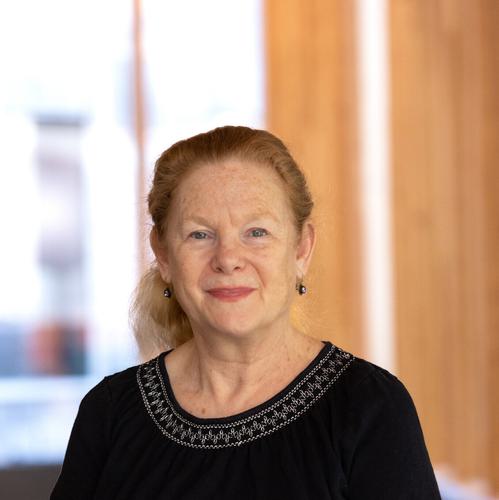
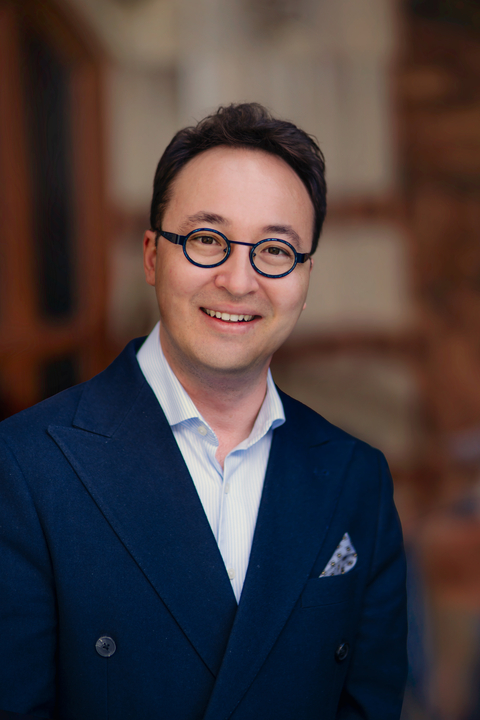
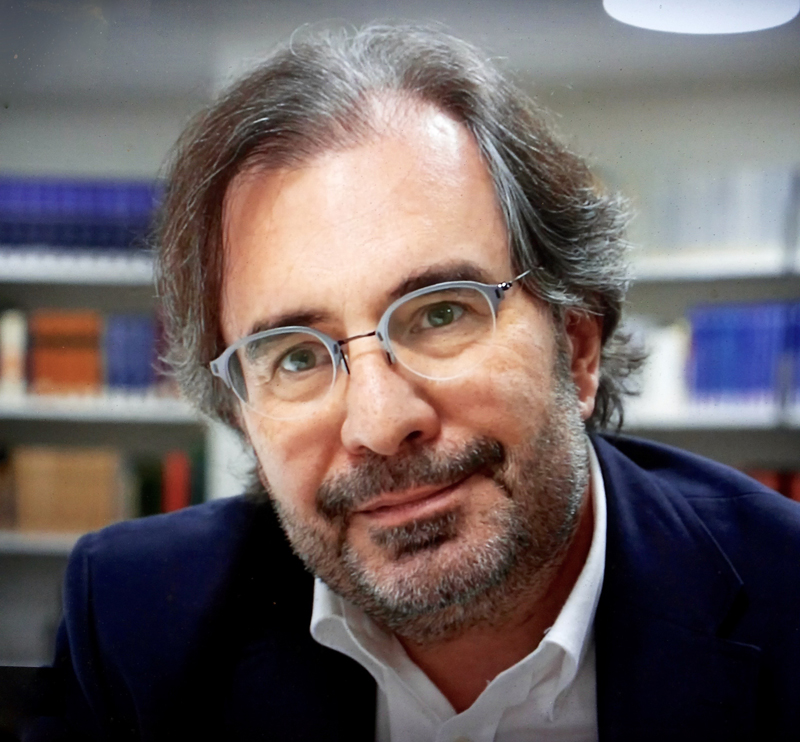
Elizabeth Hudson is Dean of the College of Arts, Media, and Design and Professor of Music at Northeastern University since 2015. Previously, she was Professor of Musicology and inaugural Director of the New Zealand School of Music (2006–2013), and held leadership roles at the University of Virginia, including Director of Undergraduate and Graduate Music Programs. She holds a Ph.D. and M.A. from Cornell University, a B.A. from Smith College, and training from the Manhattan School of Music and Vienna. Her research explores opera composers like Verdi, Donizetti, and Puccini, integrating musicology with Italian Risorgimento history, trauma studies, and neuroscience of music and emotion. Her critical edition of Verdi’s Il corsaro (University of Chicago Press) has gained global attention. She currently serves on the executive board of the American Institute of Verdi Studies and the editorial board of Verdi Forum . Awarded grants/fellowships include National Endowment for the Humanities, Lilly Teaching Fellowship, and the Thomas Jefferson Visiting Fellowship at Cambridge. Her professional experience includes editorial leadership roles such as Associate Editor of the Cambridge Opera Journal .
Claire Fontijn is the Phyllis Henderson Carey Professor of Music at Wellesley College. Her research and teaching focus on Early Music , Women Composers , and J.S. Bach , with a particular emphasis on medieval to baroque periods. Education: B.A. from Oberlin College, Certificate from Royal Conservatory of The Hague, and Ph.D. from Duke University. Her scholarly work explores the contributions of women composers like Hildegard of Bingen, Barbara Strozzi, and Fanny Hensel, alongside historical performance practices and the synthesis of image, text, and notation in medieval music. Recent publications analyze solmization puns and chorales from the Seicento Venice and Romantic periods. Fontijn’s research has been supported by prestigious organizations including the American Musicological Society , the Andrew W. Mellon Foundation , and the National Endowment for the Humanities . She teaches courses such as Italian Popular Song and the Calderwood Seminar in Public Writing: The Power of Music , which trains students to communicate music scholarship to non-specialist audiences. Scientific Awards : Nicolas Slonimsky Award for Classical Music Biography (2007) Fontijn’s collaborations with Susan Parisi and her editorship of Uncovering Music of Early European Women highlight her dedication to expanding the canon of music history. Grants from the Gladys Krieble Delmas Foundation and the Institute for Citizens & Scholars further enable her interdisciplinary work.
Nari Shelekpayev is an Assistant Professor of Slavic Languages and Literatures at Yale University, currently on leave for 2024-2025. His research focuses on transnational and comparative history, with specializations in urban history, Soviet and post-Soviet biopolitics, and the cultural history of Central Asia. He holds a Ph.D. in History from Université de Montréal, an M.A. in Social Sciences from EHESS Paris, and an M.L. in International Law from Université Paris 2, Panthéon-Assas, alongside a B.A. in Political Science from Nankai University. His research interests include the intersection of cities and political power, cultural memory in the Soviet and post-Soviet eras, and the role of opera in capital city formation. He has published extensively on topics such as Astana’s urban transformation, Soviet protests in Kazakhstan, and the symbolism of capital cities in imperial contexts. Recent publications include manuscripts on post-Soviet biopolitics and comparative Eurasian urban history. His work has appeared in Kritika , Urban History Review , and Slavic Review , among others. He has held prestigious fellowships including the Macmillan Center Research Grant (2024) and the Nizami Ganjavi Fellowship (2022). Shelekpayev teaches courses such as The Master and Margarita: Money, Sex, and Power in Stalin’s USSR and Second Sex After Second World War at the undergraduate level, and a graduate seminar on Central Asian studies. He is fluent in English, French, Italian, Russian, and Kazakh, with reading competency in Chinese and Portuguese.
Chiara Natali is a PhD Student in Computer Science at University of Milan-Bicocca (2022-present) and a Visiting Research Fellow at the Dalle Molle Institute for Artificial Intelligence USI-SUPSI, supported by a Swiss Government Excellence Research Fellowship. She serves as a Lecturer for Interaction Design Lab and Human-Computer Interaction courses at University of Milano-Bicocca, and as a Tutor for Advanced Data Management and Decision Support Systems and Human-System Interaction courses across multiple Italian universities. Her educational background includes: MA in Politics, Philosophy and Public Affairs at University of Milan (2020-2022) Master's in Digital Communication Strategy at IED, Milan (2019-2020) BSc in International Politics and Government at Bocconi University, Milan (2016-2019) Natali's research centers on the complex relationship between humans and AI systems, with particular focus on Human-AI Interaction, Explainable AI (XAI), Ethical AI, and her signature concept of Frictional AI. She investigates the multidirectional effects of AI on human cognitive faculties, examining the tension between Augmentation and Deskilling. Her work explores how intentional design friction can serve as a debiasing strategy against Automation Bias, promoting more thoughtful human-AI collaboration while preserving human agency and critical thinking. Her publication record reveals a strong emphasis on practical applications of XAI in high-stakes domains like healthcare, with particular attention to medical decision-making processes. Her research consistently addresses the challenge of designing AI systems that support rather than replace human expertise, exploring how explanations impact accuracy in hybrid decision-making and how to measure technology dominance in AI-supported environments. Her significant contributions have been recognized with: Best Paper Award at the World Conference on Explainable Artificial Intelligence (2024) Best Doctoral Consortium Award at CEUR Workshop Proceedings (2023) Natali actively shapes her field through academic service, serving as PUBLICITY & PROCEEDINGS CHAIR for HHAI 2025 and organizing multiple workshops on Human-Centred Machine Learning, Algorithmic Authority, and Frictional AI. She also contributes to gender equality in STEM as a Science Ambassador for her institution's Gender Equality Plan and previously served as PhD co-representative at the Department Board. Her interdisciplinary approach extends into creative domains, where she is developing an Interactive AI Opera on 'The Garden of (Un)Earthly AI's' funded by the University of Edinburgh's Generative AI Laboratory, and has curated projects exploring Human-AI Music Co-Creation and live-coding music performances.
Vincenzo Borghetti is an Associate Professor of Music History at the University of Verona, Italy, where he has been employed since 2008, first as a Lecturer ("ricercatore") until 2017, then promoted to his current position. He previously held teaching positions at the University of Vienna (2015-2016) and was a Lila Wallace–Reader's Digest Fellow at Villa I Tatti, Harvard's Center for Italian Renaissance Studies in Florence (2007-2008). He earned his Ph.D. from the University of Pavia-Cremona in 2001. His scholarly work centers on Renaissance polyphony and early twentieth-century opera, with particular expertise in music philology, court culture, and the intersection of music with visual arts and literature. Borghetti has made significant contributions to Rossini scholarship through his critical edition of Elisabetta regina d'Inghilterra (2016) for the Fondazione Rossini's critical edition series. Borghetti's publications appear in leading journals including Early Music History , Acta musicologica , Journal of the Alamire Foundation , and Imago Musicae . His research demonstrates consistent engagement with both historical musicology and interdisciplinary approaches connecting music to broader cultural contexts. Gabriele D'Annunzio Award (1998) for co-authored monograph Il bacio della Sfinge: D'Annunzio, Pizzetti e "Fedra" Grant from Fritz Thyssen Stiftung (2018) for organizing the International Conference "Books, Images, Objects: The Media of Secular Music in the Medieval and Early Modern Period" As an active scholar in musicology, Borghetti contributes to major reference works including the Handbuch der Musik der Renaissance , demonstrating his standing in the international academic community. His work bridges historical musicology with cultural studies, offering nuanced interpretations of musical practices within their broader social and intellectual contexts.
Anne Piéjus is a CNRS Researcher specializing in Early Modern Music, with a focus on interdisciplinary approaches integrating literature, theater, history, and digital humanities. She leads the Mercure galant program, producing enriched editions of music, text, and images while advancing digital methodologies in musicology. Her research includes studies on Italian Renaissance music, French Baroque theater, and music's role in education and devotion. Positions: 1st Class Research Director at CNRS-IReMus (2021–present) Formerly at the Paris Philharmony (2001–2002) and University of Fribourg (2001–2002) Fellowships: Villa Medici (Rome, 1998–2000), Thiers Foundation (1995–1998) Research Interests: Music in early modern press, theater, and education; sacred music in Renaissance Rome; digital humanities; music and politics; interdisciplinary performance studies. Awards: Thorlet Prize (2015), Alfred Verdaguer Prize (2015) Prime d'Encadrement de Recherche (2016, 2020) Prix des Muses (2001) Advising & Grants: Supervises graduate students in the Doctoral School “Concepts et langages”; led ANR-funded research on school spectacles under the Ancien Régime. Labs/Teams: Heads the Mercure galant program and co-founded the European seminar Building Relationships in a Changing World .
Luca Zoppelli is a Professor of Musicology at the University of Fribourg, Switzerland, since 2000. Previously, he held academic positions at the University of Salento (1993–1998 as Lecturer, then Associate Professor) and taught at several Italian conservatories including Padua, Vicenza, and Lecce. His research focuses on 19th-century opera, Venetian music history, musical dramaturgy, and the aesthetics of Baroque music. He co-directs the critical edition of Vincenzo Bellini's works and served as editor of the Schweizer Jahrbuch für Musikwissenschaft / Annales Suisses de Musicologie (2008–2019). Education: Studied Musicology and Literature at Ca' Foscari University in Venice (B.A., 1984 under Giovanni Morelli). Specialized in Baroque music aesthetics, operatic narrative structures, and the interplay between music and drama. His work bridges historical analysis with contemporary musicological methodologies. Research interests prominently feature operatic composition processes, the role of narrative in music, and the socio-political dimensions of 19th-century Italian opera. His publications critically analyze composers like Rossini, Verdi, Wagner, and Bellini, with notable contributions to understanding musical dramaturgy and the evolution of operatic forms.
Susan McClary is the Fynette H. Kulas Professor of Music at Case Western Reserve University’s Department of Music (College of Arts and Sciences). A globally influential scholar, she has held professorships at the University of Minnesota, McGill University, UCLA, and the University of Oslo. Her work redefines music analysis by addressing its cultural, social, and gendered dimensions, challenging traditional aesthetic frameworks. Education : PhD in Music (Harvard University, 1976). Earlier degrees include a B.Mus. from Southern Illinois University (SIU). Research Focus : McClary’s interdisciplinary research spans the European classical canon and contemporary popular music. Key themes include gender in music, musical form’s socio-political content, and the intersection of music with identity, particularly in Renaissance and Baroque eras. Her approach emphasizes music as a dynamic social practice rather than an abstract art form. Publications & Impact : She authored landmark books such as Feminine Endings (1991) and Conventional Wisdom (2000), translated into 20+ languages. Her writings bridge musicology with feminist theory, cultural studies, and critical social analysis. Awards : 1995 MacArthur “Genius” Fellowship Advising : Oversaw over 50 doctoral dissertations Courses Taught : Music History, Music Theory, Early-Music Performance Practices Her work remains foundational in redefining music’s role in sociocultural contexts.
Flora Willson is a Senior Lecturer in Music at King's College London, affiliated with the Department of Music within the Faculty of Arts & Humanities. She holds a PhD from King's College London and previously held fellowships at King's College Cambridge and King's College London. Her research focuses on 19th-century opera, urban and cultural history, and music's material culture. Education: BA Music (Selwyn College, Cambridge); MMus and PhD (King’s College London). Research Interests: Willson examines evolving concepts of music production/consumption in the 19th century, with special attention to operatic canons, technological impacts on opera, and cross-cultural musical exchanges. Notable projects include a book on opera’s ties to urban infrastructure in 1890s London/Paris/New York, exploring travel/communication technologies' influence on operatic institutions and performers. Publications reflect her expertise in Puccini, Meyerbeer, Verdi, and opera’s relationship with war/cultural memory. She frequently engages with public audiences through Guardian columns, BBC Radio 3 appearances, and program notes for major opera houses like the Royal Opera House and Glyndebourne. Teaching spans all undergraduate levels with a focus on 19th-century music history, while postgraduate teaching includes research methodologies and specialized opera topics. She has supervised numerous dissertations and advised on projects ranging from film music to dance studies. Grants include leading the ERC-funded 'Music in London 1800–1851' project (2013–2018). She collaborates with institutions like the BBC Proms and Royal Opera House, offering academic communication consultancy. Labs/Teams: Core member of King’s Music Department research group, contributing to interdisciplinary projects linking musicology with urban studies and digital humanities.
Sarah J. Townsend is an Associate Professor of Spanish and Portuguese at Pennsylvania State University, affiliated with the College of the Liberal Arts. She holds a PhD from New York University and a BA from the University of Iowa. Her research integrates Marxist theory, political ecology, and performance studies to explore intersections between culture and capitalism in Latin America and beyond. Education: PhD in Spanish & Portuguese (NYU), BA in Spanish (University of Iowa) Her current projects include Opera in the Amazon: Culture, Capital, and the Global Jungle , analyzing the Teatro Amazonas opera house’s role in rubber-boom era capitalism, and Rio-mar, Mare internum , examining transnational connections between the Amazon and Mediterranean regions. She has held prestigious fellowships, including the ACLS Burkhardt Residential Fellowship (2021–2022). Research interests span Amazonian studies, avant-garde theater, sound studies, and critical race theory. Notable publications include The Unfinished Art of Theater: Avant-Garde Intellectuals in Mexico and Brazil (2018), winner of multiple awards, and co-edited volumes like Stages of Conflict (2008). Awards: Modern Drama Outstanding Article Prize (2018), ACLS Burkhardt Fellowship (2020) Academic service includes organizing the Hemispheric Americas lecture series and leading the Redesigning Modernities grant project. Teaching focuses on Latin American performance, modernisms, and cultural ecology, with courses in Portuguese, Spanish, and English.
Giovanni Francesco Basini is Full Professor of Private Law (IUS/01) at the University of Parma, where he has taught since 2005 and currently serves as Director of the Department of Law, Political and International Studies for the 2024–2027 term. He is also a member of the editorial board of the journal Responsabilità civile e previdenza . Education & Academic Career Born in Reggio Emilia, 25 May 1965. Appointed Full Professor of Private Law at the University of Parma in autumn 2005. Previously taught Institutions of Private Law at the Faculty of Law of Parma. Regular visiting lecturer at Bocconi University (Milan) from 2001/2002 to 2017/2018 (Private Law). Lecturer in “Successioni per causa di morte” at the School of Specialization for the Legal Professions, Universities of Pavia & Bocconi, 2017/2018–2022/2023. Research Focus Basini’s scholarship concentrates on four interlocking domains: Succession due to death and generational transfer of family wealth – analysing intestate and testamentary succession, forced heirship, and reform proposals. Family law – custody, filiation, recognition of children (including so-called “incestuous” children), grandparents’ visitation rights, and the assignment of the family home. Obligations and contracts – limitation clauses, contract invalidity, and the intersection of private law with artistic and cultural heritage. Art and cultural-heritage law – legal regulation of cultural assets within private-law frameworks. Publication Trends Across more than 180 works, Basini has produced extensive monographic contributions, journal articles, and commentaries. Late-career outputs (2020–2024) evidence a sustained focus on succession reform, the legal status of vulnerable persons, and the interplay between family relationships and property transmission. Earlier works (2006–2015) chart evolving Italian jurisprudence on spousal and filiation rights, often highlighting constitutional tensions and de iure condendo perspectives. Editorial & Institutional Service Member, Editorial Board, Responsabilità civile e previdenza . Director, Department of Law, Political and International Studies, University of Parma (2024–2027). Frequent keynote speaker and trainer for continuing legal-education programs aimed at practitioners. Teaching & Advising At the five-year single-cycle Master’s Degree in Law at Parma, Basini currently teaches: Civil Law I – Successions and Donations (2nd year) Family Law (2nd year) Institutions of Private Law (1st year) He maintains weekly office hours and accepts appointments ad hoc via e-mail, underscoring a strong commitment to student mentoring.
Professor Michael Burden is a Fellow in Music at New College, University of Oxford, and Professor of Opera Studies. His research focuses on the history of the London stage (1660–1860), emphasizing opera staging techniques, dance performance, and Henry Purcell’s music. A former Duff Cooper Literary Prize judge, he has directed Oxford’s New Chamber Opera and co-founded the Oxford Dance Symposium. Education: BA/MA from University of Adelaide; PhD from University of Edinburgh. Leadership: Past President of the British Society for 18th-century Studies, Visitor of the Ashmolean Museum, and RISM Trustee. His publications include studies on Shakespearean adaptation in opera, dance iconography, and libretto interventions. He co-edits the complete Stradella and John Eccles editions and leads the ongoing London Stage Project 1800–1900 , aiming to document 19th-century theatre calendars. Collaborative work includes the Oxford-Princeton grant on historical performance practices in London and New York. Scientific awards include his role as a Duff Cooper Prize judge, though no personal honors are listed. His teaching spans music history from Medieval to 21st-century, with specializations in opera historiography and analysis.
Prof. Katharina Thoma is a renowned opera director currently serving as Head of the Opera School at the University of Music Würzburg . She also holds the positions of Deputy Chair of the Music Academy and Dean of Studies . With a career spanning major European opera houses including the Royal Opera House Covent Garden and Glyndebourne Festival, she specializes in blending historical accuracy with modern theatrical innovation. Studied piano at Lübeck University of Music Resident director at Dortmund Opera (2011-2014) Visiting professor at Graz University of Music (2018) Freelance director since 2008 Katharina Thoma's research and practice focus on opera stage direction , scenic training for singers , and historical opera interpretation . Her work spans from Baroque masterpieces to contemporary political operas, emphasizing: Contextual authenticity in period-specific productions Modern reinterpretation of classical works Interdisciplinary approaches to staging Integration of visual and musical elements Training of next-generation opera performers Exploration of war-related themes in opera Notable productions include: 2024: Johann Strauss' The Bat (University of Music Würzburg) 2023: De Falla's El retablo de Maese Pedro 2022: Britten's The Rape of Lucretia 2019: Schönberg's Pierrot lunaire 2007: European Opera Directing Competition Finalist Her artistic contributions have been recognized with: Second Prize at the European Opera Directing Competition 'Camerata Nuova' (2007) Katharina Thoma actively mentors young singers and develops innovative opera productions at the University of Music Würzburg's Opera School. Her recent work includes: Wagner operas debut (2019/20 season) Collaboration with composers like Richard Jones and Christof Loy Participation in renowned festivals (Munich Biennale, Glyndebourne) The Opera School under her leadership focuses on comprehensive training combining: Historical performance practices Contemporary staging techniques Technical vocal training Interdisciplinary collaboration
Ann-Katrin Zimmermann is an apl. Professor (non-tenured professor) at the Musicological Institute within the Faculty of Philosophy at the University of Tübingen. She has held this position since 2018, following her time as a private lecturer from 2012-2018. In addition to her academic work, she serves as a dramaturg at the Gewandhaus Leipzig since 2013 and has teaching assignments at LMU Munich, Felix Mendelssohn Bartholdy University of Music and Theatre, and Leipzig University since 2012. Her educational background includes: Habilitation (2012) on "Forms of slow movements in the classical cycle" Promotion/PhD (2006) on "Studies on medieval three-part harmony" Master's degree in musicology, philosophy and art history from University of Tübingen and University of Oxford (1998-2003) Professor Zimmermann's research spans multiple eras and aspects of music history and theory. Her work focuses particularly on polyphony of the 12th and 13th centuries, keyboard music from the 15th-18th centuries, early German-language music terminology, and the works of Heinrich Schütz, composers of the Viennese classics, and Richard Strauss. She has made significant contributions to the fields of organology, instrumentation, music iconography, and 19th-century symphonies, with particular interest in cross-temporal aspects of genre, form, and composition. Her extensive publication record shows a consistent focus on historical music analysis, particularly examining compositional strategies across different periods. Her recent work has increasingly focused on Richard Strauss and Mozart, while maintaining her longstanding interest in early music traditions and terminology. She has published numerous articles in prestigious journals and contributed to important edited volumes in musicology. Professor Zimmermann is actively involved in the academic community: Member of the Society for Music History in Baden-Württemberg since 2009 Member of the DHV since 2012 Throughout her career, Zimmermann has balanced academic research with practical musical experience. She has been a bassoonist and leader of various vocal and instrumental ensembles since 1998, and served as a church musician from 1997-2014. Her work as a dramaturg at the Gewandhaus Leipzig since 2013 demonstrates her commitment to connecting scholarly research with contemporary musical practice.
Arnold Jacobshagen is a Professor and Chair of Musicology at the Cologne University of Music and Dance since 2006. He holds a Ph.D. from Freie Universität Berlin (1996) and habilitation on 19th-century Italian opera semiseria (2003). His expertise spans opera studies, 19th/20th-century music history, music historiography, and performance practice. He has authored five books and edited/co-edited 18 volumes, with significant contributions to journals like Die Musikforschung , Cambridge Opera Journal , and Acta Musicologica . Awards include membership in Academia Europaea (2015) and fellowships from the Deutsches Historisches Institut Rome and Deutsches Studienzentrum Venice. He currently leads editorial roles at Die Musikforschung and advisory boards for institutions like the Joseph Haydn Institute. Educations: Musicology, Modern History, and Philosophy studies in Berlin, Vienna, and Paris Research focuses on opera historiography, performance practices, and cultural transfer. Key works include Gioachino Rossini und seine Zeit (2015) and Opera semiseria (2005). Publications analyze composers like Handel, Berlioz, and Mahler, with attention to national genres, stage practices, and historical reception. His recent work explores 19th-century French grand opéra and counter-tenor vocal traditions.