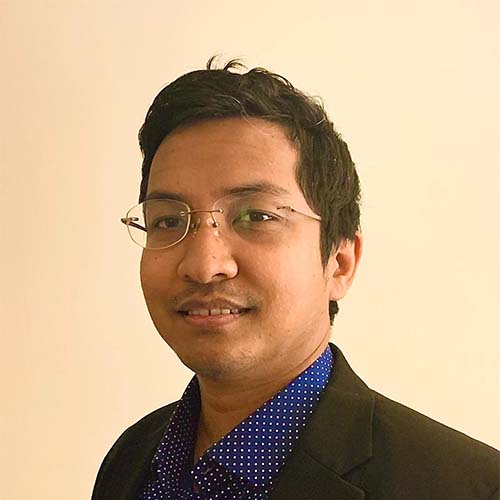
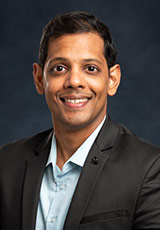
Anomadarshi Barua is an Assistant Professor in the Department of Cyber Security Engineering at George Mason University, leading the System Design and Security research group. His work spans hardware-software co-design for securing cyber-physical systems (CPS), robotics, and sensors. Prior Affiliation: PhD from University of California, Irvine (2023) Industry Experience: Intel Corporation, Solidigm, Nordic Semiconductor, IDEAS Research Themes: Focuses on multimodal system security (audio, visual, electromagnetic data), analog-digital signal integrity, and quantum-inspired defenses in CPS. Key applications include healthcare systems, smart grids, and industrial control systems (ICS). Recent ACSAC 2024 paper acceptance Best Paper Award at ACSAC 2022 NSF panel reviewer (2024) Labs & Collaborations: Collaborates with University of Louisville on robotics and works on Commonwealth-funded UG research (2024). Publications in ACM CCS, USENIX, CHES, and IEEE Transactions (TDSC, TIFS).
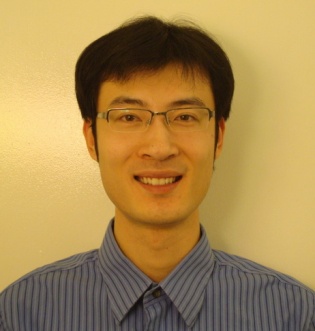
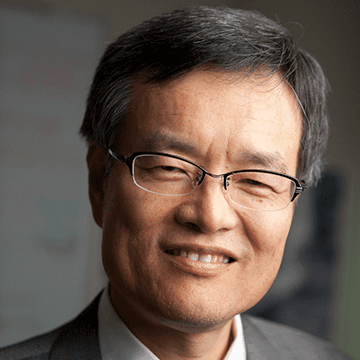
Yue Zhao is an Associate Professor in the Department of Electrical and Computer Engineering at Stony Brook University, with an affiliated appointment in Applied Mathematics and Statistics. Prior to this, she held postdoctoral positions at Stanford University and Princeton University. She earned her Ph.D. from UCLA in 2011 and B.E. from Tsinghua University in 2006. Her research focuses on smart grid systems, renewable energy integration, machine learning applications in power systems, and game-theoretic approaches to electricity markets. Key areas include transportation electrification, demand response mechanisms, and cyber-physical security of grid infrastructure. She teaches courses on digital signal processing, convex optimization, and communication systems. Her work spans over 50 publications in top journals and conferences like IEEE Transactions on Power Systems and ACM e-Energy. Notable contributions include dynamic state estimation frameworks for inverter-based resources, incentive-compatible market mechanisms for renewable aggregation, and cyber attack detection methodologies. Dr. Zhao advises a research group focused on interdisciplinary challenges in energy systems. Current openings exist for Ph.D. students with strong analytical backgrounds. Sponsors include NSF, DOE, and industry collaborators.
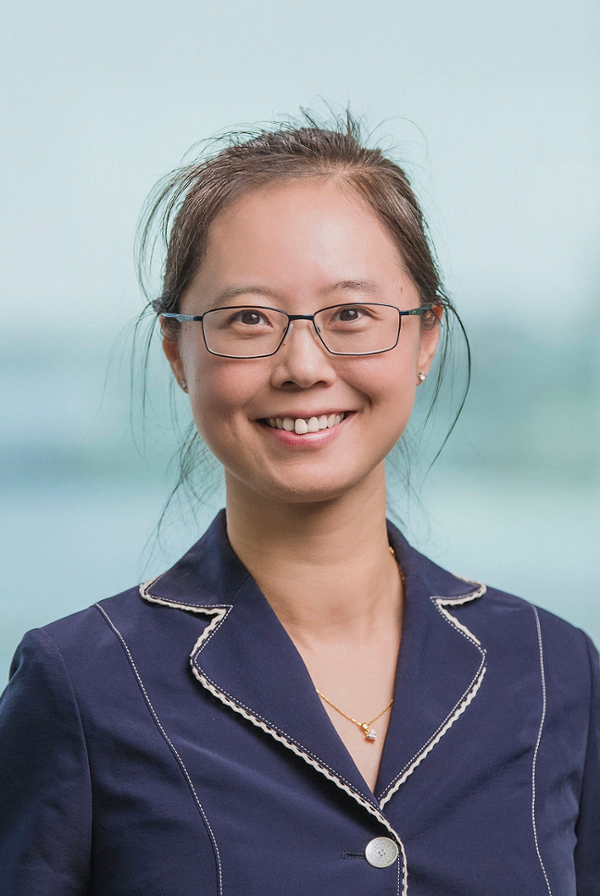
Sijia Geng is an Assistant Professor in the Department of Electrical and Computer Engineering (ECE) at Johns Hopkins University (JHU) and a core researcher at the Ralph O’Connor Sustainable Energy Institute (ROSEI). She directs the Power and Energy Network Systems Analysis (PENSA) Laboratory and co-leads the NSF-funded Electric Power Innovation for a Carbon-free Society (EPICS) Center as co-PI. Her research focuses on integrating control theory, mathematical analysis, and optimization to enhance renewable energy utilization and grid resiliency. Education: Ph.D. and M.S. (ECE & Mathematics) from the University of Michigan-Ann Arbor (2016–2022), B.S. in Automation from Harbin Institute of Technology (2016). Postdoctoral work at MIT (2022) and visiting scholar roles at Purdue University (2015) and Pacific Northwest National Lab (2018). Research Interests: Dynamic analysis of inverter-based power systems, nonlinear control theory, data-driven decision-making, and multi-energy systems. Her work emphasizes achieving autonomous, resilient energy systems through advanced computational tools and theoretical frameworks. Awards: Best Paper Award at MIT/Harvard Applied Energy Symposium (2022), MIT Rising Stars in EECS (2021), Barbour Scholarship (2021), Towner Prize (2018), and Gerald and Esther Forrest Fellowship (2016). She is active in IEEE and INFORMS, organizing sessions at PES General Meeting and CISS conferences. Grants & Collaborations: Funded by NSF, DOE, MIT Energy Initiative, and industry. Leads global initiatives through EPICS, collaborating with UK, Australian, and international stakeholders. Co-leads ROSEI’s Grid pillar to advance fossil-free energy systems. Labs & Teams: Directs PENSA Lab, affiliated with JHU’s Data Science and AI Institute, Applied Mathematics & Statistics, and Computer Science departments.
Michael Kleemann is an Associate Professor at the Faculty of Engineering Technology within KU Leuven , affiliated with the Department of Electrical Engineering (ESAT) . His research focuses on Power System Protection , Wireless Power Transfer , and Renewable Energy Integration , with a particular emphasis on inverter-based grid dynamics and fault analysis. Key Research Areas : Power system protection algorithms, capacitive wireless power transfer, fault location methods in medium voltage cables, and grid stability with high renewable penetration. Notable Projects : Lead projects on Protection of Future Distribution Grids (2021-2025), Capacitive Wireless Power Transfer (2020-2024), and Flux 50 ICON (2024-2026) for low-voltage DC grid protection. Publication Trends : Recent work explores capacitive wireless power transfer materials and control systems (2024-2025), fault detection algorithms for inverter-dominated grids (2023-2025), and machine learning applications in voltage regulation for photovoltaic-rich networks (2024). Teaching : Courses include Power System Protection (JPI322), Power Electronics (JPI0L8/JPI318), and Capacitive Wireless Transfer topics in graduate seminars.
Dr. Balarko Chaudhuri is a Professor of Power Systems at the Department of Electrical and Electronic Engineering, Imperial College London. He leads cutting-edge research on dynamic stability of electric power grids with high shares of renewables and inverter-based resources, critical for achieving net-zero energy systems. As UK Director of the Global Centre on Electric Power Innovation for a Carbon-Free Society (EPICS) and co-leader of the Global Power System Transformation (G-PST) consortium's workforce development pillar, he drives collaborative efforts to modernize global power systems. Affiliated with the Control and Power Research Group Contributor to G-PST Teaching Agenda and MSc program in Future Power Networks His research spans power and energy systems, focusing on integrating renewable energy while ensuring grid stability. This work addresses foundational challenges in transitioning to carbon-free electricity networks. Scientific recognition includes: Fellow, IEEE Fellow, Institution of Engineering and Technology (IET) He engages in workforce development through G-PST and contributes to global power system transformation initiatives.
Junjie Qin is an Assistant Professor of Electrical and Computer Engineering at Purdue University’s Elmore Family School of Electrical and Computer Engineering. His research focuses on control systems, optimization, market design, and data analytics applied to power systems and the energy-transportation nexus. He explores challenges in distributed energy resource management, smart grid technologies, and the integration of renewable energy sources. His work addresses issues such as scheduling under limited observability, neural risk-limiting dispatch, and joint optimization of transportation-energy systems through electric vehicle charging strategies. Key research areas include power system stability, inverter-dominated grid dynamics, and machine learning applications in energy systems. He investigates topics like real-time charging control for electric roadways, loss function selection in learning-based optimal power flow, and pricing mechanisms for workplace EV charging. His contributions span theoretical frameworks and practical algorithms, emphasizing data-driven solutions and system-level optimization. While no awards or grants are explicitly listed, his publications reflect a strong focus on advancing smart grid technologies and sustainable energy systems. His advising activities are not detailed here, but his research group likely engages in cutting-edge projects at the intersection of control theory and energy infrastructure.
Sairaj Dhople is the Oscar A. Schott Professor in the Department of Electrical and Computer Engineering at the University of Minnesota. His research focuses on renewable energy systems, particularly modeling and control of grid-connected inverters, power-system reliability, and distributed energy resources. University: University of Minnesota Department: Electrical and Computer Engineering Academic Rank: Professor His work spans power systems, power electronics, and control theory, with recent publications examining grid-forming inverters, stability analysis, and hybrid computing solutions for optimization problems. Key research themes include: Equivalent-circuit modeling for renewable systems Large-signal stability assessment inverter-based resources Grey-box system identification of power networks Interoperability standards for grid-forming technologies Scientific awards include the Institute for Advanced Study Faculty Fellowship (2018). Current projects funded by the National Science Foundation and U.S. Department of Energy explore analog/hybrid computing and universal interoperability for grid-forming inverters (UNIFI Consortium). His Dhople Research Group investigates power-system architecture and sustainability challenges.
Dr. Shuangshuang Jin is an Associate Professor in the School of Computing with a joint appointment in the Department of Electrical and Computer Engineering at Clemson University's College of Engineering, Computing and Applied Sciences. Previously, she served as a Senior Research Scientist at Pacific Northwest National Laboratory. Her educational background includes a Ph.D. in Computer Science (2007), M.S. in Computer Science (2003) from Washington State University, and a B.S. in Computer Science (2001) from Wuhan University. Ph.D., 2007 - Washington State University, Computer Science M.S., 2003 - Washington State University, Computer Science B.S., 2001 - Wuhan University, Computer Science Dr. Jin specializes in high-performance computing (HPC), distributed and parallel computing, general-purpose computation on graphical processing units (GPGPU), and HPC-based big data analysis, machine learning, scientific computation, and visualization. Her research focuses on applying these technologies to electrical engineering (power and energy systems, power electronics), automotive engineering, systems biology, and computer graphics. She leads the High-Performance Computing Enabled Science and Engineering (HPCeSE) Lab, where she supervises six PhD students working on HPC implementations for power system dynamic simulation, GridPACK application development, data-driven model-based smart control of power electronics converters, and other cutting-edge projects. Her recent publications demonstrate expertise in accelerating power system simulations, PV inverter reliability assessment, edge computing for power systems, and virtual prototyping of vehicle powertrain systems. The research trends show increasing focus on GPU acceleration, real-time simulation capabilities, and integration of HPC with emerging power system challenges. Junior Faculty Excellence in Teaching award (2021) Churchill Carter Fellowship (2022-2023) Zucker Graduate Education Center PhD Grant (2023) Doctoral Dissertation Completion Award (2023-2024) Outstanding Masters Student in Computer Science award (2022) Dr. Jin has successfully secured multiple grants from DOE, DOD, and other agencies for projects including 'Vehicle Propulsion Digital Twins', 'GridPACK-Wind', and 'Tool for Reliability Assessment of Critical Electronics in PV (TRACE-PV)'. She has advised numerous PhD and Master's students who have gone on to positions at national laboratories and industry. Her HPCeSE Lab maintains strong connections with Pacific Northwest National Laboratory, Fermi National Accelerator Laboratory, and other research institutions, providing students with valuable internship opportunities. Dr. Jin leads the High-Performance Computing Enabled Science and Engineering (HPCeSE) Lab at Clemson University, which focuses on developing optimized HPC-based parallel programming algorithms and architectures to solve complex scientific and engineering domain problems. The lab works on smart grid modeling and simulation, power electronics reliability assessment, ground vehicle systems prototyping, and advanced grid analytics, utilizing OpenMP, MPI, Pthreads, and CUDA/OpenCL on various computing platforms.
Dr. Carl Ho (Ngai Man) is a Full Professor and Canada Research Chair in Efficient Utilization of Electric Power at the University of Manitoba's Price Faculty of Engineering, Department of Electrical and Computer Engineering. Appointed Associate Head (Electrical Engineering) in July 2021, he leads the Renewable-energy Interface and Grid Automation (RIGA) Lab established with CFI funding in 2014. His educational background includes: PhD in Electronic Engineering (2007), City University of Hong Kong MEng in Electronic Engineering (2002), City University of Hong Kong BEng in Electronic Engineering (2002), City University of Hong Kong Dr. Ho's research focuses on power electronics applications for sustainable energy systems, with particular expertise in power conversion technologies for electric vehicles, renewable integration, and smart grid infrastructure. His work bridges industrial application and academic innovation, evidenced by over 40 IEEE journal publications, 80 conference papers, and 20+ patents. Current research emphasizes wide-bandgap semiconductor applications, power hardware-in-loop validation, and DC microgrid architectures for remote communities. Analysis of his recent publications reveals a strong trend toward practical implementation of power electronics solutions, with increasing focus on GaN/SiC devices, grid-forming converters, and modular architectures for microgrids. His work consistently addresses real-world challenges in efficiency, reliability, and cost-effectiveness across renewable integration, electric transportation, and power quality domains. Notable awards include: Second Place Winner for 2018 IEEE Transactions on Power Electronics Prize Paper Multiple IEEE JESTPE Star Associate Editor Awards (2022-2023) IEEE TPEL AE Excellence Award (2023) Best Student Team Regional Award in IEEE Empower a Billion Lives 2019 As an active mentor, Dr. Ho supervises numerous graduate students across multiple cohorts and leads significant research initiatives including NSERC Discovery Grants, MITACS collaborations with Power Integrations Inc., Research Manitoba Innovation Proof-of-Concept Grants, and Natural Resources Canada projects on zero-emission heavy vehicles. His RIGA Lab serves as a hub for industry-academic collaboration with Manitoba Hydro and transportation sector partners. The RIGA Lab, completed in 2016 and renovated in 2019, houses specialized equipment for power electronics prototyping, real-time simulation, and hardware-in-loop testing. Current projects include advanced wireless EV charging, GaN-based controller development, and DC microgrid solutions for remote communities, with recent recognition including a visit from Prime Minister Justin Trudeau in April 2023.
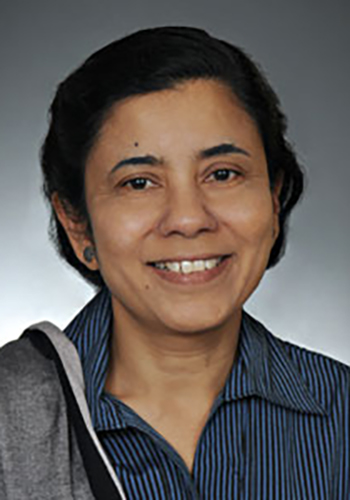
Dr. Wajiha Shireen is a Professor in the Department of Engineering Technology at the University of Houston’s College of Technology. She has held this position since 1993 and maintains a joint appointment in the Department of Electrical and Computer Engineering. Her academic focus spans power electronics, smart grid technologies, and renewable energy systems. Education: B.S. (Bangladesh University of Engineering and Technology, 1987), M.S. (Texas A&M University, 1991), Ph.D. (Texas A&M University, 1993) Dr. Shireen’s research centers on power quality, wireless power transfer, battery energy storage systems, and the integration of renewable energy sources like solar and wind into modern grids. She has pioneered advancements in MPPT control for photovoltaics and frequency regulation in microgrids , with a particular emphasis on low-inertia grid stability . Her recent publications highlight trends in EV charging infrastructure optimization , predictive control for energy systems , and grid-following battery storage operations . These works intersect electrical engineering, renewable energy, and smart grid technologies. Scientific Awards : College of Technology Outstanding Faculty Award for Teaching (2014) College of Technology Outstanding Faculty Award for Research (1998, 2006) Featured in the Journal of Engineering Technology as a leading researcher (2001) Dr. Shireen has secured over $3 million in grants from the National Science Foundation, Department of Energy, and industry partners like Texas Instruments and Transmark Subsea. She has mentored numerous students, including co-authors Amir Hussain , Preetham Goli , and Sonal Patel , and contributed to the development of educational tools such as the Microgrid Test Bench .
Akhtar Hussain serves as an Assistant Professor in the Department of Electrical and Computer Engineering at Laval University, Quebec. His research centers on AI-driven optimization of power and energy systems, with emphasis on microgrid resilience, distributed energy resource integration, and electric vehicle-grid interactions. He actively contributes to advancing grid reliability through innovative resource allocation and consumer satisfaction frameworks. Ph.D. in Electrical Engineering, Incheon National University, South Korea (2019) M.Sc. in Electrical Engineering, Myongji University, South Korea (2014) B.Sc. in Electrical Engineering, National University of Sciences and Technology, Pakistan (2011) Dr. Hussain's research spans power systems resilience, smart grid technologies, and equitable energy access. His work integrates artificial intelligence with traditional power engineering to address challenges in microgrid operation, electric vehicle integration, and renewable energy management. Key focus areas include developing algorithms for optimal resource utilization, enhancing grid stability during contingencies, and designing frameworks for fair energy distribution in diverse communities. His recent publications (2023-2025) reveal a strong trajectory toward AI-enhanced grid management, with recurring themes of resilience optimization, equity-focused resource allocation, and electric vehicle-grid synergies. The research demonstrates increasing sophistication in handling uncertainty through machine learning while addressing socio-technical dimensions of energy transition. Dr. Hussain currently supervises one Master's student and has guided five Ph.D. candidates to completion. His research is funded by a Natural Sciences and Engineering Research Council of Canada (NSERC) Discovery Grant ($160,000/year) for the project 'Grid Condition and Resilience-Aware Incentivization and Deployment of Distributed Energy Resources' (2024-2029), supplemented by a Springboard to Discovery award ($40,000) for 2024-2025. As an IEEE member, he collaborates with industry partners on real-world grid modernization initiatives, focusing on practical implementation of resilience strategies through microgrids and mobile energy resources.
Shivam Saxena is an Assistant Professor in the Department of Electrical and Computer Engineering at the University of New Brunswick, located in Head Hall D65, Fredericton. His research focuses on smart grid technologies, including distributed energy resource integration, blockchain applications for energy trading, electric vehicle-grid interactions, and resilient microgrid design. This work addresses decarbonization challenges through technological and market innovations. Publications demonstrate a strong emphasis on real-world implementation, with field-tested solutions for V2X integration, blockchain-based transactive energy, and distributed control systems. Recent work explores novel applications in agricultural energy management and trust mechanisms for decentralized systems.
Charu Sharma is an Associate Professor in the Department of Electrical Engineering at UiT The Arctic University of Norway, specializing in power systems and smart grid technologies. Her work focuses on reactive power control, voltage stability, and optimization of renewable energy-integrated networks. Research on cyber-physical co-simulation frameworks for real-time grid management Development of hybrid renewable energy microgrids for rural and industrial applications Expertise in optimization algorithms (e.g., BFOA-PSO, ANFIS) for energy systems Recent publications highlight her contributions to DER-enriched distribution networks, low-inertia system stability, and intelligent load frequency control. She actively collaborates with researchers on projects like Cooperative Isolated Renewable Energy Systems and arcICE , addressing reliability and sustainability challenges.
Xiaonan Lu is an Associate Professor of Electrical Engineering Technology at Purdue University's School of Engineering Technology, with a courtesy appointment in the Elmore Family School of Electrical and Computer Engineering. His research focuses on critical challenges in modern power systems dominated by inverter-based resources, particularly stability and control in microgrids and renewable-integrated grids. His research interests span power systems engineering with emphasis on small-signal stability analysis, dynamic modeling of hybrid AC/DC microgrids, and advanced control strategies for grid-forming and grid-following inverters. He investigates AI-assisted modeling techniques, resilience enhancement through hydrogen integration, and data-driven optimization of microgrid operations to address challenges in low-inertia power systems and distributed energy resource coordination. Analysis of his recent publications (2024-2025) reveals dominant trends toward AI-aided stability assessment, seamless control transitions between inverter modes, and quantifiable trade-offs in voltage regulation and power sharing. His work consistently addresses practical implementation challenges including communication delays, cyber resilience, and standardized testing methodologies for inverter-dominated systems.
Hsiao-Dong Chiang is a Professor in the School of Electrical and Computer Engineering at Cornell University. He holds a Ph.D. in Electrical Engineering from the University of California, Berkeley, and has made significant contributions to nonlinear system theory and power system stability. His research spans theoretical development and practical applications in electric power systems, nonlinear optimization, and machine learning. B.S., Electrical Engineering, National Taiwan University, 1979 M.S., Electrical Engineering, National Taiwan University, 1981 Ph.D., Electrical Engineering, University of California, Berkeley, 1986 Chiang's research interests focus on nonlinear system theory , power system stability and control , nonlinear optimization , and their applications to modern power grids with high penetration of inverter-based resources. He is renowned for developing the BCU method and TRUST-TECH methodology , which have enabled fast direct stability assessment and global optimization in complex systems. His work bridges fundamental theory with industrial deployment through his companies, Bigwood Systems, Inc. and Global Optimal Technology, Inc. His recent publications (2024–2025) reflect a strong trend toward integrating machine learning and deep neural networks with power system analysis , particularly in state estimation, optimal power flow, and voltage control. There is a clear emphasis on handling uncertainty, non-convexity, and multi-scale dynamics in active distribution networks and integrated energy systems . His work increasingly focuses on resilience , real-time control , and user-centered methodologies for modern grid operations. Chiang has received numerous scientific honors, including: IEEE Fellow (1997) United States Presidential Young Investigator Award (1989) Multiple DOE Grid Optimization Challenge Awards (2020–2023) Best Paper Awards from IEEE Transactions and Conferences Outstanding Education Award, Cornell University (1990) He has successfully managed over 100 research projects and holds 28 U.S. and international patents. As the founder of Bigwood Systems, Inc., he has commercialized advanced software for utility companies across the U.S. and Japan. His team has published over 480 refereed papers and received more than 17,500 citations. He advises a large research group and leads innovations in computational methods for energy systems. His lab is actively involved in developing next-generation tools for grid security, optimization, and machine learning integration.