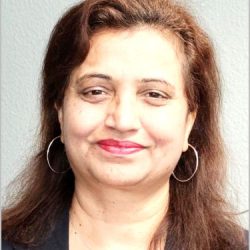
Gunther Döhlemann is a Professor at the Institute of Plant Sciences, University of Cologne, specializing in molecular plant-microbe interactions. His research, affiliated with CEPLAS since 2014, focuses on effector proteins of biotrophic microbes, plant immune signaling, and root-microbiome assembly. Key Themes: Effector biology, plant immunity, microbiome dynamics, synthetic biology. Technologies: Metabolomics, imaging platforms, computational plant sciences. Recent work investigates Ustilago maydis effector proteins in maize tumor formation, inter-kingdom conserved motifs in immune suppression, and apoplastic peptide signaling. Publications span high-impact journals like Nature Communications and Science . His lab integrates experimental approaches with theoretical plant sciences to decode cross-kingdom communication mechanisms. Collaborations emphasize network-building and interdisciplinary research.
Alfred Michael Franz is a Professor of Medical Informatics at Ulm University of Applied Sciences (THU) since 2017, where he serves as Dean of Studies for Computer Science. Prior to this position, he worked as a scientist and deputy research group leader at the German Cancer Research Center in Heidelberg. His research focuses on navigated medical interventions , with particular emphasis on: Medical instrument tracking and localization Ultrasound imaging and image fusion Augmented reality applications for medical procedures Artificial intelligence for diagnostic and therapeutic support Cancer and stroke treatment technologies Prof. Franz's recent publications demonstrate a strong trend toward integrating AI with medical imaging and intervention technologies. His work spans applications in cancer ablation therapy, stroke treatment, and diagnostic imaging, with a particular focus on improving precision through navigation systems and augmented reality. Notable recognition includes: DEMA Award third place in 2020 for a student project on image fusion Program committee member for MICCAI 2017 and IPCAI 2021 Reviewer for prestigious journals including Medical Physics and International Journal of Computer Assisted Radiology and Surgery Prof. Franz actively involves students in his research through project work and theses. His "Navigation for Medical Interventions" laboratory provides opportunities for students from various programs including Data Science in Medicine, Computer Science, and Medical Devices. He has supervised numerous student projects that have led to publications and conference presentations, and offers doctoral opportunities in cooperation with universities. The "Navigation for Medical Interventions" laboratory, led by Prof. Franz, conducts cutting-edge research on medical tracking systems, ultrasound imaging, and augmented reality applications. Current projects include developing systems for 3D reconstruction of residual limbs, AI support for interventional radiology, and navigation systems for cancer and stroke treatments.
Samuel Schülein is Professor for physiotherapeutic therapy methods at the Ulm University of Applied Sciences (THU) since 2024. His academic credentials include a Dr.rer.biol.hum. from Friedrich-Alexander-Universität Erlangen-Nürnberg (2017), M.Sc. in Physiotherapy from Philipps-Universität Marburg (2011), and B.Sc. in Physiotherapy from Hochschule Fulda & Philipps-Universität Marburg (2008). His clinical research focuses on: Mobility in older adults Falls & Fall Prevention in the elderly Fall Syndrome Frailty & Sarcopenia Dizziness Professor Schülein's research integrates biomechanics, rehabilitation engineering, and geriatrics to develop assessment tools and interventions for improving mobility in older populations. His work demonstrates expertise in instrumented gait analysis using wearable sensor technology, validation of clinical assessment tools, and application of exoskeleton technology for mobility assistance. He has led significant projects including the statewide implementation of the MoSi® training and prevention program (2019-2022) and served as leader of the clinical testing phase for the XoSoft soft exoskeleton project within the EU Horizon 2020 framework (2017-2019). His scholarly output reveals consistent research productivity with publications spanning from 2013 to 2023. His work shows a clear evolution from foundational studies on assessment tools and reliability to more technologically advanced research on sensor-based gait analysis and exoskeleton technology. The interdisciplinary nature of his research bridges clinical practice with engineering solutions for geriatric care. Professor Schülein teaches in the B.Sc. Physiotherapy program, covering foundational professional practice, anatomy and physiology, geriatrics/gerontology/psychiatry, and physiotherapeutic care for the spine and trunk. He supervises Bachelor's, Master's, and doctoral theses, demonstrating his commitment to academic mentorship.
Alexei Yurievich Kitaev is a Russian-American theoretical physicist and professor at the California Institute of Technology. His work spans topological quantum field theory, quantum computing, and condensed matter physics, with groundbreaking contributions to fault-tolerant quantum computation and topological phases of matter. Education: Moscow Institute of Physics and Technology (1986), Ph.D. from Landau Institute for Theoretical Physics (1989). Affiliations: Caltech (since 2002), Microsoft Research (1999–2001), Landau Institute (1989–1998). Research focuses on topological quantum field theory, quantum computing, and condensed matter physics, including the development of the toric code, Kitaev spin liquid, and Sachdev–Ye–Kitaev model. His 2006 paper introduced exactly solvable lattice models for topological order. Key awards include the MacArthur Fellowship (2008), Breakthrough Prize in Fundamental Physics (2012), Dirac Medal (2015), Oliver E. Buckley Prize (2017), and the Henri Poincaré Prize (2024). Kitaev also advocates for political causes, notably signing an open letter against the Russian invasion of Ukraine in 2022. He collaborates with Google Quantum AI on experimental realizations of fault-tolerant quantum computation using the toric code, as seen in recent publications (e.g., 2021–2023 studies on topological qubits and error suppression).
Bert Vogelstein is a Professor of Oncology and Pathology at the Johns Hopkins School of Medicine and serves as Director of the Ludwig Center at the Sidney Kimmel Comprehensive Cancer Center . A Howard Hughes Medical Institute investigator, he is renowned for his groundbreaking work in cancer genomics , particularly in elucidating the somatic evolution of tumors. University of Pennsylvania (B.A.) Johns Hopkins School of Medicine (M.D.) His research focuses on: Colorectal cancer genetics Tumor suppressor genes (e.g., TP53 , APC ) Liquid biopsy technologies (Digital PCR, BEAMing, SafeSeqS) Mathematical models of cancer evolution Genomic instability in hereditary cancers His recent publications emphasize liquid biopsies for cancer detection, exomic sequencing of tumors, and mathematical modeling of therapy resistance. Key trends include precision oncology, mutation profiling, and non-invasive diagnostic methods. Scientific awards include: Breakthrough Prize (2013) Warren Triennial Prize (2014) Japan Prize (2021) Gruber Prize (2019) Dan David Prize (2018) Vogelstein has mentored key researchers like Kenneth Kinzler and Victor Velculescu . His work has been supported by major grants from the Howard Hughes Medical Institute and Ludwig Center . He leads the Vogelstein-Kinzler Lab at Johns Hopkins, which has pioneered cancer genomics and liquid biopsy technologies. The lab collaborates with institutions like Harvard University and Technion on interdisciplinary cancer research.
Dr. Dekel Rosenfeld is a Senior Lecturer in the Department of Biomedical Engineering at Tel Aviv University, affiliated with The Iby and Aladar Fleischman Faculty of Engineering. He holds a Ph.D. in Biomedical Engineering from the Technion (2015) and conducted postdoctoral research at MIT's Bioelectronics group (2016-2022), focusing on magnetothermal approaches for peripheral nerve/organ interfaces and gut-brain axis studies. Education: B.Sc. in Biomedical Engineering (Cum Laude, 2007), Technion M.Sc. in Biomedical Engineering (Direct Track, 2010), Technion Ph.D. in Biomedical Engineering (2015), Technion His research develops magnetic functional materials for remote neuromodulation and calcium-dependent processes in peripheral organs. Key applications include treating hormonal imbalances in mental health disorders like PTSD through adrenal stress hormone control , and advancing organ-brain communication understanding using minimally invasive techniques validated in vitro and in vivo . Recent publications (2020-2025) demonstrate expertise in magnetothermal stimulation , bioelectronic interfaces , and neuro-endocrine interactions , with notable work in Science Advances and Neuron . Current projects explore in silico thermal transducer optimization and 3D magnetic collagen gels for cellular control.
Larissa Fleischmann is a Scientific Team Leader at the European Centre of Just Transition Research and Impact-Driven Transfer (JTC) at Martin Luther University Halle-Wittenberg (MLU Halle-Wittenberg). Her research spans critical migration and border studies , more-than-human political geographies , and biosecurity , with a regional focus on Eastern Germany, Europe , and Sub-Saharan Africa . She has been affiliated with MLU Halle-Wittenberg since 2018 and previously worked at the University of Konstanz. Education : Doctorate in Social Sciences (Dr. rer. soc.), University of Konstanz (2018) Master’s in Human Geography, University of Glasgow (2014) B.Sc. in Geography, University of Bayreuth (2013) B.A. in Geographical Development Studies of Africa, University of Bayreuth (2013) Research Projects : Animals, Power and Space (2021–present): Funded by the German Research Foundation (DFG), explores biosecurity practices (fencing, zoning, mapping, killing) for African Swine Fever (ASF) through a more-than-human lens. The Contested Solidarities of Refugee Support (2014–2018): Analyzed refugee volunteering during the 2015 European crisis, focusing on power and political ambiguity. Key Publications : Contested Solidarity (2020, open access monograph) Guest Editorial in Political Geography (2023) Peer-reviewed articles in journals like sub/urban , Environment and Planning E , and Preventive Veterinary Medicine Scientific Awards : 2021 Promotion Prize, Migration and Ethnic Minorities Section of the German Sociological Association Teaching and Mentorship : Co-leads courses in Human Geography at MLU Halle-Wittenberg Contributed to workshops on more-than-human borderlands and biosecurity Labs/Teams : Lead of Innovation Team A6 "Demographic Change and Migration" at JTC Collaborates with institutions across Europe and Southern Africa
Inigo Martincorena is a Group Leader at the Wellcome Trust Sanger Institute, where he leads the Martincorena Group focused on somatic evolution research within the Cancer, Ageing and Somatic Mutation Programme. His career path includes positions as a CRUK Career Development Fellow, Research Fellow at Queens' College, University of Cambridge, and Postdoctoral Fellow at the Sanger Institute, demonstrating his deep integration within the academic research community. Dr. Martincorena's research centers on understanding somatic mutation and evolution in normal tissues and its implications for cancer development and ageing. His groundbreaking work has revealed that human tissues are mosaics of thousands of competing clones carrying cancer-driver mutations, fundamentally changing our understanding of early cancer development. His group has published seminal studies on somatic mutation landscapes in normal skin, esophagus, bladder, and other tissues, showing that these processes are widespread across human tissues. The Martincorena Group combines genome sequencing, laser capture microscopy, and computational data analysis to investigate somatic mutation dynamics, with current work focusing on characterizing somatic mutation in healthy tissues, exploring the role of somatic mutation in ageing and disease, studying somatic mutation in other species, and developing new experimental and computational methods. Among his notable scientific achievements, Dr. Martincorena holds the prestigious CRUK Career Development Fellowship and has developed dNdScv, an evolutionary method to study selection in cancer and somatic evolution that has become widely used in the field. His research has been published in top-tier journals including Nature, Science, and Cell, with multiple highly cited papers that have reshaped understanding of somatic evolution in normal tissues. Dr. Martincorena leads a research group within the Cancer, Ageing and Somatic Mutation Programme at the Sanger Institute, collaborating with numerous researchers and institutions worldwide. His group's work has significant implications for understanding cancer development, improving early detection methods, and potentially developing new approaches to prevent cancer. The Martincorena Group continues to push the boundaries of somatic mutation research with innovative methodologies and comprehensive analyses of normal tissue genomics.
Mohammad Sadeghi is a Research Fellow at the Institute of Mechatronics in Mechanical Engineering, Hamburg University of Technology, specializing in robotics, haptic systems, and sensor design. He holds a Dr.-Ing. degree and maintains active roles in research supervision and collaborative industry projects. His academic foundation includes: M.Sc. in Mechanical Engineering from Ferdowsi University, Mashhad, Iran B.Sc. in Mechanical Engineering from Birjand University, Birjand, Iran Dr. Sadeghi's research integrates robotics with medical applications, focusing on wearable exoskeletons for telerehabilitation, bio-inspired whisker sensors, and magnetoelectric actuator systems. His methodological approach combines finite element simulation, inverse optimization, and machine learning to solve challenges in human-robot interaction and precision sensing. Recent work demonstrates growing emphasis on mixed reality integration for industrial haptic feedback and minimally invasive surgical applications. Publication analysis reveals dual research thrusts: medical robotics (40% of recent output) featuring rehabilitation devices and surgical sensors, and magnetoelectric systems (35%) for bioimaging and precision actuation, complemented by biomaterials and manufacturing optimization studies. Recognition includes: Hamburg Innovation Call for Transfer award (2024) for surgical precision enhancement via whisker sensors He supervises six active theses on topics including magnet-based whisker sensors and mixed reality haptic feedback, with Kyrillos Adeeb's 2024 singularity-avoidance project completed. Industry collaborations with Schaeffler (robotic manufacturing), MBJ GmbH (solar robotics), and bAhead (liquid handling systems) demonstrate translational impact. His experimental work utilizes the institute's Haptics Lab and PHiLsLab for hardware-in-the-loop validation of autonomous systems.
Dr. Stefano Villa is a Group Leader and Scientist at the Max Planck Institute for Dynamics and Self-Organization , leading interdisciplinary research at the intersection of biophysics, fluid dynamics, and cellular mechanics. He earned a Master's degree in Physics from the University of Milan (2014) and a PhD in Physics from the University of Montpellier (2018). His career includes postdoctoral work at the Charles Coulomb Laboratory (Montpellier) and BIOMETRA Department (University of Milan). His research spans three main domains: Cilia-Driven Cerebrospinal Fluid Dynamics in the ventral third ventricle of mammalian brains, using particle tracking and immunostaining to decode flow patterns. Shear-Induced Cellular Responses in amoeba colonies, epithelial monolayers, and heart muscle fibers, integrating experimental microscopy with vertex modeling. Colloidal and Soft Matter Mechanics via rheomicroscopy and 3D tracking of microparticles near fluid interfaces. His recent publications in Soft Matter , Nature Materials , and Cell Reports highlight his contributions to understanding tissue fluidification, stress-induced phase transitions, and interfacial particle dynamics. Collaborations span institutions including the University of Milan , IFOM Institute , and Charles Coulomb Laboratory .
Prof. Dr. Alexander Westermann (Chair of Microbiology, University of Würzburg) is a leading researcher in RNA biology of anaerobic gut commensals and host-microbe interactions . Since 2023, he has served as a W2-Professor at the University of Würzburg, previously holding a Junior Professorship and leading a junior research group at the Helmholtz Institute for RNA-based Infection Research (2018-2023). His work integrates cross-species RNA-seq technologies and hypoxic tissue models to study bacterial colonization. His research focuses on Salmonella virulence regulation via small RNAs, metabolic interactions within Bacteroidetes , and microbiota-pathogen dynamics . Notably, he developed low-input RNA-seq protocols for single-cell analysis of gut bacteria. His team has trained multiple PhD students including Tais Franco de Carvalho , Nahyung Ko , and Ann-Sophie Rüttiger , while postdocs like Lena Amend and Thomas Guest have contributed to key discoveries. Awarded the 2025 GSLS Supervisor of the Year (2nd place), Westermann's work has been published in Nature , Cell Reports , and Nature Microbiology . His scientific community engagement includes leadership in the Westermann Lab on Bluesky and collaborations with institutions like UC Davis and Imperial College London.
Florian Philipp Stilz is a researcher at the Chair of Computer Science Applications in Medicine under Prof. Navab at Technical University of Munich (TUM), focusing on computational methods for medical imaging and surgical applications. His work bridges computer vision and healthcare technology within TUM's research ecosystem. His research specializes in Medical Imaging and Computer Vision with emphasis on Endoscopic Video Analysis and Neural Radiance Fields. Current work optimizes dynamic radiance field reconstruction for stereo endoscopic videos, enhancing 3D visualization in surgical procedures through pose estimation and real-time processing techniques. Stilz contributes to Prof. Navab's research group advancing computer-assisted interventions, particularly in surgical robotics and medical image computing. The team develops AI-driven solutions for endoscopic video analysis, targeting improved accuracy in minimally invasive procedures through novel radiance field optimization frameworks.
Ardit Ramadani is a Postdoctoral Researcher at Deutsches Herzzentrum München (German Heart Center Munich) and affiliated with the Technical University of Munich's Department of Informatics, Chair of Computer Aided Medical Procedures (Prof. Navab). His work bridges medical image analysis, computer vision, and surgical robotics to advance minimally invasive cardiac interventions through computational solutions. His educational background includes: Doctor of Natural Sciences in Computer Science - Biomedical Computing (2019-2025), Technical University of Munich Master of Science in Biomedical Computing (2015-2018), Technical University of Munich Bachelor of Science (Hons) in Computer Science (2012-2015), University of Sheffield, International Faculty CITY College, Thessaloniki Ramadani specializes in multimodal catheter tracking systems, developing novel approaches for electromagnetic, image-based, and active-element tracking combined with shape sensing and hybrid methodologies. His research addresses critical challenges in registration accuracy and motion compensation during endovascular procedures, with direct applications in cardiac interventions requiring real-time spatial precision. His 2022-2023 publications reveal a concentrated research trajectory in catheter tracking innovation, particularly focusing on electromagnetic tracking enhanced by bioelectric sensing and dynamic time warping algorithms. These works demonstrate strong integration of computer vision with medical robotics, targeting motion artifacts in cardiac environments through multimodal data fusion and robust registration frameworks applicable to ultrasound and preoperative imaging. No scientific awards were documented in the provided materials. Ramadani actively supervises student projects in multimodal catheter tracking, minimally invasive endovascular procedures, and motion-compensation techniques. He contributes to the DHM Research Group and RobUSt (Robotics and Ultrasound) lab, developing surgical data science solutions for cardiac interventions while teaching advanced courses in medical image computing and surgical robotics at TUM.
Lena Maier-Hein serves as one of Helmholtz Imaging's center coordinators at the German Cancer Research Center (DKFZ), head of the Intelligent Medical Systems division, managing director of the Data Science and Digital Oncology cross-topic program, and is a full professor at Heidelberg University. She also holds the position of managing director at the National Center for Tumor Diseases (NCT) Heidelberg. Her research focuses on machine learning-based biomedical image analysis with specific emphasis on surgical data science, computational biophotonics, and validation of machine learning algorithms. As a fellow of both the Medical Image Computing and Computer Assisted Intervention (MICCAI) society and the European Laboratory for Learning and Intelligent Systems (ELLIS), she leads significant initiatives including presidency of the MICCAI special interest group on challenges and chairing the international surgical data science initiative. Her publication portfolio demonstrates strong focus on algorithm validation, surgical data science, and medical imaging AI, with recent work addressing critical issues in reproducibility, bias in medical AI, and practical clinical implementation. The articles reveal consistent themes around establishing rigorous validation frameworks, developing practical surgical AI tools, and addressing real-world deployment challenges in medical imaging. Her notable scientific recognition includes: 2013 Heinz Maier Leibnitz Award of the German Research Foundation (DFG) 2017/18 Berlin-Brandenburg Academy Prize European Research Council (ERC) starting grant (2015-2020) ERC consolidator grant (2021-2026) She serves on the editorial boards of prestigious journals including Nature Scientific Data, IEEE Transactions on Pattern Analysis and Machine Intelligence, and Medical Image Analysis, demonstrating her leadership in establishing standards for medical imaging research. Her work bridges fundamental AI research with practical clinical applications, particularly in surgical settings where real-time decision support is critical.
Prof. Dr. Alia A. Matysik is a leading academic with dual affiliations: as a Group Leader at Leipzig University's Institute for Medical Physics and Biophysics (since 2014) and as a tenured Assistant Professor at Leiden University's Leiden Institute of Chemistry (since 2007). Her research bridges neurodegenerative diseases and environmental toxicology, leveraging ultra-high-field magnetic resonance imaging (μMRI) and spectroscopy to study Alzheimer's disease mechanisms, zebrafish metabolic pathways, and nanoplastics toxicity. Research Focus: Her work dissects gender-specific Alzheimer's progression, circadian disruptions in neurodegeneration, metabolic profiling in zebrafish models, and environmental toxin impacts. She pioneers non-invasive MRI techniques for in vivo brain imaging and develops NMR-based toxicology assays. Key collaborations span Europe (Paul Flechsig Institute, University of Leiden) and the US (Florida International University). Honors & Funding: Recipient of 10+ awards, including the Alzheimer Forschung Initiative Grant (2013), C.J. Kok Prize (2004), and JSPS Fellowship (1996). Secured major grants from NWO, ISAO, and CMSB for projects on Alzheimer's biomarkers and phenotypic engineering. Advising & Labs: Supervises doctoral/master's students in neuroimaging and metabolomics. Leads interdisciplinary teams at Leipzig and collaborates on EU-wide consortia. Her lab develops cutting-edge μMRI protocols for transgenic models.