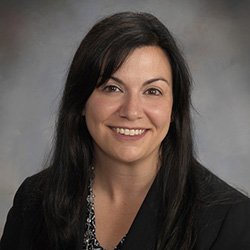
Amie Nielsen is an Associate Professor in the Department of Sociology & Criminology at the University of Miami's College of Arts and Sciences. Her research focuses on the intersection of immigration, criminology, and social policy, with a particular emphasis on racial/ethnic disparities in crime and public attitudes toward rehabilitation funding. Her work synthesizes theories of social disorganization, modern racial prejudice, and immigration's impact on urban violence. Key findings include the nonlinear relationship between English fluency and crime rates, the racialization of drug policy attitudes, and the role of socioeconomic context in alcohol availability disparities. Notable collaborations include research with Ramiro Martínez on immigrant arrest trends and Terrence D Hill on alcohol-related violence. Her publications span journals like Sociological Quarterly , Journal of Contemporary Criminal Justice , and Social Science Research .
Dr. Jeanna Mastrocinque is an Associate Professor in the Department of Law & Justice Studies at Rowan University's College of Humanities & Social Sciences. Her research examines the intersection of victimization and health outcomes, with focus areas including homicide survivorship, intimate partner violence in the Deaf community, and trauma responses to violent loss. Her current projects include a Department of Justice-funded initiative ($500,000) advancing hospital-based victim services and a Camden Health Research Initiative grant ($63,000) developing trauma-informed training for healthcare providers. Recent publications explore spirituality after traumatic loss, Deaf community experiences with intimate partner violence, and health consequences for homicide survivors. Dr. Mastrocinque employs mixed-method approaches to understand victim experiences with response systems and develops interventions addressing barriers in service accessibility.
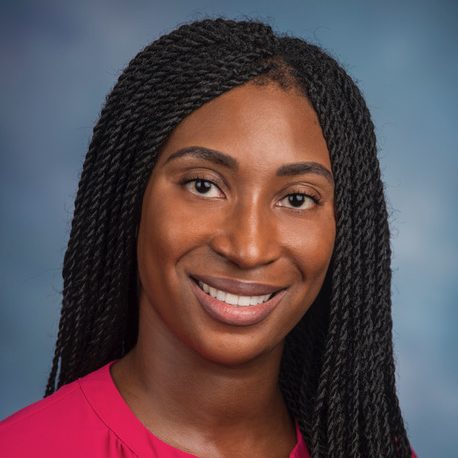
Dr. Monique Stephanie Balthazar is an Assistant Professor at the Ross and Carol Nese College of Nursing, Pennsylvania State University. Her research focuses on sleep health, brain health, and social determinants of health, with a particular emphasis on vulnerable populations, including racial, ethnic, sexual, and gender minorities. She integrates multidisciplinary approaches to address health disparities and improve healthcare equity. Her work spans clinical and translational nursing science, including studies on transgender and gender diverse populations, HIV/AIDS, violence, and mental health. Notable projects include analyzing stigma in psychiatric care, risks of intimate partner violence among gender minorities, and cost-effectiveness of palliative care interventions. She contributes to policy initiatives aimed at reducing health inequities and has published extensively in journals like International Journal of Environmental Research and Public Health and Violence Against Women . Dr. Balthazar’s research aligns with UN Sustainable Development Goals targeting health equity and well-being. She collaborates internationally and leads initiatives such as the Living Well Project and studies within the LITE Cohort. Her efforts emphasize community-based approaches to foster inclusive healthcare systems.
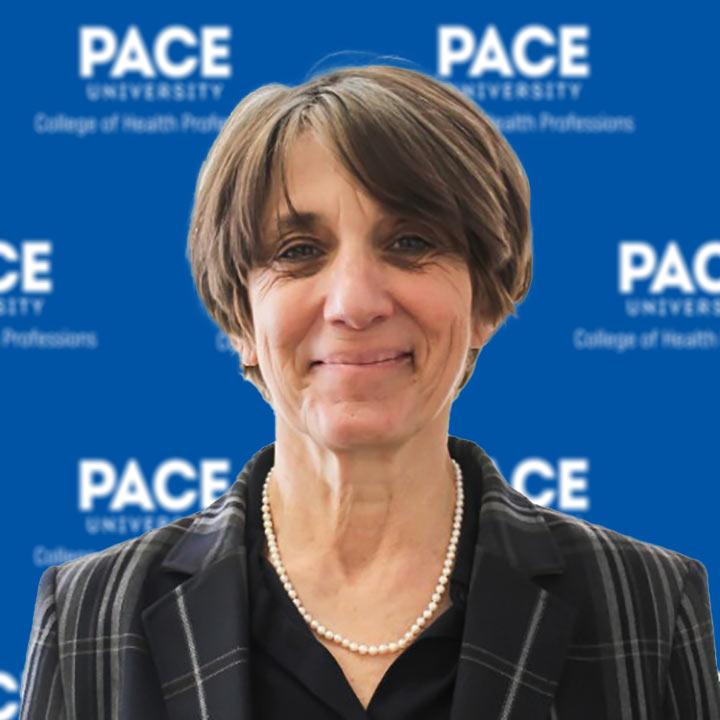
Erica Gollub is a Professor in the Department of Health Sciences within the College of Health Professions at Pace University. Her work bridges epidemiology, public health, and social justice, with a strong focus on HIV prevention, mental health, and health disparities. She is based at the Westchester campus in Lienhard Hall. Education: DrPH in Epidemiology, Columbia University MPH in Population/Family Health, Columbia University BS in Biology, Stanford University Research Interests: Dr. Gollub's research spans reproductive justice, behavioral health, and the social determinants of health. She investigates HIV prevention technologies, particularly structural barriers for women, and examines mental health and prevention behaviors among college students during crises like the pandemic. Her work also addresses disparities in firearm-related intimate partner homicides and integrates syndemic theory to understand overlapping social and health challenges. Recent Research Trends: Her recent presentations and funded research reflect a strong emphasis on integrative models of health behavior, particularly during public health emergencies. Themes include vaccine hesitancy, mental health under societal stress, structural inequities in healthcare access, and violence prevention. These works often employ epidemiological methods and national datasets to uncover disparities and inform policy. Scientific Awards: Provost Office Student-Faculty Research Award, Pace University (2022) Kenan Faculty Development Award, Pace University (2021) COVID-19 Collaborative Interdisciplinary Research Award (2021) Provost’s Certificate for Prolific and Exemplary Scholarship (2019) Fulbright Scholar (1997) Award for Accomplished Foreign Researchers, France (1998) Advising and Grants: Dr. Gollub actively mentors students through funded research projects, including multiple Student-Faculty Research Awards. She led a funded interdisciplinary study on Covid-19 vaccine beliefs among college students. She chairs the Allied Health Search Committee and contributes to academic service at Pace. Her work is supported by institutional grants focused on collaborative and innovative public health research. Labs and Teams: While no formal lab is mentioned, Dr. Gollub collaborates across disciplines, working with colleagues in psychology and public health. She presents regularly at the American Public Health Association and contributes to professional service through abstract reviews. Her affiliations with Columbia University’s HIV Center and ongoing engagement with national public health networks indicate an active research team presence.
Jordana Navarro, Ph.D., is an Associate Professor in the Department of Cyber and Computer Sciences at The Citadel, part of the Swain Family School of Science and Mathematics. Her research focuses on cybercrime, intimate partner abuse, victimology, and sexual violence, with a particular interest in how technology intersects with these issues. She holds a Ph.D. in Sociology (University of Central Florida, 2013), an M.S. in Criminal Justice, and a B.A. in Political Science. Her teaching interests include homicide and mapping analysis, and she has authored books on criminological theory and domestic abuse in virtual environments. Navarro’s work bridges sociology, criminology, and cybersecurity, emphasizing empirical research and practical applications such as GIS mapping for harm reduction. She has published extensively on topics like cyberfinancial abuse, online harassment, and gendered cybercrimes. Her recent articles explore themes such as victim-centered education, social media dynamics for marginalized groups, and the digital dimensions of domestic violence. She advocates for policies that address cyber victimization and improve support systems for survivors. Living in Charleston with her family, Navarro remains active in both academic and community initiatives to combat interpersonal violence.
Ceryl Davies is a Senior Research Fellow at the School of Health Sciences, Bangor University, with a distinguished interdisciplinary background in social work, law, education, and social policy. She holds a PhD in Social Policy and is a qualified social worker with extensive frontline and leadership experience in children’s and adult services. She has previously served as a Lecturer in Education and in Health Sciences at Bangor University and has taught at the University of Lincoln and Chester University. She is currently a Principal Investigator on multiple research projects and is accepting PhD students. Education: PhD in Social Policy MA in Law (Healthcare Ethics & Law) Postgraduate Diploma in Community and Criminal Justice DipSW (Diploma in Social Work) HEA Associate Fellow Her research centers on social norms and their influence on social problems, particularly in the areas of young people’s intimate relationships , domestic abuse , gender and sexuality , dementia care , and well-being among adults with learning disabilities . She employs co-productive and rights-based methodologies, ensuring that service users and communities are active participants in research design and implementation. Her work consistently addresses health inequities and systemic barriers, with a strong focus on policy and practice impact. Her recent publications and projects reflect a growing body of work on care leavers’ engagement with multi-agency services , dementia support roles , and mindfulness-based interventions for vulnerable populations. A major focus of her current research is the HCRW and NIHR Advanced Fellowship project on enhancing cervical screening care for women who have experienced sexual violence and abuse, a five-year international study involving partners in Wales, England, Sweden, and Australia. Scientific Awards: HCRW and NIHR Advanced Fellowship (2024) HCRW Emerging Research Leader Award (2025) University of Lincoln PhD Scholarship (2014) Ceryl has secured competitive funding from Health and Care Research Wales, North Wales Together, and other regional and national bodies. She has led evaluations of statutory services, developed national training toolkits, and contributed to policy through her role on the Welsh Government Disability Task Force. She actively supervises research students and has delivered CPD courses across the health and social care sectors. Her collaborative network includes academic, clinical, and community partners across the UK and internationally. She is a member of the North Wales Gender-Based Violence Network (Co-Chair) and has presented her research at national and international conferences, including the European Social Work Conference and the ESA Annual Meeting. Her work contributes to several UN Sustainable Development Goals, particularly those related to good health, reduced inequalities, and quality education.
James Alan Fox is the Lipman Family Professor of Criminology, Law, and Public Policy at Northeastern University's College of Social Sciences and Humanities. As a pioneering criminologist, he has maintained the Associated Press/USA TODAY/Northeastern University Mass Killings Database since 2006, documenting 567 mass killings with 2,944 victims. His work spans serial murder analysis, juvenile crime trends, and firearm policy reform, earning him recognition as one of the top 10 most influential figures in criminal justice over the past 50 years. Holds Lipman Family Chair (1999–present) Co-founded quantitative criminology journal (1985) Testified before Congress over a dozen times Advised President Clinton and Attorneys General Conducted first analytical study of serial/mass murder (1985 book) His research areas focus on mass homicide characteristics , youth violence prevention , and gun law reform . Recent publications examine media contagion effects on mass shootings and statistical models for predicting violence severity. His policy proposals include: 25-year-old gun ownership minimum Banning large-capacity magazines Strengthening local firearm purchase permits Scientific honors include: 2007 Hugo Adam Bedau Award 2008 Klein Lectureship Academic Influence Top 10 ranking While no longer teaching regular classes, Fox remains active through public policy advocacy , NBC News commentary , and leading Boston's 'Unfreedom Trail' historical crime tours. His work has shaped national discourse on gun violence prevention and criminal justice reform.
Alexandra Lysova, Ph.D., is a Full Professor in the School of Criminology at Simon Fraser University in Vancouver/Burnaby, Canada. Her academic credentials include a Doctor of Sciences in Sociology from the Russian Academy of Sciences and a Ph.D. in Criminology from the University of Toronto. Educational Background Doctor of Sciences in Sociological Sciences, Russian Academy of Sciences, St. Petersburg Ph.D. in Criminology, University of Toronto Dr. Lysova has conducted groundbreaking research on intimate partner violence and homicide for over 20 years, examining victimization across genders in both Russia and Canada. Her methodological approach combines international focus groups, the Canadian General Social Survey on Victimization, and the Homicide Survey. She has secured funding from prestigious institutions such as the Fulbright Foundation , Humboldt Foundation , and Trudeau Foundation . Her scholarly output includes over 80 publications in Russian and English. In 2022, she was honored with the Sterling Prize in Support of Controversy for her research on men’s victimization experiences. Dr. Lysova actively contributes to academic governance and freedom, serving on SFU’s Senate and university-wide committees. In 2023, she earned the Heterodox Academy Leadership Award and facilitated SFU’s integration into the Heterodox Academy Network of Academic Communities.
Dr. Kerem SEHLİKOĞLU is an Assistant Professor and Head of the Department of Forensic Medicine at Adıyaman University, Faculty of Medicine. He also serves as President of the Forensic Medicine Institute Gaziantep Group. Previously, he worked as a Specialist at the Adıyaman Forensic Medicine Branch Directorate from 2019 to 2021. Dr. SEHLİKOĞLU earned his medical degree from Gaziantep University (2006-2013), completed Forensic Medicine specialization training at Fırat University (2014-2017), and further specialized at Adıyaman University (2017-2019). His academic credentials provide a strong foundation for his forensic expertise. His research spans multiple forensic domains with particular emphasis on trauma analysis, forensic toxicology, suicide and homicide investigations, substance abuse forensics, and specialized studies in both pediatric and geriatric forensic medicine. Recent publications demonstrate a focus on regional forensic patterns in southeastern Turkey, including suicide attempts, intimate partner violence dynamics, and juvenile delinquency characteristics. His work bridges clinical findings with legal implications, contributing significantly to forensic methodology development. Total Citations: 48 Google Scholar h-index: 3 Web of Science h-index: 2 As an educator, Dr. SEHLİKOĞLU teaches comprehensive forensic medicine courses covering drowning cases, ASI (Assault, Sexual Injury) cases, autopsy procedures, blunt traumatic wounds, work accidents, and gunshot wounds. His teaching integrates theoretical knowledge with practical forensic applications, preparing students for real-world forensic challenges. Dr. SEHLİKOĞLU maintains active involvement in the forensic medicine community through leadership roles and scholarly contributions, advancing forensic science practice and education in Turkey.
Esperanza García Vergara serves as Assistant Professor in the Department of Quantitative Methods at Loyola University Andalusia, where she teaches Probability and Statistics. Her interdisciplinary work bridges computer science, criminology, and public health through AI applications for gender-based violence prevention. Her academic credentials include: PhD in Data Science (2024) Master's in Research Methods (2021) Double Degree in Psychology and Criminology (2020) Dr. García Vergara's research pioneers AI-driven femicide risk assessment, developing genetic algorithm models that incorporate victim coping strategies and legal document analysis. Her methodology transforms static risk tools into dynamic predictive systems by integrating multilevel factors from victim behavior to judicial records, creating actionable prevention frameworks for law enforcement and social services. Her 2022-2024 publications reveal consistent interdisciplinary output across computational science (Heliyon, Sci Rep) and public health journals (IJERPH), with systematic reviews establishing foundational knowledge and algorithmic papers delivering technical innovation. This dual approach balances theoretical rigor with practical implementation. Currently leading a Junta de Andalucía-funded Pre-Doctoral Project (2022-2026), she directs research on femicide prediction models while mentoring doctoral candidates. Though no formal lab structure is documented, her project team operates at the intersection of data science and criminology. Her conference presentations at international forums—including the V International Conference on Predoctoral Research in Law (2022) and I International Symposium on Feminist Studies (2021)—demonstrate active engagement with judicial and feminist academic communities to translate research into policy impact.
Dr. Beth Bailey serves as Professor with Tenure and Director of Health Services Research at Central Michigan University College of Medicine, leading clinical and health systems research initiatives since joining the faculty in 2019. Her work engages campus-wide faculty and statewide collaborators to address critical maternal-child health issues through rigorous epidemiological approaches. Her educational background includes: B.S. from University of Michigan-Ann Arbor M.A. from Wayne State University Ph.D. from Wayne State University Dr. Bailey's research centers on maternal and child health with specialization in prenatal substance exposure (tobacco, marijuana, opioids) and perinatal mental health . She employs longitudinal clinical research methodologies and leverages electronic health records alongside population-based datasets to investigate surveillance systems, intervention efficacy, and developmental consequences for exposed children. Her work addresses urgent public health challenges including substance use disorders in pregnancy and health disparities affecting rural populations. Analysis of her 2023-2024 publications reveals consistent focus on dose-response relationships between prenatal exposures and birth outcomes, with increasing attention to pandemic-related mental health impacts and health equity considerations. Her research demonstrates methodological sophistication through matched cohort designs and sophisticated statistical modeling of complex perinatal datasets. Her scholarly contributions have been recognized through: College of Medicine Honoree designation Woman of the Year award Faculty Research Excellence Award As an educator, Dr. Bailey mentors medical students through research electives and academic advising while directing key curriculum components including the Medicine and Society course and Social Determinants of Health elective. Her NIH and SAMHSA-funded research programs support multiple student and faculty projects through coordinated access to regional health databases and collaborative research infrastructure. Dr. Bailey extends her expertise beyond campus through leadership roles in the Michigan Health Alliance THRIVE Initiative and Michigan Region 5 Perinatal Quality Collaborative, where she applies epidemiological methods to improve community maternal health outcomes. She also serves as the College of Medicine liaison for the MD-MPH Program, bridging clinical medicine with population health training.
Dr. Elicka Sparks is Professor of Criminal Justice in the Department of Government and Justice Studies within Appalachian State University's College of Arts and Sciences, where she has served since 2003. She concurrently holds the position of Honors Program Director for the department since 2010, guiding advanced curriculum development and student mentorship. Her academic credentials include: Ph.D. in Criminology and Criminal Justice, University of Missouri—St. Louis (2002) M.A. in Criminology and Criminal Justice, University of Missouri—St. Louis (1998) B.S. in Criminology and Criminal Justice, University of Missouri—St. Louis (1996) Dr. Sparks' research critically examines homicide patterns, theoretical frameworks in criminology, religion's influence on criminal behavior, and interpersonal/intimate partner violence dynamics. She employs integrated methodological approaches to analyze situational crime contexts, particularly focusing on how conservative religious environments intersect with criminal outcomes and how gendered power dynamics manifest in violent relationships. Her scholarship bridges theoretical rigor with practical criminal justice applications. Her significant scholarly recognition includes: Outstanding Teacher in Arts and Sciences Award (2016) Academy of Outstanding Teachers Award Kappa Sigma Kick-Ass Professor Award (Florida State University) Outstanding Teacher Meritorious Service Award (University of Missouri) 50 Most Frequently Cited Articles in Homicide Studies and Punishment & Society As Honors Program Director, Dr. Sparks mentors high-achieving students through advanced research projects and specialized coursework. Her teaching portfolio spans foundational theory and methods courses to specialized seminars on homicide, victimology, and culture-violence intersections, reflecting her commitment to developing critical analytical skills in criminal justice education.
James Alan Fox is the Lipman Family Professor of Criminology, Law, and Public Policy at Northeastern University in Boston, Massachusetts. With a career spanning over four decades, he is widely recognized as one of the nation's leading criminologists, often referred to as "The Dean of Death" for his extensive research on mass murders. His academic journey began at American University for his bachelor's degree, followed by multiple degrees from the University of Pennsylvania. Throughout his career, Fox has maintained affiliations with several prestigious institutions including Northeastern University, University of Massachusetts Lowell, Vanderbilt University, and American University. Dr. Fox's educational background is impressive and multidisciplinary: Bachelor's degree in Sociology from American University (1972) Master's degree in Criminology from University of Pennsylvania (1974) Master's degree in Statistics from University of Pennsylvania (1975) Ph.D. in Sociology from University of Pennsylvania (1976) James Alan Fox's research interests span multiple critical areas within criminology, with particular emphasis on understanding extreme violence. His work focuses on serial murder, mass shootings, intimate partner homicide, youth crime, school and campus violence, workplace violence, and capital punishment. What sets Fox apart is his rigorous statistical approach to studying crime patterns and trends. He has developed expertise in randomized response techniques for surveying sensitive topics, which has strengthened the methodological foundation of criminological research. His research often bridges academic theory with practical policy implications, making it highly influential in both scholarly and public policy circles. Dr. Fox's publications reveal a consistent focus on understanding patterns of extreme violence, particularly mass shootings and serial murder. His work demonstrates a progression from foundational statistical methods in criminology to increasingly specialized studies of mass violence. Recent publications show a growing interest in the contagion effect of media coverage on mass shootings, school safety, and forecasting the severity of public shootings. His research combines rigorous quantitative analysis with practical policy recommendations, reflecting his dual commitment to academic scholarship and real-world impact. The breadth of his work spans from methodological innovations in survey research to comprehensive analyses of homicide trends and mass murder phenomena. James Alan Fox has received significant recognition for his scholarly contributions: Hugo Adam Bedau Award for excellence in capital punishment scholarship (2007) Klein Lectureship from Northeastern University (2008) As an influential scholar, Fox has advised policymakers at the highest levels. He served on President Bill Clinton's advisory committee on school shootings and a Department of Education Expert Panel on Safe, Disciplined and Drug-Free Schools. His expertise has been sought by the United States Congress (with over a dozen testimony appearances) and in White House meetings with the President. Fox also chaired a blue-ribbon panel for the city of Seattle investigating the 2006 Capitol Hill massacre. His ability to translate complex criminological research into accessible insights has made him a frequent contributor to major media outlets, where he has published over 300 op-ed columns in newspapers including the New York Times, Washington Post, Los Angeles Times, and USA Today. James Alan Fox maintains a significant presence in both academic and public spheres. As a principal in maintaining the Associated Press/USA Today, Northeastern University Mass Killing Database, he has created a valuable resource for researchers and policymakers. His frequent media appearances on national television and radio programs, including the Today Show, Meet the Press, Dateline, 20/20, 48 Hours, and Oprah, demonstrate his commitment to bringing criminological insights to the broader public. His work bridges the gap between academic research and practical application, making complex issues of violence and crime accessible to diverse audiences.
Shilan Caman is a Postdoctoral Researcher at the Department of Clinical Neuroscience, Karolinska Institutet, Stockholm, Sweden (2023-2026), affiliated with the Centre for Psychiatry Research and Katarina Howner's Research Group. Her work bridges forensic behavioral neuroscience and clinical psychiatry within Sweden's legal-medical framework. She earned her Doctor of Philosophy from Karolinska Institutet's Department of Clinical Neuroscience in 2017, establishing her expertise in violence-related research through population-based Swedish studies. Dr. Caman's research critically examines intimate partner violence , femicide , and homicide through intersecting lenses of forensic psychology , psychiatry , and criminology . Her methodology combines quantitative epidemiological analysis with qualitative perpetrator interviews, revealing gendered patterns in youth violence, mental disorder comorbidity, and treatment resistance. Key contributions include identifying boldness-meanness-disinhibition dynamics in psychopathy and exposing systemic gaps in femicide prevention. Analysis of her 15 most recent publications (2015-2025) shows escalating focus on youth intimate partner homicide ( 2024 ) and voluntary help-seeking perpetrators ( 2024 ), while maintaining core investigation of Swedish homicide databases. Her work consistently employs controlled population studies, highlighting Sweden's unique forensic registry advantages and revealing cross-cultural applicability in perpetrator typologies. Dr. Caman currently leads a Swedish Research Council-funded grant (2023-2025) evaluating social service interventions for intimate partner violence perpetrators through mixed-methods design. This project collaborates with Örebro County service providers (Social Services Örebro, Mansforum Örebro) to measure recidivism risk reduction and treatment accessibility barriers, directly informing national policy reforms following Sweden's 2021 Social Services Act amendment. As a core member of Katarina Howner's Research Group, she contributes to the Centre for Psychiatry Research's mission of translating neuroscientific findings into forensic practice, particularly through psychophysiological assessments of empathy and criminal responsibility.