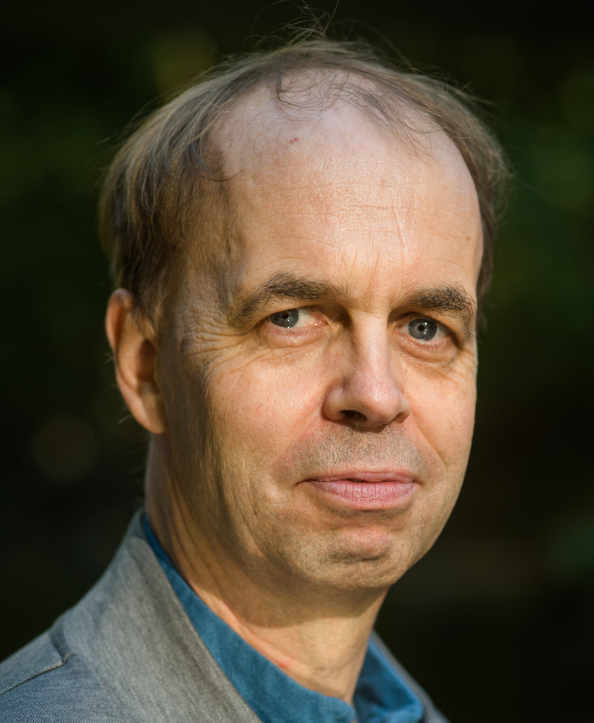
Marilyn J Smith is the David S. Lewis Professor and Director of the Vertical Lift Research Center of Excellence (VLRCOE) at the Georgia Institute of Technology's Daniel Guggenheim School of Aerospace Engineering. She leads a seven-university consortium conducting vertical lift research for the U.S. Army, Navy, and NASA, and has secured over $200 million in collaborative research funding. Computational Nonlinear Computational Aeroelasticity Lab Director NASA FUN3D development team contributor Aerospace Systems Design Lab (ASDL) affiliate Her research spans unsteady aerodynamics, computational aeroelasticity, and sustainable energy applications across rotary-wing, fixed-wing, and launch vehicles. She serves on the Vertical Lift Consortium (VLC) Board of Directors and Vertical Flight Society (VFS) Board, while acting as VFS Deputy Technical Director for Aeromechanics and leading international NATO AVT panels on UAV aerodynamics. Recent publications focus on galaxy cluster cosmology, ship-helicopter dynamic interface modeling, and Type Ia supernova analysis. She has won prestigious awards including the AIAA Aerodynamics Award and multiple American Helicopter Society honors for research, mentoring, and service. 2022 AIAA Aerodynamics Award 2015 Best Paper Awards at AHS Forum 2014 & 2012 AHS Agusta-Westland International Fellowships Her laboratory work integrates high-performance computing with aerospace design and develops advanced turbulence models through partnerships with Georgia Tech Research Institute (GTRI). She contributes to public science communication with appearances on National Geographic, PBS, NPR, and local media.
Jay Strader is a Professor in the Department of Physics and Astronomy at Michigan State University, where he serves as Graduate Director for the astronomy PhD program and Associate Chair for astronomy. His research focuses on compact objects, particularly black holes and neutron stars in globular clusters, neutron star binaries in Fermi gamma-ray sources, and intermediate-mass black holes. He has received a Packard Fellowship for Science and Engineering and grants from NSF and NASA. His research group includes postdoc Ryan Urquhart, graduate students Thomas Do and Rebecca Kyer, and several undergraduates, with past students like Teresa Panurach (now director of NoVEL Consortium) and Samuel Swihart (NRC fellow at Naval Research Lab). Education: PhD in Astronomy, UC-Santa Cruz/Lick Observatory Awards: Packard Fellowship Collaborations: Member of Rubin Observatory's Stars, Milky Way, and Local Volume science collaboration since 2008 Previous Positions: Hubble Fellow and Menzel Fellow at Harvard-Smithsonian Center for Astrophysics (2007-2012) Program Initiatives: Co-founder of PAREDS program for early research opportunities at MSU His work has been supported by NSF and NASA grants, and he has contributed to studies on black holes in M22, hypervelocity globular clusters around M87, and transitional millisecond pulsars. His group collaborates with Laura Chomiuk and contributes to data catalogs like the M31 globular cluster velocity dispersion database.
Professor David Alexander is a distinguished academic at Durham University's Department of Physics, where he serves as Professor and Chair of Board of Examiners. His responsibilities include Head of Section for Astronomy and Director of Postgraduate Research, demonstrating his significant leadership role within the department. Alexander is also responsible for teaching the Stars Lecturer component of the Level 2 Stars and Galaxies course. His primary research interests focus on Active Galactic Nuclei, black holes, and galaxy formation and evolution, representing core areas in modern astrophysics. Alexander's work spans observational and theoretical aspects of high-energy astrophysics, with particular emphasis on understanding the connections between supermassive black holes and their host galaxies across cosmic time. His research leverages data from major international facilities including NuSTAR, ALMA, DESI, and XMM-Newton, conducting multi-wavelength studies that combine X-ray, infrared, optical, and radio observations. Analysis of his most recent publications reveals a strong focus on AGN demographics, obscuration mechanisms, quasar environments, and the role of AGN in galaxy evolution. His work frequently explores the connection between AGN activity and galaxy properties, with particular attention to the cosmic evolution of these relationships. Recent papers demonstrate increasing emphasis on large-scale surveys and statistical approaches to understanding AGN populations. Leverhulme Research Fellowship (2000-2012) Philip Leverhulme Prize (2000-2008) Royal Society University Research Fellowship (2000-2003) Thomson Reuters ESI highly cited researcher over 2002-2012 Professor Alexander has been instrumental in numerous major survey projects including the NuSTAR extragalactic surveys, DESI quasar studies, and the VST ATLAS Quasar Survey. His collaborative work spans international teams and leverages cutting-edge observational facilities across the electromagnetic spectrum. His research group focuses on understanding the physical processes that govern AGN activity and their connection to galaxy evolution, with particular emphasis on obscured AGN populations and their role in the cosmic black hole growth history.
Wayne Springer is a Professor in the Department of Physics & Astronomy at the University of Utah, with a career spanning over 25 years. He has been actively involved in experimental particle astrophysics, ultra-high-energy cosmic ray (UHECR) physics, and gamma-ray astronomy. Ph.D. in Physics from University of Maryland (1991) B.S. in Physics from University of Maryland (1985) Postdoctoral training at University of Maryland and University of Alberta His research focuses on particle astrophysics, cosmic ray detection, and gamma-ray astronomy. He has made significant contributions to the development of the HiRes and Telescope Array cosmic ray observatories, as well as the HAWC and SWGO gamma-ray observatories. His recent work includes deployment of the Trinity neutrino detector prototype and serving as SWGO project manager for Chile site infrastructure. Article trends show strong emphasis on TeV gamma-ray observations (HAWC, SWGO), cosmic ray diffusion mechanisms, dark matter searches, and high-energy astrophysical source characterization (pulsars, microquasars, supernova remnants). He has secured multiple NSF grants for particle astrophysics research and leads detector working groups in international collaborations. Professor Springer actively participates in astronomy outreach, co-developing observatories and implementing computational physics teaching tools with Gradescope auto-graders for enhanced pedagogy. His work bridges experimental high-energy physics, detector development, and multiwavelength astrophysical studies.
Paul Wiegert is a Full Professor in the Department of Physics and Astronomy at the University of Western Ontario , where he has been since 1996 after positions at York University and Queen's University. He is a member of the Institute for Earth and Space Exploration (IESX) and the Centre for Planetary Science and Exploration (CPSX) . His research spans asteroid dynamics , exoplanet systems , and celestial mechanics , with notable work on Earth co-orbital asteroids like (3753) Cruithne and Earth's first Trojan asteroid 2010 TK7. Education : PhD in Astronomy (University of Toronto, 1996) Research Domains : Planetary Science, Astronomy, Big Data Analytics His recent publications focus on interstellar transport mechanisms , asteroid impact risks , and exomoon detection . Key findings include quantifying risks from asteroid 2024 YR4's potential lunar impact and demonstrating the feasibility of detecting alpha Centauri-origin material in our solar system. He actively supervises graduate students like Cole Gregg and participates in NSERC-funded summer research programs for undergraduates. For planetary defense, he has analyzed collision probabilities for Apophis and developed meteoroid hazard models for spacecraft. His work appears in Planetary Science Journal , Nature Astronomy , and Astrophysical Journal Letters , with media coverage in 60+ outlets and 126 X (Twitter) mentions .
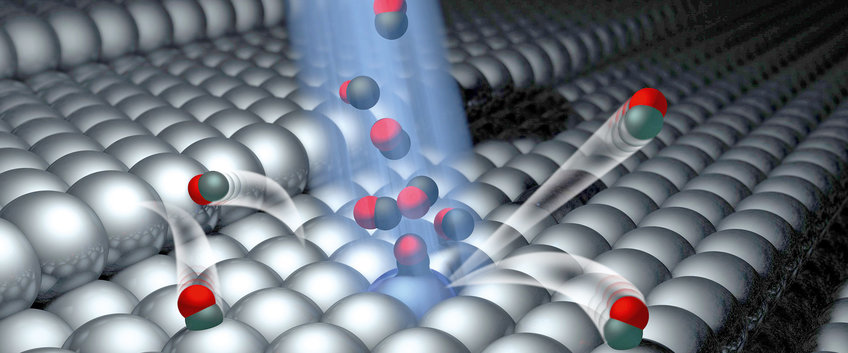
Alec M. Wodtke serves as Director at the Max Planck Institute for Biophysical Chemistry and holds a Professorship at the University of Göttingen. He leads the Dynamics at Surfaces research group, which employs cutting-edge laser, molecular beam, and ultrahigh vacuum technologies to study molecular interactions at interfaces. His research focuses on understanding the fundamental rules governing energy conversion at molecular interfaces. Wodtke's work bridges macroscopic energy conversion phenomena with molecular-scale processes, investigating how energy transfers occur one molecule and one collision at a time. His group specializes in designing well-defined experiments that capture molecules in the act of reacting, providing benchmark measurements for theoretical advances in surface chemistry. Recent research trends show a strong focus on ultrafast molecular dynamics, with significant contributions to understanding hydrogen-graphene interactions, energy dissipation mechanisms at surfaces, and atomic-scale reaction kinetics. His work has important implications for developing heterogeneous catalysts, photovoltaics, and fuel cell technologies. Alexander von Humboldt Professorship (2011) ERC Synergy Grant worth 12 million euros (2024) Ertl Lecture Prize (2022) Somorjai Visiting Miller Research Professorship Moore Distinguished Scholar at Caltech Wodtke directs multiple project groups including Atom-surface scattering dynamics, Chemical dynamics using ultra-short atom pulses, First-principles simulations of molecule-surface dynamics, and Time-resolved spectroscopy of surface adsorbates. His research team has secured significant funding including Advanced ERC Grants and operates specialized facilities for surface science research.
Professor Andrew Newsam is a faculty member at Liverpool John Moores University's Astrophysics Research Institute (ARI), where he serves as Professor of Astronomy Education and Engagement since 2012. He has been instrumental in developing the National Schools' Observatory and astronomy distance learning courses, bridging observational astronomy with STEM education initiatives. Education: PhD in Astrophysics from University of Glasgow (1994), BSc in Physics with Computing from University of Warwick (1991) His research spans observational astronomy, high-energy astrophysics, and science education. Recent publications focus on nova remnants (RS Ophiuchi), gamma-ray bright novas (Nova Persei 2018, V392 Persei), microlensing surveys (Angstrom Project), and educational outreach. He has contributed to planetary eclipse studies and interstellar dynamics research. Key trends in his publications include: binary star systems (56% of works), transient phenomena (43%), and educational technology (35%). His citations show strong engagement with nova studies (22% of total citations) and microlensing research (19% of total citations). Scientific Awards: Teaching Fellowship Award for Individual Excellence (2009) Curriculum Innovation Award (2007) Queens Anniversary Prize for Higher and Further Education (2005) As chair of multiple education and outreach panels (2016-2025), he has shaped astronomy policy and public engagement strategies. He received STFC grants for STEM capacity building (2020) and BBSRC funding for citizen science projects (2019).
Norm Murray is a Professor at the Canadian Institute for Theoretical Astrophysics (CITA) within the University of Toronto . With a Ph.D. from UC Berkeley (1986), his research spans nonlinear dynamics , planetary formation , solar system evolution , and active galactic nuclei . His work combines theoretical physics with observational data from radio telescopes, X-ray satellites, and cosmological simulations. Recent research focuses on galaxy formation (via FIRE simulations), dark matter interactions in dwarf galaxies, and AGN disk dynamics . He employs machine learning for planetary collision modeling and investigates the interplay of magnetohydrodynamics and radiative transfer in quasar environments. Publications highlight his expertise in computational astrophysics, spanning topics from cosmic molecular gas mapping to the stability of exoplanetary systems.
Dr. Jacqueline McCleary is an Assistant Professor of Physics at Northeastern University's College of Science, specializing in observational cosmology with a focus on galaxy clusters and dark matter. She leads research using weak gravitational lensing to study cosmic structures, collaborating on projects like the COSMOS-Web (JWST), SuperBIT (balloon telescope), and LoVoCCS surveys. Her work leverages multi-wavelength data from space, stratospheric, and ground-based observatories. Education: M.S. in Astronomy (New Mexico State University), M.S. and Ph.D. in Physics (Brown University), Postdoctoral Fellow at NASA's Jet Propulsion Laboratory. She transitioned to Northeastern as an ADVANCE Future Faculty Fellow before becoming a tenure-track faculty member in 2022. Research Interests: Dark matter interactions, galaxy cluster dynamics, gravitational lensing techniques, and next-generation observational platforms. Her team develops advanced algorithms and instrumentation for high-resolution imaging. Recent Contributions: COSMOS-Web has enabled unprecedented observations of distant galaxies using JWST, while SuperBIT's stratospheric flights provide diffraction-limited data. Key publications focus on lensing surveys, data reduction techniques, and dark matter-halo relationships. Awards: Recognized as a Northeastern ADVANCE Future Faculty Fellow. Media Engagement: Regularly comments on space exploration, asteroid risks, and cosmic phenomena for public outlets.
Kyle Dawson is a Professor of Physics and Astronomy at the University of Utah, where he has been employed since 2009. He currently serves as both a full Professor and Director of Graduate Studies in the Department of Physics and Astronomy, having progressed from Assistant Professor (2008-2015) to Associate Professor (2015-2019) before achieving his current position in 2019. His institutional affiliation places him within the College of Science at the University of Utah, a major research university in the western United States. Dawson earned his BA in Physics from Cornell University in 1998, followed by a PhD in Physics from the University of California, Berkeley in 2004. After completing his doctoral studies, he served as a postdoctoral researcher at the Lawrence Berkeley National Laboratory before joining the University of Utah faculty. His educational background in physics provided the foundation for his transition into observational cosmology, where he has made significant contributions through large-scale spectroscopic surveys. Professor Dawson's research focuses on observational cosmology through large spectroscopic surveys designed to measure the fundamental properties of the universe. He is currently the co-Spokesperson for the Dark Energy Spectroscopic Instrument (DESI), a major cosmological survey that has produced numerous high-impact publications in 2024-2025. Previously, he served as Principal Investigator for the Extended Baryon Oscillation Spectroscopic Survey (eBOSS), which concluded in 2020 with final cosmological measurements. His work centers on measuring baryon acoustic oscillations to constrain cosmic expansion history, dark energy properties, neutrino masses, and to test General Relativity. His research group employs techniques including galaxy clustering analysis, quasar astrophysics, and large-scale structure mapping to address fundamental questions in cosmology. The analysis of Dawson's recent publications reveals a strong focus on extracting cosmological constraints from the DESI survey data. His work spans multiple aspects of cosmological analysis, including baryon acoustic oscillation measurements, full-shape power spectrum analysis, imaging systematics mitigation, and cross-correlation studies with cosmic microwave background data. The publications demonstrate collaborative work with large international teams and contribute to increasingly precise measurements of cosmological parameters, with particular attention to dark energy equation of state, neutrino masses, and potential deviations from General Relativity. Professor Dawson has secured significant research funding throughout his career, including multiple grants from the Department of Energy (DOE), NASA, and the National Science Foundation. His grant portfolio includes leadership roles in major cosmological surveys like DESI and eBOSS, as well as support for postdoctoral researchers and graduate students. His research group has mentored numerous students who have gone on to successful careers in academia, industry, and data science fields. Dawson leads a vibrant research group at the University of Utah focused on cosmological data analysis from large spectroscopic surveys. His current team includes two postdoctoral researchers (Angela Berti and Sarah Eftekharzadeh) and a graduate student (Allyson Brodzeller). The group specializes in galaxy clustering analysis, quasar astrophysics, and machine learning applications to spectroscopic data. The research environment fosters collaboration with international teams working on DESI and related cosmological surveys, providing students with opportunities to engage with cutting-edge cosmological research and large-scale data analysis techniques.
Prof. Dr. Michael Kramer is a Professor of Astrophysics at the University of Manchester and a Scientific Member (Managing Director) at the Max Planck Institute for Radio Astronomy. He leads the COMPACT Research Group and specializes in radio astronomical fundamental physics. University of Manchester: Professor for Astrophysics Max Planck Institute for Radio Astronomy: Managing Director, Radio Astronomical Fundamental Physics Research Interests: Dr. Kramer focuses on pulsars , neutron stars , and gravitational physics , using these as tools to test general relativity , detect gravitational waves , and study transients in the Milky Way. Recent Research Trends: His 15 most recent publications emphasize fast radio bursts (FRBs) , axion dark matter searches , black hole imaging , and pulsar timing arrays for gravitational wave detection. Studies include the M87 jet, Galactic Center magnetars, and MeerKAT telescope optimizations.
Chris Matzner is a Professor and Associate Graduate Chair at the University of Toronto's Department of Astronomy and Astrophysics, affiliated with the Dunlap Institute for Astronomy & Astrophysics. He earned his Ph.D. from UC Berkeley in 1999. His research focuses on astrophysical fluid dynamics, particularly star formation processes (protostellar disks, molecular clouds, energy feedback) and stellar explosions (supernovae, gamma-ray bursts), employing analytical, numerical, and observational approaches. His research encompasses: Dynamics of protostellar outflows and molecular cloud interactions Models for supernova shocks and gamma-ray burst mechanisms Fragmentation in star and planet formation Massive black hole accretion processes Evolution of giant molecular clouds Stellar feedback in galactic environments Analysis of his 15 most recent publications reveals strong emphasis on supernova dynamics (particularly Type Ia explosions), star formation mechanisms in clusters and molecular clouds, shock wave physics in astrophysical contexts, and the development of astronomical instrumentation. The works demonstrate consistent focus on explosive transients, fluid dynamics in cosmic environments, and observational constraints on theoretical models. As Associate Graduate Chair, he oversees academic programs and student development. His laboratory affiliations include the Dunlap Institute's computational astrophysics and instrumentation groups. Current work involves modeling star cluster-galaxy interactions, tidal disruption events, and developing next-generation UV/IR detectors.
Martin Rey is a Lecturer in the Department of Physics at the University of Bath, specializing in theoretical astrophysics with a focus on galaxy formation and evolution. His research employs advanced computational methods to investigate fundamental questions about dark matter, star formation, and cosmic structure. His primary research interests include: Modeling the formation and co-evolution of stars, galaxies, and cosmic structures Using supercomputers for detailed fluid dynamics models of galaxies Investigating the nature of dark matter and its distribution Exploring the formation of the first stars and early universe processes Understanding how chemical elements permeate the Universe Dr. Rey's research portfolio reveals a strong concentration in Dark Matter Physics (100%), Dwarf Galaxy Physics (80%), Galactic Evolution Physics (74%), and Stellar Mass Physics (63%). His recent publications demonstrate expertise in radiation-hydrodynamics simulations, particularly through the EDGE project framework, which examines various aspects of dwarf galaxy physics and dark matter distribution. His notable scientific achievements include: Christopher Skinner Prize for outstanding PhD research (2020) Fellow of the Royal Astronomical Society (awarded December 7, 2024) Beecroft Fellowship (awarded September 1, 2021) Dr. Rey is actively engaged in research leadership as Co-Principal Investigator on the MEGATRON project (2023-2028) and Engineering Dwarf Galaxy project (2019-2027), and as Co-Investigator on the Vintergatan project (2020-2025). He serves as a peer reviewer for prestigious journals including Monthly Notices of the Royal Astronomical Society, Astronomy & Astrophysics, and The Open Journal of Astrophysics, and regularly presents at international conferences such as his Maynooth University seminar (November 2024) and First Galaxies conference (April 2025).
Sven De Rijcke is a Full Professor at the Faculty of Sciences , Ghent University , affiliated with the Department of Physics and Astronomy (WE05). His research focuses on galaxy formation and evolution , particularly dwarf galaxies , disc galaxies , and numerical simulations involving dark matter, star formation, and gravitational lensing. Key research themes: dwarf galaxy dynamics, spiral structure in discs, cosmological simulations, and interstellar medium analysis. Recent publications (2020–2025) highlight work on primordial black holes , spiral eigenmodes , and ultra-diffuse galaxies , with affiliations to European framework programs (e.g., PRODEX-13, SUrvey Network) and regional grants. His supervised doctorates include Michele Mastropietro (2021), Eric Muires (2026), and Shivangee Rathi (2021), among others. Funding sources include the Research Foundation - Flanders (FWO) and the Special Research Fund . No explicit scientific awards are listed, but his roles as promotor and administrative supervisor underscore his academic mentorship.
Claudius Gros is a Professor of Theoretical Physics at Goethe University Frankfurt. He holds a PhD from ETH Zurich and has held academic positions at Indiana University, University of Dortmund, and Saarland University. His research focuses on complex systems theory, physics of AI, self-organized robotics, and the Genesis Project, an interstellar mission concept for establishing life on exoplanets. His work bridges theoretical physics with interdisciplinary applications, including epidemiology modeling and societal dynamics analysis. Key contributions include the textbook Complex and Adaptive Dynamical Systems (Springer) and foundational studies on attention mechanisms in AI architectures. Education: Bachelor/Master: ETH Zurich, Theoretical Condensed Matter Physics PhD: ETH Zurich, 1985 (Advisor: T. Maurice Rice) Postdoc: Indiana University, 1988–1990 (With Steve Girvin and Allan MacDonald) Research Interests: Physics of AI : Analysis of transformer models, attention mechanisms, and neural scaling laws. Complex Systems : Epidemic models, dormancy dynamics in cellular automata (Spore Life), and self-organized robotics. Genesis Project : Feasibility of interstellar probes to seed life on exoplanets, magnetic sail deceleration. Societal Dynamics : Strategy condensation, envy-driven class stratification, and pandemic policy modeling. Articles Overview: Recent work spans AI physics (attention mechanisms, neural scaling), complex systems (epidemic oscillations, dormancy models), and robotics (self-organization principles). Themes include theoretical frameworks for embodied systems, computational models of societal behavior, and interdisciplinary applications of dynamical systems theory. Advising & Grants: Claudius Gros has advised multiple researchers, with co-authored papers featuring collaborators like O. Neumann, D.H. Nevermann, and B. Sandor. His grants include funding for Genesis Project studies and robotics research. Labs & Teams: His research group focuses on Physics of AI and Self-Organized Robotics , with active projects on embodied robots, neural network dynamics, and interstellar mission feasibility.