Deborah Boehm, Ph.D., is a Foundation Professor of Gender, Race, and Identity and Anthropology at the University of Nevada, Reno, where she also serves as Graduate Director for the Gender, Race, and Identity Program. Her research explores intersections between immigration, gender, family dynamics, and state control mechanisms, with a focus on transnational Mexican communities. Education: Ph.D. in Anthropology from the University of New Mexico Her work examines: Gendered family relations in immigration contexts Transnational youth experiences 21st-century immigration control systems Detention and deportation practices Borderlands studies Intersectionality in migration narratives Recent research trends include analyzing spaces of invisibility in immigration detention and collaborative studies on undocumented migrant children categorized as 'unaccompanied' by the U.S. government. Scientific Awards & Fellowships: American Council of Learned Societies Fellowship Fulbright-Garcia Robles Award School for Advanced Research residency University of Arizona School of Anthropology residency Center for the Study of Law and Society (UC Berkeley) residency
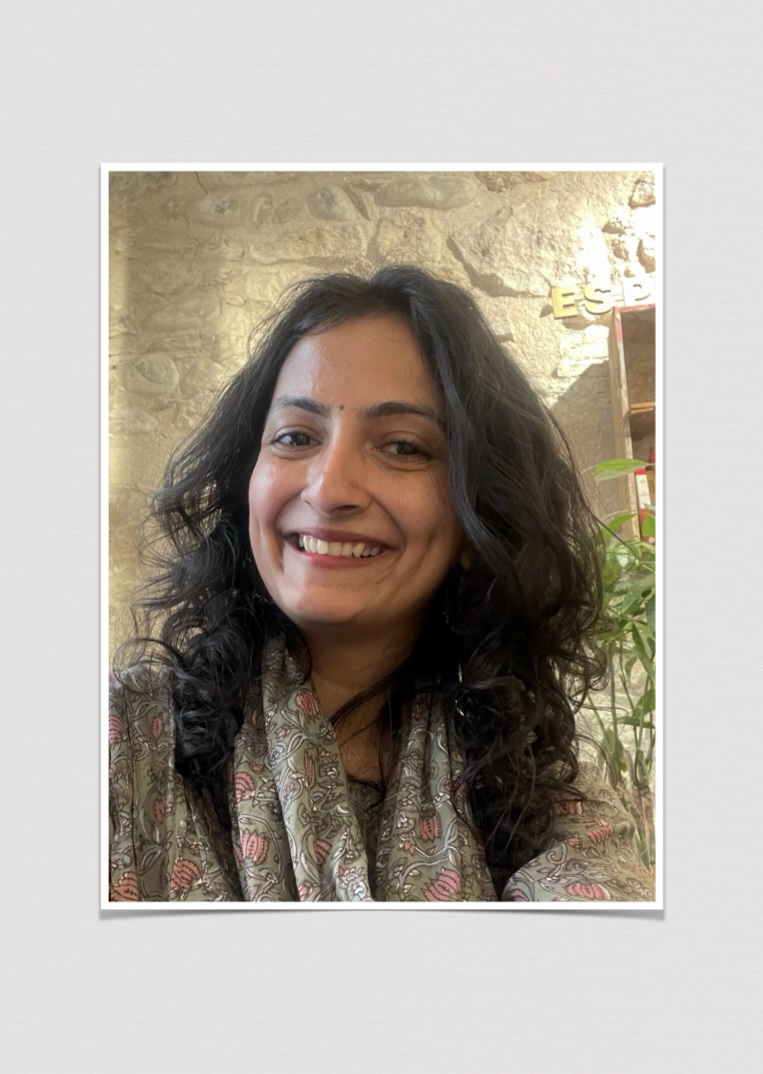
Anupriya Tuli is a Postdoctoral Research Fellow at the KTH Royal Institute of Technology , affiliated with the Division of Media Technology and Interaction Design . She collaborates with Madeline Balaam and Airi Lampinen to examine ethics in data collection for intimate topics and designs interactions fostering trust and collective care in reproductive/menstrual journeys. Research Focus : Intersection of Human-Computer Interaction (HCI), global health, taboo, marginality, and activism Expertise : Qualitative research, feminist design, health equity Education : PhD in Human-Centered Design from IIIT-Delhi, India Their work emphasizes technology as a tool for equity and empowerment , particularly for marginalized communities. Recent publications explore themes like intimate technologies, post-growth HCI, and menstrual mobilities. Awards include fellowships from the Indian Government, Google, and the MARFATIA AWARD (2018). Scientific Awards Fellowship from the Indian Government (for doctoral research) Google Fellowship (for doctoral research) MARFATIA AWARD (2018)
Ilana Feldman is a Professor of Anthropology, History, and International Affairs at George Washington University, and former Vice Dean of the Elliott School of International Affairs. Her research focuses on Palestinian experiences of displacement, citizenship, and humanitarianism, with a regional specialization in the Middle East. She holds a Ph.D. from the University of Michigan. Key works include Governing Gaza (2008), Police Encounters (2015), and Life Lived in Relief (2018), which examine bureaucracy, security, and refugee politics. She has been recognized with the 2017 GW Distinguished Scholar Award for her contributions to anthropological scholarship. Her teaching spans courses on human rights, Middle Eastern anthropology, and security studies. She co-edited In the Name of Humanity (2010), exploring the intersections of threat and care in governance. Her research bridges historical and contemporary analyses of colonial legacies, state formation, and the lived realities of Palestinian refugees in camps and diasporas. Recent publications address humanitarian law, decolonial feminist praxis, and global academic freedom struggles. Her work critiques international humanitarian frameworks while advocating for nuanced understandings of Palestinian agency and resistance. She actively engages public anthropology, linking academic research to contemporary political debates about occupation, displacement, and solidarity movements.
Navtej Purewal is Professor in Anticolonial and Decolonial Politics and Praxes at the Decolonising Arts Institute, University of the Arts London (UAL), a position she joined in 2024. Prior to this, she was Professor of Political Sociology and Development Studies at SOAS, University of London (2019–2024) and Deputy Director of the SOAS South Asia Institute (2014–2019). She has also held academic positions at the University of Manchester and served as a visiting chair at the University of Sydney. Her work bridges the social sciences, humanities, and arts, with a strong focus on decolonial praxis and critical development studies. Her educational background includes a PhD in International Development from Lancaster University, an MA in South Asia Area Studies from SOAS, and a BA in Political Science from Vassar College. She is fluent in English and Punjabi, enabling deep engagement with South Asian communities and scholarship. Navtej's research centers on the intersections of coloniality, development, identity, and social justice. She critically examines how structures of power, shaped by imperialism and inequality, are reflected and challenged in society. Her work emphasizes gender, caste, religion, and bordering processes, particularly in the Punjab region and its diaspora. She advocates for the use of art and creative methods to visualize and confront systemic injustices. Her recent projects include AHRC-funded initiatives such as 'Border Crossings'—which uses virtual reality to explore Partition memory among the UK South Asian diaspora—and 'GRID Heritage,' a network that amplifies marginalized voices in cultural heritage through craft, textiles, and performance. These projects reflect a consistent trend in her scholarship: interdisciplinary, community-engaged, and committed to decolonizing knowledge production. Scientific awards and honors mentioned include: AHRC/UKRI India Fellowship Multiple AHRC grants for interdisciplinary research British Academy grant for research on sexual and gender-based violence in Indian universities She has advised postdoctoral researchers and collaborated with leading scholars such as Dr. Eleanor Newbigin, Prof. Raminder Kaur, and Prof. Parul Dave-Mukherji. Her grants reflect a sustained commitment to funding impactful, socially engaged research. Navtej is also involved in developing educational resources for critical teaching on 1947 and its legacies. She is a key member of the Decolonising Arts Institute, a research hub dedicated to challenging colonial epistemologies and fostering anticolonial practices through art and scholarship. Her leadership in projects like GRID Heritage and Border Crossings underscores her role in building collaborative, transnational research teams focused on justice, memory, and cultural transformation.
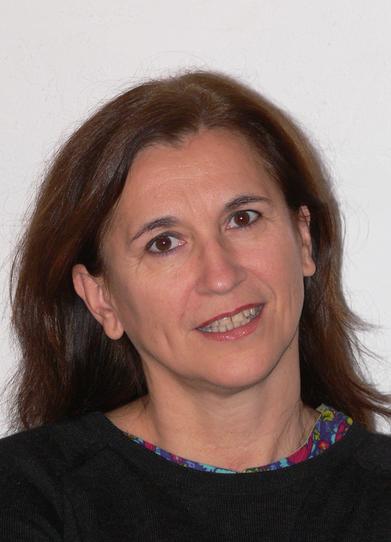
Sabine Strasser is a full-time professor at the Department of Social Anthropology, University of Bern, Switzerland. She previously held academic positions at Middle East Technical University (associate professor, 2007–2011) and the University of Vienna (professor, 2011–2013). She has also served as a visiting professor or scholar at institutions including the London School of Economics, Stanford University, and the University of Lucerne. Doctorate (1994): Focused on gender issues and ideas of possession in a Turkish village. Habilitation Thesis (2004): Explored transnational politics of Turkish and Kurdish activists. Research Interests encompass political anthropology, migration, transnationalism, feminist anthropology, moral anthropology, intersectionality, social movements in Europe, and globalization. Her work often integrates ethnographic methods with feminist and postcolonial approaches. Projects include co-coordinating the SNIS project on genderized sanitation in Indian and Ugandan health facilities and consulting for the "Imams, Rappers, Cybermuftis" project at the University of Lucerne. She has taught courses on migration, knowledge production, and ethnographic methods at the University of Bern.
Carole Browner is a Research Professor in the UCLA Department of Anthropology, Department of Gender Studies, and the David Geffen School of Medicine's Center for Social Medicine. She previously served as Chair of Anthropology (2010–2013). Her work focuses on gender, reproduction, health, and the social impact of biomedical advancements like genetic testing. Her research spans Colombia, Mexico, and the U.S., addressing topics like abortion access, prenatal care medicalization, and neurogenetic diagnoses. Education: B.A. Social Sciences (New School, 1969); M.A. & Ph.D. Anthropology (UC Berkeley, 1974/1976); M.P.H. Health Administration (UC Berkeley, 1977). Key research interests include: reproductive politics, Latin American health systems, genetic medicine ethics, and healthcare equity. She has conducted long-term fieldwork with Mexican indigenous communities and advised on U.S.-Mexico border health policies. Her recent work explores Mexico’s healthcare reforms under AMLO and the legacy of Lázaro Cárdenas’ policies. She co-authored Neurogenetic Diagnoses (2011) and edited Reproduction, Globalization, and the State (2012), which won a prize for best edited volume in medical anthropology. Awards : Society for Medical Anthropology’s MASA Mentoring Award (2009), Russell Sage Foundation Fellowship (1998–99), and leadership roles in professional organizations. Grants : Funded by NIH, NSF, CDC, and private foundations for projects on genetic testing, reproductive health disparities, and cross-border health equity. Current research includes collaborative work on Mexican health policy reforms and ethnographic studies of rural Mexican healthcare access.
Prof. Ajay Bailey is a Professor of Human Geography and Spatial Planning at Utrecht University's Faculty of Geosciences, serving as Head of the Department of Human Geography and Spatial Planning. His research focuses on planetary health, ageing, and inclusive urban development in the Global South. Specializing in anthropology and demography, he examines challenges faced by rapidly urbanizing communities in India, Bangladesh, Curaçao, and the Netherlands. His work emphasizes integrating human-centered approaches to health systems, urban infrastructure, and social equity. Bailey leads international research teams and has driven initiatives like the MIGFOODCITY project addressing migration and urban planning. He actively organizes academic conferences, such as the 2023 panel on 'Mundane Geographies of Food'. His teaching and mentorship aim to build capacity for young researchers in qualitative methods and transnational studies. Research interests include (planetary) health equity, intergenerational relations, and infrastructure accessibility for marginalized groups. His recent publications highlight barriers to urban mobility for older adults, safety in public transport for women, and long-term impacts of diseases like chikungunya. Bailey’s work bridges demographic analyses with environmental challenges, advocating for resilient, inclusive cities.
Dr. Raquel Rojas serves as Teaching Associate in Gender and Reproduction at the University of Cambridge's Department of Sociology. Her research examines inequality, intersectionality, and labor relations with focus on transforming caregiving into public policy, conducting fieldwork on household workers in Uruguay/Paraguay, pandemic impacts on care responsibilities, and decolonizing sociological knowledge through Global South perspectives. Her academic credentials include: PhD in Sociology from Freie Universität Berlin MA in Social Sciences from Humboldt University of Berlin Rojas specializes in Gender Sociology, Social Reproduction, and Decolonial Theory, investigating how care work intersects with class, race, and migration in Latin America. Her work exposes systemic undervaluation of domestic labor while documenting organizing efforts among household workers and housewives, emphasizing how crises like COVID-19 exacerbate existing inequalities in care distribution. Her recent publications (2020-2024) reveal consistent focus on pandemic impacts on border economies, domestic workers' unionization, and decolonial knowledge production. Key patterns include centering Latin American case studies to challenge Eurocentric frameworks, analyzing how care responsibilities become sites of political struggle, and documenting transnational activist networks shaping labor rights. Her scientific recognition includes: Princeton PLAS Fellowship (2024) Mecila Fellowship (2021) CONACYT-Paraguay Level I Researcher (since 2018) DAAD Congress Participation Scholarship (2018) Doctoral Fellowship from International Research Training Group (2016-2019) Rojas supervises MPhil students in Social Inequalities, Gender, and Latin America while securing research funding through: DFG Grants: COVID-19 impact studies in Paraguayan border cities (2021/2022) Margherita von Brentano Center: Podcast production on Gender and Migration (2023) MECILA: Conviviality and Inequality research (2021) She actively contributes to FG DeKolonial e.V. for decolonial practice, CLACSO's Labor Working Group, LASA's Gender section, RITHAL's household work network, and co-founded Paraguay's APIF feminist research association.
Erika Lee is the Bae Family Professor of History and Radcliffe Alumnae Professor at Harvard University, serving as Director of the Schlesinger Library on the History of Women in America. A past president of the Organization of American Historians, she is a leading scholar of U.S. immigration, Asian American history, and xenophobia across the 19th-21st centuries. Her research centers on immigration history, Asian American history, and the intersections of race, xenophobia, law, gender, and society. Lee examines how systemic racism and exclusionary policies have shaped American identity, with particular focus on Asian American experiences and the historical roots of contemporary anti-immigrant sentiment. Lee's recent publications (2020-2024) analyze xenophobia during crises like the COVID-19 pandemic, anti-Asian discrimination, and immigration policy weaponization. Her work reveals historical patterns connecting past exclusion laws to modern nativist movements while highlighting immigrant resilience and the power of public history. Lee's honors include: American Book Award Asian/Pacific American Award for Literature Andrew Carnegie Fellowship Election to the American Academy of Arts & Sciences Immigrant Heritage Award Pioneer Award from OCA Champion for Justice Award She received the Andrew Carnegie Fellowship for research funding and testified before Congress on anti-Asian discrimination. As a public intellectual, Lee frequently contributes to media discussions on immigration and race through major outlets including the New York Times and CNN. Lee co-founded three digital humanities initiatives: Immigrant Stories (documenting immigrant experiences through digital storytelling), #ImmigrationSyllabus (educational resource on immigration history), and Immigrants in COVID America (tracking pandemic impacts on immigrant communities).
Karleen Pendleton Jiménez is a Professor of Education, Gender, and Social Justice at Trent University. Her interdisciplinary work bridges education, gender studies, and creative writing, focusing on queer and feminist pedagogies, Chicana identity, and fat studies. She is recognized for her Lambda Literary Award-nominated books, including Are You a Boy or a Girl? and How to Get a Girl Pregnant , as well as her award-winning animated film Tomboy . Her research explores sociocultural influences on learning, LGBTQ+ youth identities, and transgressive gender expression in schools. Key Awards: Vice Versa Awards for Excellence, American Library Association Recognition Recent Work: Digital storytelling projects on queer embodiment, ecojustice education, and trans/fat body studies Teaching: Courses on gender, sexuality, and education, including Transgender Feminisms and Community Learning: Relationships, Creativity, Action Her films and creative works address intersectional identities, challenging norms around gender, race, and family. She advocates for inclusive education through narrative and embodied research methodologies.
Catherine Briddick is the Andrew W Mellon Associate Professor of International Human Rights and Refugee Law at the University of Oxford, affiliated with St Antony's College and the Refugee Studies Centre. She serves as Course Director for the MSc in Refugee and Forced Migration Studies. Her research focuses on feminist approaches to international law, intersectionality, and the interplay between protection, discrimination, and refugee rights. Briddick holds an LLM from the London School of Economics (LSE) and a DPhil from the University of Oxford. She previously practiced as a barrister and worked in non-profit legal services before academia. Her research interests span Refugee Law, International Human Rights Law, Public International Law, and European Law, with a particular emphasis on gender and forced migration. Recent work critiques discriminatory migration policies, explores CEDAW implementation gaps, and examines non-refoulement principles in cases like the UK-Rwanda agreement. Briddick is also a Research Associate at the Refugee Law Initiative and an Associate Fellow of the Higher Education Academy. Her publications analyze topics such as domestic violence and migration law, human trafficking, and gender-based discrimination in border policies. She actively supervises doctoral candidates in gender and forced migration, international refugee law, and EU migration frameworks. Briddick’s interdisciplinary approach bridges legal theory, feminist critique, and practical policy analysis.
Marianne Pieper is a Professor of Sociology at the University of Hamburg's Faculty of Economics and Social Sciences since 1996. Her work focuses on migration, gender, neoliberalism, and biopolitical transformations. Leads the DFG-funded project on prenatal diagnostics and social change Coordinator for EU projects like MIG@NET and From Welfare to Work Founded the Center for Gender and Queer Studies (2000-2011) Research Interests span: Intersectional analysis of race, gender, and disability Neoliberal governance and precarity in labor markets Biopolitical shifts in migration and social policies Digital networks and transnational social movements Doctoral College supervises 25 projects funded by the Heinrich Böll Foundation, Hans Böckler Foundation, and others, covering topics from refugee integration to postnational subjectivity.
Philip Kelly is a Professor in the Department of Geography at York University's Faculty of Environmental and Urban Change, where he also serves as Associate Dean for Research, Graduate & Global Affairs. He holds a PhD in Geography from the University of British Columbia, an MA from McGill University, and a BA (Hons) in Geography from Oxford University. His academic work centers on migration, transnationalism, and economic geography, with a focus on the Filipino diaspora in Canada and Southeast Asia. PhD in Geography, University of British Columbia MA in Geography, McGill University BA (Hons) in Geography, Oxford University Professor Kelly’s research explores the intersections of migration, labor, and social justice, particularly in urban labor markets. His work investigates transnational economic practices, caregiver programs, and intergenerational mobility among immigrant families. He emphasizes community-engaged research, collaborating with organizations such as Gabriela-Ontario and Migrante-Canada. His recent publications reflect a strong focus on labor migration, gender, and urban change. Articles analyze topics such as the Live-In Caregiver Program, Filipino youth transitions, and migrant labor in global fisheries. The research spans disciplines including geography, sociology, migration studies, and development, with recurring themes of inequality, integration, and transnational networks. He has been recognized with the Canadian Association of Geographers' Julian M. Szeicz Award. His ongoing SSHRC-funded projects include studies on Canada-Philippines transnational economies and labor relations in global fishing industries. Philip Kelly supervises graduate students in Geography and contributes to curriculum development through community partnerships, such as the PASSOC Project with the Toronto Catholic District School Board. He has co-authored influential texts including Economic Geography: A Contemporary Introduction and edited volumes on labor and capital mobilities in Asia. He is affiliated with the York Centre for Asian Research and leads collaborative research involving institutions in Canada, the Philippines, and the United States. His work bridges academic scholarship with community mobilization and policy engagement.
Professor Michael Dickmann is a distinguished academic at Cranfield School of Management, Cranfield University, where he serves as Professor of International Human Resource Management and Course Director for the Management MSc program. With extensive international experience spanning multiple continents and industries, Professor Dickmann brings both academic rigor and practical insights to his work in international business and human resource management. Professor Dickmann holds a first class honours degree in Economics from London University and an MSc in Industrial Relations and Personnel Management from LSE. His professional background includes work in Germany, Australia, the USA, Colombia, Spain and Britain, and he is fluent in English and Spanish, enabling cross-cultural research and consulting engagements. His scholarly focus centers on human resource strategies, structures and processes of multinational organizations, international mobility and global careers. Professor Dickmann's research examines career capital development, talent management systems, and the evolving nature of global assignments, with increasing attention to sustainability, mental health in the workplace, and paradigm shifts in global mobility accelerated by geopolitical tensions and the pandemic. His work bridges theoretical frameworks with practical applications in multinational contexts. As Senior Editor-in-Chief of The International Journal of Human Resource Management, Professor Dickmann significantly shapes scholarly discourse in the field. His extensive publication record demonstrates consistent engagement with evolving challenges in international HRM, including the organizational value of international assignments, career adaptability across borders, and the impact of institutional contexts on career pathways. Professor Dickmann maintains strong connections between academia and practice through consulting with major organizations across professional services (PricewaterhouseCoopers), industry (Siemens, Oracle), finance (HSBC, Deutsche Bank), and government/non-profit sectors (United Nations, WorldVision). This practical engagement informs his research and teaching, creating a valuable bridge between academic theory and organizational practice. His leadership as Course Director for the Management MSc program, combined with his editorial responsibilities and extensive publication record, positions Professor Dickmann as a significant contributor to the advancement of international human resource management knowledge and practice globally.
Professor Michaela Benson is Professor of Public Sociology at Lancaster University's School of Social Sciences. She is internationally recognised for her leadership in Migration Studies and Urban Sociology, with her work critically examining Brexit and migration, lifestyle migration, class, space and place, and self-build housing. Since 2022 she also serves as Chief Executive of The Sociological Review , a charitable foundation advancing public sociology. Education & Recognition: Michaela holds a PhD and was elected Fellow of the Academy of Social Sciences (FAcSS) in 2025. Research Interests: Her research agenda centres on the intersections of migration, citizenship, and urban life, with a particular focus on how these phenomena are reshaped by Brexit. She explores lifestyle migration as a lens on class, coloniality, and identity, and interrogates the meanings of home and housing through self-build practices. Her work is marked by a commitment to reflexive, empirical methodologies and public engagement. Scholarly Output: Across more than 60 publications, her recent articles span critiques of post-Brexit bordering practices, the colonial legacies shaping UK migration regimes, and innovative pedagogies in sociology. A consistent theme is the biopolitical and geopolitical dimensions of migration governance, analysed through ethnographic and multi-sensory methods. Awards & Fellowships: Fellow of the Academy of Social Sciences (FAcSS) – 2025 British Academy Mid-Career Fellowship – 2020-2021 Research Funding & Projects: Brexit, citizens’ rights and British Citizens in the EU-27 5 years on – ESRC consultancy (2025) Rebordering Britain and Britons after Brexit (MIGZEN) – ESRC (2021-2024) BrExpats: Freedom of Movement, Citizenship and Brexit in the lives of Britons resident in the European Union – ESRC (2017-2019) PhD Supervision & Research Groups: She welcomes doctoral researchers working on migration and citizenship, Brexit, class, home and housing, and urban sociology, especially those employing qualitative or ethnographic methods. She is affiliated with the Centre for Alternatives to Social and Economic Inequalities and the Centre for Health Futures .