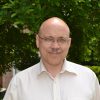
Gregory Eyink is a Professor in the Department of Applied Mathematics & Statistics at the Whiting School of Engineering, Johns Hopkins University. He holds joint appointments in the Departments of Physics & Astronomy, Mathematics, and Mechanical Engineering. His research focuses on turbulence in fluids and plasmas, mathematical physics, dynamical systems, and nonequilibrium statistical physics. He contributed to the proof of the Onsager conjecture and studies of spontaneous stochasticity in turbulence. Education: Bachelor's in Mathematics and Philosophy, Ohio State University (1981) Ph.D. in Physics, Ohio State University (1987) Research Interests: Fluid mechanics, turbulence, and partial differential equations Mathematical physics and dynamical systems Geophysics, astrophysics, and plasma dynamics Statistical mechanics and renormalization group theory Awards & Honors: Fellow of the American Physical Society (APS) Fellow of the Institute of Physics (IOP) Stanislaw Ulam Visiting Scholar at Los Alamos National Laboratory (2005–2006) Grants & Labs: Recipient of funding from the Simons Foundation for turbulence research Co-author of seminal papers on turbulent reconnection and flux-freezing violations Developed stochastic Lagrangian models for vorticity dynamics Teaching: Current courses include Numerical Analysis and Turbulence Theory at Johns Hopkins.
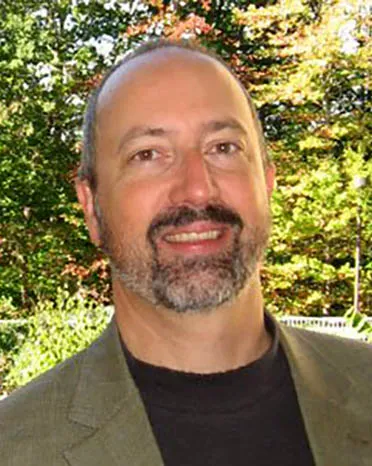
Michael Brown is the Morris L. Clothier Professor of Physics at Swarthmore College, with affiliations to the Department of Physics & Astronomy . He has served as past department chair , past chair of the American Physical Society Division of Plasma Physics , and is currently an APS Councilor . Research Interests Dr. Brown's research spans plasma physics , solar physics , and fusion energy , focusing on magnetic reconnection , MHD turbulence , and experimental plasma dynamics . His work connects laboratory experiments (e.g., the SSX lab ) to space plasma phenomena, exploring topics like 3D reconnection structures , electron heating , and self-organization in plasmas. Publication Trends Recent articles emphasize MHD turbulence , plasma relaxation , and magnetic reconnection . Key themes include equation of state measurements , turbulent intermittency , and flux rope dynamics , with applications to magnetic confinement fusion and astrophysical plasmas . Scientific Awards 2008 APS Award for Research at an Undergraduate Institution Advising & Collaborations Dr. Brown has advised over 30 senior honors theses and mentored 44 student researchers. His collaborations include institutions like Princeton , UCLA , and Caltech . He leads the SSX lab , which focuses on spheromak experiments , Whistler waves , and plasma wind tunnel studies .
Rasmus Kehlet Skjødt Berg is an Assistant Professor at the Department of Economics , University of Copenhagen, within the Faculty of Social Sciences . His research focuses on environmental and climate economics, political economy, and computable general equilibrium (CGE) modeling. Position: Assistant Professor University: University of Copenhagen Department: Economics Email: rasmus.kehlet.berg@econ.ku.dk Research Interests Berg specializes in integrating environmental and climate considerations into macroeconomic modeling. Key projects include the development of the MEE (Model of the Economy with Emissions) and GREEN REFORM models to analyze policy impacts on emissions and economic growth. Publications & Projects Recent work includes studies on green national accounting, social security design, and energy systems. He explores the economic costs of climate change, renewable energy integration, and policy barriers in Denmark. Collaborations & Tools Collaborates with researchers like Peter Birch Sørensen and Janek Bligaard Eskildsen. Develops open-source CGE tools ( GitHub ) for environmental policy simulation.
Dr. Xiaoyan Hong is an Associate Professor in the Department of Computer Science at The University of Alabama's College of Engineering. Her research focuses on mobile/wireless networks, vehicular networks, and delay-tolerant systems. Ph.D., Computer Science, University of California-Los Angeles (2003) M.S., Computer Science, Zhejiang University (2000) Research spans Internet of Things (IoT) , Connected Vehicles , and Underwater Wireless Networks . Key projects include NSF-funded underwater robot communication infrastructure and smart traffic light systems. Recent work explores Named Data Networking (NDN) in vehicular environments, Task Synchronization for autonomous vehicles, and V2I Communication for traffic optimization. NSF Research Experience for Undergraduates (REU) grant recipient $1.5M NSF grant for underwater robotics networking Her research integrates with multiple engineering centers, including the Center for Advanced Vehicle Technologies and Center for Transportation Operations .
Dr. Paola Falugi is a Senior Lecturer in Electro-Mechanical Engineering at the University of East London and holds an honorary visiting researcher position at Imperial College London. Her expertise spans predictive control systems, data-driven modeling, and energy network optimization under uncertainty. Senior Lecturer, Department of Engineering & Construction, School of Architecture, Computing and Engineering, University of East London Honorary Visiting Researcher, Imperial College London Research focuses on: Predictive control strategies for uncertain systems Data-driven modeling for control applications Optimization methods in energy network expansion Energy management under stochastic conditions Control systems for robotics and mechatronics Recent publications highlight her contributions to: Robust co-design frameworks for building energy systems Machine learning integration in transmission expansion planning Automated scenario generation for optimal control Control strategies for residential buildings with energy storage Her work bridges theoretical advancements in control theory with practical applications in energy systems and building automation.
Miriam B. Goodman holds the Mrs. George A. Winzer Professorship of Cell Biology at Stanford University , with affiliations in the Department of Molecular and Cellular Physiology , Bio-X , and the Wu Tsai Neurosciences Institute . As Chair of the Molecular and Cellular Physiology Department (2017–present) and former Deputy Director of the Stanford Neuroscience Institute (2013–2017), she leads interdisciplinary research bridging neuroscience, biophysics, and molecular physiology . Education : Ph.D. in Neurobiology, The University of Chicago (1995) Sc.B. in Biochemistry, Brown University (1986) Her research focuses on molecular mechanotransduction using C. elegans to investigate touch sensation, temperature detection, and neuronal stress resilience . Key methodologies include quantitative behavioral analysis , CRISPR gene editing , and in vivo electrophysiology . Recent work explores mechanical forces in feeding through upconverting microgauges and chemosensory integration of plant-derived molecules. Her publications span neurobiological mechanisms , biomechanical sensor design , and ecological signal processing , with a 2025 Nature study on ingestible nanosensors and a 2024 Current Biology paper on mechanosensory complex organization . Scientific Awards : Distinguished Alumni Award, University of Chicago (2024) Landis Award for Outstanding Mentoring, NIH (2019) Michael and Kate Barany Award, Biophysical Society (2014) Klingenstein Fellow in Neuroscience (2005-2008) McKnight Scholar Award (2005-2008) Prize in Neurobiology, Eppendorf & Science (2004) As an advisor, she mentors doctoral candidates in the Biophysics , Molecular and Cellular Physiology , and Neurosciences Ph.D. programs , including Madeline Cooper and Caroline Arellano-Garcia. Her lab collaborates with UC San Diego's Vergassola Group on mechanosensory physics and Stanford Microsystems Lab on optical sensor design .
Gaetano Iuso is a Full Professor in the Department of Mechanical and Aerospace Engineering (DIMEAS) at the Polytechnic University of Turin, and a member of the Interdepartmental Center Ec-L - Energy Center Lab. His academic career spans multiple doctoral programs in Aerospace Engineering, Mechanical Engineering, and Fluid Dynamics from 2003 to present, demonstrating sustained academic leadership. Professor Iuso's research focuses on fluid dynamics with emphasis on car aerodynamics, flow control, turbulent flows, and wind tunnel investigations. His work spans both fundamental studies of turbulent and separated flows and applied research in aeronautical and automotive fields. He employs experimental methodologies using wind tunnels and advanced measurement techniques including optical anemometry (PIV and StereoPIV), hot-wire anemometry, pressure measurement techniques, and wall friction stress analysis. Recent research trends show increasing integration of machine learning with traditional flow control techniques, particularly for closed-loop control of bluff body wakes. His work combines passive manipulation methods (riblets) with active manipulation using jets (continuous, intermittent, synthetic) and plasma actuators. These approaches have applications in reducing aerodynamic drag for vehicles and improving wind turbine performance, contributing to climate action goals as noted in his profile. Professor Iuso has supervised numerous PhD students including Edoardo Fracchia, Sara Montagner, Enrico Amico, and Alessandro Grava. He has led multiple research projects funded by competitive tenders including MechaTwing (2024-2027) and WATACO (2023-2025), as well as commercial research contracts in aerodynamic characterization for antennas, wind rotors, and automotive applications. His research is conducted through the Flow Control & Aeroacoustics Group at the Polytechnic University of Turin's Department of Mechanical and Aerospace Engineering. The group utilizes advanced wind tunnel facilities and measurement equipment for experimental fluid dynamics research, with strong connections to European research initiatives and industrial applications.
Professor Michael Templeton is a leading academic in Public Health Engineering at Imperial College London , affiliated with the Faculty of Engineering and the Department of Civil and Environmental Engineering . He also holds the Royal Academy of Engineering Research Chair in Global Sanitation Technology , working closely with organizations like Oxfam , Water For People , and the International Worm-Based Sanitation Association . His work addresses critical issues in water supply , sanitation , and public health , particularly in regions affected by schistosomiasis and water scarcity . Professor Templeton earned a Bachelor's degree with honours in Engineering Science and a PhD in Civil-Environmental Engineering , both from the University of Toronto . He is a chartered civil engineer , Fellow of the Institution of Civil Engineers , and elected Fellow of the African Academy of Sciences . His professional experience includes advisory roles for the World Health Organization , Ethiopian Federal Ministry of Health , and various research councils. Environmental Engineering : Water treatment Infectious Diseases : Schistosomiasis control Global Health : Sanitation in low-income settings Climate Resilience : Cold region sanitation Waste Valorization : Biochar from faecal sludge Diagnostic Innovation : Biosensors for pathogens His most recent research explores stormwater odorants , UV disinfection , and smartphone-based water quality monitoring . He has also advanced tiger worm toilets and citizen science approaches in data-scarce regions. His work spans 15 countries including Ghana , Sierra Leone , India , and Ethiopia . Scientific awards and honors include: Fellow of the Institution of Civil Engineers Elected Fellow of the African Academy of Sciences Royal Academy of Engineering Research Chair Professor Templeton has no listed students in the provided data but has contributed extensively to sanitation innovation , waterborne disease prevention , and capacity-building in developing nations. He has led field projects and published on vermifiltration systems , biochar production , and disinfection byproducts .
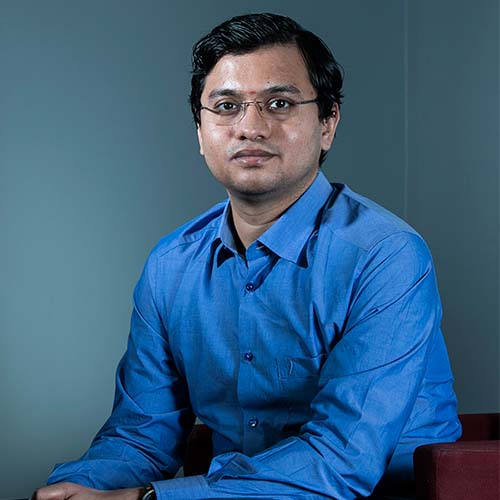
Sai Manoj Pudukotai Dinakarrao is an Assistant Professor in the Department of Electrical and Computer Engineering at George Mason University's College of Engineering and Computing. He leads the HArt (Hardware and AI Research) Group, focusing on cutting-edge research at the intersection of hardware security and artificial intelligence. His educational journey includes a BTech in Electronics and Communication Engineering from Jawaharlal Nehru Technological University (2010), an MTech in Information Technology from International Institute of Information Technology Bangalore (2012), and a PhD in Electrical Engineering from Nanyang Technological University, Singapore (2015). Following his doctoral studies, he completed post-doctoral research at TU Wien, Vienna (2015-2017) and George Mason University (2017-2018). Dr. Dinakarrao's research spans hardware security, adversarial machine learning, IoT networks, and deep learning in resource-constrained environments. His work integrates hardware design with AI techniques to address security challenges in computing systems, with particular focus on side-channel attack detection, malware detection in IoT networks, on-chip security, and hardware accelerator design for machine learning applications. His research has resulted in numerous publications in top-tier conferences and journals including IEEE Transactions, ACM conferences, and Design Automation Conference. Analysis of his recent publications reveals a strong trend toward hardware security solutions using machine learning techniques. His work increasingly focuses on Processing-in-Memory architectures, energy-efficient security solutions for IoT devices, and innovative approaches to hardware Trojan detection. Many publications demonstrate interdisciplinary collaboration across electrical engineering, computer science, and cybersecurity domains. Young Research Fellow Award at Design Automation Conference (DAC) 2013 Best paper award at International Conference on Data Mining (ICDM) 2019 Best paper award at International Conference on Consumer Electronics (ICCE) 2020 Best paper nomination at International Conference on Computer-Aided Design (ICCAD) 2019 Best paper nomination at Design Automation and Test in Europe (DATE) 2018 Dr. Dinakarrao has successfully mentored numerous PhD and MS students, with alumni securing positions at AMD-Xilinx, US Government agencies, and academic institutions. His research has been supported by significant grants from NSF, DARPA, and Virginia Commonwealth Cyber Initiative. Current projects include securing supply chains with UVA, developing novel architectures for machine learning acceleration, and creating energy-preserving cryptography protocols. The HArt Group maintains active collaborations with industry partners including AMD-Xilinx and government agencies. The lab focuses on practical implementations of theoretical security concepts, with particular emphasis on creating deployable security solutions for real-world hardware systems. Current research directions include intermittent computing with energy harvesting, hardware fuzzing techniques, and robust machine learning models resistant to adversarial attacks.
Christopher D. Link is an Associate Professor in the Department of Integrative Physiology at the University of Colorado Boulder , affiliated with the Institute for Behavioral Genetics . His research focuses on understanding the cellular and molecular mechanisms of age-associated neurodegenerative diseases like Alzheimer's disease (AD) and Amyotrophic Lateral Sclerosis (ALS). University: University of Colorado Boulder Affiliation: Institute for Behavioral Genetics Department: Integrative Physiology Email: linkc@colorado.edu Dr. Link's lab develops Caenorhabditis elegans models expressing human disease proteins (e.g., beta amyloid in AD, TDP-43 in ALS) to identify genetic and molecular pathways driving pathology. These models enable high-throughput screening of modifiers and potential therapeutics, complemented by mammalian cell studies and bioinformatic analysis of deep sequencing data. Recent publications highlight his work on PKR signaling in sleep regulation (2023), TDP-43 knockdown mechanisms (2023), hydrogen sulfide supplementation (2022), and bisphenol A effects on aging (2022). His lab also investigates protein aggregation, neuroinflammation, and genetic modifiers of neurodegeneration. The Molecular Biology of Neurodegeneration Lab has contributed to understanding amyloid-β toxicity, TDP-43 functions in chromatin regulation (2018), and stress granule dynamics (2018). Collaborations span biofluid proteomics, induced pluripotent stem cell modeling, and transcriptomic analysis of ALS/FTLD pathologies.
Dr. Jean Carlos (J.C.) Hernandez-Mejia is a Senior Research Engineer at the National Electric Energy Testing, Research, & Applications Center (NEETRAC) within Georgia Tech's School of Electrical and Computer Engineering (ECE). His work focuses on power system reliability, asset management strategies, and energy conservation. Previously, he held a tenured professorship at the University of the Andes in Venezuela, where he taught, conducted research, and advised students in power systems engineering. Dr. Hernandez-Mejia earned his bachelor’s degree (Summa Cum Laude) in Electrical Engineering from the University of the Andes (2000), followed by a Master’s (2005) and Ph.D. (2008) in ECE from Georgia Tech, supported by an OAS-LASPAU scholarship. His research spans cable diagnostics, optimization techniques, and smart grid technologies, with 2,800+ citations and 32 industry-relevant reports. His articles highlight advancements in power system reliability, including cable defect analysis, SVC optimization, and smart inverter applications. He has been invited as an expert speaker at six conferences and collaborates closely with utilities and manufacturers across North America. Awards: OAS-LASPAU Scholarship (2003) Advising: Led curricular development and student mentoring at the University of the Andes Grants/Collaborations: NEETRAC-funded projects, industry partnerships with 13 manufacturing companies and 140+ utilities Labs/Teams: NEETRAC (Georgia Tech), University of the Andes Electrical Engineering Lab
Mark Vousden is a Lecturer at the University of Southampton's School of Electronics and Computer Science. His research focuses on event-driven parallel computing and energy-efficient systems, particularly within the Partially Ordered Event Triggered Systems (POETS) architecture. He contributes to projects on high-throughput computing solutions for complex simulations. His teaching includes supervision of PhD students working on electronic engineering and intelligent systems. External activities include invited talks on event-based computing challenges and knowledge transfer initiatives.
Shahriar Nirjon is an Assistant Professor in the Department of Computer Science at UNC Chapel Hill, where he leads research on embedded intelligence systems. His work focuses on developing ultra-low-power devices capable of adaptive machine learning for health monitoring and mobile applications. Dr. Nirjon's Intermittent Learning framework enables energy-harvesting devices to continuously adapt to changing environmental conditions and input patterns. His research encompasses: Energy-harvesting sensor systems Adaptive machine learning for embedded devices Mobile health monitoring technologies Wireless sensing platforms Robust embedded intelligence He has received multiple best paper awards at premier conferences including MOBISYS, RTAS, DCOSS, and AIChallengeIoT. Dr. Nirjon is a recipient of the NSF CAREER Award for his work on intermittent learning systems.
Dr. Joseph Welch is an Assistant Professor in Respiratory Physiology at the School of Sport, Exercise and Rehabilitation Sciences, University of Birmingham , UK, a position he assumed in September 2022. His research focuses on the neural control of breathing, respiratory mechanics, diaphragm fatigue, and exercise physiology. Education: PhD in Kinesiology, University of British Columbia, Canada MRes in Sport and Exercise, University of Derby, UK BSc (Hons) in Sport and Exercise Science, University of Derby, UK Dr. Welch's research investigates how breathing adapts to physiological stressors such as exercise, disease, and hypoxia; how it interacts with other body systems; and its impact on human health and performance. His work spans both healthy individuals and clinical populations, including spinal cord injury. He is particularly known for his studies on respiratory motor plasticity induced by acute intermittent hypoxia and its therapeutic applications. His research aligns with the Rehabilitation and Motor Control theme and the Integrative Physiology of Exercise and Neuroscience and Brain Health groups. The recent publications indicate a strong focus on respiratory neuroplasticity, ventilatory control, and the therapeutic potential of hypoxia. His work integrates human and animal models, clinical populations, and advanced physiological assessments, reflecting a multidisciplinary approach to understanding breathing regulation and rehabilitation. Scientific Awards: Inaugural Review Prize 2023: The exercise hyperpnoea dilemma: A 21st-century perspective Dr. Welch actively supervises postgraduate research at both master’s and doctoral levels and teaches courses including Human Physiology & Exercise, Control of Human Movement, and Applied Exercise Physiology. He has collaborated extensively with leading researchers such as Professor Gordon Mitchell and Professor Bill Sheel. His laboratory work includes neurophysiological assessments and respiratory function testing, contributing to translational research in rehabilitation.
Norbert F. Scherer is a Professor of Chemistry at the University of Chicago , with affiliations to the James Franck Institute and the Institute for Biophysical Dynamics. His research spans biophysics, materials chemistry, and optical physics, focusing on nonequilibrium systems, nanoplasmonics, and cellular transport mechanisms. B.S., University of Chicago (1982) Ph.D., California Institute of Technology (1989) Research Highlights: Optical matter self-organization and nanoscale light-powered machines Optical magnetism in nanoplasmonic meta-materials Intracellular vesicle transport in diabetic cell models Development of ultrafast lasers, 4D microscopy, and image analysis methods Scientific Contributions: 2022 Optica C.E.K. Mees Medal 2015 Peter Debye Prize 2014 Vannevar Bush Fellowship 1997 Sloan Fellow 1993 Packard Fellow Student Advisees: Charlie Wright (PhD) Daozheng Gong His group collaborates on quantum dot integration, optical vector beam spectroscopy, and machine learning approaches to intracellular dynamics. Laboratory Focus: The Scherer Lab develops photonic methods for optical trapping, super-resolution microscopy, and nonequilibrium systems analysis, with applications in diabetes research and nanoscale machine design.