Jianwei Xu is a Lecturer at the Brussels Centre for Language Studies and the Department of Linguistics and Literary Studies at Vrije Universiteit Brussel (VUB), affiliated with the Faculty of Languages and Humanities. He holds a PhD in Linguistics/Applied Linguistics from La Trobe University (2005), following a BA in English (Yunnan Normal, 1994) and MA in TESOL (La Trobe, 2000). His research focuses on intercultural communication, multilingualism, and heritage language education in multicultural settings. Key research interests include sociocultural dimensions of second language learning, the role of multilingualism in intercultural education, and identity negotiation among immigrant communities. He has contributed to projects such as ‘Making Internationalization an Intercultural Endeavour’ (2024–2028) and ‘Cooperative e-platform for Minority Languages’ (2021–2022). Publications emphasize topics like intercultural dialogues, language maintenance in diverse communities, and autoethnographic approaches to cultural identity. He actively participates in academic activities, including peer-review for Language and Intercultural Communication and editorial roles in New Perspectives on Languages .
Roles & Affiliations: Professor specializing in Humanism and Philosophy, active in interdisciplinary research on aging, social resilience, and meaningful life. Principal Investigator of multiple funded projects addressing social inclusion, resilience in loss, and community dynamics. Extensive collaborations across universities and non-profits in the Netherlands and Europe. Research Interests: Focuses on older adults' quality of life, resilience mechanisms in vulnerable populations, and social inclusion strategies. Key areas include: - Social isolation and its psychological impacts - Existential resilience in aging - Intergroup dynamics and identity - Community-based interventions for marginalized groups - Role of meaning-making in healthcare and daily life Key Projects: Resilience around severe experiences of loss (2023–2025) SEE ME: Social inclusion through Meaningful ageing (2021–2022) Zin in Bellen: Telephone group discussions for older adults (2021–2023) Factorsmodel sociale relaties (2021) Awards: Recognized as one of the 25 Invloedrijke denkers en doeners in het sociaal domein (2023) for contributions to social resilience research. Grants & Activities: Secured €1.2M+ in research funding for aging and social policy projects Over 90 invited lectures/seminars (2021–2025) including keynotes at LUMC and community initiatives Co-developed the SEE ME-training toolkit for elderly care professionals Labs & Teams: Leads cross-disciplinary teams at Rotterdam-based research hubs, collaborating with social workers, psychologists, and policymakers to translate research into actionable interventions.
MF Norwegian School of Theology, Religion and SocietyNorway
Binta-Victoria Jammeh is a Doctoral Research Fellow in Didactics of Social Science at the MF University College of Theology, Religion and Society. She holds a Master's in Social Science Education from the University of Oslo, with a focus on teacher competencies in addressing diversity. Her work bridges secondary education and university lecturing, emphasizing inclusive democratic education. Her research interests center on inclusion, democratic preparedness, and citizenship education, particularly exploring how teachers and students co-create inclusive environments. She examines contextual challenges in democracy education through a comparative Scandinavian perspective. Key themes include handling anti-democratic attitudes, racism, and controversial issues like the Israel-Palestine conflict in classrooms. Publications highlight practical pedagogical approaches to racism, source criticism, and ideological debates. She contributes to teacher training programs on anti-racism and mediates dialogues on sensitive topics. Her doctoral project investigates structural factors shaping democracy education accessibility. Current position includes teaching SAM1080/SAM1080L modules on Identity, Power, and Diversity. She actively participates in initiatives promoting gender balance and diversity in academia. Her work often intersects with NGOs like Fritt Ord, emphasizing public engagement alongside academic research.
Carlo Koos is a Professor of Political Science in the Department of Government at the University of Bergen, Norway. He is also an associated senior researcher at the Chr. Michelsens Institute (CMI) and the Development Learning Lab. His research focuses on the political and social consequences of war, particularly on gender dynamics, community cohesion, and political behavior in conflict-affected regions. He leads the ERC-funded WarEffects project and collaborates with major international organizations including UNICEF, the Red Cross, and the World Bank. Education and Background: Former humanitarian aid worker with Médecins Sans Frontières in South Sudan, Libya, Egypt, Swaziland, and Uganda. Research Interests: Carlo Koos’s work centers on civil wars, political violence, conflict-related sexual violence, post-conflict resilience, and the impact of foreign aid. He employs survey-based methods in fragile contexts across sub-Saharan Africa. His research explores how experiences of war shape social attitudes, with a strong emphasis on gendered consequences and stigma. He also investigates the effectiveness of reconstruction programs and humanitarian interventions. Recent Research Trends: Over the past decade, his publications have increasingly focused on the micro-level effects of wartime sexual violence, using innovative methodologies such as list experiments to study sensitive topics. His work bridges political science, gender studies, and development research, often combining historical and contemporary analysis to understand long-term legacies of conflict. Scientific Awards: ERC Starting Grant for the WarEffects project Advising and Grants: Koos leads a major ERC-funded project on conflict and gender, and advises international NGOs and agencies on human rights and gender equality. He has secured funding from the European Research Council (ERC), Horizon Europe, and the Norwegian Agency for Development Cooperation (NORAD). He mentors early-career researchers through the WarEffects Global Fellows Network, offering research grants and publication support. Labs and Teams: He leads the WarEffects research team at the University of Bergen, which brings together scholars studying civil wars, violence, and gender. The project hosts workshops and conferences, including the EuroWEPS conference, and fosters a global network of researchers focused on the micro-dynamics of conflict and peace.
Kieran File is an Associate Professor and Reader in the Department of Applied Linguistics at the University of Warwick. His work bridges linguistic theory and practical application in high-performance sports contexts, with a focus on how language shapes team dynamics, leadership, media engagement, and identity. Research Interests: Kieran specializes in discourse analysis, interactional sociolinguistics, pragmatics, and professional communication, particularly in elite sports. His research explores team talk, media interviews, athlete-coach communication, and how language reflects and constructs power, identity, and inclusion. He has a strong interest in gendered communication in rugby and inclusive coaching practices. Publications and Research Trends: His recent publications reveal a consistent focus on identity construction, impression management, and linguistic strategies in sports media and team interactions. He frequently employs discourse analysis to examine real-world communication in rugby, football, and netball, with an emphasis on how language performs social functions under pressure. Impression management in sports media Leadership and identity in team discourse Racial and gendered language in sports Genre and register in professional communication Strategic use of humor and impoliteness Communication training for athletes and coaches Scientific Projects and Funding: KTP Project with the Rugby Football Union (2025–2027): Developing knowledge on how coaching language can create inclusive environments for women and girls in rugby. Funding from Innovate UK and RFU: Supporting research into language and social interaction in sport. Collaborations: Kieran has worked with top-tier organizations including Williams F1, Football Association of Wales, England Boxing, Warwickshire County Cricket Club, and professional rugby clubs in New Zealand. He also contributes to academic discourse through book chapters and editorial works on linguistic consultancy and language in the workplace. Education and Teaching: He delivers communication workshops and education programs for athletes, coaches, and performance staff, helping them develop strategic awareness of language use. His teaching integrates qualitative research methods and applied sociolinguistics.
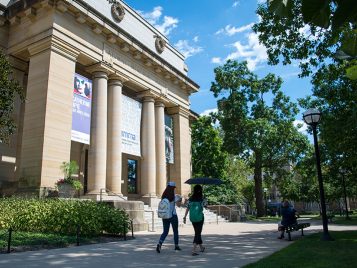
Kelly Maxwell, Ph.D. serves as the Senior Assistant Dean for Undergraduate Education and Engagement at the University of Michigan's College of Literature, Science, and the Arts (LSA), where she coordinates comprehensive undergraduate engagement initiatives. She oversees multiple programs including the Center for Global Intercultural Study, English Language Institute, Program on Intergroup Relations, Undergraduate Research Opportunity Program, Language Resource Center, and Kessler Scholars Program, while serving as liaison to LSA Student Government, University Music Society, and UMMA. Her research expertise centers on intergroup dialogue , inclusive education , and social justice pedagogy . Maxwell's work focuses on developing dialogic skills for effective campus conversations, examining whiteness and racial identity in educational contexts, and creating inclusive learning environments through critical-dialogic approaches. Her scholarship bridges theoretical frameworks with practical applications in higher education settings. Maxwell's extensive publication record (spanning 1997-2023) demonstrates consistent focus on: Facilitator training and development for intergroup dialogues White student experiences in racial dialogues Comparative analysis of debate, discussion, and dialogue methods Faculty development for inclusive educational environments Program development and evaluation in intergroup education She actively leads several diversity, equity, and inclusion initiatives including the Inclusive Campus Collaborative and Foundations of DEI Program for student employees. Maxwell serves as an Inclusive Teaching Liaison for the College, working to integrate inclusive pedagogical practices across undergraduate programs. Her office is located in 2144 LSA Building on the Ann Arbor campus, with regular business hours of 8:30 am-5:00 pm.
Madeleine Fugère serves as a Professor in the Department of Psychological Science at Eastern Connecticut State University, where she maintains active research and teaching programs in social psychology with emphasis on human attraction and romantic relationships. Her office is located in Webb Hall, Room 131, with Spring 2025 office hours scheduled Monday, Wednesday, and Friday from 11:00 a.m. to 12:40 p.m., plus Monday 2:00-2:50 p.m. Her educational background includes: Ph.D. in Social Psychology from the University of Connecticut M.A. in Social Psychology from the University of Connecticut Dr. Fugère's research centers on evolutionary and social psychological perspectives of human mating, specifically investigating physical attractiveness in mate selection, parental influence on adult children's romantic choices, and cross-generational differences in relationship preferences. Her work bridges theoretical frameworks with real-world dating dynamics through empirical studies on mate guarding, policy perception, and intergenerational transmission of relationship standards. Her publication record (2015-2017) reveals consistent focus on mate preference mechanisms across evolutionary psychology and social cognition domains. Articles frequently examine gender differences in attraction criteria and intergenerational influences, appearing in specialized journals like Evolutionary Psychological Sciences and Personality and Individual Differences , demonstrating methodological diversity from experimental designs to cross-sectional analyses. She actively mentors student researchers as evidenced by asterisked collaborators in publications, and extends her expertise to public audiences through her Psychology Today blog 'Dating and Mating', which translates academic findings into accessible relationship insights while maintaining scientific rigor.
Nghi D. Thai is a Professor in the Department of Psychological Science at Central Connecticut State University. They serve as Co-Director of the Asian American, Asian, & Pacific Islander Center and Coordinator of the Asian American & Pacific Islander Studies minor, as well as the Community Engagement Minor in Psychology: Community Psychology. Education: BA in Psychology (University of Nebraska at Lincoln), MA and PhD in Community and Cultural Psychology (University of Hawaii at Manoa), Certificate in Urban and Regional Planning (University of Hawaii at Manoa) Dr. Thai’s research focuses on community psychology, cultural psychology, and intergroup relations, with an emphasis on Asian American & Pacific Islander studies and prevention-oriented research. They have led initiatives such as the Summer Enrichment Experience Program and have contributed to community-based evaluation research through courses like PSY 553. Their accolades include the 2019 Dean’s Award, 2018-2019 Excellence in Teaching (Full-Time), and the 2018 Psychology Professor of the Year award. Dr. Thai has also received recognition for collaborative efforts, such as the 2016 New York Life Foundation Excellence Award and the 2015 Creativity and Teamwork Award.
Stephen Wu is the Irma M. and Robert D. Morris Professor of Economics at Hamilton College , where he has been a faculty member since 2000. His research spans applied microeconomics with a focus on Health economics Subjective well-being Higher education economics Behavioral economics Environmental economics He earned a Ph.D. and M.A. in Economics from Princeton University and a B.Sc. in Economics from Brown University. His 15 most recent publications highlight interdisciplinary themes such as Behavioral responses to climate disasters Discrimination in labor markets Religion's impact on refugee well-being Status-seeking across cultures Environmental policy preferences Health-income well-being links
Julie Christian is an applied social psychologist based at the University of Birmingham's School of Psychology. Prior to her Birmingham appointment, she held positions at the London School of Economics and Political Science and Cardiff University. Her research program focuses on social identity processes, attitude formation, leadership dynamics, and housing/community studies. Christian has established herself as a significant contributor to applied social psychology through both theoretical and practical applications of her work. Former associate editor for Journal of Community and Applied Social Psychology Member of British Psychological Society's Social Psychology Section Board (2004-2006) Held research grant awards across US and UK institutions Maintained executive/charity board positions related to her research areas Christian collaborates internationally, as evidenced by her co-authorship of the unpublished manuscript 'Bridging the divide'?: Intergroup magnanimity by Brexiteers following the UK referendum' with Daniella Nayyar, Ronald Riggio, and others, currently under review at the European Journal of Social Psychology.
Christopher Bader is Professor and Chair of the Department of Sociology at Chapman University, with joint affiliations to the Wilkinson College of Arts, Humanities, and Social Sciences and the Argyros College of Business and Economics. He serves as Associate Director of the Association of Religion Data Archives (ARDA), the world's largest religion survey archive, and is affiliated with the Institute for Religion, Economics and Society (IRES). His research has been funded by the Templeton Foundation and Lilly Foundation. Education includes: Bachelor of Arts from Evergreen State College Master of Arts from Bowling Green State University Ph.D. from University of Washington Bader's research explores the sociology of religion, paranormal phenomena, fear dynamics, and deviance management. His work employs large-scale surveys like the Baylor Religion Survey and Chapman Survey of American Fears to examine how belief systems influence social behavior. Key focuses include: Interplay between religious & paranormal beliefs Social consequences of fear in American society Measurement methodologies for religious attitudes Cultural narratives around evil and morality His publications demonstrate consistent focus on belief systems, fear psychology, and survey methodology, with recent work examining political violence, xenophobia, and measurement validation. Articles frequently employ quantitative analysis of national surveys and explore intersections between religion, politics, and deviance. Major research leadership includes serving as principal investigator for multiple national surveys and directing projects for the U.S. Department of Homeland Security. He maintains collaborative networks through ARDA and Chapman University research initiatives.
Dr. Jenny Sarah Wesche is a postdoctoral research fellow at the Division of Social, Organizational and Economic Psychology within the Department of Education and Psychology at Freie Universität Berlin. Previously, she served as a visiting professor in Occupational Health Psychology at Humboldt-Universität zu Berlin and earned her doctoral degree from Ludwig-Maximilians-Universität München. Current Postdoctoral Research Fellow at Freie Universität Berlin Former Visiting Professor at Humboldt-Universität zu Berlin PhD from Ludwig-Maximilians-Universität München Her research focuses on leader-follower dynamics in organizations, with a particular emphasis on digitization, automation, and ethical implications in workplace contexts. Key areas include algorithmic decision-making, acculturation in migration, and the psychological effects of human-automation interactions. Dr. Wesche's scholarly work appears in journals such as Computers in Human Behavior , Journal of Business Ethics , and European Journal of Social Psychology . Her publications explore themes like AI-driven recruitment, leadership ethics, and the intersection of technology and organizational behavior. Contact: jenny.wesche@fu-berlin.de | Office hours: Monday to Friday by appointment
Dr. Nathalie Bick is a Researcher at the FernUniversität Hagen , working within the Stereotype Threat research group in the CATALPA cluster. Her work focuses on stereotypes affecting student groups in digital higher education contexts and interventions to mitigate their negative impacts. PhD in Psychology (2025), University of Cologne Master of Science in Psychology (2021), University of Cologne Bachelor of Science in Psychology (2017), University of Cologne Her research explores social identity threat , belongingness , and performance disparities in distance learning environments, particularly for migrant youth. Recent publications examine stereotype facets, virtual collaboration barriers, and trustworthiness signaling during the pandemic. Key trends in her work include: Quantitative analysis of stereotype content in digital education Impact of negative stereotypes on social integration Interventions for equitable learning conditions
Prof. Dr. Oliver Christ is a Professor for Psychological Methods and Evaluation at the Faculty of Psychology, FernUniversität in Hagen, Germany. He has held this position since March 2015, following roles as Acting Chair for Psychological Methods at the same university (2013-2015) and Senior Lecturer/Lecturer at the University of Marburg (2001-2015). His academic trajectory includes visiting research positions at the University of Oxford and St Andrews in 2011-2012. Christ's research specializes in intergroup dynamics, prejudice reduction, and advanced statistical methodologies. Key interests include: Longitudinal effects of positive/negative intergroup contact on societal attitudes Contextual influences on prejudice and group relations Development of multilevel modeling techniques for social science data Innovations in psychological assessment and educational tools His recent publications (2023-2025) demonstrate a strong focus on: Mechanisms of polarization and social cohesion Validation of contact theory across diverse cultural contexts Applications of statistical software in distance education Intersections of political behavior and intergroup relations Christ maintains significant editorial involvement, having served as Associate Editor for European Journal of Social Psychology (2015-2017) and British Journal of Social Psychology (2017-2019), and reviews for over 40 academic journals and funding bodies including DFG and ERC.
Qais Alemi, PhD, MPH, MBA, is a Professor at the Department of Social Work and Social Ecology within the School of Behavioral Health at Loma Linda University. His academic career spans over a decade, focusing on refugee mental health, cultural health beliefs, and social determinants of well-being. As a Principal Investigator and collaborator, Alemi has led numerous grants examining Afghan refugee experiences, cancer screening disparities, and community-based health initiatives. Doctor of Philosophy (PhD), Loma Linda University (2013) Master of Business Administration (MBA), Loma Linda University (2008) Master of Public Health (MPH), Loma Linda University (2006) Bachelor of Science (BS), San Diego State University (2003) His research portfolio includes refugee mental health , cultural consensus models , social capital , and health equity , with particular emphasis on Afghan and Burmese diasporas. He employs mixed-methods approaches to study post-migration stressors, gender-specific health beliefs, and community-based interventions. Alemi's scholarly output reveals trends in cross-cultural mental health , violence prevention , and health disparities in marginalized populations . His work spans epidemiological analyses of intimate partner violence, policy evaluations for refugee integration, and community health interventions addressing sleep patterns and cancer screening. Administrative Fellow, VA Palo Alto Health Care System (2008) Active in institutional service, Alemi chairs the Diversity, Equity, and Inclusion Committee and contributes to the Institutional Review Board. His teaching includes Advanced Research Methods and Statistics at the graduate level, with a focus on evidence-based practices in residential care.