Maurice D. Mulvenna is a Researcher at the School of Computing and Mathematics, Ulster University , focusing on Artificial Intelligence, Digital Health, and Human-Computer Interaction . His work explores the application of AI in mental wellbeing, assistive technologies for dementia care, and usability testing methodologies. Research Themes : AI for Wellbeing, Ambient Assisted Living, Machine Learning in Healthcare, IoT for Elderly Care, Sentiment Analysis Recent Articles : 2025 study on AI's impact on mental health; 2024 work on employee wellbeing platforms; 2023 papers on chatbots and IoT lighting solutions for dementia His collaborations span Raymond R. Bond, Siobhan O'Neill, and Chris D. Nugent , with publications in journals like Behavior & Information Technology and conferences such as ICT4AWE and ECCE . While no explicit awards are listed, his contributions include co-editing conference proceedings and advancing ethical-by-design frameworks. Labs/Teams : Involved in projects like SenseCare (2016) for emotional wellbeing visualization and UX-Handle (2017) for usability analytics. His work bridges technical innovation with user-centered approaches in healthcare and digital platforms.
Bernhard Saske serves as a Research Associate at the Chair of Virtual Product Development within Dresden University of Technology, where he has been affiliated since completing his mechanical engineering studies in 2002. Holding a doctorate (Dr.-Ing.) earned in 2008 for research on 'Augmented Reality in Maintenance,' he specializes in virtual and augmented reality applications integrated with product lifecycle management systems. His academic credentials include: Master's degree in Mechanical Engineering from Dresden University of Technology (2002) Doctorate (Dr.-Ing.) from Dresden University of Technology (2008) focusing on Augmented Reality in Maintenance Saske's research centers on digital transformation in engineering workflows, with core expertise in virtual/augmented reality implementation, product lifecycle management (PLM), and model-based systems engineering (MBSE). Recent investigations address generative AI applications in CAD processes, sustainable product development frameworks, and component reuse optimization in industrial plant design. His work consistently bridges theoretical methodologies with practical industry implementation challenges. Analysis of his 2023-2025 publications reveals a strategic shift toward artificial intelligence integration in engineering design, particularly generative models for CAD and computer vision systems. Concurrently, his research maintains strong emphasis on sustainability-driven PLM strategies and MBSE adaptation for circular economy principles, reflecting evolving industry priorities in resource efficiency and digitalization. Scientific Awards: No documented awards, fellowships, or major honors were identified in the source materials. Dr. Saske actively contributes to collaborative research projects within the Chair of Virtual Product Development, frequently co-authoring with Prof. Paetzold-Byhain and interdisciplinary teams. While specific student supervision is unrecorded, his publications indicate mentorship roles in conference papers and journal articles. Project funding appears aligned with German academic-industry partnerships focused on digital engineering solutions, though grant details remain unspecified. As a core member of the Chair of Virtual Product Development, Saske operates within a research ecosystem dedicated to advancing virtual prototyping, digital twin technologies, and immersive maintenance solutions. The chair maintains active industry collaborations to implement VR/AR methodologies in real-world manufacturing and product development contexts across European industrial partners.
David Leimstädtner is a researcher at the Human-Centered Computing group within the Department of Computer Science, Department of Mathematics and Computer Science at Free University of Berlin. He currently contributes to the WerteRadar project focused on sovereign health data donation systems. His educational background includes a Master of Science with distinction in Communication Science from the University of Amsterdam (2021) and a Bachelor of Arts in Communication in Social and Economic Contexts (GWK) from the University of the Arts Berlin (2017). Between degrees, he worked as a user-experience consultant on e-government digitization initiatives. Leimstädtner's research spans Human-Computer Interaction and Human-Centered Data Science with specialized focus on Health Informatics applications. His work integrates Value Sensitive Design principles into conversational AI systems and reflective interfaces for healthcare contexts, particularly examining ethical frameworks for patient data sovereignty and human-AI collaboration in clinical decision support. The Human-Centered Computing group actively develops privacy-preserving technologies through projects including WerteRadar, Digi-POD (postoperative delirium prevention), ILLUMINATION (LLM applications in healthcare), and Robotic Assistance in Emergency Departments, emphasizing user-centered ethical design throughout their research portfolio.
Dr.-Ing. Birger Berghoff is a researcher at the Institute of Semiconductor Electronics (RWTH Aachen University) and Managing Director of the Central Laboratory for Micro- and Nanotechnology (CMNT). He earned his Diplom (2004) and PhD (2010) in Electrical Engineering from RWTH Aachen University. Current position since 2016: Akademischer Oberrat (senior academic official) Previously led research groups in nanoelectronics and silicon-based solar materials (2012-2016) Conducted visiting research at the University of New South Wales (2011) His research interests focus on silicon quantum structures and nanostructures for energy harvesting, photonics, and nanoelectronics. Key publication trends include: 2021: SiO2 coating effects on electron conductivity in nanoscale silicon 2019: Comparative studies on SiO2/Si3N4 embedding for electronic structure control 2018: Carrier type manipulation through dielectric coatings 2017: Hydrogen-induced quasi-metallic behavior in ZnO 2016: All-silicon triple-junction solar-hydrogen systems 2010-2012: Quantum well transport mechanisms and defect passivation He received the Borchers Badge (2012) for academic excellence and has supervised 14 theses including master's and bachelor's projects related to solar cells, quantum dot transport, and nanofabrication.
Robert Woroch is a research assistant at the Chair of Business Information Systems and Software Engineering at the University of Duisburg-Essen's Faculty of Computer Science. His work focuses on digital business models, platform ecosystems, and value creation analysis in fintech and e-commerce domains. Current affiliation: Universitaet Duisburg-Essen Academic rank: Researcher Research specializations: Ecosystems, Value Networks, Fintech, E-commerce, IoT-enabled business models. His studies explore digital transformation mechanisms and value flow analysis in platform economies. Publication trends: Recent work examines value creation frameworks in e-commerce ecosystems, sustainability-driven initiatives in retail, data monetization strategies, and fintech customer dynamics. Key methodologies include multi-case studies and systematic literature reviews. Academic engagement: Active in conference reviewing (Electronic Markets, WI, ECIS) and has contributed to several peer-reviewed publications on digital platforms.
Thomas Noll is a full Professor at Bielefeld University , affiliated with the Faculty of Engineering and leading the Cell Culture Technology Working Group . He serves as a Member of the Faculty Conference (University Professors) , Member of the Habilitation Committee , and Chair of the Molecular Biotechnology (Master) Examination Board . His work bridges biotechnology with engineering principles and interdisciplinary applications. His research focuses on CHO cell cultivation , perfusion processes , bioprocessing optimization , and biotechnological solutions for climate change . He integrates CRISPR/Cas9 for site-specific genetic integration and investigates hyperosmolality stress responses in cell cultures. The recent Google Scholar articles highlight a sustained research trajectory in lentivirus production , CHO secretome analysis , and sustainable biotechnologies . These works emphasize process intensification, proteome dynamics, and interdisciplinary approaches to biopharma and environmental challenges. Professor Noll contributes to academic governance as a board member of the Center for Biotechnology (CeBiTec) and through Molecular Biotechnology module responsibilities . His leadership spans interdisciplinary biotechnology , cell culture engineering , and industrial biotech education . No explicit teaching or lab details are provided in the scraped text.
Martin Koch is a Professor in the Department of Physics at Philipps-Universität Marburg . He leads the Semiconductor Photonics Group and contributes to teaching and doctoral supervision in physics. Research Focus : Terahertz spectroscopy, quantum well dynamics, materials characterization, and applications in pharmaceuticals and cultural heritage conservation. Key Article Trends : Recent work explores THz for microplastic detection, 3D-printed photonic components, and excitonic behavior in 2D heterostructures. Teaching Roles : Lecturer for Optics and Quantum Phenomena and Functional Materials seminars.
Stefan Renato Kachel serves as a Lecturer in the Department of Chemistry at Philipps University of Marburg. His academic profile is centered on advanced surface science research with particular expertise in metal-organic interfaces and 2D materials systems. Dr. Kachel's research focuses on the fundamental interactions at material interfaces, particularly examining graphene/metal systems, molecular adsorption phenomena, and the thermodynamics of organic semiconductor interfaces. His work bridges physical chemistry, materials science, and nanotechnology, with significant contributions to understanding electronic coupling, surface bonding mechanisms, and molecular topology effects at nanoscale interfaces. His experimental approach frequently employs surface characterization techniques including temperature-programmed desorption and x-ray photoelectron spectroscopy. Analysis of his publication record reveals consistent research activity through 2022, with particular emphasis on graphene defects, transition metal dichalcogenide interfaces, porphyrin-based systems, and molecular adsorption thermodynamics. His work demonstrates strong interdisciplinary connections between inorganic chemistry, physical chemistry, and materials engineering. Dr. Kachel has collaborated extensively with researchers across multiple institutions, as evidenced by his co-authorship on numerous peer-reviewed publications in high-impact materials science journals. His research group appears to focus on experimental surface science with applications in molecular electronics and nanomaterials design.
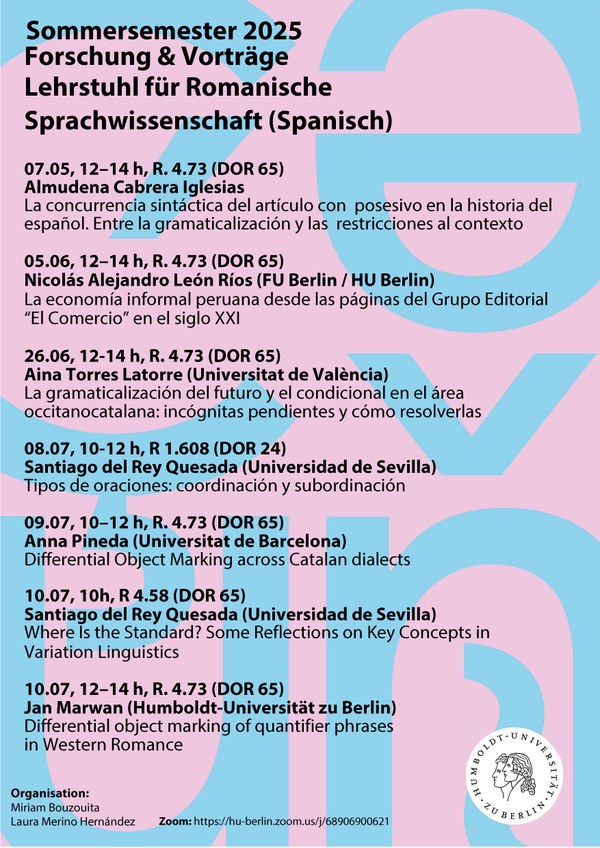
Prof. Dr. Miriam Bouzouita is a Professor of Romance Linguistics specializing in Spanish at the Humboldt University Berlin's Institute of Romance Studies, where she serves as Deputy Director of the Executive Directorate. Her research focuses on historical and comparative aspects of Romance languages, with particular emphasis on Spanish linguistic variation across time and space. She leads the Romance Varieties Lab and has established herself as a leading scholar in grammaticalization processes, syntactic variation, and possessive constructions within Ibero-Romance languages. Her research interests span historical linguistics, syntactic variation, grammaticalization processes, and corpus-based approaches to Romance languages. She has made significant contributions to understanding the development of future and conditional tenses in medieval Ibero-Romance, possessive constructions across Romance varieties, and syntactic archaisms in Atlantic Spanish dialects. Her work often bridges theoretical linguistics with practical applications through digital tools and corpus development, including the creation of the Spanish Dialects app for studying linguistic variation in the Hispanophone world. Analysis of her recent publications reveals a strong focus on grammaticalization phenomena in medieval Ibero-Romance languages, particularly the development of future and conditional constructions. She employs comparative methodologies across Spanish, Catalan, and Navarro-Aragonese, often using parallel biblical translations from the 14th century as data sources. Her work increasingly incorporates computational approaches, including Games With A Purpose (GWAPs) for linguistic annotation and corpus development, reflecting her commitment to methodological innovation in linguistic research. Prof. Bouzouita has successfully supervised numerous doctoral students to completion, including Daniel Eduard Bejarano Bejarano, Antoine Primerano, Johnatan Bonilla Huérfano, Rosa Lilia Segundo Díaz, Vanessa Casanova Romero, and Matti Marttinen Larsson. Her research has been supported through various projects, including the SFB Project 1412 at HU Berlin where former doctoral student Johnatan Bonilla Huérfano now works as a researcher. She leads the Romance Varieties Lab, which focuses on documenting and analyzing linguistic variation across Romance languages, with particular attention to Spanish dialects. The lab has developed digital tools for linguistic research, including the Spanish Dialects app, and has organized lecture series on research projects by participants and guests of the Department of Romance Linguistics. Prof. Bouzouita collaborates extensively with international researchers, as evidenced by her co-organized lecture series with Dr. Merino Hernández.
Professor D. Fischer holds the Chair of Pharmaceutical Technology at the Department of Chemistry and Pharmacy, Faculty of Natural Sciences, Friedrich-Alexander-Universität Erlangen-Nürnberg (FAU). With extensive teaching responsibilities across multiple pharmacy and life science engineering programs, Prof. Fischer leads courses in Pharmaceutical Technology, Biopharmacy, Quality Assurance, and related fields for both undergraduate and graduate students. Prof. Fischer's research spans multiple cutting-edge areas in pharmaceutical sciences, with particular emphasis on advanced drug delivery systems. The research portfolio demonstrates deep expertise in nanocarrier development, bacterial nanocellulose applications, and sustainable pharmaceutical formulations. Recent work shows a strong focus on gene delivery vectors, polymer-based delivery systems, and innovative approaches to overcome biological barriers in drug administration. Analysis of recent publications reveals a consistent trajectory toward increasingly sophisticated delivery systems, with growing emphasis on sustainability in pharmaceutical manufacturing. The research integrates materials science, polymer chemistry, and biological testing to develop novel solutions for drug delivery challenges, particularly in areas like transdermal delivery, biofilm penetration, and targeted gene therapy. Prof. Fischer serves as primary instructor for multiple core courses in the pharmacy curriculum, including Pharmaceutical Technology lectures and internships for third- and fourth-year pharmacy students, Biopharmacy seminars, and Quality Assurance training. The teaching extends to the Molecular Science Master's program, demonstrating cross-disciplinary engagement within the Faculty of Natural Sciences.
Dr. Antonia Henke (née Klopfer) is a Researcher at the Chair of Operations Management, School of Business and Economics, RWTH Aachen University since August 2020. She focuses on sustainable mobility solutions, system modeling, and environmental assessments. Research Interests: Multimodal corporate mobility concepts Sustainable mobility transformation System modeling in chemical industry Recent Research Trends: Her 2020-2024 publications analyze Mobility-as-a-Service (MaaS) implementations, emission reduction potentials, and network-based environmental assessments across transportation and circular economy domains. Projects: Participates in: NRW Research College: ACCESS! (funded by North Rhine-Westphalia) Catalaix - Catalysis for a Circular Economy (funded by Werner-von-Siemens-Stiftung) Teaching: SS 2025: Sustainable Operations; past courses in sustainable supply chains and student thesis mentoring.
Prof. Dr. Thorsten Thormählen is a University Professor for Computer Graphics and Multimedia Programming in the Department of Mathematics and Computer Science at Philipps University Marburg, Germany, a position he has held since October 2012. Prior to this, he served as Substitute Professor for Interactive Graphics Systems at the University of Tübingen (2011-2012) and led the independent research group "Image-based 3D Scene Analysis" at the Max Planck Center for Visual Computing and Communication (2007-2012). His academic background includes a PhD (Dr.-Ing.) from the University of Hannover (2000-2005), where he also worked as a full-time scientific assistant, and a Diploma in Electrical Engineering from the University of Duisburg (1994-1999). Prof. Thormählen's research centers on Visual Computing , spanning Computer Graphics , Computer Vision , Video Processing , and Human-Computer Interaction . His work pioneers tools for 3D reconstruction (e.g., Multi-View Photometric Stereo), video manipulation (e.g., MovieReshape), and multimedia processing (e.g., GSN Composer), with groundbreaking contributions to accessibility through haptic and auditory interfaces for blind 3D modelers. His lab develops practical systems that bridge theoretical computer vision with real-world applications. Analysis of his 15 most recent publications reveals a consistent focus on photometric stereo techniques for 3D reconstruction, video processing innovations, and accessibility-driven interfaces. His work increasingly emphasizes inclusive design, particularly for visually impaired users, while maintaining technical rigor in camera calibration, surface modeling, and multi-sensor fusion. At the Max Planck Center, he established and led the "Image-based 3D Scene Analysis" research group, which advanced methods for reconstructing 3D environments from video sequences. His current work at Marburg continues this trajectory, integrating computer vision, graphics, and human-centered design to solve complex problems in digital content creation and accessibility.
Dr.-Ing. Stefan Schröder is a researcher at the Chair for Multicomponent Materials Navigation, part of the Faculty of Engineering at the University of Kiel. His work focuses on advanced materials science, polymer chemistry, and nanotechnology, with applications in sensors, biomedical engineering, and environmental monitoring. Key research includes strain-invariant conductors, electret-based magnetic field sensors, and functional polymer coatings for gas sensors. His research highlights include collaborations with the Chair for Functional Nanotechnology to develop ultra-lightweight foam-like frameworks for stable conductors and pioneering work on initiated chemical vapor deposition (iCVD) for bio-interface materials. Schröder’s expertise spans material synthesis, sensor fabrication, and surface engineering, with notable contributions to superhydrophobic surfaces and hybrid nanocomposites. Publications emphasize innovations in polymer thin films, MEMS packaging, and environmental sensors. His work bridges fundamental material science with practical applications in healthcare, industry, and energy sectors. Contact him via ssch@tf.uni-kiel.de or visit his lab at Kaiserstraße 2, Room A-026.
Natascha Dell is a Lecturer in the Department of Communication Design at Folkwang University of the Arts, serving as Vice Dean of Faculty 4. Specializing in Font Design and Computer-Assisted Design, she teaches and advises on typography and digital design. Education: Diploma in Visual Communication from Fachhochschule Aachen (2004) Professional Experience: Founded Fontfarm.de (2006) with Karl Friedrich Oetzbach, developing custom fonts for global clients. Notable fonts include Ergilo, Caput, and KofiPure. Her research interests focus on typeface creation, corporate typography, and digital design methodologies. Awards include the 'font of the week' recognition from typo.cz (2010) and a Silver Best of Corporate Publishing Award (2009). She actively contributes to exhibitions like the Klingspor Museum's 'Schriftgenuss' (2010) and publishes in design journals like Slanted Magazine. Her work bridges academic teaching with industry applications through Fontfarm.de's design studio.
Dr. Emely Hoch is a researcher at the Institute for Technology and Learning (IWM) at the Eberhard Karls University of Tübingen, affiliated with the Multiple Representations Lab. Since 2014, she has focused on learning processes in digital environments and metacognitive strategies in problem-solving. She coordinates the Tübingen Digital Teaching Lab (TüDiLab) since 2020 and previously led the tabletBW meets Science project (2018-2022). Her research interests include educational technology, self-regulation in multimedia learning, and AI applications in adaptive learning systems. Education: M.Sc. Psychology from the University of Tübingen (2014), Ph.D. completed in 2018 investigating if-then plans for self-regulation in multimedia learning. Associated memberships include LEAD Graduate School and the Tübingen Center for Digital Education. Research highlights include studies on technology adoption in schools, metacognitive monitoring prompts, and implementation intentions in educational interventions. She has coordinated projects funded by Baden-Württemberg's Ministry of Education and collaborates with institutions like the Hector Institute. Professional activities include scientific coordination of digital education initiatives and participation in conferences. Her work emphasizes bridging psychological theory with practical educational technology solutions.