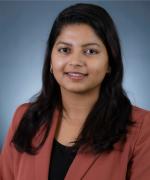
Tina Zhu, MD is an Adjunct Assistant Professor at Queen’s University and a Full-Time Cardiologist at APEX Heart Centre. She holds dual degrees from the University of Toronto: a Bachelor of Science in Immunology and a Medical Degree. Her clinical training includes Internal Medicine at Western University and Adult Cardiology at Queen’s University, alongside specialized certifications in Level III Echocardiography and Nuclear Cardiology. Her research interests focus on heart failure , women’s heart health , and digital health innovation . She actively explores applications of AI and technology in cardiology, particularly in improving diagnostic workflows and patient care. Dr. Zhu’s academic contributions span AI-driven healthcare solutions, with recent work emphasizing automated planning models, text anonymization, and robust dialogue systems. Her publications reflect interdisciplinary expertise at the intersection of cardiology and computational science. Professional affiliations include Queen’s University and APEX Heart Centre, where she balances clinical practice with academic engagement. No formal awards or grants are explicitly listed in the provided materials.
Prof. Hasan BULUT is a full-time faculty member at Ege University's Faculty of Computer and Information Sciences, Department of Computer Engineering. His primary research focuses on software engineering, parallel algorithms, computer networks, artificial intelligence, and algorithm design. He has contributed to fields like distributed systems, data structures, and bioinformatics through innovative algorithmic solutions. His academic work spans over two decades, with notable contributions to machine learning applications in energy forecasting, DNA sequence analysis, and cloud computing optimization. Key areas of expertise include hybrid machine translation models, real-time data clustering, and optimization techniques for computational problems. Prof. BULUT's recent publications emphasize interdisciplinary approaches, combining deep learning with traditional methods to solve challenges in healthcare informatics, financial prediction, and bioengineering. His work on network slicing techniques for 5G and beyond networks highlights cutting-edge contributions to modern communication systems. Despite an extensive publication record and collaborations within Ege University, no formal scientific awards or grant information is explicitly mentioned in the provided texts. His academic career includes supervising numerous research projects but specific student advisee details are not documented here.
Felice Dell'Orletta is a researcher at the Institute of Computational Linguistics "Antonio Zampolli" (ILC), part of the Italian National Research Council (CNR). With numerous publications spanning from 2023 to 2025, Dell'Orletta is actively contributing to the field of computational linguistics and natural language processing. The researcher's work demonstrates strong collaboration with colleagues including Alessio Miaschi, Giulia Venturi, and Dominique Brunato across multiple projects. Dell'Orletta's research interests focus on the intersection of linguistics and artificial intelligence, particularly in the development and evaluation of Large Language Models. Key areas include linguistic profiling methodologies, text style transfer applications, and the analysis of text coherence across languages. The researcher has made significant contributions to Italian language processing, developing specialized techniques for adapting language models to the Italian linguistic context. The publication record shows a clear trend toward practical applications of NLP research, particularly in healthcare communication (reducing physician-patient expertise gaps), software engineering (feature extraction from mobile app reviews), and mental health assessment (linguistic markers of psychological conditions). Dell'Orletta's work bridges theoretical linguistic concepts with real-world AI applications, demonstrating both academic rigor and practical relevance. Dell'Orletta has been involved in multiple collaborative research projects, as evidenced by the extensive co-authorship network across publications. The research spans both technical NLP advancements and interdisciplinary applications in healthcare, education, and psychology. Recent work on linguistic profiling of LLMs represents a significant contribution to understanding the linguistic capabilities and limitations of current language models.
Gyu-Ho Shin is an Assistant Professor in the Department of Linguistics within the College of Liberal Arts and Sciences at the University of Illinois at Chicago (UIC). He holds a PhD in Linguistics from the University of Hawai’i at Mānoa and previously taught at Palacký University Olomouc and the University of Hawai’i at Mānoa. His research focuses on the cognitive and computational mechanisms underlying language acquisition and development. He investigates how exposure to linguistic environments interacts with general cognitive abilities to shape linguistic knowledge, employing a methodological pluralism that combines corpus analysis using NLP, behavioral experiments, and computational modeling. His work is grounded in usage-based constructionist theories and emphasizes explainability in AI and AI literacy for researchers. His research spans interdisciplinary areas including language acquisition, computational linguistics, corpus linguistics, psychology of language, and second language acquisition, with a particular focus on Korean. His recent publications in journals like Cognitive Science , Developmental Science , and Studies in Second Language Acquisition reveal trends in using advanced computational methods to model child and adult language comprehension, particularly of complex constructions in Korean, and in analyzing learner corpora to understand proficiency development. He has been awarded significant research grants from organizations such as the Academy of Korean Studies and Language Learning journal, supporting his work on Korean language acquisition and computational methods. Shin advises students and conducts research involving interdisciplinary teams, often collaborating with colleagues on projects related to Korean linguistics and computational modeling. He teaches courses at UIC on AI for language research, computational linguistics, statistics, and the psychology of language, continuing a strong commitment to pedagogy in quantitative and computational methods.
Norwegian University of Science and TechnologyNorway
Björn Gambäck is a Professor of Language Technology at the Department of Computer Technology and Informatics, NTNU. His research focuses on computational creativity, computational linguistics, artificial intelligence, and machine learning, with a strong emphasis on natural language processing (NLP) and language technology. He actively contributes to the academic community through teaching courses such as 'Intelligent Text Analysis and Language Comprehension' and supervising master's theses. His work includes advancing techniques for sentiment analysis, code-mixed language processing, and computational creativity. Recent research highlights include developing deep learning models for code-mixed social media analysis and exploring coreference resolution in entity-level sentiment tasks. Gambäck’s contributions span interdisciplinary areas, such as applying evolutionary algorithms to media repositories and music composition. Notable collaborations include projects on hate speech detection, sarcasm annotation in tweets, and named entity recognition for low-resource languages like Amharic. His expertise bridges theoretical advancements and practical applications in NLP and computational systems.
Xin Zhong is an Assistant Professor of Computer Science at the University of Nebraska at Omaha (UNO), affiliated with the College of Information Science & Technology (IS&T). He specializes in deep learning, machine learning, computer vision, and image processing, with a focus on robust watermarking techniques, adversarial training, and multimedia security. His work integrates computational intelligence into practical applications like medical imaging, disaster risk assessment, and smart city technologies. Dr. Zhong serves as an advisor for PhD, MS, and undergraduate researchers and contributes to academic governance as a member of the Artificial Intelligence concentration committee and the Computer Science Department’s graduate program committee. He also reviews for journals, conferences, and NSF grants, emphasizing interdisciplinary collaboration. His research interests span image watermarking robustness, AI ethics, and interpretable machine learning. Notable contributions include innovations in cross-attention mechanisms, noise-invariant domain learning, and deep morphological neural networks. His lab focuses on advancing cybersecurity, healthcare diagnostics, and urban infrastructure safety through AI-driven solutions. Xin Zhong’s advising and service roles reflect his commitment to advancing both technical research and educational initiatives. His projects often involve partnerships with industry and government agencies to address real-world challenges in automated systems and cyber-physical infrastructure.
Lonneke van der Plas is an Associate Professor at the Institute of Argumentation, Linguistics and Semiotics within the Faculty of Communication, Culture and Society at Università della Svizzera italiana (USI), and an Adjunct Professor at the Faculty of Informatics, USI, since October 2024. She also serves as the group leader of the Computation, Cognition & Language research group at the Idiap Research Institute in Martigny, a position she has held since February 2021. Her academic background includes: PhD in Humanities Computing, University of Groningen M.Phil in Computer Speech and Language Processing, University of Cambridge Postdoctoral research at the University of Geneva (CLASSiC project) Junior Professor at the University of Stuttgart (IMS, SFB 732) Associate Professor at the University of Malta (2014–2020) Her research interests span Natural Language Processing , Computational Linguistics , Distributional Semantics , Multilingual NLP , Computational Creativity , and Low-Resource Languages . She integrates insights from cognitive science, linguistics, and computer science to model language as a tool for creative thinking and reasoning. Her work includes semantic role labeling, cross-lingual transfer, medical question answering, and lexical innovation. The 15 most recent publications reflect a strong trend in interdisciplinary NLP research, combining linguistic theory with machine learning. Topics include lexical innovation, multilingual financial NLP, skill extraction, multi-modal fact checking, and cognitive modeling. The articles demonstrate expertise in both theoretical and applied NLP, with applications in healthcare, finance, education, and AI ethics. Key subfields include semantic role labeling, cross-lingual transfer, bootstrapping for low-resource languages, and structured knowledge integration. Scientific recognitions include: DSI Fellow, University of Zurich (2019–2020) Erasmus Mundus LCT Visiting Scholar at Shanghai Jiao Tong University and University of Melbourne (2016) Visiting Academic at Macquarie University, Sydney (2007) She has advised multiple PhD students including Stefan Müller, Patrick Ziering, Molly Petersen, Mete Ismayilzada, and Diego Rossini. She currently leads several major funded projects: NCCR Evolving Language (SNSF, PI), C-LING (SNSF, PI), SEM24 (Innosuisse, PI), and FactCheck (Hasler Foundation, co-PI). These grants support postdoctoral researchers, developers, and PhD students, and involve collaborations with institutions like EPFL, EHL, and ARCA24. Her research bridges academia and industry, with applications in HR, finance, and healthcare. Lonneke leads the Computation, Cognition & Language group at Idiap, which conducts highly interdisciplinary research involving collaborations with social scientists, cognitive scientists, linguists, and professionals in health, finance, and business. The group focuses on modeling language as a cognitive and creative tool, using computational methods to explore lexical innovation, diachronic change, and reasoning. Open PhD positions are available in areas such as NLP for cognitive modeling, multilingual NLP, and mental health applications.
Dr. Xuelian Cheng is an Adjunct Lecturer at the Department of Data Science & AI, Monash Suzhou Research Institute, and a Research Fellow at Monash University Australia. She holds a PhD from Monash University under the supervision of Professors Zongyuan Ge, Mehrtash Harandi, and Tom Drummond. Her research focuses on medical imaging, 3D reconstruction, and interdisciplinary applications of AI in robotic surgery and AR/VR technologies. She has contributed to projects with industry partners like Tencent, IIAI, and Airdoc, resulting in publications at top venues such as MICCAI, CVPR, and Nature. Affiliations: Monash Suzhou Research Institute, Monash University Australia. Teaching: Courses include FIT5047 (Artificial Intelligence), FIT5226 (Multi-Agent Systems), and FIT5216 (Discrete Optimization). Research interests span deep learning for 3D visual perception, automated machine learning (AutoML), and medical image analysis. Her work aligns with UN SDGs related to health and innovation. The MMAI group she co-leads has published extensively in top conferences/journals, including JAMA, The Lancet, and NeurIPS. Advising: Accepting PhD students interested in medical 3D topics, with projects focusing on surgical intelligence and clinical decision support. Labs/Teams: Monash Medical AI (MMAI) Group, collaborating on surgical workflow understanding and endoscopic reconstruction.
Dr. Judita Preiss is a Lecturer in Data Science at the University of Sheffield's School of Information, Journalism and Communication. She holds a MA, MPhil, and PhD in Mathematics, Computer Speech and Language Processing, and Natural Language Processing (NLP) from the University of Cambridge. Her career includes postdoctoral research at Cambridge, a visiting professorship at Ohio State University (2008–2010), and a role as a lecturer in Data Science at the University of Salford (2017–2022). Education: MA Cantab (Mathematics), MPhil (Engineering), PhD (Computer Science) – all from Cambridge. Her research focuses on NLP with applications in biomedical domains, mental health analysis via social media, big data techniques, multilingual models, and knowledge organization. She explores text/speech analysis involving large datasets and industry knowledge transfer. Publications emphasize literature-based discovery, semantic analysis, and tools like HiDE for scientific knowledge extraction. She is certified by Databricks (Apache Spark 3.0 – Python) and AWS (SysOps Administrator, Academy Educator), and serves on ACL's rolling review panel. Teaching: Modules include Big Data (INF6032), Business Intelligence (INF6040), and Practical Programming for Data Science (INF111). Grants & Labs: Active in interdisciplinary projects linking data science to healthcare and social sciences. Current research spans automatic discovery in healthcare, multilingual NLP models, and ethical AI applications in data-driven decision-making.
Nimisha Roy is a Lecturer in the School of Computing Instruction (SCI) at Georgia Tech's College of Computing, teaching undergraduate and graduate courses in Computer Science, including Software Engineering, Machine Learning, and the CS Capstone. She also instructs in the Online Master of Science in Analytics (OMSA) program. Her research focuses on AI-driven pedagogical innovation, generative AI, and infrastructure resilience. Dr. Roy holds a Ph.D. in Computational Science and Engineering from Georgia Tech (2021), with NSF-funded work on scientific computing and data-driven modeling of physical systems. Her research interests bridge computing and real-world applications, emphasizing AI in education and sustainable practices. She has advised students across academic levels and published over 30 peer-reviewed works. Notably, she was honored as one of the top 75 Indian women in Geotechnical Engineering (2023) and received teaching awards including the Provost Teaching Fellowship (2024) and William D. Leahy Jr. Outstanding Instructor Award (2025). She also serves on the editorial board of Nature's Scientific Reports and collaborated with EPFL, Switzerland. Her research trends emphasize AI integration into education (e.g., automated grading tools like VISGRADER), disaster resilience through machine learning (e.g., earthquake damage assessment via social media images), and sustainable infrastructure design. She has pioneered active learning strategies using video tutorials and student-created content, enhancing large-classroom engagement. Her work spans geotechnical engineering applications (e.g., landslide mapping) and materials science (e.g., MICP-cemented sands). Awards: Top 75 Indian Women Leaders in Geotechnical Engineering, Provost Teaching Fellowship, Transformative Teaching Grant, Sustainability Education Award, Leahy Instructor Award Grants: NSF-funded doctoral research, Transformative Teaching Innovation Incubator Grant Dr. Roy leads initiatives in equitable grading practices and rubric development for teaching assistants. She actively contributes to interdisciplinary research teams and participates in international academic collaborations. Her lab focuses on leveraging AI to solve complex engineering and educational challenges.
Professor Ali Babar is a faculty member in the School of Computer and Mathematical Sciences at the University of Adelaide, part of the Faculty of Sciences, Engineering and Technology. He holds the academic rank of Professor and leads research in secure software systems, cyber security, and emerging technologies like cloud computing and IoT. Research focuses include engineering secure software systems, applying AI/ML for security, and empirical methods in software engineering. His work has resulted in over 320 peer-reviewed publications (h-index 66) and contributions to high-impact projects like the Cyber Security Cooperative Research Centre (CSCRC), a A$140M initiative. Collaborations span industry/government partners such as DST Group, ActewAGL, and Cisco. Awards include the 2014 Most Influential Paper Award at the Australasian Software Engineering Conference. His research addresses critical areas like secure microservices, ML model decay mitigation, and privacy engineering practices. Current themes include cyber security as a service and platform architectures for distributed systems. Active in supervising PhD and Master's students and participates in interdisciplinary initiatives like the Oceania Cyber Security Centre and Australian Cyber Collaboration Centre.
Schloss Dagstuhl - Leibniz Center for InformaticsGermany
Florian Reitz is a Scientific Staff member at Schloss Dagstuhl - Leibniz Center for Informatics, specializing in the dblp computer science bibliography. His current role involves enhancing bibliographic data infrastructure and managing projects like SmartER. He holds a PhD from the University of Trier (2018), focusing on historical metadata analysis. Previously, he was a research assistant in the Databases and Information Systems group under Prof. Bernd Walter. His work centers on metadata quality, author disambiguation, and leveraging historical corrections for test collections. Research interests include information retrieval, database systems, and digital libraries. He contributes to projects like Scalable Author Disambiguation and has co-authored numerous publications on topics such as LLM applications, knowledge graphs, and FAIR data principles. Contact: florian.reitz@dagstuhl.de.
Rebecca Hwa is a Professor in the Department of Computer Science at the University of Pittsburgh. She was on leave during the 2020-2021 academic year, serving as a Program Director at the National Science Foundation. Her research focuses on Natural Language Processing, Machine Learning, Artificial Intelligence, and Human-Computer Interaction. She co-advises PhD students with Prof. Adriana Kovashka and has mentored graduates now at tech companies like Facebook, Microsoft, LinkedIn, and Apple. Her work bridges computational methods with social and educational applications. Recent research trends include advancing NLP techniques for detecting bias in social media analysis, developing domain-robust visual question answering systems, and creating interfaces to enhance student writing through AI-driven tools. Her contributions span interdisciplinary areas, integrating machine learning with human-centric design. Affiliated with the Intelligent Systems Program, she emphasizes collaborative projects between academia and industry. Her advising record reflects a commitment to preparing students for impactful careers in tech and research. No scientific awards are explicitly mentioned in the text.
Alberto Nogales Moyano is a Lecturer at the Department of Computer Science at the University of Alcalá. He holds a PhD in Computer Science from the same institution, completed in 2018, with a thesis titled A structural and quantitative analysis of the web of linked data and its components to perform retrieval data , supervised by Dr. María Elena García Barriocanal and Dr. Miguel Ángel Sicilia Urbán. His research focuses on AI applications in healthcare, data science, and cultural heritage preservation, with notable work on deep learning models for medical imaging, EEG analysis, and architectural restoration. Key research interests include artificial intelligence techniques for mental health assessment (e.g., lockdown impact studies during the pandemic), medical diagnostics using hybrid AI models, and optimizing deep learning frameworks for diverse domains like food safety and noise suppression. He also contributes to open-source tools such as EEGraph (for electroencephalogram analysis) and explores GAN-based approaches for virtual reconstruction of historical structures. His publications span topics such as self-organizing maps for data imbalance, BERT-based EEG analysis for Parkinson’s disease, and systematic reviews of deep learning’s role in physiotherapy and neurology. He actively engages in interdisciplinary projects combining machine learning with healthcare, sociology, and architecture, demonstrating a commitment to both methodological innovation and practical societal impact.
Miguel Ángel Sicilia Urbán is a Full Professor in the Department of Computer Science at Universidad de Alcalá, Spain. His research focuses on software engineering, data management, and fuzzy systems, with recent work extending into blockchain technology, cryptocurrency, and semantic web applications. He holds a Ph.D. from Universidad Carlos III de Madrid (2003), where his thesis explored adaptive hypermedia models with imperfect information support. Research Interests His expertise spans collaborative filtering algorithms, software cost estimation, and the application of fuzzy logic in database systems. Current projects include metadata traceability, privacy-preserving computing, and the analysis of cryptocurrency markets. Sicilia is also active in semantic web technologies, including linked data integration and knowledge graph development. Publications & Collaborations With over 20 years of research output, Sicilia has authored/co-authored 11 indexed publications since 2001, including foundational work on OWA-based collaborative filtering and Choquet integral aggregation. Notable collaborations include projects with researchers like Elena García on usability criteria modeling and Juan J. Cuadrado-Gallego on software estimation models. Awards & Recognition While no specific awards were explicitly mentioned, his contributions to software engineering and data management have been recognized through multiple co-edited conference proceedings and citations in interdisciplinary fields like medical informatics and environmental economics. Contact Email: msicilia@uah.es