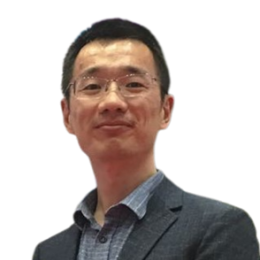
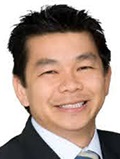
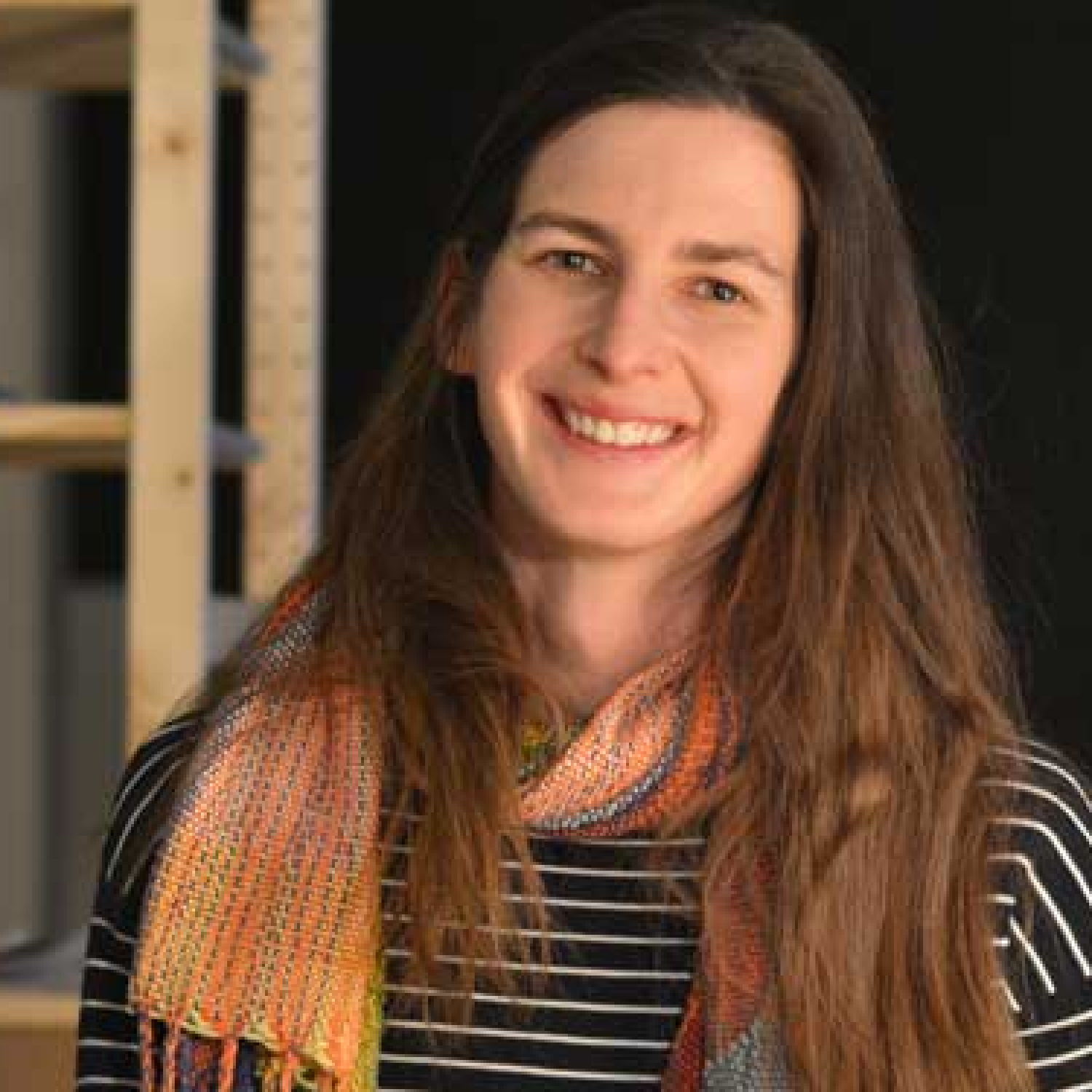
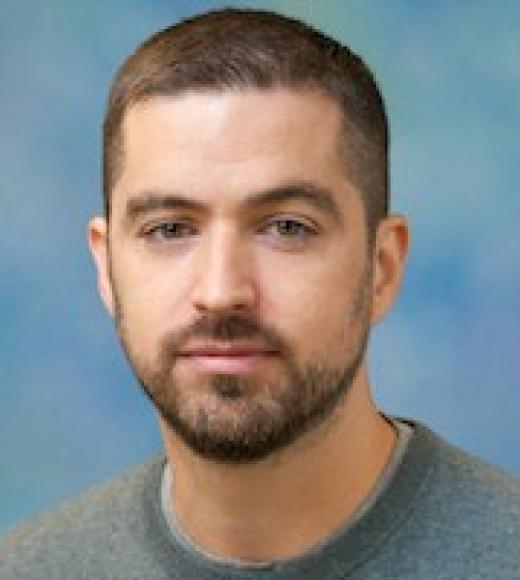
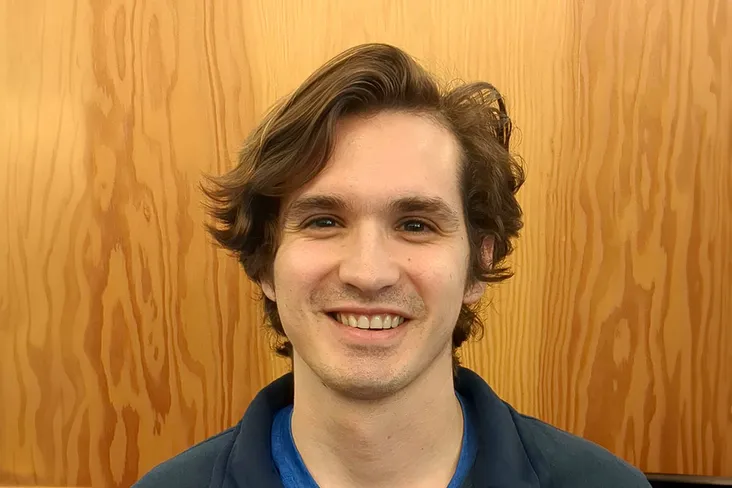
John Nassour is a Researcher at the Technical University of Munich's School of Computation, Information and Technology, affiliated with the Chair of Cognitive Systems. He holds engineering degrees from Tishreen University (electronics), a Master's in intelligent systems from University of Cergy-Pontoise/École Nationale Supérieure de l'Électronique, and a joint PhD from University of Versailles/TUM. His interdisciplinary research focuses on computational cognitive systems applied to robotics, including wearable devices, humanoid robots, soft robotics, and robot learning for locomotion/manipulation. Before joining TUM in 2020, he was a lecturer/researcher at Chemnitz University of Technology. He teaches courses in cognitive systems, neuro-inspired engineering, and soft robotics.
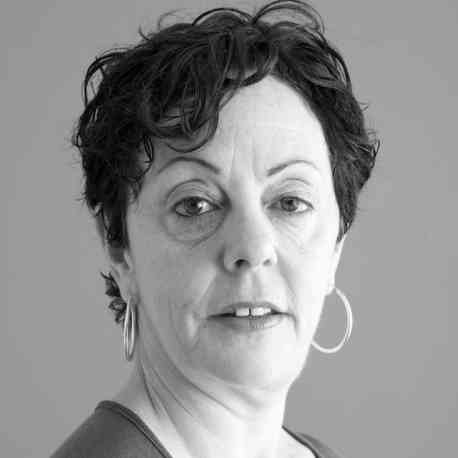
Professor Anna Marie Munster is a distinguished academic and artist at UNSW Art and Design (College of Fine Arts), where she has held a full-time tenured position since 2001. Her work bridges theoretical scholarship with creative practice, establishing her as a leading figure in digital media art and critical theory. University: University of New South Wales School: College of Fine Arts (UNSW Art and Design) Position: Professor Qualifications: PhD from UNSW (2002), BA (Class 1 Hons with University Medal) from University of Sydney (1984) Professor Munster's research explores the intersections of art, technology, and philosophy, with particular focus on statistical visuality, radical empiricism, the politics and aesthetics of machine learning, and more-than-human perception. Her work integrates process philosophy with contemporary media practices, examining how time, movement, and sonicity shape our experience of digital environments. She approaches these topics through both theoretical scholarship and creative practice, often collaborating with artist Michele Barker on multi-channel audiovisual installations. Her publications reveal a consistent trajectory exploring the relationship between embodiment and digital media, with recent work focusing on AI and machine learning in cultural contexts. Munster's creative output demonstrates sophisticated integration of technical innovation with philosophical inquiry, particularly in how her installations challenge conventional perceptions of time and space. ARC, UNSW Student Council Award for Excellence in Postgraduate Supervision (2017) Dean's Award for Excellence in Postgraduate Supervision (2015) Highly commended for Materializing New Media at Prix Ars Electronica (2008) Winner of National Digital Art Awards 'The Harries' (2006) University Press of New England Publishing Award (2005) Professor Munster has completed over 20 PhD and Masters supervisions at UNSW and been involved in another 10 secondary supervisions. She currently supervises five PhD candidates working on diverse topics including coding materialities, critical bio-textiles, schizophrenia and XR technologies, sound and resonance, and affective drawing. Her ARC-funded research projects demonstrate sustained commitment to interdisciplinary work, particularly at the intersection of art, science, and technology. Her creative practice with Michele Barker has resulted in numerous commissioned installations exploring perception, embodiment, and the relationship between humans and technology.
Yu Xia is a Post Doc at the Department of Chemistry, Stockholm University, Sweden. He is affiliated with the Tom Willhammar Research Group, focusing on advanced electron microscopy and diffraction techniques for structural characterization of materials. PhD (2019–2023) from a joint program between the University of Birmingham (UK) and the Southern University of Science and Technology (China). Research emphasizes fabrication of metallic nanoparticles with non-equilibrium structures and shapes using gas-phase condensation and thermal shock methods. Specializes in scanning transmission electron microscopy (STEM), in-situ heating experiments, and electron energy loss spectroscopy (EELS) for nanoparticle analysis. Current work prioritizes 4DSTEM imaging for electron beam-sensitive materials and Python-based post-processing of electron microscopy datasets. Yu Xia's research spans Materials Science , Nanotechnology , and Electrocatalysis , with applications in photocatalytic hydrogen evolution , graphene composites , and advanced electron microscopy techniques . His work often integrates computational image processing with structural characterization to optimize material properties. Publications highlight innovations in heterostructure engineering , metallic alloy catalysts , and electron beam-sensitive material imaging . No scientific awards are explicitly mentioned in the provided text. Yu Xia's technical expertise includes Python scripting for image analysis, in-situ electron microscopy , and multifunctional graphene-based materials .
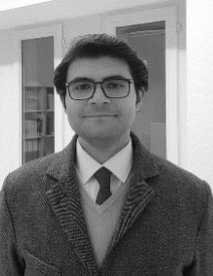
Milad Abedi is a PhD candidate in Linguistics at the University of Zurich and Institut national des langues et civilisations orientales (INALCO), Paris, focusing on the cultural history of Sino-Iranian lexical contacts. He has taught Zoroastrian Middle Persian and Middle Iranian languages at the University of Zurich while conducting research on topics including language contact mechanisms and historical Persian grammar. PhD in Linguistics (2020–Present), University of Zurich & INALCO, Paris MA in Ancient Languages and Cultures of Iran (2015–2019), Allameh Tabataba'i University (Highest Distinction) BSc in Cellular-Molecular Biology (2010–2015), Islamic Azad University His research spans ancient Iranian language contact (Elamite-Iranian, Sino-Iranian, Arabic-Iranian), historical grammar of Persian, and Classical Persian literature. He has published on topics such as kinship term evolution, cuneiform epigraphy, and metonymic phrases in Achaemenid Elamite. Recent publications highlight his focus on lexical diffusion across Eurasia, with key works on donkey terminology in cross-cultural contexts and the origins of felt words in Iranian languages. His collaborative research with Wolfgang Behr and Samira Müller demonstrates interdisciplinary approaches combining linguistics and archaeology. 2021 Travel grant, University of Zurich 2016 Travel grant, Allameh Tabataba'i University 2016 Top student award, Allameh Tabataba'i University As a Lecturer at the University of Zurich, he has taught courses on Zoroastrian Middle Persian and historical linguistics. His digital humanities expertise includes ELAN software, GIS, and SQL for language documentation.
Elvin Karana is a Professor of Materials Innovation and Design at Delft University of Technology's Faculty of Industrial Design Engineering. His work bridges the gap between material science, design, and human-computer interaction with a focus on emerging materials and their experiential qualities. He leads the Materials Experience Lab, which investigates how materials communicate ideas and beliefs while enhancing functionality and user experience. Dr. Karana's research interests center on Materials Design, Emerging Materials, Material Driven Design, Bio-based Materials, and Materials Experience. His work explores how living materials can be incorporated into design practices, particularly focusing on microbial interactions, textile interfaces, and regenerative material ecologies. He investigates how materials can be designed to create serene experiences, facilitate multispecies interactions, and support sustainable practices in human-computer interaction. His recent publications demonstrate a strong trend toward biodesign and living materials, with significant focus on microbial systems like cyanobacteria and flavobacteria. His work explores the design space of direct interactions with living organisms, examining how materials can be designed for performativity and how livingness can be understood as a material quality. The research spans textile interfaces, material ecologies, and regenerative design approaches that integrate living systems into everyday artefacts. Best Paper Honourable Mention (2023) Dr. Karana serves as a member of the Supervisory Board/Advisory Board at Avans University of Applied Sciences (CARADT) from May 2024 to December 2025. His research has been featured in various media outlets including TU Delft, Delta, Strawberry Earths, and architectmagazine, highlighting the societal impact of his work on living materials. His projects often involve interdisciplinary collaborations across design, biology, and engineering disciplines. He leads the Materials Experience Lab, which approaches materials as a medium that communicates ideas, beliefs, and approaches while compelling users to think, feel, and act in certain ways. The lab's work emphasizes the dual role of materials as both technical and experiential components in design, exploring how material qualities can be harnessed to create meaningful interactions and sustainable solutions.
Alvin NG Theng Haw is an Adjunct Associate Professor at the Division of Information Technology and Operations Management, College of Business (Nanyang Business School), Nanyang Technological University (NTU). He combines over 20 years of global leadership experience in Sales and Product Management with academic roles, including serving as a Senior Career Fellow and executive coach for NTU’s Global Executive MBA and Full-Time MBA programmes. His work focuses on integrating Digital Transformation, Internet of Things (IoT), and Artificial Intelligence for Business into strategic frameworks. Research Interests : Alvin specializes in leveraging Digital Transformation and Advanced Technologies (IoT, AI) to drive business innovation. His publications in materials science demonstrate interdisciplinary applications of these technologies to fields like Soft Robotics, Self-Healing Materials, and Wearable Electronics. His expertise extends to Smart Cities, Sustainability Technology, and Industry 4.0, where he applies business strategies to technological challenges. Contributions : As a founding member of the World Economic Forum’s Digital ASEAN Skills Task Force, he advocates for digital literacy and skills development. His industry experience includes roles in networking, software, cloud platforms, and biorenewable materials, reflecting a bridge between business and engineering.
Laura Devendorf is an Associate Professor at the ATLAS Institute and Department of Information Science at the University of Colorado Boulder. As director of the Unstable Design Lab, she bridges human-computer interaction (HCI), computational design, and craft practices through smart textiles and collaborative innovation. BFA in Studio Art and BS in Computer Science from University of California Santa Barbara PhD in Information Science from UC Berkeley Research Interests focus on smart textiles as a medium to challenge human-machine relationships, with projects exploring: Computational design tools for weaving Gendered labor in technology Biodegradable materials for wearables Interdisciplinary collaboration with craftspeople Speculative design practices Human-fungi relationships Recent Research Trends demonstrate her leadership in: AdaCAD software for parametric weaving Desktop biofiber spinning systems Interactive hygromorphic textiles Material-led HCI frameworks Scientific Recognition : Best Pictorial Award (TEI '23) Best Paper Honorable Mention (DIS ’22) Honorable Mention (CHI EA ’20) Best Pictorial Honorable Mention (DIS ’22) Collaborations & Grants : NSF CAREER Grant (2020) for smart textiles innovation Extensive partnerships with Mirela Alistar, Kristina Andersen, and others Advancing open-source tools like AdaCAD and Desktop Bio-spinning
Kim Joo-yeon is an Associate Professor at the Department of Clothing and Textiles , Seoul National University , within the College of Human Ecology . She holds a Ph.D. in Fiber and Polymer Science from North Carolina State University, with prior Master's and Bachelor's degrees in Clothing and Textiles from Seoul National University. Research Interests focus on Textile Engineering , Nanotechnology , and Environmental Materials , particularly photocatalytic fabrics, biodegradable filters, and sustainable textile processing. Her work integrates Photocatalytic degradation of pollutants Nanoparticle functionalization Smart filtration systems Waste-to-resource strategies Publications (2022–2024) highlight innovations in Photocatalytic fabric design Bacterial adhesion control Multi-jet electrospinning MOF-based gas filters with a focus on environmental and healthcare applications. She teaches undergraduate courses in Clothing Material Evaluation and Experimental Studies , and graduate courses in Textile and Polymer Chemistry and Filter Materials . Kim leads the Textile Materials Lab , part of the multidisciplinary W.E.A.R. Lab ( Wearable Ergonomics + Anthropometrics Research ), addressing real-world challenges through textile innovation.
Alexander Müller-Rakow is a Researcher and PhD Candidate at the Design Research Lab at Berlin University of the Arts. His work explores the interplay between embodied interfaces , digital sovereignty , and social design , focusing on bodily movements as a medium for musical and interactive technologies. Education: Industrial and Interaction Design (University of Applied Science Magdeburg, University of Bergen) Current Roles: Research Scientist (Design Research Lab), Lecturer (Hochschule für Kunste Bremen, others) His research spans haptic technology , textile-integrated sensors , and experimental interfaces , often intersecting with digital justice and material interactions . Early-career publications include collaborations on capacitive sensing and urban design interventions , reflecting his interdisciplinary approach. As part of the Design Research Lab, he contributes to projects addressing inclusive digital futures , smart urban mobility , and collaborative tools , aligning with the lab's mission for ecologically sustainable design .
Santiago Barreda is an Associate Professor in the Department of Linguistics at the University of California, Davis, specializing in speech perception and phonetic analysis. His research examines how acoustic properties of speech convey speaker characteristics including age, gender, and physical attributes. Education: Ph.D. in Linguistics (Phonetics), University of Alberta, 2013 M.A. in Hispanic Studies (Language and Linguistics), University of Western Ontario, 2008 B.A. in Linguistics and Spanish Language and Literature, University of Western Ontario, 2006 Research Focus: Dr. Barreda employs behavioral experiments and statistical modeling to investigate perceptual mechanisms in speech recognition. His work bridges theoretical phonetics with practical applications, particularly in vowel normalization techniques and formant tracking algorithms. Key questions address how listeners extract speaker identity from acoustic cues and interpret social characteristics through vocal signals. Publication Trends: Recent publications (2020-2025) reveal three dominant themes: computational phonetic tools (FastTrack, phonTools), perception of social/physical speaker characteristics from children's voices, and interdisciplinary public health research on speech-related aerosol transmission. His work demonstrates strong methodological consistency in combining acoustic analysis with perceptual validation. Scientific Awards: No scientific awards were mentioned in the source material. Advising and Grants: The provided documentation does not specify graduate student advising roles or external grant funding. Technical Contributions: Dr. Barreda develops open-source phonetic analysis software including FastTrack (Praat-based formant tracking) and the phonTools R package, which have become standard resources in acoustic phonetic research.
Steven Ceron is an Assistant Professor in Robotics at the University of Michigan's College of Engineering. His research focuses on swarm robotics, multi-agent systems, and programmable self-organization of micro- and macro-scale robot swarms. He leads the Synergetic Adaptive Machinas (SAM) Lab, which develops reconfigurable robot swarms for biomedical applications and smart materials integration. Key research areas include microrobot fabrication, heterogeneous swarm coordination, and self-reconfigurable modular systems. His work envisions seamless integration of robot swarms into daily life through innovations in design, control, and scalability. Recent publications emphasize swarmalator dynamics, strain-based coordination in soft robots, and scalable fabrication methods. His lab explores both theoretical frameworks and practical implementations, bridging micro-scale and macro-scale robotics applications. Though no awards were explicitly listed, his contributions to novel fabrication techniques and modular robotics suggest ongoing recognition in the field. Advising and grant details are not provided here, but his lab's focus on biomedical and aerospace applications indicates active collaborative projects.
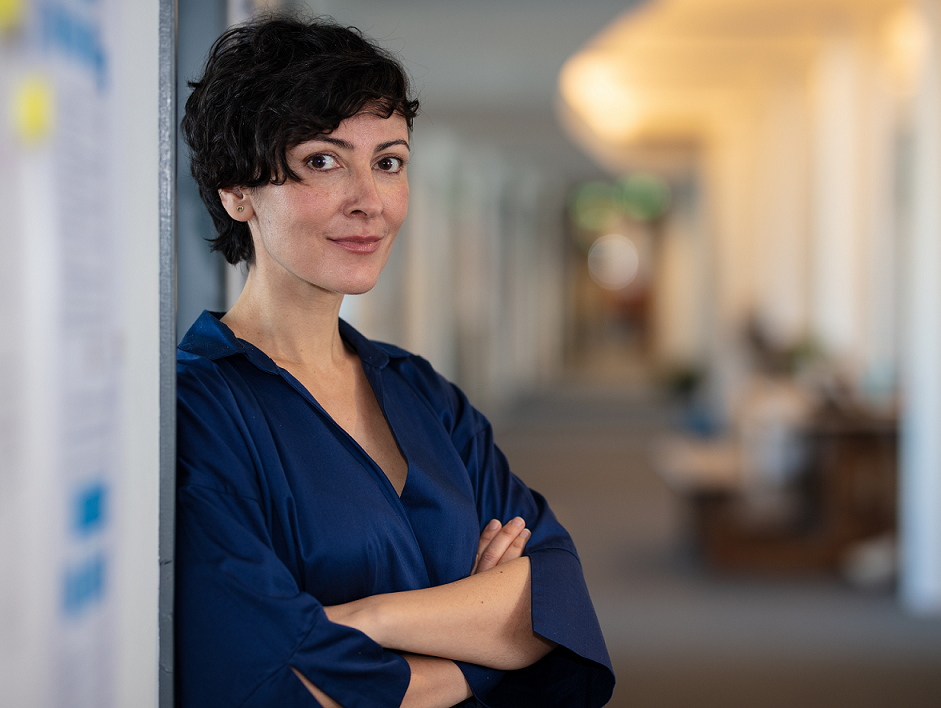
Secil Ugur Yavuz is a Professor at the Faculty of Design and Arts, Department of Design, at Free University of Bozen-Bolzano. Her academic work spans eco-social design, research through design, and tangible human-technology interactions, with a particular focus on sustainable materials and collective making practices. She teaches courses including Design 3 for the Master in Eco-social Design and doctoral programs in Experimental Research through Design, Art and Technologies. Professor Yavuz's research explores the intersection of analog and digital through tangible human-technology interactions, with significant contributions to sustainable material systems. Her FERAL WOOL project investigates ecological and cultural dimensions of wool, while her work with biomaterials like microbial cellulose and open-source bioreactors addresses circular production systems. She employs embodied and speculative approaches to examine microplastic emissions, children's nature engagement through tools like TREESENSE, and social play with interactive toys. Her recent publications reveal a strong thematic focus on material culture, sustainability, and human-centered design across multiple scales. The research demonstrates consistent exploration of how digital and physical realms interact to create meaningful user experiences while addressing ecological challenges. Key trends include the use of embodied interaction methods, speculative design for cultural critique, and co-creative processes that bridge technological innovation with social and environmental responsibility. Yavuz leads the Design Friction Lab, which investigates the philosophical foundations of design through customizable interfaces and DIY approaches. Her work with doctoral students in Experimental Research through Design emphasizes reshaping technologies through collective making processes. The FERAL WOOL research project represents a significant current initiative exploring sustainable textile futures through both ecological and cultural lenses.
Dr. Esmaeel Esmaeeli is a Senior Lecturer in Civil and Environmental Engineering at Brunel University London, serving as Course Director for the MSc in Structural Engineering. His work focuses on sustainable structural retrofitting solutions, safety, and resilience of concrete and masonry structures. Brunel University London (Current: Senior Lecturer) Queen’s University Belfast (Postdoctoral Fellow, Horizon 2020 MSC Fellowship) University of Minho (PhD research on Hybrid Composite Plate) K. N. Toosi University (MSc research on seismic strengthening) His research spans advanced materials like Strain-Hardening Cementitious Composite (SHCC) and Carbon Fibre Reinforced Polymer (CFRP) for seismic retrofitting, computational modeling of FRP-concrete interfaces, and dynamic response under extreme loads. Recent work includes the SMArtPlate and Hybrid Composite Plate (HCP) systems. Scientific recognition includes the Horizon 2020 Marie Skłodowska-Curie Individual Fellowship and a Portuguese Foundation for Science and Technology (FCT) scholarship. He has advised on structural vulnerability assessments and leads teams in consultancy projects.
Mark D. Gross is a Professor of Computer Science and Director of the ATLAS Institute at the University of Colorado Boulder. His research focuses on modular robotics, tangible interaction design, digital fabrication, and computational design. He co-founded Modular Robotics and Blank Slate Systems, leveraging his expertise in educational technology and maker culture. Education: PhD in Design Theory & Methods from MIT. Academic history includes roles at Carnegie Mellon University and University of Washington Seattle. His work spans architecture, robotics, and human-computer interaction. Research Interests: Modular robotics and computationally enhanced construction kits Tangible interaction and e-textiles Shape-changing interfaces and swarm robotics Sketch-based interaction and digital fabrication Publications highlight advancements in collaborative AR systems, shape-changing interfaces (e.g., LiftTiles, ShapeBots), and accessible technologies like FluxMarker. His work bridges computational tools and creative design processes. Advising: Guided students such as Ryo Suzuki (PhD '20). Entrepreneurial ventures include companies spun off from research. Labs/Teams: Leads projects at the ATLAS Institute, emphasizing interdisciplinary collaboration in robotics, design, and human-centered computing.
Dr. Nilanjan Banerjee is a Professor in the Department of Computer Science and Electrical Engineering at the University of Maryland, Baltimore County (UMBC). He leads the Mobile, Pervasive, and Sensor System Lab, focusing on embedded and distributed systems for mobile, pervasive, and sustainability-based computing. His research spans renewable energy-driven systems, health diagnostics, mobile usability, and experimental testbed design. He holds a Ph.D. in Computer Science from the University of Massachusetts (2009), an M.S. from the same institution (2007), and a B.Tech. (Hons) from the Indian Institute of Technology (2004). Dr. Banerjee's work emphasizes interdisciplinary innovation, including low-power wearable devices for health monitoring (e.g., RestEaZe), cybersecurity frameworks for embedded systems (e.g., CARE), and sensor-based solutions for environmental sustainability. His contributions address challenges in mobility, energy efficiency, and accessibility, such as the Presight sidewalk localization system for visually impaired riders and the Inviz gesture-recognition textile sensors. His recent publications (2018–2021) reflect a focus on health technology, cybersecurity, and sustainable systems. Notable trends include: Integration of machine learning with sensor data for medical applications (e.g., sleep analysis, infection detection) Development of lightweight security protocols for embedded devices Exploration of renewable energy solutions for mobile and sensor networks No scientific awards are explicitly listed in the provided text. His academic advising and grant activities are not detailed here, but his lab's active research suggests significant collaborative projects. The lab also pioneers educational strategies in mobile app development and inclusive faculty recruitment through peer education programs like STRIDE.