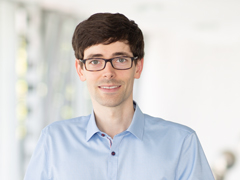
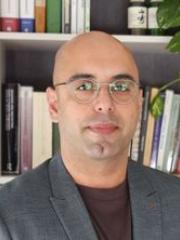
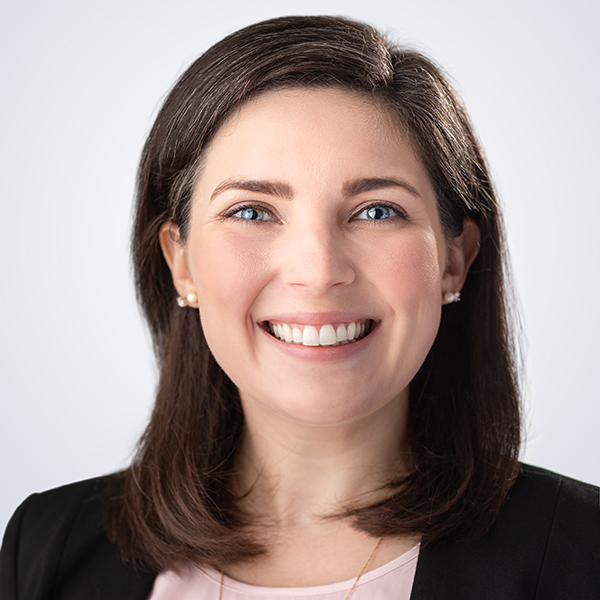
Tim Schreiter is a doctoral researcher at the Chair of Perception for Intelligent Systems within the Munich Institute of Robotics and Machine Intelligence at Technical University of Munich , joining in 2024. His work focuses on bridging human behavior with robotic systems through advanced sensor networks and machine learning. Education M.Sc. in Automation Engineering, TU Chemnitz (2021) Prior doctoral studies at AASS, Örebro University, Sweden Research Themes explore human-robot interaction , motion prediction , and intent communication . Recent publications highlight applications of large language models , ultra-wideband localization , and multimodal interfaces in industrial robotics and shared environments.
Dr. Patrick Aloy Calaf is an ICREA Research Professor and Principal Investigator at the Institute for Research in Biomedicine (IRB Barcelona) , leading the Structural Systems Biology lab. His academic journey includes a BSc in Biochemistry and an MSc in Biotechnology from the Autonomous University of Barcelona (UAB) , followed by a postdoctoral and staff scientist role at the European Molecular Biology Laboratory (EMBL) in Heidelberg, Germany. His research merges structural bioinformatics , network biology , and systems pharmacology to analyze macromolecular assemblies using 3D structures. He has pioneered Structural Systems Pharmacology , integrating chemical and structural data for drug development, and developed tools like 3did , IntSide , and NetAligner to model protein interactions and networks. Key research areas: 3D interactomes Peptide-mediated interactions Network medicine His 150+ publications in journals like Nature , Cell , and PLoS reflect broad impact, with over 17,500 citations. His work spans from yeast interactome modeling to human disease networks, emphasizing structural insights in biological complexity. The Structural Systems Biology lab under his leadership focuses on bridging computational models with experimental validation, advancing structural predictions for protein complexes and pathways.
Dipl.-Ing. Oliver Eigner BSc is a Researcher in IT Security and Coordinator for AI & Digital Transformation at St. Pölten University of Applied Sciences' Department of Computer Science and Security. He holds a Master's degree in Information Security and Bachelor's degree in IT Security from the same institution. Master Information Security (2014-2016), St. Pölten University of Applied Sciences Bachelor IT Security (2011-2014), St. Pölten University of Applied Sciences HTL Ybbs a.d. Donau, Network Technology (2011) His research focuses on Trustworthy AI , Cyber-Physical Systems Security , and Resilient Artificial Intelligence . He leads projects like TrustAI (2026), FAIRAI, and Secure Supply Chains for Critical Systems (SSCCS). His work bridges AI ethics , security in multimodal logistics , and cybersecurity education . Recent publications demonstrate his expertise in AI security frameworks (2024), active learning applications (2024), and environmental monitoring via microwave links (2022). He contributes to conferences like Machine Learning Prague and IEEE COINS. Contact: oliver.eigner@fhstp.ac.at
Dr. Simon Mages serves as Group Leader at the Gene Center and Department of Biochemistry, Ludwig Maximilians University Munich (LMU), within the Faculty of Medicine. His research bridges bioinformatics, high-performance computing, and theoretical physics to develop computational frameworks for spatial omics data analysis. Previously, he held positions as Scientist at LMU (2021-2022), Visiting Scientist at the Broad Institute of MIT and Harvard (2020-present), and Research Scientist at Siemens Corporation (2019). His research focuses on the physics of high-dimensional biological data , specifically developing methods to analyze cellular dynamics in joint position-internal state spaces using spatial omics. Key areas include spatial transcriptomics, single-cell data integration, and physics-inspired algorithm development. The Mages Lab collaborates extensively with clinical researchers to translate computational insights into biological understanding, particularly in cancer progression and tissue organization. Analysis of his publication record reveals a strong trajectory from theoretical physics ( 2015-2017 lattice QCD work ) to computational biology ( 2022-present spatial omics leadership ). His recent work demonstrates expertise in algorithm development (TACCO, SlideCNA), multi-omics integration, and clinical applications in oncology. The publications consistently emphasize scalable computational frameworks and physical modeling approaches. Selected scientific awards: German Research Foundation (DFG) Research Fellowship (2020-2022) Studienstiftung des Deutschen Volkes PhD Fellowship (2012-2015) Studienstiftung des Deutschen Volkes Scholarship (2008-2011) Mages advises doctoral researchers including Antonia Eicher and collaborates with major institutions like the Broad Institute. His lab develops open-source tools (BoReMi) and participates in high-impact consortia such as the Regev Lab collaborations. Current research integrates physics-based modeling with cutting-edge spatial technologies to decode multicellular functional units in cancer and tissue organization. The Mages Lab operates within LMU's BioSysM infrastructure at Butenandtstraße 1, leveraging high-performance computing resources for large-scale biological data analysis. The group maintains strong ties with both computational physics (through prior Jülich Supercomputing Centre work) and clinical research communities.
Sean O'Donoghue is a Conjoint Professor at the School of Biotechnology and Biomolecular Science, University of New South Wales (UNSW). He concurrently serves as a Laboratory Head and Senior Faculty Member at the Garvan Institute of Medical Research and a Visiting Scientist at CSIRO Data61. He holds a B.Sc. (Hons) and Ph.D. in Biophysics from the University of Sydney. His research integrates bioinformatics, structural biology, and data visualization to decode complex biological systems. Key interests include: Development of computational tools for protein structure/function analysis Visual analytics for genomics and multiomics data Mechanisms of viral protein assembly (e.g., SARS-CoV-2) Epigenetic dynamics and cancer transcriptomics Recent publications (2018–2022) demonstrate a strong focus on: Protein annotation frameworks and dark proteome characterization SARS-CoV-2 structural mechanisms Single-cell transcriptomics in breast cancer Innovations in biological data visualization tools He leads the VIZBI initiative (advancing bioinformatics visualization) and VizbiPlus (public science outreach). No awards or student advisories are detailed in the source material.
Sinem Mollaoglu is a Professor and CANR Faculty Excellence Advocate in the School of Planning, Design and Construction at Michigan State University. She serves as a LEED-accredited professional with expertise in construction management and sustainable built environments, advising the Professional Women Builders Student Group and working with the Outreach and Mentoring Committee of the Industry and Alumni Board. Her educational background includes: Bachelor of Architecture from Dokuz Eylul University Master of Science in Project Construction and Management from Istanbul Technical University PhD in Architectural Engineering from Penn State University, with dissertation on High-Performance Green Building Delivery Professor Mollaoglu's research focuses on sustainable built environments, project delivery systems, team integration, and organizational issues in architecture, engineering, and construction. Her methodological expertise includes Social Network Analysis, Survey Research, and Case Study Research. She investigates how information exchange patterns impact performance of inter-organizational project teams in sustainable construction delivery, with particular emphasis on communication networks and team dynamics. Her publication record demonstrates consistent focus on applying network analysis to construction project teams, spanning airport construction partnering to general AEC project performance. Her work shows evolution from foundational research on green building delivery to current work on social network interventions and future of work in construction, revealing a trajectory of increasingly sophisticated analysis of team dynamics and communication patterns in complex construction environments. Her scientific recognition includes: LEED-accredited professional certification 2020-2021 'You Belong Here Diversity, Equity and Inclusion Champion Award' Emerald Literati Award for highly commended paper Professor Mollaoglu has successfully advised numerous graduate students who have won awards and secured academic positions. She has secured significant research funding including a $1.2M NSF grant to study intelligent social network interventions and a $417K NSF grant to study impacts of social network interventions on engineering project outcomes, demonstrating her ability to translate theoretical research into practical applications for the construction industry. She leads multiple research initiatives including the Construction Management Education and Research Lab, Housing Education and Research Initiative, and Inter-Organizational Project Teams for Innovation, Collaboration and Sustainability (I-OPT4). She serves on the Engineering Project Organization Journal Editorial Board and actively participates in the International Partnering Institute, contributing to industry standards and practices in collaborative construction project delivery.
Dr Reza Arab is a Lecturer in Applied Linguistics at the School of Languages and Cultures, Faculty of Humanities, Arts and Social Sciences, University of Queensland. He serves as the Major Convenor for the English as an International Language (EIL) program, focusing on language practices that shape belonging, identity, and cross-cultural interaction in institutional contexts. Education: PhD in Applied Linguistics, Griffith University (2021) His research spans pragmatics, cultural linguistics, and discourse analysis with emphasis on: Humour studies in prison discourse, media, and political communication Cultural semantics of Persian concepts (e.g., 'salt' and 'taste') Ethnopragmatics of Persian speech practices (Hāzer Jāvabi) Metaphors of national belonging in Indigenous contexts Political communication accessibility for migrant communities Recent publications (2021-2025) demonstrate methodological diversity through corpus analysis, ethnographic fieldwork, and cultural-linguistic frameworks. Key trends include cross-linguistic studies of epistemic markers, documentation of endangered language practices, and applied research on humour as a coping mechanism in confined spaces. Dr Arab actively supervises higher degree research students. His projects receive funding from: The University of Queensland Australian Linguistics Society Griffith Centre for Social and Cultural Research European Commission (Erasmus Mundus) He contributes to the Language Data Commons of Australia (LDaCA) and Korean Studies Centre, currently leading the project 'Making Democracy Accessible: Rethinking Political Communication for Australia’s Migrant Communities' through community partnerships.
Keith A. Crandall is a Professor and founding Director of the Computational Biology Institute at George Washington University's Milken Institute School of Public Health, with a courtesy appointment in the Office of the Dean. He also directs the Genomics Core and holds leadership roles in the Health Data Science PhD Program and Bioinformatics Minor. Education: BA in Biology and Mathematics, Kalamazoo College (1987) MA in Statistics, Washington University in St. Louis (1993) PhD in Biology and Biomedical Sciences, Washington University School of Medicine (1993) Professor Crandall's research spans computational biology, population genetics, and bioinformatics, with dual foci on molecular ecology/conservation biology and infectious disease evolution. His lab develops computational methods for DNA sequence analysis, including genealogy estimation, recombination detection, and microbiome characterization, while applying these to diverse organisms from freshwater crayfish to HIV. Recent work emphasizes Omics data integration, clinical applications, and pandemic response, particularly through SARS-CoV-2 genomic surveillance and microbiome studies in human health. His 15 most recent publications reveal a strong trend toward translational genomics, with 40% focused on pandemic response (2020-2022), 30% on cancer/retrovirus genomics, and 20% on methodological advances in bioinformatics. Key subfields include viral evolution, microbiome dynamics, and computational epidemiology, demonstrating consistent NIH/NSF funding in infectious disease and genomic medicine. Scientific Awards: Alfred P. Sloan Foundation Postdoctoral Fellowship NSF CAREER Award NIH James A. Shannon Directors Award ISI Highly Cited Researcher AAAS and Linnean Society Fellowships Edward O. Wilson Naturalist Award Professor Crandall has secured continuous funding from NIH, NSF, and private agencies including the PhRMA Foundation, Sloan Foundation, and American Foundation for AIDS Research. His mentorship spans computational method development and international collaborations in conservation genomics. As Director of the Computational Biology Institute, he leads a multidisciplinary team integrating bioinformatics, clinical data science, and genomic technologies across GW's DC CFAR, Clinical and Translational Science Institute, and Cancer Center initiatives.
Daniel Luzzati is a permanent researcher at the University of Le Mans, affiliated with the LIUM (Laboratoire d'Informatique de l'Université du Maine) in France. His work bridges computational linguistics, automatic language processing, and theoretical linguistics, with a focus on spoken/written language interactions and dialogue systems. University: University of Le Mans Department: Computer Science Academic Rank: Researcher His research primarily addresses: Grammar and syntax analysis in French Automatic processing of oral and written language Human-machine dialogue systems Corpus linguistics and speech recognition Language teaching methodologies Sociolinguistic aspects of gender and humor Recent publications focus on the Great Grammar of French (GGF), interrogative structures, and the evolution of grammatical frameworks. He frequently collaborates with researchers like Danielle Coltier, Mary-Annick Morel, and Sophie Rosset. Labs & Teams: LIUM, a multidisciplinary research laboratory specializing in language technologies and computational linguistics.
Brooke N. Wolford is a Marie Skłodowska-Curie Postdoctoral Fellow at the Norwegian University of Science and Technology (NTNU), affiliated with the Department of Public Health and Nursing within the Faculty of Medicine and Health Sciences. She leads the ProtectHearts and HUNT AI for Heart Health projects at the HUNT Center for Molecular and Clinical Epidemiology, while also contributing to the EU-funded INTERVENE project through the Finnish Institute for Molecular Medicine. Her work bridges statistical genetics, computational biology, and clinical applications to advance precision public health initiatives. Dr. Wolford earned her PhD in Bioinformatics and Master's in Statistics from the University of Michigan, where she completed her dissertation on 'Genetic Discovery and Precision Medicine in Cardiovascular Diseases Using Electronic Health Record-linked Biobanks' under Dr. Cristen Willer and Dr. Michael Boehnke. Her undergraduate training includes a Bachelor of Science in Quantitative Biology with highest honors from the University of North Carolina at Chapel Hill, where she was a Phi Beta Kappa honors graduate. Her research program focuses on artificial intelligence-driven precision public health, particularly in cardiovascular disease prediction and prevention. By integrating genomics, proteomics, and clinical data from large biobanks like HUNT, UK Biobank, and FinnGen, she develops novel risk prediction models that address critical gaps in women's heart health and young adult disease prevention. Her work on polygenic risk scores and proteomic biomarkers aims to transform population-scale screening programs through explainable AI methodologies. Dr. Wolford's recent publications demonstrate significant contributions to genetic epidemiology, with high-impact work in Nature Genetics, Nature Communications, and Circulation: Genomic and Precision Medicine. Her research outputs reveal consistent themes in cross-population polygenic score development, sex-specific disease mechanisms, and innovative biobank data integration approaches that enhance cardiovascular risk prediction across diverse populations. 2022/2023 Best Dissemination Award (K.G. Jebsen Centers) 2022 ASHG Trainee Research Excellence Award Finalist 2021 ASHG Trainee Research Excellence Award Semi-Finalist National Science Foundation Graduate Research Fellowship Genome Sciences Predoctoral Traineeship University of Michigan Program in Biomedical Sciences 20th Anniversary Award As a dedicated mentor, Dr. Wolford supervises multiple graduate students across Master's and PhD programs at NTNU, focusing on proteomic risk prediction for diabetes, cardiovascular-Alzheimer's disease connections, and polygenic scoring for women's heart health. She actively promotes open science through R-ladies Trondheim leadership and develops educational resources like the Health AI in R workshop. Her ongoing projects with INTERVENE and ProtectHearts secure substantial European research funding for translational genomics initiatives. Dr. Wolford co-leads the HUNT AI for Heart Health initiative and ProtectHearts project within the HUNT Center for Molecular and Clinical Epidemiology. These teams integrate computational biologists, clinicians, and epidemiologists to develop explainable AI models that translate genomic discoveries into clinical prevention strategies, with particular emphasis on addressing health disparities in cardiovascular outcomes for women and younger populations.
Professor Mick Urbaniak is a Professor in the Biomedical and Life Sciences Department at Lancaster University, affiliated with the Data Science Institute. His research focuses on tropical infectious diseases, particularly trypanosomatid parasites including Trypanosoma brucei and Leishmania species. His research interests include: Molecular mechanisms of parasite-host interactions Cell cycle regulation in trypanosomatids Iron sensing and response mechanisms in parasites Heat shock signaling in Trypanosoma species Translating basic research into early-stage drug discovery for neglected tropical diseases Professor Urbaniak's laboratory employs a combination of genetics, cell biology, and proteomics approaches. They have pioneered stable isotopic labelling (SILAC) in T. brucei for global quantitative proteomic analysis and developed methods for quantifying phosphorylation changes in cells. His recent publications reveal a strong focus on molecular detection methods for parasites, genome analysis of Leishmania, and understanding cell cycle regulation in trypanosomatids. The research spans from basic molecular mechanisms to potential therapeutic applications. Professor Urbaniak has received several professional recognitions: Senior Fellow of the Higher Education Academy Fellow of the Royal Society of Biology Senior Fellow of Advance HE Member of the Royal Society of Biology Royal Society of Biology Ambassador He actively supervises PhD and MRes students, offering projects on parasite sensing mechanisms, cell division cycle regulation, and behavioral changes related to infection. Professor Urbaniak serves as an external examiner for PhD and master's programs and reviews grants for organizations including Wellcome Trust, BBSRC, and MRC. He also engages in outreach activities as a registered STEM ambassador.
Kevin L Childs is a Fixed Term Associate Professor in the Department of Plant Biology at Michigan State University. His research focuses on plant genomics, bioinformatics, and stress tolerance mechanisms through computational approaches. Education: Ph.D. in Plant Physiology from Texas A&M University M.S. in Computer Science from Texas A&M University B.S. in Botany from the University of Michigan Dr. Childs specializes in integrating computational biology with plant stress responses and pathogen interactions. His work includes genome assembly, effector protein identification, and regulatory network analysis across diverse species such as sweetpotato, sour cherry, and Arabidopsis. Recent research highlights include: whole genome duplication in Teucrium chamaedrys, NLR gene characterization in hexaploid sweetpotato, ZCT transcription factor analysis in Catharanthus roseus, and molecular diagnostics development for Ceratocystis fimbriata. His publications demonstrate expertise in long-read sequencing, transcriptomics, and comparative genomics. Dr. Childs maintains affiliations with plant biology laboratories at MSU and collaborates on projects involving biofuel crops, food security, and environmental stress adaptation.
Pierrette Bouillon is affiliated with the University of Geneva as a researcher, focusing on machine translation, accessible communication, and language technology applications in healthcare. Her work bridges computational linguistics, speech processing, and inclusive design. Institution: University of Geneva Research Focus: Medical translation, sign language processing, text/pictograph translation Research Interests : Bouillon specializes in machine translation and computational linguistics , with particular emphasis on: Accessible communication for patients with language barriers Sign language and pictograph translation systems (e.g., BabelDr) Speech-to-speech translation in emergency settings Text simplification for intellectual disabilities Historical French normalization for NLP Multilingual speech recognition and post-editing Article Trends : Her recent publications highlight the integration of large language models with accessibility tools in healthcare, focusing on Swiss French sign language corpora , pictograph sequences , and spontaneous speech simplification . Work spans both NLP and human-computer interaction in medical contexts. Education and Teaching : While specific educational details are omitted, Bouillon contributes to translation pedagogy through tools like COPECO and MT3 , integrating speech technologies into post-editing workflows.
Hermann Stolte is a scientific collaborator at the Institute of Computer Science , Humboldt University of Berlin . His work focuses on data science, database systems, and information systems, with applications in astrophysics, educational technologies, and mobile app analysis. Institution: Humboldt University of Berlin Department: Databases and Information Systems His research includes developing validation frameworks for data analysis workflows, plausibility checks in exploratory data analysis, and predictive modeling for user feedback. Recent work explores astrophysical data analysis and educational robotics. Hermann's publications span data validation, star rating prediction from reviews, and transformative educational technologies. His work frequently addresses data quality, interpretability in machine learning, and interdisciplinary applications.
Pedro Henrique Luz de Araujo is a member of the Faculty of Computer Science affiliated with the Research Group Data Mining and Machine Learning . His work focuses on Natural Language Processing , Language Modeling , and Behavioral Learning , particularly in Brazilian legal text domains. He has contributed to advancements in named entity recognition , hate speech detection , and specification-driven AI systems . Active in 2022-2025 with publications in PLoS ONE and top NLP conferences Organized the KONVENS 2024 conference Research emphasizes LLM calibration , multimodal classification , and domain-specific datasets His recent publications show expertise in large language models (2025: persona effects; 2024: specification overfitting, text-guided image clustering), NER techniques (2024), and legal document processing (2023: multimodal classification; 2020: VICTOR dataset, LeNER-Br).