معرفی
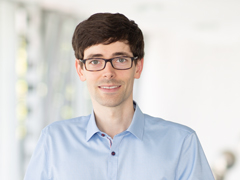
Dr. Simon Mages serves as Group Leader at the Gene Center and Department of Biochemistry, Ludwig Maximilians University Munich (LMU), within the Faculty of Medicine. His research bridges bioinformatics, high-performance computing, and theoretical physics to develop computational frameworks for spatial omics data analysis. Previously, he held positions as Scientist at LMU (2021-2022), Visiting Scientist at the Broad Institute of MIT and Harvard (2020-present), and Research Scientist at Siemens Corporation (2019).
His research focuses on the physics of high-dimensional biological data, specifically developing methods to analyze cellular dynamics in joint position-internal state spaces using spatial omics. Key areas include spatial transcriptomics, single-cell data integration, and physics-inspired algorithm development. The Mages Lab collaborates extensively with clinical researchers to translate computational insights into biological understanding, particularly in cancer progression and tissue organization.
Analysis of his publication record reveals a strong trajectory from theoretical physics (2015-2017 lattice QCD work) to computational biology (2022-present spatial omics leadership). His recent work demonstrates expertise in algorithm development (TACCO, SlideCNA), multi-omics integration, and clinical applications in oncology. The publications consistently emphasize scalable computational frameworks and physical modeling approaches.
Selected scientific awards:
- German Research Foundation (DFG) Research Fellowship (2020-2022)
- Studienstiftung des Deutschen Volkes PhD Fellowship (2012-2015)
- Studienstiftung des Deutschen Volkes Scholarship (2008-2011)
Mages advises doctoral researchers including Antonia Eicher and collaborates with major institutions like the Broad Institute. His lab develops open-source tools (BoReMi) and participates in high-impact consortia such as the Regev Lab collaborations. Current research integrates physics-based modeling with cutting-edge spatial technologies to decode multicellular functional units in cancer and tissue organization.
The Mages Lab operates within LMU's BioSysM infrastructure at Butenandtstraße 1, leveraging high-performance computing resources for large-scale biological data analysis. The group maintains strong ties with both computational physics (through prior Jülich Supercomputing Centre work) and clinical research communities.