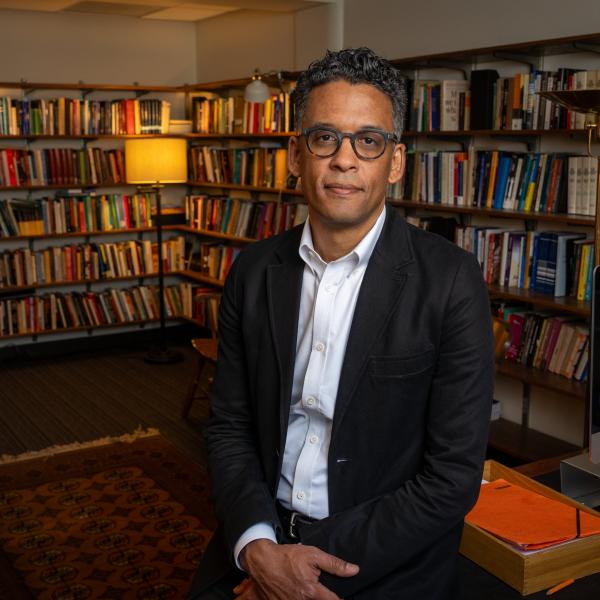
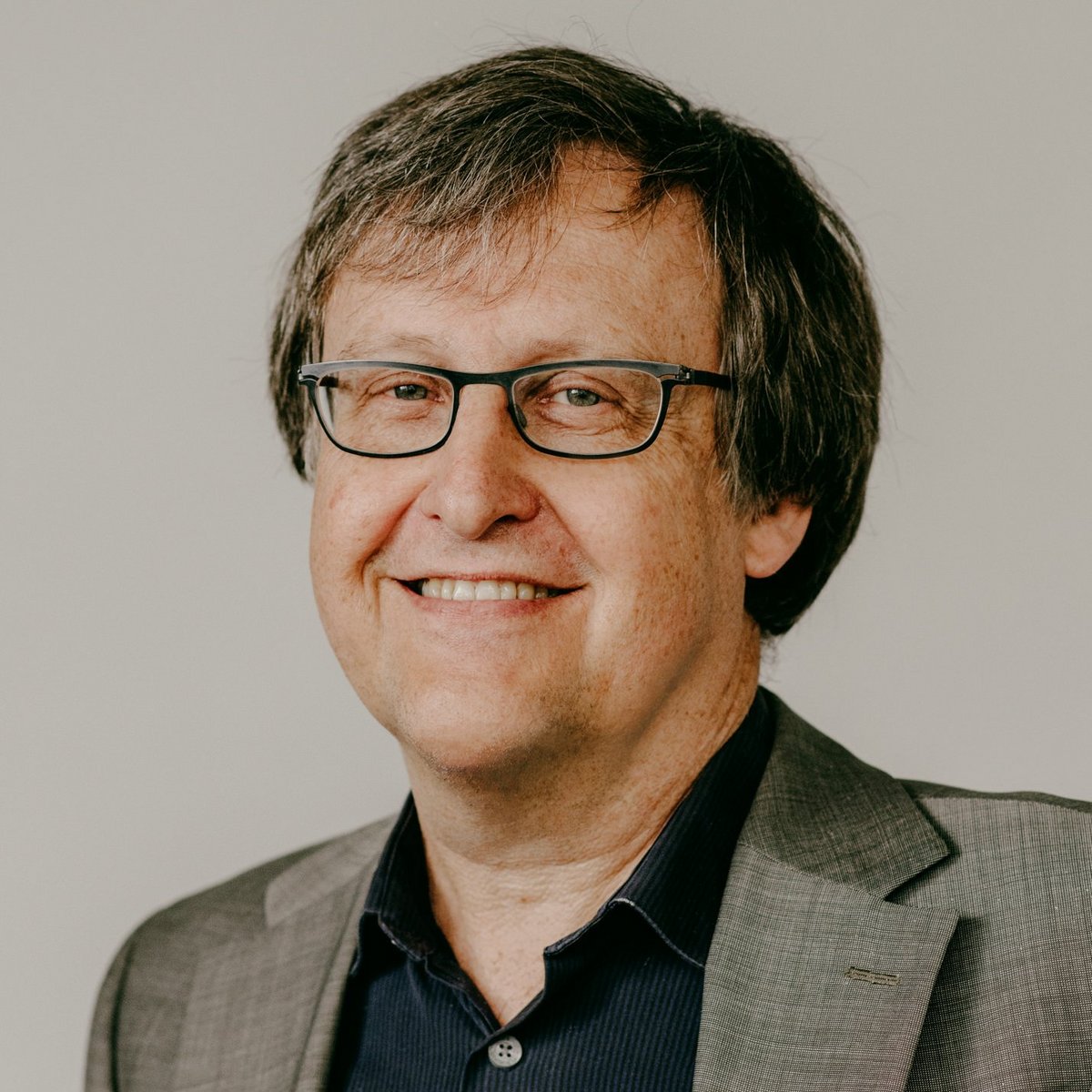
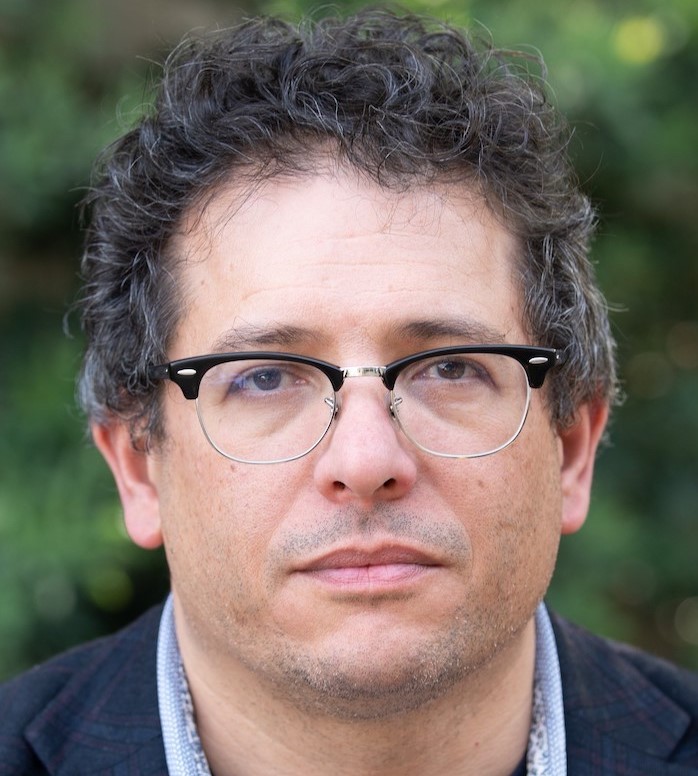
Lance Rips is a Professor in the Psychology Department at Northwestern University , Evanston, IL. His research focuses on cognitive psychology, particularly concepts, reasoning, and autobiographical memory. Academic Rank: Professor Institution: Northwestern University Department: Psychology Department Contact: ripslab@gmail.com , rips@northwestern.edu Research interests include: Deductive and inductive reasoning Concepts of objects/events over time Causal cognition Mathematical thinking (numbers, non-Euclidean geometry) Informal argumentation and survey methodology His lab investigates foundational questions in cognition, with recent work on conditional reasoning, object individuation, and developmental understanding of substances. Publications span journals like Cognitive Science , Psychological Science , and Cognition .
Anton Ford is an Associate Professor of Philosophy and Deputy Dean of the Humanities Division at the University of Chicago, where he has been a faculty member since 2007. His academic home is the Department of Philosophy within the Division of the Humanities, and he maintains an active teaching and research profile spanning practical philosophy, ethics, and political theory. Dr. Ford's educational background includes: PhD in Philosophy from the University of Pittsburgh (2008) BA from Harvard University (1999) His research centers on Practical Philosophy, explicitly encompassing Action Theory, Ethics, and Political Philosophy, with deep engagement in the works of Anscombe, Aristotle, and Marx. Ford investigates the metaphysical and normative dimensions of human agency, intentionality, and political compromise, blending historical analysis with contemporary philosophical rigor. His scholarship demonstrates how practical reasoning operates across moral, political, and epistemic domains. Analysis of Ford's publications (2010-2018) reveals consistent thematic focus on agency and action theory, particularly through Anscombian frameworks, while progressively expanding into political philosophy and ancient thought. His work shows increasing interdisciplinary reach, connecting metaphysical questions about intention to concrete political problems like compromise and justice. The editorial project on Anscombe's Intention underscores his role in shaping contemporary action theory discourse. Dr. Ford has not received major scientific awards, prizes, or fellowships as documented in available sources. His professional recognition derives primarily from scholarly contributions and institutional leadership. As Deputy Dean of the Humanities Division, Ford provides administrative leadership while mentoring graduate students in the Philosophy PhD program. Though specific advisees aren't listed, his course offerings and publication record indicate active research supervision. His editorial work and sustained publication output suggest successful grant support for scholarly activities, though specific funding sources aren't detailed. Within the Division of the Humanities, Ford contributes to research ecosystems through departmental leadership and association with Practical Philosophy and Ancient Philosophy research clusters. His administrative role as Deputy Dean positions him to influence collaborative initiatives across humanities disciplines at the University of Chicago.
Prof. Dr. Urs Fischbacher is a full-time Professor at the Department of Economics at the University of Konstanz, holding the Chair of Behavioral Economics. He is also affiliated with the Thurgau Institute of Economics in Switzerland. Research Focus: Behavioral Economics, Experimental Economics, Game Theory, Social Preferences, Public Goods, Trust and Cooperation, Decision-Making under Stress, and Neuroeconomics. Key Projects: Evaluation of educational interventions in Colombia, analysis of leadership selection in inequality perception, and studies on social pension targeting in Bangladesh. Academic Contributions: His recent articles focus on super-additive cooperation mechanisms, responsibility attribution in decision chains, stress-induced prosociality, and diversity policy impacts. Work spans interdisciplinary collaborations with psychologists and neuroscientists. Contact: Based at the University of Konstanz (Room F315) and Thurgau Institute of Economics. Office hours require appointment via email.
Christian List is Professor of Philosophy and Decision Theory at Ludwig Maximilian University of Munich, where he serves as Co-Director of the Munich Center for Mathematical Philosophy (MCMP). Previously, he was Professor of Philosophy and Political Science at the London School of Economics until 2020. His work bridges philosophy, economics, and political science with a particular focus on individual and collective decision-making and the nature of intentional agency. Professor List's research spans multiple interconnected domains: theories of individual and collective choice (particularly social choice theory and judgment aggregation), free will and consciousness, the philosophy of mind and action, and the foundations of the social sciences. His work on group agency, developed in his influential book Group Agency with Philip Pettit, has reshaped debates about corporate entities and collective intentionality. His more recent work on free will, culminating in his book Why Free Will is Real , presents a scientifically grounded defense of free will against reductionist skepticism. His recent publications reveal a sophisticated integration of formal methods with deep philosophical questions, particularly regarding consciousness, probability aggregation, and the relationship between different levels of explanation. List's work consistently demonstrates how mathematical precision can illuminate fundamental philosophical problems while maintaining relevance to broader social and scientific contexts. Scientific Awards and Recognition: Elected Fellow of the British Academy (2014) Member of Academia Europaea (2023) Member of the Bavarian Academy of Sciences and Humanities (2022) Joseph B. Gittler Award from the American Philosophical Association (2020) Philip Leverhulme Prize in Philosophy (2007) 5th Social Choice and Welfare Prize (2010) List has supervised numerous PhD students and early-career researchers, many of whom have gone on to prominent positions in philosophy and related fields. His collaborative work with Franz Dietrich on judgment aggregation has been particularly influential. As Co-Director of the Munich Center for Mathematical Philosophy, he has secured substantial research funding and established MCMP as a leading international hub for formal and mathematical approaches to philosophical problems. Through the Munich Center for Mathematical Philosophy, List leads a vibrant research community that brings together philosophers, economists, political scientists, and mathematicians to tackle foundational questions using rigorous formal methods. The center hosts regular workshops, seminars, and visiting scholars, creating a dynamic intellectual environment that bridges disciplinary boundaries.
Prof. Thomas Szanto is a Professor of European Political Philosophy at Europa-Universität Flensburg since 2024. He holds a dual affiliation as Recurrent Visiting Professor at the Center for Subjectivity Research (University of Copenhagen). His research bridges social/political philosophy with phenomenology and emotion theory, focusing on normative political emotions, collective agency, and epistemic justice. He earned his PhD (2010) and MA (2004) from the University of Vienna. Affiliations: Europa-Universität Flensburg, University of Copenhagen (CFS), Carlsberg Foundation Project "Who are We?" Education: PhD in Philosophy (University of Vienna, 2010), MA in Philosophy (University of Vienna, 2004) Research Interests: Political emotions (hatred, solidarity), collective intentionality, critical phenomenology, climate change ethics, feminist epistemology, group agency dynamics. His work combines continental and analytical approaches, engaging social science findings from sociology, political psychology, and social movements research. Grants & Projects: Led FWF-funded project "Antagonistic Political Emotions" (€386k), Marie Curie Fellowship (SHARE project, €212k). Current projects include collaboration on group-based affective mechanisms and political cohesion. Editorial Roles: Associate Editor of Emotion Review , Editorial Board member of Philosophy and Society . Reviewed for 70+ journals including Mind and ERC. Key Contributions: Pioneered analysis of epistemically exploitative bullshit (2023), developed taxonomy of political resentment types (2024), authored monograph Bewusstsein, Intentionalität und mentale Repräsentation (2012). Supervised 6+ doctoral theses across European institutions.
Dr. Aaron Schurger is an Assistant Professor in the Psychology Department at Chapman University’s Crean College of Health and Behavioral Sciences. He is also a member of the Institute for Interdisciplinary Brain and Behavioral Sciences. Schurger holds a BA from Indiana University, and MA and PhD from Princeton University. His research focuses on the neuroscience of volition, consciousness, and decision-making, particularly exploring the readiness potential (RP) and its implications for free will debates. His work challenges classical interpretations of the RP using computational models, suggesting it reflects stochastic neural processes rather than preconscious decisions. Recent contributions include studies on the origins of the RP in spiking neural networks, critiques of causal structure theories of consciousness, and interdisciplinary analyses of free will. His findings emphasize that the RP may not indicate preconscious decision-making but instead arise from natural neural fluctuations during decision thresholds. Schurger collaborates across neuroscience, philosophy, and cognitive science, contributing to debates on consciousness, action initiation, and neural correlates of subjective experience. His research also addresses methodological rigor in studying unconscious processing and integrates computational models with empirical data, as seen in studies on movement timing and neural stability during perception. While no specific grants or labs are explicitly listed, his affiliations suggest involvement in interdisciplinary projects at Chapman.
Dr. Hanno Sauer is an Associate Professor at Utrecht University's Department of Philosophy and Religious Studies, affiliated with the Ethics Institute. His research focuses on normative ethics, metaethics, and moral psychology, with particular attention to moral cognition, debunking arguments, and the nature of moral progress. He leads the ERC-funded project 'The Enemy of the Good: Towards a Theory of Moral Progress' (PROGRESS, 2019–2024). Sauer has authored books on moral judgment, intuition, and moral progress. His work bridges philosophy, cognitive science, and empirical ethics. He has presented widely at international conferences and universities, addressing topics such as moral disagreement, dual-process models, and the role of emotions in moral judgment. Research interests include the psychological foundations of moral cognition, epistemology of moral judgment, and the mechanisms of moral evolution. He critiques dual-process theories and advocates for a moderate rationalist view of moral reasoning. Sauer's recent publications explore moral progress, moral intuitionism, and the ethical implications of cognitive biases like the Knobe Effect.
Beth Grabowski is the Kappa Kappa Gamma Distinguished Professor of Art at the University of North Carolina at Chapel Hill's Department of Art. She holds a BA from the University of Virginia and an MFA from the University of Wisconsin-Madison. An active artist and educator, Grabowski teaches courses including Print I, Screen Printing, Letterpress, and interdisciplinary classes like Art and Science: Merging Printmaking and Biology. Her research explores communication through photography and printmaking, examining narrative construction, cultural relationships, and paradoxical human understanding. She intentionally manipulates imagery to evoke ambiguity, wonder, and layered meanings tied to memory and identity. Grabowski has received three awards from the North Carolina Arts Council and completed international residencies in Argentina, China, Belgium, and Switzerland. She co-authored the textbook Printmaking, a Complete Guide to Materials and Processes and curated exhibitions like the Käthe Kollwitz portfolio showcased in Berlin.
Michael Quante is a Full Professor of Practical Philosophy at the Westfälische Wilhelms-Universität Münster since 2009, where he also serves as Speaker of the Centrum für Bioethik and Principle Investigator in the Cluster of Excellence "Religion and Politics" . Previously, he held full professorships at the University of Cologne (2005–2009) and University of Duisburg-Essen (2003–2005). Education: PhD in Philosophy (1992) – Westfälische Wilhelms-Universität Münster Habilitation in Philosophy (2001) – Westfälische Wilhelms-Universität Münster Research Interests: His work centers on German Idealism , especially Hegel and Marx, and spans ethics , biomedical ethics , personal identity , philosophy of law , theory of action , and social philosophy . He has authored or edited 30 books and over 150 scholarly articles. Scientific Awards: Managing Director, Deutsche Gesellschaft für Philosophie (2006–2011) President, Deutsche Gesellschaft für Philosophie (since 2012) Vice-President, Deutsch-Ungarischen Gesellschaft (since 2012) Member, Berlin-Brandenburgische Akademie der Wissenschaften (since 2012) Doctor honoris causa, University of Debrecen (2012) Academic Roles & Affiliations: Speaker, Centrum für Bioethik, WWU Münster Member, Centre for Advanced Studies in Bioethics Co-Editor, Hegel Studien (since 2012) Former Associate Editor, Ethical Theory and Moral Practice (2004–2011)
Michael Wilby is an Associate Professor of Philosophy at Anglia Ruskin University (ARU), based in Cambridge. He serves as Course Director for ARU's BA (Hons) Philosophy and Philosophy and English Literature programs. His academic affiliations include membership in the International Society of Social Ontology, ARU’s Advanced Computing Research Centre, and the AI in Learning, Teaching and Assessment Group. Wilby holds a PhD in Philosophy from the University of York (2008), an MA from the University of Bristol, a BA (Hons) from the University of Sheffield, and a PGCert in Higher Education from ARU. His research focuses on philosophy of mind, collective intentionality, joint attention, and the philosophy of artificial intelligence, with recent work exploring ethical dimensions of AI and the concept of evil. He has supervised multiple PhD students and teaches interdisciplinary modules on AI ethics, consciousness, and epistemology. His research interests span social ontology, hinge epistemology, and the intersection of philosophy with developmental psychology and technology. Recent presentations include talks on AI ethics at conferences in Helsinki, Lisbon, and Cambridge. He has engaged with media platforms such as ABC Radio National and The Conversation, discussing topics like common knowledge and philosophical approaches to climate change. Wilby’s publications include articles in journals like Topoi , International Journal of Philosophical Studies , and Philosophical Psychology , as well as contributions to edited volumes on AI, social robotics, and philosophical methodology. His work bridges traditional philosophical inquiry with contemporary issues in technology and ethics.
Dr. Matteo Montecchi is a Senior Lecturer (Associate Professor) in Marketing at King’s Business School, King’s College London, where he also serves as Theme Lead for Sustainable Consumption at the Centre for Sustainable Business and Programme Director for the Strategic Marketing (Open Executive) programme. He teaches core modules such as Consumer Behaviour, Digital Marketing, and Research Methods, and leads executive education initiatives. Previously, he was a Senior Lecturer at the London College of Fashion, University of the Arts London, and has held visiting positions at Milan Politecnico, Università Cattolica del Sacro Cuore, and Università Federico II. Montecchi earned his PhD in Marketing from King’s College London, an MRes in Marketing from Birkbeck College, an Executive Master in Marketing and Sales from SDA Bocconi and ESADE, and a Bachelor’s in Business Economics from the University of Modena and Reggio Emilia. He also holds a PgCert in Academic Practice and is a Fellow of the Higher Education Academy (FHEA). His research focuses on the digital transformation of marketing, particularly the role of artificial intelligence and blockchain in enhancing transparency and trust. He investigates ethical engagement with diverse consumer groups, inclusion, and corporate responsibility, with a special interest in marginalized communities. His work integrates consumer behavior, digital interactions, and decision-making with technological innovation, offering actionable insights for sustainable and responsible business strategies. The most recent 15 publications reflect a strong trend in AI in retail, brand transparency, consumer trust, ethical data use, voice technologies, and social sustainability. His research spans journals in marketing, psychology, interactive marketing, and business ethics, demonstrating interdisciplinary impact. Scientific Awards: KingsCAT: Capture and Analysis Tool for Social Media Research at King’s College London (2024) – Recognized as part of a collaborative team for advancing digital research infrastructure and media analysis. Montecchi is actively involved in PhD supervision and is accepting new students. He has led research projects using social media analytics (KingsCAT) and has contributed to strategic debates on grand challenges in marketing. His work connects academic research with real-world managerial applications, particularly in digital strategy and ethical innovation. He is a key contributor to interdisciplinary research through tools like KingsCAT, which supports collaborative social media analysis, and his publications often involve co-authorship with experts in data science, psychology, and organizational behavior.
Gordon Hughes is an Associate Professor of Art History in the Department of Art History at Rice University, specializing in early 20th-century European modernism with concentrated expertise in French painting and abstract art. His research significantly reinterprets foundational narratives of abstraction while extending into contemporary art and photographic history. His academic credentials include: Ph.D. in Art History from Princeton University (2004) M.A. from the University of Western Ontario (1996) M.F.A. in Studio Art from the University of Illinois at Chicago (1992) B.F.A. from the Nova Scotia College of Art and Design (1989) Professor Hughes' scholarship centers on re-examining abstract painting's origins through meticulous visual analysis, particularly focusing on Robert Delaunay's contributions to modernist vision. His work bridges pre-war European art with American conceptual practices from the 1960s-1980s, evidenced by influential publications on Fernand Léger, Georges Braque, Douglas Huebler, and Jenny Holzer. His theoretical approach integrates continental philosophy while prioritizing phenomenological engagement with artworks, reflected in his current book project Seeing Red: Murder, Abstraction, Machines which investigates intersections of art, technology, and violence. Analysis of his recent publications (2006-2022) reveals consistent scholarly engagement with French modernism's theoretical underpinnings while progressively incorporating contemporary critical frameworks. His work demonstrates evolving methodological sophistication through examinations of visual perception, medium specificity, and post-structuralist theory across diverse artistic movements from Cubism to Conceptual Art. His distinguished recognitions include: Getty Research Institute Scholar-in-Residence (2012-2013) Barr Ferree Foundation Publication Grant (2011) Terra Foundation for American Art support (2010) Professor Hughes mentors graduate students in Rice's Art History program with emphasis on close visual analysis and theoretical rigor. His research has received significant institutional support including Getty Research Institute residencies and major publication grants that facilitated his influential monograph Resisting Abstraction and editorial projects like October Files: Richard Serra .
Dr. Gabriel Reich is Professor of Teaching and Learning at Virginia Commonwealth University's School of Education. A former NYC public school teacher, his research examines historical consciousness, Civil War memory, and the intersection of race and history education. He received VCU's Charles P. Ruch Teaching Excellence Award (2021) and Distinguished Scholarship Award (2019). Research Focus: Dr. Reich investigates how cultural tools like monuments, standards, and teaching practices shape historical understanding. His current project analyzes Virginians' collective memories of the Civil War and emancipation, funded by the Spencer Foundation. Educational Impact: His book 'A Single Garment' explores strategies for creating intentionally diverse schools that benefit all students, synthesizing decades of desegregation research.
Peter Hartman is an Associate Professor in the Department of Philosophy at Loyola University Chicago. He specializes in Medieval Philosophy, focusing on Philosophy of Mind and Metaphysics, with particular attention to Durand of St.-Pourçain and John Buridan. His research explores cognitive psychology, theories of mental acts, and the historical development of concepts like consciousness and representation in scholastic thought. Education: PhD in Philosophy, University of Toronto (2012) MA in Philosophy, University of Toronto (2005) BA in Philosophy, Goshen College (2003) Research Interests: Hartman investigates medieval theories of mind, metaphysical reductionism, the nature of cognitive habits, and the influence of medieval thinkers on early modern philosophy. His current projects include a collaborative translation of John Buridan’s Questions on Aristotle’s Nicomachean Ethics and a book on skills and know-how in medieval and Second Scholastic contexts. Key Contributions: Hartman has published extensively on Durand of St.-Pourçain’s theories, including works on hylomorphic composites, reflex acts, and modal theory. He co-edited John Buridan’s Questions on Aristotle’s De Anima (Springer, 2023), bridging medieval and modern philosophy of mind. Affiliations: Active member of Loyola’s History of Philosophy Roundtable and the St. Louis-Chicago Area Medieval Philosophy Research Group.
Erin Stiles, Professor of Anthropology at the University of Nevada, Reno, specializes in the intersections of religion, law, and gender. Her ethnographic work in Zanzibar, Tanzania, Ghana, South Africa, and Utah examines Islamic family law, legal pluralism, and Mormon spiritual experiences. Ph.D., Washington University in St. Louis M.A., University of Colorado, Boulder A.B., Duke University Stiles' research explores: Islamic legal reasoning in marital disputes and inheritance law Gender dynamics in LDS fundamentalist and Irish Traveller communities Spirit-world encounters in Utah Mormonism Comparative legal practices across sub-Saharan Africa and the Indian Ocean Her recent publications focus on global Islamic divorce mechanisms, LDS spiritual ethics, and postcolonial legal adaptations in East Africa. She teaches courses ranging from introductory cultural anthropology to specialized topics in African studies and Islamic law. Stiles actively mentors graduate students working on: Healing practices among LDS fundamentalists Marriage customs in Irish Traveller communities Islam and migration in Japan LGBTQ+ affirming Protestant groups