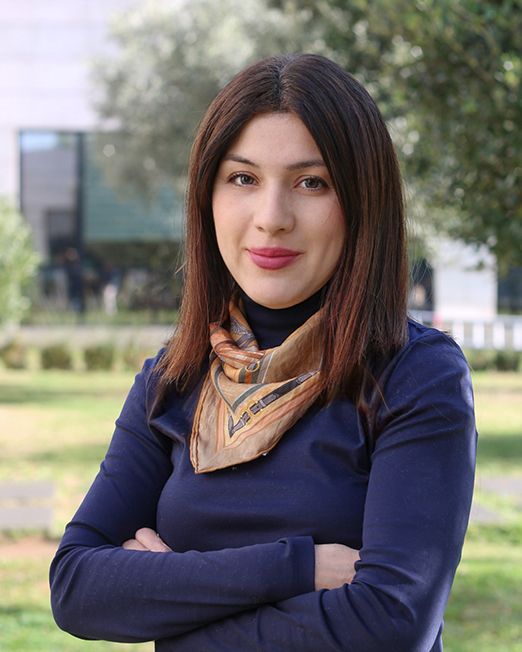
Sanja Raspor Janković is a Professor of Professional Studies at the Polytechnic of Rijeka, affiliated with the Business Department. She specializes in customer satisfaction, tourism management, and hospitality industry dynamics. Her teaching responsibilities include courses such as 'Basics of Tourism,' 'Entrepreneurial Economics,' and 'Statistics for Entrepreneurs.' Her research focuses on enhancing service quality and visitor experiences in tourism, event management, and entrepreneurial ecosystems. Notable projects include studies on resident satisfaction in island tourism destinations, immersive technology applications in heritage tourism, and the role of heritage in rural tourism events. She has contributed to developing the Sustainable Agritourism study program through Croatia’s qualifications framework. Consultation hours are held weekly, with special scheduling adjustments noted for June 2025. She actively engages in academic conferences and has authored numerous papers on service quality measurement models (e.g., DINESERV, SERVQUAL) across sectors like museums, wellness tourism, and online banking. Her work bridges theoretical frameworks and practical applications, emphasizing sustainable practices and community impact in tourism development. She maintains an academic profile on IRB and can be reached via sraspor@veleri.hr.
Marge Taks serves as Head of the Impactful Entrepreneurship Bachelor's Programme and Senior Lecturer at Estonian Business School since January 2019, holding a full-time academic appointment. Her career spans multiple Estonian institutions including significant contributions at the University of Tartu (2015-2018) where she held various specialist and lecturer positions in entrepreneurship education. Täks earned her undergraduate degree in International Business Management from Estonian Business School in 1998, complemented by an exchange program at InHolland University of Applied Sciences in the Netherlands. She completed her PhD in Educational Sciences at the University of Tartu in 2015 with her dissertation 'Engineering Students' Experiences of Entrepreneurship Education' supervised by Hasso Kukemelk and Päivi Tynjälä. Her research primarily focuses on entrepreneurship education, examining competence models, self-assessment tools, and the integration of entrepreneurial thinking across educational contexts. Recent work increasingly addresses sustainability and green transition within business education, reflecting contemporary challenges. She has been instrumental in developing national frameworks for entrepreneurship education in Estonia through systematic approaches spanning all educational levels. Archimedes Primus Programme recognition for cooperation (2014) Archimedes Primus Programme first prize as 'Learning Teacher of the Year' (2010) As a principal investigator, Täks has secured substantial funding from the European Commission, Estonian Ministry of Foreign Affairs, and Enterprise Estonia for projects including 'Innovative Finance Inclusion in Academia and Field (IFI)' and 'Nordic Sustainable Entrepreneurship Network.' From 2015-2018, she led the nationwide ESF project 'Systematic development of entrepreneurship education at all educational levels,' significantly influencing Estonia's educational policy. Her international collaborations include Nordplus initiatives with Norway and Finland, Erasmus IP projects, and the ENTRETECH project developing entrepreneurship education curricula. Dr. Täks has played a pivotal role in shaping Estonia's approach to entrepreneurship education, bridging academic research with practical implementation. Her work with the 'Concrete Theatre' project brought together students from Arts and Civil Engineering disciplines, while her leadership in the 'Micro-lecturers' project produced teaching method examples for Estonian educators. She maintains active participation in the academic community through her ORCID profile and the Estonian Research Information System.
Asst. Prof. Hediye Gamze TÜRKMEN is a full-time faculty member at 29 Mayıs Üniversitesi, specializing in marketing and management disciplines. Her academic journey includes an undergraduate degree from Boğaziçi Üniversitesi (2001) and a doctoral degree from İzmir Katip Çelebi Üniversitesi (2018). She holds an Assistant Professorship with a strong focus on digital marketing, consumer behavior, and interdisciplinary research. Research interests include marketing ethics, agile management strategies, social media impact on businesses, and the intersection of technology with education. She has conducted studies on customer citizenship behavior in multi-layered marketing environments and the digital transformation of ecotourism sectors. Her work also explores South Asian geopolitical dynamics and the role of digital innovation in women's entrepreneurship. Her publications analyze pandemic-era marketing agility in tourism, the effectiveness of digital coupons, and the integration of social networking in ESL classrooms. TÜRKMEN has contributed to both theoretical frameworks (e.g., agile management in Industry 4.0) and applied research (e.g., Bhutan's ecotourism strategies). She maintains a full-time academic role without any part-time status mentioned in her profile.
Yuyan Wang is an Assistant Professor of Marketing at Stanford Graduate School of Business and the Kevin J. O’Donohue Family Faculty Scholar (2024-2025). She holds a PhD in Statistics from Princeton University (2016) and a BSc from the Special Class for the Gifted Young at USTC (2012). Before academia, she spent 7 years as a machine learning scientist/engineer at Uber and Google DeepMind. Her research focuses on the intersection of marketing, machine learning, and statistics, with a emphasis on improving AI systems' long-term values and fairness. Key contributions include optimizing multi-sided marketplaces, developing intent-based recommendation frameworks, and deploying solutions with global business impact. Awards include the Steven Shugan Best Junior Faculty Paper Award (2025) and CIST Best Paper Award (2022). She teaches Stanford's first AI-focused MBA course, MKTG321, which received exceptional student feedback (mean instruction rating: 4.9/5). Education Highlights: PhD in Statistics, Princeton University (2016) BSc in Statistics, USTC Special Class for Gifted Youth (2012) Research Themes: Recommender Systems & Personalization Algorithmic Fairness & Long-Term Optimization User Intent Modeling & Explainer Systems Multi-Sided Marketplace Algorithms Awards & Recognitions: Steven Shugan Best Junior Faculty Paper (AIM 2025) CIST Best Paper (2022) Top 10 ML Article (0.7% selection) for Uber's Food Discovery work Teaching & Mentorship: Course creator of 'Understanding AI Technologies for Business Problems' (GSB's first AI MBA course) Mentor for 3+ students in CS research programs targeting marginalized groups Industry mentor at Google Brain and Uber Key Collaborations: Google DeepMind Uber Industry partnerships with Netflix, Clari, OpenAI, etc.
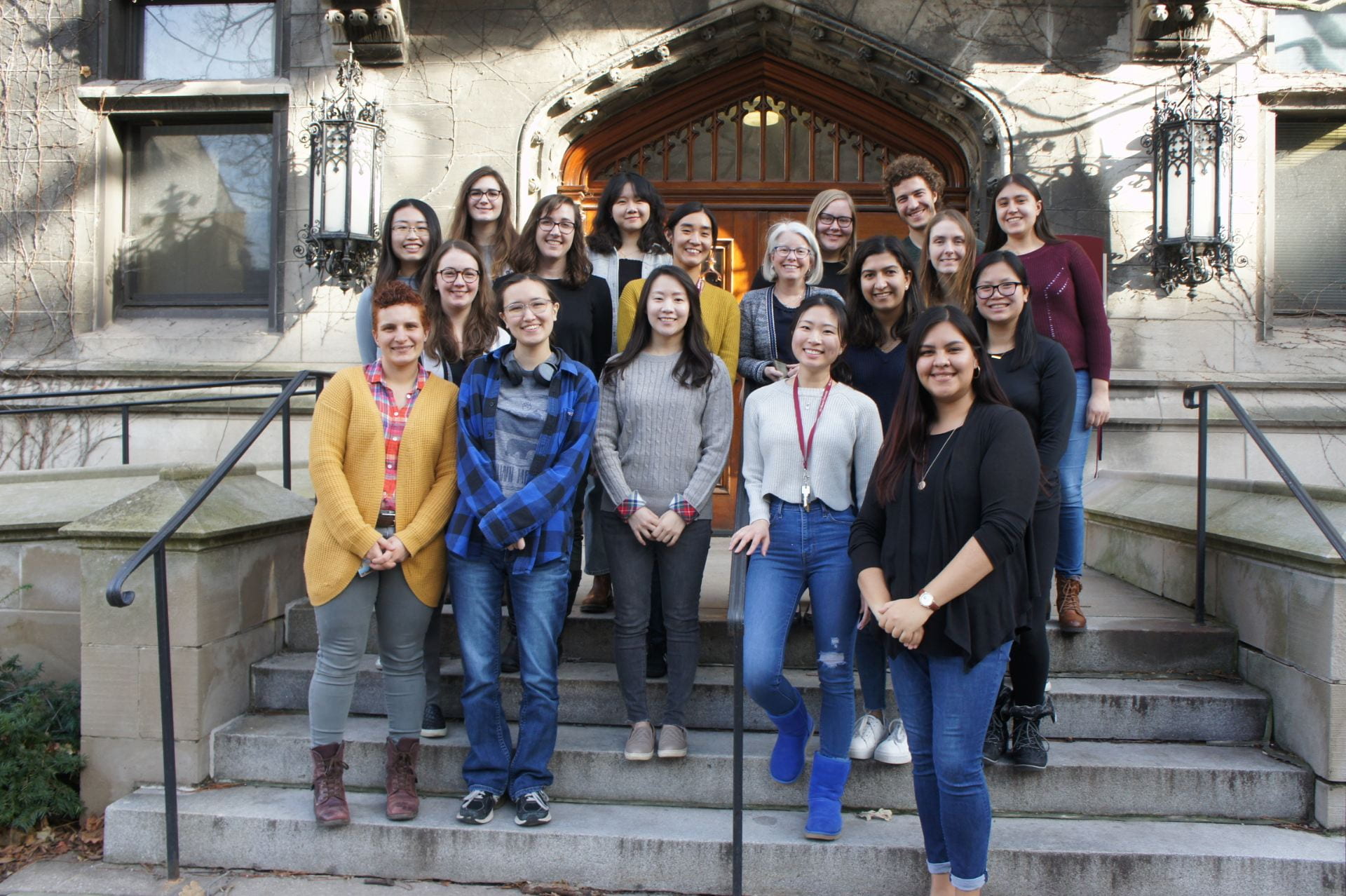
Amanda Woodward is the William S. Gray Distinguished Service Professor of Psychology at the University of Chicago and serves as Deputy Dean for Faculty Affairs in the Division of the Social Sciences. She holds a B.A. from Swarthmore College (1987) and a Ph.D. from Stanford University (1992). Her research focuses on infant social cognition, including how infants understand social structure, learn from cultural contexts, and develop neural processes underlying early social-cognitive abilities. She pioneered experimental methods to study infant social understanding, emphasizing imitation, theory of mind, and cross-cultural influences. Woodward has received prestigious awards such as the APA Boyd McCandless Award and is a fellow of the American Academy of Arts and Sciences. Her lab, the Infant Learning and Development Laboratory, investigates infants' understanding of social intentions, perceptions, and emotions. Notable students include Tess Fulcher, Natalie Brezack, and Haerin Chung. She teaches courses like Cognitive Development and From Action to Abstraction . Her work bridges developmental psychology with neuroscience, emphasizing how early experiences shape social cognition. Recent research explores racial categorization, cross-cultural learning strategies, and neural correlates of social perception.
Professor Julie Leask is a social scientist and professor at the University of Sydney, School of Public Health within the Faculty of Medicine and Health. She co-leads the Social and Behavioural Insights in Immunisation research group and is also affiliated with the Susan Wakil School of Nursing and Midwifery. As a visiting professorial fellow at the National Centre for Immunisation Research and Surveillance, she contributes to national immunization research and policy. Professor Leask holds an NHMRC Investigator Leadership Fellowship and serves on various national and international advisory committees related to vaccination. Professor Leask earned her PhD in Public Health from the University of Sydney in 2003, following a Master of Public Health from the same institution in 1998. Her educational background also includes a Certificate of Midwifery from Northern Sydney Area Midwifery School (1991) and a Diploma in Health Science, Nursing from University of Technology Sydney (1990), giving her a unique interdisciplinary perspective that bridges clinical practice with public health research. Professor Leask's research focuses on the social and behavioural aspects of vaccination, vaccine uptake, communication strategies, and strengthening vaccination programs and policy. She applies knowledge and methods from psychology, sociology, public health ethics, communication, and implementation science to understand and address vaccine hesitancy and improve immunization coverage. Her work includes developing the Sharing Knowledge About Immunisation (SKAI) communication package to support conversations between parents and health care workers, and she has contributed to international efforts to standardize surveys for understanding influences on vaccine uptake. Analysis of her recent publications shows a strong emphasis on vaccine hesitancy across diverse populations, the impact of policies like 'No Jab, No Pay,' and cross-cultural studies of vaccination attitudes in countries including Australia, Italy, and Indonesia. Professor Leask has received numerous prestigious awards recognizing her contributions to public health and vaccination research: Officer of the Order of Australia (AO) in the General Division in 2024 Rosemary Bryant Award, Australian Primary Health Care Nurses Association, July 2023 President's Award, Public Health Association of Australia – group award for the Collaboration on Social Science and Immunisation, 2022 Supervisor of the Year 2021 (Medicine), Sydney University Postgraduate Representative Association The Australian Financial Review 100 Women of Influence, 2019 Overall and global category winner Professor Leask supervises several PhD students including Maria Christou-Ergos, Belinda Bruce, Catherine Helps, and Rebika Nepali. She has been instrumental in developing and implementing research grants focused on vaccination communication, vaccine hesitancy, and improving immunization coverage. As chair of the WHO working group for measuring the Behavioural and Social Drivers of Vaccination (2018-2022), she led international efforts to standardize metrics for understanding vaccination behaviors. Her NHMRC Investigator Leadership Fellowship supports her ongoing research in social and behavioral aspects of immunization and vaccine communication. Professor Leask co-founded the Collaboration on Social Science in Immunisation (COSSI) in 2016, which aims to inform Australian immunisation policy with evidence from social sciences. She leads the Social and Behavioural Insights in Immunisation research group at the University of Sydney and is a member of the Sydney Infectious Diseases Institute. Her team has developed innovative communication tools like the SKAI package and has conducted extensive research on vaccine hesitancy, risk communication during health emergencies, and the impact of policies like Australia's 'No Jab, No Pay' on vaccination rates. She has also been instrumental in establishing the Vaccine Acceptance Research Network now based at the Sabin Vaccine Institute.
Marc Killpack is an Associate Professor at the College of Engineering , Brigham Young University . His research focuses on soft robotics , human-robot interaction , controls , and robot manipulation , with applications in search and rescue , disaster response , and collaborative systems . He leads the Rad Lab and teaches courses in robotics , instrumentation , and control systems . Ph.D. in Robotics, Georgia Institute of Technology (2013) M.S. in Mechanical Engineering, Georgia Tech (2008) M.S. in Manufacturing, Arts et Métiers ParisTech (2008) B.S. in Mechanical Engineering, Brigham Young University (2007) Research interests span soft robot control (model predictive, adaptive, and optimal control), human-robot co-manipulation , tactile and force sensing , 3D perception , and mechanical design optimization . His work addresses robot dynamics and teleoperation for unstructured environments . Recent publications highlight soft robotics , model predictive control , haptic sensing , and human-robot collaboration in disaster response and physical co-manipulation scenarios. Awards include the 2024 Best Demonstration at IEEE-RAS International Conference on Soft Robots, 2023 Early Career Teaching Award , and 2021 Excellence in Research Award . He has advised 16 graduate students , including current Ph.D. candidates and alumni now at institutions like Raytheon , 3M , and SkyTech Robotics . His professional roles include Associate Editor for the International Journal of Robotics Research and Outreach Co-chair for IEEE Humanoids 2024 . 2024 : Best Demonstration, IEEE-RAS International Conference on Soft Robots 2023 : Early Career Teaching Award, BYU 2021 : Excellence in Research Award, BYU Mechanical Engineering 2020 : Most Influential Faculty Award, BYU Mechanical Engineering 2019 : Outstanding Teaching Award, BYU Mechanical Engineering 2016 : Outstanding Faculty Teaching Award, BYU Mechanical Engineering 2014-2017 : Early Career Faculty Award, NASA He actively contributes to IEEE Control Systems Society and ASME as a reviewer and editorial board member, while developing open-source libraries like MoLDy for soft robot modeling and control.
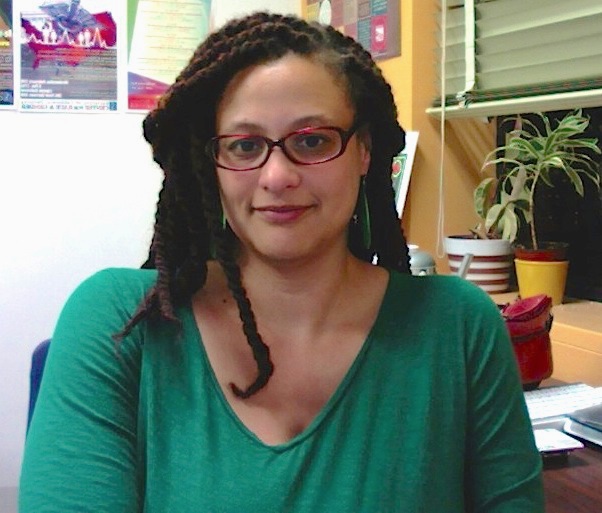
Alisa Bierria is an Assistant Professor in the Department of Gender Studies at the University of California, Los Angeles (UCLA). A Black feminist philosopher with over 20 years of advocacy and organizing experience within the feminist anti-violence movement, Dr. Bierria's work focuses on racialized gender violence and critical acts of survival. She is developing a manuscript entitled "Missing in Action: Agency, Race, & Invention," which explores how intention is imagined and invented within structures of anti-black racism, carceral reasoning, and gendered violence. Dr. Bierria's educational background includes: Ph.D. in Philosophy from Stanford University (2018) B.A. in Philosophy from Cornell University (1997) Her research interests span Black Feminist Theory, Gender Violence and Redress, Feminist and Queer Carceral Studies, Agency and Intentionality, and Feminist Epistemology. Dr. Bierria approaches these topics through a lens that centers Black women's agentic practices in conditions of violence, proposing a pluralistic framework for agency that can account for intentional action within contexts of domination. Her scholarship is deeply informed by her two decades of activism and organizing within the feminist anti-violence movement. Dr. Bierria's publication trajectory demonstrates a clear evolution from theoretical explorations of agency within violence toward more applied work on abolitionist frameworks and community accountability. Her recent scholarship increasingly focuses on practical applications of transformative justice while maintaining rigorous philosophical foundations, reflecting her commitment to bridging academic theory and activist practice in addressing systemic violence. Her notable awards and recognitions include: Freedom Scholar Award from the Marguerite Casey Foundation (2020) Hellman Fellowship from the Hellman Family Foundation (2020) Engaging Humanities Grant from the University of California Humanities Research Institute (2019) Named Recognition: Alisa Bierria Graduate Fellowship in Black Feminist Research, Center for the Study of Women, UCLA (2019) Colorlines 20 x 20 recognition from Colorlines, Race Forward (2018) University of California President's Postdoctoral Fellowship (2018) As a scholar-activist, Dr. Bierria has co-founded and co-led several national organizations, including Survived & Punished, which advocates for the decriminalization of survivors of domestic and sexual violence. Her work bridges academic and community spaces through significant grant-funded projects that develop both theoretical frameworks and practical applications for community accountability. While specific advising details aren't provided, her editorial work and organizational leadership indicate a strong commitment to mentoring emerging scholars and activists. Dr. Bierria is deeply embedded in collaborative networks through her co-editorship of "Abolition Feminisms" and her work with Survived & Punished. These interdisciplinary collectives focus on transforming responses to violence through abolitionist frameworks. Her influence extends to institutional spaces like UCLA's Center for the Study of Women, which established a fellowship in her name, demonstrating her significant impact on feminist scholarship and practice.
Joachim Högväg is a Researcher at Åbo Akademi University's Faculty of Humanities and Social Sciences, affiliated with the Experience Lab Solutions for health. His work bridges cognitive science and practical applications in crisis management, virtual reality, and democratic innovation, utilizing biometric data and user-centered design methodologies. His research focuses on information processing under stress , particularly examining situational awareness during crises and information overload in emergency contexts. Högväg investigates how visual attention mechanisms affect decision-making, as evidenced by his VR-based forensic psychology studies and analysis of crisis communication during the COVID-19 pandemic. His work extends to digital democratic tools , where he develops accessible applications for citizen engagement in local politics through user experience optimization. Recent publications reveal an interdisciplinary trajectory combining cognitive science, human-computer interaction, and political communication. His studies increasingly incorporate biometric measurements and virtual reality environments to simulate real-world crisis scenarios, while maintaining strong connections to practical societal applications in healthcare and governance. Högväg actively contributes to externally funded research as Co-Investigator on projects including INTAKT (reducing academic intention-action gaps among Finnish-Swedish students), VRwitness (eyewitness research in VR), and Pocket Democracy (local politics engagement tools). These projects receive support from foundations like the Swedish Cultural Foundation and Swedish-Ostrobothnian community. He operates within the Experience Lab Solutions for health framework and maintains collaborative networks across disciplines, evidenced by multi-institutional projects addressing societal challenges through technological innovation. His upcoming June 2025 conference presentation on VR forensic applications demonstrates ongoing research momentum.
Andrew Green is an Assistant Professor in the Department of Information Systems at Kennesaw State University's Coles College. His work bridges academic research with practical cybersecurity applications, including leadership in vulnerability disclosure studies and cyber defense competition analysis. He co-authors educational materials with colleagues like Herb Mattord and Amy Woszczynski. Academic Focus: Information Security, Network Security, Cybersecurity Education Leadership: Gary Roberts Outstanding Advisor Award recipient, multiple times Influential Instructor by graduating students Research spans vulnerability disclosure frameworks for critical infrastructure, AI integration in information systems, and cybersecurity education pedagogy. His publications demonstrate expertise in both technical and behavioral aspects of security. Scientific awards include: 2023 Coles College 'Five in Flight' Alumni Award 2016 Innovation in Teaching Award Multiple Gary Roberts Advisor Awards Consistent recognition as Influential Instructor (2011–2020) He provides consulting through Strategic Security Consulting Services LLC and develops innovative teaching tools using Docker containers and AWS cloud environments.
Clémence Pinaud is an Associate Professor in the Department of International Studies at the Hamilton Lugar School of Global and International Studies, Indiana University Bloomington. She serves as Director of Undergraduate Studies and is a leading expert on South Sudan, African civil wars, and genocide. Her interdisciplinary research combines political science and history, grounded in extensive fieldwork in South Sudan since 2009. Her educational background includes a Ph.D. in History from Paris Sorbonne University (2013) and M.A. & B.A. in Political Science from Sciences Po Lille (2009). Pinaud’s research focuses on the intersections of violence, predation, state formation, and gender in conflict zones, especially during South Sudan’s civil wars. Key themes include military kinship, sexual and gender-based violence, social class formation, and the role of the Sudan People’s Liberation Army (SPLA). She examines how wartime processes contribute to long-term sociopolitical structures and genocidal dynamics. Her recent publications reveal a strong trend toward analyzing systemic violence, particularly genocidal rape and predatory state-building. Her work spans academic journals, policy briefs, and major media, reflecting a commitment to both scholarly rigor and public engagement. She has published with Cornell University Press , African Affairs , and Human Rights Quarterly , and contributed to outlets like Democracy in Africa and Le Monde . War and Genocide in South Sudan (Cornell University Press, 2021) Genocidal Rape in South Sudan (Human Rights Quarterly, 2020) Military Kinship, Inc. (Review of African Political Economy, 2016) Pinaud has collaborated on policy initiatives with organizations such as the United States Institute of Peace and African Arguments. She has not received publicly listed scientific awards, but her influence extends through academic leadership and media commentary. She advises students in international studies and gender-related conflict research, though specific advisees are not named. Her work is supported by field-based research and institutional affiliations rather than explicitly mentioned grants. She is actively involved in shaping curriculum as Director of Undergraduate Studies. While no formal lab or research center is mentioned, her work aligns with interdisciplinary teams focused on conflict, human rights, and African studies at Indiana University. Her future research is likely to continue exploring the legacies of violence and state formation in post-colonial Africa.
Fabrizio GERLI is a Full Professor of Business Organization and Human Resources Management at Ca' Foscari University of Venice. He serves as Director of the Ca' Foscari Competency Centre (CFCC) and Rector's Delegate for Career Services. His academic roles include teaching leadership development, organizational behavior, and competency-based management across various graduate and undergraduate programs. Dr. GERLI holds a Ph.D. in Management from Ca' Foscari and has led over 15 research projects funded by institutions like the Italian Ministry of Research and the European Social Fund. His research focuses on behavioral competencies, leadership development, lean management, and the role of emotional/social intelligence in innovation and entrepreneurship. He co-founded the CFCC to advance competency-driven education and employability. His notable contributions include developing competency assessment frameworks, leadership education programs, and studies on entrepreneurs' behavioral skills. Awards highlight his impactful teaching (e.g., 2019 Best Teaching Award) and scholarly work, including the 2012 Distinguished Track Paper Award for lean management research. Research Areas: Competency Modeling, Leadership Education, Lean Manufacturing, Innovation Psychology Key Projects: PRIN 2022 Hybrid Work Models, Por FSE-funded competency labs, and international collaborations with ESADE Business School Awards: Over 10 teaching awards from 2002–2020, including multiple recognitions for leadership education
Lysanne te Brinke is an Assistant Professor at the Erasmus School of Social and Behavioural Sciences, Erasmus University Rotterdam. Her research focuses on how interpersonal and societal experiences shape adaptive (e.g., community engagement) and maladaptive (e.g., antisocial behavior) outcomes in adolescents. She leads the Healthy Start ambition on youth participation and co-leads the YoungXperts platform, integrating youth voices into research through transdisciplinary approaches. Her work emphasizes participatory research methods, including co-creation sessions with adolescents, educators, and policymakers. Key projects include leveraging youth contributions to societal challenges and reframing policy narratives to enhance youth participation. She holds a VENI grant for studying adolescents as agents of change and co-led research awarded an NWA Science Communication Grant and a societal engagement award from the Dutch Ministry of Education, Culture, and Science. Te Brinke serves as President of the Early Researchers Union of the European Association of Developmental Psychology, advocating for early-career researchers. Her research spans social psychology, developmental neuroscience, and policy design, with a focus on translating findings into actionable societal interventions. She actively collaborates with the Society, Youth & Neuroscience Connected (SYNC) Lab, exploring how youth develop into socially responsible adults.
Dr. Tobit Nauheim is a Scientific Staff Member at the Geographical Institute of the University of Bonn, affiliated with the Faculty of Mathematics and Natural Sciences. He holds a Dr. rer. nat. from the University of Bonn (2024) and has been engaged in research and teaching since 2020. His work bridges historical geography, geography education, and religious geography, with a regional focus on Japan, Israel-Palestine, and the Rhineland. He is currently based at the Chair of Geography Education under Prof. Eva Nöthen. PhD in Natural Sciences, University of Bonn (2024) M.Ed. in Geography, Catholic Theology, Educational Sciences, University of Bonn B.A. in Historical Sciences, University of Bonn Erasmus+ studies at Charles University, Prague Dr. Nauheim's research centers on the history of geographical knowledge, particularly the 19th-century expedition of Johannes Justus Rein to Japan. He investigates how research practices, power relations, and discourse shape geographical knowledge. His work employs praxeological and qualitative methodologies, analyzing travel diaries and institutional histories. He has regional expertise in Japan, Israel-Palestine, and Germany, and explores intersections between historical, political, and religious geography. His recent publications and lectures reveal a strong trend in historical geography, with a focus on Rein’s Japan expedition, colonial legacies in geography, and transformative geographical education. He frequently contributes to academic discourse through edited volumes, journal articles, and international presentations. His collaborative projects with institutions in Atlanta, Prague, Budapest, and Tokyo reflect a global scholarly network. Dr. Nauheim is actively involved in academic service and leadership: Speaker, Working Group on the History of Geography (AK Geschichte der Geographie) Member, ARKUM (Working Group for Historical Cultural Landscape Research) Member, Bonn Geographical Society Member, Transdisciplinary Research Area TRA 5 – Present Pasts, University of Bonn He has contributed to multiple research projects, including Unearthing Atlanta’s Past (digital urban history) and Earth System Science & Transformative Geographical Education , funded by the University of Bonn and BZL/DIG Bonn. He has supervised and co-led excursions and public events, including feminist city walks and discussions on colonial traces in geography. He has also held visiting positions at ELTE Budapest, Charles University Prague, and Kokugakuin University Tokyo. Dr. Nauheim leads and participates in research teams focused on historical geography, geography education, and transcultural studies. He has organized conferences such as Zeiten – Räume – Wissen and contributes to the academic community through editorial and collaborative research work.
Prof. Dr. Bernd Ludwig is a faculty member at the Institute for Information and Media, Language and Culture (I:IMSK) within the Faculty of Languages, Literature and Cultural Studies at the University of Regensburg. He has held the Professorship for Information Linguistics since August 2011, following a visiting role in the summer semester of that year. His academic journey began at Friedrich-Alexander-Universität Erlangen-Nürnberg, where he earned his PhD in 2004 and completed his habilitation in 2010. His research spans the interdisciplinary domains of natural language processing, human-computer interaction, and artificial intelligence, with a focus on spoken dialogue systems, user modeling, and context-aware assistive technologies. He leads projects like URWalking and ROSE, contributing to advancements in indoor navigation and intelligent mobile assistance. His recent publications reflect a diverse portfolio, combining AI and NLP with health informatics, social media analysis, and industrial applications. Trends show a growing emphasis on large language models, health recommendation systems, and the societal impact of AI. Scientific Awards: Zeitschrift für Medizinische Physik (ZMP) Autorenpreis 2022 AMiner Most Influential Scholar Award 2018 Nomination for Best Paper Award at MUM 2016 Nomination for Best Paper Award at KI 2010 SEW-EURODRIVE-Stiftung Studienpreis for Diploma Thesis (1997) Advising and Grants: Prof. Ludwig has supervised multiple doctoral candidates to completion, including Dr. Karema Al Subari and Dr. Robert Jackermeier, and currently mentors PhD students. He has secured research funding, notably a BMBF grant for the OPTAPEB project (2018–2021), and contributes to academic service as co-editor of Künstliche Intelligenz and organizer of major conferences such as CHIIR 2022 and COSIT 2019. Labs and Teams: He is a core member of the research team at the University of Regensburg, collaborating closely with Prof. Udo Kruschwitz, Prof. David Elsweiler, and others. His workgroup focuses on intelligent user interfaces, multimodal interaction, and practical applications of AI in everyday contexts.