
Magnus Liebherr is a Professor at the University of Duisburg-Essen , focusing on Technology Acceptance , Artificial Intelligence , and Sustainable Transportation . His work bridges Business Administration with Human-Computer Interaction , exploring how users adapt to emerging technologies like autonomous vehicles and AI systems. Key research areas include: Acceptance of AI applications in mobility Business model development for climate-neutral transportation Cognitive and psychological factors in technology interaction Digital media effects on adolescent well-being Trust calibration in automated systems His recent publications examine Large Language Model dependency , gamified language learning , and mental workload metrics for autonomous vehicles. While no formal awards are listed, his interdisciplinary work spans psychology , engineering , and business strategy .
جستجوی استاد راهنمای دانشگاهی
برای مسیر پژوهشیتان، استاد راهنما، استاد دانشگاه و پژوهشگر مناسب را پیدا کنید و با آنها ارتباط بگیرید.
نمایش ۱۶-۳۰ از ۷۷۱ استاد راهنما
اطلاعات پروفایلها از صفحات عمومی دانشگاهها گرفته شده و ممکن است بهروز نباشد.
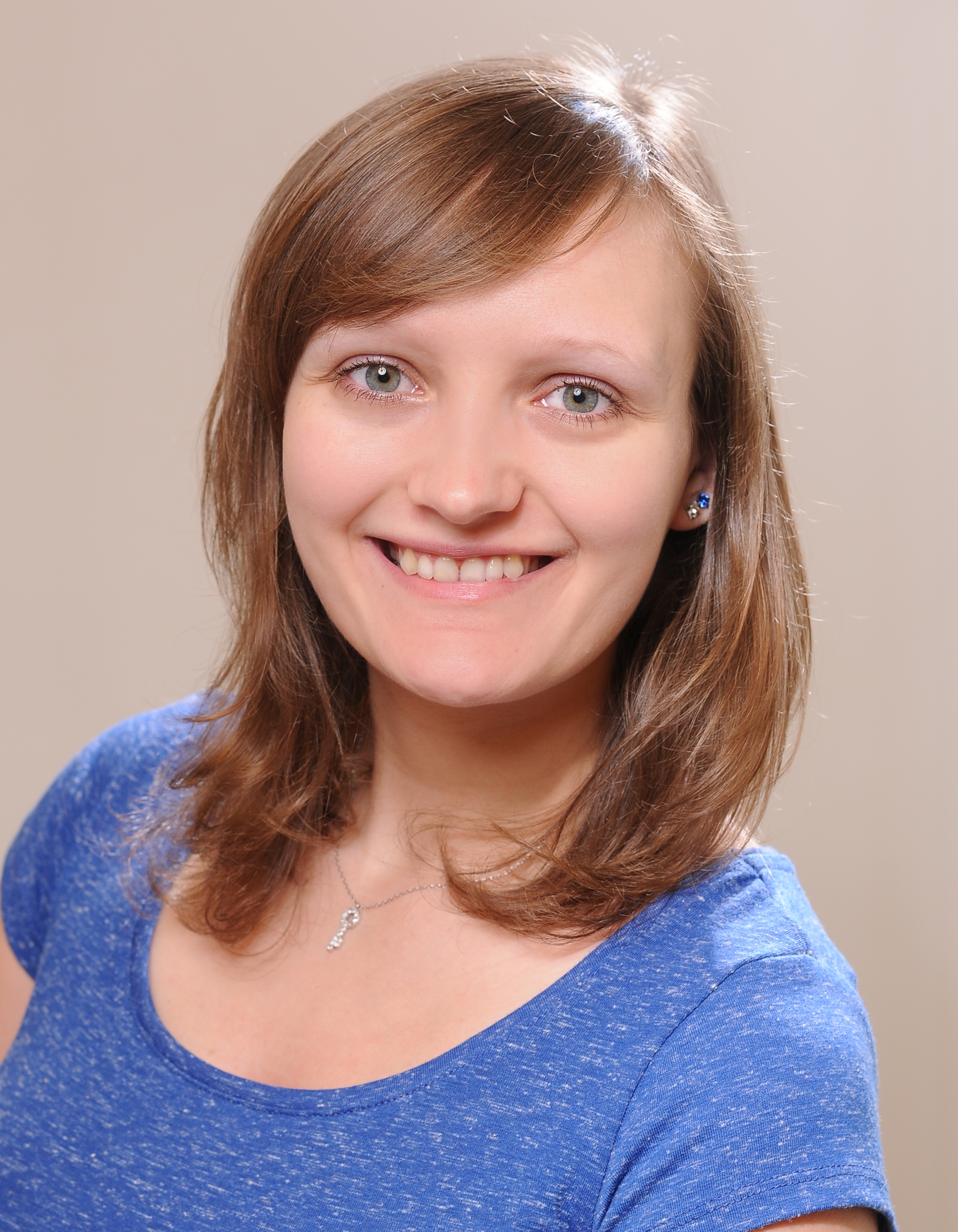
Franziska Mueller is a Research Scientist at Google Zurich , specializing in Augmented Perception . Prior to joining Google, she earned her Ph.D. in Computer Science at Saarland University under the supervision of Prof. Dr. Christian Theobalt, focusing on real-time hand reconstruction from RGB and depth images. Ph.D. in Computer Science (2016-2020) at Saarland University Master’s and Bachelor’s in Computer Science at Saarland University Research visits at Stanford University (2018) and Reality Labs Research (2019) Her research emphasizes the integration of model-based techniques and machine learning components for real-time 3D hand pose estimation, occlusion handling, and hand-object interaction tracking. Key contributions include methods for single-camera reconstruction and datasets like HandSeg. Scientific Awards : Dr. Eduard Martin Award (2021) Google PhD Fellowship (2017) Günter-Hotz-Medal (2016) Bachelor Award (2015) Völklinger Abiturpreis (2012)
Jihyun Leeمشاهده پروفایل
استادیار
- Manufacturing Automation
- Mechatronics
- Robotics
- +۷ مورد دیگر
Jihyun Lee is an Assistant Professor in the Department of Mechanical and Manufacturing Engineering at the Schulich School of Engineering, University of Calgary. She was awarded the Anna Boyksen Fellowship by the Technical University of Munich Institute for Advanced Study (TUM-IAS) in 2021, hosted by Prof. Michael Zäh. Doctorate in Mechanical Engineering from University of Michigan-Ann Arbor (2016) Prior post at Korea Institute of Machinery and Materials (2016-2019) Her research focuses on mechatronics, robotics, manufacturing automation, and control systems , with applications in machine tools, additive manufacturing, and precision measurement. She integrates artificial intelligence and optimization to enhance industrial automation. Recent publications highlight work on vibration control , sensor fusion , and flexible manufacturing systems . Her team explores dynamic modeling , nanocomposite sensors , and human-in-the-loop robotics for industrial and marine applications. 2020 Remote Teaching Award, Schulich Engineering 2020 Early Achievement Award, Association of Korean-Canadian Scientists and Engineers 2018 Best Achievement Award, KIMM She supervises doctoral and master’s students at the University of Calgary, emphasizing hands-on experience and MATLAB/Python simulation skills in her lab. Her work bridges quantum logic and industrial robotics through interdisciplinary collaborations.

Anett Hoppeمشاهده پروفایل
پژوهشگر
Dr. Anett Hoppe is a research staff member at the Leibniz Information Centre for Science and Technology (TIB) in Hannover, Germany, where she works in the Visual Analytics research group. Her research focuses on the intersection of artificial intelligence, education technology, and information science, with particular emphasis on how people learn through search processes and educational video consumption. Dr. Hoppe completed her academic journey with: Ph.D. in Semantic Web technologies for online user profiles from the University of Burgundy, Dijon, France Her primary research interests span Search as Learning, software-based support for scientific reproducibility, and ethical considerations in computer-based decision making. She investigates how visual elements, reading sequences, and AI technologies impact knowledge acquisition during web search and educational video consumption. Her work bridges human-computer interaction, educational psychology, and information retrieval to create more effective learning experiences, with recent publications examining the role of large language models, vision-language models, and visual complexity in educational contexts. Analysis of her recent publications (2024-2025) reveals a strong interdisciplinary focus combining computer science, educational psychology, and information science. Her research examines video-based learning effectiveness, knowledge gain prediction, educational resource discovery, and the impact of visual elements on learning outcomes. She consistently explores how AI technologies can be leveraged to enhance educational experiences while maintaining attention to ethical considerations and scientific reproducibility. Dr. Hoppe maintains active collaborations with researchers across multiple institutions, with frequent co-authorship patterns indicating strong research partnerships, particularly with Ralph Ewerth and other members of the Visual Analytics group at TIB. Her work supports TIB's mission to advance knowledge infrastructure and scholarly communication through innovative technological solutions while directly addressing practical challenges in educational technology and information retrieval.
Prof. Dr. Bernd Skiera holds the first chair for electronic commerce in Germany at Goethe University Frankfurt am Main since 1999. He serves on the board of efl - The Data Science Institute and the Schmalenbach Society, while representing Germany at the European Marketing Community (EMAC). Chair of Marketing, Goethe University Frankfurt am Main Board member, efl - The Data Science Institute National representative, European Marketing Community (EMAC) His research focuses on MarTech/SalesTech integration, customer value management, online advertising analytics, data-driven pricing models, and the economic implications of internet privacy regulations. He leads the ERC Advanced Grant project on cookie usage restrictions' economic consequences. Recent publications examine dynamic pricing in digital markets, competition visualization using big data, and AI applications in marketing analytics. The ERC Advanced Grant research has produced empirical analyses of GDPR impacts on advertising ecosystems. 2015 Journal of Marketing Best Paper Award 2013 International Journal of Research in Marketing Best Paper Award Multiple MSI/H. Paul Root Award recognitions He has mentored 17 doctoral students who became professors globally, including at London Business School and LMU Munich. His work bridges marketing analytics with financial valuation through customer equity modeling.
Thomas Groteمشاهده پروفایل
پژوهشگر ارشد
Thomas Grote is a Research Fellow at the University of Tübingen's Ethics and Philosophy Lab within the Cluster of Excellence 'Machine Learning: New Perspectives for Science'. His research focuses on philosophical and ethical dimensions of artificial intelligence, particularly interpretability, fairness, and reliability in medical and social contexts. He co-supervises the Carl-Zeiss-Stiftung-funded project 'Certification and Foundations of Safe Machine Learning Systems in Healthcare' and co-organizes the 'Philosophy of Science Meets Machine Learning' conference series. Research Focus Grote's interdisciplinary work bridges philosophy of science and applied AI ethics. Key areas include: Methodological foundations of AI ethics and epistemology Clinical reliability and safety of ML systems Fairness metrics in sociotechnical healthcare systems Interpretability requirements for medical AI Computational psychiatry and evolving mental health frameworks His recent publications demonstrate strong emphasis on healthcare applications, with critical analyses of reliability in foundation models, ethical paradigms for LLMs, and rethinking evaluation methodologies at the epistemology-ethics interface.

Prof. Torsten Wolfgang Kuhlen serves as a Universitätsprofessor at RWTH Aachen University, leading the Teaching and Research Area for Virtual Reality and Immersive Visualization within the Department of Computer Science. He is affiliated with Chair of Computer Science 12 (High Performance Computing), the Visual Computing Institute, and remains an integral part of the RWTH IT Center where his research group operates one of the world's largest Virtual Reality laboratories including the 30 sqm aixCAVE visualization chamber. The group maintains strong connections with Computational Science & Engineering Division, National High Performance Computing Center for Computational Engineering Science (NHR4CES), and VR in Science and Industry Network NRW e.V. Prof. Kuhlen's research spans virtual reality, immersive visualization, and multimodal 3D user interfaces with applications across simulation science, production technology, neuroscience, and medicine. His work combines basic research on advanced methods and algorithms with interdisciplinary collaborations involving RWTH Aachen institutes, Forschungszentrum Jülich, and industry partners. Recent publications demonstrate strong focus on audiovisual perception, immersive analytics, collaborative virtual environments, and practical VR applications in education and manufacturing. His research group has produced significant work on listening effort in virtual environments, immersive authoring techniques, and VR applications for scientific visualization. Notable projects include VRScenarioBuilder for automated vehicle testing and applications in monitoring additive manufacturing processes. The group actively participates in major conferences including IEEE VIS and EuroVis, with several award-winning contributions. Prof. Kuhlen has advised PhD students including Martin Bellgardt who recently completed his doctoral degree on "Increasing Immersion in Machine Learning Pipelines for Mechanical Engineering". The research group maintains state-of-the-art VR infrastructure including the aixCAVE facility which is open to all RWTH research groups.
Jan Borchers is a full professor of computer science and head of the Media Computing Group, an endowed Chair in the Computer Science Department at RWTH Aachen University. He serves as deputy member of the Faculty Council for Mathematics, Computer Science and Natural Sciences (2024-2026) and previously headed the Computer Science Department's Examination Board from 2015 until February 2025. Borchers established his research group in 2003, pioneering modern HCI academic research and teaching in Germany, and opened Germany's first Fab Lab in 2009. Borchers received his PhD 'summa cum laude' in computer science from Darmstadt University of Technology in 2000. Before joining RWTH Aachen, he held faculty positions at Stanford University and ETH Zurich. His PhD thesis, 'A Pattern Approach to Interaction Design,' became the first book to bring design patterns to HCI. His research focuses on Human-Computer Interaction with particular interest in new user interfaces for soft robotics, textile user interfaces, 3D printing and personal fabrication, augmented reality, wearable and tangible computing, interfaces for software development, deceptive patterns, and interactive guides and exhibits. He is a member of ACM, SIGCHI, SIGCHI Germany, and GI, and introduced the Interactivity format to the CHI conference in 2005. Recent publications reveal a strong emphasis on deceptive patterns/dark patterns in UI design, textile interfaces, and the impact of generative AI on creative teamwork. His work spans from fundamental research in interaction techniques to practical applications in smart homes, accessibility, and children's interfaces, with a consistent focus on usability and user-centered design. IDC 2025 Best Work in Progress: 'If They Have No Choice, They'll Accept!' CHI'25 Student Games Competition Winner: 'The Deceptive Dungeon' RWTH-Wissenschaftsnacht 2024 Best Science Slam: 'Usability: 4 Prinzipien guter User Interfaces' Multiple CHI/UIST Honorable Mentions and Best Paper awards spanning two decades Author of influential books including 'A Pattern Approach to Interaction Design' and 'Arduino In A Nutshell' Borchers has provided extensive consulting, training, and user interface design services to major clients including AirBus, Apple, ARD, Bayer, Children's Museum Boston, Daimler, Handelsblatt, OTIS, Scout24, TEDx, and Deutsche Telekom. He actively organizes the Computer Science Department's weekly Faculty Lunch since 2003 and coordinates the department's public relations and web presence since 2010. He leads the Media Computing Group, which has become a leading German lab in terms of archival publications at CHI, the top international conference in HCI. Since March 2025, he serves as faculty patron for TechLabs Aachen, a student initiative providing practical digital skills training.
- Managing discontinuous business model innovation
- Digital strategies for Industrie 4.0
- Additive Manufacturing
- +۱۱ مورد دیگر
Prof. Dr. Frank T. Piller is a University Professor and Co-Leader of the Institute for Technology and Innovation Management (TIM) at RWTH Aachen University, where he also serves as Academic Director of the Executive MBA program at RWTH Business School. He leads a research team of approximately 30 doctoral students, 5 postdocs, and over 20 student researchers within the TIME Research Area of the School of Business and Economics. His educational background includes a doctoral degree in Operations Management from the University of Würzburg (1999) and a Habilitation degree from TUM Business School (2004) on "Innovation and Value Co-Creation." Prior to joining RWTH Aachen in 2007, he was a Research Fellow at MIT Sloan School of Management and faculty at TUM Business School. Prof. Piller is recognized as one of the world's leading experts in customer-centered value creation, specializing in mass customization, personalization, and customer co-creation. His current research focuses on how established companies can transform in response to disruptive business model innovations, with particular emphasis on digital transformation (Industry 4.0), AI-augmented innovation, and sustainable business models. He is particularly known for his work on innovation ecosystems, platform-based business models, and stakeholder-oriented technology development. His recent publications demonstrate a clear trajectory toward integrating artificial intelligence with traditional innovation management frameworks, exploring how AI transforms manufacturing systems, innovation processes, and business models. His work increasingly addresses the challenges of digital transformation in established industries while maintaining focus on customer co-creation and mass customization principles. His scientific achievements have been recognized with numerous awards: Co-Creation Award of the PDMA Nomination for "Innovating Innovation" Prize by Harvard Business Review and McKinsey "Lecturer of the Year" by Executive MBA students at TU Munich RWTH Aachen Rector's Prize for Excellent Teaching (since 2010) Grant for innovative "Flipping the Classroom" teaching concept ERC Synergy Grant for SAFER Grid project (2025-2031) Prof. Piller maintains an extensive research network spanning academia and industry. He collaborates with numerous corporations including 3M, Adidas, BASF, EON, J&J, P&G, Siemens, and Vodafone, as well as many technology startups across Europe and North America. As a co-founder, supervisory board member, and investor in innovative startups, he actively transfers research into practice. His research has received significant funding, most notably the prestigious ERC Synergy Grant for the SAFER Grid project. He leads the Technology and Innovation Management Group (TIM) within the TIME Research Area at RWTH Aachen, which comprises over 100 senior and junior researchers working at the intersection of innovation, technology management, marketing, and entrepreneurship. The institute is a leading European research institution for strategic, behavioral, and computer-supported technology and innovation management.
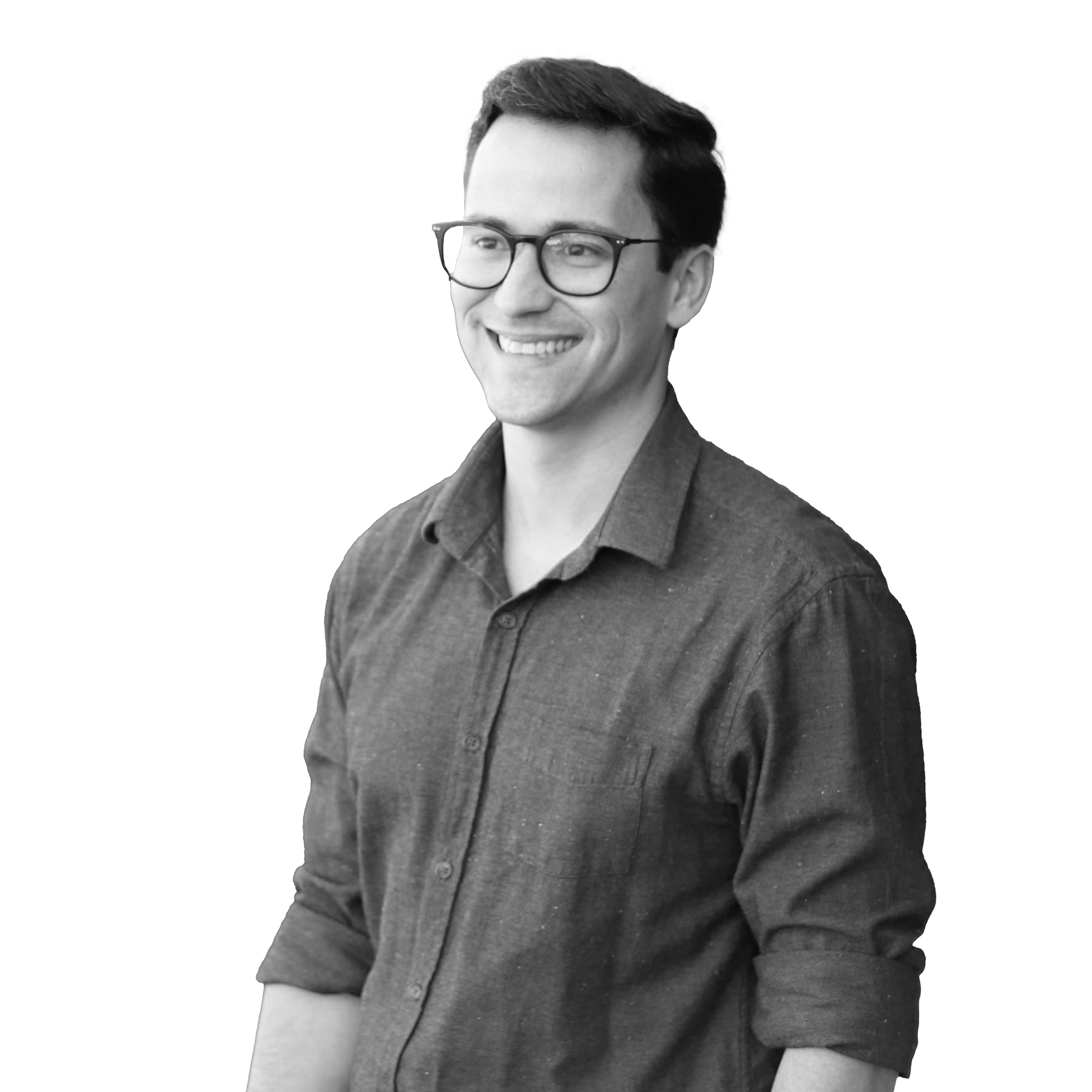
Eduardo Velloso is a Professor of Computer Science at the University of Sydney , focusing on interaction design for emerging technologies . His work explores novel user experiences through input modalities, interaction devices, and AI/ML integration in systems. Education: PhD in Computer Science (Lancaster University, UK), Bachelor in Computer Engineering (Pontifical Catholic University of Rio de Janeiro, Brazil) Research Interests: Interdisciplinary work combining Human-Computer Interaction , Augmented/Virtual Reality , Eye Tracking , Wearable Computing , and Machine Learning . Publication Trends: Recent work addresses methodology in HCI , AR/VR applications , AI integration , and sensor-based interaction . Scientific Awards: Best Paper Award at CHI Best Paper Award at UIST Best Paper Award at TOCHI Best Paper Award at TEI Supervision: Actively supervises PhD students and collaborates with companies/government on projects like VR training systems and AI mediation tools . Labs/Teams: Affiliated with institutions in Australia (University of Sydney) and Brazil (PUC-Rio), with global co-authors in projects involving mixed reality , wearables , and AI ethics .

Thomas Hermannمشاهده پروفایل
پژوهشگر
Dr. rer. nat. Thomas Hermann is a faculty member at Bielefeld University's Faculty of Engineering, leading the Ambient Intelligence Group and coordinating the Computer Science program. He specializes in sonification, auditory data science, and smart environments. Head of Ambient Intelligence Working Group Computer Science Program Coordinator Member of multiple academic advisory boards His research focuses on interactive sonification for biomedical applications, quantum systems, and smart environments. Key projects include ECG sonification for cardiac diagnosis, real-time auditory feedback in swimming, and sonic interfaces for AR cooperation. Recent publications span 2025 with Python-based sonification tools ( pya AGen ), quantum system sonification, and ST-elevation myocardial infarction monitoring. He contributes to open-access supplementary materials and interdisciplinary workshops. As a researcher , Hermann develops practical sonification frameworks like Panson for facial behavior analysis, CardioScope for portable ECG monitoring, and Base Cube One for smart environments. His work bridges academic research with industry applications.
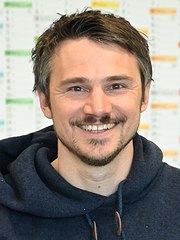
Prof. Dr. Janick Edinger is a Professor of Distributed Operating Systems at the Department of Informatics, Faculty of Mathematics, Informatics and Natural Sciences, University of Hamburg, Germany. He leads a research group focused on distributed, context-aware, and adaptive computing systems, with a strong emphasis on edge computing, computation offloading, and assistive technologies. Education: PhD in Computer Science, University of Mannheim Studies at National Taiwan University Studies at University of Alberta, Canada Research stays at University of British Columbia, Hong Kong Polytechnic University, and Georgia State University, USA His research explores how edge computing and computation offloading can enable efficient, privacy-preserving processing of sensor and video data close to their sources, particularly in dynamic environments. He investigates the integration of autonomous and heterogeneous systems—such as drone fleets and mobile devices—into scalable middleware platforms for real-time monitoring and decision-making in logistics and industrial operations. His work also emphasizes societal impact, contributing to accessible routing, adaptive interfaces, and crowd-sourced mapping. The recent publications reflect a strong trend in edge computing, federated learning, privacy-preserving analytics, and assistive technologies. Topics include WebAssembly-based offloading, emotion prediction via eye tracking, real-time traffic detection, and predictive maintenance in Industry 4.0, showcasing a blend of foundational systems research and applied human-centered computing. Scientific Awards: PerCom 2021 Mark Weiser Best Paper Award Best Paper Award at IEEE PerCom 2021 for 'Voltaire: Precise Energy-Aware Code Offloading Decisions with Machine Learning' Prof. Edinger actively advises students and leads research projects involving grants and collaborations. His team includes PhD candidates and researchers working on middleware, edge systems, and context-aware applications. He has served on conference program committees, such as shadow PC member for EuroSys 2021, and publishes in top venues including IPDPS, PerCom, CHIIR, and COMPSAC. Labs and Teams: He leads the Distributed Operating Systems research group at the University of Hamburg, where he mentors students and collaborates on projects involving edge computing, IoT, and adaptive systems.

Jelena Mirkovicمشاهده پروفایل
دانشگاهی
Jelena Mirkovic serves as Principal Scientist at USC Information Sciences Institute (USC/ISI) and Research Associate Professor at the University of Southern California's Thomas Lord Department of Computer Science. She has held faculty positions at USC since 2010, progressing from Research Assistant Professor to her current role as Research Associate Professor since 2017, while also serving as Project Leader at USC/ISI. Her educational background includes: PhD in Computer Science from UCLA (2003) MS in Computer Science from UCLA (2000) B.Sc. in Computer Science from University of Belgrade, Serbia (1998) Mirkovic's research spans network security, human-centered attacks, and cybersecurity experimentation infrastructure. Her work focuses on critical security challenges including botnets, denial-of-service attacks, IP spoofing, vulnerability scanning, and user-centric privacy. She has pioneered methodologies for security experiments and led major infrastructure projects including the DETER testbed and SPHERE (Security and Privacy Heterogeneous Environment for Reproducible Experimentation). Analysis of her recent publications reveals consistent innovation across multiple security domains. Her work demonstrates strong technical depth in DDoS defense systems (particularly DNS protection), binary vulnerability analysis, privacy-preserving systems, and security experimentation infrastructure. A notable trend is her focus on bridging theoretical security concepts with practical implementation through large-scale testbeds and real-world data analysis. Her significant scientific achievements include: IEEE Senior Member distinction Best paper award at IEEE COMSNETS 2023 for DNS DDoS defense research Mirkovic has secured substantial research funding as Principal Investigator or Co-PI on numerous grants from NSF, DHS, and other agencies. Current major projects include SPHERE (Security and Privacy Heterogeneous Environment for Reproducible Experimentation), DISCERN (Datasets to Illuminate Suspicious Computations), and modernizing DeterLab education infrastructure. She has successfully led multiple REU sites focused on cybersecurity education and workforce development. She directs the STEEL (Security Research Lab) at USC/ISI, which develops innovative security solutions through interdisciplinary research in network security, human factors in security, and cybersecurity experimentation infrastructure. The lab emphasizes practical implementations that address real-world security challenges while advancing theoretical understanding of security systems.

- Manycore system on chip (SoC) architectures
- Network processor (NPU) architectures
- On-chip communication architectures
- +۳ مورد دیگر
Dr.-Ing. Thomas Wild serves as an Academic Director at the Technical University of Munich (TUM), working within the TUM School of Computation, Information and Technology at the Chair of Integrated Systems. He maintains an active research and teaching role at the institution, with his office located in Building N1 (Theresienstr. 90), Room N2136 in Munich, Germany. Dr. Wild's research focuses on advanced computing architectures, with particular emphasis on manycore system on chip (SoC) architectures, network processor (NPU) architectures, on-chip communication architectures including networks on chip (NoC), and system level design methodologies. His work bridges theoretical research with practical implementation, often exploring design space exploration techniques to optimize system performance. The evolution of his research over two decades demonstrates a consistent focus on improving communication architectures and system-level design for embedded and high-performance computing platforms. His recent publications (2023-2025) reveal a growing integration of machine learning techniques with traditional hardware design, particularly in optimizing power-performance tradeoffs in embedded systems. There's a clear trend toward hardware-software co-design approaches, with significant work on SmartNICs, Linux system optimization, and network processing acceleration. His research shows strong interdisciplinary connections between computer architecture, networking, and machine learning. EUROPRACTICE representative for TUM city campus, facilitating access to commercial EDA tools for academic purposes Active collaborator with Professor Andreas Herkersdorf and other researchers at TUM Focus on practical implementations with FPGA-based prototyping and real system modifications Dr. Wild teaches several hardware design courses including VHDL Lab, SystemC Lab, and HW/SW Codesign, contributing to the education of next-generation computer engineers. His teaching directly complements his research in system design and hardware acceleration, providing students with hands-on experience in cutting-edge technologies.
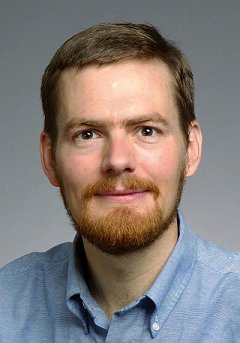
Michael D. Ernst is a Professor in the Computer Science & Engineering department at the University of Washington's College of Engineering. His research aims to make software more reliable, more secure, and easier (and more fun!) to produce. Previously, he was a tenured professor at MIT and a researcher at Microsoft Research. Ernst's primary technical interests are in software engineering, programming languages, type theory, security, program analysis, bug prediction, testing, and verification. His research combines strong theoretical foundations with realistic experimentation, with an eye to changing the way that software developers work. He focuses particularly on programmer productivity and developing practical tools that can be integrated into developers' workflows. Analysis of his recent publications (2018-2025) reveals a continued focus on verification techniques, program analysis, and testing methodologies. His work spans from theoretical foundations of type systems to practical applications of NLP for test generation and LLMs for test oracle creation. A consistent theme is developing lightweight, modular approaches that can be practically applied in real-world development environments. Scientific Awards: ACM Fellow (2014) John Backus Award (2009) NSF CAREER Award (2002) ACM SIGSOFT Impact Paper Award (2013) 8 ACM Distinguished Paper Awards across multiple conferences ECOOP 2011 Best Paper Award Microsoft Academic Search ranked #2 in software engineering research (2013) Ernst has received significant research funding including the NSF CAREER Award, supporting his work on program analysis and verification techniques. His research combines theoretical rigor with practical impact, often resulting in tools that are adopted by the software engineering community. He actively collaborates with researchers across institutions and has served in leadership roles for major conferences in programming languages and software engineering. His research group develops practical tools that address real challenges in software development, with a focus on making verification and analysis techniques more accessible to working developers. Current projects include applying machine learning techniques to software engineering problems while maintaining strong theoretical foundations.
نمایش نتایج تا ۷۵۰ مورد اول. برای یافتن نتایج دقیقتر، جستجوی خود را با فیلترها محدود کنید.