Hannah Michalska is an Associate Professor in the Department of Electrical and Computer Engineering at McGill University. She is a member of the McGill Center for Intelligent Machines. Her research focuses on nonlinear control challenges, particularly stabilization of complex systems like multi-dimensional inverted pendulums. She leads projects addressing control problems in robotics and dynamical systems, with simulations demonstrating stabilization techniques under varying initial conditions. Her work emphasizes rigorous analysis of control strategies for high-difficulty configurations, as evidenced by her publicly accessible simulation examples of double and triple 3D inverted pendulums. These models explore system behavior across increasing levels of control complexity. No scientific awards, grants, or advised students are explicitly listed in the provided text. Her professional contact includes a McGill email address and affiliation with the McConnell Engineering Building in Montreal.
Ali Mohammed Mohammed Al-Zawqari is a postdoctoral researcher at Vrije Universiteit Brussel (Brussels, Belgium). His research focuses on interdisciplinary areas combining natural language processing (NLP) with engineering applications, particularly in Arabic debate analysis and photonics design. He has collaborated internationally on projects involving machine learning models for argumentation mining and optimization algorithms for antenna systems. Key research interests include computational linguistics for Arabic discourse analysis, generative photonics modeling, and stochastic optimization in microwave engineering. His work bridges computational methods with real-world applications in both humanities and technical domains. Recent publications (2023-2025) highlight advancements in Arabic debate corpus development, neural argumentation classification, and automated antenna design optimization. He actively participates in academic conferences, presenting at events like ICALP 2023/2024 and the International Conference on Microelectronics (ICM 2024). Al-Zawqari holds an ORCID identifier (0000-0002-6649-7705) and has an h-index of 98 with over 500 citations. His research spans collaborations across multiple countries and institutions, reflecting a global approach to interdisciplinary challenges.
Michael Galde is an Assistant Professor at the University of Arizona's College of Engineering, Department of Electrical and Computer Engineering, where he specializes in cybersecurity education and research. He holds a Master's in Cybersecurity and a Bachelor's in Political Science from the University of Nebraska and brings over a decade of experience from defense intelligence, industrial cybersecurity, and academic instruction. MS in Cybersecurity, University of Nebraska BA in Political Science, University of Nebraska His research and teaching focus on malware analysis , Industrial Control Systems (ICS) security , reverse engineering , and hands-on cyber operations training . He develops advanced courses and practical tools to strengthen cybersecurity resilience in critical infrastructure. His work bridges technical depth with educational accessibility, empowering the next generation of cyber professionals. His recent technical projects reflect a strong trend in applied cybersecurity research , especially in OT/ICS monitoring , network visualization , and the integration of AI and NLP into security operations . Projects like GRID-LM, IAES-SOC, and PCAPMap demonstrate innovation in real-time threat detection, large-scale data analysis, and user-friendly tooling for cyber defense. Notable scientific credentials include: Global Industrial Cyber Security Professional (GICSP) GIAC Response and Industrial Defense (GRID) Michael Galde actively contributes to cybersecurity through teaching (80% responsibility), university service (20%), research (2024–present), and external consulting (15%). He mentors students through project-based learning and leads initiatives in developing robust educational and technical frameworks. His research team works on projects including SPINE, DaRIA, and IAES-SOC, focusing on scalable NLP ecosystems and intelligent network monitoring. He leads multiple research and development efforts, including the IAES-SOC for OT network monitoring, PCAPMap for traffic visualization, and SPINE for NLP infrastructure. These projects are supported by hands-on development and integration with tools like Wazuh, ELK stack, Scapy, and Bokeh.
Dirk Arnold is a Professor in the Faculty of Computer Science at Dalhousie University, Halifax, Canada. His research focuses on evolutionary computation, optimization, and surrogate modeling, with applications in machine learning and digital media. He is actively involved in teaching and research, contributing to major conferences and journals. PhD, University of Dortmund (2001) MSc, Simon Fraser University (1997) Diplom, University of Dortmund (1995) His research interests lie in evolutionary algorithms, particularly evolution strategies, and their application to noisy and constrained optimization. He investigates constraint handling, surrogate modeling, and parameter adaptation mechanisms. His work bridges theoretical analysis and practical applications in image processing, tone mapping, and robotics. Recent publications show a strong trend toward surrogate-assisted optimization, constrained evolutionary algorithms, and applications in computer vision and graphics. His work is consistently published in top venues such as GECCO, PPSN, and IEEE Transactions on Evolutionary Computation. Scientific Awards: Best Paper Award, Continuous Optimization Track, GECCO 2015 Best Paper Award, ES/EP Track, GECCO 2013 Best Paper Award, PPSN XII 2012 Best Paper Award, ES/EP Track, GECCO 2010 Best Paper Award, PPSN IX 2006 Best Student Paper Award, ACM Symposium on Document Engineering 2014 Arnold has advised numerous students, many of whom are co-authors on his publications. He has received research grants supporting work in evolutionary computation and optimization, though specific grant details are not listed. He is a key member of research clusters in Human-Computer Interaction, Visualization & Graphics, and Algorithms & Bioinformatics. He leads a research group focused on evolutionary algorithms and optimization, collaborating with researchers such as H.-G. Beyer, N. Hansen, and S. Brooks. Future work includes advancing constrained and mixed-integer evolutionary optimization, improving surrogate models, and expanding applications in computer vision and HCI.
Evangelos E. Milios is a Professor in the Faculty of Computer Science at Dalhousie University , Halifax, Nova Scotia. He has been a faculty member since 1998 and leads the MALNIS (Machine Learning and Networked Information Spaces) research group. He is affiliated with the Institute of Big Data Analytics and served as Scientific Director of DeepSense , an innovation hub for ocean data analytics. Education: PhD in Electrical Engineering and Computer Science, MIT (1986) SM & EE, MIT (1983) Dipl. Eng. in Electrical Engineering, NTUA, Greece (1980) His research focuses on visual text analytics, text mining, graph mining, social network analysis, and machine learning . He has made significant contributions to modeling and mining of networked information spaces, with applications in data science and AI. The recent publications reflect a strong trend in data mining, robotics, pattern recognition, and semantic analysis , particularly in log analysis, pose estimation, and information retrieval. His work bridges theoretical algorithms with practical applications in robotics and web technologies. Scientific Awards and Honors: Distinguished Research Professor (2017–2022) Killam Chair in Computer Science (2006–2011) Senior Member, IEEE Professional Engineer, Ontario (1998–2024) He has served in key administrative roles including Associate Dean, Research (2008–2017) and Director of the Graduate Program (1999–2002) . He has supervised numerous graduate students and taught a wide range of courses in AI, machine learning, data science, and networking. His research is supported by major grants and collaborations, including NSERC and industry partnerships. Research Labs and Teams: MALNIS – Focuses on machine learning and networked information spaces. DeepSense – Ocean data analytics and AI innovation. Institute of Big Data Analytics – Cross-disciplinary big data research.
Jason J. Jung is a Professor in the Department of Computer Engineering at Chung-Ang University, Seoul, Korea. His academic work focuses on knowledge engineering , social media analytics , and data mining within the Knowledge Engineering Laboratory. Research Interests : Computer Science, Social Knowledge, Data Modeling, Sentiment Analysis Projects : IoT-based cultural systems, real-time social event detection, transmedia storytelling models The 15 most recent publications (2014-2018) demonstrate expertise in social network analysis , multimodal data processing , and context-aware systems applied to urban services, cultural tourism, and digital storytelling. Key trends include real-time analytics , trust modeling , and collaborative frameworks for O2O services. Professional activities include editorial contributions, invited talks, and patent developments. Students at all levels (PhD/MSc/BSc) conduct research under his supervision at the Knowledge Engineering Laboratory. Personal interests include travel, film, painting, literature, and music.
Tian Heong Chan is an Associate Professor at Emory University's Goizueta Business School in the Information Systems & Operations Management department. His research and teaching focus on new product/service development, team collaboration, and technology operations. Education: PhD in Technology and Operations Management, INSEAD MS in Management Science and Engineering, Stanford University BS in Mechanical Engineering, UC Berkeley His work investigates: Collaboration dynamics in diverse settings (product design, problem-solving, customer-supplier co-production) Novelty emergence in design processes (exaptation, computer vision similarity metrics) Team composition effects on invention value (expertise similarity, gender diversity, cohesion) Recent publications analyze: Exaptation in IKEA hacks Voting protocols in FDA advisory committees Style evolution in product design Free-rider problems in medical equipment maintenance
Riccardo Cantoro is an Associate Professor in the Department of Control and Computer Science (DAUIN) at Politecnico di Torino, where he is a member of the College of Computer, Film and Mechatronics Engineering and the College of Mechanical, Aerospace and Automotive Engineering. He is affiliated with the CAD - Electronic CAD & Reliability Group and the CARS@PoliTO Interdepartmental Center for Automotive Research and Sustainable Mobility. His work bridges academic research and industrial applications through multiple commercially funded projects. Scientific Disciplinary Sector: IINF-05/A - Information Processing Systems ERC Sectors: PE7_4, PE6_2, PE6_11, PE6_12 His research focuses on functional safety, functional testing, and microprocessor testing, with a strong emphasis on embedded systems and reliability. He applies machine learning and formal methods to enhance test efficiency and system robustness, particularly in automotive and safety-critical domains. His work integrates computer-aided design, fault modeling, and resilience assessment in both hardware and AI systems. The recent publications highlight a trend toward data-efficient and intelligent testing methodologies, combining machine learning (e.g., TabPFN, active learning) with traditional electronic design automation. Topics include microcontroller performance screening, CNN resiliency, FeFET device testing, and system-level test optimization, reflecting a cohesive research agenda in trustworthy computing and hardware reliability. Scientific Awards: No awards explicitly mentioned in the provided texts. Advising and Grants: Dr. Cantoro supervises numerous PhD students in Computer and Systems Engineering, focusing on functional safety, test methodologies, and AI for CAD. He leads multiple industry-funded research projects, including collaborations with Infineon Technologies and Dana-TM4 Italia, on topics such as ATPG tools, speed monitor modeling, and power module reliability. His role as Scientific Manager/Head underscores his leadership in applied research and technology transfer. Labs and Teams: He is a core member of the CAD - Electronic CAD & Reliability Group (DAUIN) and contributes to the CARS@PoliTO center, fostering interdisciplinary research in automotive systems and sustainable mobility.
Juan Andrés Hernández Simón is an Associate Professor in the Department of Computer Science and Automation at the Faculty of Sciences, University of Salamanca, where he has been teaching since 1992. He is also an active member of the GRIAL Research Group, which specializes in intelligent and adaptive learning environments. His educational background includes: Bachelor of Science in Physics, University of Salamanca (1987) Master in Computer Science, Pontifical University of Salamanca (1990) His research interests lie at the intersection of computer science and education, focusing on: Development of intelligent tutoring systems Adaptive and personalized e-learning platforms Educational data mining and learning analytics Integration of AI in educational automation These interests are closely aligned with the mission of the GRIAL Research Group. No recent publications were listed in the provided text, so no article trends can be analyzed. There are no mentioned scientific awards or honors. He advises students through his role in the GRIAL group, though no specific advisees are named. There is no mention of research grants or funding sources. His dual professional role includes academic teaching and industrial work in the financial sector. He is a key member of the GRIAL Research Group , a multidisciplinary team at the University of Salamanca dedicated to advancing technology-enhanced learning through innovative software systems and AI-driven educational models.
Günter Karl Schiepek is a Professor at Ludwig Maximilian University of Munich and Paracelsus Medical University Salzburg. He serves as Director of the Institute of Synergetics and Psychotherapy Research at Paracelsus Medical University and co-directs the Center for Complex Systems in Stuttgart. His work integrates computational models, synergetics, and nonlinear dynamics into psychotherapy research. Primary Affiliations : Ludwig Maximilian University of Munich, Paracelsus Medical University Salzburg Research Focus : Synergetics, complex systems, psychotherapy process analysis, psychiatric disorders His research explores phase transitions in psychotherapy, unconscious dynamics in dream analysis, and neural reuse in OCD. Articles demonstrate cross-disciplinary approaches combining statistical mechanics, computational neuroscience, and clinical psychology. Editorial roles include Associate Editor for Health Psychology at Frontiers in Psychology and Guest Associate Editor for Psychological Therapy at Frontiers in Psychiatry . Collaborators include Wolfgang Aichhorn, Helmut Schöller, and Kathrin Viol.
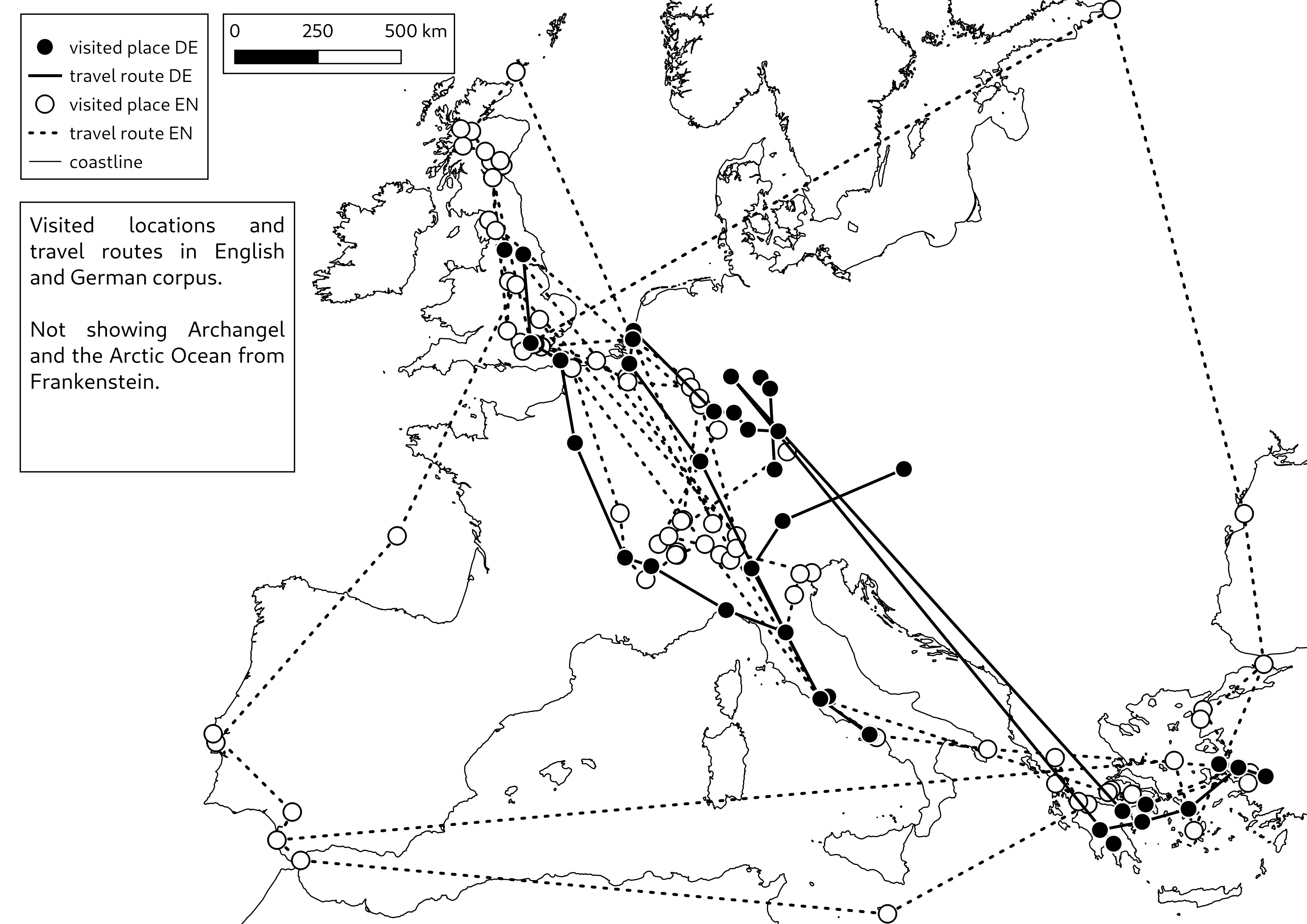
Asko Nivala is an Adjunct Professor and Collegium Researcher at the School of History, Culture and Arts Studies, University of Turku, where he serves as Senior Research Fellow in History and Archaeology at the Turku Institute for Advanced Studies (TIAS). He earned his PhD in Cultural History from the University of Turku in 2015 with a dissertation on Friedrich Schlegel's early Romantic philosophy of history. Nivala's research focuses on nineteenth-century Romanticism across Germany, the UK, and USA, with particular expertise in philosophy of history, spatial humanities, and digital methodologies. His scholarly work bridges traditional humanities with computational approaches, examining how spatial concepts operate in Romantic literature and thought. He has made significant contributions to understanding the spatial dimensions of Romantic narratives and conceptual frameworks. Currently (2022-2025), Nivala serves as Collegium Fellow at TIAS working on the project Artificial Intelligence Before Computers: The History of Romantic Computationalism (AICOM) and as Principal Investigator for the Atlas of Finnish Literature 1870-1940 project funded by the Alfred Kordelin Foundation. His methodological approach combines close reading with distant reading techniques, particularly in geospatial analysis of literary texts. Nivala has published extensively in his field, including the monograph The Romantic Idea of the Golden Age in Friedrich Schlegel's Philosophy of History (Routledge, 2017) and co-editing Travelling Notions of Culture in Early Nineteenth-Century Europe (Routledge, 2016). His recent publications demonstrate sophisticated integration of digital humanities methods with traditional literary scholarship, particularly in extracting geographical references from literature and analyzing conceptual change through computational linguistics. As an educator, Nivala supervises three doctoral students and delivers guest lectures. His scholarly network extends internationally, with collaborations across Europe and North America, reflecting the transnational nature of his research on Romanticism and digital humanities.
Associate Professor Liem Viet Ngo is a distinguished academic at UNSW Business School, University of New South Wales, Sydney, Australia. He serves as Editor-in-Chief of the Australasian Marketing Journal and has previously held significant administrative roles including Research Coordinator (2018-2019), Postgraduate Research Coordinator (2014-2017), and Postgraduate Coursework Coordinator (2010-2014). He is also a Member of the Advisory Board of Relationship Marketing for Impact at Griffith University. Dr. Ngo's educational background includes a PhD from the University of Newcastle, Australia, an MBA from the Asian Institute of Technology, Thailand, and a Bachelor of Engineering from HoChiMinh City University of Technology, Vietnam. His research focuses on human experience, theory of mind, attitude formation and change, persuasive communications, business ethics, value creation, and resources and capabilities management , applied to consumers, employees, managers, entrepreneurs, and organizations in marketing, branding, innovation, and entrepreneurship contexts. He employs survey research and experimentation methodologies in his work. The analysis of his recent publications (2022-2025) reveals a strong emphasis on contemporary marketing challenges including digital marketing ethics, AI applications in marketing, consumer well-being, sustainability in luxury markets, and cross-cultural consumer behavior. His work demonstrates a consistent integration of psychological principles with marketing theory, particularly in Asian contexts. Scientific Awards: Best Overall Conference Paper, ANZMAC 2019, Wellington, New Zealand Best Paper in Services Marketing Track, ANZMAC 2019, Wellington, New Zealand Honorary Doctor of Economics, University of Economics – HoChiMinh City, 2018 Best Paper in Services Marketing Track, ANZMAC 2015, Sydney Best Paper in Marketing Strategy Track, ANZMAC 2015, Sydney Outstanding Reviewer, Industrial Marketing Management Non-professorial Research Achievement Award, Australian School of Business Dr. Ngo has successfully supervised eight PhD students (five completed, one with revised thesis, two currently supervised), including Oanh Nguyen researching 'The Psychological Effects of Deprivation and Scarcity on Consumer Behaviors' and Widya Paramita studying 'The Ethical Chameleon: Exploring Frontline Employees' Problem-Solving Strategies Across Different Types of Ethical Issues.' His research has been supported by numerous grants from 2007-2020, including an ARC Discovery Grant. He is an active member of professional organizations including the American Marketing Association, Academy of Management, Australian Marketing Institute, ANZMAC, and ANZAM.
Alessandro Dal Palu' is an Associate Professor at the Department of Mathematical, Physical, and Computer Sciences at University of Parma. He holds a PhD in Computer Science from University of Udine and has been with University of Parma since 2005, transitioning from Researcher to Associate Professor in 2014. His teaching portfolio includes courses on Computer Architecture, Constraint Programming, and Algorithms & Data Structures. His research spans computational logic, bioinformatics, and GPU computing. Notable achievements include the 2007 GULP award for his Ph.D. thesis and the ICLP 2010 best paper award. He has led Italian INdAM-GNCS research projects on GPU applications (2011) and Logic Programming in cancer genomics (2016). Recent publications focus on explainable AI frameworks, bioinformatics applications, and sustainable logistics solutions. His work integrates Answer Set Programming with biomedical challenges like protein structure analysis and cancer genome evolution. He chairs the International Conference on Logic Programming (ICLP 2018) and has organized multiple international workshops on constraint programming. 2007 GULP Award ICLP 2010 Best Paper PI for INdAM-GNCS projects (2011, 2016) Program Committee member for international conferences
Prof. Dr. Tolga Ovatman is a faculty member at the Department of Computer Engineering, Istanbul Technical University , where he has been serving as Head of Department since 2024. His academic career spans roles from Research Assistant (2004-2012) to Associate Professor (2019-2023) and full Professor (2023-present). He previously held administrative roles such as Vice Dean (2018-2022) and Deputy Head of Department (2016-2018). PhD in Computer Engineering (2005-2011) MS in Computer Engineering (2003-2005) BSc from Hacettepe University (1999-2003) His research focuses on model checking , replicated state machines , cloud computing , and object-oriented software . Recent work addresses computation offloading in 6G networks , collaborative text editing data structures , and energy-efficient environmental monitoring systems . Key projects led include Design of a Multiplexed State Machine Storage System for Edge Computing (2022-2024) and Microservice Compatible Symphony Infrastructure Research (2020). He has supervised numerous theses on topics ranging from collaborative text editing to AI applications in watershed management . Publications span IEEE Transactions , Springer , and conferences like CSCE and CLOSER .
Frank Puppe is a Full Professor of Computer Science at the University of Würzburg, Germany, where he holds the Chair of Computer Science VI (Artificial Intelligence and Applied Computer Science) within the Faculty of Mathematics and Computer Science. He is also affiliated with the Center for Artificial Intelligence and Data Science (CAIDAS) and leads research in artificial intelligence, knowledge systems, and applied computer science. His educational background includes a Diploma in Computer Science from Bonn University (1983), a dissertation on Diagnostic Problem Solving from Kaiserslautern University (1986), and a habilitation on Problem Solving with Expert Systems from Karlsruhe University (1991). Professor Puppe's research spans multiple domains of artificial intelligence and its applications. His primary focus areas include Medical Image Analysis , where he develops AI systems for endoscopic disease detection and medical information extraction; Document Analysis and OCR , with significant contributions to processing historical documents and musical manuscripts; and Information Extraction from diverse domains including medical, legal, and literary texts. His work in E-Learning and E-Assessment has led to innovative systems for automatically evaluating programming assignments and argumentation structures. His recent publications demonstrate a strong interdisciplinary approach, bridging computer science with medicine, digital humanities, and law. A notable trend is the application of deep learning techniques to historical document analysis and medical imaging, while maintaining a strong foundation in knowledge-based systems. His research consistently focuses on practical applications of AI that solve real-world problems across multiple domains. 2015-2017: Senator at University of Würzburg 2011-2013: Dean at University of Würzburg 2008-2011: Dean of Students at University of Würzburg Professor Puppe leads multiple significant research projects including KINERGY (optimization of heating systems), DZ-PTM (order entry optimization in radiology), Corpus Monodicum (edition of medieval Latin music), and projects related to adenoma detection in colonoscopy. His laboratory develops tools such as OCR4all for historical document processing and it4all for programming assessment.