معرفی
Asko Nivala is an Adjunct Professor and Collegium Researcher at the School of History, Culture and Arts Studies, University of Turku, where he serves as Senior Research Fellow in History and Archaeology at the Turku Institute for Advanced Studies (TIAS). He earned his PhD in Cultural History from the University of Turku in 2015 with a dissertation on Friedrich Schlegel's early Romantic philosophy of history.
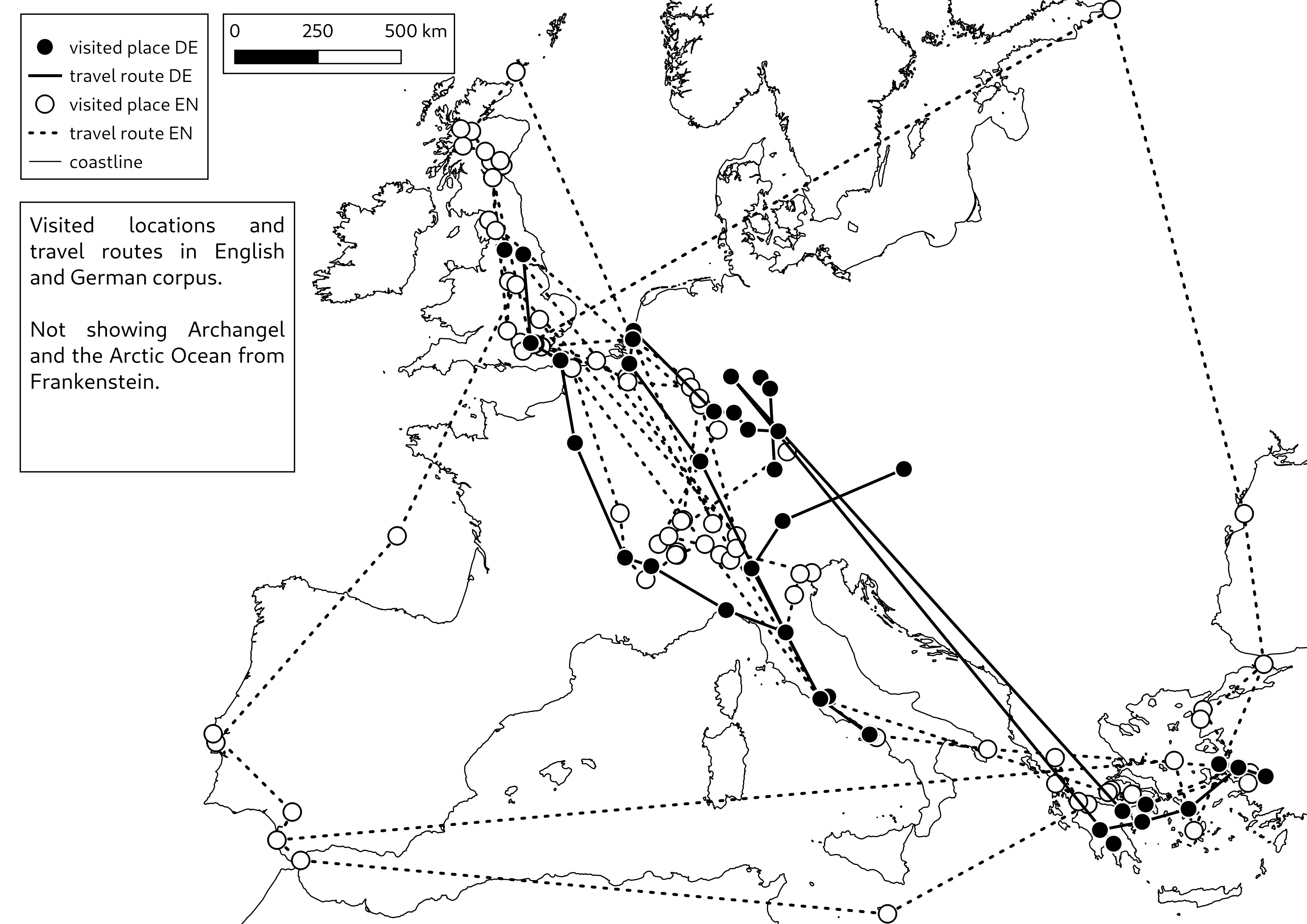
Nivala's research focuses on nineteenth-century Romanticism across Germany, the UK, and USA, with particular expertise in philosophy of history, spatial humanities, and digital methodologies. His scholarly work bridges traditional humanities with computational approaches, examining how spatial concepts operate in Romantic literature and thought. He has made significant contributions to understanding the spatial dimensions of Romantic narratives and conceptual frameworks.
Currently (2022-2025), Nivala serves as Collegium Fellow at TIAS working on the project Artificial Intelligence Before Computers: The History of Romantic Computationalism (AICOM) and as Principal Investigator for the Atlas of Finnish Literature 1870-1940 project funded by the Alfred Kordelin Foundation. His methodological approach combines close reading with distant reading techniques, particularly in geospatial analysis of literary texts.
Nivala has published extensively in his field, including the monograph The Romantic Idea of the Golden Age in Friedrich Schlegel's Philosophy of History (Routledge, 2017) and co-editing Travelling Notions of Culture in Early Nineteenth-Century Europe (Routledge, 2016). His recent publications demonstrate sophisticated integration of digital humanities methods with traditional literary scholarship, particularly in extracting geographical references from literature and analyzing conceptual change through computational linguistics.
As an educator, Nivala supervises three doctoral students and delivers guest lectures. His scholarly network extends internationally, with collaborations across Europe and North America, reflecting the transnational nature of his research on Romanticism and digital humanities.