Professor Grant Mills is the Faculty Lead for Health at University College London's Bartlett School of Sustainable Construction. His research focuses on advanced healthcare infrastructure delivery, interdisciplinary design, and project management, with funding from EPSRC, ESRC, NIHR, and international bodies. He leads initiatives like Project HERCULES and explores topics such as digital twins, BIM adoption, and modular healthcare design. Education: PhD from Loughborough University (2013), Master of Science from De Montfort University (2001). Previous roles include Senior Lecturer and Lecturer at UCL, and Senior Research Associate at Loughborough University. Research Interests: Healthcare infrastructure innovation, sustainable construction, BIM implementation challenges, modular design, and governance frameworks for large projects. His work addresses healthcare facility adaptability, AI integration in emergency departments, and post-pandemic healthcare systems. Grants & Funding: Department of Health, European Investment Bank, WHO, and EPSRC grants. Active in megaproject collaborations and strategic asset management for NHS infrastructure. Lab/Teams: Leads Bartlett Health-related research groups, collaborating with global institutions on healthcare infrastructure projects and digital twin applications.
Damon L. Woodard is a Professor in the Department of Electrical and Computer Engineering at the University of Florida (UF) and serves as Director of the Florida Institute for National Security (FINS) and the Applied Artificial Intelligence (AAI) Group. His research focuses on applied artificial intelligence, hardware security, and biometrics, with particular emphasis on adversarial AI, AI-enabled hardware assurance, and explainable AI (XAI). He holds IEEE and ACM Senior Member status and is a Kavli Frontiers Fellow. Education: Ph.D. in Computer Science and Engineering, University of Notre Dame M.E. in Computer Science and Engineering, Penn State University B.S. in Computer Science and Computer Information Systems, Tulane University Research Interests: Dr. Woodard explores cutting-edge areas such as AI hardware acceleration, multi-modal AI systems, and counter-AI strategies. His work bridges cognitive science and technology through projects like text stylometry and psychological analysis frameworks. Key focus areas include semiconductor reverse engineering, hardware trojan detection via SEM imaging and machine learning, and secure IoT biometric systems. Highlighted Awards: National Academy of Science Kavli Frontiers Fellow IEEE Senior Member ACM Senior Member AAAI Membership Leadership & Contributions: As FINS Director, he oversees national security initiatives integrating AI and hardware assurance. His AAI Group develops resource-efficient AI solutions for constrained environments. Notable projects include the SECURE segmentation metric for IC reverse engineering and the MaGNIFIES GAN framework for electronic system inspection. Labs & Teams: Leads the Applied Artificial Intelligence Group and collaborates across disciplines through FINS, fostering innovation in AI-driven security and semiconductor integrity.
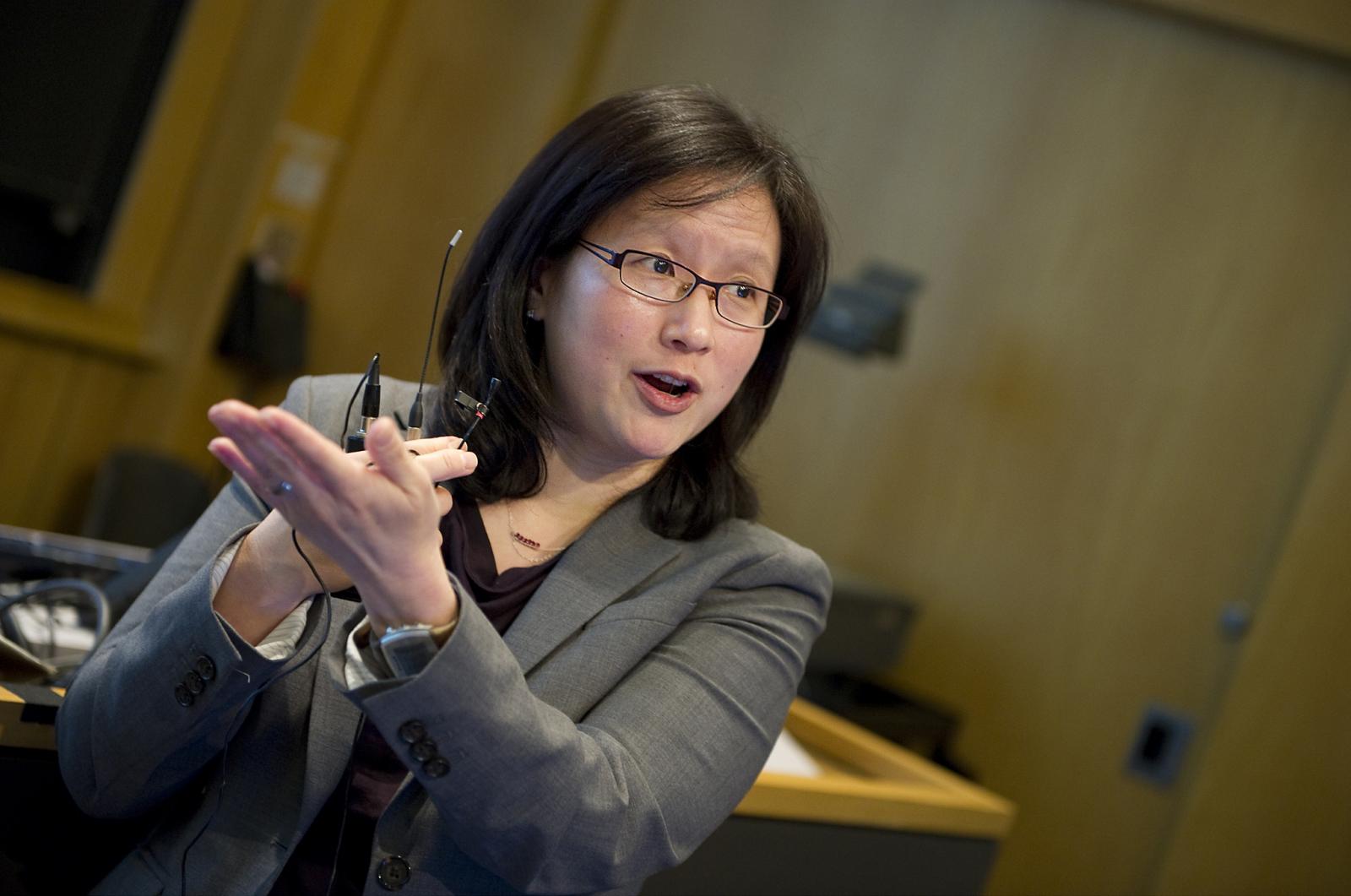
Maria Yang is a Professor and the William E. Leonhard Professor/Interim Dean of the School of Engineering at the Massachusetts Institute of Technology (MIT), affiliated with the Department of Mechanical Engineering. Her research focuses on early stage design processes , design methods , and system-level engineering design , with applications spanning consumer products, complex systems, and sustainable technologies. Educational Background: B.Sc., MIT (1991) M.Sc., Stanford University (1994) Ph.D., Stanford University (2000) Yang's research explores the theoretical foundations of design , emphasizing sketching , prototyping , and design cognition . Her work addresses global challenges in sustainability , emerging markets , and human-computer interaction , as demonstrated by collaborations with NASA, IBM, and Ferrari. Recent publications highlight trends in design-by-analogy , 3D printing of transparent glass , and information flow in complex systems . Her research bridges mechanical engineering , bioengineering , and computational design . Scientific Awards: 2024 ASME Design Theory and Methodology Award 2024 ASME Design Theory and Methodology Best Paper Award 2017 MacVicar Faculty Fellow 2016 Bose Excellence in Teaching Award 2014 ASEE Fred Merryfield Design Award 2013 ASME Fellow Yang mentors students through courses like 2.00B Toy Product Design and 2.009 Product Engineering Processes , and leads the MIT Ideation Laboratory , which investigates transformational design strategies for global competitiveness and sustainability.
Prof. Dongheui Lee is a Full Professor at TU Wien's Institute of Computer Technology, Faculty of Electrical Engineering and Information Technology, and leads the Human-centered Assistive Robotics Group at the German Aerospace Center (DLR). She holds a PhD from the University of Tokyo (2007) and has held academic roles at Technical University of Munich (TUM), the University of Tokyo, and KIST. Her research focuses on human-robot interaction, assistive robotics, and machine learning applications in robotics. Education: PhD, Information Science and Technology, University of Tokyo, 2007 MS, Kyung Hee University, 2003 Research Interests: Her work spans human motion understanding, assistive robotics, human-robot collaboration, and control systems. Key areas include robotic balance assistance, motion imitation, and safety-aware robotics. She has pioneered methods for light touch support in human-robot interaction and developed frameworks for dynamic task execution. Recent Trends in Publications: Recent work emphasizes variable stiffness control, motion retargeting, and multimodal anomaly detection. Publications highlight advancements in assistive robotics, human motion prediction, and reinforcement learning for locomotion. Articles often integrate robotics with machine learning to improve safety and adaptability in human-robot systems. Awards: Carl von Linde Fellowship (TUM Institute for Advanced Study, 2011) Helmholtz professorship prize (2015) Best Intelligence Paper Award (2024) Projects & Grants: Leads projects like LunarAssembly (robotic assembly on the Moon) and INVERSE (interactive robots through reasoning). Funded initiatives include EU Horizon, BMBF, and industry collaborations. Coordinates teams for projects like PERSEO (service-oriented robotics) and SOLAR (body representation studies). Labs/Teams: Directs the Human-centered Assistive Robotics Group at DLR and collaborates with TU Wien's Autonomous Systems unit. Her teams focus on real-world applications in healthcare, manufacturing, and human-centered robotics.
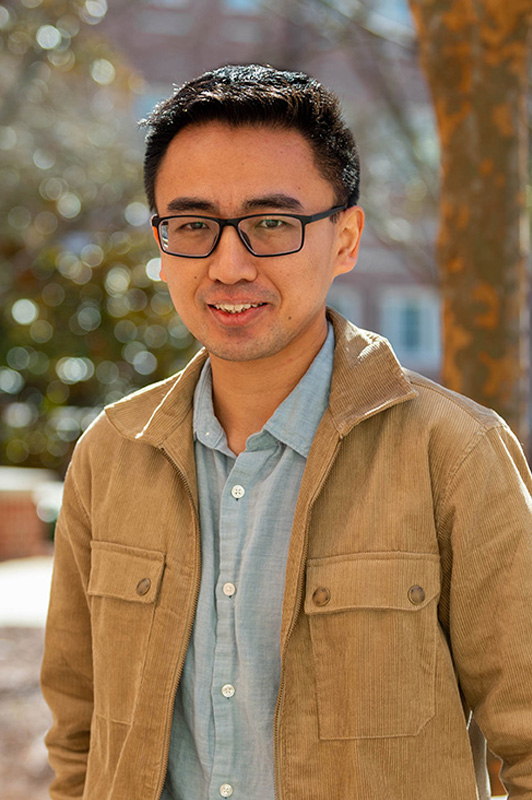
Dr. Budi Zhao is a Lecturer/Assistant Professor in the School of Civil Engineering at University College Dublin since August 2020. He holds a PhD from City University of Hong Kong (2017) and has held academic positions at Imperial College London (Research Associate, 2019–2020) and King Abdullah University of Science and Technology (Postdoctoral Fellow, 2017–2019). His research focuses on multi-physics processes in soil and rock, employing advanced techniques like X-ray micro-tomography (μCT), microfluidics, and numerical modeling (e.g., DEM and CFD-DEM). Key areas include crushable sands, desiccation cracking, fines migration, and energy geotechnics. He serves on ISSMGE committees TC105 and TC308, and is a member of the editorial board of the Journal of Rock Mechanics and Geotechnical Engineering . His research outputs span topics such as 3D printed composites, microplastic transport, and internal erosion mechanisms. Notable projects include grants on multi-scale analysis of clays and salt precipitation effects. Dr. Zhao coordinates modules like Geotechnical Engineering and Soil Mechanics at UCD, emphasizing innovative teaching methods like flipped classrooms. His work bridges fundamental science and engineering applications, with a focus on sustainable geotechnical solutions. Education: PhD (City University of Hong Kong, 2017), B.Eng (Chongqing University), Professional Certificate in University Teaching (UCD). Grants: Includes funding for offshore wind energy anchors and carbon geological storage projects. Advising: Supervises multiple PhD students in geomechanics and energy geotechnics. Labs/Teams: Leads research using state-of-the-art facilities for μCT imaging and microfluidics.
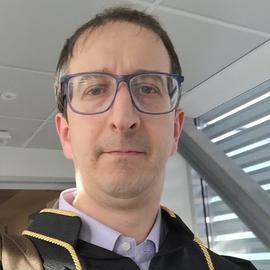
Luca Di Gaspero is an Associate Professor of Information Technology at the University of Udine, specializing in metaheuristic optimization techniques. His research enhances combinatorial optimization through hybridization of algorithms for scheduling, routing, and industrial applications. Research spans artificial intelligence in optimization, scheduling algorithms for manufacturing/healthcare, and metaheuristic framework development. Recent publications focus on LLMs in optimization, parallel batch scheduling, and energy-efficient manufacturing. Key Contributions: Developed EasyLocal++ framework for local search algorithms Advanced multi-neighborhood simulated annealing techniques Applied metaheuristics to healthcare logistics and emergency services
Yazhou Tu is an Assistant Professor in the Department of Computer Science and Software Engineering at Auburn University. He specializes in Cyber-Physical System Security, Side Channel Analysis, and Privacy in embedded systems. His work focuses on addressing vulnerabilities in sensors, actuators, and IoT devices to enhance security and privacy in critical systems. Education: Ph.D. Computer Science, University of Louisiana at Lafayette M.S. Software Engineering, Tsinghua University B.S. Software Engineering, Wuhan University Research Interests: Dr. Tu’s research explores cutting-edge topics such as adversarial control of embedded systems, acoustic and magnetic side-channel attacks, and privacy risks in robotic and biomedical systems. He develops novel defense mechanisms like ADC-Bank and Transduction Shield to counteract physical signal injection attacks. Key Contributions: His work spans sensor security, IoT exploitation, and healthcare technology, with notable studies on 3D printer IP theft, vehicle control via smart glasses, and keystroke tracking via audio. He also investigates physics-informed ML for porous media and glucose monitoring systems. Awards & Grants: No specific awards or grants listed in the provided data, but his prolific publication record highlights sustained research excellence. Labs & Collaborations: Engaged in Auburn’s Center for Artificial Intelligence and Cybersecurity Engineering and other interdisciplinary initiatives focused on secure embedded systems and cyber-physical infrastructure.
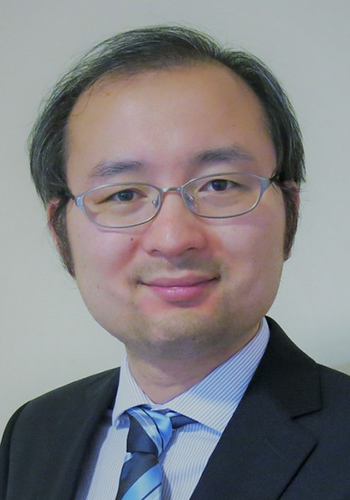
Dr. Bin Hu is an Assistant Professor in the Department of Engineering Technology at the University of Houston (2022–present) and previously held the same position at Old Dominion University (2019–2022). He earned a Ph.D. in Electrical Engineering from the University of Notre Dame (2016), an M.S. in Control Science from Zhejiang University (2010), and a B.S. in Electrical Engineering from Hefei University of Technology (2007). His research focuses on resilient Cyber-Physical Systems (CPS), AI-human collaboration safety, machine learning-driven control, and vehicular networks. Key projects include NASA-funded work on adaptive human-autonomy responsibility allocation (2023–2026) and NSF-supported AI-human collaboration in autonomous vehicles (2020–2023). He has secured over $1.2 million in grants, including a $700k NASA grant (pending) and an ONR Rapid Solutions grant ($42k). Dr. Hu’s work bridges control theory, machine learning, and human factors. Recent contributions include safer leader-follower robotic systems, fault-tolerant UAV control, and studies on driver trust in AI-driven vehicles. His research has been recognized through awards like the 2024–2025 APeX Excellence Speaker Series. Teaching experience includes courses on C++ programming and electrical engineering fundamentals at both the University of Houston and Old Dominion University. He advises multiple undergraduate and graduate students in projects ranging from LiDAR systems to cyber-physical security. Key Labs/Teams : NAIL Lab (Networked Autonomous Intelligence & Learning), part of the University of Houston’s Cybersecurity and Robotics initiatives. Grants : NASA TTT Grant ($700k), NSF CHS Grant ($500k), ONR RSLP Project ($42k).
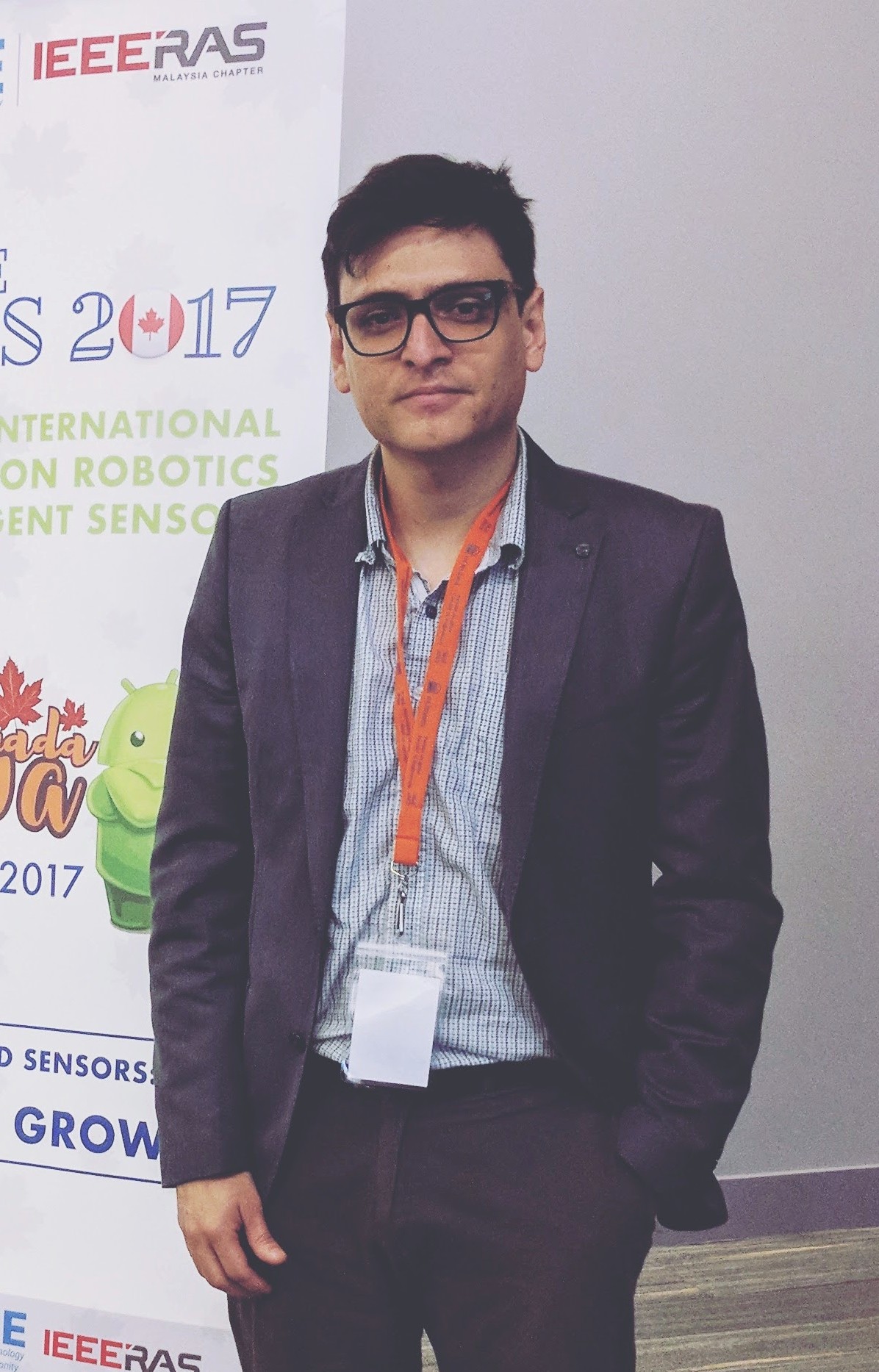
Vinicius Prado da Fonseca is an Assistant Professor in the Department of Computer Science at Memorial University of Newfoundland. His research focuses on advanced robotics, tactile sensing technologies, and human-robot interaction. His work integrates machine learning and artificial intelligence to improve robotic manipulation, prosthetic control, and haptic interfaces. Education background includes: Ph.D. in Electrical and Computer Engineering from University of Ottawa (2020) M.Sc. in Systems and Computing from Military Institute of Engineering, Brazil (2013) B.Sc. in Computer Science from Federal University of Tocantins, Brazil (2010) Research interests emphasize tactile perception systems, compliant robotic grippers, and bio-inspired sensor modules. Notable contributions include the BioIn-Tacto tactile sensing framework and studies on myoelectric control for upper-limb prosthetics. His work bridges theoretical machine learning with practical robotics applications in manufacturing, healthcare, and assistive technologies. Publications span over 30 peer-reviewed articles focusing on tactile datasets, sensor design, and robotic control algorithms. Recent trends show increasing emphasis on multimodal data fusion, active learning for sensor optimization, and human-centric robotics applications. Currently no listed scientific awards or grants, but maintains active collaborations in prosthetic development and industrial automation projects.
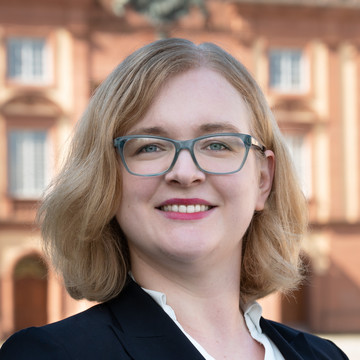
Prof. Dr. Jana-Rebecca Rehse serves as Assistant Professor for Management Analytics at the University of Mannheim Business School, where she leads the Chair of Management Analytics within the Information Systems department. Her academic work bridges theoretical research with practical business applications, focusing on data-driven approaches to business process optimization. Her primary research interests encompass User Behavior Mining , Process Mining , and AI applications in business process management . Rehse investigates how organizations can leverage process mining techniques to extract meaningful insights from event logs, with particular attention to conformance checking, process resilience assessment, and the practical implementation challenges businesses face when adopting these technologies. Her work frequently addresses the intersection of human behavior and process execution, examining how user interactions with IT systems can be analyzed to improve process design and user experience. Analysis of her recent publications reveals a clear research trajectory toward increasingly sophisticated integration of artificial intelligence with traditional process mining techniques. Starting with foundational work on reference model mining and process discovery methodology, her research has evolved to address cutting-edge applications of generative AI, explainable AI, and predictive analytics in business process contexts. The majority of her work appears in top-tier information systems and business process management journals including Information Systems, Process Science, and ACM Transactions publications, demonstrating her significant contributions to the field. Professor Rehse actively collaborates with industry partners including Siemens and MEHRWERK, offering thesis opportunities and research projects that address real-world business challenges. Her current call for applications includes work-study programs at Siemens and master thesis topics focused on conformance checking in cooperation with MEHRWERK. She has recently introduced innovative thesis topics exploring the use of Generative AI for Emotion Identification, reflecting her forward-looking research agenda that anticipates emerging technological trends and their business implications.
Dr. Amara Cynthia Ajaegbu is a Senior Teaching Fellow in the Operations and Information Management Department at Aston Business School (Aston University). Her expertise spans technology innovation, servitisation in manufacturing, and digital transformation. She holds a PhD in Digitalisation, IoT, Servitisation, and Value Co-Creation from Aston University (2019). Education: BSc. Business Information Systems MSc. Information Systems and Business Analysis PhD: The role and impact of digital capabilities on value co-creation of servitising organisations (Aston University) Her research focuses on AI, IoT, data sharing, and servitisation's impact on value creation. She is a Senior Fellow of the UK Higher Education Academy (SFHEA) and actively contributes to teaching enterprise systems, digital transformation, and technology management. Awards: 2017 Mentor of the year award Her grants include projects on hybrid learning environments using game-based methods. She supervises PhD topics on ERP systems in digital transformation and supply chain resilience. Amara is involved with professional bodies like the British Academy of Management and British Computer Society.
Dr. Farheen Javed is a Lecturer in Management at Murdoch Business School, Murdoch University, Australia. She holds a Doctor of Business Administration (2019), Master of Philosophy (2016), and Bachelor of Business Administration (2012). Her research focuses on Corporate Social Responsibility (CSR), Human Resource Management (HRM), and employee-related outcomes such as behaviors, attitudes, and engagement. She has published 14 articles in high-impact journals, including five in Quartile 1 publications, with over 1700 citations. Her work explores CSR perceptions, green HRM, leadership roles in innovation, and cultural intelligence effects on workplace behavior. Dr. Javed serves on Murdoch University's Student Appeals Committee and reviews for international journals. She has received the Murdoch International Postgraduate Scholarship (2019–2023). Her research themes include environmental citizenship behaviors, leadership-environmental linkages, and cross-cultural employee dynamics. Her articles analyze CSR-employee behavior connections, innovative work behavior drivers, and HR policies in SMEs and agricultural sectors. Education: Doctor of Business Administration, Murdoch University (2019) Master of Philosophy (MPhil), National College of Business Administration & Economics (2016) Bachelor of Business Administration, University of South Asia (2012) Her research bridges HRM strategies with organizational sustainability, emphasizing employee perceptions of CSR initiatives and leadership roles in fostering environmentally conscious behaviors. She has explored knowledge-sharing mechanisms in education sectors and CRM's role in customer loyalty. Dr. Javed's work often employs advanced quantitative methods, contributing to both theoretical and practical HRM frameworks.
Dr. Yingyan Zeng is an Assistant Professor at the Department of Mechanical and Materials Engineering, University of Cincinnati, leading the Data-Centric Intelligence Lab. Her research focuses on creating data quality assurance paradigms to enhance AI modeling performance in Manufacturing Industrial Internet and Healthcare Systems. Ph.D. in Industrial and Systems Engineering, Virginia Tech (2024) M.S. in Computer Engineering, Virginia Tech (2024) B.Eng. in Industrial and Systems Engineering, Shanghai Jiao Tong University (2019) Her work spans data generation, acquisition, valuation, and sharing, with applications in additive manufacturing, bio-manufacturing, semiconducting, and IoT infrastructure design. She employs statistical and machine learning models, optimization methods, and interpretable AI techniques. Key trends in her publications include data-centric AI, privacy-preserving frameworks, synthetic data generation, and reinforcement learning in manufacturing. Her research often integrates domain knowledge and addresses challenges in industrial cyber-physical systems. 2022 Finalist, QSR Best Paper Competition (INFORMS Annual Meeting) She has secured industry grants, such as the MME Industry 4.0/5.0 Institute project on AI-driven reinforcement learning for factory operations. Her service roles include VP Marketing and Finance at the INFORMS VT Student Chapter and membership in IEEE Technical Committees.
Joel E. Cohen is the Abby Rockefeller Mauzé Professor at The Rockefeller University, where he leads the Laboratory of Populations. With over five decades of research experience, Cohen has pioneered innovative mathematical approaches to study biological populations and variability. His work bridges mathematics, biology, and environmental science, fundamentally changing how scientists understand population dynamics and the significance of biological variability. Dr. Cohen's research focuses on developing new mathematical tools to address population problems in demography, epidemiology, and ecology. He has made seminal contributions to the understanding of heavy-tailed distributions that describe extreme events like hurricanes and disease outbreaks, challenging traditional statistical approaches. His laboratory has conducted groundbreaking research on the spatial distribution of human populations in relation to geophysical factors, with unexpected practical applications ranging from soap formulation to semiconductor manufacturing. Cohen has also developed mathematical models for Chagas disease control in rural Argentina and created algorithms to predict international migration patterns. Analysis of Cohen's recent publications reveals a sustained focus on Taylor's law of fluctuation scaling, population dynamics, and ecological statistics. His work consistently demonstrates how abstract mathematical concepts can transform our understanding of biological systems, from cellular processes to global population trends. The research spans theoretical mathematics to practical applications in disease control, conservation biology, and environmental management. Olivia Schieffelin Nordberg Prize for excellence in writing in the population sciences (March 1997) Gheorghe Lazar Prize of Romanian Academy (December 2000) As director of the Laboratory of Populations, Cohen has led research on human population growth, infectious diseases, food webs, and international migration. His methods for assessing the uncertainty of population projections have been applied in court cases for predicting future claimants of asbestos-related diseases. Cohen's laboratory has collaborated with the United Nations Population Division on migration studies and developed mathematical models that account for more than half of the variability in annual migration numbers among 229 countries. Current research directions include understanding how demographic, economic, and cultural changes interact with Earth's physical, chemical, and biological environments. The Laboratory of Populations employs a multidisciplinary approach that combines mathematical modeling, statistical analysis, and field studies to address complex population issues. Their work exemplifies how basic quantitative research on populations frequently yields unexpected practical applications, demonstrating the profound connections between theoretical mathematics and real-world challenges in public health, environmental science, and resource management.
Dr. Saptarshi Sengupta is an Assistant Professor in the Department of Computer Science at San José State University (SJSU), leading the Machine Intelligence and Complex Systems (MICoSys) Lab. He advises the ACM student club at SJSU and holds a 'Alien of Extraordinary Ability' visa (Einstein Visa) from USCIS. His work focuses on resilient cyber-physical systems, risk analysis, and deep learning applications in healthcare and industrial systems. Education: Ph.D. in Electrical Engineering, Vanderbilt University M.S. in Electrical Engineering, Vanderbilt University B.Tech. in Electronics & Communication Engineering, West Bengal University of Technology Research Interests: Cyber-Physical Systems Security Healthcare AI for Cancer and Chronic Disease Prediction Battery Prognostics and Energy Systems Machine Learning for Complex Systems Analysis Key Achievements: Dr. T.M.A. Pai Gold Medal Award for Healthcare AI contributions Recipient of multiple best paper awards at international conferences Author of over 30 peer-reviewed publications Labs & Teams: Leads the MICoSys Lab, developing AI solutions for healthcare diagnostics, industrial prognostics, and smart infrastructure systems. Collaborations include interdisciplinary projects with biomedical and engineering domains.