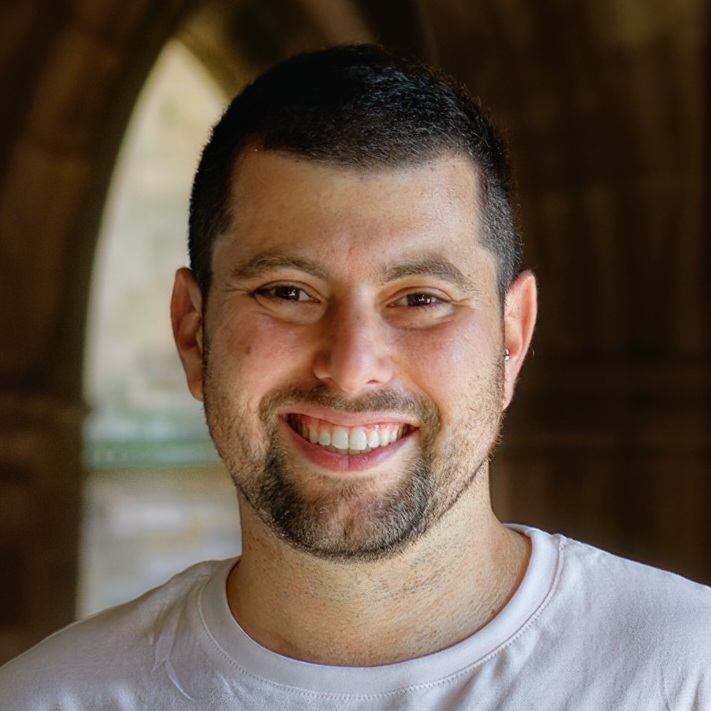
Associate Professor Luke Houghton is based at Griffith University’s Griffith Business School, specifically within the Department of Management. He holds roles including Academic Director of Executive Education and Director of the Digital Transformation Cluster. His work focuses on digital transformation, complex problem-solving, and professional education. He has over 120 publications and has supervised 22+ higher degree students. Education: PhD (University of New England), MBA and Bachelor of Business (University of the Sunshine Coast). Professional certification: Senior Fellow of the Higher Education Academy. Research interests span digital transformation strategies, organizational problem-solving in ambiguous contexts, and the ethical adoption of AI/digital tools. His funded projects include studies on AI in healthcare, aviation innovation, and Pacific digital economies. He advises organizations on scaling digital initiatives and building innovative cultures. Key grants include NHMRC-funded work on AI in medical imaging and UNCTAD research on Pacific digital economies. He is editor for Information Technology and People and affiliated with the Centre for Work, Organisation and Wellbeing. Teaching includes courses on managerial problem-solving, data analysis, and sustainability leadership. He designs executive education programs for businesses and governments.
David Missirian is an Associate Professor in the Law Department at Bentley University , specializing in business law, contracts, and U.C.C. He teaches Tax Law, Real Estate Law, Contract Law, U.C.C., and Ethics, and has a particular interest in introducing freshmen to legal theory. Research Focus : Marginalized groups, Public Policy, Constitutional Law, Real Estate Law, Contract Law, and Indigenous Peoples Law. Professional Role : Massachusetts state-certified real estate licensing instructor, title examiner, and conveyancing attorney. Research Trends : His work bridges real estate law, indigenous sovereignty, and ethical implications of technology and corporate practices. Recent publications emphasize legislative reform, cultural preservation, and aligning legal frameworks with modern societal challenges. Consulting Practice : Focuses on real estate law from residential and lending perspectives, serving as a conveyancing attorney and legal consultant for lenders.
Mark MCLAUGHLIN is an Assistant Professor of Law (Research) at the Yong Pung How School of Law, Singapore Management University (SMU). His research focuses on International Investment Law, Arbitration, and the Belt and Road Initiative. He holds a Ph.D. in International Law from the China University of Political Science and Law (2019), a PgD in International Law from the University of Glasgow (2016), and an LL.B. (Honours) from the University of Glasgow (2014). His work examines issues such as state-owned enterprises, investor-state mediation, and the intersection of law and technology in global investment frameworks. He teaches courses on Foreign Investment Law in Asia and Dispute Resolution Advocacy at SMU. His research has been presented at international conferences, including the CIBEL Global Network Conference and the Asian Society of International Law Conference. He has also conducted training programs for the United Nations Commission on International Trade Law (UNCITRAL) and the Singapore Cooperation Programme.
Dr. Matilde Lucheschi is an Assistant Professor in Marketing (Strategy and Marketing) at the University of Sussex Business School. Her research focuses on prosocial behavior, particularly morality in charitable giving and societal challenges like gender equality. She holds a PhD in Marketing from City University London and prior degrees from Bocconi University. Her work bridges behavioral science and marketing strategy to inform social impact. **Education:** BSc in Management and Economics for Arts, Culture and Communication (Bocconi University, 2008-2011) MSc in Marketing Management (Bocconi University, 2011-2014) PhD in Management (Marketing) (City University London, 2016-2022) **Research Interests:** Explores how individuals and organizations can maximize social impact through giving and policy. Key areas include: Morality and sustainable charitable giving Social change mechanisms (e.g., gender stereotypes) Consumer well-being and ethical decision-making **Grants & Collaborations:** Currently leads a grant exploring university spin-offs' B2B product advantages (2024-2025). Co-authored studies presented at SCP, ACR, and La Londe conferences. Engaged in journal reviewing for Journal of Advertising , Psychology and Marketing , and others. **Teaching:** Teaches Marketing Management, Consumer Behaviour, and International Marketing at both undergraduate and postgraduate levels. **Impact Activities:** Organized the 'Wellbeing@Sussex' conference and contributed to refugee support initiatives through entrepreneurship programs.
Dr. Lisa Dive is a Senior Lecturer in Genetic Counselling at the University of Technology Sydney's Graduate School of Health, where she teaches in the Master of Genetic Counselling program. Her research focuses on ethical considerations in genetics and genomics, particularly in reproductive health, public health, and clinical care intersections. Prior to joining UTS, she contributed to Mackenzie's Mission as a Postdoctoral Research Fellow in Bioethics at the University of Sydney, investigating large-scale reproductive genetic carrier screening across Australia. Dr. Dive holds an MPhil in Medicine (Bioethics) and PhD in Philosophy from the University of Sydney. Her research applies philosophical frameworks to resolve practical ethical challenges in healthcare contexts, specializing in genetic technologies and their societal implications. She has extensive experience developing ethical guidelines for clinical genomics and carrier screening programs. Her research elucidates normative concepts in bioethics through empirical studies of reproductive decision-making and screening implementation. Recent work examines severity assessment frameworks in carrier screening programs and ethical preparedness in genomic laboratories. Publications demonstrate consistent focus on justice considerations in information disclosure, stakeholder engagement models, and policy development for emerging genetic technologies.
Bill Tomlinson is a Professor of Informatics and Education at the University of California, Irvine (UCI), and a researcher at the California Institute for Telecommunications and Information Technology (Calit2). His work bridges artificial intelligence, ICT for sustainability, and environmental policy, focusing on leveraging technology to address global ecological challenges. He authored *Greening through IT* (MIT Press, 2010), which examines how information technology can enable sustainable practices, and has published over 100 academic works across computing, education, and sustainability. Education: A.B. in Biology (Harvard College), M.F.A. in Experimental Animation (CalArts), and S.M./Ph.D. in Media Arts & Sciences (MIT). Professional service includes roles on the EPA’s Board of Scientific Counselors (2014–2017) and as a Sloan Research Fellow (2008). His research spans sustainable food systems (e.g., the Plant Guild Composer tool), AI ethics, and legal frameworks for technology governance. Key research interests include computational sustainability, AI’s environmental impact, and interdisciplinary approaches to ecological challenges. Recent work explores AI certification systems, biodiversity law frameworks, and educational tools for fostering systems thinking. His projects often integrate technical innovation with policy design, such as simulations modeling corporate governance reforms or climate policy. Scientific awards include the NSF CAREER Award (2007) and recognition from major media outlets (e.g., *Wall Street Journal*, BBC). His grants and collaborations emphasize real-world impact, such as designing equitable energy systems or analyzing AI’s role in environmental decision-making. Bill co-founded initiatives like *SAGE Community Coordinator* and *Collapse Informatics*, which use participatory simulations to engage communities in sustainability challenges. He teaches courses on global disruption and technology’s societal role, emphasizing ethical and ecological responsibility.
Dr. Aditya Shrikhande is a Researcher at the University of Sheffield's School of Electrical and Electronic Engineering. His role focuses on enhancing the autonomy of swarms of UAVs through computer vision technologies. He is affiliated with the Amy Johnson Building in Sheffield, S1 3JD. Research interests center on advanced robotics, swarm coordination, and computer vision applications in autonomous systems. Despite no explicitly listed publications or awards, his work contributes to cutting-edge developments in UAV autonomy and swarm intelligence. No grants, advising details, or lab affiliations are detailed in the provided text.
Sonja Rispens is an Associate Professor at Eindhoven University of Technology (TU/e), affiliated with the Department of Human Performance Management and the EAISI Health initiative. She holds a PhD in Social and Organizational Psychology from Leiden University and previously worked at Leiden University and the University of Twente. Her research focuses on organizational culture, leadership, conflict management, and collaborative processes in the evolving workplace. She explores how technological advancements and societal challenges impact collaboration, aiming to develop interventions for future work environments. Key research interests include team dynamics, conflict resolution, and the integration of human-robot interaction in workplaces. She has contributed to over 70 publications and received awards such as the IACM Outstanding Published Article Award (2012) and the Negotiation and Conflict Management Research Article of the Year Award (2017). She serves on editorial boards for journals like Group Dynamics and Negotiation and Conflict Management Research . Recent projects include studies on resilient manufacturing systems (2023–2025), human-robot interaction (2022–2025), and ethical considerations in automation (2018–2021). Her work aligns with UN Sustainable Development Goals, particularly addressing decent work and innovation. Awards include recognition for contributions to conflict management research and interventions. She teaches courses on team dynamics, performance enhancement, and board management, reflecting her focus on practical applications of her research.
Chao Zhang is an Assistant Professor in Human-Centered AI at the Human-Technology Interaction group, Eindhoven University of Technology. His research bridges psychology and technology through data-driven methods and psychological theories, focusing on behavior change, AI-human dynamics, and trustworthy systems. MSc in Human-Technology Interaction (TU/e) PhD in Intelligent Systems (TU/e, 2019) Postdoc at Utrecht University Research interests span Human-Centered AI , Explainable AI , and Behavioral Data Science . Key contributions include: Integrating psychological principles with machine learning Modeling longitudinal behavioral data Developing interpretable AI systems for lifestyle interventions Investigating social characteristics in AI-driven environments Current work includes the ENFIELD project on Trustworthy Green AI. Scientific contributions appear in CHI Conference , arXiv , and International Journal of Social Robotics . Recognized with a TU/e PhD Thesis Award nomination in 2021.
Jesse Benjamin is Assistant Professor in Industrial Design at Eindhoven University of Technology, affiliated with EAISI (Eindhoven Artificial Intelligence Systems Institute). His research explores human-AI interaction through participatory design and research-through-design approaches. Benjamin investigates ethical AI licensing, generative systems in design, and value conflicts in smart technologies. He received the Best Paper Award at ACM DIS 2024 and leads projects on metaphor-driven AI design.
Stephen R. Latham, JD, PhD, is Director of Yale's Interdisciplinary Center for Bioethics and Senior Research Scientist at Yale University's Institution for Social and Policy Studies. He holds courtesy appointments in Religious Studies, Environmental Studies, History of Science and Medicine, and is a Senior Lecturer at Yale Law School, School of the Environment, and Program in Ethics, Politics & Economics. As Director of the Center, he oversees a broad bioethics program that includes biomedical ethics, environmental ethics, animal ethics, and ethics of new technologies. His educational background includes a Ph.D. in Jurisprudence and Social Policy from UC Berkeley (1996), a J.D. from Harvard Law School (1985), and an A.B. in Social Studies from Harvard College (1982). Latham has taught numerous courses at Yale including Bioethics and Law, International and Comparative Bioethics, and Philosophical Environmental Ethics. Latham's research spans multiple domains of bioethics with particular emphasis on the legal regulation of novel medical technologies, human and animal research, philosophical argumentation in bioethics, and environmental ethics. His work frequently intersects law, medicine, and ethics, examining topics from brain resuscitation research to pandemic resource allocation. He has published over 150 articles in prestigious journals including Nature , JAMA , New England Journal of Medicine , and numerous bioethics publications. His recent publications reveal a strong focus on contemporary bioethical challenges including pandemic ethics, AI applications in research ethics, postmortem research, resource allocation during crises, and reproductive ethics. These works demonstrate his ability to bridge theoretical bioethics with practical healthcare challenges, often combining legal analysis with ethical reasoning. Fellow of the Hastings Center (2021) Presidential Citation Award, American Society for Bioethics and Humanities (2022, 2021, 2011) Distinguished Service Award, American Society for Bioethics and Humanities (2010) Healthcare Compliance Certification Board award (2005) Commencement Hooding Professor by Quinnipiac Law Students (2003) Latham has advised numerous graduate students and served on multiple university committees including as Chair of Yale's Human Subjects Committee (social/behavioral IRB) and Co-Chair of the Embryonic Stem Cell Research Oversight Committee. He has secured significant research funding from NIH, AHRQ, and other agencies for projects ranging from acute kidney injury care to brain cell atlas development. His work with the Center includes hosting a renowned summer bioethics program that attracts students from around the world and organizing lecture series that bring prominent bioethicists to Yale. The Yale Interdisciplinary Center for Bioethics, which Latham directs, maintains a research alliance with the Hastings Center and serves as a hub for bioethics scholarship across Yale's campus. The Center's work encompasses health policy, environmental ethics, animal ethics, and the ethical implications of emerging technologies, reflecting Latham's broad scholarly interests and institutional vision.
Guy Laban is a Researcher at the Department of Computer Science & Technology, University of Cambridge, and a member of the Affective Intelligence and Robotics Laboratory (AFAR) led by Prof. Hatice Gunes. His work focuses on how humans interact emotionally with social robots and how these robots can support well-being. He holds a PhD from the University of Glasgow as a Marie Skłodowska-Curie Fellow, with research emphasizing human-robot relationships and emotional health interventions. Education: PhD in Psychology (Marie Skłodowska-Curie Fellowship), University of Glasgow Research Master’s, University of Amsterdam Research Interests: Human-robot interaction in healthcare Affective computing and social robotics Long-term human-robot relationships Emotional well-being support systems Publications highlight his focus on affective robotics, including longitudinal studies on child well-being, caregiver-robot interactions, and ethical design of conversational interfaces. He contributed to the EU-funded ENTWINE network on informal care. Key awards include the Marie Skłodowska-Curie Fellowship. His work bridges psychology, robotics, and AI to create socially assistive technologies for mental health support.
Professor Jon Platts is the Dean of Cardiff School of Technologies and a Professor of Autonomous Systems at Cardiff Metropolitan University. He holds a BEng in Electrical and Electronic Engineering from the University of Bradford, an MSc in Aerosystems Engineering, and a PhD in Self-Organising Fuzzy Logic from Loughborough University. With a career spanning the UK Royal Air Force and industry roles at QinetiQ, he specializes in autonomous systems, UAVs, and cybersecurity. He is a Chartered Engineer and Fellow of the Institution of Engineering and Technology, with affiliations to the Institution of Measurement and Control and the International Council on Systems Engineering. His research focuses on advancing autonomous systems, IoT applications, cybersecurity in multinational operations, and ethical AI. Recent work includes smart water management, metaverse security, and sustainable hospitality technologies. He collaborates with organizations like Dstl, BAE Systems, and Thales UK, emphasizing cross-disciplinary and industry-academia partnerships. Key achievements include leading QinetiQ’s autonomy division, shaping defense research programs, and publishing widely on UAV control, AI ethics, and IoT. Awards include his IET Fellowship and Chartered Engineer status. His leadership drives innovation in Cardiff School of Technologies’ research centers like the Centre for Industry 4.0 and Blockchain Research.
Farshad Arvin is Professor of Robotics at Durham University's Department of Computer Science. He directs the Swarm & Computation Intelligence Laboratory (SwaCIL) and leads multi-million Euro projects including RoboRoyale, Sensorbees, and BioDiMoBot. His research develops bio-inspired swarm robotics for applications ranging from environmental monitoring to biohybrid systems. The laboratory focuses on autonomous coordination algorithms for robotic collectives and human-swarm interaction paradigms. Professor Arvin has pioneered artificial pheromone systems for robotic coordination and perpetual robot swarms with inductive charging. Current work involves developing micro-robotic systems for hazardous environment inspection and cooperative bio-monitoring platforms.
Danielle M. Wenner is an Associate Professor of Philosophy at Carnegie Mellon University and Associate Director of the Center for Ethics & Policy. She holds an Affiliate Faculty position at the University of Pittsburgh Center for Bioethics and Health Law. Her work critically examines structural injustice , power dynamics in global economics and health research contexts. PhD in Philosophy from Rice University (2011) Clinical Ethics Fellowship at Cleveland Clinic (2013) Mellon Postdoctoral Fellow at CMU (2013-2015) Key research areas include: Structural Analysis in moral/political philosophy Non-Ideal Theory applications Health Research Ethics for vulnerable populations Global Health Governance and equity frameworks Recent publications address topics in: Exploitation debates and theoretical frameworks Critiques of flawed policy reviews AI governance ethics University institutional betrayals Notable awards: Greenwall Faculty Scholar in Bioethics (2019-2022) Mellon Postdoctoral Fellowship for humanities She actively serves on: HIV Vaccine Trials Network Efficacy Trials Working Group HIV Prevention Trials Network Ethics Working Group NIH CONNECTS Program DSMB ACTIV4 Platform DSMB