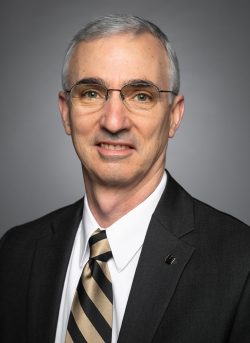
Dr. Vivek Nallur is an Assistant Professor in the School of Computer Science at University College Dublin. His research focuses on Machine Ethics, Multi-Agent Systems, emergence in socio-technical systems, and decentralized adaptation mechanisms. He holds a PhD from the University of Birmingham and advanced certifications in university teaching from UCD. Education: BBS, Delhi University Post-Graduate Diploma in Advanced Software Technology, National Centre for Software Technology MS, Carnegie Mellon University PhD, University of Birmingham Prof Cert University Teaching & Learning, University College Dublin Research Interests: Machine Ethics explores ethical decision-making in autonomous systems, while Multi-Agent Systems (MAS) are his primary tool for studying self-adaptation and emergence. He serves on key committees like IEEE P7008 (Ethically Driven Nudging) and the AAAI 2021 Spring Symposium on AI Ethics. His work bridges computer science with philosophy, law, and social sciences. Advising & Grants: Supervises three PhD students focusing on ethical AI, elder-care robotics, and AI governance. Leads the Machine Ethics Research Group and participates in the ML-Labs SFI grant (2019–2027). Professional Roles: Senior Member of IEEE, organizer for AAAI ethics symposia, and contributor to OpenAAL's ELSI panel. Teaches modules on Machine Learning, Operating Systems, and Web Development.
Dr. Jing Wang is a Professor in the Department of Bioinformatics at Southern Medical University's School of Medicine, with extensive research at the intersection of artificial intelligence and biomedical applications. Her work demonstrates strong cross-disciplinary collaboration across medical institutions, engineering departments, and computer science research groups. Her primary research interests include Artificial Intelligence in Healthcare , Biomedical Engineering , and Traditional Chinese Medicine Informatics , with recent publications showing particular expertise in medical imaging analysis, diagnostic assistance systems, and clinical decision support. Her work spans both theoretical algorithm development and practical clinical implementations. Analysis of her 15 most recent publications (2025-2026) reveals a strong trend toward clinically applicable AI systems, with approximately 60% of publications focused on medical diagnostics and treatment support systems. The remaining publications demonstrate expertise in industrial applications of computer vision and fundamental AI research. Her work shows consistent collaboration with both domestic Chinese institutions and international research groups. Notable scientific contributions include: Development of 'Tianyi', a traditional Chinese medicine language model for clinical practice Innovations in bionic soft robotics for rehabilitation assistance Novel approaches to medical image analysis for cancer diagnostics Her research program appears well-funded with consistent publication output across high-impact journals in biomedical engineering, AI, and medical informatics. Current work suggests strong emphasis on translating AI research into clinical practice, particularly in diagnostic support systems and rehabilitation technology.
Theodora Varvarigou is a Professor in the Department of Electrical and Computer Engineering at the National Technical University of Athens (NTUA). She holds a B.Eng. from NTUA and M.Eng. and Ph.D. degrees from Stanford University. Her career includes research at AT&T Bell Labs and roles at the Technical University of Crete. From 2008-2012, she served as director of NTUA's 'Technoeconomic Systems' postgraduate program. Her research focuses on Cloud Computing, Multimedia Content Processing, Social Networking Technologies, and emerging areas like blockchain, edge computing, and cybersecurity. She has published over 200 papers and led numerous European research projects, emphasizing scalable systems, data management, and smart infrastructure applications. Her work spans technical innovations such as intrusion detection systems, edge resource optimization, and blockchain-based solutions for IoT, healthcare, and smart cities. Recent publications highlight advancements in AI-driven resource allocation, privacy-preserving blockchain designs, and predictive analytics for edge computing environments. Professor Varvarigou has contributed to interdisciplinary initiatives, including cohort data harmonization in biomedical research and social media analytics for urban planning. Her teaching includes courses on digital systems, network programming, and fault-tolerant systems.
Paul-Eric DOSSOU is a Researcher at ICAM’s Grand Paris Sud campus, specializing in Societal and Technological Transitions of Companies. His work focuses on Industry 5.0, decision-aided systems, logistics optimization, and digital twin applications. He leads projects like Plateforme Life, Urban Logistics, and Healthcare 4.0, aiming to enhance SME efficiency through sustainable digital transformation. Expertise includes AI-driven supply chain management, cybersecurity for legacy systems, and robotic solutions for archaeology. He collaborates with industry partners to bridge theoretical research and practical applications, emphasizing human-centric automation and environmental sustainability. Contact: paul-eric.dossou@icam.fr | Mobile: +33 6 17 81 33 43 Research contributions span over 30 peer-reviewed articles since 2003, addressing topics from energy audits in the nautical industry to multi-agent systems in supply chain optimization.
Cem Zafer is an academic researcher affiliated with İstanbul Okan University , specifically the Faculty of Humanities and Social Sciences . His scholarly work spans interdisciplinary topics in sociology, religious studies, and technology's societal impacts. Research Focus: Digital transformation, gender dynamics, and cultural identity. Publications: 15+ peer-reviewed articles and book contributions since 2012. Key Themes: Social media ethics, religious discourse, and labor sociology. His recent publications highlight the interplay between artificial intelligence, social justice, and historical narratives in modern Turkey. While no formal awards or grants are documented in the provided text, his academic output demonstrates sustained engagement with contemporary sociocultural challenges.
Felipe Meneguzzi is a Professor of Computing Science at the University of Aberdeen, where he leads research in automated planning, goal and plan recognition, multiagent systems, BDI agents, and machine learning. He also holds a Bridges Professorship at the Pontifical Catholic University of Rio Grande do Sul (PUCRS) in Brazil and leads the Group on Artificial Intelligence at PUCRS. He is a Senior Member of the ACM and AAAI. PhD in Artificial Intelligence (2009) from King's College London Postdoctoral Fellowship at Carnegie Mellon University His research spans theoretical and applied artificial intelligence, with a focus on automated planning, decision-making in autonomous agents, and AI applications in neuroscience. He has contributed to landmark-based methods in plan recognition, generalized decision-making in BDI agents, and clinical AI for autism spectrum disorder detection. Key publications include: Landmark-based approaches for goal recognition as planning (IJCAI 2024) Empowering BDI Agents with Generalised Decision-Making (AAMAS 2024) Identification of autism spectrum disorder using deep learning (Neuroimage: Clinical, 2017) Visually-impaired accessibility application via CNNs (IJCNN 2017) Norm conflict identification with deep learning (AAMAS 2017 workshop) Scientific honors include: Best SPC member at AAMAS 2021 Blue-Sky Paper award at AAMAS 2024 Google Research Awards for Latin America (2016, 2019) Runner-up for Microsoft Research Faculty Fellowship (2013) CNPq Highly Productive Researcher Fellowship (Brazil) As an advisor, he supervised Ramon Pereira's MSc dissertation and PhD thesis, both recognized as top works in Brazilian AI. He actively mentors students in automated planning, machine learning, and multiagent systems through projects like the final year project repository and the graduate student repository .
Brad Campbell is an Associate Professor in the Department of Computer Science and Electrical and Computer Engineering at the University of Virginia, where he is a member of the Link Lab, a cross-disciplinary research group focused on cyber-physical systems. His research centers on designing and building scalable, effective, and unobtrusive embedded systems for the Internet of Things, with applications in smart buildings, smart cities, and personal health. His work spans hardware design, networking, and cloud infrastructure, with a strong emphasis on energy-harvesting systems, low-power wireless communication, and resilient embedded operating systems. He has led projects such as the Living Link Lab, a heavily instrumented smart building testbed, and has developed open-source platforms for self-powered sensing and IoT ecosystems. His recent publications reflect a strong trend toward privacy-preserving federated learning, contactless occupancy sensing using WiFi and light, decentralized edge computing, and sustainable IoT systems. These works are published in top venues including SenSys, BuildSys, MobiCom, and IPSN, indicating a high impact in the systems and networking community. NSF CAREER Award (2022) Best Paper Award at DFHS’19 Multiple graduate fellowships and teaching awards for his students UVA Engineering Endowed Graduate Fellowships Link Lab Seminar Award CPS Rising Star recognition Brad Campbell has advised numerous PhD and master’s students, many of whom have gone on to academic and industry roles. He has secured significant research funding, including from the NSF, and has contributed to curriculum development in cyber-physical systems. He is actively involved in teaching courses on computer networking, IoT, and operating systems, and has co-taught wireless IoT courses across multiple institutions. His lab focuses on real-world deployment of IoT systems, emphasizing scalability, fault tolerance, and long-term sustainability. He continues to push the boundaries of what embedded systems can achieve in everyday environments, from homes to cities.
Irina Rish is a Full Professor at the Université de Montréal and a core academic member of Mila – Quebec Artificial Intelligence Institute, where she leads the Autonomous AI Lab. She holds a Canada Excellence Research Chair (CERC) and a CIFAR AI Chair, reflecting her leadership in foundational AI research. Her work is supported by major initiatives, including the U.S. Department of Energy’s INCITE project on Summit and Frontier supercomputers. PhD in AI, University of California, Irvine MSc in AI, University of California, Irvine MSc in Applied Mathematics, Moscow Gubkin Institute Her research focuses on machine learning, neural scaling laws, emergent behaviors in foundation models, continual learning, robustness, and neuroscience-inspired AI . She explores how AI systems can become more general, flexible, and aligned with human cognition. Her recent work investigates training dynamics in large language models, efficient pruning techniques, and the development of time-series foundation models. The analysis of her recent publications reveals a strong focus on scaling behaviors, continual adaptation, and robustness in AI systems . Her work spans theoretical understanding of training dynamics (e.g., zero-sum learning), practical optimization methods, and applications in climate modeling and mental health. She emphasizes open science, leading open-source projects and co-founding Nolano.ai to build efficient, compressed foundation models. Canada Excellence Research Chair (CERC) CIFAR AI Chair IBM Eminence & Excellence Award (2018) IBM Outstanding Innovation Award (2018) IBM Outstanding Technical Achievement Award (2017) IBM Research Accomplishment Award (2009) Irina Rish advises a large group of PhD and Master’s students across Université de Montréal, McGill, and Concordia. She leads major research grants and collaborates internationally on HPC-based AI research. She is also the co-founder and CSO of Nolano.ai, driving innovation in efficient AI systems. She leads the Autonomous AI Lab, which focuses on building large-scale foundation models, understanding neural scaling laws, and developing bio-inspired learning systems. She actively organizes reading groups on scaling, continual learning, and out-of-distribution generalization, fostering a collaborative research environment.
Rehan Syed is a Professor at Queensland University of Technology's School of Information Systems within the Faculty of Science and Engineering. His research focuses on Business Process Management (BPM), Robotic Process Automation (RPA), and Process Mining, with significant contributions to understanding digital transformation challenges in public and healthcare sectors. He has authored/co-authored over 35 peer-reviewed publications in top journals and conferences like BPM, HICSS, and ECIS. Key areas of expertise include leadership in IT initiatives, healthcare data quality, and low-code adoption strategies. Recent work emphasizes RPA's impact on organizational processes and knowledge retention. His research bridges academic theory with practical implementation, often collaborating with institutions like UN agencies and healthcare organizations. Publications span case studies in developing countries, systematic reviews, and curriculum development frameworks for BPM education. His work is cited across disciplines, reflecting its relevance to both academia and industry.
Inigo Flores Ituarte is a Research Professor at Tampere University's Faculty of Engineering and Natural Sciences, affiliated with the Automation Technology and Mechanical Engineering department. He leads the Digital Design and Manufacturing (D2M) research lab, focusing on sustainable manufacturing and twin-transition strategies integrating digital and green technologies. His work emphasizes optimization-driven design, additive manufacturing innovations, and AI-driven expert systems to enhance energy efficiency and reduce environmental impacts. Key research pillars include: Pillar 1: Twin-transition in Engineering Design and Manufacturing Processes, addressing sustainable manufacturing and intelligent systems Pillar 2: Development of open D2M systems and Process-Structure-Property-Performance (PSPP) linkages in advanced materials His research explores multi-disciplinary optimization combining model-based simulations and data-driven techniques. Notable contributions include generative AI integration in CAD systems, cognitive manufacturing systems, and cost-effective process monitoring using CNN-based methods. Inigo's work emphasizes environmental sustainability, with a focus on reducing manufacturing's energy consumption (54% of global use) and CO2 emissions. He advocates for interconnected material systems, smart manufacturing processes, and AI-assisted decision-making to achieve cognitive intelligence in industrial operations. His D2M lab's overarching goal is to maximize product/process performance while improving cost-effectiveness and minimizing environmental footprints. Recent projects include railway bogie demonstrators via multi-material deposition and sensor systems leveraging IoT and ChatGPT integration.
Professor Chee Yew Wong is a leading academic in supply chain management at Leeds University Business School (LUBS), where he holds the position of Professor and serves as Director for Research & Innovation in the Analytics, Technology and Operations department. He previously held a Chair in Logistics and Supply Chain Management at Hull University Business School and has served as a visiting professor in Thailand and China. His work bridges academia and industry, with over nine years of professional experience in operations and supply chain roles across multinational corporations and SMEs. His educational background includes a PhD in Supply Chain Management from Aalborg University, Denmark; an MSc in Manufacturing Management from Linköping University, Sweden; a BEng in Mechanical Engineering from the University of Technology, Malaysia; and a PG Certificate in Higher Education from Hull University, UK. Professor Wong's research centers on intelligent, responsible, and sustainable solutions for global supply chains. Key interests include digital supply chains, supply chain analytics, green logistics, human rights in supply chains, resilience, and circular economy models. He leverages technologies such as blockchain, machine learning, and IoT to enhance transparency, integration, and performance in complex supply networks. The analysis of his recent publications reveals a strong trend toward digital transformation, sustainability, and ethical governance in supply chains. His work increasingly emphasizes data-driven decision-making, environmental and social risk assessment, and the role of technology in enabling responsible global sourcing. Many projects focus on real-world applications in industries such as healthcare, fashion, retail, and manufacturing, often through Knowledge Transfer Partnerships with industry leaders. Best Reviewer Award, Operations and Supply Chain Management Division, Academy of Management Conference, Chicago, USA (2018) Prof. Xiande Zhao's Best Paper Award, International Conference on Operations and Supply Chain Management, Kaifeng, China (2017) Finalist for the Jack Meredith Best Paper Award, Academy of Management Conference, Anaheim, USA (2016) Emerald Best Paper Award, Supply Chain Management: an International Journal (2006) Professor Wong has successfully supervised 10 PhD students and 4 post-doctoral researchers, and has examined over 15 PhD dissertations internationally. He leads multiple research grants, including projects funded by Innovate UK, UKRI, ESRC, and the British Council, focusing on digital transformation, human rights, and green supply chain innovation. His collaborations span academia, government, and industry, demonstrating a strong commitment to impactful, applied research. He is actively involved in the Centre for Operations and Supply Chain Research, the Adaptation Information Management and Technology group, and the Centre for Decision Research at LUBS. These research groups support interdisciplinary work in analytics, digital technologies, and sustainable operations, fostering innovation and knowledge exchange across sectors.
Charles Gomez is an Associate Professor in the School of Sociology at the University of Arizona. He is affiliated with the College of Information Science and the Applied Math Graduate Interdisciplinary Program (GIDP), reflecting his interdisciplinary focus. His work centers on computational and mathematical sociology, particularly the study of inequality in global scientific knowledge production, diffusion, and diversity. Dr. Gomez received his Ph.D. from Stanford University, master’s degrees from Harvard Kennedy School and Columbia University, and a B.Sc.Eng. from Duke University. Ph.D., Stanford University M.A., Harvard Kennedy School M.S., Columbia University B.Sc.Eng., Duke University His research integrates natural language processing, social network analysis, survey experiments, simulations, and interviews to explore hierarchies, complexity, and diversity in science. He is particularly interested in how political and institutional forces shape AI research and global knowledge systems. The recent publications reflect a strong focus on global science, AI, knowledge diffusion, and inequality. His work employs both computational and qualitative methods to analyze large-scale scientific networks, epistemic diversity, and the structural biases in research collaboration and dissemination. Themes include international politics in AI, peer review bias, simulation of knowledge spread, and the role of elite institutions in shaping scientific agendas. His scientific recognition includes the prestigious National Science Foundation (NSF) CAREER Award (2024–2029). He has secured over $1 million in research funding as PI or co-PI. National Science Foundation (NSF) CAREER Award (2024–2029) Dr. Gomez leads the Global Knowledge Lab and Observatory ("The Global Lab"), an interdisciplinary research group dedicated to studying science, knowledge, and innovation at a global scale. He is actively involved in mentoring and welcomes Ph.D. students and collaborators. He has published in top journals including Nature Human Behaviour , Nature Communications , Research Policy , Social Networks , and Sociological Science .
Oliver Gasser is a researcher at the Max Planck Institute for Informatics (MPI-INF) and the Technical University of Munich (TUM), where he has co-lectured courses such as Advanced Computer Networking and Master Course Computer Networks. His research focuses on Internet measurement, security, and privacy, with a strong emphasis on IPv6, DNS, BGP, and web tracking technologies. His research interests include Internet measurement, IPv6 deployment, BGP security, DNS infrastructure, web tracking, privacy technologies, and network resilience. He has made significant contributions to understanding IPv6 hitlists, router fingerprinting, hypergiant content delivery networks, and consent banner manipulation on the web. His work combines large-scale active measurements with data analysis to uncover systemic issues in Internet infrastructure and privacy practices. The recent publications highlight a consistent focus on measurement-driven research across networking, security, and privacy. Trends include analyzing IPv6 adoption patterns, detecting covert tracking mechanisms in web cookies, evaluating security of Internet protocols like DNS and BGP, and improving measurement methodologies for large-scale network studies. His work often involves developing open tools and datasets that advance reproducibility in networking research. PAM 2023 Best Paper Award TMA 2023 Best Paper Award TMA 2023 Fast Track Award PAM 2018 Best Paper Award IRTF Applied Networking Research Prize 2018 IMC 2017 Community Contribution Award TMA 2017 Best Dataset Award CoNEXT 2023 Community Contribution Award Oliver Gasser has advised or co-advised over 40 master’s and bachelor’s theses at MPI-INF and TUM, demonstrating strong mentorship in academic research. He has led several measurement projects that have received external funding, including development of the IPv6 Hitlist Service and tools for analyzing web tracking. His community service includes extensive participation in program committees for major networking conferences such as IMC, CoNEXT, PAM, and TMA. He leads and contributes to several open research initiatives including the IPv6 Hitlist Service, SNMPv3 Measurement Service, MPTCP Measurement Service, DNS Observatory, and the BannerClick tool for automated cookie banner interaction. These platforms provide valuable resources for the global networking research community and support reproducible science.
Keith D. Koper is a Professor in the Department of Geology & Geophysics at the University of Utah and serves as Director of the University of Utah Seismograph Stations (UUSS). He is also the editor-in-chief of The Seismic Record . His work integrates academic research with operational seismic monitoring and public safety initiatives across Utah and the Intermountain West. Education: PhD in Geophysics, Washington University, 1998 BA in Math, Geology, and ISP, Northwestern University, 1993 Dr. Koper's research focuses on array seismology, forensic seismology, deep Earth structure (especially the inner core), earthquake rupture imaging, ambient seismic noise, and seismic hazards in the Intermountain West, including mining-induced and urban earthquakes. His work combines observational seismology with advanced signal processing and machine learning techniques to improve detection, discrimination, and imaging capabilities. He has led or contributed to major projects involving the Wasatch Front, Yellowstone, and regional seismic networks. His recent research emphasizes machine learning for earthquake detection, high-resolution relocation of aftershock sequences (e.g., Magna 2020, Bluffdale 2019), microseism generation in lakes, and fine-scale imaging of the Earth's inner core using seismic reflections. His studies often involve interdisciplinary collaboration, particularly with mining engineering and geodesy. Dr. Koper's research has been consistently funded by federal and state agencies, including the National Science Foundation (NSF), U.S. Geological Survey (USGS), Department of Energy (DOE), Air Force Research Laboratory (AFRL), and the Utah Department of Public Safety. His publications reflect a strong trend toward integrating computational methods with traditional seismological analysis to tackle complex problems in both natural and induced seismicity. Scientific Service and Leadership: Editor-in-Chief, The Seismic Record Director, University of Utah Seismograph Stations Secretary, U.S. Air Force Seismic Review Panel Former Chair and Vice-Chair, Utah Seismic Safety Commission Dr. Koper mentors graduate students in seismology and geophysics, including recent advisees Sean Hutchings and Alysha Armstrong. His research group actively engages in both fundamental and applied seismological research, with strong ties to national labs such as Sandia. The group is involved in deploying portable seismic arrays, analyzing large datasets, and developing new algorithms for event detection and classification. The University of Utah Seismograph Stations, under his leadership, plays a critical role in monitoring seismicity in Utah and Yellowstone, producing real-time earthquake information, ShakeMaps, and public outreach materials. The station also contributes to national and international efforts in nuclear test monitoring and volcanic hazard assessment.
James S. Noble is a Professor and Chair of the Department of Industrial and Systems Engineering at the University of Missouri, where he also serves as the MU Site Director for the NSF I/UCRC Center for Excellence in Logistics and Distribution (CELDi). His work bridges academia and industry through applied research in logistics, supply chain, and integrated production systems. PhD, Purdue University MS, Purdue University BS, University of Oklahoma Dr. Noble's research focuses on logistics and distribution , supply chain system design , and integrated production systems , with applications ranging from humanitarian logistics to intelligent warehouse systems. His work emphasizes modeling, analysis, and optimization of material flow and transportation systems. The 15 most recent articles reflect a consistent trajectory in logistics systems analysis , supply chain modeling , and material flow improvement . These publications demonstrate a strong integration of operations research, systems engineering, and real-world problem-solving, with applications in energy, transportation, humanitarian aid, and industrial logistics. Keywords span Operations Research , Supply Chain Management , and Industrial Engineering , while sub-fields include Bayesian forecasting, reverse logistics, winter road maintenance, and intelligent systems. Dr. Noble has been recognized with several prestigious awards: Society of Manufacturing Engineers Outstanding Young Manufacturing Engineering Award (1997) William T. Kemper Fellowship for Teaching Excellence (2022) Win Horner Award for Innovative Writing Intensive Teaching (2014) Elected Fellow of the Institute for Industrial and Systems Engineering (IISE) (2019) His research has been generously funded by the National Science Foundation , Bayer , Boeing , Hallmark Cards , Honeywell FMT , Medline , Ameren , UMB Financial , the U.S. Economic Development Administration , the Midwest Transportation Consortium , and the Missouri Department of Transportation . While specific advisees are not listed, his leadership in CELDi and role as department chair suggest extensive mentorship of graduate and undergraduate students in real-world logistics projects. He is also a registered Professional Engineer in Missouri. As MU Site Director for CELDi, Dr. Noble leads a multidisciplinary team of faculty from Industrial Engineering, Civil Engineering, Geography, and Biological Engineering, collaborating with over 30 industry, military, and government partners to solve real-world logistics challenges and develop implementable, cutting-edge solutions.