معرفی
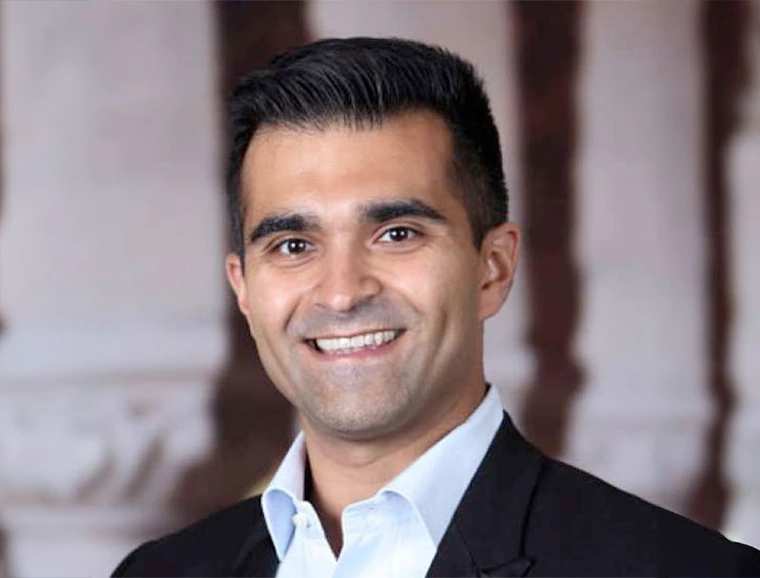
Charles Gomez is an Associate Professor in the School of Sociology at the University of Arizona. He is affiliated with the College of Information Science and the Applied Math Graduate Interdisciplinary Program (GIDP), reflecting his interdisciplinary focus. His work centers on computational and mathematical sociology, particularly the study of inequality in global scientific knowledge production, diffusion, and diversity.
Dr. Gomez received his Ph.D. from Stanford University, master’s degrees from Harvard Kennedy School and Columbia University, and a B.Sc.Eng. from Duke University.
- Ph.D., Stanford University
- M.A., Harvard Kennedy School
- M.S., Columbia University
- B.Sc.Eng., Duke University
His research integrates natural language processing, social network analysis, survey experiments, simulations, and interviews to explore hierarchies, complexity, and diversity in science. He is particularly interested in how political and institutional forces shape AI research and global knowledge systems.
The recent publications reflect a strong focus on global science, AI, knowledge diffusion, and inequality. His work employs both computational and qualitative methods to analyze large-scale scientific networks, epistemic diversity, and the structural biases in research collaboration and dissemination. Themes include international politics in AI, peer review bias, simulation of knowledge spread, and the role of elite institutions in shaping scientific agendas.
His scientific recognition includes the prestigious National Science Foundation (NSF) CAREER Award (2024–2029). He has secured over $1 million in research funding as PI or co-PI.
- National Science Foundation (NSF) CAREER Award (2024–2029)
Dr. Gomez leads the Global Knowledge Lab and Observatory ("The Global Lab"), an interdisciplinary research group dedicated to studying science, knowledge, and innovation at a global scale. He is actively involved in mentoring and welcomes Ph.D. students and collaborators. He has published in top journals including Nature Human Behaviour, Nature Communications, Research Policy, Social Networks, and Sociological Science.