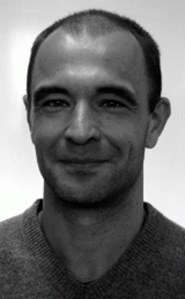
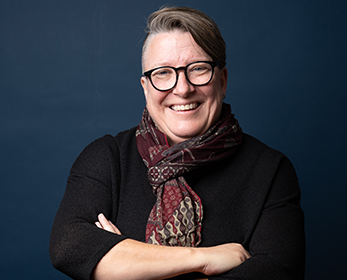
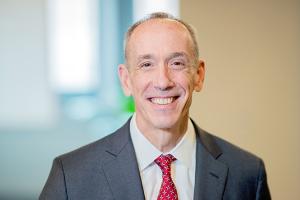
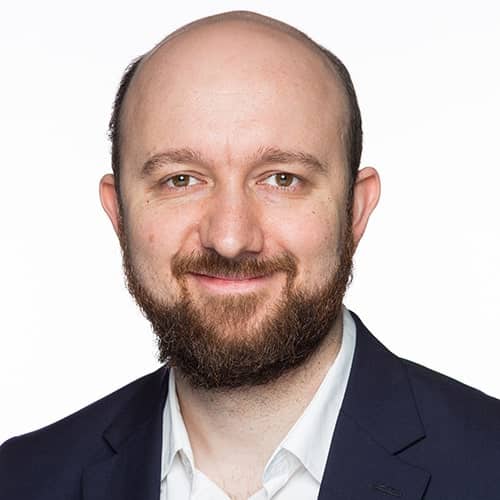
Galina Biedenbach is an Associate Professor (Docent) in Business Administration specializing in Marketing at Umeå University's Umeå School of Business, Economics and Statistics (USBE). She serves as Section Coordinator for Marketing and Program Coordinator for the Master’s program in Marketing. Her research focuses on branding, sustainability marketing, and B2B marketing dynamics. She holds a PhD in Business Administration (2012) and was awarded Docent status (2018). Recognized for pedagogical excellence, she received the USBE Pedagogical Prize (2018) and Distinguished University Teacher title (2020). Teaching responsibilities include undergraduate courses in Marketing Ethics, Research Methodology, and advanced modules on Strategic Marketing Planning and Executive Decision Making. Administrative roles include leadership of the Marketing Section (2016–2018, 2021–present) and Board membership of the Faculty of Social Sciences (2024–present). Research interests span corporate branding, organizational resilience, and sustainability transitions, with affiliations to the ROBUST research group. Her publications emphasize B2B brand equity, coopetition strategies, and internal branding in public sectors. Notable works include analyses of sustainability performance through coopetition mechanisms and paradox management. Awards highlight both academic contributions and pedagogical innovation, reflecting her dual focus on research and education.
Niklas Hanes is an Associate Professor at the Department of Economics within the Umeå School of Business, Economics and Statistics (USBE) at Umeå University. His research focuses on public economics, labor economics, regional development, and behavioral economics with particular attention to military policy impacts, childcare reforms, municipal amalgamations, and stock market participation behaviors. Research Projects: Lead researcher in the 2021-2023 project analyzing military deployment's labor market effects. Research Groups: Member of the Economic Policy Network. Research Interests His work examines the economic implications of public policies across multiple domains: Military training's civilian labor market returns Effects of childcare fee reforms on gendered employment patterns Economic efficiency of municipal mergers Psychological determinants of financial decision-making Historical analysis of municipal governance reforms Recent Research Trends Recent publications emphasize: Long-term economic effects of military service Regional policy impacts on local economies Behavioral factors in financial market participation Awards & Grants Recipient of the 2021-2023 research grant studying military deployment labor market outcomes. Active in securing multi-year research funding through collaborative projects. Labs & Teams Prominent contributor to the Economic Policy Network's initiatives analyzing regional development strategies and public sector efficiency.
Professor Marnie Campbell serves as the Executive Dean of the School of Science at Edith Cowan University (ECU), overseeing disciplines including Biology, Chemistry, Computing, Cyber Security, and Mathematics. She leads four research centers: the Centre for Artificial Intelligence and Machine Learning, the Centre for Marine Ecosystems Research, the Conservation and Biodiversity Research Centre, and the Centre for Securing Digital Futures. Her academic journey includes a BSc(Hons) and PhD from Murdoch University (2000). Marnie’s career spans 18 years in higher education, with 14 years in leadership roles, including Head of the School of Life and Environmental Sciences at Deakin University. She balances active research with policy translation, emphasizing stakeholder collaboration to address environmental challenges. With 12 years in non-academic roles (government, consultancy, CSIRO), she applies cross-sectoral insights to academic leadership. Her research focuses on marine biosecurity, invasive species management, and environmental policy. Notable contributions include frameworks integrating social, cultural, and ecological values in biosecurity and strategies to mitigate marine debris impacts. She has pioneered educational initiatives aligning academic programs with industry/community needs. Marnie’s honors include the 2007 Peter Morris Prize for maritime biosecurity contributions and a Queensland Smart Futures Fellowship (2012–2015). She advises international organizations like the UN and has led projects in the Galapagos Islands and Palau. Her work emphasizes bridging science and policy to address global challenges like biodiversity loss and climate change. Her leadership extends to strategic initiatives like ECU’s Centre for People, Place & Planet. She advocates for innovative education and adaptive governance models to prepare future environmental leaders. Current efforts focus on AI applications in ecological research and securing digital futures amid emerging threats.
Gerhard Hillmer is a Professor and Program Director of the Industrial Engineering & Management Master's program at the Management Center Innsbruck. He holds a Dr.-Ing. in Chemical Engineering from Friedrich-Alexander-University Erlangen-Nuremberg (1993) and an MSc in Management from Management Center Innsbruck (2008). His career spans over 25 years in academia and industry, including leadership roles as Department Head (2009-2023) and Study Coordinator in Process Engineering. Prior to academia, he held strategic roles in ExxonMobil and Esso Italiana focusing on business planning and operations optimization. His research focuses on leadership development in engineering education, interdisciplinary competency models, and organizational change management. He has authored textbooks such as Key Competencies in Leadership and Project Work (2022) and pioneered training concepts for engineering graduates' soft skills and responsible management practices. His work emphasizes integrating non-technical competencies like conflict resolution, project management, and ethical decision-making into engineering curricula. Recent publications address global business strategies in Africa, AI-driven HR practices, and corporate ethics expectations. Hillmer has supervised over 50 theses on topics ranging from cross-cultural leadership to resilient supply chains. His presentations at international conferences highlight trends in engineering education reform and organizational transformation in VUCA environments. Notable contributions include developing the PRiME-based Responsible Management certificate and advancing qualitative research methods for change processes in manufacturing. His work bridges academic research with practical industry challenges, emphasizing sustainable career development for engineers and leadership excellence in multinational contexts.
Dr. Violeta Šugar is an Associate Professor and Deputy Head of the Department of Organisation, Entrepreneurship and Law at the Faculty of Economics and Tourism, Juraj Dobrila University of Pula, Croatia. She specializes in entrepreneurship, innovation management, quality management, and sustainable tourism. Her academic roles include teaching courses such as Entrepreneurship, International Entrepreneurship, Lean Start-Up, and Quality Management. She leads the Student Entrepreneurial Incubator and managed the ISO 9001:2015 implementation project at her faculty. Prior to academia, she held roles in small business ownership, media (TV journalism), and banking, enriching her teaching with practical insights. Her research focuses on sustainable tourism practices, innovation ecosystems, and the interplay between economic growth and environmental factors. Notable projects include EDIH Adria, analyzing SME contributions to Adriatic economies, and studies on e-bike adoption in Slovenia. She has authored/co-authored books and papers on topics like metaverse integration in tourism economics, burnout economics in healthcare, and cultural heritage management. Her work bridges theoretical frameworks with practical implementations, emphasizing quality-driven strategies for competitiveness. Dr. Šugar’s academic contributions extend to EU-funded projects and Croatian Ministry initiatives, reflecting her commitment to fostering innovation and sustainability in economic and tourism sectors. She actively promotes entrepreneurial education and has pioneered quality management systems in higher education institutions.
Manuela Nilsson is a Professor in Peace and Development Studies at Linnaeus University's Department of Social Studies (Faculty of Social Sciences). Her work focuses on conflict transformation, post-conflict peacebuilding, and the security-development nexus. She has conducted extensive research in Colombia, Nicaragua, and other Latin American countries, with a particular emphasis on police reform, land restitution, and civil-military cooperation in post-conflict scenarios. Education: Trained in conflict transformation by the United Nations and Organization of American States. Over 17 years of fieldwork experience in Latin America, including involvement in Nicaragua's post-war reconstruction. Current research centers on Colombia's peacebuilding processes, including the role of Swedish police training programs and civilian-military collaboration. Research Projects: Includes 'Peacebuilding Amidst Ongoing Violence,' collaboration with Universidad Javeriana (Colombia), and analysis of security policies in Angola and Nicaragua. Her work explores challenges in implementing peace agreements and strengthening local ownership of reconciliation processes. Publications: Over 20 peer-reviewed articles and book chapters on peacebuilding strategies, security-sector reform, and conflict resolution. Authored the book Cultural Diplomacy and Foreign Policy: German-American Relations, 1955-1968 (1996) and contributed to edited volumes on Latin American globalization responses and relational peace practices. Collaborations: Active in international research networks such as the European Migration and Integration Network (EMIN). Supervises doctoral students and leads interdisciplinary projects analyzing violence reduction and sustainable peace mechanisms.
Tomasz Nowacki is an Assistant Professor at the University of Warmia and Mazury in Olsztyn, affiliated with the Department of Administrative and Constitutional Law within the Faculty of Law and Administration. His research focuses on constitutional law, administrative law, and nuclear energy law, with particular emphasis on legal frameworks governing Poland's energy transition and nuclear regulatory systems. He has contributed significantly to debates on nuclear safety standards, regulatory independence, and legislative compliance with international norms. Dr. Nowacki earned his doctoral degree in 2016 with a dissertation titled Independence of nuclear regulatory authorities in the context of international, European and constitutional law . His academic work spans over a decade, with publications in prestigious journals such as Studia Iuridica , Energies , and atw – International Journal for Nuclear Power . His research interests include the legal aspects of high-temperature nuclear reactor development, the role of regulatory bodies in nuclear safety, and Poland’s integration with EU energy policy. He has presented at major international conferences including the International School of Nuclear Energy and the International Nuclear Law Association events. Awards: Honorary badge 'For services to the energy sector' (2019), Distinction of the Minister of Economy (2015) Professional Activities: Co-supervisor of doctoral research on nuclear energy investment processes, member of the International Nuclear Law Association’s Working Group on Nuclear Safety and Regulation Dr. Nowacki’s work bridges legal theory and policy implementation, advocating for robust regulatory frameworks to support Poland’s energy security and sustainable development goals.
Dr. Thomas (Tom) Brock is a Research Professor and Director of the Community College Research Center (CCRC) at Teachers College, Columbia University, within the Graduate School of Education, Health & Psychology and affiliated with the Department of Education Policy & Social Analysis (EPSA). With over 30 years of experience in education and social welfare research, he leads a broad portfolio of studies aimed at improving community college outcomes, advancing educational equity, and shaping national policy. PhD in Social Welfare, UCLA MPA, Columbia University BA in Anthropology, Pitzer College Dr. Brock's research is centered on transformative reforms in postsecondary education. He has pioneered work in developmental education reform , advocating for corequisite remediation and multiple measures assessment to replace outdated prerequisite models. His leadership in developing the guided pathways framework has influenced hundreds of colleges nationwide. Current projects span dual enrollment , transfer pathways , and sector-based training for green jobs , reflecting a deep commitment to economic mobility and equity. The recent publications led or influenced by Dr. Brock reveal a consistent focus on evidence-based policy, institutional reform, and student success. Themes include remedial education innovation, college completion strategies, workforce alignment, and equity-centered interventions. His work bridges academic research with real-world application, emphasizing scalable models that improve outcomes for underserved populations. Dr. Brock has received significant recognition through leadership roles, including: Commissioner, National Center for Education Research (NCER), IES Acting Director, Institute of Education Sciences (IES) U.S. Representative, OECD’s Centre for Educational Research and Innovation (CERI) Board of Trustees, Pitzer College He actively mentors doctoral students through research apprenticeships at CCRC, collaborating with EPSA to train the next generation of education policy scholars. His grants and projects often involve large-scale evaluations, such as the Opening Doors Demonstration and Achieving the Dream initiative, supported by federal agencies like IES, NSF, and the U.S. Department of Education. Dr. Brock champions interdisciplinary collaboration, leveraging connections across Columbia University and New York City to address complex educational challenges. He is deeply embedded in research teams and centers, most notably leading CCRC—a national hub for postsecondary education research. The center functions as a lab for policy innovation, conducting rigorous evaluations and disseminating findings to practitioners, policymakers, and researchers. Ongoing work includes refining guided pathways implementation and exploring the role of community colleges in the emerging green economy.
Professor Andrew Lymer holds the Chair in Taxation and Personal Finance at Aston University , where he also serves as Head of the Department of Accounting and Finance and Director of the Centre for Personal Financial Wellbeing (CPFW) . With visiting appointments at the University of South Africa and Massey University , he chairs the Tax Research Network and has led projects across 15 countries. Research Focus: Intersections of UK/international taxation policy, personal financial capability, poverty alleviation strategies, and health-finance linkages Key Collaborations: Aviva Foundation, Money and Pensions Service, Birmingham City Council, NEST Insight, CREME Recent Projects: EMPOWER (ethnic minority entrepreneurship), Real Accounts (long-term financial diaries), Harmful Gambling interventions Academic Contributions: Co-author of the UK's leading tax textbook Taxation: Policy & Practice and the 2023 Taxation and Social Policy primer. His work has influenced national policy frameworks through the UK Government's 2030 financial wellbeing strategy.
Lisa Kreeger, PhD, is a Research Fellow at Antioch University's Graduate School of Leadership & Change. She serves as Dean of Nursing and Health Sciences at Capella University, combining extensive healthcare industry experience with academic expertise in leadership, technology, and qualitative research. Her career spans roles in health plan operations, medical management, and compliance. Education: Doctor of Philosophy, Antioch University (2007) Master of Science in Nursing (Leadership in Health Systems Management), Drexel University (2016) Master of Business, Seattle University (2001) Bachelor of Science in Nursing, DePaul University (1982) Her research focuses on leadership dynamics, competency-based education frameworks, and alliance relationships in healthcare and technology sectors. She actively contributes to academic discourse through presentations at conferences like the Higher Learning Commission and IBM Press publications. Recent publications highlight interdisciplinary themes across education, business, and healthcare, emphasizing practical applications of leadership theories and collaborative models in organizational contexts. Professional Affiliations: American Nurses Association (ANA) Competency-Based Education Network (C-BEN) Consortium of Universities for Global Health (CUGH) Sigma Theta Tau International Honor Society of Nursing
Jessica Diaz, PhD , is a scholar-practitioner at Claremont Graduate University , where she chairs the applied doctorate program in Organizational Psychology. She is the founder and director of the ExCo (The Employee Experience Collective), a collaborative network focused on enhancing employee experiences through research and practice. Her expertise spans organizational behavior, psychological safety, and leader development, with a strong emphasis on diversity, equity, and inclusion (DEI). Education: PhD in Psychology, Claremont Graduate University BA in Political Science and Government, Cornell University Research Interests center on the psychological processes that shape employee experiences and the organizational conditions that foster empowerment. She explores intersections of DEI, multisource feedback mechanisms, longitudinal leader development methodologies, and statistical approaches to workplace dynamics. Teaching and Consulting roles include instructing courses in organizational psychology and statistics, as well as serving as managing partner at BCD Consulting Group, specializing in public-sector selection and development. She also works independently as an executive coach and facilitator for private and non-profit organizations. Leadership and Mentorship are integral to her work, advising both PhD and PsyD students and contributing to academic and practitioner journals.
Philip Armour is a Professor and Senior Economist at the RAND Corporation , where he also serves as Director of the Ph.D. Program and the RAND Center for Disability Research. His work integrates labor economics, public policy, and health economics to analyze intersections between government programs and workforce behavior. Research Interests: Focuses on disability policy , retirement decision-making , financial security , and military healthcare systems . Employs empirical analysis of Social Security, Workers' Compensation, and DoD/Veterans Administration programs to understand how policy incentives shape individual choices. Key Contributions: Recent publications examine Social Security appeals barriers for homeless populations, military eye examination policies, and pension crisis reform frameworks. Research funded by SSA, DoD, NIOSH, and CFPB. Education: Ph.D. in Economics, Cornell University M.Sc. in Econometrics, London School of Economics
Ben Wagner is a leading academic in digital rights and technology governance, holding multiple prestigious positions: University Professor of Human Rights & Technology at IT:U, Director of the AI Futures Lab on Rights and Justice at TU Delft, and Professor of Media, Technology and Society at Inholland University of Applied Sciences. He leads the Digital Rights Research Team (DRRT) and co-founded the Sustainable Media Lab (SML) in The Hague, contributing to bridging research and education. He is also a visiting researcher at Oxford University's Human Centred Computing Group and serves on the advisory board of the journal Patterns . Inholland University of Applied Sciences – Professor, Media, Technology & Society (since 2021) TU Delft – Director, AI Futures Lab on Rights and Justice IT:U – University Professor, Human Rights & Technology European University Viadrina – Founding Director, Center for Internet & Human Rights Vienna University of Economics – Director, Sustainable Computing Lab ENISA – Advisory Group Member Ben Wagner earned his PhD in Political and Social Sciences from the European University Institute in Florence in 2013, with a dissertation on freedom of expression and online content regulation. He has held research positions at Cambridge University, University of Pennsylvania, Technical University of Berlin, and European University Viadrina. His research centers on digital rights, AI governance, freedom of expression online, and the societal impact of technology. He investigates how digital infrastructures shape human rights and advocates for sustainable, accountable systems. His work spans legal, technical, and social dimensions, focusing on public sector data practices, content moderation, ethical AI, and digital inclusion. He actively promotes citizen control over technological change and interdisciplinary collaboration. The recent publications reflect a strong focus on the ethical and governance challenges of AI and data science, digital rights frameworks, and platform accountability. Themes include the gap between policy and practice in public data use, global AI ethics, content governance on social media, and co-designing digital rights labels. His work emphasizes systemic accountability, hybrid digital-physical spaces, and embedding rights into technological design. Ben Wagner is an expert advisor to the European Parliament, European Commission, OSCE, Council of Europe, and UNESCO. He is a member of the policy advisory board for ECHOES (European Cloud for Heritage OpEn Science) and contributes to high-impact publications and international discourse. His research is widely covered in global media including CNN, The Guardian, Bloomberg TV, Der Spiegel, ORF, and SWR2. He advises on and contributes to major research initiatives such as ReSocial and fabricated. He is involved in developing a new Master’s program in Data-Driven Business at Inholland and leads efforts to integrate digital rights into education and innovation. His inaugural lecture, 'The Ground Beneath our Feet,' highlights the instability of digital infrastructures and the urgent need to embed digital rights at their core. Ben co-founded the Digital Rights Research Team and the Sustainable Media Lab at Inholland, fostering collaboration across faculties and sectors. These labs focus on creating a digitally responsible society through interdisciplinary research in design, policy, and technology. The AI Futures Lab at TU Delft explores justice-oriented futures for AI, while his work at IT:U advances human rights in digital contexts.
Maurizio Marco Bocconcino is an Associate Professor in the Department of Structural, Building and Geotechnical Engineering (DISEG) at Politecnico di Torino. He is a member of the Interdepartmental Center R3C (Responsible Risk Resilience Center) and serves as Coordinator of basic subjects for the 2nd year of Engineering. His academic work bridges civil engineering and architectural design, with a strong focus on representation and digital modeling. His research interests include engineering drawing, territorial and urban surveying, geographic information systems (GIS), Building Information Modeling (BIM), data representation, and tools for urban and social regeneration. He investigates methods for surveying historic buildings, urban resilience, and the integration of digital technologies in heritage and urban planning. His work is aligned with UN Sustainable Development Goals 11 and 17, emphasizing sustainable cities and collaborative research. Bocconcino's recent publications explore digital archives for academic heritage, analog artifacts in engineering education, urban form, LEAN-BIM integration, and the visualization of social impact. His research outputs span journals such as DISEGNO , International Archives of the Photogrammetry, Remote Sensing and Spatial Information Sciences , and AGATHÓN , as well as conference proceedings in representation and urban planning disciplines. He is actively involved in research projects, including the EU-funded MAINCODE project on urban climate shelters and multiple commercial consulting contracts as Scientific Manager, focusing on urban and social regeneration. His teaching responsibilities include courses in engineering drawing, digital modeling, and graphic language across Civil, Environmental, and Building Engineering programs. Bocconcino collaborates with researchers such as Mariapaola Vozzola, Giorgio Garzino, Martino Pavignano, and Fabio Manzone. His affiliations with ERC sectors highlight expertise in civil engineering, computational modeling in culture, computer graphics, design, and information systems.
Dr. Michael Feuer is a Professor of Education Policy at George Washington University's Graduate School of Education and Human Development, where he previously served as Immediate Past Dean. He is also a nonresident senior fellow at the Brookings Institution and former president of the National Academy of Education. With a career spanning academia, policy, and philanthropy, Feuer specializes in education policy, civic education, and the interplay between research and public policy. Education: Ph.D. in Public Policy, University of Pennsylvania M.A. in Public Management, Wharton School B.A. in English, Queens College (CUNY) Research & Grants: Feuer's research focuses on civic education, inequality in academic opportunity, and the role of philanthropy in shaping education research. In 2025, he secured a $2.4M grant from the William and Flora Hewlett Foundation to establish the Forum on Democracy and Education, aiming to enhance civic education in teacher training programs. His books include *Can Schools Save Democracy?* (2023), analyzing the role of education in sustaining democratic values. Recognition: Elected Fellow of the American Association for the Advancement of Science and American Educational Research Association. Consistently ranked in the RHSU Edu-Scholar Public Influence Rankings (2023, 2022, 2020, 2019). Media & Outreach: Host of the podcast *EdFix* and frequent contributor to national and international media, including *Education Week*, *Foreign Affairs*, and *The Brookings Institution*. Engages in global education policy consultancies and lectures internationally on topics like civic education and educational equity.