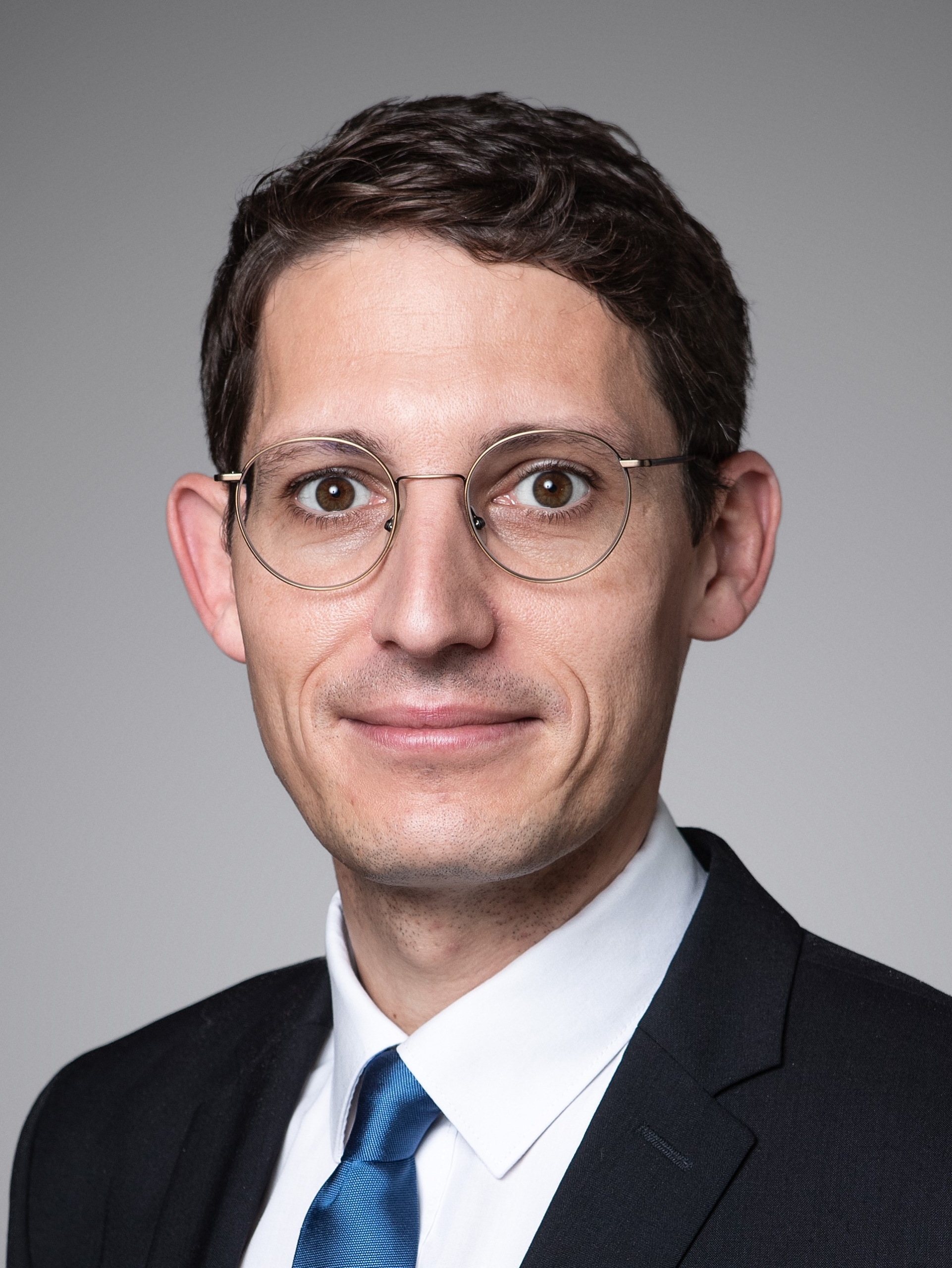
Dr. Marcel Dettling is a Group Lead in Data Analysis and Statistics at the ZHAW School of Engineering , focusing on predictive analytics, applied statistics, and complex data analysis. He also serves as a Lecturer at ETH Zurich , teaching advanced statistical methods. Education : PhD in Mathematics (2000-2004), ETH Zurich Postdoc in Applied Statistics (2004-2006), Johns Hopkins University His research spans predictive analytics (regression, classification, time series), data mining, and applications in health economics, transportation safety, social sciences , and business analytics . Recent work includes pharmaceutical cost group analysis for Swiss healthcare and predictive maintenance for marine vessels. Selected publications highlight his expertise in flight trajectory modeling , deep learning error mitigation , and statistical frameworks for rehabilitation finance . His projects address diverse fields like crowdworking in nursing, energy optimization for shipping, and customer behavior prediction.
Academic Profile: Damir Filipovic is a Full Professor and the Swissquote Chair in Quantitative Finance at the College of Management of Technology (CDM) of École Polytechnique Fédérale de Lausanne (EPFL), Switzerland. He previously held academic positions at the University of Vienna, University of Munich, and Princeton University, and served as Head of the Vienna Institute of Finance. Research Focus: Quantitative finance, risk management, stochastic processes, term structure modeling, volatility risk, and machine learning applications in financial markets. Industry Collaboration: Co-developed the Swiss Solvency Test for insurance capital requirements while consulting for the Swiss Federal Office of Private Insurance. Publications: Contributed extensively to journals like Journal of Financial Economics, Mathematical Finance, and Annals of Applied Probability, with a textbook on Term-Structure Models. Academic Service: Editorial board member of multiple journals and organizer of advanced workshops on systemic risk and financial technology. Recent Research: His work emphasizes machine learning for portfolio risk management, kernel-based yield curve estimation, and robust stochastic modeling. Keynote speaker at international conferences on finance and insurance mathematics, with over 15 recent publications in 2023-2025 addressing high-dimensional financial problems, neural control systems, and causal inference in market data. Education: Ph.D. in Mathematics from ETH Zurich (2000). Graduate of ETH Zurich and University of Vienna. Teaching & Mentorship: Supervises current and former EPFL Ph.D. students in quantitative finance, including Nicolas Camenzind, Joshua Hayes, Andrea Ruglioni, and ten others. Former students like Damien Ackerer and Lotfi Boudabsa now lead research in risk management. Labs & Programs: Directs EPFL's Finance and Technology Programme, leads the Computational Finance Group (CSF) at EPFL, and contributes to Swiss Finance Institute initiatives. Scientific Leadership: Served on EPFL Committee of Academic Evaluation and Doctoral Program Finance committee.
Tarun Ramadorai is Professor of Financial Economics at Imperial College London, with a distinguished career spanning household finance, financial economics, behavioral economics, real estate, and international finance. He serves as Executive Editor of the Review of Financial Studies and holds prestigious fellowships including Research Fellow of the Centre for Economic Policy Research (CEPR), Senior Academic Fellow of the Asian Bureau of Finance and Economics Research (ABFER), and Nonresident Senior Fellow at the National Council of Applied Economic Research (NCAER). Education BA in Mathematics and Economics from Williams College MPhil in Economics from the University of Cambridge PhD in Business Economics from Harvard University Research Interests Professor Ramadorai's research spans household finance, financial economics, behavioral economics, real estate, and international finance. His work examines how households make financial decisions across different markets and countries, with particular focus on housing markets, investment behavior, and financial inclusion. He has established himself as a leading expert in international comparative household finance, having previously served as Principal Investigator on a transformational initiative financed by the Sloan Foundation to establish this sub-field of finance and economics. His recent research explores the intersection of technology and personal finance, housing market dynamics, and optimal tax policy. He has demonstrated how housing costs impact fertility decisions, how machine learning affects credit markets, and how privacy policies influence consumer data extraction. His work combines rigorous theoretical frameworks with innovative empirical approaches using large-scale datasets from diverse markets. Publication Trends Professor Ramadorai's recent publications reveal a strong focus on household decision-making in financial markets, with increasing attention to the digital transformation of finance. His work bridges theoretical insights with practical policy implications, particularly in emerging economies. There is a clear trend toward interdisciplinary research that combines finance, economics, and data science to address pressing questions about financial inclusion, housing affordability, and the impact of technology on traditional financial services. Scientific Awards Brattle prize for best paper in the Journal of Finance Jensen prize for the best paper in the Journal of Financial Economics Wharton School-WRDS Best Paper Award in Empirical Finance James A Lebenthal Excellence in Municipal Finance Research Prize FMA Napa Conference Best Paper Prize INQUIRE Europe third prize Viz Risk Management Best paper prize Policy Engagement and Advisory Roles Professor Ramadorai has made significant contributions to policy discussions worldwide. He served as Chairman of the Inter-Regulatory Committee on Household Finance constituted by the Reserve Bank of India, which produced the influential "Indian Household Finance" report. He has advised numerous institutions including the Economic Advisory Council to the Prime Minister of India, the European Securities and Markets Authority, and the Norwegian Sovereign Wealth Fund. Currently, he co-chairs the Fintech workstream of the India-UK Financial Partnership, helping to shape the future of financial technology across borders. Research Initiatives Professor Ramadorai previously led the Initiative on International Comparative Household Finance, funded by the Sloan Foundation, which established household finance as a distinct sub-field of research. He is in the process of setting up a new initiative at Imperial College Business School to further advance this area of study. His work has influenced both academic research and practical policy interventions in financial markets around the world.
Prof. Antoine Bommier is a Full Professor at ETH Zurich's Department of Management, Technology, and Economics, serving as Deputy Head of the department. He holds a Chair in Integrative Risk Management and Economics and is a member of the ETH Risk Center's Steering Committee. His academic journey includes a PhD in Mathematics from École Polytechnique (1993) and a Habilitation à Diriger des Recherches in Economics from the University of Toulouse (2005). Prior roles include positions at CNRS (France), University Paris-Nanterre, and Berkeley. His research focuses on risk management, intergenerational equity, uncertainty modeling, and public policy. Key areas include climate change mitigation, annuity markets, and the valuation of catastrophic risks. Bommier has been recognized with the Robert C. Witt Award (2013) and a best-paper award from the Journal of Risk and Insurance (2012). Recent work explores ambiguity aversion's impact on savings and insurance, dynamic preferences in risky environments, and equity considerations in exhaustible resource management. He also investigates mortality-linked retirement policies and the societal value of risk reduction. Editorial Roles: Associate Editor of Decisions in Economics and Finance Professional Activities: Visiting appointments at Paris School of Economics and University Paris-Nanterre Key Themes: Climate policy, actuarial fairness, recursive utility, and sustainable development
Pablo Koch-Medina is an Associate Professor of Finance and Insurance and Head of the Department of Finance at the University of Zurich (UZH). He is a faculty member of the Swiss Finance Institute and Director of the Center for Finance and Insurance, which bridges finance and insurance research. Before joining academia, he spent over 20 years in the finance and insurance industry. Research Interests: His work focuses on mathematical finance, financial economics, risk management, and insurance. Key themes include asset-liability management, valuation of insurance liabilities, and regulatory frameworks in financial markets. He emphasizes interdisciplinary approaches combining theoretical finance with practical insurance applications. Recent Articles: Recent publications explore capital adequacy, risk measurement frameworks, and the interplay between insurance and financial markets. His work addresses challenges like currency risk in capital requirements and the dynamics of long-term insurance products. Affiliations: Besides UZH, he contributes to the Swiss Finance Institute and the Center for Finance and Insurance. His research collaborates with institutions like the École Polytechnique Fédérale de Lausanne and Maastricht University. Future Work: Ongoing projects include optimizing insurance firm investment strategies and analyzing systemic risks in pension systems. He advocates for integrating digitalization and data science into traditional actuarial models.
Patrick Gagliardini is a Full Professor of Econometrics at the University of Lugano (USI) within the Faculty of Economics and the Institute of Finance. He also serves as Pro-Rector at USI. His academic journey includes a PhD in Econometrics from USI (2003) and studies in Physics at ETH Zurich (1998). He has held roles such as Visiting Fellow at CREST Paris (2003) and Assistant Professor at the University of St. Gallen (2004–2006). His research focuses on econometric methods (nonparametric techniques, GMM, latent factor models) and financial applications such as credit risk, asset pricing, and risk management. Competence areas include Big Data, investment decisions, and systematic risk analysis. He teaches courses in econometrics, financial econometrics, and time series at the undergraduate, graduate, and PhD levels. Recent publications explore latent factor models, econometric testing (e.g., eigenvalue tests for factor detection), and financial decision-making in small data regimes. His work bridges theoretical econometrics with practical applications in finance and risk modeling. Notably, his research addresses challenges in dynamic latent factor models, hedge fund performance evaluation, and granularity theory in financial systems. He maintains an active academic profile with contributions to both theoretical and applied econometrics.
Markus Huggenberger is an Assistant Professor of Risk Management and Insurance at the University of St. Gallen (HSG). Previously, he served as an Assistant Professor at the University of Mannheim, where he also earned his doctoral degree. He holds diplomas in Business Administration and Mathematics. His research focuses on quantitative risk management, insurance, and asset pricing, particularly exploring techniques for managing extreme event risks, risk sharing mechanisms in insurance, and solvency regulation design. He has published in leading journals such as the Journal of Risk and Insurance , Journal of Financial Economics , and Insurance: Mathematics and Economics . Notable contributions include analyzing solvency regulation from a policyholder perspective and examining multivariate crash risk dynamics. Awards: NAAJ Outstanding Reviewer of 2024 Executive Programs: Executive Master Insurance & Financial Services, Insurance Management Diploma Program Professional Affiliations: Involved in events like the IVW Jahrestagung 2025 and research stays at institutions like UNSW Sydney.
Manuel Rach is an Assistant Professor of Risk Management and Insurance at the University of St. Gallen (HSG). He holds a Ph.D. in Economics and Management from Ulm University (2020), an M.Sc. in Mathematics & Management (2018), and an M.Sc. in Mathematics from Illinois State University (2017). His research focuses on actuarial science, retirement planning, and insurance product innovation, particularly in tontines, annuities, and behavioral aspects of risk management. Education: Ph.D. in Economics (Dr. rer. pol.), Ulm University (2020) M.Sc. Mathematics & Management, Ulm University (2018) M.Sc. Mathematics, Illinois State University (2017) B.Sc. Mathematics & Management, Ulm University (2015) Research interests emphasize actuarial fairness, retirement product design, and stochastic volatility modeling. He explores ethical dimensions of risk sharing and behavioral biases in pension choices, leveraging tools like Cumulative Prospect Theory (CPT) and game theory. Key awards include the UUG Prize (2021), Berliner Preis (2022), and the ASTIN Bulletin PBSS Prize (2021). His work frequently addresses pension system reforms and innovative retirement income solutions, with publications in ASTIN Bulletin, Insurance: Mathematics & Economics, and the Review of Behavioral Economics. Grants and advisory roles include collaborations on German pension schemes and cross-system retirement information frameworks. He is a member of the German Actuarial Association (Aktuar DAV) and the German Society of Insurance and Financial Mathematics (DGVFM).
Thomas Maillart is a Senior Lecturer and researcher at the Research Institute for Statistics and Information Science at the University of Geneva. His work bridges complex systems, collective intelligence, and cybersecurity, with a focus on modeling human dynamics and digital risks. Education: PhD in Science, ETH Zurich (2011) Master’s degree, EPFL (2005) His research centers on understanding how incentives, structures, and social interactions shape collective behavior in online and physical environments. He investigates topics such as cyber risks, privacy, resilience, and technological innovation. His work often applies statistical physics and data science to socio-technical systems, including open-source software development, cybersecurity policy, and human behavior modeling. His recent publications reflect a strong trend toward interdisciplinary research, combining insights from computer science, economics, psychology, and public policy. He explores how machine learning can forecast digitization labor needs, how collective action enhances cybersecurity, and how bio-sensors can aid in medical diagnosis. His work frequently appears in high-impact journals such as Science , PLOS ONE , and Physical Review . Scientific Awards: Zurich Dissertation Prize (2012) for pioneering work on cyber risks Thomas Maillart has advised and collaborated with numerous researchers and students, though specific names are not listed in the provided text. He has been involved in significant research grants and initiatives, including cybersecurity consulting for governmental and private organizations and co-founding a cybersecurity startup in 2005. His academic service includes organizing and presenting at international conferences such as WEIS and ACM conferences. He is associated with several research platforms, including ResearchGate, Google Scholar, LinkedIn, and Twitter, and has contributed to both peer-reviewed and practitioner-oriented publications. His recent editorial work includes co-editing a book on critical information infrastructure security.
Anastasia Kartasheva is an Associate Professor at the Institute of Insurance Economics within the School of Finance at the University of St. Gallen, Switzerland (2021-2024). She also holds a Senior Research Fellow position at the Wharton Alternative Investments Initiative, University of Pennsylvania (2019-present). Her career spans significant roles at the Bank for International Settlements (2012-2018) and academic positions at Wharton School and Georgia State University. PhD in Economics (2004), University of Toulouse, France MA in Economics (1998), New Economic School, Russia BSc in Mathematical Economics (1997), Lomonosov Moscow State University, Russia Her research focuses on insurance regulation , international financial regulation , and extreme risk management (pandemic, cyber, climate). She explores financial guarantees in life insurance , liquidity risk frameworks , and capital allocation strategies using reinsurance. Recent work examines fintech innovations in insurance and systemic risk implications. Article trends reveal expertise in systemic risk quantification , CoCo bond mechanics , and extreme risk financing . Empirical studies on pandemic insurance , cyber risk capital constraints , and reinsurance as divestment dominate her output. Collaborations with institutions like the Financial Stability Board and ECGI underscore regulatory impact. Teaching includes advanced courses on financial institutions , monetary policy , and financial regulation at the University of St. Gallen. She leads research teams including PhD candidates Artur Dobysh and Changrui Zhou , focusing on global insurance group structures and cyber risk financing .
Prof. Heini Wernli is a Full Professor at ETH Zurich's Department of Environmental Systems Science and Deputy Head of the department. His research focuses on extratropical weather systems, atmospheric transport processes, and diabatic processes influencing weather dynamics. He combines numerical modeling, field experiments, and diagnostic techniques in his work. He earned his physics degree (1989) and doctorate (1995) from ETH Zurich, followed by postdoc roles there. He was a professor at the University of Mainz (2003–2009) before returning to ETH Zurich. His honors include an ERC Advanced Grant, Golden Owl awards (ETH Zurich's top student honor), and teaching awards in Mainz and Rhineland-Palatinate. Education: Bachelor's in Physics, ETH Zurich (1989) Post-graduate degree at NADEL, ETH Zurich (1991) PhD in Atmospheric Science, ETH Zurich (1995) His research group explores weather system predictability, moisture transport, and climate change impacts. Notable projects include studying Arctic cyclones, European hail patterns, and the role of warm conveyor belts in cyclone intensification. Awards: ERC Advanced Grant 'INTEXseas' (2018) ECMWF Fellow (2016) Golden Owl ETH Zurich (2013, 2016) Rhineland-Palatinate Teaching Award (2008) Teaching contributions include courses on environmental fluid dynamics, atmospheric dynamics, and mathematics for systems analysis. He collaborates internationally on projects like the EUREC4A field campaign and Arctic Ocean expeditions.
Francesco Audrino is a Professor of Statistics at the Department of Mathematics and Statistics, University of St. Gallen, affiliated with the School of Economics and Political Science (SEPS). He holds a Diploma in Mathematics from ETH Zurich (specializing in Financial and Insurance Mathematics) and a Ph.D. in Statistics/Finance from ETH Zurich, with a thesis on statistical methods for high-dimensional financial time series. Research Focus: Computational Statistics applied to Economics and Finance, Financial Econometrics, Sentiment Analysis, Volatility Estimation, and Regime-switching Models. His work emphasizes nonparametric methods (e.g., Functional Gradient Descent) and their applications in asset pricing, interest rate dynamics, and risk management. Recent projects include the SentiVol program for sentiment-driven volatility forecasting and causal machine learning analyses of post-earnings sentiment impacts. Selected Projects: Director of the SentiVol SNF Grant (2017–2020) on sentiment analysis for volatility prediction. Co-Director of the SNF Grant on Behavioral Asset Pricing (2010–2013). Leading research on cross-asset dependency structures and causal machine learning applications. Awards & Recognition: Swiss Society of Economics and Statistics Young Economist Award (2007). University of St. Gallen’s Best Researcher Award (2007). Teaching load reduction for outstanding publications (2009–2018). Teaching & Academic Service: Teaches Statistics, Financial Volatility, and Computational Statistics at bachelor’s, master’s, and Ph.D. levels. Served as Elected Member of the Board of Directors of the European Regional Section of the International Association for Statistical Computing (2016–2020). Active in academic networks like the Computational Financial Econometrics (CFE) Network. Labs & Resources: Developed the FGD Code package for nonparametric high-dimensional time series analysis, widely used in volatility and correlation modeling. Maintains real-time volatility forecasts for S&P 500 constituents via the SentiVol project.
Claudia Ravanelli is a Senior Research Fellow at the University of Zurich's Department of Banking and Finance, associated with the Center for Finance and Insurance. Her research focuses on financial risk management, actuarial science, and mathematical finance, with expertise in insurance economics and stochastic modeling. She holds a Ph.D. in Economics from the University of Lugano and a Mathematics diploma from the University of Milan. Education: 2004: Ph.D. in Economics (summa cum laude), University of Lugano 1999: Diploma in Mathematics (highest score), University of Milan Research Interests: Her work addresses ambiguity-sensitive preferences, capital requirements under model risk, longevity risk modeling, and optimal investment strategies in insurance contexts. She explores theoretical frameworks in mathematical finance and their applications to real-world financial and actuarial challenges. Publications: Her articles span topics like risk measures, insurance firm optimization, and longevity risk management, reflecting a focus on bridging theoretical finance with practical regulatory and economic issues. Teaching & Engagement: She has taught courses in quantitative finance and statistics at USI and the University of Zurich. She serves as a referee for top journals like Mathematical Finance and Finance and Stochastics . Professional Activities: Invited speaker at conferences including the Bachelier Finance Conference and the Sorbonne University's honor event for Nicole El Karoui. Active in academic networks like the Swiss Finance Institute and the Swiss Banking Institute.
Anthony Davison is a Professor Emeritus at EPFL's School of Basic Sciences, affiliated with the Department of Mathematical Sciences (SMA-ENS) and the Institute of Mathematics (PH-SB). He holds an Honorary Professor title at EPFL. Education: BA in Mathematics (Oxford, 1980), MSc and PhD in Statistics (Imperial College London, 1981–1984). Research: Focuses on statistical theory/methods, extreme value theory, environmental/biological applications, and risk modeling. His work includes analyzing climate extremes, insurance claims, and spatial-temporal phenomena. Recent articles address extreme thunderstorms, hail damage modeling, and longevity limits. Teaching: Supervised over 20 PhD students, including Mario Krali, Ophélia Miralles, and Raphaël Huser. His advising spans topics like Bayesian inference, environmental statistics, and extreme value analysis. Grants & Labs: Collaborates on projects involving climate science, statistical methodology, and data-driven risk assessment. Active in interdisciplinary teams at EPFL and international institutions.
Anthony Christopher Davison is a Professor at the Institute of Mathematics within the School of Basic Sciences at École polytechnique fédérale de Lausanne (EPFL). He maintains an active research program in statistical methodology with a particular focus on extreme value theory and its applications across various domains including climate science, environmental statistics, and insurance. His work bridges theoretical developments with practical applications, addressing challenging problems in multivariate and spatial extremes. His research interests span Extreme Value Theory , Statistical Modeling , Multivariate Statistics , Spatial Statistics , and Bayesian Inference . Professor Davison has made significant contributions to the understanding of extremal dependence structures, developing novel methodologies for modeling multivariate extremes using structural equation models, graphical representations, and flexible nonparametric approaches. His work often addresses the challenges of non-stationarity in extreme events, particularly relevant in climate change contexts. Analysis of his recent publications reveals a consistent focus on advancing methodological frameworks for extreme value analysis while maintaining strong connections to real-world applications. His work demonstrates increasing sophistication in handling high-dimensional extremal dependence structures and addressing challenges in causal inference for extreme events. The publications span theoretical developments in statistical methodology alongside applications in climate science, environmental risk assessment, and insurance modeling. Professor Davison has supervised numerous doctoral students including Mario Krali, Timmy Rong Tian Tse, and Sonia Alouini, whose theses address cutting-edge problems in extreme value theory. His research has been supported by various funding bodies including the Swiss National Science Foundation and other Swiss foundations.