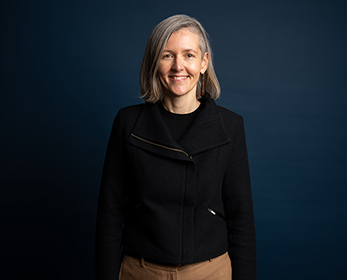
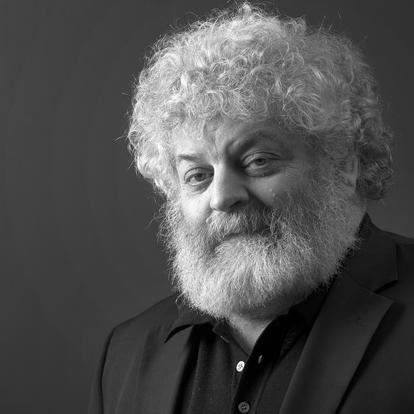
Rowena Harper is a Professor and Deputy Vice-Chancellor (Education) at Edith Cowan University (ECU), where she leads educational strategy, including Library and the Centre for Learning and Teaching. Her portfolio encompasses curriculum innovation, learning technologies, and academic integrity initiatives. Prior roles include Director of ECU's Centre for Learning and Teaching and Associate Director of Curriculum Development at the University of South Australia. Harper holds a PhD, GradCertEd, and BA (Hons). Her research focuses on academic integrity, contract cheating, digital learning, and English language development. She co-founded the International Consortium of Academic Language and Learning Developers (ICALLD) and served as President of the Association for Academic Language and Learning (AALL). Key projects include leading the Learning Management System transition and City Campus Project at ECU. Her articles highlight innovative approaches to combating contract cheating, assessment reform, and digital clinical communication in health education. She emphasizes ethical pedagogy and institutional accountability in addressing academic misconduct.
Samuel Brazys is Associate Professor in the School of Politics and International Relations (SPIRe) at University College Dublin (UCD), where he also serves as Vice Principal for Research, Impact & Innovation in the College of Social Science & Law. He is the Editor of the Journal of International Development and has a strong research profile in international political economy and development. BA in Political Science/Economics, Marquette University MA in Economics, Indiana University MSc in Politics of the World Economy, London School of Economics PhD in Political Science, Indiana University Professional Certificate in University Teaching & Learning, UCD His research focuses on the political economy of development, with emphasis on foreign aid, foreign direct investment, Chinese development finance, and governance. He employs sub-national and spatial analysis methods, often using geo-referenced data to assess local-level impacts of development interventions in Africa, South Asia, and the Pacific. His work bridges comparative and international political economy, international organizations, and development studies. Recent publications reveal a consistent trend in analyzing the spatial and political dimensions of development finance, particularly Chinese aid and FDI, and their effects on conflict, governance, and public perceptions. His work increasingly engages with public diplomacy, as seen in studies on mask diplomacy and wolf warrior rhetoric, using large-scale text analysis of media and social media. Irish Research Council Grant: Trade Related Assistance for Development. Evidence from Micro-Level Evaluations (2018) UCD College of Human Sciences Research Funding Scheme (2015–2016) His research has had significant policy impact, notably cited by the U.S. State Department in decisions regarding Confucius Institutes. He is a member of major professional associations including the American Political Science Association and the International Studies Association. He teaches core modules in International Political Economy, Research Methods, and Governance and Development, and has coordinated thesis and internship programs. He leads a research agenda that critically examines donor behavior, recipient agency, and the political economy of global development, contributing to both academic discourse and policy debates.
Christina Lee is an Associate Professor in English and Cultural Studies at Curtin University, affiliated with the School of Media, Creative Arts and Social Inquiry and the Faculty of Humanities. She earned her PhD in Communication Studies from Murdoch University. Her research focuses on cultural memory, screen tourism, spectral spaces, and representations of gender/race in popular culture. Current projects explore affective landscapes in screen tourism (e.g., Bridgerton , Harry Potter ), urban ghost cities, and nostalgia in youth cinema. She edits peer-reviewed books and contributes to The Conversation . Teaching: Leads undergraduate units like Engaging Narratives and supervises postgraduate students in cultural/media studies. Active in curriculum development and assessment reform. Research Interests: Combines cultural theory with film/media analysis, emphasizing how spaces and spectrality shape cultural narratives. Recent projects include Screen Tourism and Affective Landscapes (2023) and Haunted Futures (2023). Her work often bridges academic critique with creative practice, as seen in video-installation collaborations. Memberships: Association for Cultural Studies, Cultural Studies Association of Australasia, and Graduate Women Western Australia. Her work has been showcased at venues like the John Curtin Gallery and PICA (Perth Institute of Contemporary Arts). Grants/Labs: Leads Curtin University’s tourism futures research (e.g., 2032 Western Australia Vision). Collaborates with interdisciplinary teams on projects like sustainable mining paradoxes (2018) and Hong Kong’s educational reforms (2016).
Tim Wade is a Leverhulme Early Career Fellow at the Centre for the Study of the Renaissance at the University of Warwick. He previously served as a lecturer and junior research fellow at the University of Oxford, demonstrating a strong foundation in early modern intellectual history and Renaissance studies. His research centers on the history of the book, early modern readership, marginalia, Renaissance humanism, the Reformation, Erasmus, Christian Hebraism, and transnational scholarly networks within the Republic of Letters. He is particularly interested in how ideas were transmitted across Europe through institutions such as printing shops, universities, and diplomatic missions. His recent publications focus on key figures like Reginald Pole and Richard Pace, examining their roles in humanist and ecclesiastical scholarship. His current project, England’s Roads to Renaissance , explores English scholarly engagement in continental Europe between 1490 and 1550, drawing on travel accounts, letters, marginalia, and printed books. Scientific Awards: Leverhulme Early Career Fellow Tim Wade has advised no students listed in the provided text and has not mentioned specific grants beyond his fellowship. He is affiliated with the Centre for the Study of the Renaissance at Warwick, a hub for interdisciplinary research on early modern European culture and thought.
Madawi Al-Rasheed is Visiting Professor at the London School of Economics (LSE) Middle East Centre, where she conducts research on political and religious change in Saudi Arabia, particularly following the 2011 Arab uprisings. She previously held the position of Professor of Anthropology of Religion at King’s College London (1994–2013), was a Research Fellow at the Open Society Foundation, and a Prize Research Fellow at Nuffield College, Oxford. She has also taught at Goldsmiths College and the University of Oxford. Her research focuses on Saudi political development, gender policies, religious reform, and civil society. She is widely published, with major works including Muted Modernists (2015), Salman’s Legacy (2018), and A History of Saudi Arabia . Her research has been supported by fellowships from the Open Society Foundation and other institutions. Al-Rasheed is a frequent contributor to international media, including BBC, CNN, CCTV, and Al-Hura, and has published op-eds in The Guardian , Foreign Policy , Al-Monitor , and Foreign Affairs . She has given seminars at Harvard University, the University of Denver, and Casa Arabe in Madrid. Saudi Arabia GCC states Anthropology Gender Islamic Politics Political Reform Her recent publications reflect a consistent focus on authoritarian resilience, religious reinterpretation, and social change in Saudi Arabia, particularly under Mohammed bin Salman. Themes include state-led modernization, repression of dissent, gender reforms, and the manipulation of nationalist discourse. Fellow of the British Academy (2020) She has advised governments and international organizations and continues to be an influential public intellectual on Gulf affairs. Although she does not appear to supervise formal students at LSE, her extensive publications and public engagement reflect significant academic mentorship and influence. She is not part of a formal lab or research team but leads independent and collaborative research initiatives.
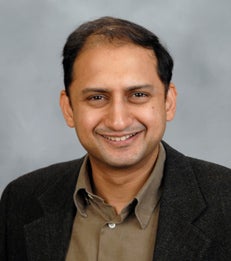
Viral V. Acharya is the C.V. Starr Professor of Economics in the Department of Finance at New York University Stern School of Business. He is a Research Associate at the National Bureau of Economic Research (NBER), a Research Affiliate at the Center for Economic Policy Research (CEPR), and a Research Associate at the European Corporate Governance Institute (ECGI). He previously served as Deputy Governor of the Reserve Bank of India (2017–2019), with responsibilities in monetary policy, financial markets, and financial stability. He is currently Director of Doctoral Education at NYU Stern (2025–), Advisor to the NYU Stern Henry Kaufman Initiative on Financial History (2023–2026), and a Scientific Advisor to the Sveriges Riksbank (2024–). He is also a member of the Climate-related Financial Risk Advisory Committee (CFRAC) of the Financial Stability Oversight Council (2023–2026), the Bellagio Group, and the Financial Advisory Roundtable of the Federal Reserve Bank of New York. Education: B.Tech. in Computer Science and Engineering, Indian Institute of Technology, Mumbai (1995) Ph.D. in Finance, New York University Stern School of Business (2001) His research focuses on systemic risk, financial regulation, sovereign and financial linkages, credit and liquidity risk, and the macroeconomic implications of financial frictions. He has also recently explored risks related to pandemics and climate change. His recent publications examine commercial real estate exposure in banks, spillover risks from non-banks, U.S. Treasury market dynamics, and industrial policy in India. The body of work consistently emphasizes financial stability, regulatory design, and the interaction between public policy and financial markets. Scientific Awards: Alexandre Lamfalussy Senior Research Fellowship, Bank for International Settlements (2017) Inaugural Banque de France – Toulouse School of Economics Junior Prize (2011) Senior Houblon-Norman Research Fellowship, Bank of England (2008) Clarivate Analytics Highly Cited Researcher (2020–2022) Acharya has held numerous editorial and leadership roles, including Editor of the Journal of Law, Finance and Accounting (2014–2016, 2020–), member of the Editorial Committee of the Annual Review of Financial Economics (2022–), Board Member of the American Finance Association (2024–), and Director of the Western Finance Association (2012–2015). He has served as an Academic Advisor to multiple Federal Reserve Banks and international institutions including the IMF, World Bank, and BIS. He advises on financial policy globally and is a frequent commentator in major media outlets. He is not known to advise specific students, but his leadership in doctoral education at NYU Stern underscores his role in mentoring the next generation of finance scholars. He is affiliated with research centers and policy initiatives focused on financial history, climate risk, and financial stability.
Dr. Tajul Islam is a Lecturer in Islamic Studies at the School of Languages, Cultures and Societies , University of Leeds , where he has been a member of staff since 2009. He also holds a visiting position at the University of the Punjab, Lahore. His academic work bridges traditional Islamic scholarship and critical theory, and he is a co-founder of Critical Muslim Studies (CMS) at Leeds, a framework aimed at centering Muslim subjectivity and decolonizing knowledge production in higher education. Education: BA in Arabic and Islamic Studies — University of Leeds PhD in Arab and Islamic Studies — University of Exeter Dr. Islam’s research encompasses a wide range of fields, including Islamic Theology (kalam) , Qur’anic Studies , Hadith , Islamic Law , Islamic Philosophy , Islamism , Islamophobia , antisemitism , racism , Biblical Studies , and Madrasa studies . His teaching emphasizes inclusivity and sensitivity to contemporary issues of identity and prejudice. His recent publications reflect a strong interdisciplinary trend, combining religious studies with food ethics, digital humanities, and decolonial theory. Key themes include theological minimalism , racial justice in early Islam , Islamic reform , and cross-traditional dialogue . He frequently presents at international conferences and public events on topics such as decolonial imagination, fatwa borrowing, and Muslim identity. Scientific Contributions and Recognition: Co-authored a well-cited article on Hanafi fiqh and British Muslims’ views on cultured meat. Published on Qur’anic phonetics and automatic lexis extraction. Contributed to encyclopedias on Ibn Mujahid and the Bible’s use in Islamophobic discourse. Co-founded the Iqbal Centre for Critical Muslim Studies. Dr. Islam supervises a diverse cohort of PhD students on topics ranging from blasphemy laws and translation studies to female religious authority and Qur’anic coherence. He has successfully guided over 15 doctoral candidates to completion. He is also involved in collaborative research and international academic partnerships, particularly with institutions in Pakistan. Labs and Research Groups: Co-Director, Iqbal Centre for Critical Muslim Studies Member of research groups in Arabic Cultural Studies , Conflict , and History
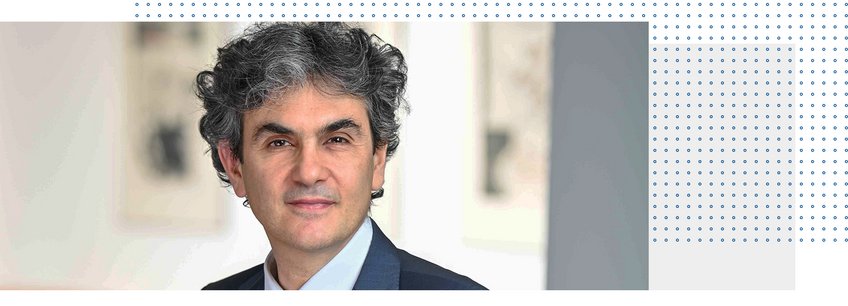
Lucio Baccaro is Director at the Max Planck Institute for the Study of Societies (MPIfG) and was Full Professor of Macrosociology at the University of Geneva, where he also served as Deputy Dean for Research (2016–2020). He has held academic positions at MIT, Case Western Reserve University, and visiting roles at the University of Turin and the University of Vienna. His primary affiliations are with MPIfG and the University of Geneva, both central to his research in political economy and sociology. Education: PhD in Management and Political Science, Massachusetts Institute of Technology (MIT), 1999 Doctorate in Labor Law and Industrial Relations, University of Pavia, 1997 Master of Business Administration, Stoa' (IRI-MIT joint venture), 1991 Laurea in Philosophy, summa cum laude, University "La Sapienza", Rome, 1989 Lucio Baccaro’s research focuses on comparative political economy, labor relations, global worker rights, and deliberative governance . His work integrates economic sociology and political sociology to analyze institutional change, social dialogue, and the impact of globalization on labor and welfare systems. He has led major comparative studies on employment models, pension reforms, and international labor standards. His scholarship emphasizes the interplay between institutions, ideas, and power in shaping economic governance. His recent publications reveal a consistent focus on institutional change, deliberative processes, labor market reforms, and global justice . Themes include path dependence in international organizations, the transformation of collective bargaining, and the role of expertise in democratic governance. His interdisciplinary approach bridges sociology, political science, and economics, with strong methodological rigor in comparative and qualitative analysis. Scientific Awards and Honors: Honorary Professor, University of Duisburg-Essen (2023) Professeur honoraire, University of Geneva (2020) International Geneva Award (2011) Outstanding Young Scholar Award, IRRA (2003) Founder's Prize, SASE (2001) Maurice F. Strong Career Development Chair, MIT (2006–2009) Multiple fellowships from SSRC, Harvard, MIT, and CUNY Alfiere del Lavoro, awarded by the President of Italy (1984) Advising and Grants: While specific student advisees are not listed, Baccaro has supervised research and mentored scholars through his roles at MPIfG and the University of Geneva. He has secured substantial research funding, including grants from the Swiss National Science Foundation (SNF) and the Swiss Network for International Studies (SNIS), supporting projects on post-Fordist growth models, employment policy, and deliberative governance. His leadership in co-principal investigator roles highlights his collaborative research approach and institutional influence. Labs and Research Teams: As Director at MPIfG, Baccaro leads a major research institute focused on the study of societal and economic institutions. He has been instrumental in shaping research agendas on political economy and governance, fostering interdisciplinary collaboration and international scholarly exchange.
Prof. Dr. Marco Rieckmann is a Professor of Higher Education Didactics with a focus on key competencies at the Department of Educational Sciences, Faculty of Education and Social Sciences, University of Vechta, Germany. He is also the Co-Chair of the UNESCO Chair ‘Physical Education and Sport Pedagogy for Sustainable Development’ at the University of Limerick since 2024. His work centers on education for sustainable development (ESD), transformative learning, and sustainable university development. His research interests include: Education for Sustainable Development (ESD) and Teacher Education Service Learning and Civic Engagement Curriculum Development for Sustainability Higher Education Governance and Institutional Transformation Digitalization and Serious Games in Sustainability Education Global Learning and Intercultural Education His recent publications and projects reflect a strong trend toward assessing the impact of sustainability education, developing innovative teaching formats (e.g., Minecraft-based learning), and fostering whole-institution approaches in schools and universities. He emphasizes participatory, transdisciplinary, and transformative methods to empower learners and institutions. Scientific awards and recognitions include: Best Doctoral Researcher of the Year 2008 (2nd place, Leuphana University) Innovative Teaching Award (2010) Multiple DAAD and ERASMUS guest lectureships UNESCO recognition for HOCH-N and LeNa projects (2018) Prof. Rieckmann actively advises and collaborates with students and researchers, leads major funded projects (e.g., IMP>ACT, Senatra, HOCH-N), and contributes to national and international policy development. He is a key figure in advancing sustainability in higher education through research, teaching, and institutional leadership. He leads and participates in various research labs and networks, including the UNESCO Chair, the LeNa network, the HOCH-N consortium, and multiple EU-funded projects focusing on co-learning labs, digital tools, and service learning for sustainability.
Sriram Subramanian is an Assistant Professor at the School of Computer Science in Carleton University since July 2025. He holds affiliations with the Vector Institute for Artificial Intelligence and the Schwartz Reisman Institute for Technology and Society in Toronto, and serves as a mentor in the Indigenous Black Engineering and Technology (IBET) PhD Project . Ph.D. in Electrical and Computer Engineering, University of Waterloo (2022) MASc in Electrical and Computer Engineering, University of Waterloo (2018) BE in Geomatics Engineering, Anna University (2016) His research focuses on advancing Multi-agent Systems and Reinforcement Learning through intersections with Game Theory , with applications in generative AI , robotics, finance, and autonomous driving. Recent work emphasizes cooperation mechanisms, constraint learning, and theoretical robustness in large-scale environments. Articles demonstrate cross-disciplinary impacts in chemistry (ChemGymRL) and societal systems. Notable awards include the MITACS Globalink Research Award , Pasupalak Fellowship in AI , and the CAIAC Best Doctoral Dissertation Award (2023) . Publications span top venues like AISTATS, ICML, AAAI, IJCAI, JAIR , and TMLR . He has collaborated with Microsoft, Royal Bank of Canada, Denso, ESRI, and Borealis AI. As a Distinguished Postdoctoral Fellow at the Vector Institute (2022-2025), he advanced algorithmic frameworks while maintaining active roles in conference reviewing and committee work. His advocacy for equity and diversity drives mentorship initiatives in Canadian institutions.
Ivan Franceschini is a Research Fellow at the Department of Asian and North African Studies, Ca' Foscari University of Venice, and a Postdoctoral Fellow at The Australian National University's Coral Bell School of Asia Pacific Affairs. His work focuses on Chinese labor movements, civil society, and political transformations. University: Ca' Foscari University of Venice Department: Department of Asian and North African Studies Email: ivan.franceschini@unive.it Franceschini's research spans labor activism, NGO strategies, and historical narratives in China. His publications in journals like The China Quarterly and Pacific Affairs analyze state-labor relations, digital activism, and garment industry exploitation. He co-edits the Made in China Journal , exploring labor and civil society dynamics. Key article trends include comparative labor studies across China and Cambodia, legal mobilization by workers, and historical reinterpretations such as the Taiping Rebellion. His 2019 work on collective bargaining and 2018 comparative analysis of garment workers highlight systemic labor challenges.
R. Edward Freeman is Stephen E. Bachand University Professor of Business Administration and Olsson Professor of Business Administration at the University of Virginia Darden School of Business. He serves as academic director of the Institute for Business in Society and previously directed Darden's Olsson Center for Applied Ethics from 1986 to 2009. Freeman maintains additional academic appointments as adjunct professor of stakeholder management at Copenhagen Business School, visiting professor at Nyenrode Business School, and adjunct professor of management at Monash University. Freeman's research focuses on stakeholder management, business ethics, and business strategy. His work explores how businesses can create value for multiple stakeholders without tradeoffs. He has developed innovative teaching methods incorporating theater, music, and philosophy into business education, including the popular 'Leadership and Theater' course. His publications reveal a consistent focus on stakeholder theory applications across diverse contexts, from sports ethics and gender equality to sustainable business practices and organizational decision-making. Recent work examines contemporary issues like transgender athletes in sports, sustainable food systems, and ethical leadership in crisis situations. His scientific achievements have been recognized through numerous awards: Seven honorary doctorates from institutions across Europe and Canada Lifetime Achievement Awards from World Resources Institute, Aspen Institute, Humboldt University, Academy of Management, and Society for Business Ethics Multiple teaching awards from Wharton, Carlson School, Darden, and Virginia State Council Freeman has advised numerous global corporations and has served as Co-editor in Chief of the Journal of Business Ethics. His stakeholder theory framework has influenced business practice worldwide and been translated into multiple languages. Beyond academia, he co-founded Stakeholder Media LLC, hosts The Stakeholder Podcast, and is active in music as a co-founder of Red Goat Records.
Prof. Dr. Jan Eckel is a Professor of Modern and Contemporary History at the University of Freiburg . His academic career includes prior professorships at the University of Tübingen (2016-2021) and the University of Cologne (2015-2016). He researches human rights history , transnational politics , and globalization discourses since the late 19th century. Research Focus: Interactions between state/non-state actors, Cold War dynamics, decolonization, and ethical governance frameworks. Grant Involvement: DFG-funded projects, including SFB 923 sub-project on globalization narratives (1990s-2000s). His 15 most recent publications analyze globalization discourses, human rights evolution, and transnational conflict resolution, with keywords spanning 20th-Century History , Political Science , and Conflict Studies . Scientific Awards include the 2024 Opus Magnum Scholarship and multiple honors for historical analysis excellence. He advises seven doctoral students in contemporary history and globalization studies.
A. Mechele Dickerson is a Professor at the University of Texas School of Law and holds a courtesy appointment at the LBJ School of Public Affairs. She serves as the Faculty Athletics Representative for the University of Texas, bridging sports law and academic governance. Her work focuses on financial vulnerability, consumer debt, housing affordability, and racial/economic disparities. Arthur L. Moller Chair in Bankruptcy Law and Practice Distinguished Teaching Professor Former Associate Dean for Academic Affairs (2006–2011) Dickerson’s research explores the intersection of law, economics, and social policy, particularly how systemic issues affect the U.S. middle class. She has authored a book Homeownership and America's Financial Underclass (Cambridge, 2014) and is set to release The Middle-Class New Deal (University of California Press, Jan. 2026), which addresses strategies for restoring upward mobility. Her scholarship has been featured in prominent venues like the University of Memphis Law Review , Arizona Law Review , and Texas Law Review , with recurring themes on housing policy, debt decision-making, and economic justice. She frequently comments on national issues via media outlets such as USA Today , The Guardian , and New York Times . Scientific Awards: Elected member, American Law Institute Elected member, American College of Bankruptcy Dickerson teaches core courses in Federal Civil Procedure and Remedies, and has led interdisciplinary graduate courses on the American middle class and the impacts of the COVID-19 pandemic. She has provided congressional testimony and delivered keynote speeches at institutions like Austin Community College and the U.S. Capitol Visitor Center.
Rune Svarverud is a Professor at the Department of Culture, Religion, Asian and Middle Eastern Studies, Faculty of Arts, University of Oslo. His research spans two major periods in Chinese history: early Chinese philosophy (pre-Qin to Han dynasties) and modern China (post-Opium War cultural encounters). Key research areas include conceptual history, environmental history, political philosophy, and cross-cultural translation studies. Permanent employee since 2004 Head of Department since 2021 Former PhD committee member and research leader (2007-2014) Active in international collaborations with Fudan, Nanjing, Kansai, and Zhejiang Universities His academic work focuses on: History of concepts and textual analysis in Chinese thought Environmental history and terminology evolution in modern China Qing dynasty legal and political philosophy Translation of Western knowledge into Chinese Interactions between Chinese and Western modernity Individualism in 20th-century Chinese society Recent publications examine environmental terminology, cross-cultural scientific translation, and conceptual frameworks in Qing reform. His interdisciplinary approach connects philosophy, law, and environmental studies through historical analysis. Co-edited works on standard languages and cultural communication Contributor to ACTA ORIENTALIA and PNAS Recipient of multiple research grants for Transsustain project