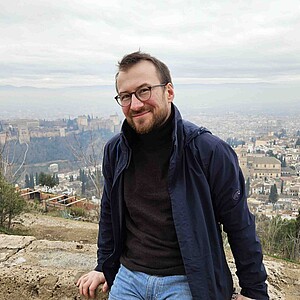
Patrick L. Kohlمشاهده پروفایل
پژوهشگر ارشد
Dr. Patrick L. Kohl is a Postdoctoral Research Fellow at the Department of Population Genomics in Farm Animals at the University of Hohenheim (Walter Benjamin Program, DFG). His research focuses on the ecology, evolution, and behavior of social insects, particularly honeybees (Apis spp.), with an emphasis on understanding wild-living populations' dynamics and the impacts of domestication. He completed his doctoral studies in Biology at the University of Würzburg (2019–2023), funded by the German Federal Environmental Foundation, where he investigated wild honeybee colony demographics and parasite burdens in Germany. His academic journey includes a Master's in Biology (University of Würzburg, 2015–2018), with a thesis on alpine pollination ecology, and a Bachelor's in Biosciences (University of Münster and Universidad de Granada, 2011–2014), focusing on honeybee drone production. He conducted comparative behavioral studies on Asian honeybees at India's National Centre for Biological Sciences (2015–2018). Dr. Kohl's current project, funded by the German Research Foundation (DFG), explores genomic signatures of modern beekeeping practices in Apis mellifera. This work investigates whether domestication pressures have driven functional genetic differences between wild and managed populations, impacting fitness and conservation strategies. His publications span topics like honeybee communication (waggle dance analysis), parasite ecology, and habitat preferences, with a focus on Central European forests and semi-natural landscapes. He has contributed to high-impact journals such as Proceedings of the Royal Society B , Oecologia , and Trends in Ecology & Evolution . Scientific contributions include identifying reduced parasite loads in feral colonies and demonstrating how landscape features influence overwintering survival. His work bridges evolutionary biology, applied ecology, and conservation policy, emphasizing the need for sustainable apiculture practices.





.JPG)