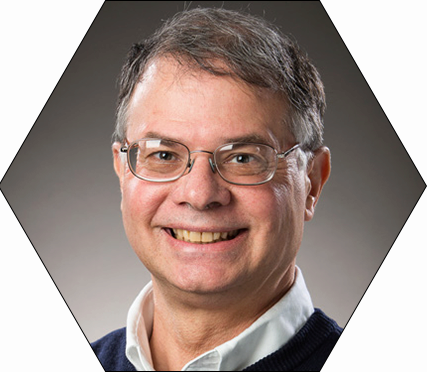
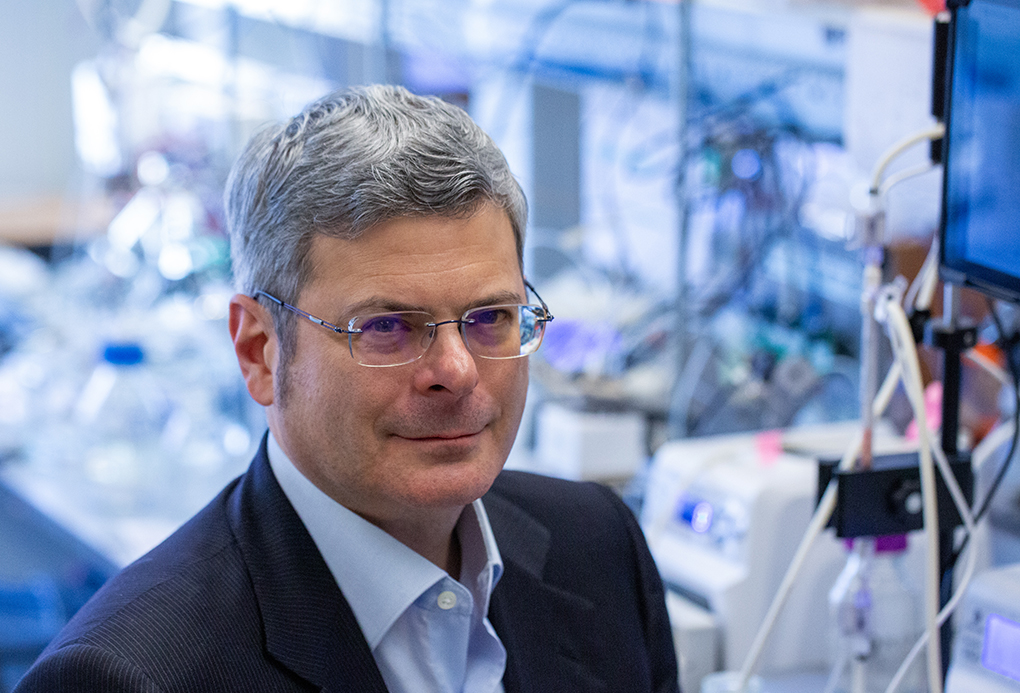
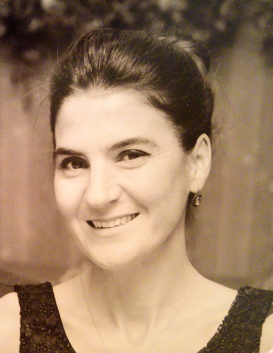
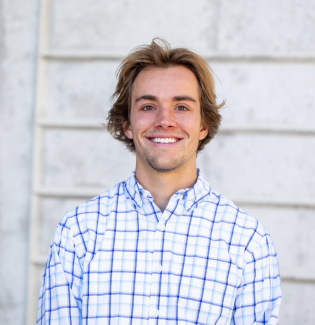
Prof. Dr.-Ing. Matthias Deckert is Professor and Head of Kunststofftechnik at Hochschule Esslingen, where he also serves as Institute Director. His research focuses on polymer processing, recycling technologies, and additive manufacturing, with emphasis on sustainable materials engineering. Recent publications explore advanced injection molding techniques, recycling potential of specialized polymer products, and additive manufacturing with functional additives. Research trends include optimization of silicone rubber processing, mechanical behavior of recycled polymers, biomimetic optical materials, and AI-assisted manufacturing processes. Studies frequently investigate material degradation mechanisms and sustainability improvements.
Dr. Jonathan S. Colton is the Eugene C. Gwaltney, Jr. Professor of Manufacturing and a Professor in the Department of Mechanical Engineering at the Georgia Institute of Technology. He joined Georgia Tech in 1985 as an Assistant Professor and has since contributed extensively to research in manufacturing, polymers, and humanitarian design. His work focuses on polymer composites, micro and nano engineering, and technologies for resource-limited environments. Dr. Colton has a strong record of innovation, reflected in over 20 patents and numerous awards, including the Jefferson Science Fellow (2013-2014) and the Woodruff School Outstanding Educator Award (2007). Education : Ph.D., Mechanical Engineering, Massachusetts Institute of Technology, 1986 S.M., Mechanical Engineering, Massachusetts Institute of Technology, 1982 S.B., Mechanical Engineering, Massachusetts Institute of Technology, 1981 Research Interests : Dr. Colton’s research spans polymer processing (e.g., micro-molding, injection molding), metamaterials for electromagnetic applications, and humanitarian design for developing countries. He emphasizes multidisciplinary collaboration to create sustainable, user-centric solutions. Recent projects include solar dryers, low-speed wind turbines for Africa, and agricultural machinery for Bangladesh. Publications & Awards : Over 100 journal articles and 20 patents, including critical work on microcantilevers and composite manufacturing. Recognitions include fellowships from the Society of Plastics Engineers (2004), ASME (1999), and multiple teaching awards. Advising & Grants : Advised notable students like Andrew McFarland (2005 Best Ph.D. Thesis) and Anne Palmer (2000 Best M.S. Thesis). His grants and partnerships include work with NASA, WHO, and NGOs like The Global Soap Project.
Professor Dobrivoje Ćatić serves as a Professor at the Department for Mechanical Constructions and Mechanization within the Faculty of Engineering at the University of Kragujevac , Serbia. He chairs the Machine Structures and Mechanization research group and focuses on mechanical systems reliability, automotive safety, and failure analysis. His research interests emphasize brake systems design , failure mode analysis , and regulatory compliance for vehicles and industrial machinery. Key areas include: Vehicle braking system reliability Automotive component failure prediction Material degradation under environmental stress Lean manufacturing principles in healthcare Recent publications highlight advancements in disc brake dynamics , tire wear safety , and photovoltaic system performance analysis . His work bridges theoretical reliability engineering with practical applications in transportation and manufacturing sectors. Professional contributions include: Development of FMEA/FMECA methodologies EU regulatory compliance for agricultural machinery Acoustic noise reduction in disc brakes Thermal stress analysis of polymers Professor Ćatić collaborates with industry partners on projects addressing mechanical system dependability and safety standards, contributing to safer vehicle and industrial equipment designs.
Matteo Calaon serves as a Senior Researcher in Manufacturing Engineering within the Department of Civil and Mechanical Engineering at the Technical University of Denmark (DTU). His research spans multiple advanced manufacturing domains with particular expertise in additive manufacturing, injection molding technologies, and digital transformation of manufacturing processes. Dr. Calaon's research interests focus on integrating artificial intelligence with physics-based modeling for manufacturing process optimization. His work in Additive Manufacturing explores quality prediction systems for polymer PBF-LB processes, while his research in Injection Molding investigates high-precision micro-manufacturing techniques. He also contributes significantly to Digital Manufacturing through development of digital fingerprints linking product and process perspectives. His recent publications demonstrate a clear trend toward hybrid AI-physics approaches for manufacturing quality control, with applications spanning polymer processing, silicon crystal growth, and medical device manufacturing. This interdisciplinary work bridges computer vision, materials science, and precision engineering to solve complex manufacturing challenges. Dr. Calaon actively supervises multiple PhD students across diverse manufacturing projects including Platform-based Manufacturing Systems, Additive Manufacturing Farm, and Digital Moulding 4.0 initiatives. His research is supported through substantial project funding that enables advanced manufacturing research and development. He is actively involved in the manufacturing research community, participating in conferences such as the Euspen Special Interest Group Meeting on Structured and Freeform Surfaces. His collaborative network extends across multiple institutions and research groups focused on advancing manufacturing technologies.
Guido Tosello is an Associate Professor in the Department of Civil and Mechanical Engineering at the Technical University of Denmark. His research focuses on advanced manufacturing technologies, including injection molding, additive manufacturing, and process optimization. He leads projects addressing sustainability-by-design, digital manufacturing systems, and precision engineering. Tosello has supervised multiple PhD students and contributed to over 395 publications, with recent work emphasizing data-driven modeling, oxide classification in silicon crystal growth, and root cause analysis using AI techniques. His research interests span injection molding, additive manufacturing integration, process chain optimization, and quality control. Key projects include Digital Moulding 4.0 (zero-defect injection molding) and improving silicon crystal growth efficiency through digital tools. Tosello actively collaborates on industry 4.0 frameworks and has pioneered methods for smart polymer acoustofluidic chip manufacturing. Notable contributions include over 40 projects and 395+ publications, with recent articles focusing on sustainability in manufacturing processes, AI-driven defect analysis, and additive manufacturing applications in extrusion tools. His work aligns with UN Sustainable Development Goals, emphasizing environmental and industrial progress. Tosello advises PhD students in areas like digital manufacturing, polymer tooling, and silicon crystal growth. His lab integrates advanced simulation tools and experimental validation to bridge design, production, and sustainability challenges.
Silvia Agnelli is an Assistant Professor in the Department of Mechanical and Industrial Engineering at the University of Brescia, specializing in Materials Science and Technology. She holds a Bachelor's and Master's degree in Materials Engineering (cum laude) from the University of Brescia (2003-2005) and a European PhD in Materials for Engineering (2011) from the same institution. Her PhD thesis focused on 'Development of fracture mechanics methodologies for polymers and elastomers.' Her research interests include fracture mechanics of ductile and soft polymers, property-structure relationships in elastomers with micro- and nano-fillers, and the large deformation behavior of polymers under impact and varying environmental conditions. She has conducted internships at Martin Luther Universität Halle-Wittenberg (2009) and Cranfield University (2010), contributing to her expertise in advanced materials characterization. Her recent work emphasizes sustainable materials, such as rubber composites using recycled materials, and the optimization of polymer processing techniques like injection molding. She also explores hydrogels for tissue engineering and additive manufacturing for medical applications. Her publications reflect a focus on experimental methodologies for fracture testing, material reinforcement via nanocomposites, and the application of polymer science to real-world challenges like recycling and medical devices. Her research bridges fundamental material science with practical industrial and biomedical innovations.
Professor Bernhardt L. Trout leads the Molecular Engineering Laboratory at MIT’s Department of Chemical Engineering. His work integrates computational, theoretical, and experimental methods to engineer molecular-level solutions for high-value chemical applications. Key focus areas include continuous pharmaceutical manufacturing, biopharmaceutical formulation, nucleation/crystallization processes, and molecular computational methods. Education : Ph.D. in Chemical Engineering, University of California, Berkeley (1996) S.B. and S.M. in Chemical Engineering, MIT (1990, 1990) Research Interests : Pharmaceutical Manufacturing: Developing continuous processes and novel formulation strategies for biologics. Nucleation & Crystallization: Molecular-level design of crystals and polymorphic control. Computational Methods: Innovating algorithms for reactive processes in complex systems. Energy & Environment: Exploring gas hydrate technologies and sustainable manufacturing. Awards : Over 15 major honors including The Medicine Maker Power List (2015–2017), AIChE Excellence in Process Development Award (2014), and NSF CAREER Award (2000–2004). Advising & Labs : Directs the Trout Research Group, fostering innovation in molecular engineering. Collaborates on projects like injection molding for pharmaceuticals and freeze-drying optimization. Active in professional education, offering courses on biotherapeutic stabilization and AI ethics in technology.
B. Duygu Özpolat is an Assistant Professor of Biology at Washington University in St. Louis, where she leads the Özpolat Lab focused on understanding the mechanisms of reproductive cell regeneration. Her research addresses fundamental questions about how reproductive cells (which become eggs and sperm) can be regenerated in certain organisms but not in humans or well-established research models. Dr. Özpolat's work combines advanced techniques including live-imaging, genome-editing, mRNA injections, and transgenesis to study marine and aquatic segmented worms, particularly Platynereis dumerilii (Dumeril's clam worm) and Pristina leidyi (water nymph worm). Her laboratory investigates three primary research areas: the cellular origins and molecular mechanisms of germ cell regeneration, asymmetric cell division in the 4d lineage that gives rise to germline and mesoderm, and host-microbiome interactions in the context of regeneration and asexual reproduction. Her research has significant implications for understanding stem cell biology and regenerative medicine, potentially providing insights into the 'mother of all stem cells.' Dr. Özpolat has developed innovative methodologies including optimized Hybridization Chain Reaction protocols and custom 3D-printed tools for embryonic manipulation. Her work has been featured in news outlets including the Marine Biological Laboratory. Dr. Özpolat actively welcomes students and postdocs interested in molecular cell biology, regeneration, stem cell biology, and evolutionary developmental biology to join her laboratory. Her collaborative approach spans multiple disciplines, connecting developmental biology with microbiome research and technical innovation.
Mohammadreza Kadivar is a Lecturer in Engineering Simulation at the Department of Mechanical & Manufacturing Engineering, Atlantic Technological University. His research focuses on additive manufacturing, heat transfer optimization, and advanced manufacturing processes. He is affiliated with the PEM (Precision Engineering Materials) and MISHE (Mathematical Modelling for Health & Environment) research centers. Key research areas include additive manufactured tooling, convective heat transfer in rough channels, and nanofluid dynamics. He actively supervises PhD students and offers guidance on funding opportunities through Irish Research Council, SFI, and Marie Skłodowska-Curie Actions. Notable contributions include studies on surface acoustic wave sensors in mould tools, roughness effects in mini-channels, and CFD modeling of turbulent flows. His work aligns with UN Sustainable Development Goals through innovative thermal and manufacturing solutions.
David Tormey is a Senior Lecturer and Director of the Precision Engineering Materials and Manufacturing Research Centre (PEM Research Centre) at Atlantic Technological University's Department of Mechanical & Manufacturing Engineering. His research focuses on additive manufacturing, heat transfer optimization, and advanced materials processing, particularly in polypropylene and stainless steel applications. He leads interdisciplinary projects addressing sustainable manufacturing and industrial innovation. Research interests include additive manufacturing techniques, laser welding of polymers, computational fluid dynamics (CFD), and sensor integration for real-time process monitoring. His work contributes to UN Sustainable Development Goals related to Industry, Innovation, and Infrastructure (SDG 9) and Climate Action (SDG 13). Recent studies emphasize roughness effects on heat transfer in additive-manufactured channels, optimization of injection molding processes, and biomedical applications of nanocoatings. Collaborations span academic and industrial partners globally, addressing challenges in energy-efficient manufacturing and materials science. The PEM Research Centre, under his leadership, develops cutting-edge solutions for precision engineering and advanced manufacturing systems. His publications (58+ articles) highlight contributions to thermal engineering, polymer processing, and AI-driven quality control in manufacturing.
Merve Erdal is an Associate Professor in the Department of Mechanical Engineering at Middle East Technical University (METU), Ankara, Turkey. She holds a B.Sc. (1989), M.Sc. (1992) from METU, and a Ph.D. (1998) from the University of Illinois. Her research focuses on transport phenomena in materials processing, composites, structural/functional ceramics, rapid prototyping, and computational fluid mechanics. She leads the Composites Lab, offering graduate research opportunities in vascularized composites, electrically conductive materials, honeycomb structures, and microstructure control in composites. Her work emphasizes advanced manufacturing techniques like selective laser sintering and resin transfer molding. Notable projects include strain monitoring systems in fiber-reinforced composites, CNT dispersion effects, and optimization of sandwich structures. Her research bridges material science with mechanical engineering, addressing challenges in composite design, process-induced defects, and material functionality. Current research topics include: 1) Controlled functionality in composites via vascularized designs, 2) Electrically conductive nanocomposites, 3) Honeycomb sandwich structure processing, and 4) Microstructure homogenization through resin flow control. She collaborates on numerical modeling of void dynamics, warpage characterization, and equivalent material models for sandwich laminates. Dr. Erdal’s publications span journals like Advanced Composite Materials , Results in Physics , and Journal of Composite Materials , reflecting her expertise in composite mechanics, material characterization, and process simulation. Open positions are available for graduate students in her lab, focusing on innovative composite applications and advanced manufacturing processes.
Prof. Dr. Benjamin Grewe is an Associate Professor at the Department of Information Technology and Electrical Engineering at ETH Zürich. His research focuses on the intersection of artificial intelligence, neuroscience, and neural networks, with a particular emphasis on cortical hierarchies, continual learning, and biologically plausible algorithms. He leads projects involving deep feedback control, synaptic connectivity analysis, and neural ensemble dynamics. Grewe teaches courses such as Learning in Deep Artificial and Biological Neuronal Networks and Reinforcement Learning Basics , integrating theoretical and applied perspectives. His work bridges computational models with biological insights, contributing to advancements in medical robotics, process control, and AI safety. His research interests span neural network architectures , continual learning , and biological neuronal systems . Recent projects explore synaptic plasticity in cortical microcircuits and the application of AI to surgical planning and industrial automation. Grewe’s publications reflect a multidisciplinary approach, addressing challenges in both technical and biological domains. No scientific awards are explicitly mentioned in the provided texts. His advising and grant activities remain unspecified in the available data. His lab, part of the Neural and Intelligent Systems group, focuses on developing biologically inspired algorithms and neural interfaces.
Dr. Loong-Tak Lim is a Professor and Undergraduate Faculty Advisor at the University of Guelph's Department of Food Science. He leads the Packaging and Biomaterials Group, focusing on food packaging, electrospinning, encapsulation, and coffee technology. Prior to academia, he worked at Husky Injection Molding Systems (1999-2005). He teaches Food Packaging and Food Engineering Principles, and co-teaches graduate courses. His research develops ultrafine fibers and films for food/non-food applications, extending food shelf-life through material science innovations. Education: Ph.D., Food Science (U. Guelph, 1999); B.Sc., Food Science (Acadia U., 1994). Research interests include active/intelligent packaging, biopolymer films, electrospun nanofibers, and coffee chemistry. Over 200+ publications span journals like Food Hydrocolloids , Journal of Food Science , and Polymers . He co-authored books on polylactic acid (PLA) and postharvest nanotechnology. Patents include methods for volatile compound release in packaging and aldehyde detection in polymers. Lab teams: Current advisees include PhD/MSc students and post-docs working on nanotechnology, antimicrobial coatings, and coffee processing. Past students have pursued roles in academia, industry, and post-doc research globally.
Salvatore Bordonaro is an Associate Professor at the University of Catania's Department of Agriculture, Food and Environment (Di3A), specializing in Animal Production. With a PhD in Zootechnical Sciences since 1997, his career spans over three decades in research and teaching. He transitioned from contract lecturer (2001-2014) to his current associate professorship since 2014. Animal Genetics and Biotechnology Biodiversity Characterization Genetic Improvement Proteomics in Milk Analysis Livestock Science Molecular Biology Applications His research focuses on genetic markers like microsatellites and SNPs to assess biodiversity in livestock species (bovine, caprine, equine, swine, donkey). He investigates milk protein polymorphisms for hypoallergenic properties and participates in national/European research projects. Recent work includes DNA sequencing for phylogenetic studies of Sicilian breeds. Publications from 2018-2025 span plant pathology, molecular diagnostics, and sustainable agricultural practices. Articles show expertise in Phytophthora diseases, Trichoderma biocontrol, and innovative detection methods (LAMP, RPA assays). While primarily zootechnics-focused, collaborations extend into plant disease research and postharvest technologies.
Jose Antonio Ortiz Marzo is a researcher at the Department of Mechanical Engineering, Polytechnic University of Catalonia (UPC), affiliated with the MICROTECH LAB - Microtechnology for the Industry. His work focuses on manufacturing technologies, surface roughness, tool wear, and high-speed machining, particularly in hardened steels and aluminum alloys. He has contributed to projects like Smart Trash Detection for Shared Mobility and Optimal Machining Strategies for Injection Molds. PhD in Mechanical Engineering (UPC) Specializes in predictive modeling for surface quality and deburring techniques Recognized with UPC Quality in University Teaching Award (2016) and Distinció Jaume Vicens Vives (2016) Collaborates with teams on MQL lubrication, microlubrication, and sustainable manufacturing His recent research explores intersections of mechanical design, renewable energy applications, and educational innovation programs. Awards highlight his contributions to both academic excellence and public science outreach.