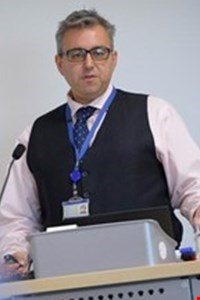
Jérôme Charmet is an Associate Professor at the University of Applied Sciences Arc (HES-SO) and holds adjunct positions at the University of Bern (School of Biomedical and Precision Engineering) and the University of Warwick (Warwick Medical School). His research focuses on biomedical engineering , microfluidics , and advanced manufacturing for medical devices. BSc in Microtechniques, Haute Ecole Arc MSc in Biomedical Engineering, University of Bern Current research projects include: Bacterial Suicide (HES-SO funded): Treating biomaterial-associated infections on 3D-printed implants HYPERCELL (SNSF funded): Developing single-cell T cell therapy efficacy assays ELUSIVE (HES-SO funded): Creating mechanically enhanced biodegradable PCBs Public Mask (HES-SO funded): Biodegradable electrospun mask filters His >50 publications and >1200 citations reflect expertise in biodegradable polymers , organic bioelectronics , and point-of-care diagnostics . Key technologies include microheater fabrication , immunoaffinity liquid biopsies , and contamination-free OFET manufacturing .
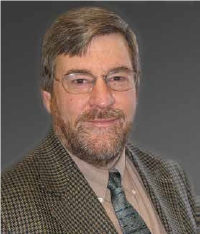
Marek Behr is a Professor (C4/W3) and Chairholder at the Chair for Computational Analysis of Technical Systems within the Faculty of Mechanical Engineering at RWTH Aachen University since 2004. He also holds an Adjunct Professorship at Rice University’s Department of Chemical and Biomolecular Engineering since 2005. His academic leadership roles include serving as Founding Director of the Center for Simulation and Data Science (CSD) since 2018, President of the German Association for Computational Mechanics (GACM) since 2021, and Executive Council Member of the International Association for Computational Mechanics (IACM) since 2020. He coordinates the International Research Training Group 2379 Modern Inverse Problems with the University of Texas at Austin. Behr’s research focuses on computational fluid dynamics (CFD) , biomedical engineering , and finite element methods , with applications in cardiovascular modeling, multiphysics systems, and manufacturing processes. His work bridges engineering and medicine, addressing challenges like in-stent restenosis, hemolysis prediction, and advanced material processing. He has an h-index of 45 (Google Scholar) and over 3,600 citations. Teaching responsibilities include courses such as Simulation Methods in Mechanical Engineering , Parallel Computing in Computational Mechanics , and Finite Elements in Fluids . His research group actively collaborates with institutions like the Jülich-Aachen Research Alliance (JARA) and the Oden Institute . Recent publications emphasize computational models for cardiovascular devices, machine learning in structural health monitoring, and advanced manufacturing simulations, reflecting his interdisciplinary approach to solving complex engineering problems.
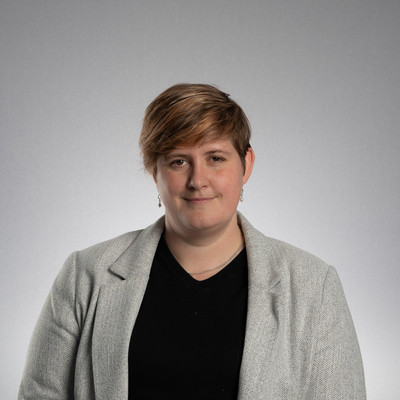
Danilo Quagliotti is a Senior Researcher in the Department of Civil and Mechanical Engineering at the Technical University of Denmark (DTU), specializing in Manufacturing Engineering. He is actively engaged in research related to additive manufacturing, injection molding, surface metrology, and industrial computed tomography (CT), contributing to both academic and industrial advancements in precision engineering. Research Interests: His work focuses on additive manufacturing , surface topography , X-ray CT metrology , and multiscale analysis . He explores how advanced manufacturing techniques affect surface properties and dimensional accuracy, with applications in aerospace, automotive, and quality assurance. His research integrates optical and X-ray metrology with computational modeling for enhanced process control and traceability. Recent Research Trends: Analysis of his latest publications reveals a strong focus on the validation and application of X-ray CT for industrial metrology, particularly in energy-resolved systems for security and dimensional accuracy. His work increasingly combines simulation (e.g., virtual ray tracing) with experimental validation, emphasizing error management and digital twin development in manufacturing. Scientific Awards: Civilingeniør Kristian Rasmussen og hustru Gunhild Katrine Rasmussens Fond (2017) Fabriksejer, Civilingeniør Louis Dreyer Myhrwold og hustru Janne Myhrwolds Fond (2015) Idella Foundation (2016) Otto Mønsteds Fond (2016) Advising and Grants: Quagliotti actively supervises PhD and MSc students, including Sloth, S., and serves as a main supervisor in metrology-related thesis projects. He leads or participates in multiple funded research initiatives such as SensMonCTII and 3DIM , focusing on CT-based monitoring and 3D imaging. His projects often involve collaboration with industry and international partners, securing support from Danish and European funding bodies. Labs and Teams: He is a Principal Investigator (PI) in the 3DIM 3D imaging center at DTU and contributes to the MICROMAN project. His work is embedded within a multidisciplinary team involving experts in materials science, mechanical engineering, and computational imaging, fostering innovation in industrial metrology and advanced manufacturing.
Dr Mihalis Kazilas serves as Reader and Director of the Brunel Composites Centre (BCC) within Brunel University London's College of Engineering, Design and Physical Sciences. With over 20 years of industry and academic experience, he leads a major innovation center established through collaboration between Brunel University and TWI. His research focuses on polymer composites manufacturing, joining processes, and polymers characterisation. Key expertise includes thermoplastic composite processing, interfacial phenomena in composites, and rapid high-temperature manufacturing techniques. His work addresses critical challenges in thermal degradation prevention, interface optimization, and out-of-autoclave production methods for aerospace applications. Analysis of his 15 most recent publications reveals a dominant focus on thermal damage prevention in composite-metal joining, CF/PEEK interface characterization, and laser processing techniques. His research consistently targets industrial applicability with strong emphasis on numerical modeling, multi-scale degradation analysis, and sensor-integrated manufacturing solutions. Kazilas actively collaborates with industry partners through major research projects including CoPropel (marine propellers), smart wind turbine blades development, and graphene sensor implementation for defect detection. His leadership extends to the Non-Metallics Innovation Centre, a joint initiative between TWI, Saudi Aramco, and ADNOC. As Director of BCC since 2016, he oversees research groups focused on composites innovation and material mechanics. His technical management roles at TWI include Business Group Manager for Polymer and Composite Technologies since 2019, demonstrating strong industry-academia integration.
Dejan Lukić serves as Full Professor and Vice-Dean for Investments and Cooperation with Industry at the Faculty of Technical Sciences, University of Novi Sad. He has held progressively senior academic positions since joining the institution in 2000, including Director of the Department of Production Engineering (2021-2024) and Assistant Director (2018-2021). His academic journey began with undergraduate studies in Mechanical Engineering at the same faculty, followed by master's (2007) and doctoral degrees (2012) in specialized production engineering fields. His educational background includes: Bachelor's degree in Mechanical Engineering, Faculty of Technical Sciences (1999) Master's thesis: 'Development of a system for automated design of technological processes for manufacturing plastic injection molds' (2007) Doctoral dissertation: 'Development of a general model of technological preparation of production' (2012) Professor Lukić's research focuses on process planning, production optimization, and techno-economic analysis in manufacturing systems. His work bridges theoretical frameworks with practical industrial applications, particularly in virtual design, CAPP systems integration, and optimization of manufacturing processes. He has made significant contributions to the application of digital technologies in production engineering, including STEP-NC implementation, fuzzy logic for quality control, and collaborative process planning systems. His publication record demonstrates consistent advancement in manufacturing process optimization, with recent work emphasizing multi-criteria decision making, thin-walled structure machining, and digital integration of manufacturing systems. The research trajectory shows evolution from foundational work in traditional process planning toward contemporary applications involving artificial intelligence, collaborative systems, and Industry 4.0 technologies. Professor Lukić has been actively involved in academic service, participating in numerous evaluation committees, professional competitions, and serving as representative of Serbia in the Assembly of the Institute for Materials Testing. His industrial engagement includes consulting on CE/3A product marking, technical system maintenance, and implementation of application software solutions. As an educator and mentor, he has supervised more than 45 undergraduate and master's theses, completed one doctoral dissertation supervision, and currently guides three doctoral candidates. He teaches a comprehensive curriculum spanning process planning, production optimization, logistics, and technological preparation of production across all academic levels. His leadership extends to heading the Master of Professional Studies in Production Engineering program and serving on program committees for multiple scientific conferences and journals in mechanical engineering. Professor Lukić also maintains active industry collaboration through solving professional problems related to product development, manufacturing systems maintenance, and specialized training programs.
Professor Bruno Bürgisser holds a full professorship at the Fribourg School of Engineering and Architecture (HES-SO), leading the Institute for Applied Plastics Research (iRAP). With 20 years of industrial experience and 10 years in academia, his expertise spans plastics processing, ceramic injection molding (CIM), and mechatronics integration through overmolding. He specializes in developing innovative manufacturing solutions for industries such as medical devices and high-end consumer products. His research focuses on optimizing plastic and ceramic manufacturing processes to enhance efficiency and reduce costs. Notable projects include the Assytronic initiative, which explores integrating sensitive electronic components into plastic products via injection overmolding, supported by eight industry partners. He also leads the CIM++ project, advancing ceramic molding techniques with variotherm control systems. Recent articles highlight energy efficiency in plastics production, sustainable materials substitution, and advanced CIM applications in automotive and luxury sectors. His work emphasizes collaboration between academia and industry, addressing challenges like dynamic stress management during overmolding and improving process monitoring through sensor technology. Bürgisser actively contributes to the Swiss Plastics Cluster and collaborates with companies like Phonak and Fischer Connectors. His iRAP institute provides cutting-edge facilities for R&D in plastics and ceramics, supporting industrial innovation.
Sabina Rebeggiani is a Senior Lecturer at the School of Business, Innovation and Sustainability at Halmstad University. Her research focuses on surface metrology, tool steel polishing, and quality assurance in manufacturing processes. She holds a doctoral degree in engineering from Halmstad University (2013) and a licentiate thesis (2009) on polishability of tool steels. Her work emphasizes optimizing surface finishes for industrial applications, particularly in injection molding, automotive components, and sustainable material surfaces. Key contributions include developing methods for in-line surface measurements, defect detection in paint systems, and empirical evaluations of polishing processes. Her research spans over 20 years, with publications in conferences such as ASPE and journals focusing on manufacturing engineering and materials science. She has collaborated on projects exploring robotic-assisted polishing equipment and traceology-based process control. Her recent work (2023-2025) addresses sustainable surface communication in supply chains and objective classification of extruded aluminum surfaces. Dr. Rebeggiani’s contact details include sabina.rebeggiani@hh.se and mobile number 072-977 36 50. She is affiliated with Halmstad University’s innovation-focused research programs and has contributed to industry partnerships in surface characterization and quality assurance.
Douglas Scott Cairns is a Professor of Mechanical Engineering in the Mechanical & Industrial Engineering Department at Montana State University's Norm Asbjornson College of Engineering. He serves as Chairman of the Mechanical Engineering Graduate Studies Committee and is an Adjunct Professor of Chemical Engineering. Dr. Cairns is also the Chief Scientist for Radius Engineering in Salt Lake City, Utah, and consults for various industrial and private sector partners including major aerospace companies. Ph.D. in Aeronautics and Astronautics, Massachusetts Institute of Technology, 1987 M.S. in Mechanical Engineering, University of Wyoming, 1981 B.S. in Mechanical Engineering, University of Wyoming, 1978 Dr. Cairns' research focuses on the applications of advanced materials to primary structures, encompassing materials development, manufacturing processes, design, analysis, and testing. His current professional interests include understanding advanced materials as applied to primary structure and the materials-manufacturing-structural performance link. His recent work (2023-2025) examines frictional properties during composite forming processes and stretch broken carbon fiber applications. He has developed damage and failure criteria for advanced composites and is actively working on manufacturing and testing new materials for wind turbine blade structures and aerospace applications. Dr. Cairns' recent publications demonstrate a strong trend toward understanding the fundamental mechanics of composite manufacturing processes, particularly focusing on frictional behavior, formability, and structural performance of novel composite materials. His work bridges fundamental material science with practical engineering applications in wind energy and aerospace sectors. Founders Day faculty Award - VPRED Award for Meritorious Technology/Science (2024) College of Engineering Teaching Award (1999) Hercules Research Fellow Award (1992) Hercules Board of Directors' Excellence in Research (1993) Outstanding Instructor Award in Mechanical Engineering (1996-97 and 1997-98) Outstanding Paper Award (2003) Dr. Cairns has secured significant research funding from diverse sources including the Department of Energy, Sandia National Laboratories, Office of Naval Research, National Renewable Energy Laboratory, U.S. Air Force, and various industry partners. His research projects span wind energy technology, composite materials for aerospace applications, and infrastructure development. As Chairman of the Mechanical Engineering Graduate Studies Committee, he oversees graduate education and research in mechanical engineering at Montana State University, fostering strong industry-academic partnerships that translate research into practical applications. Dr. Cairns is actively involved with the Montana Nanotechnology Facility (MONT) as an Affiliate/User and participates in the Energy Research Institute. His industrial collaborations include Radius Engineering, where he serves as Chief Scientist and Board Member, and consulting relationships with major aerospace companies including Boeing, McDonnell Douglas, Lockheed, and Northrop, creating a robust network that connects academic research with real-world engineering challenges.
Dr. Emma Yang is an Assistant Professor at The University of Texas at Arlington (UTA), Department of Industrial, Manufacturing, and Systems Engineering. She leads the Sustainable and Intelligent Manufacturing (SIGMA) Lab, focusing on additive manufacturing sustainability, circular economy integration, and advanced materials. Her professional career includes roles at UTA since 2019, prior experience at the University of Illinois at Chicago, and DOE Industrial Assessment Center (IAC) as a student investigator. Education: Ph.D., Industrial Engineering & Operations Research, University of Illinois Chicago (2019) M.S., Mechanical Engineering, Purdue University Northwest (2015) B.S., Automotive Engineering, Beijing Institute of Technology (2013) Research Interests: Dr. Yang’s work emphasizes high-quality metallic fabrication via hybrid additive manufacturing, circular economy strategies for waste recycling, additive manufacturing supply chain optimization, and sustainability in advanced manufacturing. Her lab’s projects are funded by NSF, DoD, and UTA. She also advocates for engineering education through virtual reality integration and K-12 STEM outreach. Awards: 2024: President’s Award for Excellence in Teaching (UTA) 2023: 40 Under 40 (City of Arlington) 2023: Outstanding Achievement in Energy Engineering (DOE IAC Alumni) 2021: Best Presentation Award (International Conference on Resource Sustainability) Grants & Funding: DoD Office of Naval Research (2022-2023) NSF and UTA Research Enhancement Program (2020-2021) Labs & Teams: SIGMA Lab (Engineering Research Building 188) focuses on additive manufacturing waste recycling, hybrid manufacturing systems, and virtual reality training. Collaborations include UTA Libraries’ FabLab and Waters Corporation.
Assistant Professor in Mechanical Engineering at University of Colorado Denver and Director of the Intelligent Design & Manufacturing (IDM) Lab. Research focuses on additive manufacturing of composites, lattice structures, and multi-material systems. Leads research group with 2 PhD students and 3 MS students. Developed hybrid DLP-DIW printing for continuous fiber composites and SimuLattice simulation software. Teaches courses in additive manufacturing, computational design, and statics. Manages IDM Lab with capabilities in direct ink writing, material extrusion, stereolithography, and mechanical testing equipment. Recent publications examine pre-impregnation systems for composites, gyroid structure design, and conformal cooling channel optimization. Secured multiple NSF and NASA grants for manufacturing research.
Dr. Meaghan Charest-Finn is an Assistant Professor in the Department of Automotive and Mechatronics Engineering at Ontario Tech University. She holds a PhD in Mechanical Engineering from the University of New Brunswick (2020) and has extensive academic credentials including a Master's (2013), Bachelor's (2010), and a Diploma (2006) in mechanical engineering disciplines. Her research focuses on advanced automation, Model Predictive Control (MPC) algorithms, and integrating artificial intelligence into industrial processes. She teaches undergraduate courses in Artificial Intelligence and Machine Learning, Mechatronics Design, and Industrial Automation. Her professional contributions include patents on MPC systems and methods (e.g., US Patent 10386796) and active roles in initiatives like the Women in Research Council and Women in Engineering Mentorship. In 2023, she received the Ontario Tech TLC Teaching Award – Student Choice. Charest-Finn’s publications span topics like autonomous systems inspection, PID control optimization, and MPC applications in robotics and manufacturing. Her work bridges theoretical control systems with practical industrial challenges, emphasizing multi-physics automation and AI-driven process improvements.
Yusuf Usta is a Professor at the Department of Mechanical Engineering within Gazi University Faculty of Engineering . He has been with the department since 1989, progressing through roles from research assistant to full professor. Currently, he serves as the Deputy Director of the Additive Manufacturing Technologies Application and Research Center (EKTAM) , focusing on additive manufacturing, powder metallurgy, manufacturing processes, material science, and CAD-CAM. His administrative roles include Vice Head of the department, Vice Dean of the Faculty of Engineering, and leadership of Gazi University’s Directorate of Constructional and Technical Works. Research Interests : Additive Manufacturing (Selective Laser Melting, Metal Laser Sintering) Powder Metallurgy and Metal Injection Molding Biomedical Applications (Trabecular Bone Structures, Biodegradable Implants) Laser Processing and Surface Engineering Electrical Discharge Machining (EDM) with Powder Metal Electrodes Manufacturing Safety Systems and Process Optimization Scientific Contributions : With over 76 WoS publications, 20 projects, and 2 patents, Yusuf Usta has led research in advanced manufacturing techniques, including thermal analysis of rail systems, micro-scale porous surface fabrication, and mechanical testing of implantable structures. His work spans materials science, mechanical engineering, and industrial safety.
Tobias Martin Abt is a researcher at the Department of Materials Science and Engineering at Universitat Politècnica de Catalunya (UPC), affiliated with the Escola d'Enginyeria de Barcelona Est (EEBE). He is actively involved in multiple research groups including e-PLASCOM, CCP - Centre Català del Plàstic, and eb-POLICOM, focusing on eco-friendly polymers and composites. His research interests include polymer science and engineering, biodegradable materials, aerogels, recycling of plastic and rubber waste, reactive extrusion, and sustainable materials development. He has contributed extensively to the design of high-performance eco-composites, flame-retardant aerogels, and thermoplastic elastomers from recycled feedstocks. The recent publications highlight a strong focus on bio-based aerogels (using gelatin, alginate, PVA), crosslinking with natural compounds like tannic acid, ice-templating for structural control, and recycling of post-consumer plastics and rubber. His work bridges materials processing, mechanical characterization, and sustainability, with applications in construction, packaging, and advanced manufacturing. Scientific Awards: No scientific awards listed in the provided text. Advising and Grants: He has advised or collaborated closely with several researchers including Lucia De La Cruz, Noel Leon, Leandro Martinez, and Lucia Martinez. Participated in competitive and non-competitive R&D projects such as REVALPET, ECO-blends, and eb-POLICOM, funded by Catalan research programs including RIS3CAT and support for research groups. Labs and Research Teams: He is a core member of the e-PLASCOM and CCP research groups, focusing on ecological plastics and composites, and works within the Department of Materials Science and Engineering at UPC, utilizing advanced polymer processing and characterization facilities.
Dr. Eng. Kinga Kurowska-Wilczyńska serves as a faculty member at SWPS University of Social Sciences and Humanities within the Faculty of Social Sciences and Department of Management in Warsaw. Holding a doctoral engineering degree, she functions as a project/portfolio manager and expert specializing in organizational management, higher education systems, and automation/robotics applications. At SWPS University, she teaches organizational science, project management, and collaboration networking courses while serving on the Scientific Council and Research Ethics Committee of the Institute of Social Sciences. Her research program centers on higher education management and educational quality assurance , with particular expertise in competency frameworks, educational project design, and innovative teaching methodologies. Dr. Kurowska-Wilczyńska actively promotes systemic transformation in academic structures through digital innovation, leading significant initiatives including the "Polish MOOC" project and Erasmus+ "Universities of the Future" consortium. Her scholarly work spans MOOC development , online learning architectures , practical education models , and doctoral program design , reflecting both her engineering background and educational leadership evolution. Analysis of her publication portfolio reveals a strategic shift from technical engineering applications toward comprehensive educational leadership, with recent work emphasizing digital transformation in academia , competency-based learning frameworks , and systemic educational reform . The thematic progression demonstrates increasing focus on metaverse applications, design thinking methodologies, and problem-based learning approaches within higher education contexts. Her scientific recognition includes: LUMEN Award for the www.navoica.pl educational platform developed through the Young Science Foundation As Principal Investigator for the Ministry of Science and Higher Education-funded "Polish MOOC" project (2018-2020) and leader of the Polish team in the Erasmus+ "Universities of the Future" initiative, she has secured substantial research funding while producing influential reports on doctoral education, young scientist mobility, and university teaching practices. Her leadership extends to quality assurance through long-standing membership on the Polish Accreditation Committee's Social Sciences Division II. Dr. Kurowska-Wilczyńska co-founded and presides over the Young Science Foundation (since 2014), where she initiated the award-winning www.navoica.pl educational platform. Her collaborative frameworks through the Erasmus+ project establish new industry-education interfaces, while her accreditation committee work positions her at the forefront of social sciences education quality assurance across Polish institutions.
Dr. Paul Sherratt is a Senior Lecturer in Sports Technology at Loughborough University's Sports Technology Institute. He holds a BEng (Hons) in Engineering Science and Technology, a PhD in Composite Materials, and is pursuing a part-time MBA at Loughborough. His academic career focuses on applying advanced materials science to sports equipment and injury prevention, with expertise in composite materials, injury biomechanics, and product development. Sherratt’s professional background includes roles in manufacturing and R&D, including product management at TWI Ltd and leadership at Pera Innovation. He is an expert evaluator for the European Commission’s Clean Sky and Aerospace programs. His research integrates engineering principles with sports applications, such as developing surrogate models for traumatic brain injury (TBI) studies and analyzing sports equipment safety standards. Research Interests: Composite Materials: Damage characterization in composites, novel manufacturing techniques Sports Injury Prevention: Biomechanics of head injuries, neck stiffness effects in sports like judo Sports Equipment Innovation: Design and testing of helmets, tennis balls, and turf systems Manufacturing Processes: Injection molding optimization, recycled polymer applications Professional Affiliations: Member of the Institution of Mechanical Engineers and the Sports Technology Research Group at Loughborough. He also serves as a referee for the International Sports Engineering Association and Journal of Applied Biomechanics.