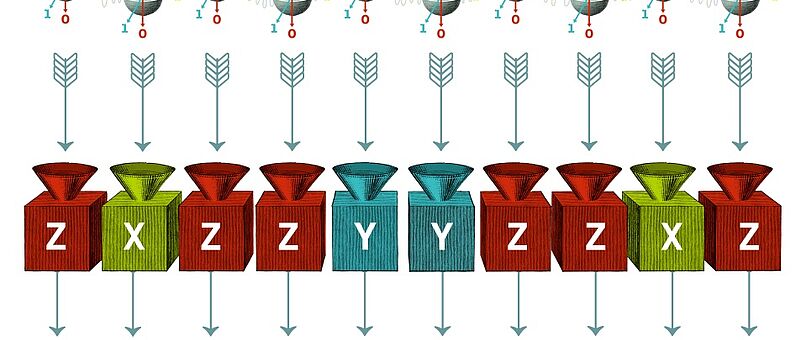
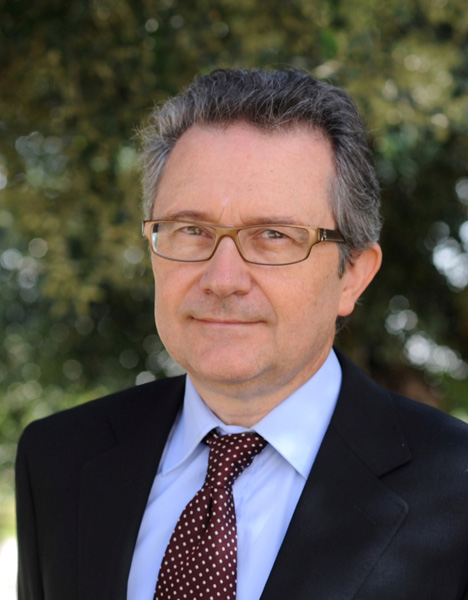
Dr. Borivoje Dakic is an Associate Professor at the University of Vienna , affiliated with the Faculty of Physics and the Quantum Optics, Quantum Nanophysics and Quantum Information department. His research spans foundational and applied aspects of quantum theory. Operational reconstruction of quantum formalism Quantum interference as a resource for communication Tomography of large-scale quantum systems Macroscopic quantum phenomena His work includes scalable verification techniques for quantum devices and collaborations with experimental teams like Philip Walther’s and Markus Aspelmeyer’s groups. He received the Marko Jarić Prize (2025) for his contributions. Recent projects focus on diagnostics of quantum devices (FWF BeyondC SFB), information-theoretic foundations of quantum interference (FWF P36994), and local operations in quantum field theory (Cluster of Excellence QuantA). His research on quantum coherence in networks and macroscopic entanglement challenges traditional assumptions about quantum-classical boundaries. Publications emphasize resource-efficient tomography, device-independent verification, and foundational frameworks for quantum statistics and field theory. Teaching: Quantum Information (2025W), Theory in Quantum Optics (2025S), VCQ Summerschool Labs: Dakić Group at University of Vienna
Marco Canteri is a Researcher in the Department of Experimental Physics at the University of Innsbruck, Austria. He holds an MSc degree and contributes to quantum information science with a focus on trapped-ion systems for quantum computing and networking. His educational background includes a Master of Science degree. The specific institution is not provided in available sources. Canteri's research spans quantum networking, quantum communication, and quantum sensing using trapped ions. Key areas include ion-photon interfaces, quantum memory, entanglement distribution, and scalable quantum hardware. His work addresses challenges in noise resilience and long-distance quantum links through experimental implementations of multiqubit systems and telecom-wavelength interfaces. Analysis of his 12 recent publications (2020-2025) reveals consistent advancement in trapped-ion quantum technologies. Notable achievements include entanglement distribution over 101 kilometers, multimode quantum networking, and development of ten-qubit quantum registers. The research demonstrates strong interdisciplinary integration of atomic physics, quantum optics, and quantum information theory for practical quantum network applications. No scientific awards are listed in the available information. Information regarding students advised or research grants obtained by Marco Canteri is not provided in current sources. He operates within the quantum information research group of the Department of Experimental Physics, utilizing advanced laboratories equipped for trapped-ion quantum computing experiments including optical cavities, precision laser systems, and single-photon detection infrastructure under department head Hanns-Christoph Nägerl.
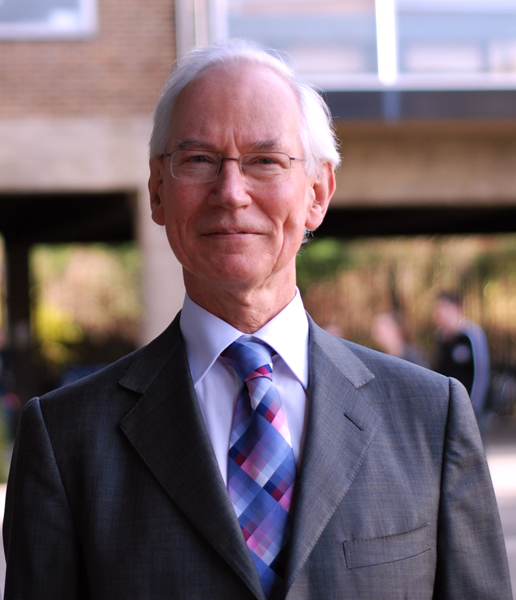
David Newbery serves as Professor of Applied Economics at the University of Cambridge's Faculty of Economics since 1988 and Research Director of the Electricity Policy Research Group (EPRG). His career spans prestigious appointments including Visiting Professorships at Stanford, Princeton, UC Berkeley, and Imperial College London, alongside significant policy roles at the World Bank and IMF. His research focuses on electricity market design , climate policy economics , and transport pricing , addressing critical challenges in energy transition and regulatory frameworks. Key contributions include foundational work on supply function equilibria, market power assessment in liberalized utilities, and optimal climate policy instruments. Analysis of his publications reveals consistent leadership in energy market restructuring (1990s-2000s) renewables integration economics (2000s-2010s) climate policy-market power interactions (2000s-present) with methodological strengths in game theory and empirical industrial organization. Major recognitions include: CBE (2012 Birthday Honours) Frisch Medal (1990) Fellowships of Econometric Society and British Academy IAEE Outstanding Contributions Award (2003) Honorary Degree from University of Antwerp (2004) Newbery's policy impact extends through World Bank advisory roles (1981-83 as Division Chief of Public Economics), IMF consultations (1987), and sustained engagement with European energy regulators via EPRG. His work informs critical infrastructure pricing frameworks globally, particularly in electricity and transport sectors. He leads the Electricity Policy Research Group at Cambridge, fostering interdisciplinary collaboration between economists, engineers, and policy experts to address energy transition challenges through rigorous market design analysis.
ao. Univ.-Prof. Dr. Martin Heintel is an Associate Professor at the Department of Geography and Regional Research, University of Vienna. With over 30 years of experience, he focuses on regional development, cross-border cooperation, and sustainable urban-rural linkages. His work spans Europe, Southeast Asia, and North America, emphasizing participatory governance and evidence-based policy. International guest professorships: University of New Orleans, Hebrew University, German University of Technology in Oman Recipient of Marshall Plan Chair and bm:bwk research grants Keynote speaker at conferences in Austria, Germany, Croatia, and Japan Research interests include collaborative governance, regional disparities, and transformative planning in megacities. His recent publications explore EU cohesion policy, cross-sectoral cooperation, and urban resilience frameworks. He has advised regional governments on demographic shifts and sustainable development. Notable trends in his 293+ publications: 100% focus on regional development, 75% sustainable practices, 60% cross-border governance, and 45% urbanization in the Global South. His work bridges academic theory with practical policy interventions. Scientific engagement: Editorial Advisory Board, Europa Regional (2008-2023) Speaker at 243+ international events Media coverage in Der Standard , Österreichische Medien , and public debates Leadership roles include co-founding the Austrian Association for Applied Geography (ÖVAG) and coordinating the IGEN EU project (2011-2013). He mentors young researchers through conference sessions and regional workshops.
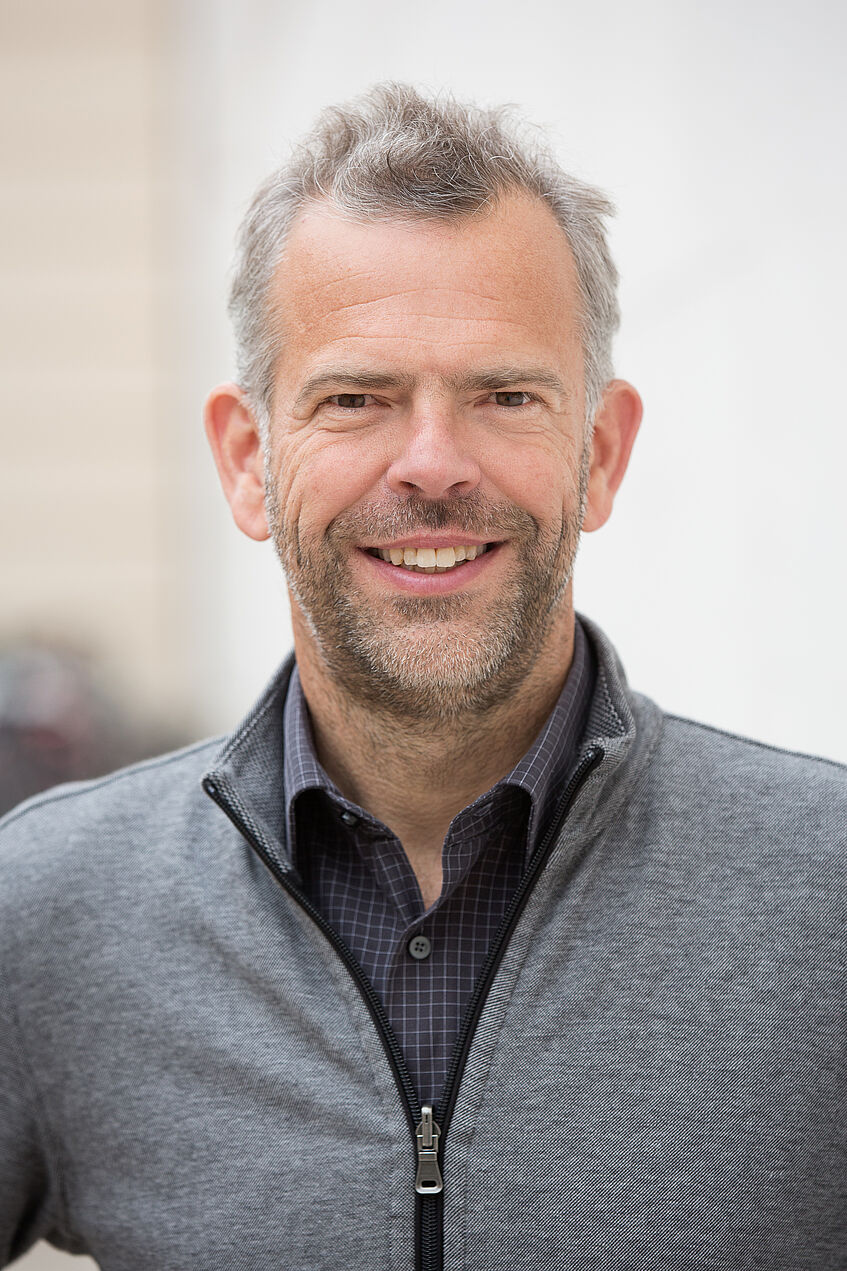
Erik Teodoor Verhoef is a Full Professor of Spatial Economics at the Department of Spatial Economics, Faculty of Economics and Business Administration, Vrije Universiteit Amsterdam. He also serves as a Visiting Professor at the Institute for Transport Studies, University of Leeds since 2009. Previously, he was a Member of the Faculty Board (serving as Research Director and Vice dean) at the Faculty of Economics and Business Administration, VU University Amsterdam from 2008 to 2011. His educational background includes a Cum Laude graduation in Economics from State University Groningen in 1991, followed by a PhD from VU University Amsterdam under the supervision of Professors Peter Nijkamp and Piet Rietveld. Since 1996, he has been an Elected Research Fellow at the Tinbergen Institute, Amsterdam-Rotterdam. Verhoef's research focuses on traffic congestion, static and dynamic network analysis, urban externalities, second-best regulation, efficiency and equity aspects of spatial externalities and regulation, spatial equilibrium modelling, valuation, transport economics, and urban economics. His work has significantly contributed to understanding congestion pricing mechanisms, transport policy design, and the economic analysis of transportation networks. His research often combines sophisticated theoretical modeling with empirical analysis to provide practical insights into optimal transport policies. His publication record shows a consistent contribution to transportation economics, with particular emphasis on congestion pricing, road pricing schemes, and the economic analysis of transportation networks. Analysis of his recent publications reveals a strong focus on equity implications of pricing mechanisms, behavioral responses to transport policies, and the integration of reliability considerations into transport economics. The Epainos Prize 1996, European Regional Science Association Honorable Mention for the 1996 Dissertation Prize of the Transportation Science Section of INFORMS RSUE Award for Innovative Research by Recent Doctoral Candidates 2000 Reimut Jochimsen Prize 2006 Honorable Mention for the WCTRS Prize 2007 Highly Cited Author Award 2004–2008, Journal of Urban Economics Elected Fellow of the Regional Science Association International (2010) Verhoef serves in significant editorial capacities, including as one of two Editors-in-Chief for Economics of Transportation and Associate Editor for Transportation Research B. He also serves on the editorial boards of several prestigious journals including the Journal of Urban Economics, Journal of Transport Economics and Policy, and Journal of Regional Science. His academic leadership extends to international organizations where he serves on the Founding Board of the International Transportation Economics Association and as Vice-chair of NECTAR, while having organized numerous academic events including the Nectar-Kuhmo Summer Schools and the European Regional Science Association Conference.
Christian Timmerer is a Professor at the Institute of Information Technology, Alpen-Adria-Universität Klagenfurt. His research focuses on adaptive video streaming , energy efficiency , MPEG standardization , and quality of experience (QoE) , with significant contributions to HTTP Adaptive Streaming (HAS), multi-codec optimization, and immersive media systems. Email: christian.timmerer@aau.at Office Hours: Monday 3:00-4:00 PM (by appointment) Projects: CD-Labor ATHENA, GAIA, SPIRIT His research integrates machine learning and generative AI to enhance video encoding, super-resolution, and voice dubbing, while prioritizing sustainability through energy-aware algorithms and open-source tools like GREEM and VEED. Current work emphasizes latency reduction and dynamic bitrate adaptation in live streaming environments. Recent publications address VVC optimization , multi-resolution encoding , and perceptual quality modeling , reflecting interdisciplinary efforts in networking , computer vision , and human-computer interaction . Awards include leading funded projects on adaptive streaming and green video systems.
Philipp Schindler serves as an Assistant Professor in the Department of Experimental Physics at the University of Innsbruck, Austria. His research is centered on experimental quantum computing using trapped ion systems, with a focus on advancing quantum error correction and scalable quantum processor architectures. Dr. Schindler's primary research interests include quantum error correction, fault-tolerant quantum computing, quantum simulation, and the development of trapped ion quantum hardware. His work bridges theoretical concepts with experimental implementations, contributing to the realization of practical quantum computers through innovations in ion trap design, qudit-based processing, and verification protocols. Key methodologies involve precision control of molecular ions and multiqubit operations within cryogenic environments. Analysis of his recent publications (2022-2025) reveals a consistent emphasis on experimental demonstrations of quantum error correction, novel ion trap architectures, and the use of qudits for enhanced quantum processing. Key themes include fault-tolerant operations, two-dimensional connectivity for scalability, and verification protocols for quantum computations. His research shows increasing focus on molecular ion systems and cross-verification techniques for quantum hardware validation. No scientific awards were mentioned in the provided information. Details regarding his students and research grants are not available in the given text. Dr. Schindler operates within the quantum computing research group at the Department of Experimental Physics, utilizing specialized facilities including cryogenic setups and microfabricated ion traps at Technikerstraße 25 in Innsbruck.
Dr. Charlotte Backerra is a Senior Lecturer for Modern History at Alpen-Adria-Universität Klagenfurt, with academic affiliations at Georg-August-Universität Göttingen, Technische Universität Darmstadt, Universität Stuttgart, and Johannes Gutenberg-Universität Mainz. Her research and teaching focus on early modern European history, dynastic structures, economic history, diplomatic practices, and intelligence studies. PhD in History from Johannes Gutenberg-Universität Mainz Certificate for Teaching at Universities from TU Darmstadt Co-editor of Studies in Monarchy & Money book series Board member of International Intelligence History Association Speaker for Women in Economic History network Her research explores the intersection of cultural, political, and economic history, emphasizing dynastic economic strategies in the Holy Roman Empire (1550–1650), crisis management, and environmental history of premodern Europe. Recent projects include source editions on the Pragmatic Sanction and environmental history. She has published extensively in peer-reviewed journals and edited volumes, with a 2018 monograph on Anglo-Austrian relations (1727–1735). Articles span legal pluralism, intelligence case studies, royal economic power, and environmental history. Scientific Awards: Christine de Pizan Mentoring Distinction (Mainz, 2015) Backerra advises graduate students and collaborates in academic networks, including editorial roles for Royal Studies Journal and Transnational Histories of the 'Royal Nation' . She has designed historical exhibitions on Mainz Citadel and public history initiatives.
University of Natural Resources and Life Sciences ViennaAustria
Patrick Hirsch is an Associate Professor at the Institute of Production and Logistics , part of the Department of Economics and Social Sciences at the University of Natural Resources and Life Sciences, Vienna . He serves as Head of the Institute of Production and Logistics since 2025 and has coordinated doctoral programs in Social and Economic Sciences since 2017. His research focuses on Sustainable Logistics, Operations Research, and Disaster Management , with specializations in Health Care Logistics Humanitarian Supply Chains Urban Mobility Food Security Cybersecurity in Logistics Green Logistics Recent publications highlight his work in 2025-2023 on: Cloud Resource Optimization Disaster Response Logistics Container Terminal Storage Cyberattack Resilience Home Health Care Scheduling His team also explores deep learning for cargo inspection and hybrid simulation modeling for pandemic and climate-related disruptions. Scientific awards include: BOKU Best Paper Award (2024) ITOR runner-up Best Paper (2023) Raiffeisen Science Award (2014) Multiple Early-Career Prizes Dr. Hirsch leads 13 active research projects funded by the Austrian Research Promotion Agency and Oesterreichische Nationalbank , including initiatives on food supply resilience , internet outage cascading effects , and blockchain in logistics security . He supervises collaborative theses and contributes to policy development through institutions like the ITA - Institut für Technikfolgen-Abschätzung .
University of Natural Resources and Life Sciences ViennaAustria
Stefan Schmutz is a full Professor at the Institute of Hydrobiology and Water Management within the Department of Ecosystem Management, Climate and Biodiversity at the University of Natural Resources and Life Sciences, Vienna (BOKU). He served as Institute Director during 2010-2018 and 2023, and Deputy Director from 2019-2022, maintaining active research leadership. His work addresses critical river management challenges at the intersection of energy production and ecological conservation. Education: Schmutz completed his PhD ("promotion") in 1995 followed by habilitation in 1997. Earlier career milestones include visiting professorships at Oregon State University (2005), Polytechnical University of Virginia (2002), and Cornell University (2000), establishing his international expertise in aquatic systems. Research Interests: His primary focus is on hydrobiological impacts of hydropeaking (rapid flow fluctuations from hydropower) on fish populations, particularly cyprinid species and endangered sturgeon. Key areas include larval stranding mechanisms , ecological flow requirements (e-flows), and sustainable river management . He develops decision support systems for hydropower mitigation and conducts historical reconstructions of river ecosystems to inform restoration. His work bridges field studies, experimental modeling, and policy implementation across European river basins. Publication Trends: Analysis of his 15 most recent articles reveals persistent emphasis on hydropeaking frequency effects on cyprinid larvae stranding, sustainable hydropower frameworks, and European river restoration challenges. He frequently collaborates on EU projects (LIFE, AQUACROSS) and publishes in high-impact journals like Environmental Management and Ecohydrology. Recent work combines experimental larval stranding studies global dam impact reviews species-specific conservation (Huchen/Danube salmon) policy analysis for the Nature Restoration Law Austrian freshwater biodiversity crisis documentation interdisciplinary doctoral program development to address energy-conservation conflicts. Scientific Awards: No specific awards, fellowships, or medals are documented in the provided text. Advising and Grants: Schmutz has supervised university theses though student names aren't listed. He leads or participates in extensive grant-funded projects totaling 82 at BOKU, secured from major sources including European Union (LIFE Boat, Hydropower For You, SHUI-ChE) Austrian Science Fund (FWF) national ministries international organizations (Mekong River Commission) His projects directly address fish stranding, sturgeon conservation, and hydropower mitigation with field applications across Austria, Europe, and the Lower Mekong. Labs and Teams: Based at BOKU's Institute of Hydrobiology and Water Management, Schmutz collaborates with hydrology, climate science, and engineering teams. His experimental work utilizes river flumes and monitoring sites along the Danube/Mur rivers, while the FWF Doctoral Program "Industrialisierte Flusslandschaften" represents his interdisciplinary academic leadership. Current projects like LIFE Boat involve transnational networks with European environmental agencies.
Gerhard Friedrich is a Full Professor at the University of Klagenfurt, leading the Institute for Artificial Intelligence and Cybersecurity. He previously served as Dean of the Faculty of Technical Sciences (2013–2021). His roles include Coordinator for International Relations of the Faculty of Engineering and Member of the Faculty Conference of Technical Sciences. He holds a PhD in Computer Science from Vienna University of Technology and has extensive industry experience, including heading departments at Siemens Austria and research roles at Siemens Corporate Research and Stanford Research Institute. Research focuses on knowledge-based systems, recommender systems, configuration and planning, and production informatics. His work bridges theoretical AI with practical applications in manufacturing, software development, and business processes. He has authored a book on recommender systems (translated into Japanese and Chinese) and contributed to prestigious journals like Artificial Intelligence and IEEE Transactions . He has organized major conferences such as the German Conference on Artificial Intelligence (2016) and served as editor and program committee member for leading venues. His awards include Fellowships from the European and Asia-Pacific AI Associations (2012, 2023). His advising and grants include leadership in applied AI projects and international collaborations. He directs the Intelligent Systems and Business Informatics research group, emphasizing interdisciplinary innovation.
Pearl Dykstra is a Full Professor of Empirical Sociology at Erasmus University Rotterdam since 2009. Her work focuses on life course sociology, family dynamics, and aging societies, with significant contributions to intergenerational relations and demographic changes in Europe. Erasmus University Rotterdam (2009–present) Member, High Level Group of Scientific Advisers to the European Commission (2015) Vice President, Netherlands Royal Academy of Arts and Sciences (2011–2016) Chair in Kinship Demography, Utrecht University (2002–2009) Dykstra's research explores: Intergenerational family ties and solidarity Loneliness and social support in aging populations Demographic shifts in marriage, divorce, and childlessness Structuration of the life course and temporal family dynamics Substitution of public care by familial networks Her publications span empirical sociology, demography, and gerontology, with a focus on European aging societies and family support systems. Recent works examine evolving family relationships and care networks in later life. Scientific honors include: ERC Advanced Investigator Grant (2013) Fellow, Netherlands Institute for Advanced Study (NIAS) (2002–2003, 2009) Elected Member, Royal Netherlands Academy of Arts and Sciences (2004) Ontario Graduate Scholarship (1980, 1981) Elected Fellow, Gerontological Society of America (2010) Dykstra has served as a scientific adviser to the European Commission and contributed to major demographic research projects across Europe.
Bernhard Rengs is a researcher affiliated with the Vienna Institute of Demography (VID), part of the Austrian Academy of Sciences. He previously served as Assistant Professor at the Institute for Mathematical Methods in Economics at Vienna University of Technology (2003–2014). His work bridges computer science and economics, focusing on computational agent-based models applied to demography, population economics, socio-economics, and forced migration. Education: Holds degrees in computer science and economics from Vienna University of Technology. Research interests include agent-based computational social simulation, evolutionary economics, and information visualization. Current projects address refugee migration patterns, socio-economic integration, and policy impacts using advanced computational methods. Selected Publications (2023–2013) focus on Ukrainian refugee self-selection, refugee family structures, climate policy modeling, and global value chains. His work combines empirical data analysis with agent-based modeling to address complex socio-economic challenges. No formal awards listed, but contributions to migration and computational demography are widely recognized. Collaborations include the Wittgenstein Centre for Demography and Global Human Capital, with interdisciplinary teams addressing demographic transitions, migration dynamics, and policy implications. His research emphasizes practical applications of computational models for understanding societal systems and informing evidence-based policies.
Xavier Vives is a Professor of Economics and Finance at IESE Business School (University of Navarra) since 2006. He serves as Academic Director of the Banking Initiative and Public-Private Sector Research Center , and Director of the Abertis Chair of Regulation, Competition and Public Policy . His research focuses on banking economics , industrial organization , market microstructure , and competition policy . 2023: President of European Finance Association 2020: Premio Nacional de Investigación 'Pascual Madoz' 2006-2009: Vice President of Spanish Energy Economics Association His recent work examines financial technology , market opacity , and strategic complementarities through game-theoretic models. He emphasizes the need for coordinated regulation and competition policy in banking, with a focus on liquidity dynamics and stability . Current publications analyze AI applications in finance , post-crisis banking models , and market fragility through high-frequency trading. Scientific accolades include: 2023: Fellow of Finance Theory Group 2020: Luohan Academy Fellow 2018-2023: European Research Council Advanced Grant 2002: Narcís Monturiol Medal 1992: Fellow of Econometric Society He contributes to policy through memberships in the European Systemic Risk Board (2023-), Technical Scientific Committee (Spanish Government, 2023-), and advisory roles for CNMA (2024-). His Public-Private Sector Research Center work addresses regional policy challenges in Barcelona's metropolitan area.
University of Natural Resources and Life Sciences ViennaAustria
Oliver Meixner is an Associate Professor at the Institute of Marketing and Innovation within the Department for Economics and Social Sciences at the University of Natural Resources and Life Sciences, Vienna (BOKU) . His work focuses on agricultural economics, sustainable marketing, and consumer behavior in food systems. Key Research Areas: Sustainable agriculture and food economics Consumer behavior and market research Innovation and digital transformation in agrifood Notable Contributions: Developed methodologies for AHP group decisions and fuzzy priority aggregation Evaluated eco-label effectiveness and food waste reduction strategies Assessed EU rural development programs' impact on agricultural competitiveness Publications & Projects (2016-2024) show a consistent focus on: Food labeling and consumer trust Sustainability assessments in agribusiness Digital transformation in food networks Climate crisis impact on consumer behavior Innovative marketing models for agrifood chains Scientific Recognition Award of Excellence (ISAHP 2020) Most Innovative Idea Award (ISAHP 2016) Literati Network Outstanding Paper (2013) Advising spans 123 theses including topics on: Consumer preferences for eco-labels Acceptance of alternative proteins Digital food shopping behavior Payment willingness for sustainable products