Prof. Anya Belz is Full Professor of Computer Science at Dublin City University's School of Computing and Science Lead at ADAPT Research Centre. A leading NLP researcher with PhD-level expertise, she specializes in natural language generation, evaluation methodologies, and multimodal systems. Recipient of multiple best paper awards and NAACL Test of Time Award nomination. Research innovations include foundational work on statistical language generation (deployed in weather forecasting systems), comparative evaluation frameworks, vision-language integration, and reproducibility quantification. Current EPSRC-funded ReproHum project coordinates 20 global labs studying evaluation consistency. Achievements : Developed industry-deployed generation systems for accessibility applications Pioneered cross-modal alignment techniques for image description Authored 100+ publications spanning generation, evaluation, and reproducibility
Jeremy Rau is a Professor of Linguistics and Classics at Harvard University's Department of Linguistics, part of the Faculty of Arts and Sciences. He currently serves as Director of Graduate Studies for Fall 2024 and is on leave for Spring 2025. His office is located in Boylston Hall, Cambridge, MA. Rau specializes in Greek and Latin historical linguistics with a particular focus on Homeric language, Indo-European linguistic systems, and Indo-Iranian comparative studies. His research explores ancient language structures, verb morphology, and diachronic phonological changes in pre-classical texts. Research Interests: Proto-Indo-European root analysis Mycenaean Greek linguistic features Homer's language and epic conventions Indo-Iranian comparative linguistics Verb derivation mechanisms Publications reflect deep engagement with ancient language structures, including studies on Mycenaean contract verbs, Homeric noun inflections, and Proto-Germanic lexicon. He has contributed to journals like Die Sprache , Glotta , and Historische Sprachforschung , as well as edited volumes such as Verba Docenti . Administratively, Rau oversees graduate programs and participates in departmental governance. His work bridges historical linguistics with philological scholarship, emphasizing systematic analysis of ancient language data.
Peter Gordon is an Associate Professor of Neuroscience and Education and Cognitive Science in Education at Teachers College, Columbia University. He directs the Language and Cognitive Neuroscience Lab and holds affiliations with Biobehavioral Sciences, Human Development, and other departments. His research focuses on language acquisition, developmental neuroscience, cross-cultural numerical cognition, and MRI-based studies of language processing. Dr. Gordon earned a B.A. (Hons) in Psychology from the University of Stirling (Scotland) and a Ph.D. in Psychology from MIT. His fieldwork includes extensive studies with the Piraha in Amazonia, Brazil, and the Kadiweu in Mato Grosso do Sul, Brazil. His research interests span infant event representations, behavioral genetics of language, and the interplay between language structure and cognitive development. Notable contributions include work on anumeric cultures and the linguistic relativity hypothesis. Publications highlight cross-cultural studies, morphological processing, and cognitive neuroscience of language. He has conducted influential research on numerical cognition in Amazonian cultures and the genetic influences on language acquisition. Contact: pg328@tc.columbia.edu | Office: 1152 Building 528 | Lab: [Link Provided].
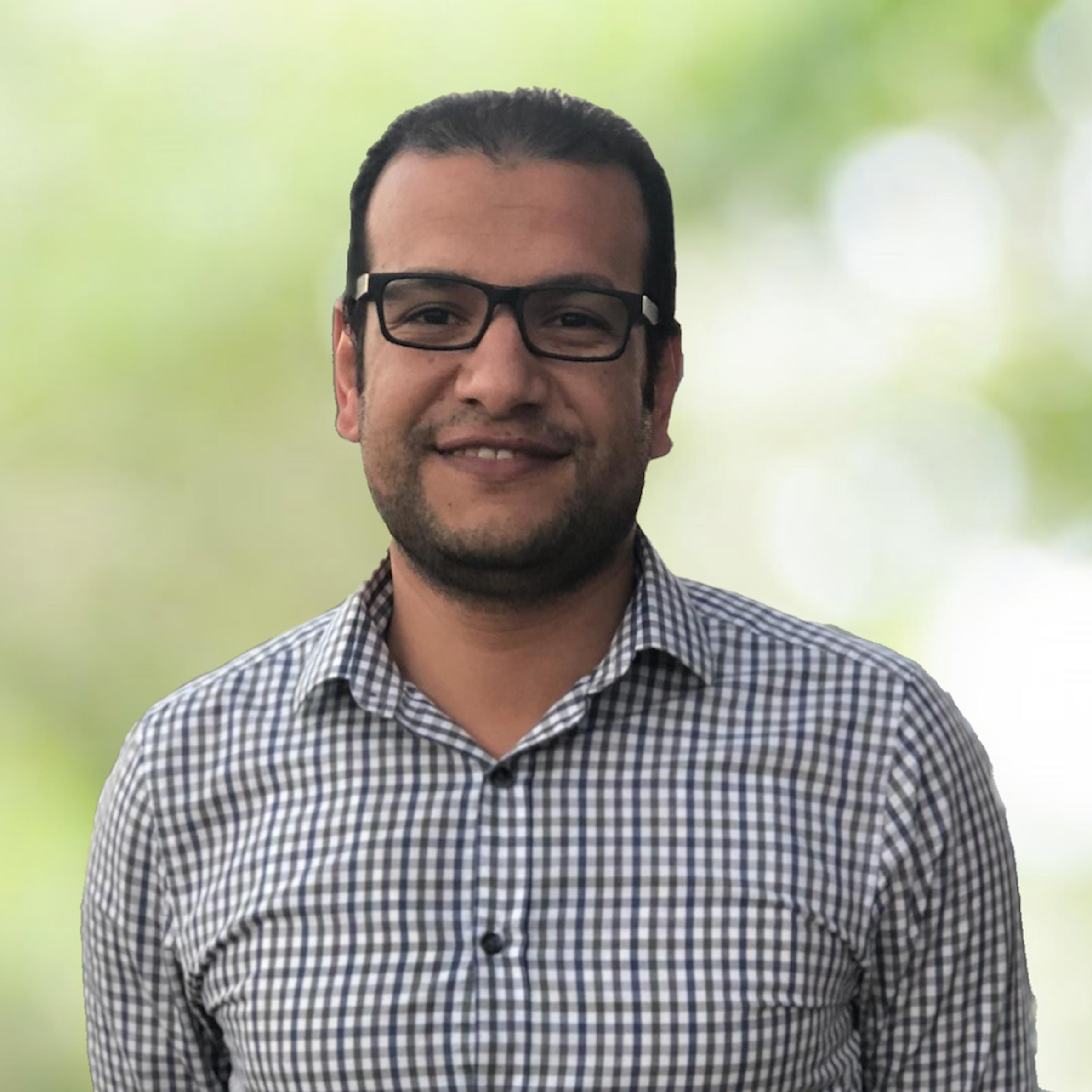
Elsayed Issa is an Assistant Professor in the School of Languages and Cultures at Purdue University. Specializing in Computational Linguistics and Arabic, his interdisciplinary research bridges Natural Language Processing (NLP) with Second Language Acquisition (SLA), focusing on conversational AI and speech technology for under-resourced languages. Ph.D. in Linguistics from the University of Arizona (2023) Research integrates NLP, conversational AI, and SLA methodologies Develops tools for computer-assisted pronunciation training (CAPT) Focuses on Arabic dialectology and large language models (LLMs) His work employs Transformer architectures and end-to-end machine learning to enhance language learning systems. Recent projects include ArabiBot development and dialect identification models. He specializes in speech-to-text systems , prosody modeling , and emotional speech analysis for Arabic language learning applications.
Oliver Bond is a Reader in Linguistics (Associate Professor) at the University of Surrey, affiliated with the Surrey Morphology Group (SMG) within the School of Literature & Languages. He holds a PhD from the University of Manchester and specializes in linguistic typology, morphology, syntax, and language documentation. His research focuses on the systemic properties of language, particularly in African and Himalayan languages, exploring features like agreement systems, case marking, and morphological complexity. Key roles include Deputy Director of SMG and PhD Coordinator. His research projects include studies on Nuer (South Sudan/Ethiopia), Tibeto-Burman languages of Nepal, and prominent internal possessors. He has received a prestigious British Academy Award for his work on language evolution and analogy in morphological change. Bond supervises PhD students in areas such as morphology, syntax, and language documentation. Notable former students include Dávid Győrfi and Tatiana Reid. His publications span typological studies, language documentation, and theoretical morphology, with recent work on contact effects in Tibeto-Burman languages and negation systems in African languages. Bond’s contributions include collaborative projects like the Nuer Literacy Initiative and the Manang Languages Project. He actively publishes in journals like Journal of Linguistics and Linguistic Typology , and maintains a comprehensive resource, the Nuer Lexicon .
Anna Theakston is a Professor of Developmental Psychology at the University of Manchester where she holds the position of Head of Division for the Division of Psychology Communication and Human Neuroscience. She is also Co-director of the ESRC International Centre for Language and Communicative Development (LuCiD), a major research initiative focused on language development in children. Dr. Theakston completed her undergraduate degree in Psychology at the University of Nottingham and earned her PhD through research at the University of Manchester on early language development in children aged 2-3 years. She subsequently coordinated the Manchester-based Max Planck Child Study Centre before being appointed to her current professorship. Her research focuses on children's early language and communicative development during preschool and early school years, situated within a usage-based framework that emphasizes child-environment interactions and caregiver input. Her work spans multiple areas including early gestural communication, caregiver-child interactions, grammatical construction acquisition, grammatical error origins, inflectional morphology, and syntax-semantics-pragmatics interfaces in complex language development. She frequently conducts crosslinguistic comparisons and employs diverse methodologies from corpus analysis to behavioral experiments, often collaborating with computational modelers. Analysis of her recent publications reveals strong emphasis on children's comprehension and production of complex sentence structures, particularly adverbial and complement clauses, with investigations into how information structure, iconicity, and pragmatic factors influence language development. Her work increasingly examines applications in real-world contexts including schools, nurseries, and cultural institutions, with growing attention to supporting deaf children's communication development and multilingual education. Co-Director, ESRC International Centre for Language and Communicative Development (LuCiD) Active researcher with 111 research outputs including articles, datasets, and book chapters Recipient of research funding from ESRC and Max Planck Institute Professor Theakston supervises numerous PhD students investigating various aspects of language development, with recent projects examining tag questions, cultural institutions' role in language learning for minority populations, science interventions for deaf children, and Modern Foreign Language teaching in multilingual classrooms. Her research has practical impact through tools like the Teacher Toolkit for Teaching Primary MFL in Multilingual Key Stage 2 Classrooms and initiatives supporting deaf children's social communication skills. She maintains active collaborations with researchers across multiple disciplines and institutions, as evidenced by her extensive co-authorship network. Her work contributes to UN Sustainable Development Goals related to quality education and reduced inequalities.
Viktória Dabóczi is a lecturer in the Department of German Studies at the University of Siegen, Faculty I. She holds a doctorate from the University of Siegen (2016) and has been actively involved in teaching and research in German linguistics since 2012. Her current academic role as AOR aZ (Akademische Oberrätin auf Zeit) began in June 2025, indicating a senior academic position. She teaches courses such as Introduction to German Linguistics, Grammatical Variation, and Language Acquisition. Research Interests: Her work focuses on word classes, spoken language, grammar theory, language acquisition, and lexical change in German, often with comparative insights from Hungarian. She investigates how words are conceptualized in speech and writing, the evolution of discourse markers, and grammatical variation in contemporary usage. The analysis of her recent publications (2005–2025) reveals a consistent focus on theoretical and applied German linguistics, with increasing attention to sociolinguistic phenomena such as pandemic-related neologisms and ideological word formations. Her research bridges empirical analysis, cognitive linguistics, and language teaching, often in interdisciplinary or contrastive frameworks. Reviewed works on German morphology and grammar Contributed to international projects like EuroGr@mm and ProGr@mm Participated in interdisciplinary conferences on ellipsis and language processing Advising and Grants: While no formal students are listed, her editorial and collaborative roles suggest mentorship and academic leadership. She has been involved in long-term research projects, including EuroGr@mm (2004–2012), indicating sustained grant-supported activity. Her current role at Siegen reflects ongoing institutional support for her research and teaching. Labs and Teams: She has collaborated with researchers at Justus Liebig University of Giessen, University of Szeged, and IDS-Mannheim. Her work with the Diskursmonitor research group and participation in interdisciplinary conferences highlight her integration into active research networks in German linguistics.
Massachusetts Institute of TechnologyUnited States
Adam Albright is a Professor of Linguistics at the Massachusetts Institute of Technology (MIT). His research focuses on phonology, morphology, language acquisition, and computational linguistics. Education Ph.D. in Linguistics, UCLA, 2002. Dissertation: "The identification of bases in morphological paradigms" M.A. in Linguistics, UCLA, 1998. Thesis: "Phonological subregularities in productive and unproductive inflectional classes: Evidence from Italian" B.A. in Linguistics and Religious Studies, Cornell University, 1996. Senior Thesis: "The history of stress in Welsh, and the analysis of historical change in OT" Research Interests Albright's main research projects include: Experimental testing and computational modeling of gradient phonotactic well-formedness Investigating the organization of paradigms (base selection and learning) Testing the psychological reality of morphological processes via Wug tests Understanding paradigm gaps Computational modeling of historical change Collaboration with Bruce Hayes on learning algorithms He also has interests in Yiddish and Lakhota phonology and morphology, and the history of stress in Welsh. Teaching He has taught courses at MIT and UC Santa Cruz, including: Advanced Phonology Language Acquisition Sound Change and Phonological Theory Modeling Phonological Learning Language Change Computational Morphology & Phonology Collaborations Albright collaborates with Bruce Hayes (UCLA) on computational modeling of phonological and morphological learning. Contact Email: albright@mit.edu Office: 32-D830, MIT Mailing Address: MIT Linguistics and Philosophy, 77 Massachusetts Avenue, 32-D808, Cambridge, MA 02139, USA
Massachusetts Institute of TechnologyUnited States
Donca Steriade serves as the Class of 1941 Professor of Linguistics in the Department of Linguistics and Philosophy at the Massachusetts Institute of Technology (MIT), where she also holds the position of Communications Director for the linguistics section. Her research centers on phonology, morphology, and historical linguistics with specialized focus on Greek and Latin. Steriade has pioneered theoretical frameworks including the Perceptibility map (P-map) for understanding phonological markedness, while her morphological work explores paradigm uniformity, morphomes, and cyclicity across diverse languages. She integrates empirical data from classical languages with cutting-edge phonological theory. Steriade's recent publications (2015-2025) reveal consistent exploration of quantitative meters in Greek/Latin poetry, morphophonological cyclicity in Romanian, and paradigm structure in Sanskrit reduplication. Her work demonstrates sophisticated interplay between phonological constraints and morphological processes, often revealing universal patterns through cross-linguistic analysis of classical and modern languages. As Communications Director, she actively shapes the department's academic outreach and scholarly discourse within the linguistics community.
Christian Zimmer is a Professor of German Linguistics at Technische Universität Dortmund, specializing in variational linguistics with a focus on multilingual contexts. His academic journey includes a Habilitation (2021) and PhD (2016) from Freie Universität Berlin, and a state examination in German Studies, Philosophy, and Sport Science (2012) from Johannes Gutenberg University Mainz. He has held substitute professorships at TU Dortmund (2019-2020) and Freie Universität Berlin (2022-2023) and led DFG projects on German in multilingual Southern Africa (2020-2022) and Namibia (2016-2019). His research explores German within multilingual environments, language change, corpus linguistics, and gender linguistics. Key projects include analyzing Namibian German (Namdeutsch) and the dynamics of German in African contexts. He uses corpus-based methods to study morphosyntactic variation, case systems, and sociolinguistic factors influencing language structure. Zimmer’s publications address topics such as genitive case reduction, loanword integration, and gender correlations in phonology. His work bridges theoretical linguistics and applied sociolinguistics, contributing to understanding language vitality and contact dynamics in minority speech communities.
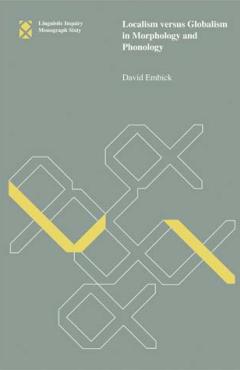
David Embick is a Professor in the Department of Linguistics at the University of Pennsylvania's School of Arts & Sciences. He received his Ph.D. from the University of Pennsylvania in 1997 and has established himself as a leading scholar in theoretical and experimental linguistics. Ph.D., University of Pennsylvania, 1997 Professor Embick's research spans both theoretical and experimental linguistics, with a focus on syntactic theory, morphological theory (particularly Distributed Morphology), and the syntax/morphology interface. His work explores syntax and phonological form, argument structure, lexical knowledge, and language processing in the brain. He has developed significant research in language and autism using MEG neuroimaging techniques. His theoretical contributions include the Localist approach to morphology and phonology, which contrasts with Globalist theories like Optimality Theory. His recent publications reveal a strong trend toward integrating theoretical linguistics with experimental psycholinguistics, particularly in morphological processing and spoken word recognition. Embick's work bridges theoretical syntax and morphology with cognitive neuroscience, examining how linguistic structures are represented and processed in the brain. His research on autism spectrum disorders has produced important insights into auditory processing differences in this population. Professor Embick leads the XMorph (Experimental Morphology) Lab at Penn, which investigates lexical and morphological representation and processing. The lab works closely with Meredith Tamminga's Language Variation and Cognition Lab and collaborates with Tim Roberts at the Children's Hospital of Philadelphia on autism spectrum disorder research. His lab has produced significant work on morphological priming, semantic transparency effects, and the representation of inflectional morphology in the mental lexicon. Embick has advised several doctoral students including Ava Creemers (2020), Robert J. Wilder (2018), and Amy Goodwin Davies (2018), whose dissertation topics focused on morphological processing, speech perception, and lexical representation respectively. His collaborative research spans multiple institutions and disciplines, connecting theoretical linguistics with cognitive neuroscience and clinical applications.
Norwegian University of Science And TechnologyNorway
Antonio Fábregas (b. 1978) is a Professor at the Department of Language and Literature, Norwegian University of Science and Technology (NTNU), specializing in Spanish grammar, variation, morphosyntax, comparative linguistics, and semantics. He has authored 8 monographs and over 150 articles/book chapters. Research : Focuses on syntax, semantics, phonology, and their interactions in word formation. Explores Spanish language variation, sociolinguistic contact phenomena, and theoretical morphology. Teaching : Engaged in linguistics education at NTNU (office: Bygg 4 Dragvoll, Trondheim). Publications : Recent work includes analyses of Spanish prefixation, argument structure, elative compounds, and negation-participle constructions. Key contributions to morphological theory and Romance language comparison.
Tanja Ackermann is a Professor of German Linguistics with a focus on Variation and Change at Bielefeld University , holding the position since 2023. She serves as project leader in two subprojects of the Collaborative Research Center 1646: Linguistic Creativity in Communication (projects A06 and B03), and as a member of BiSEd (Bielefeld School of Education). Her academic affiliations include the Faculty of Linguistics and Literary Studies and its Habilitation Committee . Doctorate in Linguistics (2017) Habilitation, Venia legendi in German Linguistics (2023) Prior academic roles: Acting Professor at University of Mainz (2020–2022), Research Associate at Freie Universität Berlin (2011–2023), and short-term lectureship at Peking University (2017). Research interests span diachronic and synchronic analysis of language variation (areal/sociolinguistic), language change (functional/contrastive), historical grammar (morphology/morphosyntax), and pragmatics (speech acts, address forms, (im)politeness, expressivity). She specializes in onomastics (name grammar, sociopragmatic aspects, phonology) and interactive linguistic creativity (interrogative forms, indirect meaning). Publications reflect trends in Germanic morphosyntax, historical pragmatics, and onomastic variation. Key themes include inflectional erosion , possessive markers , and gendered phonological patterns in proper names. Scientific Recognition Awarded Wilhelm von Humboldt Prize by the DGfS in 2019 Affiliation Highlights Project leader for SFB 1646 (linguistic creativity in communication) Previous involvement in SRC 980 'Episteme in Motion' (subproject C08, 2016–2020)
Sverre Stausland Johnsen is Professor of General Linguistics and Scandinavian Linguistics in the Department of Linguistics and Scandinavian Studies at the University of Oslo. His academic work focuses on language change within the fields of phonology, historical linguistics, and sociolinguistics, with particular emphasis on Norwegian language history and Scandinavian languages. Johnsen's research interests span phonology, sound change, language change, historical linguistics, and sociolinguistics. His work often examines how linguistic structures evolve over time, with special attention to Norwegian orthographic reforms, phonological patterns in Scandinavian languages, and the historical development of linguistic features. He has made significant contributions to understanding vowel harmony, retroflexion in Norwegian, and the historical development of grammatical structures in Old Norse and related languages. His recent publications demonstrate a consistent focus on Norwegian language history, orthography reforms, and phonological patterns. The 2021-2025 publications show particular emphasis on Somali tonal systems, Norwegian word formation, stress patterns in loanwords, and historical aspects of Norwegian orthography, especially regarding the 1901 spelling reform. His work combines theoretical linguistic frameworks with detailed historical analysis of Scandinavian languages. Johnsen is actively involved in two research groups: Language Change and Phonology. His ongoing projects include studies on the spread of uvular /r/ in Norway, the historical development of grammatical structures, and the relationship between phonetic perception and phonological change. His research often bridges theoretical linguistics with practical applications in understanding language evolution and variation.
Dr. Dorota Gaskins is a Lecturer in Applied Linguistics at King’s College London’s School of Education, Communication & Society since 2023. Previously, she held a Leverhulme Early Career Fellowship (2020–2023) focusing on metaphor acquisition in young children. With 18 years of teaching experience in TESOL and 14 years as a language examiner, her expertise bridges research and pedagogy. Her research focuses on bilingual first language acquisition (ages 1–10), metaphor development, child-directed speech effects, and methodologies for studying young language learners. She actively contributes to the Cognition, Learning, and Communities Lab and the Language, Discourse & Communication Research Centre. Dr. Gaskins teaches BA and MA courses in linguistics and supervises students in areas like bilingual acquisition, usage-based linguistics, and figurative language. Her recent work explores metaphor production in bilingual children and cross-linguistic code-switching patterns, emphasizing practical implications for multilingual education.