Christopher L. Asplund is an Associate Professor at the National University of Singapore (NUS), affiliated with the Department of Biomedical Engineering and Yale-NUS College. He serves as Head of Studies for Psychology at Yale-NUS and holds courtesy appointments in NUS Psychology, Institute for Digital Medicine (WiSDM), Centre for Sleep and Cognition, and Duke-NUS Neuroscience & Behavioural Disorders program. His research explores attentional control, consciousness, and the neural basis of cognition through behavioral experiments, fMRI, and EEG. Research Focus: Understanding attentional states and their modulation by surprise Investigating individual differences in attention, including ASD/ADHD Exploring surprise's role in learning and pain perception Developing digital therapeutics for cognitive training Examining how consciousness and intelligence emerge from neural networks Methodological Expertise: Behavioral experimentation, functional neuroimaging (fMRI, EEG), eye-tracking, and physiological measures.
Professor Naomi Sweller is a leading academic at Macquarie University's School of Psychological Sciences, specializing in cognitive development and gesture-based communication. She serves as Chair of the low-risk Human Sciences Research Ethics Committee and Co-Director of Research Training in her school. Research Interests: Cognitive development across infancy to adolescence Gesture use in learning and communication Concept learning mechanisms Impact of digital communication on empathy Developmental effects of screen time and technology use Teaching: She teaches research methods and statistics in the Honours program (PSYH4418 Design and Statistics IV). Scientific Awards: Macquarie University Vice-Chancellor's Learning and Teaching Student-nominated Award (2020) Her research collaborations span diverse areas including autism spectrum disorders, classroom dynamics, and behavioral impacts of media consumption.
Debby Klooster is a postdoctoral researcher at Eindhoven University of Technology (TU/e), affiliated with the Department of Electrical Engineering and the EAISI institute. She is part of the Electromagnetics for Care and Cure Research Lab (EM4Care+Cure) and collaborates with the Eindhoven MedTech Innovation Center, UGent, and the Berenson-Allen Center for Noninvasive Brain Stimulation (Harvard Medical School). Her research focuses on personalizing brain stimulation therapies through multimodal neuroimaging and computational modeling. She holds a MSc in BioMedical Engineering from TU/e and a post-master qualification in Qualified Medical Engineering from Kempenhaeghe and TU/e. Debby’s work addresses inter-individual differences in brain characteristics to develop tailored stimulation protocols. Key areas include neuromodulation techniques like TMS and tDCS, combined with functional MRI and EEG to study brain network effects. Her recent projects include the PerStim program (collaboration with Philips, TU/e, UGent, and Kempenhaeghe) and a junior postdoc grant from Flanders Research Organization. Her articles highlight advancements in understanding TMS-induced cortical and subcortical effects, optimizing biomarkers for depression treatments, and exploring mechanisms of transcranial stimulation. She contributes to educational activities on neurophysiology and technology for care and cure. Debby’s interdisciplinary approach bridges engineering, neuroscience, and clinical applications to improve therapies for brain disorders.
Jolanda Veldhuis is an Associate Professor in Communication Science at Vrije Universiteit Amsterdam, specializing in Health and Risk Communication and Media Psychology. She holds affiliations with the Faculty of Social Sciences and Humanities, Network Institute, and Communication Choices, Content and Consequences (CCCC) research group. Her research focuses on negotiating media effects, particularly the impact of social media on adolescent well-being, body image, and health communication strategies. She has conducted studies on selfie behavior, peer feedback dynamics, and the role of social media in normalizing cosmetic procedures. Education: Master of Biomedical Sciences (Communication & Education), Master in Teaching Biology, with visiting scholar experiences at Ohio State University, University of Cape Town, and University of Namibia. Research Interests Media effects on youth: self-presentation, peer interactions, and well-being Health communication via social media and serious gaming Body image interventions targeting adolescents Emotional appeals in HIV/AIDS stigmatization Social marketing for environmental sustainability Recent Trends in Publications Her 2023-2025 work emphasizes cross-cultural studies on social media pressures (e.g., Dutch vs. Japanese adolescents), qualitative exploration of cosmetic surgery attitudes, and systemic analysis of photo-sharing impacts. Earlier work (2017-2020) pioneered fMRI studies linking peer feedback to media exposure effects in adolescents. Awards & Grants Recipient of the 2017 grant: Brain Activation upon Ideal-Body Media Exposure and Peer Feedback in Young Females Teaching & Supervision Teaches courses on health communication, media processing, and communication campaigns at both BA/MA levels. Supervised 1 completed PhD thesis. Labs/Teams Participates in interdisciplinary projects through the Network Institute and CCCC group, focusing on digital media's societal impacts.
Agneta Herlitz is a Professor of Psychology at Karolinska Institutet, leading the research group on Individual Differences in Cognition. She has been affiliated with the Department of Clinical Neuroscience since 2012, and previously held roles such as Senior Lecturer and Researcher at Karolinska Institutet and Assistant/Associate Professor at Stockholm University. Her research focuses on sex differences in cognition and behavior, particularly exploring how these differences impact societal outcomes like career choices and dementia risk. She investigates topics using behavioral studies, Swedish registries, and physiological measures like MRI and biomarkers. Education: PhD in Psychology, Umeå University (1991) Licensed Psychologist, Stockholm University (1994) Professor at Karolinska Institutet (2008) Research Interests: Dr. Herlitz examines sex-typical cognitive profiles and their influence on life outcomes, including the origins of sex differences in cognition. Her work spans geriatrics, neurosciences, and psychology, with a focus on dementia, memory, and developmental influences. Recent studies include meta-analyses of episodic memory differences and longitudinal examinations of academic and occupational segregation. Publications & Grants: Over 150 peer-reviewed articles, including high-impact studies in PNAS , Psychological Bulletin , and Neurology . Active in editorial roles and national/international research councils, including the Swedish Research Council and the Norwegian Research Council’s Portfolio Board 'Life Sciences'. Advising & Mentoring: Supervised numerous PhD students, including Björn Persson, Daniel Fellman, and Serhiy Dekhtyar. Her lab focuses on cognitive aging, sex differences, and the neurobiological underpinnings of memory. Affiliations: Chair of the CEDAR Centre at Umeå University, member of the Royal Swedish Academy of Sciences’ National Committee for Psychological Sciences, and affiliated with research groups on neurodevelopmental effects in transgender youth.
David A. Pizarro is a Professor of Psychology at Cornell University, affiliated with the College of Arts and Sciences. He holds joint appointments in the Departments of Philosophy and Psychology. His research focuses on moral judgment, particularly moral intuitions around responsibility and permissibility, biases in moral evaluations, and the role of emotions like anger, disgust, and fear in shaping cognition and decision-making. Dr. Pizarro’s work explores how emotional states influence moral judgments, including the differential impact of specific emotions on information processing, memory, and social evaluations. He has examined topics such as moral praise, slippery slope reasoning, and the relationship between disgust sensitivity and attitudes toward marginalized groups. His research has implications for understanding intergroup dynamics, ethical decision-making, and the psychological underpinnings of cultural and political attitudes. His articles consistently investigate themes of moral psychology, emotion’s role in cognition, and social evaluation. Recent studies highlight connections between sensory sensitivity and political ideology, the cognitive mechanisms behind victim/perpetrator blame, and the psychological processes underlying perceptions of moral decline. While no formal advisees or grants are listed, Pizarro teaches advanced undergraduate and graduate courses in psychology, including research seminars and social psychology proseminars. He maintains an active presence in academic discourse through his podcast, Very Bad Wizards , and collaborations with institutions like the Cornell Center for Social Sciences.
Dr. Paul M Smith is a Senior Lecturer in Sport and Exercise Physiology at the Cardiff School of Sport & Health Sciences , Cardiff Metropolitan University. With a career spanning over 25 years, he specializes in physiological adaptations, handcycling performance, and barriers to physical activity for individuals with disabilities. BSc (Hons) in Sport Science (1992) MSc by Research in Exercise Physiology PhD via published works (11 publications) His research explores: Determinants of handcycling performance through biomechanical and physiological analyses Multidimensional barriers to physical activity for disabled individuals Exercise for health and wellbeing in adaptive populations Collaborative projects with Swansea University and ADAPT Gateway UK Ltd Recent publications address aging physiology, exercise adaptations, and antimicrobial challenges in prosthetics. His applied work includes supporting world-record handcycling achievements and developing inclusive physical activity frameworks.
S. Christian Wheeler is The StrataCom Professor of Management and Professor of Marketing at Stanford University's Graduate School of Business. He holds a PhD in Psychology from Ohio State University and has been a faculty member since 2001. His research focuses on consumer behavior, attitude change, and identity theory, with notable contributions to understanding priming effects, self-concept dynamics, and political behavior. Education: B.A. (Summa Cum Laude) in Psychology from University of Northern Iowa (1995), M.A. (1997) and Ph.D. (2001) in Psychology from Ohio State University. He has held academic roles including Full Professor (2012-present), and has served on editorial boards for major journals like Journal of Consumer Research and Journal of Marketing Research. Research interests span consumer psychology, social cognition, and marketing strategies. His work explores how environmental cues influence decision-making, the role of self-identity in consumer choices, and the psychological mechanisms behind attitude formation and persuasion. Notable awards include the StrataCom Chair (2015) and the Journal of Consumer Research Outstanding Reviewer Award (2010-2011). Teaching includes courses like Marketing Management and Behavioral Research Methods at the Stanford MBA and PhD levels. He has advised numerous students and contributed to executive education programs. His research has been featured in prestigious journals such as PNAS and Nature, and his work on voting behavior was highlighted in the New York Times. Labs and collaborations include interdisciplinary projects on recommendation algorithms, political advertising, and consumer identity. Wheeler's office artifact—a bronze sculpture by Bill Farmer—symbolizes his interest in perspective and informal learning, reflecting his research on self-concept and identity.
Leonard Newman is a Professor and Associate Chair in the Department of Psychology at Syracuse University’s College of Arts and Sciences. He also serves as Director of Undergraduate Studies and Director of the Ph.D. Program in Social Psychology. His research focuses on social cognition, particularly dehumanization, genocide, and self-protective processes. Newman holds a Ph.D. in Psychology from New York University (1990) with specialization in Quantitative Psychology. He has authored/co-authored over 75 publications, including influential books like Confronting Humanity at its Worst and Understanding Genocide . His work spans topics such as implicit attitudes toward law enforcement, gender stereotypes, and psychological mechanisms behind intergroup violence. Teaching responsibilities include courses like Experimental Social Psychology and Why Good People Do Terrible Things . Newman’s service includes editorial roles at Personality and Individual Differences , Basic and Applied Social Psychology , and leadership roles in departmental governance. He frequently presents at conferences including the Society for Personality and Social Psychology.
Ilana Witten is Professor at the Princeton Neuroscience Institute, Princeton University. Her research investigates the neural mechanisms underlying reward learning, decision-making, and behavioral control using integrative approaches including optogenetics, rodent behavior, electrophysiology, and computational modeling. Research focuses on: Neural circuit mechanisms of reward seeking behaviors Striatal contributions to learning and decision-making Neurobiology of individual differences in behavior Integration of sensory information with reward outcomes Neural plasticity during learning processes Publications center on dopaminergic systems, striatal function, and neural circuit dynamics. Recent trends include work on prediction errors, neural representations of prior information, and circuit mechanisms of behavioral control. Lab: Leads the Witten Lab at Princeton Neuroscience Institute investigating neural circuits of reward and decision.
Igor Spigelman is a Professor in the Dentistry Department at the University of California Los Angeles (UCLA), with a robust research program spanning neuroscience, alcohol effects on the brain, pain mechanisms, and cannabinoid pharmacology. His work bridges dental and medical neuroscience, focusing on the neural mechanisms underlying pain, addiction, and stress responses. Spigelman's research interests primarily center on neurophysiological mechanisms of pain and addiction. His laboratory investigates GABAergic neurotransmission, trigeminal system function, and the molecular basis of alcohol dependence. He has made significant contributions to understanding how chronic alcohol exposure alters neuronal function in brain regions involved in stress response and reward processing. His work on peripheral cannabinoid receptors has implications for developing novel pain therapeutics without central side effects. Recent research has expanded into AI applications for neurodegenerative disease biomarker discovery, particularly for ALS. Analysis of his publication record reveals consistent research themes across three decades: the neurobiology of alcohol dependence, trigeminal pain pathways, and GABA receptor plasticity. His most cited work focuses on ethanol-induced changes in GABA receptor function and the role of peripheral cannabinoid receptors in pain management. The research demonstrates strong translational potential, with several publications exploring therapeutic approaches for alcohol use disorders and chronic pain conditions. Spigelman's laboratory has maintained active collaborations across multiple institutions, with frequent co-authorship with researchers from UCLA's neuroscience, psychology, and medical departments. His work shows consistent funding support as evidenced by the sustained publication record and involvement in NIH T32 training grants mentioned in the departmental information.
Linda Bol is a Professor in the Department of STEM Education & Professional Studies at Old Dominion University (ODU), affiliated with the Darden College of Education & Professional Studies. Her expertise spans self-regulated learning, metacognition, program evaluation, and research methods. She holds a Ph.D. in Educational Psychology from UC Berkeley (1991), an M.A. in Psychology from California State University, Fresno (1985), and a B.A. in Psychology from the same institution (1982). Bol has extensive research experience in education reform, including evaluations of school restructuring models, smaller learning communities, and grant-funded initiatives like the National Math and Science Initiative. Her work emphasizes teacher practices, assessment strategies, and the intersection of technology with learning environments. Key projects include the $26 million 'AdapText Interactive' initiative and evaluations of Teaching American History Grants. Her research interests focus on metacognitive strategies, calibration accuracy in student performance, and fostering academic engagement. Notable publications explore writing rubrics' impact on calibration, self-regulated learning in STEM contexts, and the influence of peer review on student performance. Bol has also contributed to studies on generational differences in academic integrity and the role of motivation in e-learning environments. Grants & Awards: Over $30 million in federal grants, including recognition for collaborative grants (2012), doctoral mentoring (2011), and the Tonelson Award (2004). Awards: Includes the Shining Star Award (2009), multiple mentoring accolades, and national recognitions for research excellence. Labs/Teams: Active in ODU's STEM education initiatives and collaborations with the National Institute for School Leadership. Bol's work bridges theoretical research and practical educational reform, with a focus on empowering both students and educators through evidence-based strategies.
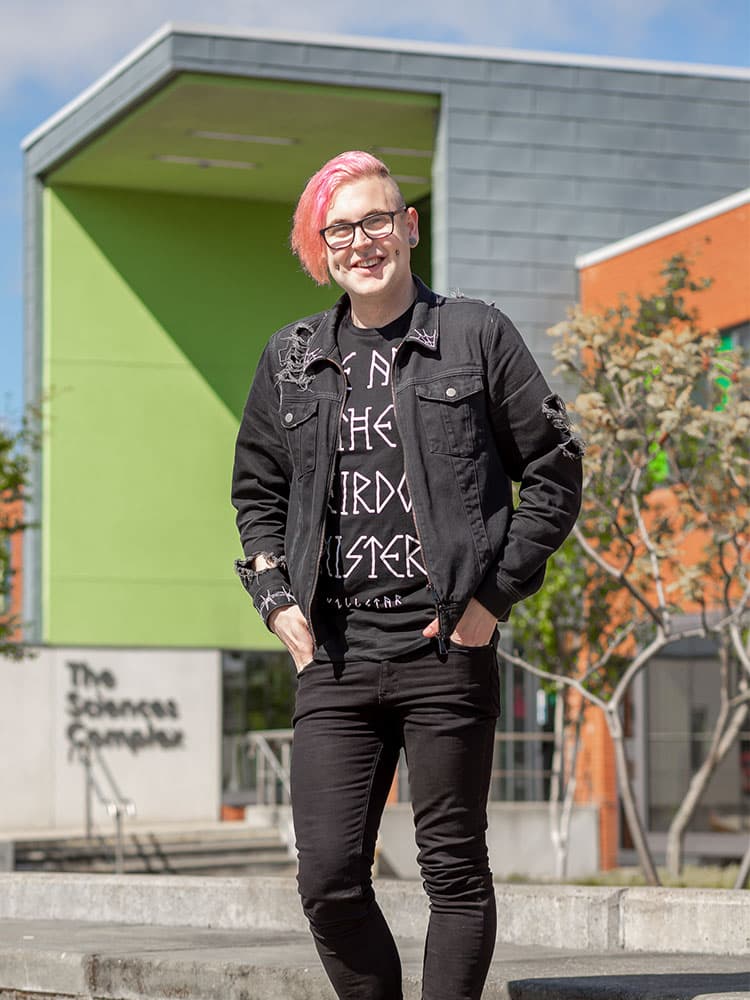
Daniel Taylor is a Tutor in the School of Psychology at the University of Sunderland. He joined the department in 2019 as a PhD researcher and has been teaching modules focused on evolutionary psychology, individual differences, and applied psychology. His PhD project aims to develop a measure for differentiating motivations behind BDSM (Bondage and Discipline, Domination and Submission, Sadism and Masochism) engagement. Teaches: PSY122 (Genes to Mind), PSY140 (Being a Psychologist), PSY267 (Cradle to Grave), PSY268 (Meet the Relatives), PSY369 (Dark Personalities), PSY380 (Research to Reality), FDN039 (Contemporary Issues in Psychology) Research Interests: Human sexuality, non-traditional sexual behavior, sexual orientation, pornography, evolutionary psychology, individual differences Contact: dan.taylor@sunderland.ac.uk
Helen Driscoll is a Professor of Global Education and Pro Vice-Chancellor (Learning and Teaching) at the University of Sunderland. Her career spans roles such as Senior Lecturer, Principal Lecturer (Team Leader), and Acting Head of the School of Psychology. She holds a PhD in evolutionary psychology from Durham University and a First Class Honours in Psychology from Newcastle University. Research Interests: Evolutionary psychology, dark personality, attraction/sexuality, aggression/violence, higher education pedagogy, and equality/diversity. Publications: 2021-2020 articles on healthcare education, mate preferences, and sexual identity, alongside conference contributions on programme delivery and relationship dynamics. Awards: Mary McKinnon Prize, Senior Fellow of the Higher Education Academy, Chartered Psychologist, Associate Fellow of the British Psychological Society, and a Santander Emerging Women Leaders scholarship. Leadership & Outreach: Aurora Champion for women in leadership, external examiner at London Metropolitan University and Bishop Grosseteste University, and frequent media commentator on topics like domestic abuse and evolutionary psychology.
Stevan Harnad is a Professor of Cognitive Science at UQÀM, McGill University, and the University of Southampton. His research focuses on cognition, consciousness, and the symbolic grounding problem. He serves as Editor of Animal Sentience , a journal exploring sentience across species. Harnad is an advocate for open access publishing, emphasizing equitable scholarly communication. His work bridges cognitive science with interdisciplinary concerns, including AI ethics, animal welfare, and language structure. Key research interests include cognitive architecture, consciousness studies, and the implications of artificial intelligence. He has contributed to debates on open access policies, emphasizing mandates for self-archiving to reduce subscription costs. His interdisciplinary approach integrates neuroscience, philosophy, and linguistics to address foundational questions about mind and language. Recent scholarship explores the ethical dimensions of AI, the neurocognitive basis of categorization, and the latent structures of language. Harnad’s work demonstrates a commitment to both theoretical rigor and practical impact in academic publishing reform.