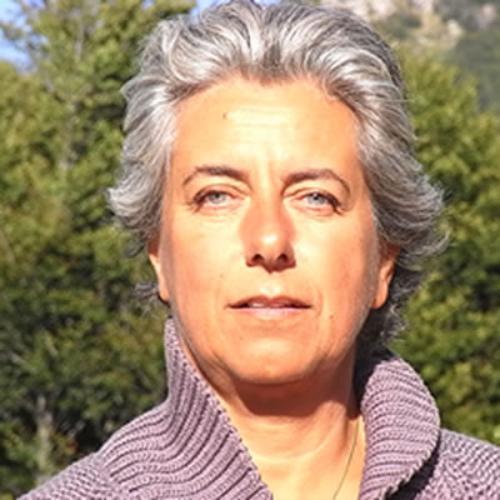
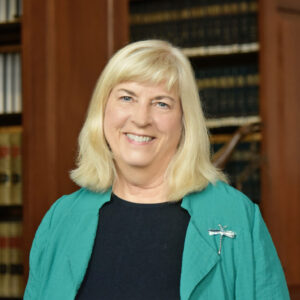
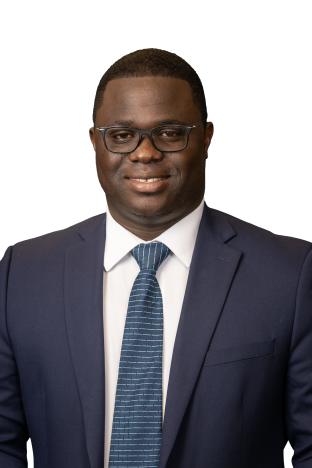
Giovanna Sissa is a PartTime Lecturer in the Department of Naval, Electrical, Electronic, and Telecommunications Engineering at the University of Genoa . Her work bridges computational modeling and environmental sustainability, focusing on ICT's ecological footprint. Research Interests She specializes in: Agent-Based Modeling for environmental awareness and policy simulation Green Computing and sustainable ICT practices Resource consumption reduction through behavioral modeling Dematerialization via digital technologies Her research explores how micro-level individual behaviors translate into macro-level environmental outcomes, particularly in energy policy and digital sustainability. Selected Publications Recent work includes: 2024 : Environmental impact analysis of digital technologies 2022 : Agent-Based Modeling of resource consumption 2017 : AI applications in energy policy modeling
Jessica A. Cooper is an Assistant Professor in the Department of Psychiatry and Behavioral Sciences at Emory University School of Medicine, where she serves as Assistant Director of the Translational Research in Affective Disorders (TReAD) Laboratory under Dr. Michael Treadway. Her research focuses on decision-making neurobiology and reward processing , examining how stress, aging, individual differences, and inflammatory processes impact reinforcement learning and motivational circuits. Key areas include computational phenotyping of effort-based decision-making in depression and psychosis, inflammation-depression interactions, and sex-specific drug effects on reward processing. Analysis of her recent publications reveals a strong emphasis on translational immunopsychiatry , particularly TNF-alpha antagonism trials for motivational deficits in high-inflammation depression, alongside innovative work on spontaneous thought dynamics and social learning across the lifespan. While no specific awards are listed in available sources, her work demonstrates significant contributions to understanding corticostriatal circuitry in affective disorders through multimodal approaches including fMRI, computational modeling, and pharmacological challenges. As Assistant Director of the TReAD Lab, Dr. Cooper mentors research staff and contributes to studies investigating neural mechanisms of depression, with particular focus on stress-induced alterations in glutamatergic signaling and inflammatory pathways. The laboratory maintains active collaborations across Emory's neuroscience and immunology departments. The TReAD Lab operates within Emory's robust neuroscience ecosystem, utilizing advanced neuroimaging facilities and maintaining partnerships with clinical departments for patient recruitment in mechanistic treatment trials.
Marion Crain serves as the Wiley B. Rutledge Professor of Law at Washington University School of Law, holding courtesy appointments with the George Warren Brown School of Social Work and the Department of Women, Gender & Sexuality Studies in the College of Arts & Sciences. Her administrative leadership includes Interim Provost & Executive Vice Chancellor for Academic Affairs (2019-2020), Vice Provost (2012-2019), and Leader of University Libraries (2016-2017). She directs interdisciplinary initiatives including the Bring Your Own Idea program and Beyond Boundaries Cross-School Teaching Grant, while serving as provost liaison to centers such as the Danforth Center on Religion & Politics and Gephardt Institute for Civic Engagement. Her educational background features a J.D. from UCLA School of Law (1983) and B.S. from Cornell University (1980). Prior to academia, she practiced labor and employment law at Latham & Watkins and clerked for the U.S. Court of Appeals for the Ninth Circuit. She previously held the Paul Eaton Professorship at UNC Chapel Hill, directing the Center on Poverty, Work & Opportunity and serving as Associate Dean for Faculty Research. Professor Crain's research examines gender-work-class intersections through collective action frameworks, focusing on labor relations, social movements, and economic justice. Her scholarship reveals how labor law structures both constrain and enable worker solidarity, particularly regarding the working poor and sexual harassment as collective harm. She pioneers reconceptualizing antidiscrimination rights as collective entitlements and analyzes corporate branding's impact on worker identity and autonomy. Her feminist legal theory work challenges individualized approaches to workplace inequality. Her publication trends demonstrate consistent focus on labor law's evolution in post-industrial contexts, with increasing emphasis on non-union worker solidarity, intersectional discrimination, and legal strategies for economic justice. Recent work explores protest at work, corporate mission statements' legal implications, and reassembling labor movements through digital and cross-sectoral organizing. Her scientific recognition includes: David M. Becker Professor of the Year Award (2009) Israel Treiman Research Fellow (2010-11) National Science Foundation grant (1992-93) Fund for Labor Relations Studies grant (1993) Professor of the Year, West Virginia University College of Law (1988) ABA Rookie Program of the Year (1988) Through the Labor Law Group (which she chaired 2011-2015), she develops pedagogical resources while serving on the Employee Rights and Employment Policy Journal editorial board. Her grant-funded research includes NSF-supported interdisciplinary projects and the Fund for Labor Relations Studies initiative. She has directed the Center for the Interdisciplinary Study of Work & Social Capital (2010-2014) and UNC's Center on Poverty, Work & Opportunity (2006-2008), fostering collaborations across law, social work, and social sciences. Her current leadership involves interdisciplinary research hubs including the Bring Your Own Idea program and Beyond Boundaries initiatives, while her scholarship increasingly addresses gig economy challenges and legal frameworks for 21st-century worker solidarity through the Danforth Center and Gephardt Institute networks.
Namiko Mitarai is an Associate Professor in the Biocomplexity group at the Niels Bohr Institute, University of Copenhagen, where she has been employed since 2009. She is also affiliated with CMoL (Center for Models of Life) and focuses on theoretical approaches to complex biological systems across multiple scales. University of Copenhagen, Niels Bohr Institute (2009-Present) Guest Professor, Department of Physics, Kyoto University (2022-2023) Assistant Professor, Department of Physics, Kyushu University (2007-2009) Her research interests span bacterial physiology and persistence, phage-bacteria interactions in spatial contexts, species competition and diversity, and complex systems in statistical physics. She employs theoretical methods from physics including dynamical systems, stochastic processes, and individual-based models to investigate complex living systems. Her recent publications (2023-2024) demonstrate strong focus on microbial dynamics, particularly examining phage-bacteria interactions, bacterial persistence mechanisms, and spatial organization in microbial communities. Her work bridges physics and biology through quantitative modeling approaches that reveal fundamental principles in complex biological systems. The Young Scientists' Prize from the Japanese Minister of Education (2015) Young Scientist Award of the Physical Society of Japan (2008) Jens Martin Knudsen Prize (2024) Mitarai actively contributes to the academic community through numerous invited talks and presentations, with scheduled appearances through 2025. She teaches courses including 'Dynamical Models in Molecular Biology' and 'Diffusive and Stochastic Processes,' which are recommended for students interested in conducting research in her lab.
Dr Wei-Ju Chang is an Honorary Lecturer in the School of Health Sciences, College of Health, Medicine and Wellbeing at the University of Newcastle , Australia. He also serves as a visiting Postdoctoral Fellow at Neuroscience Research Australia (NeuRA) and maintains an active clinical role as an APA-titled Musculoskeletal Physiotherapist in private practice in Sydney. Education Doctor of Philosophy, Western Sydney University Master of Orthopaedics, Sports & Manual Physiotherapy, University of South Australia Research Focus Dr Chang’s research integrates advanced neurophysiological techniques to investigate the transition from acute to chronic musculoskeletal pain. His work explores cortical and spinal neuroplasticity, quantitative sensory testing, and the therapeutic potential of non-invasive brain stimulation—particularly repetitive transcranial magnetic stimulation (rTMS) and transcranial direct current stimulation (tDCS)—for conditions such as knee osteoarthritis and low back pain. A complementary line of inquiry examines EEG-based biomarkers, including peak alpha frequency, as predictors and modulators of pain outcomes. Publication Trends Across more than 50 peer-reviewed outputs since 2015, Dr Chang’s articles cluster in three dominant themes: (1) systematic reviews and meta-analyses that synthesize evidence on neuromodulation and quantitative sensory testing; (2) longitudinal cohort studies that identify neurobiological predictors of chronic pain; and (3) interventional pilot RCTs that test adjunctive brain stimulation combined with exercise therapy. His 2024–2025 publications emphasize individualized pain prediction, prophylactic neuromodulation, and mechanistic TMS-EEG studies. Grant Support & Collaborations 2023 : University of Newcastle Pilot Funding Scheme (AUD $4,883) – Lead CI on mechanisms of rTMS-induced analgesia. 2022 : NHMRC Postgraduate Scholarship (AUD $105,437) – Lead CI on neurobiological transition to chronic low back pain. 2022 : CHMW Strategic Research Pilot Grant (AUD $9,783) – Co-I investigating brain biomarkers for chronic postsurgical pain. 2021 : ANZMUSC Seed Funding (AUD $20,000) – Lead CI combining rTMS with exercise in knee osteoarthritis. 2019 : Physiotherapy Research Foundation Seeding Grant (AUD $9,511) – Lead CI exploring neuroplastic mechanisms of quadriceps weakness post-TKR. Laboratory & Team Affiliations Dr Chang is affiliated with the Neuroplasticity and Pain Research Group at the University of Newcastle, led by Prof Siobhan Schabrun. Through NeuRA he collaborates on multimodal imaging and neurophysiology projects, leveraging state-of-the-art TMS-EEG and MR-compatible stimulation platforms.
Giuseppa Compagno , Associate Professor at the University of Palermo (UNIPA), specializes in Psychological, Pedagogical, Physical Exercise and Training Sciences . Her teaching includes Special Education , Intercultural Didactics , and Game Teaching . Research Focus: Neuroeducation, inclusive methodologies, teacher training, and docimological tools. Key Projects: #UNOPERUNO (inclusion/jobs), SOSAC (accessibility), Mind in Mind Lab (assessment). Recent Publications highlight neurodidactic approaches to evaluation, intercultural teaching, and game-based learning for inclusivity. She emphasizes integrating Brain Gym and Habits of Mind into teacher competence frameworks.
Dr. Yevhen Suprunenko is a Visiting Researcher in the Department of Plant Sciences at the University of Cambridge, actively contributing to the Epidemiology and Modelling research group. His work bridges theoretical physics and plant pathology to address critical challenges in agricultural sustainability and global food security through advanced spatial modeling of disease dynamics. He holds a PhD in Theoretical Physics (Condensed Matter) from Lancaster University, UK, which provides the mathematical foundation for his interdisciplinary research in plant disease epidemiology. This unique background enables innovative approaches to complex biological systems. Suprunenko's research centers on mathematical modeling of spatial epidemic spread in agricultural systems, focusing on intrinsic scales of epidemics, cropping patterns, and host landscape structure. He investigates how spatially explicit dynamics, stochasticity, and time-variability influence pest/pathogen distribution, epidemic severity, and optimal control strategies for threats like oak processionary moth and cassava brown streak disease. His work integrates computational methods with field data to develop practical solutions for crop protection. Analysis of his publication trajectory reveals a distinct evolution from chronotaxic systems in physics (2012-2017) to advanced spatial epidemiology in plant sciences (2019-2025). Recent work demonstrates increasing sophistication in modeling landscape-pathogen interactions, with strong emphasis on analytical approximations for invasion thresholds, individual-based model frameworks, and real-world applications in crop disease management. Key thematic areas include spatial scaling effects, infection rate optimization, and data refinement techniques for improved predictive accuracy. No scientific awards were explicitly documented in the provided materials. While specific student supervision details are absent from available records, Suprunenko's collaborative publications indicate active mentorship within the Epidemiology and Modelling group. Grant funding specifics are not disclosed, though his research aligns with major initiatives in agricultural security and environmental sustainability at Cambridge. As a core member of the Epidemiology and Modelling research group, Suprunenko collaborates on projects addressing plant-pathogen interactions within the Department of Plant Sciences. His work interfaces with Cambridge's broader environmental research ecosystem including the Centre for Global Wood Security and Global Food Security IRC, contributing to interdisciplinary efforts in ecosystem conservation and agricultural resilience.
Stig Vinberg is a Professor at the Department of Health Sciences , Mid Sweden University. With over 30 years of experience, his career spans research, project leadership, and consultancy in Occupational Health Science , focusing on leadership behaviors , workplace health promotion , and small business development . He supervises Master/Bachelor theses and co-supervises PhD students, while teaching courses in Working Environment Strategist programs. His research explores organizational determinants of health outcomes, including Leadership in activity-based workplaces Small enterprise resilience during crises Food insecurity and metabolic disease linkages Work-life balance in public/private sectors Crisis management in mining industry Gender-based health disparities in SMEs Recent publications examine Covid-19 impacts on self-employed individuals, hybrid work environments , and health equity in urban populations. His work integrates salutogenic theory, policy analysis, and cross-cultural comparisons, with significant contributions to workplace health metrics and municipal organizational development. Professor Vinberg collaborates internationally, with fieldwork in Sweden, Canada, and Mozambique. Current projects include Attractive Municipal Workplaces and ABW transition studies . He maintains affiliations with research consortia across Europe and Northern Africa, emphasizing practical applications for organizational stakeholders.
Ronald S. Braithwaite, MD , is a Professor at NYU Grossman School of Medicine with appointments in the Department of Population Health and Department of Medicine . He serves as Director of the Division of Comparative Effectiveness & Decision Science, focusing on HIV prevention, alcohol use disorders, and cost-effectiveness analysis in public health. Education: MD from Stony Brook University Research Interests span epidemiology, health equity, and medical decision-making. His work addresses HIV risk behaviors, preventive care optimization, and health disparities in low socioeconomic status populations. Recent publications examine alcohol use in HIV-positive individuals, community-based PrEP distribution models, and ethical considerations in cost-effectiveness analysis. Clinical Trials include projects aiming to reduce mortality in low SES populations through preventive care interventions. He has authored over 200 publications, with recent studies focusing on pancreatic cancer management, QALY-based policy modeling, and multi-level determinants of HIV risk. Contact: Phone: 212-263-4964 Email: Scott.Braithwaite@nyulangone.org Office: 227 East 30th Street, Sixth Floor, New York, NY 10016
Libak Abou is a Research Assistant Professor at the University of Michigan's Department of Physical Medicine and Rehabilitation and a Center Member at the Institute for Healthcare Policy and Innovation. His work focuses on enhancing functional independence and quality of life for individuals with neurologic disabilities through evidence-based rehabilitation strategies. Education : PhD in Kinesiology and Rehabilitation (University of Illinois at Urbana-Champaign, 2022), MPT in Physical Therapy (Santa Catarina State University, Brazil, 2017), and PT in Health Rehabilitation (University of Medical Sciences of Cienfuegos, Cuba, 2014). Research Interests : Neurorehabilitation, postural control, fall prevention using emerging technologies, and symptom management in multiple sclerosis (MS) and spinal cord injury (SCI). Recent Article Trends : His publications span MS fatigue reduction via exercise, dual-task fall prediction models, cardiovascular benefits of physical activity in MS, and innovative balance/wheelchair assessment tools. Emerging themes include wearable sensors for functional mobility and nociplastic pain in MS. Scientific Awards Elite Reviewer (American Congress of Rehabilitation Medicine, 2022-2023) Laura J. Huelster Scholarship (2021-2022) Carol L. Chittenden Fellow (2020-2022) UIUC Teachers Ranked as Excellent (2020) Grants : NIH-funded research on cognitive function in MS, MICHR grant on nociplastic pain outcomes, and multiple trainee grants for fall prediction studies in MS/SCI.
Jane E. Huggins is a Research Professor in the Department of Biomedical Engineering and Physical Medicine and Rehabilitation at the University of Michigan. Her work focuses on developing EEG-based brain-computer interfaces (BCIs) into clinical tools for individuals with physical impairments, addressing challenges like signal processing, task design, and in-home technical support. University of Michigan Appointments: Biomedical Engineering (2024–Present), Physical Medicine and Rehabilitation (2024–Present) Research Interests: Jane’s research bridges BCIs with augmentative and alternative communication (AAC) systems, emphasizing accessibility, commercial readiness, and integration with established clinical infrastructure. Her projects explore event-related potentials (P300), neural prostheses, and user-centered design for equitable healthcare technologies. Grant Funding Highlights: She has secured major grants from NIH, NSF, General Motors, and Cerebral Palsy Alliance Research Foundation to advance BCI applications in accessibility, autonomous vehicles, and lifelong assistive technology deployment. Professional Contributions: Jane actively presents at international BCI conferences and collaborates with the UMDBI Lab on clinical trials and software innovations for BCI systems.
Thomas A Hirschl is a Professor in the Department of Global Development at Cornell University's College of Agriculture and Life Sciences (CALS). His research centers on social class differentiation, life course analysis, and the economic, social, and health correlates of poverty. He has developed innovative methods for measuring social class through longitudinal data and examines how individuals perceive economic hardship and success through ideological and religious frameworks. Doctorate: University of Wisconsin-Madison (1986) Master of Science: University of Wisconsin-Madison (1980) Bachelor of Science: Purdue University (1976) His research spans demography , social stratification , and youth development , with a focus on poverty dynamics, ideological interpretations of economic conditions, and community-based interventions. Recent work explores intersections between religion and climate change indifference, emphasizing structural societal patterns. Hirschl has received prestigious recognitions including Who's Who in America (2001) Marquis Who's Who Outstanding Research Award (2001) Society for Social Work and Research Award (1994) Alpha Kappa Delta Honor Society (1991) He coordinates the Program Work Team on Poverty and Economic Hardship, collaborating with community leaders to address 21st-century poverty challenges, and directs the Teen Assessment Program to improve youth development through behavioral analysis.
Dr. Arianne Sweeting is a Senior Lecturer in Endocrinology at the University of Sydney's Faculty of Medicine and Health and serves as a Staff Specialist Endocrinologist at Royal Prince Alfred Hospital, where she leads the Maternal Metabolic Health service. She is also a member of the Charles Perkins Centre and holds significant leadership roles in diabetes in pregnancy research and clinical practice. Dr. Sweeting earned her MBBS (Hons), BSc in Neuroscience, Graduate Diploma in Public Health Law from Sydney Law School, and PhD from the University of Sydney's Faculty of Medicine and Health. She became a Fellow of the Royal Australasian College of Physicians in 2015 after receiving NHMRC postgraduate and Albert S McKern obstetric research scholarships for her PhD work on risk management in Gestational Diabetes. Her research focuses on metabolic disease in pregnancy, including diabetes, obesity, bariatric surgery, and eating disorders, with particular emphasis on precision medicine diagnostics, nutrition interventions, and risk management to improve health outcomes for women and their babies. She has pioneered work on early gestational diabetes, establishing and leading the Metabolic Health in Pregnancy service. Her recent publications (2024-2025) demonstrate a strong focus on precision medicine applications in gestational diabetes, with numerous high-impact publications in journals like The Lancet, Diabetes Care, and Communications Medicine. Her work spans epidemiology, pathophysiology, clinical trials (particularly the TOBOGM study), and systematic reviews addressing critical gaps in diabetes management during pregnancy. Australian Diabetes Society Skip Martin Fellow (2022) Sydney Medical School Dean's Publication Prize (2016) International Diabetes Federation World Diabetes Congress Travel Grant (2015) NHMRC Postgraduate Scholarship Albert S McKern Obstetric Research Scholarship Dr. Sweeting leads multiple research projects including the TOBOGM international multicentre trial on early detection of gestational diabetes, PREBABE preconception weight loss trial, and systematic reviews on precision medicine diagnostics. She has secured significant grant funding including the Australian Diabetes Society Early Career Fellowship and MRFF funding for the PreBabe study. Her leadership extends to national and international organizations, including past presidency of the Australasian Diabetes in Pregnancy Society (2020-2022) and membership on the International Association for the Diabetes and Pregnancy Study Groups Council.
Jamie Owen-DeSchryver is a Professor in the Psychology Department at Grand Valley State University, specializing in Clinical Psychology with a focus on Autism Spectrum Disorder (ASD). Holding a PhD from SUNY Stony Brook, they combine academic research with practical applications in educational settings. Education: B.A. from Kalamazoo College M.A. from Johns Hopkins University Ph.D. from State University of New York at Stony Brook Their research centers on implementing educational and behavioral interventions for individuals with ASD across developmental stages, from preschool to college. Current projects include the Statewide Autism Resources and Training (START) initiative, funded by MDE/OSEP, where they develop materials and provide technical assistance to schools in Michigan. Recent publications highlight expertise in video modeling, visual supports, self-management systems, peer supports, and opportunities-to-respond techniques. They also mentor graduate students in school psychology on intervention strategies for K-12 students with diverse needs, including ADHD, learning disabilities, and anxiety disorders. Contact: Office: 1319 Au Sable Hall Phone: (616) 331-8703 Email: owendesj@gvsu.edu
Gaurav Baruah is a researcher in the Faculty of Biology at the University of Bielefeld , specializing in Theoretical Biology . His work explores ecological systems through mathematical and network-based approaches, aligning with the university’s strategic research area on the Changing World , which investigates societal and environmental dynamics under uncertainty. Research Focus: Network science in ecological systems, including food web recovery, mutualistic networks, and climate change impacts on biodiversity.Eco-evolutionary feedbacks and trait-based modeling for species coexistence and population resilience. Grants & Collaborations: Participation in interdisciplinary projects under DFG Collaborative Research Centres and European Commission-funded initiatives, emphasizing complex systems and global change biology. Contact: Email gaurav.baruah@uni-bielefeld.de | Office: UHG W4-113 | Phone: +49 521 106-5572