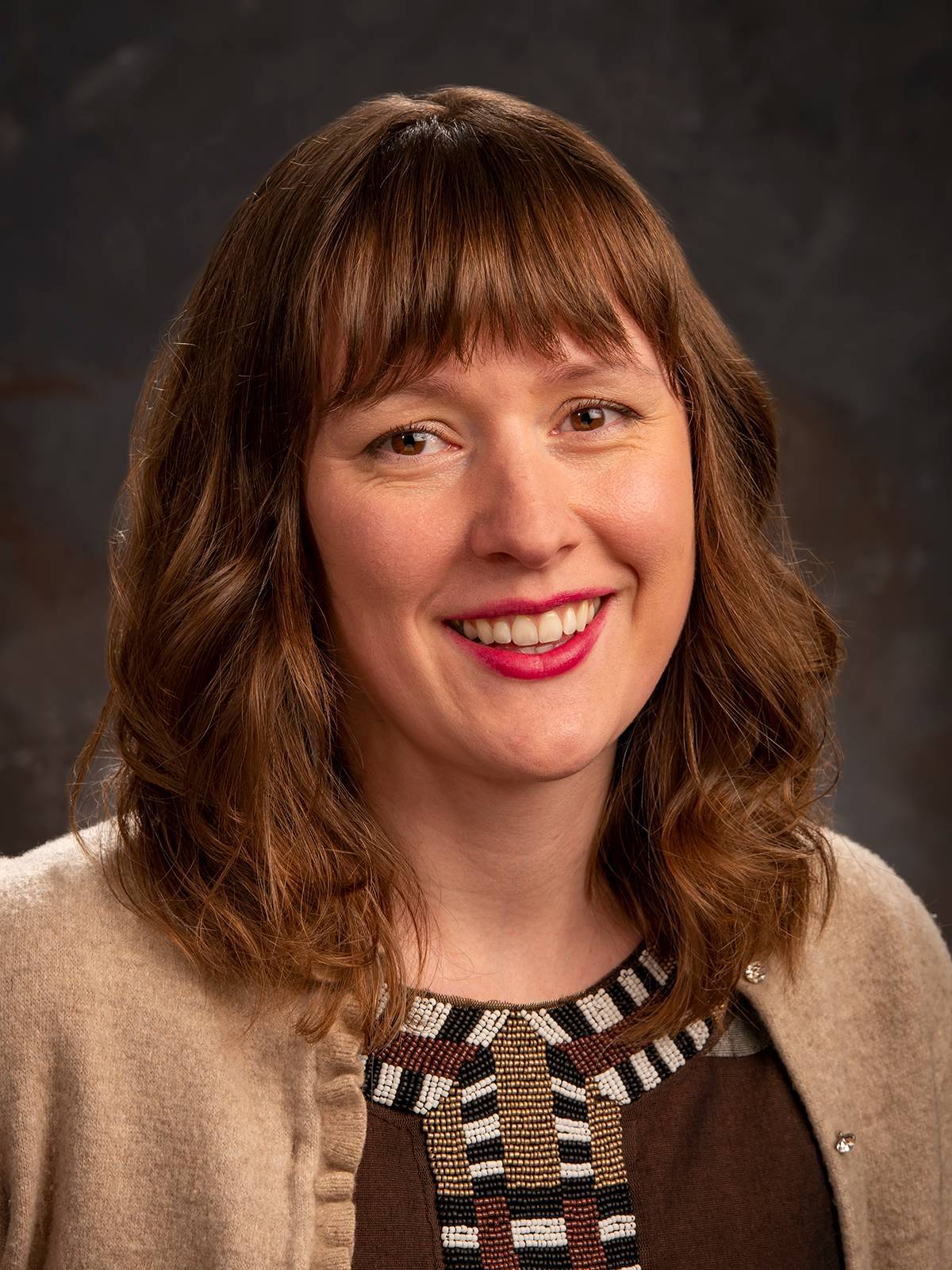
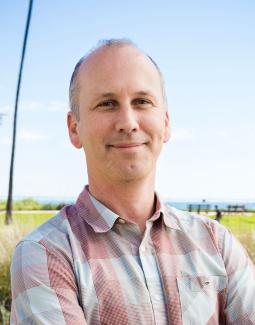
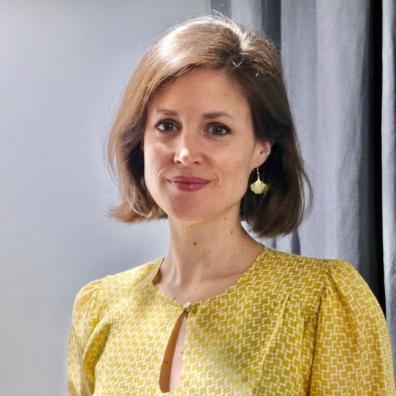
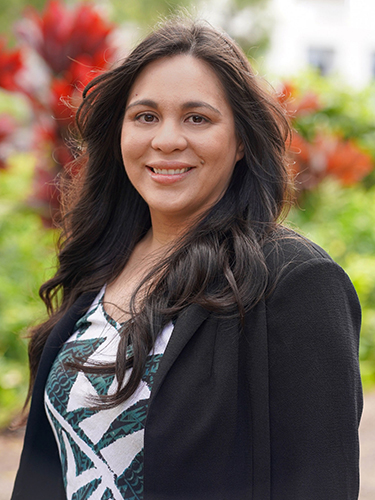
Melissa N. Morris is an Associate Professor of History at the University of Wyoming's Department of History. Her research focuses on early America and the Atlantic World, particularly cross-cultural interactions, plant-driven European expansion, and colonial failures in the Americas. She holds a PhD in History from Columbia University (2017) and previously taught at Bridgewater State University. Education: PhD in History, Columbia University, 2017 Research Interests: Dr. Morris explores how tobacco cultivation influenced Dutch, English, and French colonial expansion in the Americas (1580–1660), emphasizing indigenous and Spanish contributions. Her work integrates environmental history and the dissemination of agricultural knowledge. Contact: Located in History Building, Room 351. Email: melissa.morris@uwyo.edu .
Ben Halpern is a Professor at the Bren School of Environmental Science & Management and Director of the National Center for Ecological Analysis and Synthesis (NCEAS) at UC Santa Barbara. He holds a PhD in Ecology from UCSB and a BA in Biology from Carleton College. His research focuses on marine ecology and conservation planning, with expertise in cumulative impact assessments, marine reserves, and the Ocean Health Index. He has led global projects on ocean health, biodiversity threats, and sustainable aquaculture, collaborating with institutions worldwide. Notable roles include co-founding the Conservation Aquaculture Research Team (CART) and serving as a part-time Chair in Marine Conservation at Imperial College London (2013–2018). Research interests span marine biodiversity conservation, climate change impacts on ecosystems, and the integration of ecological and social data into policy. His work emphasizes interdisciplinary approaches to address environmental challenges, such as mapping wastewater impacts, evaluating aquaculture sustainability, and developing tools for marine spatial planning. Awards include the Smith Fellowship Program (sponsored by The Nature Conservancy) during his postdoctoral work. He teaches Bren School courses, mentors graduate students, and leads collaborative research teams. Current projects include analyzing climate change effects on aquaculture and advancing the Ocean Health Index framework to support global conservation efforts.
Dr. April Nowell is a Professor of Anthropology in the Department of Anthropology at the University of Victoria's Faculty of Social Sciences, specializing in Paleolithic archaeology, cognitive archaeology, and the archaeology of children. Currently on leave, she leads internationally recognized research projects across Europe, the Levant, Australia, and Africa while actively accepting graduate students. She earned her PhD from the University of Pennsylvania and has developed expertise in Neanderthal lifeways, Paleolithic art, and hominin life histories. Her academic journey reflects deep engagement with both theoretical frameworks and fieldwork across diverse geographical contexts. Nowell's research examines how prehistoric societies structured knowledge transmission, childhood development, and symbolic expression. Her groundbreaking work on finger flutings in Australian caves reveals children's roles in Paleolithic storytelling traditions, while her analysis of Levantine wetland ecosystems demonstrates how Pleistocene humans adapted to environmental shifts. She challenges conventional narratives about Neanderthal cognition and has pioneered methodologies for reconstructing prehistoric childhood experiences through skeletal and material evidence. Her recent publications show consistent innovation in archaeological methodology, particularly in digital documentation of rock art and interdisciplinary approaches to human development. Key trends include integrating bioarchaeological data with cognitive models, examining material culture as evidence of social learning, and analyzing environmental archives to understand human dispersal patterns. Her scientific recognition includes: 2023 EAA Book Prize for Growing Up in the Ice Age: Fossil and Archaeological Evidence of the Lived Lives of Plio-Pleistocene Children Nowell secures major research funding including Social Sciences and Humanities Research Council grants supporting her Azraq Basin project in Jordan and Koonalda Cave research in Australia. She mentors graduate students in Paleolithic theory while collaborating with Indigenous communities and international scholars on field projects spanning five continents. Her work bridges academic research and public engagement through TEDx talks and media appearances examining science communication. She directs field programs at Jordan's Azraq Basin wetlands and Australia's Koonalda Cave, working with multidisciplinary teams including geochronologists, bioarchaeologists, and Traditional Owners to investigate Pleistocene human adaptation and cultural transmission.
Delphine Allès is a University Professor at the National Institute of Oriental Languages and Civilizations (INALCO) in Paris, France, where she serves as Vice-President responsible for board of directors, organization and resources. She is a leading scholar in International Relations with a focus on Southeast Asia, particularly Indonesia, and specializes in non-Western approaches to international relations, religion in global politics, and Indo-Pacific security dynamics. Her research interests span multiple interconnected domains: Religion and International Relations Non-Western Approaches to International Relations Diplomacy, Security and Multilateral Cooperation in Southeast Asia (Indonesia / Indo-Pacific) Civilizational Narratives Global International Relations and Area Studies Allès's scholarly work demonstrates a consistent focus on decentralizing International Relations theory through empirical studies of Southeast Asian practices. Her recent publications examine the Indo-Pacific concept, religious diplomacy between Russia and Indonesia, and critiques of Western-centric security frameworks. She has pioneered research on how non-Western civilizations conceptualize international order, particularly through religious frameworks. Professor Allès serves on the editorial boards of multiple prestigious journals including European Journal of East Asian Affairs, Global: Jurnal politik internasional, and Archipel. She is also Scientific manager of the AMI-SHS DECRIPT program focused on crises and civilizational narratives. Her administrative leadership includes membership on the Scientific and Strategic Council of Pôle Asie (MEAE) and the board of the French Political Science Association. Previously, she directed the International Relations department at INALCO (2018-2023) and co-edited the journal Etudes internationales (2021-2024).
Yong-Bin Kang is a Senior Data Science Research Fellow at the ARC Centre of Excellence for Automated Decision Making and Society (ADM+S) at Swinburne University of Technology, affiliated with the School of Social Sciences, Media, Film and Education. He holds a PhD in AI from Monash University and leads numerous transdisciplinary research projects applying artificial intelligence to address complex societal challenges. Education: PhD in Faculty of IT, Monash University, Australia Dr. Kang's research focuses on Responsible AI and Society, with specific interests in developing Societal-AI platforms that integrate social data with ethical principles. His work spans healthcare, humanitech, education, financial planning, environmental health, and justice domains. He investigates how AI can enhance decision-making processes while promoting societal well-being, with particular attention to ethical implementation and human-centered approaches. His expertise encompasses AI, natural language processing, machine learning, and decision-making optimization. Analysis of Dr. Kang's recent publications reveals a strong trajectory toward socially responsible AI applications across diverse domains. His work consistently bridges technical AI capabilities with social implications, particularly focusing on ethical frameworks, community-centered design, and addressing societal inequalities through technology. The publications demonstrate increasing collaboration across disciplines including criminology, environmental science, mental health, and education. Dr. Kang is actively involved in significant research funding initiatives, with multiple ongoing projects that address critical societal challenges through AI. His supervision availability includes Doctorate (PhD) candidates, indicating his commitment to mentoring the next generation of researchers in AI and data science fields. Current Flagship Areas: Digital Capability Innovative Society Manufacturing Futures Sustainable Development Goals: Good Health and Well Being (SDG 3) Industry, Innovation and Infrastructure (SDG 9) Affordable and Clean Energy (SDG 7)
Lynda Jessup is Professor of Screen Cultures and Curatorial Studies in Film and Media at Queen's University's Faculty of Arts & Science. She currently serves as Vice Dean (2021-present), overseeing faculty relations across 30 departments, after previously holding Associate Dean (2014-2021) and Director of Cultural Studies (2009-2014) positions. Her research interrogates visual culture through exhibitions, museums, and art historiography, focusing on Canadian and Indigenous North American contexts within Western valuation systems. She critically examines "the national" as a category of cultural authority, with recent expansion into cultural diplomacy exploring art exhibitions' role in Canadian foreign policy. As Director of the North American Cultural Diplomacy Initiative (NACDI), she leads an international network connecting cultural practitioners with diplomacy scholars. Analysis of her publication trends reveals deep integration of art history with diplomatic studies, particularly through state-sponsored Canadian art exhibitions as instruments of international relations. Her collaborative work consistently bridges academic research and policy impact, with growing emphasis on decolonization, trust-building, and critical approaches to cultural exchange in global contexts. Dr. Jessup's scientific recognition includes: Universities Art Association of Canada Recognition Award (2018) Fulbright Scholar at Rockefeller Archive Center (2010–11) Queen’s University Graduate Supervision Excellence Award (2009) Queen’s University Teaching Excellence Award (1998) Massey College Visiting Scholarship (2019-20) National Gallery of Canada Research Fellowships (2002-03, 1994-95) Her funded research demonstrates sustained leadership in cultural diplomacy, including a SSHRC Partnership Development Grant (2019-25) for "The Cultural Relations Approach to Diplomacy" and MITACS Accelerate funding for Toronto's city diplomacy work. Major grants consistently address intersections of cultural policy, international relations, and visual representation through collaborative frameworks. Through NACDI, Jessup directs an international research network producing policy-shaping outputs like the "Cultural Diplomacy as Critical Practice" report series, fostering practitioner-scholar dialogue on decolonization and trust-building in global cultural relations.
Mapuana Antonio is an Associate Professor and head of the Native Hawaiian and Indigenous Health Program at the University of Hawai'i at Manoa. A Native Hawaiian scholar, she conducts community-based participatory research with Native Hawaiian communities to improve holistic health and wellbeing through a focus on resilience and cultural alignment. Her educational background includes: DrPH in Community-Based and Translational Research from the University of Hawai‘i at Mānoa Certificate in Measurement and Statistics (EDEP) from the University of Hawai‘i at Mānoa MA in Counseling Psychology from Washington State University BS in Psychology from Washington State University Dr. Antonio's research takes a strengths-based approach to enhance the physical, mental, and spiritual health of Native Hawaiians. She redefines health and resilience through Native Hawaiian worldviews, addressing structural and socio-cultural determinants. Her work emphasizes community-based participatory research, cultural practices, and the role of 'Āina (land) connectedness in fostering resilience and optimal wellbeing (Mauli Ola). Her recent publications (2017-2024) demonstrate a consistent focus on developing culturally grounded measures for Native Hawaiian health and resilience. Key projects include the Ke Ola O Ka ‘Āina study on 'Āina connectedness and the adaptation of historical loss scales. Her research integrates qualitative and quantitative methods, often co-developed with community partners, to address health disparities and promote culturally relevant interventions. Dr. Antonio has not been mentioned to have received specific scientific awards in the provided information. She secures significant research funding, including as PI for the Ola HAWAII and PIKO pilot studies and co-PI for Project Mōkiha funded by the Robert Wood Johnson Foundation. Her grants support community-driven initiatives in Indigenous health, resilience, and environmental restoration. She mentors students and community members through the NHIH Summer Health Academy and collaborative research projects. Dr. Antonio leads the Native Hawaiian and Indigenous Health Program and collaborates with community research groups such as the Pono Research Hui and Limu Hui. Her work is deeply embedded in partnerships with Native Hawaiian communities, ensuring that research is conducted with and for the community to restore cultural practices and health sovereignty.
Professor Mustapha Sheikh is Chair in Islamic Thought and Muslim Societies at the School of Languages, Cultures and Societies, University of Leeds. He is Co-Director of the Iqbal Centre for Critical Muslim Studies and actively contributes to interdisciplinary research on Muslim intellectual history, Islamic law, and contemporary socio-political issues affecting Muslim communities globally. His educational background includes a DPhil in Theology and Religion from the University of Oxford, an MSt in the Study of Religions (Oxford), a BA in Arabic and Islamic Law, and a BSc in Project Management from University College London. His academic journey reflects a deep integration of traditional Islamic scholarship and rigorous Western academic training. Sheikh's research is centered on two interrelated strands: first, Islamic intellectual and legal history, particularly revivalist and reformist movements in the Ottoman and early modern Islamic world; second, the socio-scientific analysis of contemporary Muslim societies, including Islamophobia, Islamic finance, food and water security, and decolonial studies. His seminal work Ottoman Puritanism and Its Discontents (Oxford University Press, 2016) has significantly reshaped scholarly understanding of the Qadizadeli movement and Taymiyyan influences in Ottoman thought. He is a pioneer in advancing Critical Muslim Studies as a post-Orientalist framework for rethinking Islamic tradition. His recent publications reveal a strong interdisciplinary trend, combining Islamic legal theory with social justice, environmental security, and political economy. Themes such as intersectional oppression, decoloniality, and ethical finance recur across his work, reflecting a commitment to justice-oriented scholarship. He frequently collaborates with scholars across disciplines and geographies, particularly in the Global South. Member, British Society for Middle Eastern Studies (BRISMES) Member, British Association of Islamic Studies (BRAIS) Board Member, (In)Justice International Professor Sheikh actively supervises PhD students and has successfully guided over 20 doctoral candidates to completion. His research is supported by collaborations across institutions, including the University of Punjab (where he is a Visiting Professor) and Harper Adams University. He is currently co-editing volumes on global injustice and Islamic finance, and working on a book about healing racial trauma from an Islamic psycho-spiritual perspective. He leads and participates in numerous research groups, including the Arabic History group and the Centre for Religion and Public Life, and is deeply involved in public engagement through talks, webinars, and podcasts addressing Islamophobia, women’s rights under Shari’a, and decolonising knowledge.
Nicole Latulippe is an Associate Professor in the Department of Human Geography at the University of Toronto Scarborough (UTSC), with a cross-appointment in the Department of Physical and Environmental Sciences. She focuses on Indigenous environmental governance, anticolonial research methodologies, and relational geographies through community-engaged practices. Ph.D. in Geography from University of Toronto M.A. in Geography from University of Guelph B.A. (Hons) in Geography from Nipissing University Her research explores Indigenous knowledge systems in environmental governance, settler-Indigenous relations in urban spaces, and decolonizing methodologies. Current projects include land/water stewardship in Toronto, treaty citizenship, and pathways to just futures through Indigenous placemaking. Her recent publications emphasize fisheries policy alternatives rooted in Indigenous relationality, co-creative research with Toronto Islands communities, and Indigenous-led environmental governance frameworks. Themes include knowledge sovereignty, colonial-disruption strategies, and land-based relational ethics. Scientific Awards: Connaught New Researcher Award (2022), SSHRC Insight Development Grant (2021), SSHRC Connection Grant (2019) Community Collaborations: Nipissing First Nation fisheries stewardship, Indigenous Environmental Justice Project, Mississaugas of the Credit First Nation partnerships
Jonna Häkkilä is a Professor of Industrial Design at the Faculty of Art and Design, University of Lapland and serves as Vice Dean (Research). She holds a Docent title in Human-Computer Interaction and Computer Science from the University of Oulu (since 2011). Her primary research group is LUX (Lapland User Experience Design). Research focuses on user-centered design, wearable technology, cultural heritage digitization, and ethical technology integration with marginalized communities. She leads projects like the MAGICS National Infrastructure for Human in the Digital World and Indigenous Digital Storytelling with New Media. Awards include Best Demo Award at Pervasive Displays 2019 and Best Paper Award at MUM 2017. Active in organizing international conferences and supervising 3 doctoral works. Engaged in Arctic resilience initiatives through co-creative methodologies.
Tiago de Melo Cartaxo is a Senior Lecturer in Environmental Law at the University of Exeter’s College of Humanities and Social Sciences, Cornwall Campus. He founded the Exeter Centre for Environmental Law (ExCEL) and is part of Law and Business Cornwall (LAB/C). Current roles include Associate Director for External Engagement at the Environment and Sustainability Institute (ESI) and former Director of Postgraduate Research for Humanities and Social Sciences. His research focuses on environmental rights, climate resilience justice, circular economy, energy transition, and international environmental law. He holds a European PhD in Law from Universidade Nova de Lisboa, with postdoctoral work at the University of Surrey. Tiago has advised governments and international bodies, including the Portuguese Presidency of the EU Council, and chairs the World Public Sector Integrity Initiative (WPIEI). Education European PhD in Law, Universidade Nova de Lisboa (2015–2020) LLM in Environmental Law and Planning, University of Coimbra (2012–2014) Licenciatura in Law, University of Lisbon (2000–2005) Research Interests He explores legal frameworks supporting sustainability transitions, including governance of single-use plastics, nature markets, and climate adaptation. His work bridges environmental law with social equity, focusing on resilience justice, circular economy policies, and EU environmental law. He emphasizes transdisciplinary approaches to address socio-ecological challenges in urban contexts. Notable Contributions Coordinated ESI-funded projects on regulatory frameworks for nature markets Developed academic partnerships with the Portuguese Environment Agency Chaired WPIEI during Portugal’s EU Presidency Advised on post-2011 Portuguese economic reforms Awards & Affiliations Fulbright Scholarship (USA) FCT Fellowships (Portugal) Senior Fellow of AdvanceHE Member of ILA Committees on Sustainable Development, SDGs, and ICC Environment Commission Advising & Grants Tiago welcomes PhD/Masters supervision in Environmental & Climate Law. His grants include ESI funding and collaborations with international institutions. He leads the NOVA Law Green Lab and has advised Portuguese and EU policymakers on environmental compliance and energy transitions. Labs & Networks Founder of ExCEL and NOVA Law Green Lab; collaborates with Exeter Biodiversity & People Network, Exeter Food Policy, and Environmental Intelligence initiatives.
Sebastian Heilpern serves as Acting Assistant Professor in Stanford University's Department of Earth System Science, transitioning to Assistant Professor in January 2026. An ecologist and sustainability scientist, he investigates biodiversity change in aquatic ecosystems—particularly the Amazon basin—and its implications for human well-being through food systems, renewable energy, and public health lenses. His research integrates fieldwork, data science, and synthesis across local to global scales. His educational background includes: PhD in Ecology, Evolution & Environmental Biology from Columbia University (2020) MS in Ecology & Evolution from the University of Chicago (2015) BS in Biological Sciences from Cornell University (2011) Heilpern's research centers on identifying synergies between biodiversity conservation and societal objectives. His work examines how aquatic biodiversity sustains nutritional security through fisheries, assesses hydropower's socio-ecological tradeoffs, and develops climate-smart planning frameworks. By connecting ecological processes to human outcomes, he advances sustainability science through interdisciplinary approaches that bridge environmental and social domains. His 2023-2025 publications reveal dominant themes in Amazonian freshwater systems, fisheries nutrition, and renewable energy planning. Key trends include quantifying biodiversity's role in dietary resilience, optimizing hydropower development to minimize ecological harm, and establishing mercury-nutrition linkages in fish consumption. His work consistently emphasizes win-win solutions that align conservation with food/energy security. Award highlights: Eric & Wendy Schmidt AI in Science Postdoctoral Fellowship at Cornell University As principal investigator of Stanford's Biodiversity Lab, Heilpern leads research reconciling conservation with food, energy, and water security. His team prioritizes equity in science practice while addressing historical inequities. Current projects focus on Amazonian freshwater systems, sustainable aquaculture siting, and climate-resilient energy planning, supported by interdisciplinary collaborations across ecology, data science, and policy domains. The Biodiversity Lab actively recruits researchers through structured opportunities emphasizing diversity and justice in sustainability science. Laboratory values explicitly center on correcting science's inequitable legacy while advancing stronger ecological understanding through inclusive practices.
Dominik Roeser is a Professor and Associate Dean of Research Forests & Community Outreach at the University of British Columbia's Faculty of Forestry, Department of Forest Resources Management. With over 21 years of experience in forest research and innovation, he has built a comprehensive forest operations research program since joining UBC in 2018, following his tenure as Senior Director at FPInnovations where he managed multidisciplinary teams focused on improving forest sector competitiveness and wildfire management solutions in Western Canada. Professor Roeser's research interests center on sustainable forest management and the bioeconomy, with specific expertise in forest bioproduction, supply chain design, steep slope harvesting, and biomass operations. His work through the Forest Action Lab applies diverse research methods including productivity studies, field trials, and modeling to address sustainability challenges across different operational environments. His research portfolio spans sustainable forest biomass utilization, harvesting in difficult terrain, innovative forest planning tools, operational productivity, carbon management, and community sustainability impacts from reforestation. His publication record shows a strong focus on practical applications of forest science, with recent work emphasizing wildfire management, remote sensing technologies for precision forestry, biomass energy systems, and the socio-ecological dimensions of forest management. His research increasingly integrates advanced technologies like LiDAR and drone-based systems with traditional forest operations to address contemporary challenges in sustainable forest management. Roeser has received the Recognition Award from the Canadian Forest Service (2017) for his contributions to forest science and innovation. His work demonstrates significant impact on both academic understanding and practical implementation of sustainable forest operations across North America and Europe. As an educator, Professor Roeser teaches several key courses including FOPR 264 Introduction to Forest Operations, FOPR 362 Harvesting systems and forest access, FOPR 464 Operational planning and management, and FRST 452 Coastal field school. He considers educating the next generation of forestry professionals one of his passions, bridging theoretical knowledge with practical industry applications. The Forest Action Lab, led by Professor Roeser, represents a multidisciplinary research hub applying diverse methodologies to address forestry stakeholders' needs across British Columbia, Canada, and globally. The lab's work connects academic research with industry implementation, focusing on practical solutions for sustainable forest utilization in varied operational environments.
Brad Riley is a Research Fellow at the Australian National University's Centre for Aboriginal Economic Policy Research (CAEPR), affiliated with the Institute for Climate, Energy & Disaster Solutions. His work focuses on renewable energy implementation, energy efficiency, and demand management initiatives in remote communities, particularly in North West Australia. Current Role: Research Fellow, Zero Carbon Energy for the Asia Pacific Grand Challenge Research Themes: Indigenous Engagement with Renewable Energy, Regulatory Disparities, Climate Adaptation Projects: ZCEAP Fellow, Indigenous Engagement with Renewable Energy Industries program His research bridges climate change policy, energy security, and Indigenous rights, emphasizing equity in energy transitions and resilience-building for remote populations. He has collaborated with communities in North West Australia to address energy poverty and regulatory barriers. Riley’s publications highlight challenges in energy policy, focusing on temperature extremes exacerbating energy insecurity, prepayment tariffs, electric vehicle feasibility in remote areas, and Indigenous engagement in renewable energy projects. These works emphasize social equity, regulatory disparities, and community-specific solutions. He is part of research groups including Indigenous peoples, cultures and knowledges; Adaptation, livelihoods and development in Asia and the Pacific; and Risk, vulnerability and resilience. Contact: Bradley.Riley@anu.edu.au | (02) 6125 4559
Pamela Klassen is a Professor and Chair in the Department for the Study of Religion at the University of Toronto, with a cross-appointment in the Department of Anthropology. She has taught at the University of Toronto since 1997 and has been a full professor since 2011. Her academic leadership includes serving as Chair & Graduate Chair of her department (2020-present) and as Vice-Dean, Undergraduate & International in the Faculty of Arts & Science (2016-2020). In 2022-2023, she served as the William Lyon Mackenzie King Visiting Professor of Canadian Studies at Harvard University. Professor Klassen's research focuses on colonialism, treaties, museums, and public memory. Her work spans several interconnected areas: Anthropology of religion, secularism, and mediation (including digital humanities) Christianity, colonialism, and land in North America & Turtle Island Religion, ritual, and public memory (including museum studies) Religion, spirituality, and gender Her scholarship demonstrates a consistent engagement with how religious practices, memories, and institutions intersect with questions of power, land, and identity in settler colonial contexts. Klassen's work often bridges historical and ethnographic approaches, examining both contemporary religious practices and their historical formations. Professor Klassen's publications reveal a trajectory of increasingly focused attention on the intersections of religion, land, and colonialism, with recent work emphasizing Indigenous perspectives and decolonial approaches to religious studies. Her scholarship moves fluidly between theoretical interventions in religious studies and concrete engagements with public memory projects. Scientific Awards & Honors 2022-2023: William Lyon Mackenzie King Visiting Professor of Canadian Studies, Harvard University 2019: Fellow of the Royal Society of Canada 2015-2020: Anneliese Maier Research Award, Alexander von Humboldt Foundation 2015: Northrop Frye Award of Excellence for Integration of Research and Teaching 2014-2017: Distinguished Visiting Professor in Anthropology of Modern Religion, University of Tübingen 2012: American Academy of Religion Award of Excellence for Spirits of Protestantism Professor Klassen has successfully secured significant research funding, including the prestigious Anneliese Maier Research Award which supported her collaborative work with the Kay-Nah-Chi-Wah-Nung Historical Centre. She has supervised numerous graduate students in religious studies and anthropology, with many going on to successful academic careers. Professor Klassen leads several major collaborative projects including Kiinawin Kawindomowin Story Nations, a digital storytelling initiative with the Rainy River First Nations, and Treaty Conversations, an educational resource about treaty relationships in Ontario. These projects exemplify her commitment to community-engaged scholarship that bridges academic research with public education and reconciliation efforts.