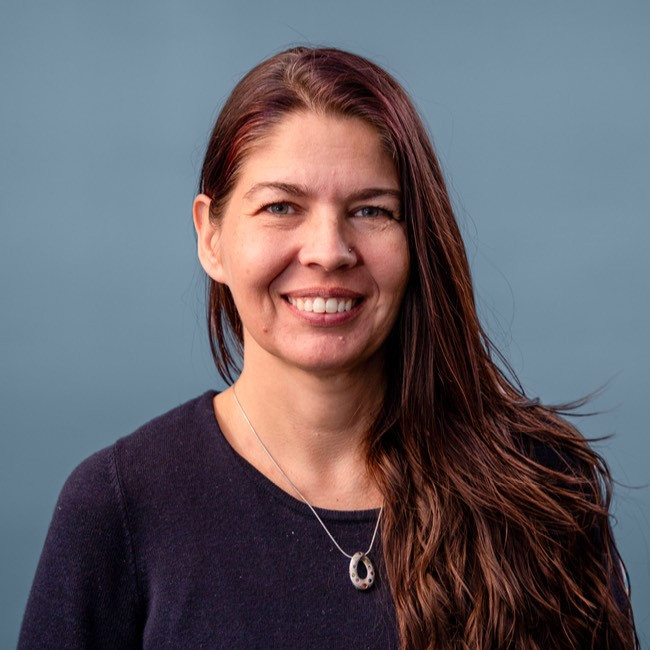
Michelle Ludecke is a Senior Lecturer at the School of Curriculum Teaching & Inclusive Education, Monash University. Her work focuses on arts-based educational research methods, teacher transitions, and classroom readiness for graduate educators. She collaborates with institutions like the Sydney Children's Hospitals Foundation and engages in simulation-based teacher education projects. Current research explores teacher identity formation, mentoring practices, and inclusive education strategies. Active in developing pedagogical tools like the Radical Care Kit and TEMAG partnership initiatives. Utilizes performative methods (dance, drama) to investigate educational challenges through projects like 'Dancing the Data' and 'The First Time'. While her recent publications address teacher preparation, simulation pedagogy, and rural education contexts, she is currently unavailable to supervise new PhD candidates.
Kumar Ravi Priya is a Professor in the Department of Humanities and Social Sciences at the Indian Institute of Technology Kanpur (IIT Kanpur), where he has established himself as a leading researcher in culturally-grounded psychological approaches with special emphasis on disaster mental health contexts. His educational background includes: PhD in Psychology from University of Delhi (2007) M.A. in Psychology from University of Delhi (2001) B.A. (Hons.) in Psychology from University of Delhi (1999) Professor Priya's research spans Disaster Mental Health, Health Psychology, Cultural Psychology, Alternative Paradigms of Psychology, and Research Methods. His scholarly work emphasizes qualitative approaches to understanding mental health phenomena within Indian sociocultural contexts, particularly focusing on trauma, healing processes, and resilience among vulnerable populations affected by disasters and conflicts. He has made significant contributions to developing culturally appropriate frameworks for psychological understanding and intervention in Indian settings. His publications demonstrate a consistent trajectory from theoretical explorations of health psychology in India toward increasingly applied research on trauma responses and healing mechanisms in specific crisis situations, with particular attention to qualitative methodologies that capture nuanced human experiences. His notable awards and recognitions include: The Class of 1970 Young Faculty Research Fellowship (2013-2016) Multiple invitations to international Capacity Building Workshops on Disaster Mental Health sponsored by The Chinese Academy of Sciences and the International Union of Psychological Sciences Letters of Commendation from the Director of IIT Kanpur for excellence in teaching PSY 454: Social Psychology Junior and Senior Research Fellowships from the University Grants Commission Professor Priya has demonstrated strong commitment to both research and teaching, with particular recognition for his instruction in social psychology. His work has established important connections between IIT Kanpur and international organizations focused on disaster mental health research and intervention.
Louise Whitaker, Associate Professor in Social Work at Southern Cross University's Faculty of Health, is a renowned scholar dedicated to transformative mental health approaches. She holds qualifications including a BSocWk, MSocWk from the University of Queensland, and a PhD from the University of Sydney. BSocWk, MSocWk - University of Queensland PhD - University of Sydney Her research program bridges cooperative inquiry methods, mental health practice, and pedagogy, emphasizing rights-based frameworks and Indigenous epistemologies. She studies severe mental distress conditions like schizophrenia and bipolar disorder through action-oriented methodologies. Recent publications highlight trends in trauma-informed care, co-design learning, and democratizing online education. Her collaborative research with Principal Supervisor roles includes studies on peer support workers, refugee women's empowerment, and telehealth practices. Best Pedagogical Article (2017) First Prize for Excellence - Anglicare Australia (2021) Community Impact Award (2019) Inspiring Educators Award (2021) Outstanding Teaching Award (2024) Louise leads the Australian Association of Social Workers National Research Committee and the International Network for Cooperative Inquirers.
Michael A. Adler is an Associate Professor of Anthropology at Southern Methodist University, serving as Director of Undergraduate Studies and Executive Director of SMU-in-Taos. He directs the Archaeological Ceramics Lab and maintains active research partnerships with Indigenous communities across the American Southwest. Education: Ph.D. in Anthropology, University of Michigan (1990) Professor Adler's research centers on Puebloan communities' complex ancestries, cultural identity construction, and sacred landscapes in the Southwest. Through deep collaboration with Picuris Pueblo, he addresses community-driven questions about historical land use and regional heritage. His parallel work documents traditional acequia irrigation systems in Northern New Mexico, while international projects examine early village contexts in Jordan. Key interests span Archaeological Ethics, Indigenous Knowledge Systems, and Southwest U.S. Prehistory. He currently mentors three graduate students—Adam Johnson, Samantha Lagos, and Spencer Lambert—and teaches foundational courses including North American Archaeology and Laboratory Methods. Though specific grants aren't detailed, his sustained fieldwork with tribal communities and international projects indicates robust research funding. Professor Adler emphasizes experiential education and public engagement, viewing archaeology as a bridge between academic inquiry and community needs. The Archaeological Ceramics Lab supports material analysis for his Southwest and Jordanian research, facilitating student training in ceramic dating and provenance studies. His community-centered methodology prioritizes Indigenous perspectives in knowledge creation, challenging conventional archaeological narratives about North American pasts.
Anne-Line Bjerknes is an Associate Professor in the Department of Mathematics and Science at the University of Southeast Norway (USN), Faculty of Humanities, Sports and Educational Sciences, based at the Drammen Campus. She has held this position since 2018 and maintains an active research profile focused primarily on early childhood education, with special emphasis on science and mathematics education. Her educational background includes a PhD in ecology from the Norwegian University of Life Sciences (NMBU), a Cand. Scient. in Biology, and a Cand. Mag with concentrations in multiple scientific disciplines from the University of Oslo (UiO). With 22 years of teaching experience across all educational levels (8 years in higher education, 10 in secondary, and 4 in primary school), she brings substantial practical knowledge to her academic work. Bjerknes's research primarily focuses on how children learn science through emotions, curiosity, play, and conversations in kindergarten settings. She serves as head of the 'Holistic learning in kindergarten' (BaHel) research group and is actively involved in the BRIDGES project on interdisciplinary didactics in teacher education. Her work bridges theoretical research with practical applications in early childhood education, with particular attention to creating supportive psychosocial environments for young learners. Her publication record shows consistent output from 2010 to 2023, demonstrating a progression from ecological research (her PhD focus) to educational research. Recent publications emphasize digital science activities in kindergarten, interdisciplinary teacher education, and the importance of indigenous knowledge for biodiversity conservation. Urfolkskunnskap er avgjørende for å redde verdens biologiske mangfold (2023) Digitale naturfaglige aktiviteter I barnehagen (2022) Implementation of Profession, progression and practice in kindergarten teacher education (2022) STEM Conversations in Early Childhood Education (2022) Curiosity and Wondering in Early Childhood Education (2021) Bjerknes actively contributes to public discourse on educational practices, notably through her 2019 critique of timeout practices in kindergarten. She collaborates extensively with the practice field through REKOMP and participates in multiple research groups focusing on science didactics, teaching quality, and holistic approaches to early childhood education. Her leadership of the BaHel research group demonstrates her commitment to advancing comprehensive educational approaches that connect various learning domains through play and emotional engagement.
Sebastian Karcher is a Research Associate Professor in the Political Science Department at Syracuse University, where he serves as Director of both the Center for Qualitative and Multi-Method Inquiry and the Qualitative Data Repository . He holds additional affiliation as a Senior Research Associate at the Campbell Public Affairs Institute. Karcher earned his Ph.D. from Northwestern University in 2014 and maintains an active research profile focused on advancing qualitative research methodologies. His research bridges data curation , open science infrastructure , and qualitative methodology , with specific interests in: Ethical frameworks for sensitive data sharing Repository development for qualitative research Transparency-enhancing tools and practices Interdisciplinary data synthesis approaches Indigenous data sovereignty initiatives Karcher has secured substantial research funding including grants from the National Science Foundation and Mellon Foundation. Key projects include: Data Services for Indigenous Scholarship and Sovereignty Support for Institutes on Qualitative Research (2021-2026) Privacy Interoperability frameworks Open Science through Journal Editors' Discussion Interface His scholarly contributions include the 2024 ASIS&T Best Short Paper Award. He teaches qualitative methodology courses and develops pedagogical resources for data management. As an open-source contributor, he maintains tools for Zotero and Citation Style Language. Through the Qualitative Data Repository, Karcher leads initiatives to develop curation standards and infrastructure supporting ethical reuse of qualitative research data across disciplines including health sciences, sustainability research, and social sciences.
Claire Cameron is the UK's first Professor of Social Pedagogy at University College London (UCL), Social Research Institute, where she has been based since 2013. She also holds a conjunct professorship at the University of Newcastle, Centre for Excellence in Equity in Higher Education, Australia since 2016. As a member of the Thomas Coram Research Unit, Professor Cameron leads research on children's and young people's lives, particularly those in disadvantaged circumstances, and researches the children's workforce. Professor Cameron's research interests focus on social pedagogy, which integrates care, education and upbringing - an approach well-established in continental Europe but emerging in the UK. Her work spans several key areas: Children's services and the children's workforce Children's and young people's experiences in families and with services Family livelihoods and their impacts on children and wellbeing Children in Care, Care Leavers, and Education of Children in Care Professor Cameron's recent publication output shows a strong focus on urban childhoods, inequality, mental health in coastal communities, and the impact of the COVID-19 pandemic on young families. Her 2025 book "Urban Childhoods: Growing up in inequality and hope" represents a significant contribution to understanding the challenges faced by children in urban environments. Her research often employs cross-national methods and works at the intersection of academia and practice, collaborating with local authorities and NGOs across multiple European countries. Professor Cameron has received funding from several major sources including: NIHR (National Institute for Health Research) for projects like "Play in Urban Spaces for Health" and "Fair Food Futures" UKRI-ESRC for the "Coastal Youth" project exploring the impact of coastal towns on young people's life chances ActEarly funding for research on inequalities of access to early childhood services As a supervisor, Professor Cameron currently advises six doctoral students and welcomes inquiries from prospective students interested in social pedagogy, children's workforce, education of looked after children, foster care, residential care, early childhood education and care, with a particular interest in European perspectives and cross-national methods. Her work aligns with several UN Sustainable Development Goals, particularly Goal 1 (No Poverty), Goal 3 (Good Health and Well Being), and Goal 8 (Decent Work and Economic Growth).
Sarah Abbott is an Associate Professor in Film Production at the University of Regina's Faculty of Media, Art, and Performance, where she bridges ethnographic film, environmental humanities, and Indigenous methodologies. Her work centers on human and nonhuman relations, particularly tree sentience and climate crisis communication, through award-winning films and community-engaged scholarship that has received international recognition. Dr. Abbott is completing her Doctorate of Social Sciences at Royal Roads University, supported by a Vanier Canada Scholarship. Her dissertation employs Indigenous Research Methodologies to explore the intelligence and relationality of trees through ethnographic inquiry and film. Her research investigates ethics of nonhuman knowing, decolonization, and multispecies communication. Through film and community projects, she examines how humans relate to vegetal beings and addresses climate crisis through eco-empathy. Her approach integrates Indigenous knowledge systems to foster relational ontologies and environmental justice, positioning film as a tool for public scholarship and cultural transformation. Recent publications and creative works demonstrate a clear trajectory toward interdisciplinary environmental scholarship, with increasing focus on tree sentience, climate communication, and translating academic research for public impact through films, The Conversation articles, and community lecture series. Dr. Abbott's significant contributions have been recognized through: 2012 Saskatchewan Lieutenant Governor’s Arts Award for Arts and Learning 2009 Regina Mayor's Arts and Business Awards for Innovation Vanier Canada Scholarship She mentors students through innovative production courses where they collaborate with industry professionals on socially relevant films, and secures substantial research funding including SSHRC grants for northern Indigenous collaborations. Her Academics for Climate Lecture Series and community-engaged projects demonstrate commitment to public scholarship and translating research into community action. While not leading a formally named laboratory, Dr. Abbott directs impactful research initiatives like 'Sensory Acts' and her tree sentience project, involving interdisciplinary teams and Indigenous community partners. Her mispon film festival co-founding role and climate change course development highlight her dedication to creating platforms for Indigenous filmmaking and student-led environmental interventions.
Jeff Stickney is a part-time Lecturer in the Department of Curriculum, Teaching & Learning at the University of Toronto's Ontario Institute for Studies in Education (OISE), where he has taught since 2006. Prior to this academic role, he spent thirty years as a secondary school teacher in the York Region District School Board teaching Astronomy, Geography, English, Philosophy, and Theory of Knowledge, and served as a Teaching Assistant at UTM (1979-1982). He remains active in educational unions as CUPE Unit 3 Rep for OISE's Joint Health & Safety Committee. Stickney's research centers on Philosophy of Education through Wittgenstein and Foucault lenses, with significant contributions to Environmental Education. His work explores place-based and arts-based learning, land-based education, political philosophy, teacher autonomy, and social justice initiatives. This dual focus manifests in publications examining philosophical walks, emplaced transcendence, and pandemic-responsive adaptations of environmental pedagogy, while maintaining critical analysis of teacher training frameworks and educational power structures. His recent scholarly output shows increasing emphasis on ecological education, with 8 of 15 most recent publications (2019-2023) addressing environmental themes. Stickney bridges theoretical philosophy with practical classroom applications, particularly in sustainability education where he developed OISE's Master of Teaching sustainability course through improvisational methods during the pandemic. His editorial work supports emerging scholars while his international conference participation extends OISE's academic reach. Stickney has supervised two doctoral candidates to completion (OISE 2013, York 2018) and mentors students through Master of Teaching courses in Sustainability Education and Social Sciences. His teaching philosophy integrates decades of K-12 experience with philosophical rigor, evident in his development of Ontario's Grade 12 Philosophy curriculum and his current focus on creating meaningful place-based learning experiences despite institutional constraints.
Robin Brandehoff, Ph.D. , is an Assistant Professor in Educational Foundations at the School of Education & Human Development, University of Colorado Denver. A first-generation graduate from Hawai’i and East LA, she specializes in Urban Ecologies, Hānai Pedagogy, and diversifying the teacher workforce through mentorship and social justice practices. Education: Ph.D. in Education, University of Colorado Denver (2020) M.Ed. in Secondary Education, Whittier College (2007) B.A. in Theatre Performance, Whittier College (2005) B.A. in Dramaturgical Critique, Whittier College (2005) Her research focuses on the impacts of systemic oppression on non-dominant communities of the Global Majority, utilizing mentorship, performance, and narrative to educate at-promise youth and their leaders. She integrates Hānai Pedagogy (2023), a framework rooted in Hawaiian cultural practices, to foster liberation through education. Recent publications highlight trends in equity-driven education , mentorship for marginalized youth , and decolonizing pedagogy . Key themes include the carceral education pipeline, culturally responsive Response to Intervention (RTI), and Grow Your Own (GYO) teacher programs. Scientific Awards: SEHD Excellence in Teaching (IRC) Award (2023) Mentorship & Mentoring Practices SIG Dissertation of the Year Award, AERA (April 2022) Robin actively advises Doctoral Students of Color and co-leads the national Grow Your Own Collective , promoting community-grounded recruitment of Teachers of Color. She also contributes to Pedagogy and Theatre of the Oppressed, Inc. , emphasizing critical thinking through performance in marginalized communities.
Kathryn Crawford, EdD, serves as Associate Professor in the School of Education at Ambrose University, specializing in preservice teacher development and field experiences with emphasis on Universal Design for Learning and ethical inclusion. Her academic credentials include: EdD from University of Calgary MEd from University of Calgary BEd from University of Alberta Research centers on pre-service/early-career teacher identity formation, professional socialization processes, Indigenous pedagogies integration, and critical analysis of field experiences. She co-edited "Crisis and opportunity: How Canadian Bachelor of Education programs responded to the pandemic" (2022) and developed classroom culture modules through Design-Based Research initiatives exploring preservice teacher confidence. Publication trends (2018-2023) reveal concentrated scholarship in pandemic-era teacher education adaptation, Indigenous knowledge systems in pedagogy, and innovative classroom management approaches including escape room design methodologies. Recurring themes emphasize identity negotiation during professional transition and ethical space creation for marginalized epistemologies. Dr. Crawford participates in multi-institutional collaborations such as the classroom culture module project, demonstrating active engagement in teacher education research networks. While specific grant funding details remain undisclosed, her work consistently addresses systemic challenges in preservice preparation through collaborative inquiry frameworks.
Dr. John Davis is a Senior Research Fellow at Deakin University's School of Education, where he leads the Indigenous Knowledge Systems Lab (IKS Lab). His work centers on decolonizing education through Indigenous knowledge regeneration, community engagement, and equity-focused pedagogies. Education: Doctor of Philosophy, Queensland University of Technology Bachelor of Arts (Visual Communication), Monash University Davis's research examines Indigenous Knowledge Systems and their application in education reform, space studies, and cultural preservation. He develops methodologies like 'Strength Basing' to empower Indigenous communities and reshape curriculum design. His transdisciplinary projects span AI-supported extended reality for mental well-being in space missions and land-based literacy practices. Publications (2012-2024) reveal three trajectories: 1) Culturally responsive pedagogy and educational equity, 2) Indigenous knowledge transmission through storytelling and digital media, 3) Transdisciplinary innovations in space psychology and heritage preservation. His most cited works address relational pedagogy and deficit-narrative countering. Grants & Supervision: Current Grant: 'Imagi-Nation' (2022-2027, $347,759) for Indigenous mentoring frameworks. Supervises doctoral candidate Wayne Francis Williams on knowledge translation in cultural spaces. At the IKS Lab, Davis pioneers community-driven research using protocols like yarning circles and kinship-based inquiry. The lab collaborates with Indigenous communities to regenerate traditional knowledge through placed-based and collective methodologies.
Elsa Lee is a Senior Lecturer at the School of Education within the Faculty of Arts, Humanities, Education and Social Sciences at Anglia Ruskin University. Her work bridges environmental sustainability, education, and social justice through research, teaching, and community engagement. Her academic qualifications include: BSc (Hons) Biological Sciences from University of Education (1998) PGCE Biology from University College London (1999) MA Environmental Education (Distinction) from University of Bath (2008) PhD Environmental Education from University of Bath (2013) Dr. Lee's research centers on Environmental Sustainability Education , with emphasis on place-based learning , environmental justice , and arts integration . She investigates how arts-in-nature experiences foster child wellbeing in deprived areas and examines connections between water education and global citizenship. Her work consistently highlights social justice dimensions in sustainability education across diverse educational contexts. Recent publications reveal strong interdisciplinary trends combining environmental psychology, wellbeing studies, and climate change education. Key patterns include the therapeutic role of arts in nature for vulnerable children, eco-capabilities frameworks for sustainability, and narrative approaches to international sustainability education. Her research frequently employs qualitative methods in global contexts from Mongolia to the UK. Scientific recognition includes: ESRC New Investigators Grant (2019) AHRC Eco-capabilities Project Named Research Fellow (2019) Dr. Lee actively supervises postgraduate research and has secured significant funding including UKRI projects on water education and global citizenship, AHRC eco-capabilities research, and EERA network development grants. She serves as Executive Editor for the National Association of Environmental Education Journal and coordinates the EERA Environmental Sustainability Education Research Network. She maintains active leadership roles as trustee and Deputy Executive Director of the National Association of Environmental Education (NAEE), contributing to national sustainability education policy and practice.
Dr Gabrielle Drake is an Associate Professor and Director of Academic Programs (Social Work and Community Welfare) at Western Sydney University. With twenty years of professional experience spanning community sector management, policy reform, research, and direct social work practice, she is recognized for expertise in social policy, mental health and disability, and homelessness pathways. Her leadership bridges academic research with practical applications in vulnerable population support. Her educational qualifications include: PhD, Curtin University of Technology Master of Social Policy, University of Western Sydney Bachelor of Social Work, University of Western Sydney Dr Drake's research centers on social work practice in mental health, disability, boarding houses, and housing pathways, with strong emphasis on inclusive emancipatory research. She investigates consumer and carer voices in social work education, culturally and racially marginalized (CaRM) older adults in rural communities, and child well-being in institutional settings. Her work consistently prioritizes participatory methodologies that amplify marginalized perspectives and challenge systemic barriers. Analysis of her 15 most recent publications (2024-2025) reveals dominant themes in child welfare research ethics, disability justice, rural aging, and post-incarceration housing pathways. Key trends include methodological innovation in qualitative fieldwork with children, critical examination of professional identity formation in social work, and co-designed workforce strategies for regional communities. Her publications demonstrate strong interdisciplinary connections between social policy, health equity, and human rights frameworks. Dr Drake actively contributes to professional networks including: Australian Association of Social Workers (2011-present) Community Mental Health Drug and Alcohol Research Network (2015-2018) Disability Justice Project (2015-2018) Expert Consultative Group, Stop the Violence Project Her research leadership includes significant policy evaluations such as the Boarding Houses Act 2012 (with reports spanning 2014-2018) and current involvement in the TAFE Pathways Project and FACS MOU Steering Group. These projects demonstrate sustained engagement with NSW government initiatives to improve housing, disability, and aged care services through evidence-based reform.
Dr. Kryssi Staikidis serves as Professor in the School of Art and Design Education within Northern Illinois University's College of Visual and Performing Arts. Her leadership extends through elected roles in national art education organizations and editorial boards of eight major journals including Studies in Art Education and Visual Arts Research . Ed.D. in Art Education, Teachers College Columbia University (2004) M.F.A., Hunter College, New York City (1991) B.S. in Anthropology/Art History, Columbia University Her research centers on Indigenous Studies with focus on Maya Tz'utuhil artistic traditions, employing decolonizing methodologies where studio practice becomes research. Key themes include ethics of representation in collaborative ethnography, Indigenous knowledge sovereignty, and critical pedagogy. Her approach treats painting as collaborative knowledge production, exemplified by co-created works with Maya artists Paula Nicho Cúmez and Pedro Rafael Gonzalez Chavajay. Analysis of her recent publications reveals consistent focus on Indigenous research sovereignty and decolonizing art education . Her work bridges visual art creation with academic scholarship, using collaborative painting as primary research method. Major publication trends show increasing emphasis on 'power with' leadership models and Maya pedagogical frameworks integrated into higher education. National Art Education Association National J. Eugene Grigsby Jr. Award (2015) National Art Education Association Western Region Higher Education Art Educator Award (2014) As an active mentor, her collaborative approach to doctoral education emphasizes relationship-centered learning, evidenced by her 2016 publication 'With relationship at the centre: Shared mentoring as a transformative experience'. Her leadership in editorial roles for major journals indicates substantial research activity and funding support for scholarly initiatives. Professional engagements include keynotes at Syracuse University, University of Wisconsin-Milwaukee, and University of Waikato in New Zealand.