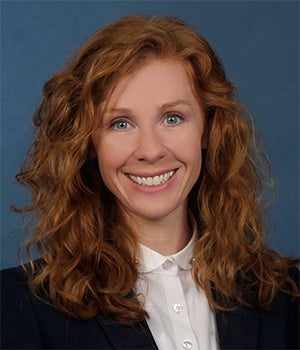
Vesa Pursiainen is an Associate Professor at the School of Business and Economics , University of St. Gallen (SBF-HSG). His research focuses on corporate finance, fintech, environmental economics, crowdfunding, and behavioral finance, with a particular emphasis on how technology, social dynamics, and crises impact financial decisions and market behavior.
Professor Kevin J. Fox is a distinguished academic at the UNSW Business School , serving as Director of the Centre for Applied Economic Research (CAER) . He holds leadership roles in global statistical initiatives, including the UK Economic Statistics Centre of Excellence and the International Association for Research in Income & Wealth (President 2020-2022). His career spans advisory positions with the Australian Treasury , Australian Bureau of Statistics , and United Nations Statistical Commission . B.Econ (Hons), University of Canterbury M.A., University of British Columbia Ph.D., Department of Economics, University of British Columbia As a leading expert in economic measurement , Fox focuses on productivity analysis , econometrics , and environmental economics . His research addresses digital economy challenges , CPI construction , and infrastructure productivity . He pioneered scanner data applications in inflation measurement, implemented by the Australian Bureau of Statistics from 2017. Recent publications analyze productivity paradoxes , digital goods valuation , and lockdown economic impacts . His 15 most recent articles demonstrate expertise in high-frequency data , TFP measurement , and price index theory , with sub-fields spanning quasi-experimental design and global economic statistics harmonization . Fellow, Academy of the Social Sciences in Australia Elected Fellow, Society for Economic Measurement Elected Fellow, U.S. Conference on Research in Income and Wealth Collaborative Indigo Prize 2017 win for GDP measurement innovation Awarded Australian Research Council grants totaling over $3 million , including: 2015-2019: $551,400 Discovery Grant for productivity frameworks 2014-2017: $1,075,000 Linkage Grant for property market measurement 2008-2013: $947,322 Linkage Grant for R&D productivity He contributes to public policy through: Advisory roles at Australian Treasury and ABS Leadership in International Working Group on Price Indices UN/IMF/OECD working groups on digital national accounts
Tommi Mäklin is a researcher affiliated with the University of Helsinki, conducting interdisciplinary research at the intersection of bioinformatics, microbiology, and genomic epidemiology. His work focuses on bacterial pathogen analysis, metagenomics, and the application of computational methods to study infectious diseases. Mäklin has contributed to high-impact studies on topics such as colibactin-producing Escherichia coli's link to cancer incidence, hospital-acquired infections during the pandemic, and enhanced metagenomic analysis tools like TRACS and Themisto. Key affiliations include visiting research positions at the University of Oslo (2024) and EMBL European Bioinformatics Institute (2023–2023), where he received the Theory@EMBL Visitor fellowship. His research has been featured in prominent journals like Nature Communications and The Lancet Microbe , with findings highlighted in media such as Yle and HS. Education: Not explicitly stated in provided materials. Research Interests: Genomic epidemiology, bacterial pathogen transmission, metagenomics, antibiotic resistance, and computational methods for microbial analysis. His recent work explores geographical cancer incidence correlations with bacterial exposure, hospital pathogen surveillance, and scalable genomic tools for outbreak analysis. Awards include recognition for methodological advancements in bioinformatics and microbial genomics.
Dan Ciubotaru is Professor of Mathematics at the University of Oxford's Mathematical Institute and Diana Brown Fellow and Tutor in Pure Mathematics at Somerville College. He completed his PhD at Cornell University in 2004 and maintains active research and teaching roles within the university's Mathematical, Physical and Life Sciences Division. His educational background includes: PhD in Mathematics, Cornell University (2004) Ciubotaru specializes in representation theory of reductive Lie groups and p-adic groups, with core focus areas including the unitary dual, local Langlands correspondence, affine Hecke algebras, Coxeter groups, and Dirac operators. His work bridges algebraic structures with harmonic analysis and number theory, particularly through the study of wavefront sets and unipotent representations. This research contributes significantly to understanding automorphic forms and geometric aspects of the Langlands program. Analysis of his 2022-2025 publications reveals concentrated advancement in wavefront set theory for p-adic groups, with recurring themes in unipotent representations, Langlands parameters, and symplectic Dirac operators. His work consistently connects representation-theoretic structures with geometric and arithmetic properties, demonstrating strong collaboration networks across international mathematics communities. His scientific recognition includes: Diana Brown Fellowship (Somerville College) MPLS Teaching Award (2017) Ciubotaru has secured significant research funding as Principal Investigator for EPSRC grants including "New Horizons" EP/V046713/1 (2021-2023) and EP/N033922/1 (2016-2020). He serves on editorial boards for Documenta Mathematica (2015-2024) and Quarterly Journal of Mathematics (2017-present), and teaches advanced courses including "Representations of semisimple Lie algebras" (C2.3). While no dedicated research labs are specified, his extensive co-authorship with scholars like Mason-Brown, Okada, and Barbasch indicates active participation in global representation theory networks, particularly through collaborations on p-adic group representations and Langlands program applications.
Professor Selva Selvanathan is a Professor of Econometrics at Griffith University, affiliated with the Department of Accounting, Finance, and Economics at the Griffith Business School. He serves as Director of the Economics Policy Analysis Program (EPAP) and a member of the Griffith Asia Institute. His research focuses on applied econometrics, time series modeling, tourism and energy economics, and consumer demand analysis. He has authored/co-authored over 100 articles and multiple monographs, contributing to leading journals such as the Review of Economic Studies and Journal of Econometrics . Education: PhD in Economics (University of WA and Murdoch University, Australia), MSc (University of Bucharest, Romania), BSc (University of Jaffna, Sri Lanka). Research Interests: Professor Selvanathan’s work spans econometric methodologies, tourism economics, energy policy, and consumer behavior. His recent studies include modeling financial asset demand in Sri Lanka, analyzing alcohol consumption patterns in Australia, and exploring the gender dimensions of cleaner energy transitions. Awards and Honors: Pro-Vice Chancellor’s Research Excellence Award 2014 (Research Supervision) University of Western Australia Distinguished Teaching Award (1988) Griffith Awards for Excellence in Teaching 2005 – Innovation Across the Institution Grants and Collaborations: Leading projects funded by the Department of Foreign Affairs and Trade, Australian Research Council, and Griffith University. Notable grants include policy capacity-building initiatives in Vietnam and Sri Lanka, and studies on alcohol control measures. Advising and Mentorship: Supervised over 20 doctoral students, including works on foreign aid impacts, renewable energy transitions, and rural livelihoods. Current research includes market integration dynamics and energy policy effectiveness. Labs/Teams: Active in Griffith Asia Institute and EPAP, fostering interdisciplinary research on Asian economies and policy analysis.
Dr. Anjan Biswas is a Professor in the Department of Math & Physics at the College of Arts & Sciences. His research focuses on analytical and computational approaches to quantum optics and nonlinear wave propagation. Education: Ph.D. in Mathematics from the University of New Mexico. Metrics: Erdos Number 4, Hirsch Index 111. Research interests center on optical solitons in fibers with linear and nonlinear chromatic dispersion, Lie symmetry analysis for quiescent solitons, and stochastic modeling in photonic systems. His work explores fractional temporal evolution, polarization-mode dispersion, and Kudryashov’s power-law structures. Recent publications highlight advancements in cubic-quartic soliton modeling, dispersion triplet systems, and noise-resilient optical communication frameworks. Studies span Boussinesq-type models, magneto-optic waveguides, and metamaterial applications. Key methodologies include Adomian decomposition, Sardar sub-equation techniques, and Lie symmetry analysis. Applications range from quantum fluid dynamics to internet bottleneck suppression via exotic self-phase modulation structures.
Jonathan M. Rosenberg is a Professor of Mathematics at the University of Maryland, where he holds the Ruth M. Davis Professorship. His career spans several decades with significant contributions across multiple mathematical disciplines. He maintains active involvement in departmental activities including the Geometry/Topology Seminar, Algebra/Number Theory Seminars, Departmental Colloquium, and Geometry and Physics RIT. Rosenberg's research focuses on the deep connections between topology, geometry, and mathematical physics. His primary interests include K-theory, noncommutative geometry, C*-algebras, index theory of elliptic operators, and positive scalar curvature problems. His work bridges pure mathematics with theoretical physics, particularly in string theory applications. His research has evolved to address increasingly sophisticated questions in manifold theory, pseudomanifolds, and their connections to physical theories. His recent publications show a continued focus on positive scalar curvature problems across various geometric settings including spin c manifolds, pseudomanifolds, and manifolds with boundary. Rosenberg also maintains active collaborations with leading mathematicians like Boris Botvinnik, Varghese Mathai, and others, producing work that connects topology with mathematical physics through T-duality and related concepts. His publications span prestigious journals including Journal of Geometry and Physics, Communications in Mathematical Physics, and Advances in Theoretical and Mathematical Physics. Fellow of the American Mathematical Society Ruth M. Davis Professorship at University of Maryland Co-editor of influential volumes including "Novikov Conjectures, Index Theorems and Rigidity" Author of the graduate textbook "Algebraic K-Theory and its Applications" Principal speaker at multiple NSF/CBMS Regional Conferences Rosenberg serves on editorial boards of several prominent journals including Annals of K-Theory (as Managing Editor Emeritus), Journal of Topology and Analysis (as Managing Editor), Homology Homotopy and Applications, SIGMA, and The New York Journal of Mathematics. He previously served as Secretary of the K-Theory Foundation from 2010 to 2021. His teaching responsibilities span undergraduate courses including Calculus and Differential Equations to advanced graduate courses in K-theory, Homotopy Theory, and Noncommutative Geometry. He has maintained the Novikov Conjecture home page and the UMCP Math Department electronic journals web page as significant service contributions to the mathematical community.
Wout Joseph is a Professor in the domain of Experimental Characterization of wireless communication systems at Ghent University (Belgium), where he has been working since October 2009. He is also an IMEC Principal Investigator since 2017. His research is conducted within the wireless, acoustics, environment & expert systems (WAVES) research unit at the Department of Information Technology (INTEC). Dr. Joseph was born in Ostend, Belgium on October 21, 1977. He received his M.Sc. degree in electrical engineering from Ghent University in July 2000. From September 2000 to March 2005 he was a research assistant at the Department of Information Technology (INTEC), where his scientific work focused on electromagnetic exposure assessment around base stations for mobile communications related to health effects. This work led to his Ph.D. degree in March 2005. Professor Joseph's research expertise spans multiple domains within wireless communications and bioelectromagnetics. His primary research interests include electromagnetic field exposure assessment, in-body electromagnetic field modeling, electromagnetic medical applications, propagation for wireless communication systems, IoT, antennas and calibration. He also specializes in wireless performance analysis, industry 4.0 applications, wireless localization, and Quality of Experience metrics. His work is particularly notable for its focus on dosimetric studies in the radiofrequency range, where his research is ranked first in number of peer-reviewed studies. His research has practical applications in wireless network planning, occupational safety, and public health policy related to electromagnetic fields. His extensive publication record (over 886 publications with an h-index of 45 in ISI Web of Science and 66 in Google Scholar) demonstrates a clear trajectory from fundamental electromagnetic field measurements to applied research in industrial wireless networks and bioelectromagnetic applications. Recent work shows a strong emphasis on 5G exposure assessment across multiple European countries, millimeter-wave channel modeling, and the application of machine learning techniques to exposure assessment and wireless localization. EBEA council board member (2015-2018) EBEA board member at large (2019) Bioelectromagnetics Society board member (2022) Bioelectromagnetics Society board member (2024) 24 research awards Professor Joseph leads significant research efforts in electromagnetic field exposure assessment, with particular emphasis on developing measurement methodologies and computational models for real-world exposure scenarios. His work bridges theoretical electromagnetic modeling with practical applications in wireless communications and bioelectromagnetics. His research group within the WAVES unit is highly active in both theoretical and experimental aspects of wireless communications and bioelectromagnetics, with current projects focusing on 5G exposure assessment across Europe, millimeter-wave channel modeling for data centers and industrial environments, and the development of novel exposure assessment methodologies using advanced signal processing and machine learning techniques.
Michele Rimoldi is an Associate Professor at the Department of Mathematical Sciences 'G. L. Lagrange' (DISMA) at Politecnico di Torino, specializing in geometric analysis and differential geometry. His research focuses on Riemannian geometry, mean curvature flow, and Ricci solitons. Research Interests: Differential geometry, geometric analysis, Ricci solitons, mean curvature flow, Sobolev spaces, and elliptic PDEs. Teaching: Courses in linear algebra, geometry, and mathematical analysis for biomedical, mechanical, and aerospace engineering students. Publications: 15 recent articles address topics like isoperimetric inequalities, stability of self-shrinkers, and density problems on manifolds.
Colin Ingalls is a Full Professor in the School of Mathematics and Statistics at Carleton University. His research focuses on Noncommutative Algebra and Algebraic Geometry, with contributions to areas such as noncommutative resolutions, quiver representations, and birational geometry. He has advised numerous graduate students, including Master’s and PhD candidates, whose theses cover topics like Hochschild cohomology, McKay quivers, and Brauer pairs. Ingalls has an extensive publication record, with recent work exploring reflection groups, discriminant loci, and derived categories of algebraic structures. His research interests span the intersection of algebra and geometry, emphasizing noncommutative methods to address classical geometric problems. He maintains active collaborations, evidenced by co-authored papers on topics such as minimal model programs for orders and applications of Koszul duality. Ingalls’ work bridges abstract algebraic theory with geometric constructions, contributing to foundational advancements in these fields.
Henry Corrigan-Gibbs is an Assistant Professor at the Massachusetts Institute of Technology (MIT) in the Department of Electrical Engineering and Computer Science. He is affiliated with the Computer Science and Artificial Intelligence Laboratory (CSAIL) and collaborates with the PDOS and CSS research groups. Henry co-hosts the MIT Security Seminar series. Education : PhD in Computer Science from Stanford University (advisor: Dan Boneh), Postdoc at École polytechnique fédérale de Lausanne (EPFL) (host: Bryan Ford), and B.S. in Computer Science from Yale University . Research Interests Henry focuses on computer security , cryptography , and systems research , building technologies that: Empower end users through privacy-preserving design Implement strong cryptographic security in real-world deployments Scale to millions of users while maintaining security Key projects include: Tiptoe for private web search Prio for privacy-preserving aggregate statistics used by Apple and Google Express for metadata-hiding communication SafetyPin and True2F for secure authentication Scientific Contributions Standards Influence : IETF and NIST standards recommend his private-aggregation systems Industry Impact : Deployed in Apple iOS , Google Android , and Mozilla Firefox Non-profit Deployment : Co-founder of Divvi Up for real-world Prio implementations Academic Recognition 2023 MIT EECS Jerome Saltzer Award for teaching excellence 2020 ACM Doctoral Dissertation Honorable Mention 2016 Caspar Bowden Award for PET research 2015 IEEE Security & Privacy Distinguished Paper Award Multiple IACR Best Young Researcher Paper Awards (2015–2018) Advising and Collaborations Current advisees include: PhD students: Alexandra Henzinger , Ryan Lehmkuhl Postdoc: Emma Dauterman Collaborates with industry (Apple, Google, Mozilla) and standards bodies (IETF, NIST) to translate research into practice.
Tomotada Ohtsuki is a Professor at the Research Institute for Mathematical Sciences (RIMS) at Kyoto University, where he conducts research in low-dimensional topology. His work focuses on quantum invariants of knots and 3-manifolds, with particular expertise in perturbative invariants and the LMO invariant. Ohtsuki's research primarily explores the intricate relationships between quantum topology and geometric structures. He has made significant contributions to understanding the asymptotic expansion of the Kashaev invariant and developing refined invariants for 3-manifolds. His research bridges abstract mathematical concepts with concrete computational frameworks, advancing our understanding of topological structures in three dimensions. Through his work on open problems in low-dimensional topology, he has helped shape research directions in the field. Organizer of the annual Low-dimensional Topology Seminar at RIMS Editor of the Problems on Low-dimensional Topology series (2010-2024) Organizer of the Intelligence of Low-dimensional Topology research meetings (2010-2025) Editorial board member for Quantum Topology journal In 2023, Ohtsuki received the prestigious Minister of Education, Culture, Sports, Science and Technology Award for Science and Technology in the Research category, recognizing his significant contributions to mathematical topology. His work has established important connections between quantum invariants and classical topological structures, influencing both pure mathematics and theoretical physics. Ohtsuki actively mentors emerging researchers through his seminar organization and collaborative research projects. He has participated in numerous joint research initiatives at RIMS, contributing to Japan's position as a global leader in mathematical research. His work with the International Joint Usage and Research Center at RIMS has fostered international collaborations in low-dimensional topology. He maintains strong connections with the global topology community through editorial work for leading journals and organization of international research meetings. His 'Problems on Low-dimensional Topology' collections have become essential references that guide research directions worldwide.
Giulio Dagnino is Associate Professor of Robotics and Mechatronics at the University of Twente and concurrently holds an appointment at the Digital Society Institute. His research integrates medical robotics, real-time perception and haptics to create MR-compatible platforms for endovascular surgery, earning an h-index of 17 and 971+ citations. Education & Career: PhD (details not specified in source) leading to faculty appointment at University of Twente. Promoted to Associate Professor with cross-appointments in Robotics & Mechatronics and Digital Society Institute. Research Interests: Prof. Dagnino’s core interest is medical robotic systems that can operate safely inside an MRI scanner. His work spans haptic guidance, real-time computer vision, soft robotic actuation, synthetic data generation and surgical simulation. By combining ferrofluid actuation, electromagnetic tracking and deep-learning-based scene understanding, he aims to reduce ionizing radiation exposure, enhance navigation accuracy and shorten procedure times for minimally invasive endovascular interventions. Publications Trend: Across 44 outputs (2010-2025) the portfolio reveals a clear evolution from early vision-based microsurgery and fracture-robot systems (2010-2016) toward holistic endovascular platforms integrating MR guidance, haptics and autonomy. Recent 2024-25 papers cluster around (i) synthetic data & scene understanding for surgical AI, (ii) MR-safe robot design and tracking, and (iii) translational studies bringing CathBot and related platforms closer to clinical use. Scientific Awards: Best Design Award – Hamlyn Symposium 2019 (with team) Best Innovation Award – ICRA 2018 Best Paper Award – CURAC 2019 IEEE ICRA Best Paper Award in Medical Robotics – 2016 Grants & Projects: Although explicit grant numbers are not listed, the continuous outputs, patents, multi-institutional collaborations (UK, Germany, Estonia, Canada) and press releases imply sustained funding from EU, Dutch and UK research councils as well as industrial partnerships. Labs & Teams: He leads activities within the Robotics and Mechatronics group at University of Twente, collaborates closely with the Digital Society Institute, and maintains international partnerships visible in co-authored papers with Imperial College London, University of Leeds, and several European hospitals.
Nick Russoniello is a Teaching Professor in the Department of Mathematics at Lehigh University. He holds a Ph.D. from Lehigh University (2022) and a B.S. from the University of Scranton (2017). Prior to his current role, he served as a Visiting Assistant Professor at the College of William & Mary (2022–2024). His research focuses on algebraic combinatorics and Lie theory, particularly exploring combinatorial tools to study algebraic and geometric structures of Lie algebras. He has collaborated on projects involving Kohnert polynomials and Lie poset algebras with contact structures. Education: Ph.D. in Mathematics, Lehigh University, 2022 B.S. in Mathematics, University of Scranton, 2017 Research Interests: Professor Russoniello investigates Lie algebras through combinatorial methods, with emphasis on: - Algebraic combinatorics and its applications to representation theory - Structure and classification of Lie poset algebras with contact structures - Combinatorial constructions related to Kohnert polynomials and posets - Spectral properties and indices of seaweed algebras and nilpotent Lie algebras Publications Trends: His work bridges algebraic structures and combinatorial frameworks, with recent emphasis on seaweed algebras, contact Lie poset algebras, and Kohnert polynomial posets. Collaborations include undergraduate researchers and focus on extending combinatorial techniques to solve algebraic problems. Scientific Awards: Elizabeth V. Stout Dissertation Award (2022) Teaching & Advising: At Lehigh, he teaches Probability/Statistics and preparatory calculus courses. Previously at William & Mary, he instructed courses in calculus, linear algebra, and analysis. Though no formal advisees are listed, he has collaborated with undergraduates on research projects. Labs/Teams: Affiliated with Lehigh’s Mathematics Department, contributing to the Journal of Differential Geometry and organizing seminars. Collaborates actively with researchers like V. Coll, N. Mayers, and others on algebraic and combinatorial projects.
Kaitlyn Crawford is an Associate Professor of Materials Science and Engineering at the University of Central Florida, with a secondary appointment in Chemistry. She directs the Functional Materials and Sensors Lab, focusing on sustainable soft materials for flexible electronics and biomedical applications. Her research integrates polymer science and engineering to develop wearable sensors for health monitoring, biodegradable materials to reduce e-waste, and natural polymer composites. Current projects include a $1.5M DHS-funded wearable for firefighter heat-stress monitoring and NASA-funded space applications. Her recent publications emphasize sustainable polymers, bionic devices, and AI-driven diagnostics. Awards include the 2024 ACS PMSE Early Investigator Award and a Jewish National Fund fellowship. She leads multiple graduate students in biomedical and materials research. Awards: 2024 ACS PMSE Early Investigator Award Faculty Fellowship Program in Israel, Jewish National Fund Faculty Excellence Honoree, Women’s History Month (UCF)