معرفی
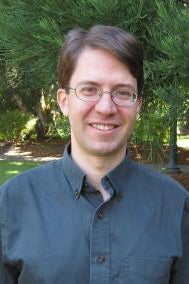
Tomotada Ohtsuki is a Professor at the Research Institute for Mathematical Sciences (RIMS) at Kyoto University, where he conducts research in low-dimensional topology. His work focuses on quantum invariants of knots and 3-manifolds, with particular expertise in perturbative invariants and the LMO invariant.
Ohtsuki's research primarily explores the intricate relationships between quantum topology and geometric structures. He has made significant contributions to understanding the asymptotic expansion of the Kashaev invariant and developing refined invariants for 3-manifolds. His research bridges abstract mathematical concepts with concrete computational frameworks, advancing our understanding of topological structures in three dimensions. Through his work on open problems in low-dimensional topology, he has helped shape research directions in the field.
- Organizer of the annual Low-dimensional Topology Seminar at RIMS
- Editor of the Problems on Low-dimensional Topology series (2010-2024)
- Organizer of the Intelligence of Low-dimensional Topology research meetings (2010-2025)
- Editorial board member for Quantum Topology journal
In 2023, Ohtsuki received the prestigious Minister of Education, Culture, Sports, Science and Technology Award for Science and Technology in the Research category, recognizing his significant contributions to mathematical topology. His work has established important connections between quantum invariants and classical topological structures, influencing both pure mathematics and theoretical physics.
Ohtsuki actively mentors emerging researchers through his seminar organization and collaborative research projects. He has participated in numerous joint research initiatives at RIMS, contributing to Japan's position as a global leader in mathematical research. His work with the International Joint Usage and Research Center at RIMS has fostered international collaborations in low-dimensional topology.
He maintains strong connections with the global topology community through editorial work for leading journals and organization of international research meetings. His 'Problems on Low-dimensional Topology' collections have become essential references that guide research directions worldwide.