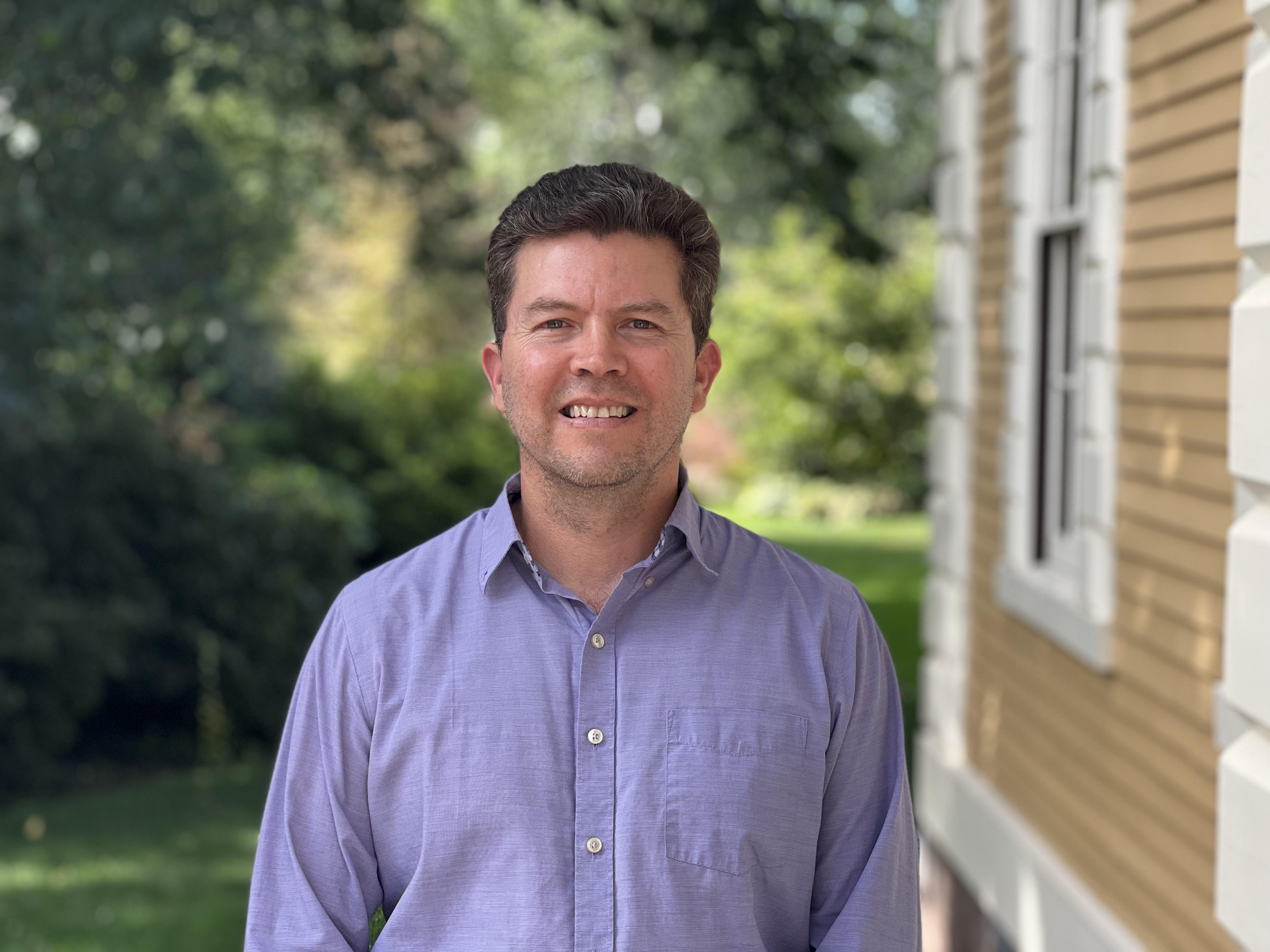
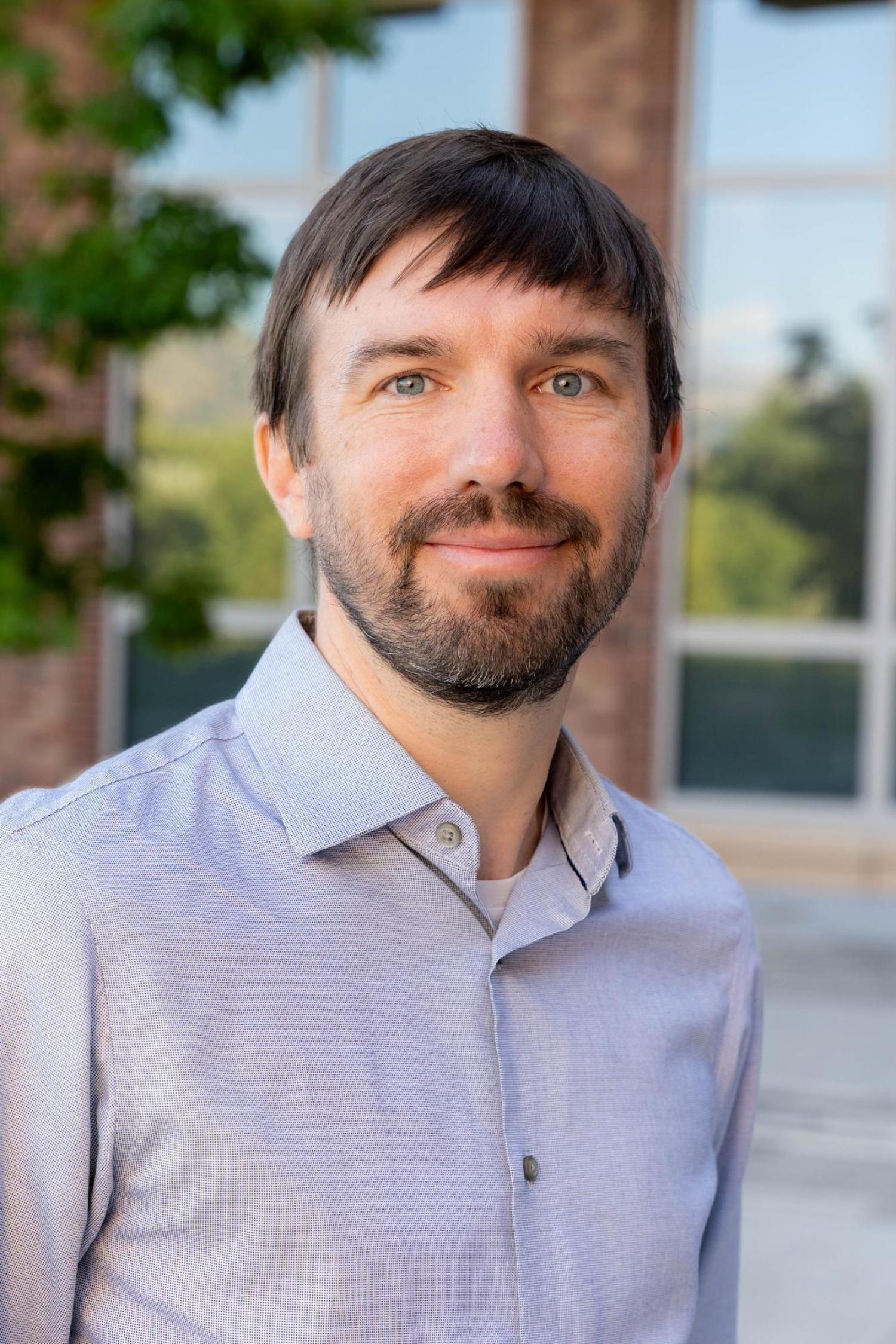
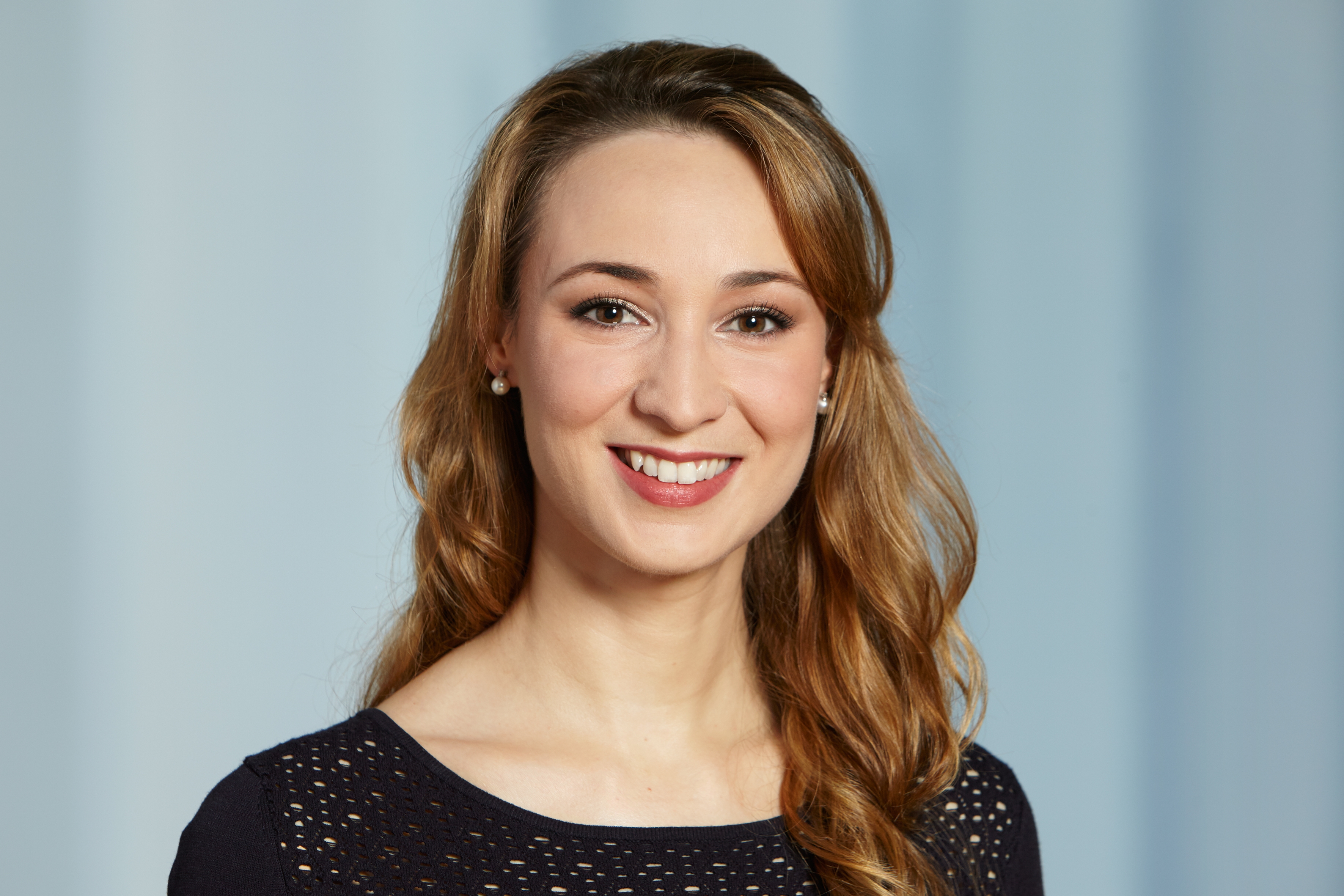
Johnny Guzmán is a Professor of Applied Mathematics at Brown University, specializing in numerical analysis of partial differential equations and scientific computing. He holds a Ph.D. in Applied Mathematics from Cornell University (2005) and a B.S. in Mathematics from California State University, Long Beach (1999). His research focuses on numerical methods for PDEs, including discontinuous Galerkin methods, mixed finite element methods, and fluid-structure interaction problems. Key contributions include work on hybridizable and mixed finite element methods, discontinuous Galerkin discretizations, and stability analysis of numerical schemes. He has been funded by multiple NSF grants, including a Postdoctoral Fellowship (2005–2008) and awards totaling over $1M in research support. Notable recognitions include the Comfort and Urry Family Fund Prize (2013). Guzmán collaborates with institutions globally and serves on editorial boards for journals like Journal of Numerical Mathematics and Calcolo . His teaching spans computational linear algebra, numerical methods for differential equations, and finite element analysis.
Andrew M. Stuart is a Professor at the California Institute of Technology's Division of Engineering and Applied Science. His research bridges computational mathematics, machine learning, and physical modeling, focusing on inverse problems, partial differential equations, and multiscale systems. He has pioneered methodologies integrating Gaussian processes, Kalman inversion, and neural operators for scientific computing. His recent publications highlight innovations in competitive protein dimerization networks, nonlinear Bayesian inference, and operator learning. Articles span applications in materials science, geophysics, and biochemical signal processing, emphasizing data-driven discovery of differential equations and scalable algorithms for high-dimensional problems. Stuart's work addresses challenges in structural error modeling, uncertainty quantification, and graph-based learning, with implications for climate modeling and dynamical systems. Despite extensive contributions, the scraped data does not specify students, awards, or contact details.
John Evans is an Associate Professor and Jack Rominger Faculty Fellow in the Department of Aerospace Engineering Sciences at the University of Colorado Boulder, affiliated with the Applied Mathematics program. He serves as Associate Chair for Undergraduate Curriculum and is part of the Aerospace Mechanics Research Center (AMREC). His research focuses on computational mechanics, particularly fluid dynamics, fluid-structure interaction, and turbulence modeling using high-order and structure-preserving methods. Evans holds a PhD (2011) and MS (2008) in Computational and Applied Mathematics from the University of Texas at Austin, and dual BS/MS degrees in Mathematics and Applied Mathematics from Rensselaer Polytechnic Institute (2006). Before joining CU Boulder, he was a postdoctoral fellow at the Institute for Computational Engineering and Sciences (ICES). His research interests include isogeometric analysis, immersed methods, and data-driven turbulence modeling. Notable contributions include development of divergence-conforming discretizations for incompressible flows, stabilized collocation methods, and invariant subgrid stress models. He leads the AMREC lab and collaborates on plasma-fueled propulsion systems and geometrically sensitive simulations. Key Awards: 2021: Rocky Mountain AIAA Educator of the Year 2021: Gallagher Young Investigator Medal 2019-2021: Clarivate Highly Cited Researcher Professional Activities: Editor of Engineering Computations, Senior AIAA Member, Simons Visiting Professor (2019) Evans' work bridges advanced numerical methods with real-world engineering challenges. His lab develops open-source tools like XIGA for multi-material problems and focuses on immersive simulation environments. Current projects explore turbulence closure models, plasma propulsion, and topology optimization with B-spline-based approaches.
Dr. Jean-Christophe Nave is an Associate Professor in the Department of Mathematics and Statistics at McGill University, specializing in applied mathematics, numerical analysis, and computational methods. His research focuses on numerical methods for partial differential equations, fluid mechanics, interface problems, and computer graphics. He holds a PhD from UCSB (2004) and has held academic positions at MIT and McGill since 2005. Currently, he serves on committees such as the Steering Committee of the Institut des Sciences Mathematiques and the CRM Applied Mathematics Lab. His educational background includes a PhD under Professors Xu-Dong Liu and Sanjoy Banerjee. Key research areas include level set methods, fluid-structure interaction, and invariant numerical methods. Notable works include the Correction Function Method for interface problems and the Characteristic Mapping Method for advection problems. Nave’s publications span topics like Poisson equations with discontinuous coefficients, fluid dynamics simulations, and high-order numerical schemes. He has advised numerous graduate and undergraduate students, contributing to their research in applied mathematics and computational science. His work bridges theoretical rigor and practical applications in engineering and physics. He teaches advanced courses such as Numerical Analysis I/II and Computational Methods in Applied Mathematics. His research group collaborates on projects involving fluid dynamics, elasticity, and geometric algorithms, with a focus on developing robust numerical tools for complex systems.
Mohamed Amara is a full-time Professor at the University of Pau and the Pays de l'Adour (UPPA) since 1996, affiliated with the Laboratory of Mathematics and their Applications (CNRS-UMR 5142). He served as its director (1999-2007), Director of the Doctoral School of Exact Sciences (ED211, 2007-2008), and UPPA's Scientific Council Vice-President (2008-2012). He has been UPPA's President since 2012 (re-elected until 2020). Education: Mathematics from University of Algiers (1973), Pierre and Marie Curie University (DEA 1974, Doctorate 1978, State Doctorate 1983) Academic Roles: Research Associate at Ecole Polytechnique (1978-1982), Algerian Electricity and Gas Company (1983-1992), Professor in Algiers (1988-1994), Tunis (1994-1995), and Associate Professor at Paris 6 (1995-1996) His research focuses on numerical simulation of partial differential equations for environmental/energy applications, including mechanics in porous media (petroleum engineering, geoscience), fluid mechanics (aerodynamics, estuarine hydrodynamics), non-Newtonian flows, and wave propagation. Articles highlight expertise in discontinuous Galerkin methods, Helmholtz problems, finite element discretization, and multiphysics systems. He managed 20 doctoral theses and led national mathematics programs at ANR (2007-2011). He chairs the Cocktail association for higher education IT systems and collaborates with INRIA's Magique 3D team (since 2006).
Peter Benner is a Professor and Director at the Max Planck Institute for Dynamics of Complex Technical Systems in Magdeburg, where he leads the Computational Methods in Systems and Control Theory group. He also holds an Honorarprofessor position for Mathematics at Otto-von-Guericke Universität Magdeburg since 2011. Benner has previously served as Managing Director of the Max Planck Institute during multiple periods (2013-2014, 2021-2022, and 2025-2026), demonstrating his leadership in the field. Benner's research focuses on Scientific Machine Learning, Numerical Linear and Multilinear Algebra, Model Order Reduction and Reduced-order Modeling, Numerical Methods in Systems and Control Theory, PDE Constrained Optimization, High-performance and Power-aware Computing, and Mathematical Software development. His work bridges theoretical mathematics with practical engineering applications, particularly addressing challenges in large-scale dynamical systems. Analysis of his recent publications reveals a strong emphasis on developing efficient computational methods for complex systems. Benner has pioneered approaches combining model order reduction with tensor methods to tackle high-dimensional problems in uncertainty quantification and PDE-constrained optimization. His work shows a consistent trend toward integrating data-driven techniques with traditional model-based approaches, particularly for nonlinear and parametric systems. Throughout his career, Benner has actively mentored students and collaborated with researchers worldwide, delivering numerous invited talks at prestigious institutions and conferences across Europe, North America, and Asia. His research has received significant funding, supporting the development of mathematical software and computational methods for industrial applications. Benner leads the Computational Methods in Systems and Control Theory department at the Max Planck Institute, which focuses on developing and implementing advanced numerical methods for large-scale dynamical systems. The group maintains strong connections with both theoretical mathematics and practical engineering applications, particularly in fluid dynamics, energy systems, and control theory.
Prof. Dr. Michael Ulbrich is a full professor and Chair of Mathematical Optimization at the Technical University of Munich (TUM), within the School of Computation, Information and Technology. He has held this position since 2006 and previously served as Dean of Studies (2007–2010) and Vice Dean of the Faculty of Mathematics (2012–2015). His research focuses on nonlinear optimization, optimal control, and numerical analysis, with applications in fluid dynamics, shape optimization, and PDE-constrained systems. He leads projects in the DFG SPP 1962 and IGDK 1754, and has received prestigious awards including the Howard Rosenbrock Prize (2015) and the Doctoral Award from the TUM Association of Friends (1996). Ulbrich is Editor-in-Chief of Optimization and Engineering and contributes to multiple journals. His work bridges theoretical foundations and practical applications, including CO2 sequestration, fluid-structure interaction, and distributed optimization algorithms. Education: PhD (1996), Habilitation (2002) in Mathematics at TUM. Research stays at Rice University (USA) under DFG funding. Research Areas: Semismooth Newton methods, PDE-constrained optimization, optimal control of Navier-Stokes equations, and distributed parameter systems. Awards: Rosenbrock Prize, Teaching Excellence Awards, and recognition for doctoral work. Leadership Roles: Department Head of Mathematics (2022–), Member of TUM Senate (2019–2022), and Co-Chair of GAMM 2018. Ulbrich has authored influential textbooks like Semismooth Newton Methods for Variational Inequalities and Nichtlineare Optimierung . His recent projects include OptiGeoS (2024–2026) and collaborations on nonsmooth optimization and stochastic algorithms. His academic contributions span over 100 publications, emphasizing both algorithmic innovation and rigorous mathematical analysis.
Mikaela Iacobelli is an Associate Professor in the Department of Mathematics at ETH Zürich. During the 2024-25 academic year, she was a von Neumann Fellow at the Institute for Advanced Study in Princeton. Previously, she held faculty positions at Durham University and a research fellowship at the University of Cambridge. Her educational background includes: PhD in Mathematics from Sapienza University of Rome and École Polytechnique in Paris (2015) Master's degree from Sapienza University of Rome (2012) Bachelor's degree from Sapienza University of Rome (2009) Mikaela's research lies at the interface of analysis, kinetic theory, and statistical mechanics. She studies partial differential equations that model the collective behavior of many-particle systems, with a focus on Vlasov-type plasmas and gravitational dynamics. Her current projects range from quasineutral and singular-limit problems for Vlasov-type systems to quantization of measures, ultrafast diffusion, and gradient-flow structures that link microscopic particle models to macroscopic fluid descriptions. She makes extensive use of PDEs techniques, optimal transport, probability, calculus of variations, and Riemannian geometry in her work. Her recent publications demonstrate a strong focus on Vlasov-type equations, particularly examining quasineutral limits, stability properties, and connections to other physical systems like Euler equations and magnetohydrodynamics. She has made significant contributions to understanding Landau damping, quantization problems on manifolds, and the mathematical foundations of plasma physics. Her notable scientific awards include: SNSF Starting Grant (Swiss ERC) Challenges and Breakthroughs in the Mathematics of Plasmas (2025-2030) von Neumann Fellow at the Institute for Advanced Study, Princeton (2024-2025) Invited speaker at the International Congress of Mathematical Physics (2021) CO-PI of the Germaine de Staël Funding Program for French-Swiss cooperation (2021-2023) L'Oréal prize for Women in Science (2015) Mikaela actively mentors postdocs, PhD, Master's, and Bachelor's students. Her current mentees include postdocs Dennis Chemnitz, Rishabh Gvalani, Stefano Rossi, and Simon Becker, as well as PhD students Thérèse Moerschell, Ata Deniz Aydin, and Antoine Gagnebin. She has served as PI for the Starting Research Grant from the University of Rome Sapienza and is currently the PI for the SNSF Starting Grant. She co-organizes several academic seminars including the Zurich Colloquium in Mathematics, the PDE and Mathematical Physics seminar at ETH Zürich and UZH, and the Analysis Seminar. She also serves on various committees including as Chair of the European Mathematical Society Committee for Women in Mathematics.
Stephen Roberts is a Professor at the Australian National University (ANU) in the College of Science, Department of Mathematics. He is the lead developer of the ANUGA open-source hydrodynamic modeling software, which simulates dam breaks, floods, and tsunamis for governments and engineers. Roberts has made significant contributions to computational mathematics, particularly in numerical methods for partial differential equations, sparse grid data fitting, and finite element approximations scaling to millions of data points. MSc, Flinders University (1980) PhD, University of California, Berkeley (1985) His research interests include: Computational methods for shallow water wave equations Development of Python-based scientific computing frameworks Global sensitivity analysis and uncertainty quantification Adaptive mesh algorithms for fluid dynamics Recent publications focus on energy-stable numerical schemes, multiscale flood simulation, and convergence analysis in sensitivity methods. Roberts actively collaborates with environmental agencies and has led major computational science education programs at ANU. Stephen serves as Treasurer of the Computational Mathematics Group (ANZIAM) and leads projects in: Parallelization of hydrodynamic models CO2 leak detection via atmospheric measurements Optimization of sparse grid combinations His work combines theoretical advancements with real-world applications in disaster risk reduction and climate policy.
Sara Zahedi is a Professor of Numerical Analysis at the Department of Mathematics, KTH Royal Institute of Technology, working within the Division of Numerical Analysis, Optimization and Systems Theory. She serves as an Associate Editor for the SIAM Journal on Numerical Analysis and contributes to the SCI Faculty Board to enhance collaboration and transparency in academic decision-making. Her educational background includes a doctorate from KTH on numerical methods for fluid interface problems followed by a postdoctoral position at Uppsala University. Doctorate: KTH Royal Institute of Technology Postdoctoral Position: Uppsala University Zahedi's research bridges mathematical theory and practical applications, focusing on computational methods for partial differential equations in evolving domains. She pioneers Cut Finite Element Methods (CutFEM) to eliminate re-meshing requirements in multiphase flow simulations, ensuring accuracy and robustness when interfaces separate immiscible fluids. Her work specifically targets challenges in large deformations and time-dependent geometries. Analysis of her recent publications reveals a concentrated research trajectory in advancing CutFEM for diverse applications including Stokes flow, Darcy flow, Maxwell's equations, and hyperbolic conservation laws. Key trends include high-order conservative schemes, divergence preservation, stabilization techniques for unfitted meshes, and extensions to surface PDEs and multi-physics problems. Her scientific recognition includes: European Mathematical Society Prize (2016) for outstanding contributions by young researchers Wallenberg Fellowship (2019) with extension granted in 2024 Zahedi serves as examiner for Degree Projects in Scientific Computing (SF250X, SF259X) and course responsible for Engineering Mathematics projects (SA120X). Her Wallenberg Fellowship provides substantial research funding supporting her work on numerical algorithm development. While specific lab structures aren't detailed, her research operates within KTH's Division of Numerical Analysis, emphasizing collaborative development of simulation tools for industrial and scientific applications. Her current research focuses on extending CutFEM to complex multi-physics scenarios with emphasis on conservation properties and computational efficiency, with potential applications in aerospace, biomedical engineering, and environmental modeling.
Fabian Fritz holds an M.Sc. degree and works at the Technical University of Munich (TUM) within the Chair of Aerodynamics and Fluid Mechanics . His research focuses on computational fluid dynamics (CFD) and numerical simulation of multiphase flows, particularly using Smoothed Particle Hydrodynamics (SPH) . He collaborates on projects like PBF-LB/M (additive manufacturing) and contributes to Lagrangian fluid mechanics benchmarking frameworks. Research Trends: His publications emphasize numerical methods (SPH, level-set, finite-volume), multiphase flow modeling , heat transfer , and thermoacoustic stability . Recent work includes hardware-agnostic code optimization and adaptive mesh refinement techniques. Education: Completed a master’s thesis on Diffusive-Interface Modeling of Multiphase Flows with Surface-Tension Effects , supervised by P.D. Dr.-Ing. habil. Stefan Adami.
Dond Asha Kisan is an Assistant Professor at the School of Mathematics , Indian Institute of Science Education and Research Thiruvananthapuram (IISER TVM). His research focuses on numerical analysis and computational mathematics , particularly in finite element methods for partial differential equations. He can be contacted at ashadond@iisertvm.ac.in or via phone at +91 (0)471-2778247. PhD : Mathematics, Indian Institute of Technology Bombay M.Sc. : Mathematics, K.T.H.M. College, Nashik Kisan's research spans adaptive finite element methods , stabilized formulations for convection-diffusion problems , and optimal control governed by Stokes equations . His work includes convergence analysis, nonconforming discretizations, and hybrid numerical schemes. Recent publications (2023-2025) address stochastic modeling in liquid crystal physics, advanced WENO schemes, and adaptive algorithms for control problems. Scientific Awards : No explicit awards mentioned in the data, though he held prestigious postdoctoral fellowships including National Post-Doctoral Fellowship and NBHM Post-Doctoral Fellowship. Kisan has extensive teaching experience , including MATLAB workshops and undergraduate course assistantships. He has presented at major international conferences like ICIAM and Hyperbolic Problems, demonstrating global engagement in computational mathematics.
Thomas Yizhao Hou is the Charles Lee Powell Professor of Applied and Computational Mathematics at the California Institute of Technology, where he has served as a faculty member since 1998 and as Executive Officer of Applied and Computational Mathematics from 2000-2006. His research spans fundamental mathematical problems with significant implications for fluid dynamics and computational science. Hou received his B.S. in Mathematics from South China University of Technology in 1982, followed by an M.S. in 1985 and Ph.D. in 1987 from UCLA under the supervision of Prof. Bjorn Engquist. His academic journey includes positions at the Courant Institute and the Institute for Advanced Study before joining Caltech. Hou's research focuses on multiscale analysis and computation, interfacial problems, stochastic PDEs and uncertainty quantification, and the Millennium Problem concerning global regularity of 3D incompressible Euler and Navier-Stokes equations. His work on adaptive data analysis has led to significant methodological innovations. His research is characterized by the integration of rigorous mathematical analysis with computational approaches to tackle problems that have resisted traditional methods. His recent publications reveal a consistent focus on singularity formation in fluid equations, particularly the Euler and Navier-Stokes equations, with increasing sophistication in analyzing potential blowup scenarios. His work spans theoretical analysis, numerical verification, and the development of innovative mathematical frameworks for multiscale problems. Member of the National Academy of Sciences (2024) William Benter Prize in Applied Mathematics (2024) SIAM Ralph E. Kleinman Prize (2023) SIAM Outstanding Paper Prize (2018) Fellow of the American Mathematical Society (2012) Fellow of the American Academy of Arts and Sciences (2011) Hou has served in significant editorial roles including Founding Editor-in-Chief of the SIAM Journal on Multiscale Modeling and Simulation and Co-Editor-in-Chief of Research in Mathematical Sciences. His professional service includes membership on the SIAM Council and leadership roles at the Institute of Mathematics and its Applications. His research has been supported by numerous grants focusing on multiscale modeling, fluid dynamics, and computational mathematics.
Dr. Jean-Christophe Nave is an Associate Professor in the Department of Mathematics and Statistics at McGill University. He holds a PhD from the University of California, Santa Barbara (2004), under advisors Xu-Dong Liu and Sanjoy Banerjee. Prior to McGill, he served as a Lecturer and Instructor at MIT's Mathematics Department (2005-2010). His research focuses on numerical analysis, partial differential equations, fluid mechanics, and computational methods for interface problems. He has led research groups involving postdocs, PhD, and undergraduate students, collaborating on projects like the Correction Function Method for PDEs and the Characteristic Mapping Method for advection problems. Education: Ph.D. in Applied Mathematics from UCSB (2004). Affiliations include the Institut des Sciences Mathematiques Steering Committee, Centre de Recherches Mathematiques Applied Math Lab, and CNRS-UMI. Active in teaching courses like Numerical Analysis I/II and Non-Linear Dynamics at McGill, with sabbatical periods noted in recent years. Research interests span numerical methods for PDEs, fluid-structure interaction, and multi-phase flows. His work integrates computational geometry and invariant numerical techniques, addressing challenges in complex fluid dynamics and interface-driven phenomena. Over 40 peer-reviewed publications and continuous contributions to the field of computational applied mathematics. Scientific advising includes over 20 graduate and undergraduate students, with notable alumni now in academia and industry. Collaborations include projects on volcano dynamics, fiber drawing instabilities, and concentrated solar power systems. His methods have advanced numerical simulations for engineering and physical systems involving discontinuous coefficients and sharp interfaces.
Hans Bihs is a Professor in the Department of Civil and Environmental Engineering, Faculty of Engineering. His research focuses on computational fluid dynamics (CFD), wave hydrodynamics, and wave-structure interaction using the open-source framework REEF3D. Key Research Areas: CFD simulations, wave modeling, floating body dynamics, ocean wave energy, aquaculture hydrodynamics, sediment transport, and high-performance computing. Projects: ERC Consolidator Grant PARTRES (2023-2028), EEA Grants Portugal SurfWave (2023), NFR KPN IPIRIS (2021-2025), EEA Baltic SolidShore (2021-2024), NTNU's MAPLE (2022-2025), and DigiCoast (2021-2024). Email: hans.bihs@ntnu.no His recent publications (2025-2020) analyze fluid-structure interaction, ship-induced waves, floating offshore wind turbines, submerged vegetation, and coastal structures using advanced CFD techniques. Topics include wave hydrodynamics, turbulence, and numerical modeling for marine and aquaculture systems.