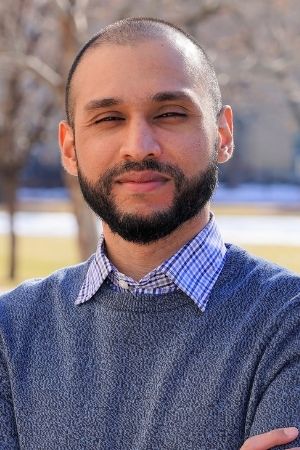
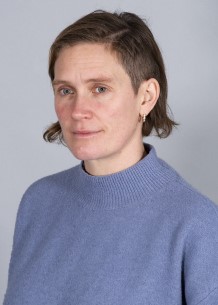
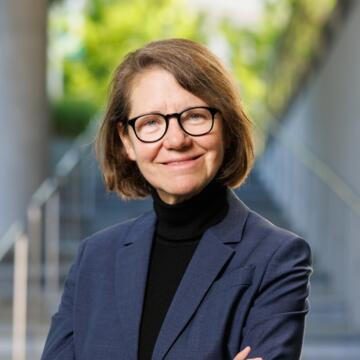
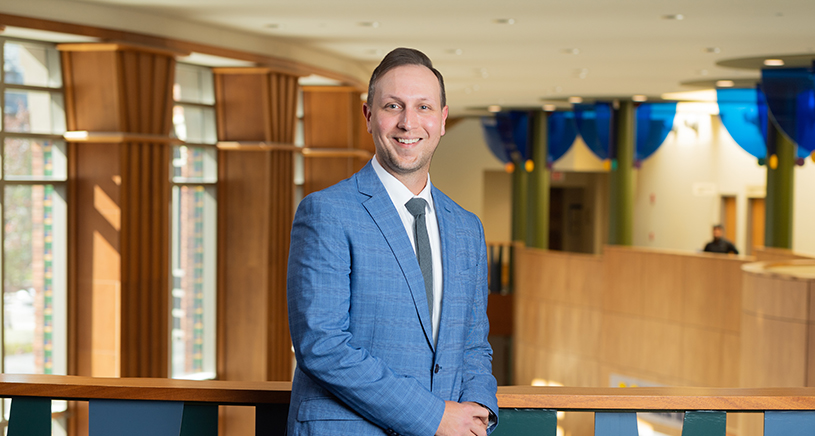
Philip Armour is a Professor and Senior Economist at the RAND Corporation , where he also serves as Director of the Ph.D. Program and the RAND Center for Disability Research. His work integrates labor economics, public policy, and health economics to analyze intersections between government programs and workforce behavior. Research Interests: Focuses on disability policy , retirement decision-making , financial security , and military healthcare systems . Employs empirical analysis of Social Security, Workers' Compensation, and DoD/Veterans Administration programs to understand how policy incentives shape individual choices. Key Contributions: Recent publications examine Social Security appeals barriers for homeless populations, military eye examination policies, and pension crisis reform frameworks. Research funded by SSA, DoD, NIOSH, and CFPB. Education: Ph.D. in Economics, Cornell University M.Sc. in Econometrics, London School of Economics
Lendel Narine serves as an Extension Associate Professor within the Youth Programs Department at Utah State University Extension, based at the Logan Campus. His role centers on evaluation and reporting for statewide extension initiatives, focusing on evidence-based program development and impact assessment across Utah's diverse communities through rigorous methodological frameworks. Dr. Narine's educational foundation includes: PhD in Agricultural Education and Communication, University of Florida (2018) MS (M.Phil.) in Agricultural Economics, The University of the West Indies (2013) BS in Agribusiness Management, The University of the West Indies (2010) His research specializes in quantitative evaluation methodologies including competency modeling, outcome metrics, and cost-benefit analysis, with growing emphasis on behavior change mechanisms and diversity-integration frameworks. He applies the Ranked Discrepancy Model extensively for needs assessment in agricultural and youth programming contexts. Analysis of his 2024-2025 publications reveals three dominant research trajectories: food/financial security programming in Utah communities, innovative evaluation frameworks for extension services, and workforce development through emerging technologies like AI. These works consistently employ advanced statistical methods to address critical issues including climate adaptation and health disparities. His award portfolio features 13 major honors including: Distinguished Team Award (2023) Susan Barkman Award for Research and Evaluation (2023) Outstanding Article of the Year (2020) Visionary Leader Award (2020) Best Research Poster (2019) Early Career Service (2021) New Specialist Award (2022) Excellence in 4-H Citizenship Programming (2023) Communication Award: Educational Publication (2022) Florence Hall Award (2022) Innovative Program (2022) Don Dean Felker Financial Management Award (2023) Excellence in Workforce Development Programming (2023) Dr. Narine advises graduate students through ongoing mentorship since 2019 and has evaluated USU Extension's internal funding mechanisms including the mini-grant program. His grant leadership spans civil rights compliance initiatives and Western regional evaluation capacity building projects addressing organizational advancement and diversity metrics. He actively directs multiple extension teams including the Climate Adaptation Intern Program, CORE Professional Development, and Civil Rights Compliance initiatives, while contributing to multi-state collaborations on leadership development and generative AI applications in extension education through the Western Extension region.
Valerie B. Duffy is a Professor and Graduate Program Director at the University of Connecticut's Department of Allied Health Sciences. Her research focuses on chemosensory variation in humans and its impact on food perception and intake, alongside community-based interventions to improve children's nutrition and physical activity, particularly for economically disadvantaged populations. Education: Human Nutrition (BS) from Cornell University, Nutrition Science (MS) and Registered Dietitian credential from Rush University, Psychophysics of Taste from University of Connecticut, and postdoctoral training at Yale University School of Medicine. Her work spans sensory science, public health nutrition, and digital health interventions. Key areas include taste/smell disorders, food environment mapping, and technology-enabled nutrition education. Recent research emphasizes food swamps, GIS-based resource mapping, and digital food literacy tools. She mentors undergraduate and graduate students in community nutrition projects and has received institutional recognition for excellence in teaching, research, and service.
Professor Ruth Patrick is a Professor of Social Policy at the University of York, currently holding a part-time role in the School for Business and Society. She joined York in 2018 and previously served as a Postdoctoral Researcher at the University of Liverpool. Her doctoral work at the University of Leeds explored the lived experiences of welfare reform. Beyond academia, she has extensive experience in practice-oriented roles, including work with Shelter and Foundation (housing support for offenders) and think tanks like the Fabian Society and IPPR. Her academic background includes a BA, MA, and PhD from Leeds. Her research focuses on bridging the gap between political narratives on poverty and the lived realities of those relying on social security. Key areas include welfare conditionality, participatory methodologies, and the impact of austerity policies on larger families. She leads major projects like Covid Realities and its successor Changing Realities , which engage low-income families in participatory research to drive policy change. Another project, largerfamilies.study , investigates the effects of the two-child limit and benefit cap. Publications highlight her critical analysis of welfare systems, devolution, and family policies. Recent works emphasize participatory research’s role in policy advocacy, particularly during the cost-of-living crisis. She advocates for inclusive policy-making that prioritizes lived experiences. Professor Patrick combines academic leadership with grants from ESRC and the British Academy. She supervises PhD students in areas like poverty representations, co-produced methodologies, and social citizenship. She serves on Oxfam’s UK Poverty Policy Advisory Group and editorial boards of prominent journals. Her collaborative work includes partnerships with groups such as the Dole Animators and ATD Fourth World, emphasizing participatory solutions to poverty. She actively contributes to public discourse through media articles and blogs, challenging stigmatizing narratives and advocating for systemic reforms.
Anna Angelin is an Associate Professor and Senior Lecturer at Lund University's School of Social Work, specializing in social vulnerability and inequality. With over 20 years of experience at the university, she has established herself as a leading researcher in poverty studies, social policy, and welfare systems. Her current research focuses on activation programs for the unemployed, food poverty, and social exclusion. Her research interests span multiple dimensions of poverty and social exclusion, with particular emphasis on food poverty, welfare benefit recipients, and activation policies. She has developed innovative approaches to studying how civil society organizations distribute food aid to economically vulnerable citizens and examines how employers perceive and interact with welfare clients. Her work bridges academic research with practical policy implementation through her leadership of AKTIV, a collaboration network for researchers focusing on activation and social welfare. Analysis of her recent publications reveals a clear trend toward examining food poverty systems and the changing role of civil society in welfare provision. Her work increasingly focuses on comparative international studies, particularly examining Swedish and Australian approaches to welfare clients and employer attitudes. She has also expanded her research to include climate crisis intersections with food poverty and distribution systems. Anna Angelin actively supervises multiple PhD students working on poverty-related topics, including Elinn Leo Sandberg (food aid from civil society), Ana Karina Pastrana Polo (food poverty among youths), and Amanda Börjeson-Hedman (labor market activation related to housing and homelessness). She has received significant research funding, including an EU FP7 grant for the COPE project and World Bank commissions. She leads the AKTIV collaboration network and has established strong connections between academic research and practical welfare implementation. Her work with civil society organizations, including Save the Children and Majblomman foundation, demonstrates her commitment to translating research into practical social interventions.
Corinne Wallace is an Adjunct Assistant Professor in the Department of Civil Engineering at McMaster University , with research expertise at the intersection of water security, climate change, public health, and gender equity. Her work spans both technical engineering analysis and community-engaged studies, particularly focusing on marginalized populations in Canada, East Africa, and South America. Dr. Wallace's research interests include: Water-Health Nexus Climate Change Impacts on Disease Gender Equity in Water Access Indigenous Water Governance Mosquito-Borne Disease Modeling Rainwater Harvesting Systems Her publication trends show increasing focus on climate-health interactions (2025), gender-water linkages (2024), and machine learning applications for water quality analysis (2025). She employs mixed-methods approaches and works closely with First Nations communities and international development organizations. Dr. Wallace utilizes art-science communication strategies like the Virtual Water Gallery to transform water and climate knowledge dissemination. Her recent work explores EDI (Equity, Diversity, Inclusion) implementation in large research networks and conceptual frameworks for climate-water equity.
Jody Nicholson is a Professor and Graduate Coordinator in Health Psychology at Clemson University's College of Behavioral, Social and Health Sciences. She holds a Ph.D. in Developmental Psychology from the University of Notre Dame (2009) and a B.S. in Human Development and Family Studies from the University of Texas at Austin (2003). Her research focuses on aging-related health promotion, including co-PI roles on two National Institute of Aging (NIA) studies: the National Study of Daily Experiences (NSDE) and the Preventing Alzheimer’s with Cognitive Training (PACT) trial. Key interests include prospective memory lapses in aging populations and clinical trial acceptability. Nicholson leads a Creative Inquiry team for undergraduates, with no current openings for graduate students in 2026. Her work spans developmental psychology, public health, and clinical interventions, addressing topics like food insecurity, environmental contaminants, and parenting stress. Notable contributions include studies on secondhand smoke reduction in pediatric cancer patients and community-based lead exposure interventions. Selected honors and grants include NIA funding and collaborative research with institutions like Penn State and the University of South Florida. Nicholson teaches courses on child development and health psychology, integrating community-based learning into her pedagogy.
Dr. Sharrelle Barber is an Associate Professor of Epidemiology at Drexel University's Dornsife School of Public Health and Director of the Ubuntu Center on Racism, Global Movements, and Population Health Equity. Her research focuses on structural racism's impact on Black communities' health in the U.S. and Brazil, emphasizing how systemic inequities are embedded in urban environments. She holds a ScD from Harvard T.H. Chan School of Public Health and an MPH from UNC-Chapel Hill. Affiliations: Ubuntu Center, Dornsife School of Public Health Key Roles: Principal Investigator (JHS Neighborhood Change Study), Co-Investigator (PAN-DIASPORA) Expertise: Racial health inequities, spatial analysis, transnational health disparities Her work bridges academia and activism, including advising the Poor People’s Campaign during the pandemic and contributing to Lancet antiracism initiatives. Recent publications address historical redlining's health impacts, income segregation in Brazilian cities, and spatial inequities in pandemic response. Awards: 2023 Sherman A. James Award, Diverse Emerging Scholar Grants: NIH-funded Jackson Heart Study research Labs/Teams: Leads Ubuntu Center collaborations across Brazil, Colombia, Canada, and the U.S., emphasizing evidence-based antiracism solutions.
Professor KK Tang is a faculty member in the School of Economics at The University of Queensland (UQ), holding the rank of Professor. His research focuses on Health Economics, Development Economics, and International Economics, with an emphasis on mental health, health inequality, income insecurity, and trade liberalization. He holds a PhD from the Australian National University, complemented by prior degrees including a Bachelor (Honours) of Science (Advanced) from the University of Hong Kong. His research projects include studies on inequality of opportunity in Australia, the use of public hospitals by private patients, and lifelong education’s impact on health and policy. He has authored over 60 journal articles, contributing to leading journals such as Economics and Human Biology and Journal of Economic Behavior & Organization . Professor Tang is available for student supervision and actively engages in collaborative research initiatives. His work frequently intersects with policy analysis, addressing issues like housing insecurity, financial hardship, and global economic dynamics. He has contributed to interdisciplinary studies on topics ranging from university rankings to supercomputing impacts on high-tech industries.
Michele Graff is an Assistant Professor at the Jimmy and Rosalynn Carter School of Public Policy, part of Georgia Institute of Technology's Ivan Allen College of Liberal Arts. Her research focuses on energy policy, climate justice, and administrative barriers in social welfare programs. She teaches undergraduate and graduate courses on environmental policy and politics. Her work examines spatial disparities in energy assistance access, the intersection of housing costs and energy burdens, and the impacts of utility disconnection policies. Graff advocates for equitable energy transition frameworks and has analyzed how the pandemic exacerbated energy insecurity among marginalized groups. Key themes in her research include racial disparities in energy access, the design of effective energy assistance programs, and leveraging interdisciplinary methods to address climate policy challenges. Her articles highlight systemic issues like asset tests reducing program participation and propose solutions to reduce administrative burdens. While no formal awards are listed, her contributions to energy justice research have informed policy discussions on federal and state levels. Graff collaborates with stakeholders to bridge academic research and practical implementation, emphasizing the need for data-driven approaches to energy inequities.
Dr. Daniel Ewon Choe is an Associate Professor of Human Development and Family Studies at the University of California, Davis. His research focuses on children’s self-regulation, externalizing behavior, parents’ mental health, and the intergenerational transmission of psychopathology. He employs a biopsychosocial approach using observational, neuropsychological, and biological data. Current projects include studying executive functions in parents and young children, psychophysiological stress markers, and the impact of guaranteed basic income on housing-insecure families. Dr. Choe holds a Ph.D. in Developmental Psychology from the University of Michigan, with earlier degrees from San Diego State University. He mentors students in PhD and Master’s programs and leads the DESC Lab. His work has been recognized through the Horowitz Early Career Scholar Program mentorship role. Research themes include screen media’s cognitive effects, parenting discipline strategies, and resilience among disadvantaged children. Articles highlight longitudinal studies on maternal depression trajectories, mobile device impacts, and predictors of violent behavior in adolescents. His findings emphasize bidirectional influences between child behavior and parental mental health, with a focus on neurobiological and environmental factors. Awards: Mentor, Horowitz Early Career Scholar Program (2024) Labs/Teams: DESC Lab, UC Davis Center for Poverty Research Advising: Supervises students in developmental psychology and family studies; accepts PhD/Master’s applicants.
Julie A. Nice is the Herbst Foundation Professor of Law at the University of San Francisco School of Law, where she has been a full-time faculty member since 2009. She previously held the Delaney Professor of Law position at the University of Denver and has served as a visiting professor at the University of Michigan and University of Connecticut law schools, as well as a clinical teaching fellow at Northwestern University School of Law. Education: JD, Northwestern University BS, Northwestern University Her research focuses on constitutional law, poverty law, and sexuality law, with particular emphasis on LGBTQ+ rights, reproductive justice, and economic equality. She is the lead author of the textbook Poverty Law: Theory and Practice and has published extensively on equal protection, dignity, and the constitutional treatment of marginalized groups. Her scholarship critically examines the judiciary's role in perpetuating inequality, especially in relation to poverty and gender. Her recent publications reflect a consistent engagement with constitutional theory, civil rights, and social justice. Key themes across her work include the intersection of equality and liberty, the deconstitutionalization of poverty law, and the evolving jurisprudence of same-sex marriage and reproductive rights. Her articles have appeared in leading journals such as Fordham Urban Law Journal , Cornell Law Review , and University of Illinois Law Review . Scientific Awards and Distinctions: Distinguished Professor of the Year, USF Law (2010, 2011, 2012, 2017, 2019, 2020) Professor of the Year for Teaching Excellence, University of Denver (1993, 1994, 1996, 1998, 2005) USF Gender Justice Award (2013) University of Denver 'Law Star' Teaching Award (2008) University Master Educator Award (2003) University Scholar/Teacher of the Year (1999) Professor Nice is widely recognized for her excellence in teaching, having been featured in What the Best Law Teachers Do (Harvard University Press, 2013) as one of the nation's top-25 law teachers. She has received 15 teaching and scholarship awards throughout her career. She began her professional journey as a public interest litigator at the Legal Assistance Foundation of Chicago, grounding her academic work in real-world legal advocacy. She has not received any formal grants mentioned in the text, but her sustained scholarly output and leadership in legal education reflect significant institutional and professional support. She is affiliated with academic networks such as SSRN and contributes to national discourse on poverty, equality, and constitutional rights. While no formal lab or research team is mentioned, her collaborative publications and editorial inclusions suggest active engagement with interdisciplinary legal communities.
James H Buszkiewicz is a Research Assistant Professor in the Department of Epidemiology at the University of Michigan School of Public Health. He is affiliated with the Center for Social Epidemiology and Population Health (CSEPH), the Tobacco Center of Regulatory Science, and the Center for the Assessment of Tobacco and Health (CAsToR). His work focuses on structural determinants of health inequities, including income inequality, structural racism, and the built environment. Education: PhD in Epidemiology (University of Washington, 2020) MPH in Epidemiology (Boston University, 2012) BA in Biology (Boston University, 2010) Dr. Buszkiewicz's research examines policy impacts on health behaviors, including tobacco use, nutrition, and mental well-being. Current projects model tobacco regulatory policies, minimum wage effects, and food/environmental determinants of obesity. His work often employs econometric and epidemiologic methods to evaluate longitudinal health outcomes. Recent publications highlight trends in policy-driven health equity research, including tobacco control, minimum wage impacts, and built environment effects. He has published extensively in journals like Nicotine and Tobacco Research , Respiratory Research , and Social Science & Medicine . Key Research Centers: Center for Social Epidemiology and Population Health (CSEPH) Tobacco Center of Regulatory Science Center for the Assessment of Tobacco and Health (CAsToR)
Seth Pipkin is an Associate Professor in the Department of Urban Planning and Public Policy at the School of Social Ecology, University of California, Irvine. Holding a Ph.D. from the Massachusetts Institute of Technology, he maintains an active research profile with recent publications spanning economic development, border policy, and public health. His office is located in 218E Social Ecology 1, and he can be contacted at spipkin@uci.edu or (949) 824-7695. His educational background includes: Ph.D. from Massachusetts Institute of Technology Dr. Pipkin's research centers on how groups collectively shape economic trajectories in developing regions, with specific focus on Latin America and the U.S.-Mexico border. He investigates group dynamics in local development processes, sources triggering 'high-road' industrial upgrading through institutional capacity-building, and citizens' responses to violence in Mexico. His work bridges economic sociology, political economy, and urban planning to examine practical habits influencing policy implementation and resource allocation. Analysis of his 12 publications (2005-2023) reveals consistent themes in industrial upgrading, border policy, and trade liberalization, with recent expansion into public health security. His interdisciplinary approach spans journals in development studies, political economy, and border research, demonstrating methodological diversity from case studies in Querétaro to epidemiological analyses of homelessness in Southern California. No scientific awards were mentioned in the provided text. Details regarding student advising, grant funding, or research supervision were not specified in available materials. No information about laboratories, research teams, or collaborative infrastructure was provided.