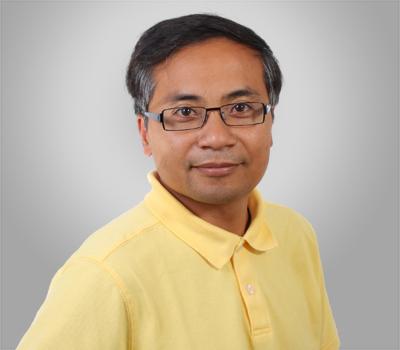
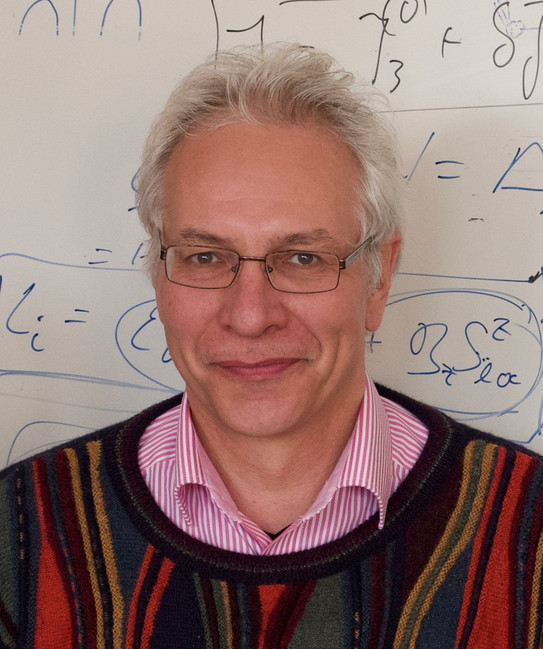
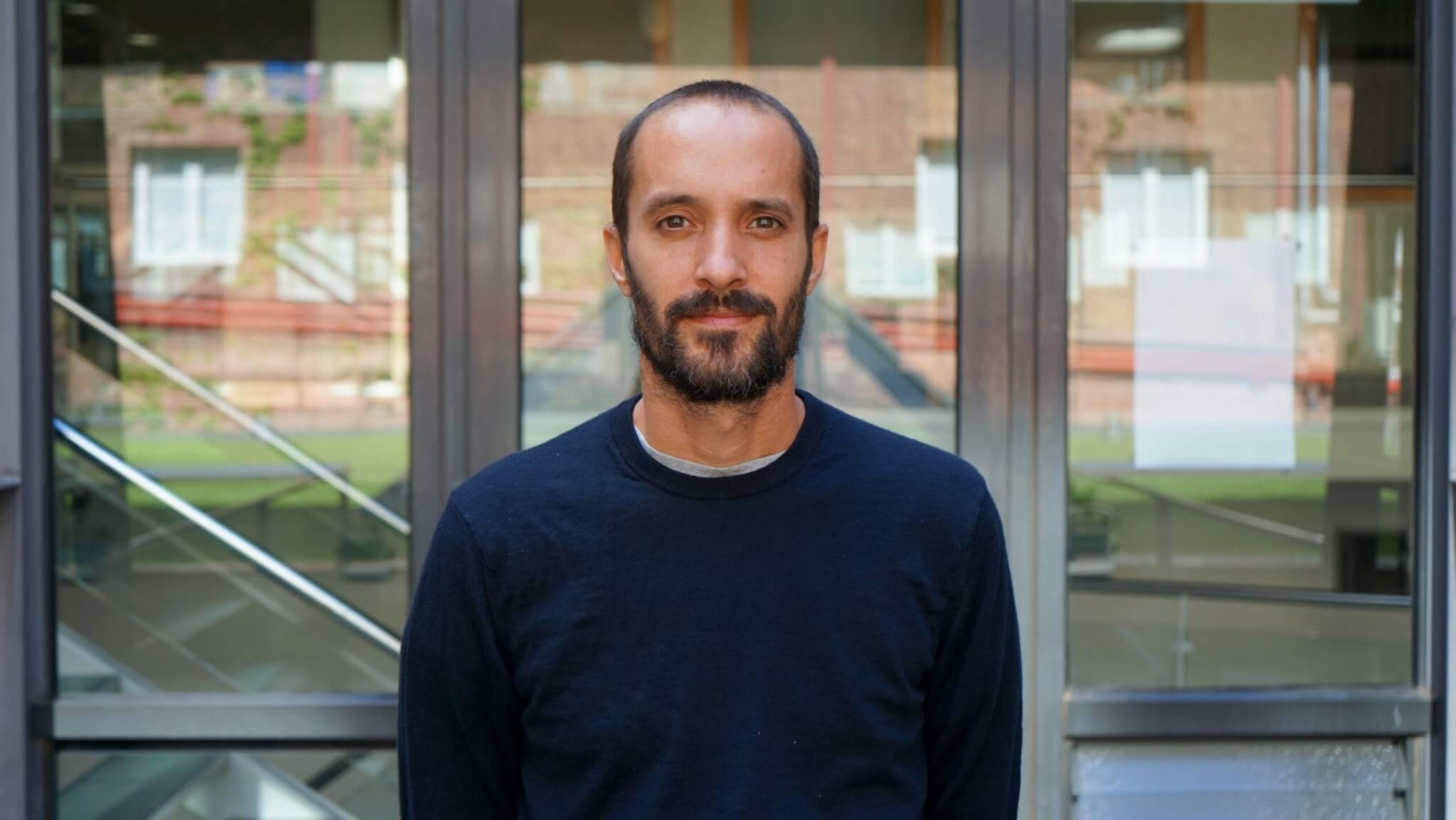
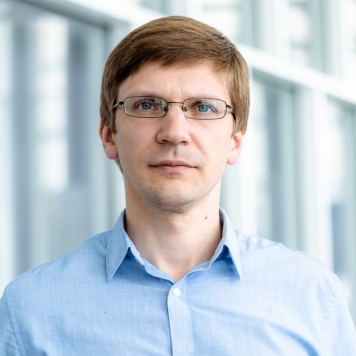
Lilia Frausto holds the position of Clinical Instructor of Medicine (Practitioner), focusing on research in plasma physics and fusion energy diagnostics. Her work involves advanced experimental techniques such as charge-exchange recombination spectroscopy and fusion proton measurements. Though affiliated with a clinical role, her research contributions are centered in high-energy physics contexts like the C-2W and Madison Symmetric Torus devices. Education details and university affiliation are not explicitly stated in the provided text, but her CTSI Profile suggests involvement with a clinical and translational science institute. Research interests emphasize plasma diagnostics, ion dynamics, and fusion technology, as reflected in her recent publications (2018–2021). No scientific awards or grants are mentioned, and no advisees or lab affiliations are listed.
Thinh Nguyen is a Professor in the School of Electrical Engineering and Computer Science at Oregon State University . His research spans theories and applications of stochastic processes, with focus areas in signal processing, video coding, networking, communication systems, and quantum information theory. He co-authored multiple award-winning papers and received the NSF CAREER Award (2009) and Engelbrecht Young Faculty Award (2007) . Education : Ph.D. in Electrical Engineering and Computer Science from UC Berkeley (2003), B.S. in Computer Engineering from University of Washington (1995) Research Focus : Information representation, processing, and transmission with applications in multimedia streaming optimization Key Contributions : Network coding theories for efficient multimedia transmission His recent publications address topics in machine learning optimization, fluid dynamics in medical systems, and microfabrication techniques. Outside academia, he maintains strong musical interests as a classical violinist and emphasizes family values. Scientific Awards NSF CAREER Award (2009) Engelbrecht Young Faculty Award (2007) Currently advises graduate students in information theory and signal processing while leading research at the intersection of electrical engineering and computer science.
Jingyu Lin is a Professor at the Whitacre College of Engineering, Texas Tech University, holding the Linda F. Whitacre Chair in Electrical and Computer Engineering and serving as Co-Director of the Nano-Photonics Center. PhD in Physics, Syracuse University (1989) MS in Physics, Syracuse University (1985) BS in Physics, SUNY-College at Oneonta (1983) Her research focuses on semiconductors, photonics, and optoelectronics, particularly III-nitride materials like AlN, GaN, and h-BN. Key applications include radiation sensors, solid-state lighting, and energy-conversion devices. The 15 most recent articles highlight advancements in hexagonal boron nitride (h-BN) quasi-bulk crystal growth, neutron detector development, and optical gain material optimization. Subfields span doping techniques, wide bandgap properties, crystal anisotropy, and device transport mechanisms. Scientific Awards National Academy of Inventors Fellow (2018) American Association for the Advancement of Science Fellow (2016) SPIE Fellow (2015) Optica Fellow (2014) American Physical Society Fellow (2010) Lin leads the Nano-Photonics Center, contributing to semiconductor neutron detectors and MOCVD growth methods. Her work bridges fundamental material science and advanced device applications.
Andrei Y. Silov is an active Assistant Professor in the Photonics and Semiconductor Nanophysics group within the Applied Physics department at Eindhoven University of Technology (TU/e), with teaching responsibilities spanning Advanced Quantum Physics, Elements of Mathematical Physics, Photonics and Modern Optics, Signals and Systems, and Vector Analysis since 2015. Education Summa cum laude in Optoelectronics, St. Petersburg State Electrotechnical University (1985) PhD in Physics and Mathematics, Ioffe Institute (1991) Research Profile His work centers on the physics of individual nanostructures from two-dimensional confinement to zero-dimensional quantum dots, emphasizing spin manipulation in magnetic impurities , spin-correlated currents , and colloidal perovskite nanocrystals . Collaborating closely with Professor Paul Koenraad, Silov targets telecom applications through nanoscale property exploitation, with research fingerprint showing dominance in quantum dots (100%) and semiconductor materials like gallium arsenide (76%). Publication Trends Analysis of his 84 research outputs (1993-2021) reveals sustained focus on quantum phenomena in semiconductors, with recent work (2010-2017) advancing perovskite nanocrystal physics, spin-orbit effects, and exciton dynamics. Publications in Nature Physics , Physical Review Letters , and ACS Nano demonstrate cross-cutting contributions to condensed matter physics, nanophotonics, and materials science. Scientific Awards No scientific awards documented in repository content Advising and Grants Advising: Co-promotor for 10 PhD theses in Photonics and Semiconductor Nanophysics Grants: Individual NWO grant (1996) for TU/e-Ioffe Institute collaboration; active project member in Zwaartekracht PSN Research Centre for Integrated Nanophotonics (2014-2025) Labs and Teams Works within the Photonics and Semiconductor Nanophysics group under the COBRA Research Institute framework, conducting experimental and theoretical research on nanoscale systems with emphasis on spin dynamics and optical properties, as evidenced by the project's focus on nanowires (100%), photonic crystals (41%), and photoluminescence (39%).
Fabio Candotto Carniel is a Fixed-Term Researcher at the Department of Life Sciences (University of Trieste), specializing in lichen symbiosis, environmental toxicology, and the ecological impacts of nanomaterials. His work bridges fundamental research in symbiotic biology with applied studies on pollutants and nanotechnology. He leads projects like the NANO 2-BEES initiative investigating 2D-nanomaterial toxicity in plant-pollinator systems. Active in academic governance, he serves on departmental boards and doctoral colleges. His research integrates physiology, ecology, and biochemistry to address desiccation tolerance mechanisms in lichens and microalgae, as well as biomonitoring strategies for heavy metals and emerging contaminants. Key contributions include studies on graphene-based materials' environmental and health risks, published in high-impact journals.
Dr. Morphy Dumlao is a Research Fellow at the University of New South Wales (UNSW) Canberra , with prior affiliations at the United Nations Directorate for Peacekeeping Operations (forensic investigator in Sudan and Timor-Leste) and academic guest roles at ETH Zurich (2013, funded by OPCW) and research fellowships at the National University of Singapore's Yong Loo Lin School of Medicine (2018) and the ARC Training Centre for Innovative Wine Production (2019, with Charles Sturt University and UNSW Sydney). He holds a Ph.D. in Chemistry (University of New South Wales) and an MSc in Analytical/Physical Chemistry (Ateneo de Manila University). Research Expertise: Development of rapid biomarker detection devices, synthesis of 3D materials for molecular extraction, and design of ambient ionization sources for mass spectrometry. Teaching: Courses on explosive ordnance safety ( ZPEM8102 ) and forensic investigation of explosives ( ZPEM8104 ). Publication Trends: Focus on ambient mass spectrometry applications in food safety (Botrytis cinerea infection in grapes), forensic science (chemical warfare agents), and agricultural diagnostics. Key innovations include portable ionization sources and solid-phase microextraction techniques. Contact: Office at UNSW Canberra, Room 216, Level 2, Building 22. Email: m.dumlao@unsw.edu.au .
Darija Knežević Ratković is a Senior Lecturer at the Faculty of Medicine of the University of Banja Luka, affiliated with the Department of Pharmaceutical Analysis . She specializes in analytical chemistry methodologies, particularly in hydrophilic interaction liquid chromatography (HILIC), green chemistry principles, and pharmaceutical quality control. Her research focuses on method development for drug analysis, including studies on caffeine, paracetamol, amitriptyline, amlodipine besylate, and lisinopril dihydrate. She also investigates the impact of environmental factors like pH on drug solubility and stability. Recent work emphasizes sustainable analytical practices and validation of HILIC methods for pharmaceutical impurity detection. Ratković collaborates on national projects, including the development of herbal medicine analysis techniques and radiotherapeutic agent efficacy studies. She has contributed to peer-reviewed journals like Acta Chromatographica and JOURNAL OF SEPARATION SCIENCE , with publications spanning 2017–2025. Her work bridges fundamental analytical chemistry with practical applications in pharmacy and healthcare quality assurance. She is active in professional conferences, presenting at events like the Congress of Pharmacists of Bosnia and Herzegovina and the International Scientific Conference Contemporary Materials. Current projects (2025–2027) focus on radiopharmaceutical response modeling and essential oil analysis from medicinal herbs in Herzegovina.
Ann Van Schepdael serves as Professor at KU Leuven's Faculty of Pharmaceutical Sciences , where she leads the Pharmaceutical Analysis unit and Subdivision Drug Analysis within the Department of Pharmaceutical and Pharmacological Sciences. She additionally directs the POC Farmaceutische Wetenschappen program and contributes to multiple faculty governance bodies including the Education-Support Committee and Faculty Council. Her research focuses on advanced separation science for pharmaceutical challenges, specializing in capillary electrophoresis , chromatography , and mass spectrometry applications. Current investigations address biopharmaceutical quality testing , antibiotic stability , and cost-effective screening methods for global health contexts, with significant collaborations in Ethiopia for traditional medicine quality control. Method development emphasizes practical solutions for drug analysis in resource-limited settings. Recent publications (2024-2025) reveal a pronounced trend toward hyphenated analytical techniques (LC-MS/MS, CE-MS) applied to biopharmaceutical characterization , antibiotic quality assurance , and enzyme inhibitor discovery . Her team increasingly utilizes on-line screening platforms and automated systems for high-throughput analysis of complex matrices including human plasma and natural product extracts, with growing emphasis on sterilization impact studies and residual solvent analysis . As principal investigator, she currently manages 10 active research grants totaling over 4 years of funding: Promotor for 4 projects (2023-2027) including biopharmaceutical CE methods and Abl1 inhibitor screening Co-promotor for 6 projects (2020-2025) covering antibiotic stability, thermal desorption GC, and Ethiopian pharmaceutical quality She supervises doctoral candidates in pharmaceutical technology and analytical method development while teaching core courses in pharmaceutical analysis and bioanalysis. Her research group operates within KU Leuven's Division Center for Drug Delivery and Analysis , maintaining strong international partnerships with Ethiopian institutions for pharmaceutical quality initiatives.
Prof. Dr. Frithjof Anders is a faculty member in the Department of Physics at the Technical University of Dortmund, where he leads a research group in Condensed Matter Theory. His work focuses on theoretical investigations of correlated electron systems, particularly the interplay of spin and charge degrees of freedom in quantum materials under equilibrium and nonequilibrium conditions. University: Technical University of Dortmund School: Faculty of Physics Department: Department of Physics Email: frithjof.anders@tu-dortmund.de Office: Room P1-O2-309, Otto-Hahn-Str. 4, 44227 Dortmund His research spans several advanced topics in theoretical condensed matter physics, including the Kondo effect in heavy fermions and quantum dots, modeling of local moments in multi-impurity systems, and theoretical simulations of laser-driven spin dynamics in quantum dot ensembles. A significant focus lies on understanding decoherence mechanisms due to spin noise and on predicting inelastic signatures in scanning tunneling spectroscopy of molecules. His group also investigates current-voltage characteristics in quantum point contacts and localized states in graphene defects. These theoretical studies are computationally intensive and conducted in collaboration with the Collaborative Research Center TRR 160, utilizing high-performance computing resources at Forschungszentrum Jülich. The research contributes to the fundamental understanding of quantum coherence, electron correlations, and non-equilibrium phenomena in nanoscale systems. While specific publications and awards are not listed in the provided text, his active research profile and leadership in a major DFG-funded collaborative center indicate a strong ongoing research program. He supervises research activities within his group, though no individual students are named. There is no indication of part-time status, retirement, or emeritus position. The group is part of the broader Condensed Matter Theory (CMT) research focus at TU Dortmund, which includes multiple principal investigators working on complementary theoretical and experimental themes.
Dr. Thomas Baddeley is a Senior Research Fellow in the Department of Chemistry at the School of Natural and Computing Sciences, University of Aberdeen. His work bridges academic research and pharmaceutical industry applications, particularly through his role as Head of DMPK/Analytical Chemistry at TauRx Therapeutics. He is also a co-founder of the North East Analytical Research (NEAR) Symposium, promoting regional collaboration in analytical science. PhD in Chemistry, University of Aberdeen (2002) BSc Hons in Chemistry, University of Aberdeen (1998) His research focuses on analytical and bioanalytical method development for pharmaceuticals, particularly in neurodegenerative disease therapeutics. He specializes in drug metabolism and pharmacokinetics (DMPK), material characterization, and impurity profiling, following ICH Q3 and M7 guidelines. His work supports clinical and non-clinical development of novel compounds, including tau aggregation inhibitors for Alzheimer’s and frontotemporal dementia. His recent publications (2015–2023) span neuropharmacology, analytical chemistry, and structural chemistry. Key themes include the mechanisms of hydromethylthionine in tauopathies, mitochondrial function in neurodegeneration, and crystallographic analysis of organic and steroidal compounds. His work frequently involves collaborations with clinical and industrial partners. Dr. Baddeley has co-authored patents related to phenothiazine-based tau aggregation inhibitors, demonstrating translational impact. He has presented at key forums including the NEAR Symposium, REID Bioanalytical Forum, and INFORM. He has not been noted to supervise students or receive specific awards in the provided text. His research is supported through industry collaboration and institutional fellowships. Dr. Baddeley is actively involved in analytical science through research, knowledge exchange, and symposium leadership, contributing significantly to both academic and pharmaceutical communities.
Josep Saurí Jiménez is a Research Collaborator in the Department of Organic and Pharmaceutical Chemistry at IQS School of Engineering, Universitat Ramon Llull. He is an active researcher specializing in NMR spectroscopy methodologies and structural elucidation of complex organic molecules, pharmaceuticals, and natural products. His work bridges analytical chemistry with practical applications in drug discovery and development. His research focuses on NMR Spectroscopy , Natural Product Chemistry , and Structure Elucidation of complex molecules. Dr. Saurí's work has significantly contributed to advancing heteronuclear correlation techniques, coupling constant analysis, and the application of NMR in pharmaceutical quality control. His research group CRISOL (Chemical Reactions for Innovative Solutions) develops innovative chemical tools addressing challenges in Molecular Science, particularly in Medicinal Chemistry, Process Chemistry, and Materials Science. Analysis of his recent publications shows consistent contributions to the field of NMR methodology development, with increasing focus on pharmaceutical applications and natural product characterization. His 2022-2024 publications demonstrate growing impact in drug discovery, particularly in the areas of nucleoside analogues and marine alkaloids with therapeutic potential. Dr. Saurí has maintained a consistent publication record with 69 scientific productions, showing particular productivity between 2015-2016 (11 and 9 publications respectively). His h-index of 19 reflects his significant contribution to the field of NMR spectroscopy and structural chemistry. He serves on editorial boards, including as an associate editorial board member for Magnetic Resonance in Chemistry, demonstrating his recognition within the scientific community. His research has attracted attention across multiple platforms, with mentions in news outlets, social media, and academic sharing platforms like Mendeley.
Dmytro Viktorovych Shyrokorad is a Senior Lecturer at the Department of System Analysis and Computational Mathematics within the Faculty of Computer Science and Technologies at Zaporizhia National Technical University. With a Candidate of Physical and Mathematical Sciences degree and extensive expertise in computational methods and materials science, he contributes significantly to both teaching and research activities at the university since 2017. Dr. Shyrokorad holds three higher education degrees from prestigious Ukrainian institutions: Zaporizhia National Technical University, Faculty of Informatics and Computing Technologies (2012) - Specialist in Systems Analysis Zaporizhia National Technical University, Faculty of Economics and Management (2012) - Financier qualification Zaporizhia National University, Faculty of Mathematics (2012) - Applied Mathematics specialist He defended his Candidate's thesis in Solid State Physics in 2018 at the G. V. Kurdyumov Institute of Metal Physics of the NAS of Ukraine. His research focuses on the intersection of computational physics and artificial intelligence, with particular emphasis on molecular dynamics modeling of nanoscale phenomena and artificial intelligence methods for data analysis. His work bridges theoretical physics with practical applications in materials science and engineering. Dr. Shyrokorad has published extensively on Janus-like nanoclusters, thin film deposition, and neural network applications in various scientific domains. Analysis of his 15 most recent publications reveals a strong research trajectory in computational materials science, particularly in molecular dynamics simulations of nanoclusters and their transformations under various conditions. His work spans both fundamental research in nanoscale phenomena and applied research in data science and machine learning applications. Dr. Shyrokorad actively participates in international conferences, presenting his research findings to the global scientific community. His Google Scholar profile shows consistent scholarly output with increasing impact in his fields of expertise. In addition to his research activities, Dr. Shyrokorad teaches several important courses including "Creating Web resources", "Informatics", "Informatics and computing", and "Computer Engineering and Programming", contributing to the education of the next generation of computer scientists and engineers.
Dr. Tomas Čeponis (Institute of Photonics and Nanotechnology, Vilnius University) serves as a Senior Researcher and Associate Professor in Technological Sciences . His research focuses on semiconductor defect analysis, carrier transport in crystalline/amorphous materials, and radiation sensor development. Key Interests: Radiation defect evolution in semiconductors, contactless characterization techniques, dosimetry systems for high-energy physics and medical applications Scientific Contributions span radiation sensor performance during proton/electron irradiation, defect profiling in GaN and SiGe materials, and development of characterization methodologies. Notable projects include: Research Council of Lithuania project S-LB-19-1 (2019–2020) Collaboration in CERN RD50 Awards include the National Science Prize of the Lithuanian Academy of Sciences (2022) and multiple young scientist recognitions. He supervises bachelor and master students' theses and teaches Basic Electronics , Radiation Detectors for CERN Experiments , and Introduction to Semiconductor Physics .
Dr. Laimonas Deveikis is a Research Fellow at the Institute of Photonics and Nanotechnology (IPN), Vilnius University. His work focuses on semiconductor physics, radiation sensor development, and materials engineering for high-energy physics and medical applications. Radiation Defect Analysis in Silicon/GaN Contactless Characterization Techniques Dosimetry Systems Development Crystal/Amorphous Material Transport Studies His research examines carrier transport, capture, and recombination mechanisms in irradiated materials, with applications in radiation dosimetry and semiconductor reliability. Collaborating with institutions like CERN, he investigates proton/electron irradiation effects on detector performance. Recent publications highlight his expertise in: Scintillation Dynamics in Nitride Structures Radiation-Induced Defect Evolution Advanced Characterization of Semiconductor Sensors Dosimetry for Medical/High Energy Physics
Ana Čikoš is a Senior Research Associate at the NMR Centre of Ruđer Bošković Institute (RBI) in Zagreb, Croatia. Her research specializes in NMR spectroscopy applications for pharmaceutical and analytical chemistry, including drug discovery, structural biology, and natural products analysis. She mentors graduate students and collaborates extensively on interdisciplinary projects. Education PhD in Analytical Chemistry (2011), University of Zagreb: Thesis on NMR studies of macrolide-ribosome interactions. B.Sc. in Chemistry (2003), University of Zagreb: Thesis on NMR conformational analysis of macrocyclic drugs. Her research integrates NMR spectroscopy with drug design, focusing on macrocycles, protein-ligand interactions, and degradation pathways. She develops methods for structural elucidation of natural products and pharmaceutical impurities, contributing to drug development pipelines. Publications emphasize NMR methodology, macrocyclic therapeutics, and cyclodextrin complexes, with consistent output in high-impact journals since 2007. Recent work explores inflammation targets and asymmetric membrane characterization. Awards "You made the difference!" Award (Fidelta, 2018) GSK Silver Award for NMR lab modernization (2010) GSK Exceptional Science Award for ribosome studies (2009) GSK Bronze Award for macrolide PK research (2008) GSK Silver Award for Open Access NMR implementation (2007) She advises graduate researchers on NMR-based projects and has supervised diploma theses on cyclodextrin complexes and macrocyclic conformation. She leads collaborative initiatives like the Remote NMR infrastructure project.