
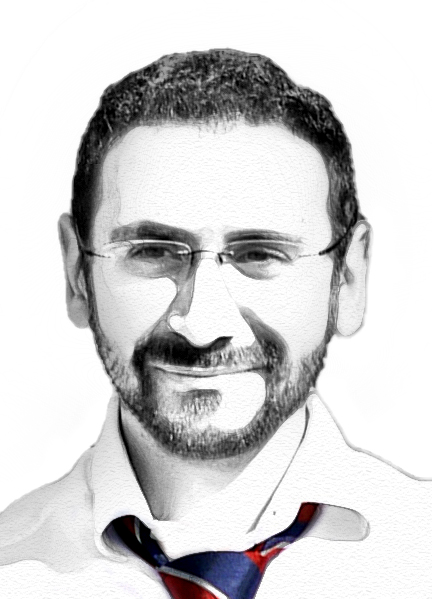
Saverio Giallorenzo is an Assistant Professor (tenure-track) at the Department of Computer Science and Engineering, University of Bologna. He is also a member of the Microservices Community communication group, OLAS team at INRIA (France), and the Italian National Laboratory for Cybersecurity (Bologna node). Previously, he was associated with the Focus team at INRIA (France), Concurrency and Logic group, DISI Jolie Lab, and SPACES groups. Dr. Giallorenzo's research spans multiple areas in computer science with a focus on distributed systems and programming languages. His primary research interests include: Programming Languages Process Calculi Choreographic Programming Microservices Session Types Dynamic Adaptability Security His work bridges theoretical foundations with practical applications, particularly in the areas of serverless computing, microservice architectures, and secure distributed systems. Analysis of Dr. Giallorenzo's recent publications (2024-2026) reveals a strong focus on serverless computing, microservices, and choreographic programming. His research demonstrates a consistent trajectory toward optimizing distributed systems through formal methods. Key themes include topology-aware function scheduling in serverless environments, energy-aware cloud-edge deployments, ransomware investigation frameworks, and formal models for choreographic programming. His work often combines theoretical rigor with practical implementations, as evidenced by tools like the tAPP OpenWhisk extension and SAFARI framework. Dr. Giallorenzo actively contributes to the academic community through teaching and research supervision. He teaches courses including Network Analysis, Programming Languages, and Social Network Analysis at both undergraduate and graduate levels. His teaching spans the First Cycle Degree in Computer Science and Second Cycle Degrees in Artificial Intelligence, Computer Science, and Digital Humanities and Digital Knowledge. His research activities are supported by collaborations with several institutions including INRIA in France and participation in the Italian National Laboratory for Cybersecurity. He has been involved in developing the Jolie programming language and related tools for microservice development and verification.


