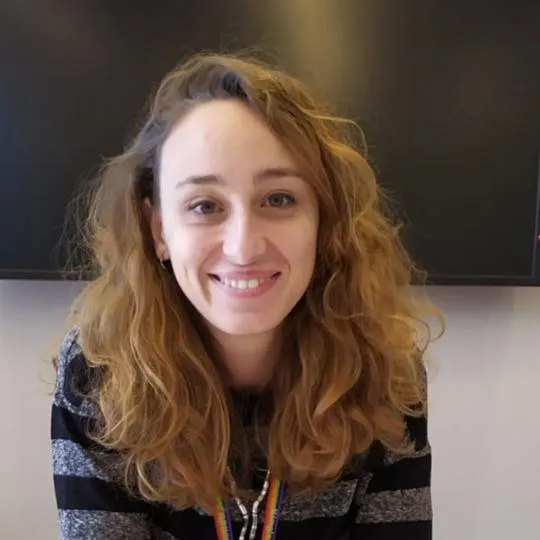
Inga Zeissetمشاهده پروفایل
مدرس ارشد
Dr. Inga Zeisset is a Senior Lecturer in the School of Applied Sciences at the University of Brighton, where she is part of the Ecology, Conservation and Society Research Excellence Group. Her work bridges molecular ecology with practical conservation applications, focusing particularly on amphibian species in Europe. Zeisset earned her BSc (Hons) in Ecology and Conservation with First Class honors from the University of Sussex (1994-1997), followed by a PhD in Molecular Ecology of North European Water Frogs from the same institution (1997-2001). Her doctoral research laid the foundation for her ongoing work in amphibian phylogeography and conservation genetics. Her research interests center on molecular ecology approaches to conservation challenges, with particular expertise in phylogeography, invasive species dynamics, the relationship between genetic diversity and fitness, adaptive genetic variation, and environmental DNA applications. Zeisset has developed specialized knowledge in amphibian conservation, particularly regarding pool frogs (Pelophylax lessonae) and their reintroduction to the UK. Her work frequently employs molecular methods including microsatellite analysis and MHC (Major Histocompatibility Complex) studies to address conservation questions. Analysis of her publication record shows a consistent research trajectory focused on amphibian conservation genetics, with recent work emphasizing practical conservation applications like species reintroduction monitoring and environmental DNA techniques. Her publications span molecular methodology development, phylogeographic studies, and applied conservation research, demonstrating how fundamental genetic research can inform conservation practice. The work shows increasing emphasis on practical conservation applications in recent years. Zeisset led the significant research project "Reintroduction of northern clade pool frogs (Pelophylax lessonae) to the UK" from 2014-2018, which represents a major contribution to amphibian conservation practice in Britain. Her supervisory interests include molecular ecology, amphibian ecology and conservation, phylogeography, species distribution, invasive species, and eDNA applications, indicating her commitment to training the next generation of conservation scientists. Her teaching philosophy emphasizes student-centered approaches, inquiry-based and cooperative learning. She incorporates practical sessions and group work into her lectures, providing guided reading and online resources to support deeper student engagement with course material outside the classroom.