

Zahira Merchant is a Professor in the Equity, Leadership Studies, and Instructional Technologies (ELSIT) department at San Francisco State University (SFSU), specializing in educational technology and research methodology. Education: Ph.D. in Educational Psychology (Emphasis in Education Technology) from Texas A&M University MS in Educational Human Resource Development from Texas A&M University Research Interests: Dr. Merchant pioneers research in virtual reality applications for education, game-based learning systems, learning analytics frameworks, and K-12 computer science pedagogy. Her methodological expertise spans advanced quantitative, qualitative, and mixed-methods approaches to evaluate digital literacy interventions and immersive learning environments. Scientific Awards: Robert Gagne Instructional Design Award (2012) from AECT Presidential Service Award (three times) from AECT’s Design and Development Division Finalist, PacifiCorp Design and Development Competition (2012) Certificate of Merit Award (2012) for nursing education game development Grants and Leadership: As Principal Investigator and Senior Personnel, she has secured funding from the National Science Foundation (NSF), California Teaching Commission (CTC), and IDEA for projects including 3-D virtual reality mathematics educator training. She currently serves on the Editorial Board of the Journal of Formative Design in Learning, demonstrating sustained scholarly leadership in educational technology.
جستجوی استاد راهنمای دانشگاهی
برای مسیر پژوهشیتان، استاد راهنما، استاد دانشگاه و پژوهشگر مناسب را پیدا کنید و با آنها ارتباط بگیرید.
نمایش ۷۳۶-۷۵۰ از ۵٬۲۸۹ استاد راهنما
اطلاعات پروفایلها از صفحات عمومی دانشگاهها گرفته شده و ممکن است بهروز نباشد.

Jonas Braasch is a Professor at Rensselaer Polytechnic Institute's School of Architecture and Associate Director for Research at the Experimental Media and Performing Arts Center (EMPAC). He teaches in the Graduate Program in Architectural Acoustics and leads research on collaborative virtual reality, binaural hearing, auditory modeling, and sensory substitution devices. His work has been funded by NSF, NSERC, and European agencies, and he holds dual PhDs in Electrical Engineering/Information Science and Musicology. His research integrates acoustic virtual reality systems, immersive museum soundscapes, telematic music, and assistive instrument design. Recent publications focus on networked immersive environments, spatial audio techniques, museum acoustics classification, and innovations in wind instrument design for accessibility. Publications emphasize the application of deep learning to acoustic prediction and multisensory integration.
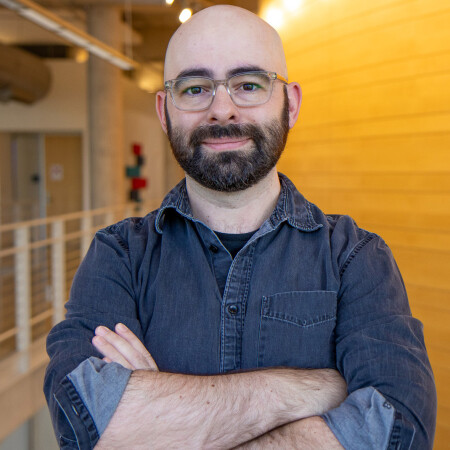
Kevin Sweetمشاهده پروفایل
استادیار
Kevin Sweet is an Assistant Professor of Design and Interactive Arts: Immersive Experience at the University of Texas at Dallas, affiliated with the Harry W. Bass Jr. School of Arts, Humanities, and Technology. His work bridges art, science, and technology to explore possibilities for social transformation through creative play. Sweet's practice spans digital media, performance, virtual reality, and community-based projects that address social justice issues and interdisciplinary collaboration. Education PhD in Emergent Technologies and Media Art Practices, University of Colorado Boulder (2022) MFA in Film/Video, Massachusetts College of Art and Design (2012) BA in Film Studies, Keene State College (2009) Research Focus Sweet's research centers on narrative refiguration through embodied creative play at intersections of art, science, and technology. His work explores how digital media can address systemic inequities, preserve cultural heritage, and create new communal storytelling forms. Recent projects focus on community media labs, ancestral land rights, and speculative methodologies challenging anthropocentric narratives. He investigates how virtual and augmented reality can be leveraged for social justice and community empowerment, as evidenced by his ongoing work with high school students in San Luis, Colorado. His practice demonstrates a commitment to using art and technology as tools for community engagement and historical preservation. Publication Trends Sweet's creative output shows a clear trajectory from traditional film and video toward increasingly complex interdisciplinary projects. His early work focused on material properties of analog media (like 'Intervals'), while recent projects integrate virtual reality, AI, and community-based practices. His publications reveal a pattern of ambitious cross-disciplinary collaborations, from partnerships with astrophysicists in 'Sound Planetarium' to community-based projects like 'La Sierra' addressing systemic inequities. There's a consistent evolution toward more socially engaged work addressing land rights, historical memory, and non-human agency. Professional Activities Faculty board member, UTD Student Media Operating Board President of the Board of Directors, Denver Digerati 501(c)(3) (2022-2024) Co-Principal Investigator, Sound Planetarium (astrophysics and art collaboration) Head of Creative Development, JoyceStick (VR adaptation of James Joyce's Ulysses) Former Director of Media, Guestbook Project (international peacebuilding organization) First Artist in Residence, Institute of Liberal Arts at Boston College Labs and Community Engagement Sweet has developed community media labs, partnering with History Colorado to build a local media lab in San Luis, Colorado. This initiative creates critical digital arts curriculum for high school students, empowering them to become authors of their community's history. His collaborative work involves interdisciplinary teams spanning artists, scientists, community organizers, and educators working on issues of land rights, historical memory, and cultural preservation.
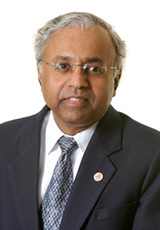
Virendra Bhavsarمشاهده پروفایل
استاد پژوهش
Virendra Bhavsar is an Honorary Research Professor and Professor Emeritus in the Department of Computer Science at the University of New Brunswick (UNB). He holds a PhD in Computer Science and is affiliated with UNB's Fredericton campus, located in Gillin Hall GE109A. His research focuses on natural language processing (especially for Hindi and other Indian languages), cognitive informatics, distributed systems, and bioinformatics. Bhavsar has also contributed to projects involving virtual reality in education, parallel computing, and machine translation systems. Education: PhD in Computer Science Research Interests: Development of NLP tools for free-word-order languages Optimization of in-memory data processing systems on NUMA architectures Cognitive learning environments using virtual reality Tree-based parsing algorithms for linguistic analysis High-performance spatial and spatio-temporal data systems Recent Work Trends: His articles from 2017–2022 highlight advancements in Hindi language processing, distributed computing optimizations, and cognitive informatics applications. Notable areas include improving data skew resilience in hash joins and developing visualization systems for language learning. Awards: No specific scientific awards listed in available materials. Advising & Grants: No formal advisee list or grant details provided in current data. His collaborations include work on grid computing frameworks like GARUDA and HPGC initiatives. Labs/Teams: Involved in projects related to distributed in-memory systems (e.g., DISTIL) and cognitive informatics research groups.
James Carrollمشاهده پروفایل
دانشیار
- Robotics
- Control Systems
- Signal Processing
- +۶ مورد دیگر
James Carroll is an Associate Professor in the Department of Electrical & Computer Engineering at Clarkson University. He is affiliated with the Coulter School of Engineering & Applied Sciences and leads research in mechatronics, robotics, and virtual reality. Dr. Carroll founded the Advanced Visualization Laboratory and co-founded the FIRST Robotics team at Clarkson. He has held multiple grants, including NSF-funded projects in engineering education and laboratory innovation. Education: Ph.D. (Clemson University, 1993), M.S. (Georgia Institute of Technology, 1990), B.S.E.E. (Syracuse University, 1989) His research focuses on adaptive signal processing, nonlinear control systems, and virtual reality applications in rehabilitation engineering and homeland security. He collaborates with organizations like GE Global Research and the U.S. Army on projects involving motion control, robotics, and system virtualization. Dr. Carroll has pioneered educational initiatives such as the Multidisciplinary Projects Course in Virtual Product Development and the Clarkson Inventor's Institute, fostering innovation and community engagement. His current work includes assistive robotic devices and virtual reality wheel-chair simulators. Grants: PI of P&G Fund grant ($150,000) and Co-PI of NSF CCLI grants ($133,602 and $96,402) He is affiliated with the Mechatronic Systems Laboratory and Advanced Visualization Laboratory, advancing human-computer interaction through immersive technologies.

- Immersive Technologies (VR, AR, XR)
- Design Cognition and Creativity
- Environment and Behavior
- +۳ مورد دیگر
Mohammad R. Dastmalchi is an Assistant Professor of Interior Architecture at the University of Kansas, affiliated with the Department of Interior Architecture. He holds a BFA in Interior Design from Ajman University of Science and Technology, an MFA in Design Pedagogy from the University of North Texas, and is a doctoral candidate in Design with Digital Media at the University of Missouri. His research focuses on immersive technologies (VR/AR/XR), design cognition, and environment-behavior relationships, with a particular interest in how virtual embodiment influences design processes and user perception. Education: Bachelor of Fine Arts in Interior Design, Ajman University of Science and Technology Master of Fine Arts in Design Pedagogy, University of North Texas Doctoral Candidate in Design with Digital Media, University of Missouri Research Interests: Immersive technologies in architectural education and practice Embodied cognition and its impact on design communication Virtual reality applications for spatial understanding WEB3 and Metaverse implications for future design paradigms Publications reflect trends in VR's role in educational outcomes, generative AI creativity challenges, and team cognition in digital design. His work bridges theory and practice, emphasizing collaborative design processes and cross-cultural communication in design contexts. He is a researcher at the University's Center for Design Research, contributing to interdisciplinary design innovation.
Giannopoulou Archontia is an Associate Professor at the Department of Informatics and Telecommunications of the National and Kapodistrian University of Athens. Her research focuses on theoretical informatics, particularly in graph theory, algorithm design, and parameterized complexity. She explores structural properties of graphs and their algorithmic implications, including graph minors, tree decompositions, and kernelization techniques. Her work emphasizes applications of graph searching, perfect matchings, and combinatorial optimization. Recent research trends include studies on flat wall theorems, matching minors in bipartite graphs, and directed tangle tree-decompositions. Her publications reflect contributions to both foundational theory and practical algorithm design in these areas. Giannopoulou has no listed scientific awards in the provided materials. Her advising and grant activities are not detailed here, though her extensive publication history suggests active research involvement. No lab or team affiliations are specified in the text.

Sharon Ihan Hsiaoمشاهده پروفایل
استادیار
Dr. Sharon Ihan Hsiao is an Assistant Professor and David Packard endowed junior fellow in the Department of Computer Science & Engineering at Santa Clara University. She previously held positions at Arizona State University and Columbia University, where she established research projects and taught courses in computer science education. Her research focuses on educational technologies, computational modeling, and adaptive learning systems, with an emphasis on AI and HCI methodologies. She actively contributes to international conferences such as EDM, LAK, and AIED, and has held leadership roles including Program Chair of the 14th International Conference on Educational Data Mining. Education: Postdoctoral studies at Columbia University (2012-2014), PhD from the University of Pittsburgh (2006-2012), MS from Royal Holloway, University of London (2003-2004), and BA from National Central University (1999-2002). Research Interests: Dr. Hsiao's work centers on leveraging technology to enhance learning, including educational data mining, programming language learning analytics, and behavior modeling. Her projects include developing tools like WebPGA for programming assessment feedback, Ogmented for augmented reality learning, and Waste Genie for sustainability education. She explores distributed practice strategies, self-regulated learning behaviors, and immersive technologies to improve educational outcomes. Awards: Recognized with the FWA Outstanding Faculty Mentor Award (ASU) and the IEEE TCLT Young Researcher Award. Grants & Projects: Secured NSF funding for CatMapper (2-year grant) and led the Waste Genie project. Her research involves collaborations with industry partners and interdisciplinary teams, focusing on topics like sustainable waste management and computational thinking. Labs & Teams: Directs the Computer Science Innovation (CSI) Lab at Arizona State University and collaborates on projects like QuizIT and PiSA, which emphasize personalized learning and adaptive feedback systems.

Miguel Ángel Fernández Varela is a Senior Research Scientist (Directeur de Recherche) at Inria and Sorbonne Université. He leads the COMMEDIA project-team, focusing on computational mathematics for bio-medical applications. His roles include Head of Science at Inria Paris (2019-2023) and Deputy Head of Science (2017-2019). Education Background: Habilitation degree (HDR) in Applied Mathematics, Université Paris VI (2010) PhD in Applied Mathematics, Université Paris IX (2001) MS in Numerical Methods for PDEs, Universidade de Santiago de Compostela (2000) BS in Applied Mathematics (5-year degree), Universidade de Santiago de Compostela (1997) Research Interests: Mathematical modeling, numerical analysis, and scientific computing applied to cardiac and vascular hemodynamics. Specializes in fluid-structure interaction, immersed boundary methods, and patient-specific simulations. Advising and Grants: Supervised over 15 PhD students since 2009, focusing on topics like fluid-structure interaction, data assimilation, and cardiovascular modeling. Active in collaborative projects at Inria and Sorbonne Université. Labs/Teams: Part of the COMMEDIA team at Inria and the Jacques-Louis Lions Laboratory (LJLL, UMR7598), Sorbonne Université.
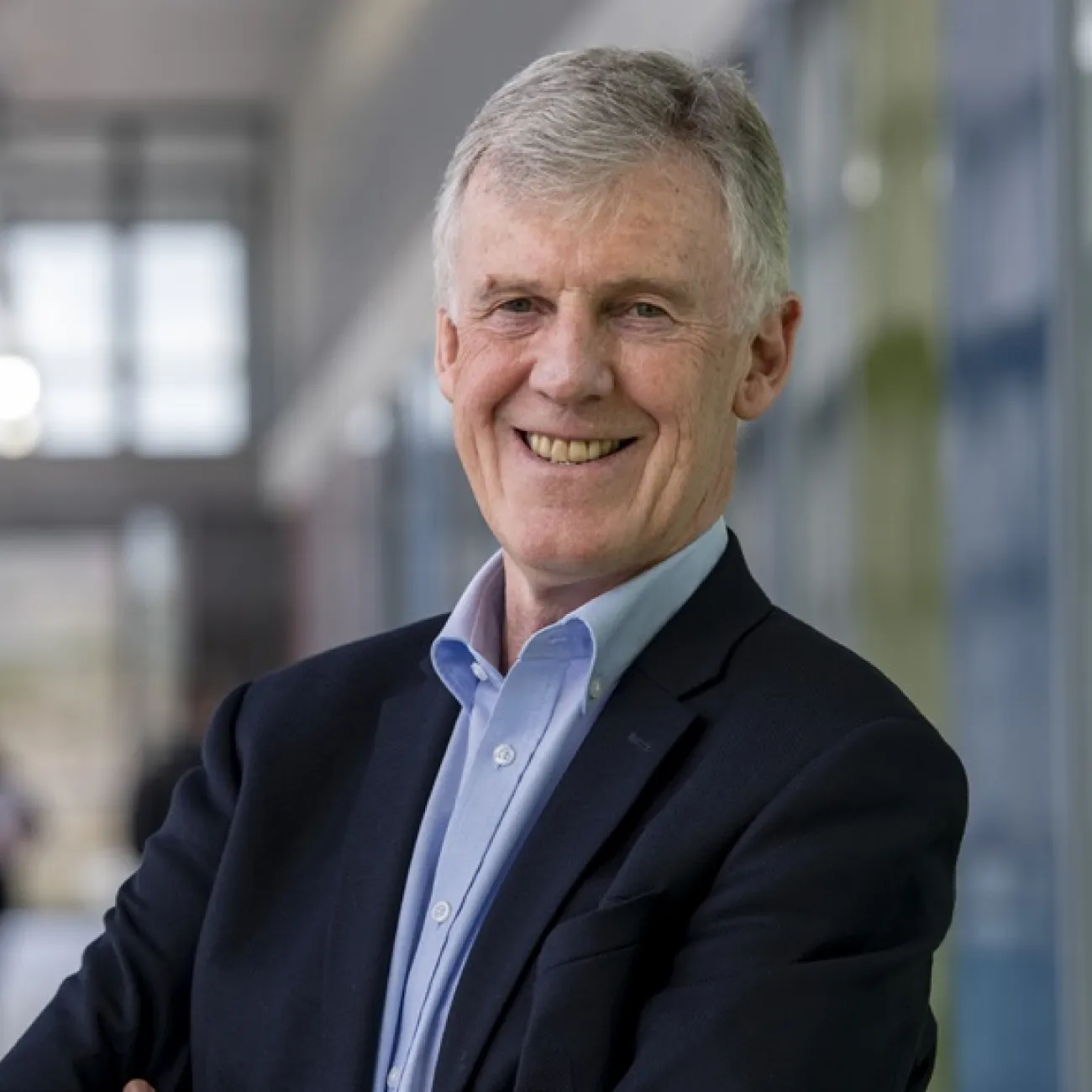
Philip Nelson is Professor of Acoustics at the University of Southampton and former CEO of the Engineering and Physical Sciences Research Council. A Fellow of the Royal Academy of Engineering, his research advances acoustic signal processing and spatial audio. Recent work applies neural networks to acoustic classification and develops methods for personalized sound field reconstruction. His industrial collaborations include Samsung, Huawei, and Qualcomm. Honors include a CBE for contributions to UK engineering science.

Zong Liuمشاهده پروفایل
استادیار
Zong Liu serves as an Assistant Professor and Extension Specialist at Texas A&M University within the College of Agriculture and Life Sciences, affiliated with the WMHS Program. His research addresses critical agricultural waste management challenges, particularly in dairy operations and water resource protection. His primary research domains include: Agricultural Engineering Manure Management Systems Water Quality Monitoring Dairy Production Technology Environmental Pathogen Control Machine Learning Applications Dr. Liu develops engineering solutions for pathogen reduction, nutrient recovery, and sustainable disposal methods, with recent work expanding into virtual reality educational tools and emergency response protocols for dairy crises. His publications demonstrate consistent integration of computational methods with practical agricultural engineering. Analysis of his 2015-2025 publications reveals dominant focus areas: dairy manure treatment (60% of works), pathogen reduction technologies (40%), and emerging applications of machine learning (15%). The research trajectory shows progression from fundamental laboratory studies (2015-2017) toward integrated field solutions and crisis management systems (2020-2025), with increasing interdisciplinary collaboration across environmental science, data analytics, and extension education domains.

Allan Peter Engsig-Karup is Associate Professor in the Department of Applied Mathematics and Computer Science at the Technical University of Denmark. His research develops high-order numerical methods for wave modeling, coastal engineering, and computational fluid dynamics. He specializes in spectral element methods, GPU computing, and uncertainty quantification techniques. Recent work advances numerical solvers for incompressible Navier-Stokes equations with free surfaces, hybrid-spectral models for nonlinear waves, and unfitted mesh techniques. His group develops efficient algorithms for large-scale simulations of water wave interactions with offshore structures.

- Computer Music
- Acoustics
- Music Technology
- +۷ مورد دیگر
Matt Wright is a Lecturer at Stanford University's Center for Computer Research in Music and Acoustics (CCRMA), specializing in media systems design and computer music research. He previously served as Musical Systems Designer at UC Berkeley's CNMAT (1993-2008) and Research Director at UCSB's CREATE center for eight years. His work focuses on real-time music synthesis, sound standards (SDIF/OSC), and computational ethnomusicology. He holds a PhD from Stanford CCRMA on musical rhythm perception, and contributed to the AlloSphere immersive audiovisual instrument. Education: PhD in Computer-Based Music Theory from Stanford University (completed at CCRMA). Earlier studies include training in traditional lutes and Afro-Brazilian percussion. Research interests bridge technology and music: developing tools for musical gesture analysis, sound synthesis, and cross-cultural music analysis. His recent work also involves genomic data platforms (ClinGen) for clinical variant curation, reflecting a dual focus on computational music and bioinformatics. Publications emphasize both music technology (e.g., EEG studies of piano duets) and genomics (e.g., ClinGen variant curation tools). He has advised students in electronic arts and contributed to genetic disease research through collaborative frameworks like ClinVar. Labs/Teams: Lead the CREATE Ensemble (technology-driven live performance) and contributed to the AlloSphere research instrument at UCSB's CREATE center.

Wenbin Liمشاهده پروفایل
مدرس ارشد
- Robotics
- Computer Vision
- Machine Learning
- +۴ مورد دیگر
Dr. Wenbin Li is a Senior Lecturer (Associate Professor) in Robotics at the University of Bath's Department of Computer Science. He leads the Pering Laboratory (Perceptual Intelligence Laboratory), affiliated with the AI & Machine Learning and Visual Computing groups. Previously, he held postdoctoral positions at Imperial College London (2016-2018) and UCL (2014-2016), and earned his PhD from the University of Bath in 2013, with earlier degrees from Imperial College London (MSc, 2009) and Xidian University (B.Eng, 2008). His research focuses on unified autonomous systems, including multi-sensory localization/mapping, dynamic motion capture, and uncontrolled scene understanding with applications in manufacturing and professional capture. Key areas include Robotics, Computer Vision, Graphics, and Machine Learning. He actively supervises doctoral students in these fields and has funded PhD openings. Dr. Li has been involved in major initiatives such as the My World - Strength in Places Fund (2021–2027), SLAM with Reinforcement Learning (2022–2023), and the CAMERA MC2 Award (2019–2023). His work aligns with UN Sustainable Development Goals, particularly in advancing technology for societal benefit. Recent publications emphasize aerial robotics, autonomous systems, and computer vision applications, including UAV package delivery reviews, Bayesian optimization for balloon station-keeping, and generative models for intrinsic image decomposition.

Sascha Schneiderمشاهده پروفایل
استادیار
Prof. Dr. Sascha Schneider is an Assistant Professor of Educational Technology at the University of Zurich's Institute of Educational Science, affiliated with the Digital Society Initiative (DSI). His research focuses on optimizing digital learning media design to enhance cognitive, emotional, and motivational processes in education. He holds a PhD in Media and Instructional Psychology and has held postdoctoral positions at TU Chemnitz. His work investigates topics like decorative elements' impact, motivational effects of choice, emotional design, and adaptive learning environments, targeting K-12 students, university learners, and adults. Education: Bachelor's: Educational Science & English, University of Erfurt Master's: Continuing Education & Educational Technology, University of Erfurt PhD: Media and Instructional Psychology, TU Chemnitz (2017) Habilitation: Educational Psychology, TU Chemnitz (2022) His research emphasizes experimental and meta-analytical methods to explore multimedia learning theory extensions, including social processes and instructional design principles. Key projects include the DEEP initiative for differentiated instruction and the LiT+ educational transfer program. Prof. Schneider's awards include the Erik De Corte Award (2021), a Dissertation Prize (2019), and the Commerzbank Prize (2018). He actively contributes to academic communities, organizing conferences and serving on editorial boards. Advising & Grants: Supervises doctoral research in educational technology Leads projects funded by BMBF and Swiss National Science Foundation His team at the Chair of Educational Technology collaborates on labs like NARRATID , focusing on narrative-driven instructional design.
نمایش نتایج تا ۷۵۰ مورد اول. برای یافتن نتایج دقیقتر، جستجوی خود را با فیلترها محدود کنید.